Natural language programming and high-level software development using large language models. Equips developers to build functional applications by prioritizing iterative prompting and intent-based logic over manual syntax.
A 5-6 week capstone project framework for Grade 10 Exploring Technology, focusing on a Minimum Viable Product (MVP) approach and weekly engineering milestones.
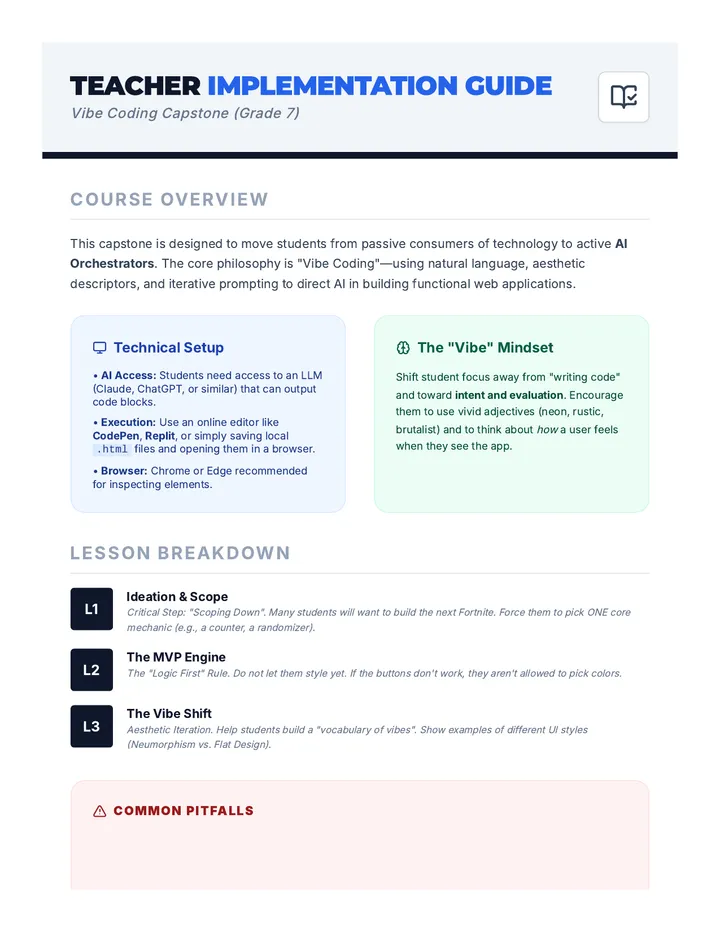
A project-based capstone where students build a fully functional browser app using AI tools. Students navigate the software development lifecycle from ideation to launch, focusing on the power of natural language 'vibe coding'.
A comprehensive graduate-level exploration of the technical and ethical shifts in engineering caused by AI-assisted 'vibe coding'. This sequence focuses on automation bias, security vulnerabilities, intellectual property challenges, and the evolution of the software engineer's role from author to auditor.
An advanced engineering sequence for graduate students exploring the architecture, security, and implementation of autonomous AI coding agents. Students progress from tool-use theory to building self-healing, multi-agent systems.
This sequence guides graduate students through the transition from syntax-focused coding to 'Vibe Coding,' emphasizing iterative prompting, automated testing, and self-correcting refinement loops to build functional MVPs.
A graduate-level sequence exploring how to design software architectures optimized for AI-generated code, focusing on context management, determinism, and agentic API consumption.
This sequence explores the transition from syntax-based programming to intent-driven development using LLMs. Graduate students will master the art of 'vibe coding'—using natural language as a high-level abstraction for complex software engineering tasks.
This critical thinking sequence explores the ethical, security, and social implications of using AI for software development. Students learn to move from passive 'vibe coders' to active, responsible 'system architects' who can audit AI-generated code for quality and bias.
A sequence for 8th-grade students exploring 'Vibe Coding' through UI/UX prototyping. Students learn to use natural language to describe layouts, generate style variations, ensure accessibility, add interactive micro-interactions, and iterate based on user feedback.
A 5-lesson unit for 8th grade students exploring the iterative nature of 'vibe coding' - using AI to generate code and then refining it through debugging, logic checks, and guardrail implementation.
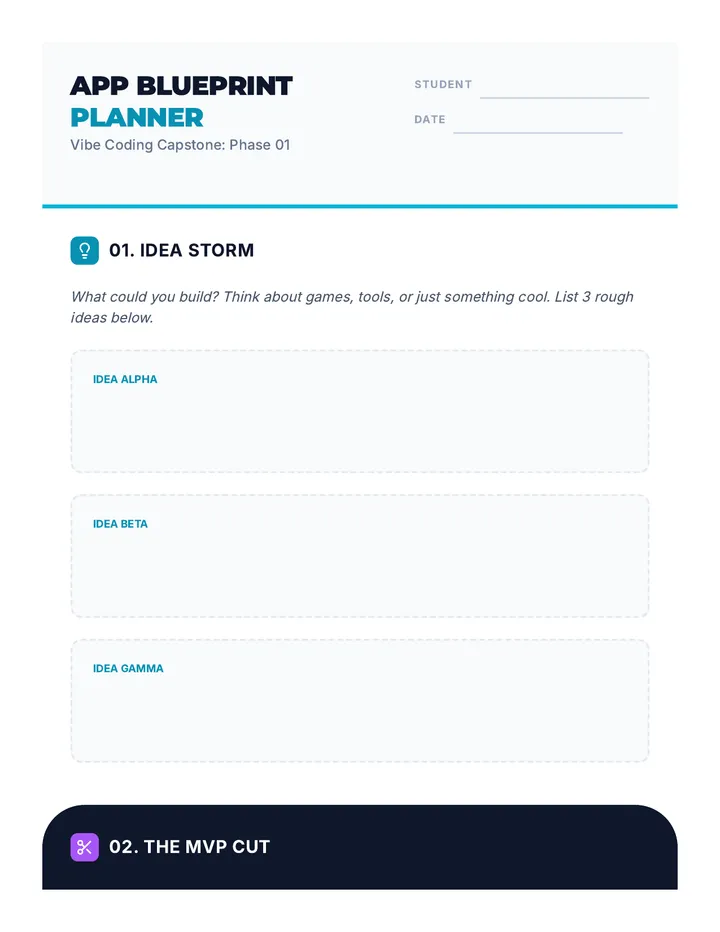
A project-based journey where students learn to build functional web applications using AI. They master decomposition, structural planning, logical implementation, and aesthetic styling to turn ideas into working digital products.
This introductory sequence establishes the foundational concepts of 'vibe coding'—programming via natural language descriptions rather than manual syntax entry. Students explore how Large Language Models (LLMs) interpret intent to generate code, comparing traditional coding workflows with AI-assisted development.
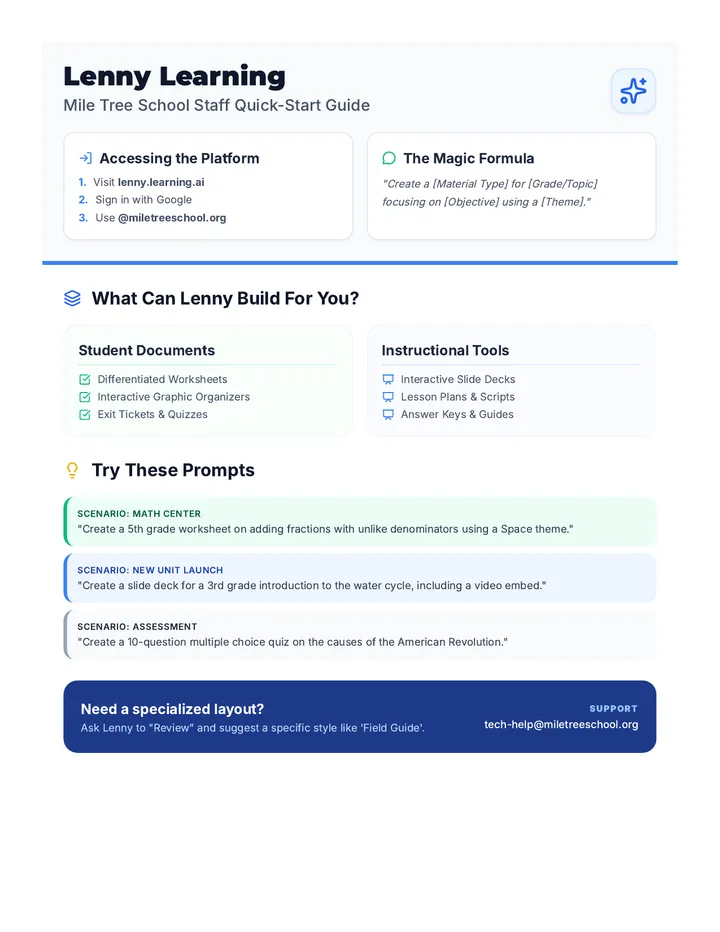
A comprehensive tutorial for Mile Tree School staff on integrating Lenny Learning into their workflow, covering login procedures, material creation, and pedagogical benefits.
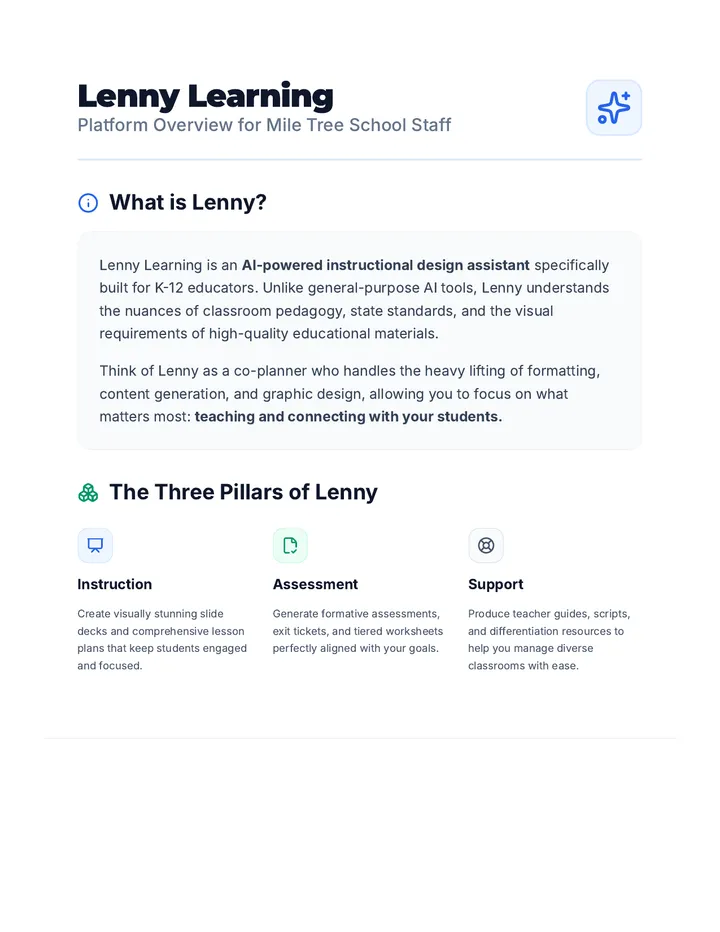
A comprehensive onboarding module designed to help educators master Lenny Learning, from initial login to generating high-quality custom resources for their classrooms.
Cette leçon enseigne l'art de concevoir des prompts efficaces pour l'IA en utilisant 10 composantes clés, de la définition du rôle à l'itération finale.
Ce cours initie les enseignants du primaire à l'utilisation pédagogique de l'IA générative. Il couvre les concepts de base, la rédaction de prompts efficaces, la création de ressources personnalisées et les enjeux éthiques liés à l'usage scolaire.
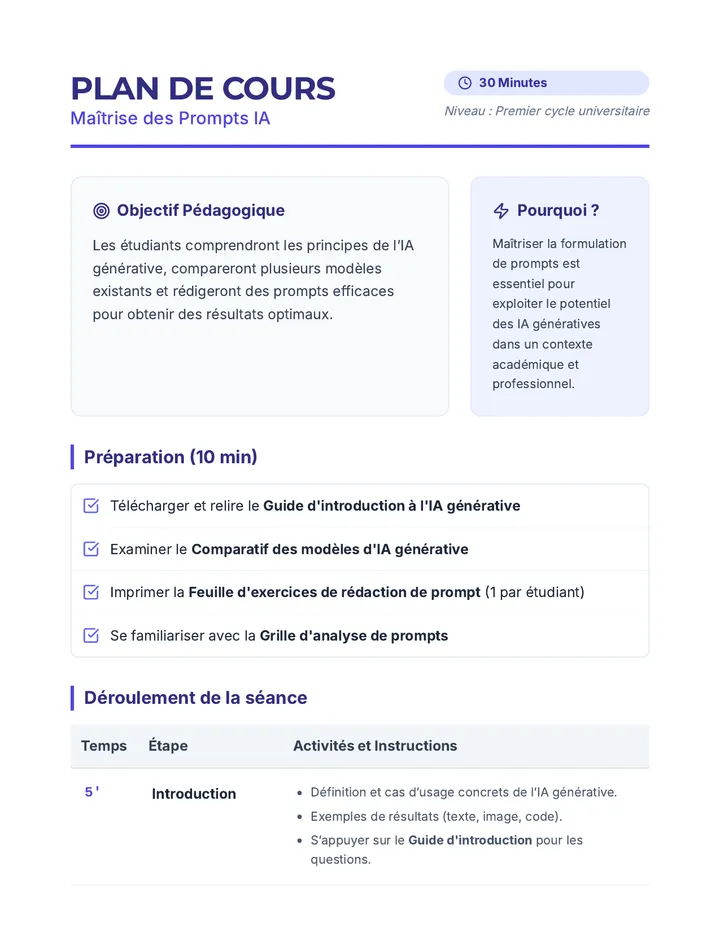
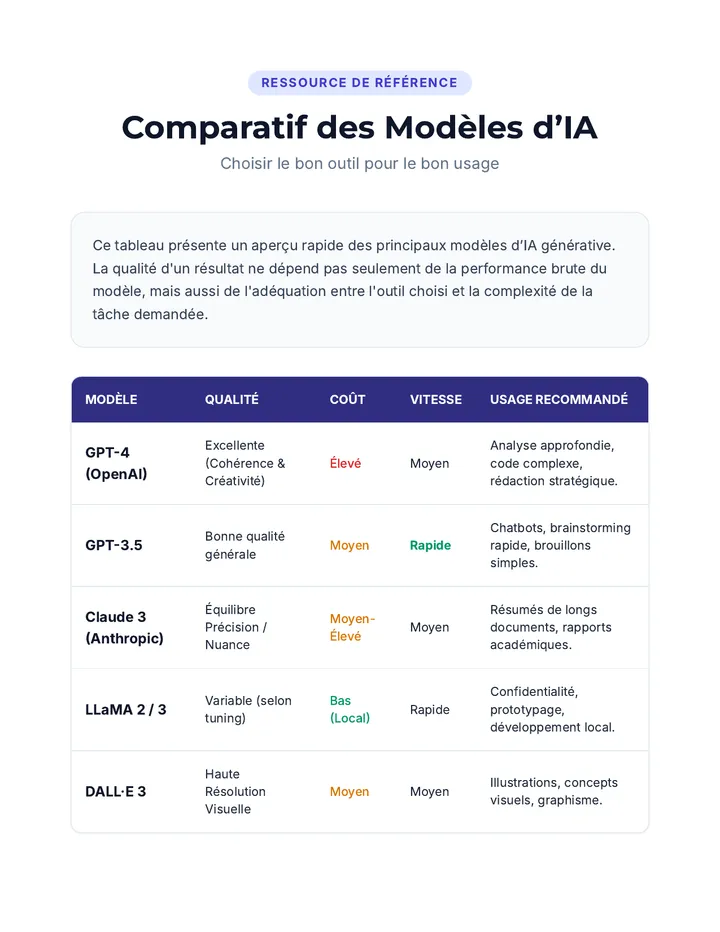
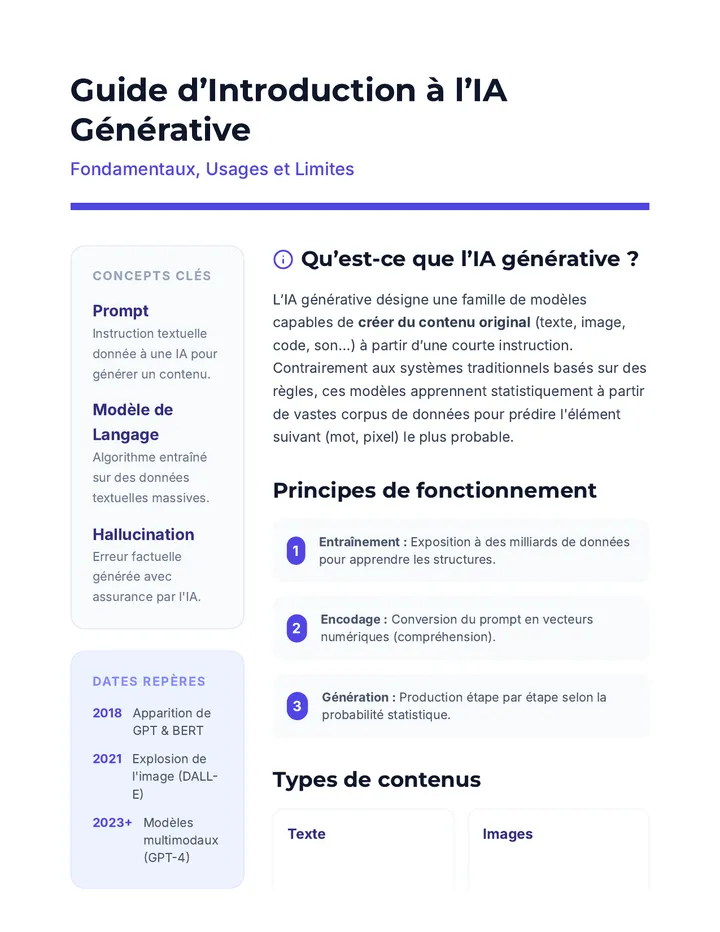
Une séance intensive de 30 minutes pour apprendre aux étudiants à comprendre l'IA générative, évaluer les modèles et maîtriser l'art du prompt.