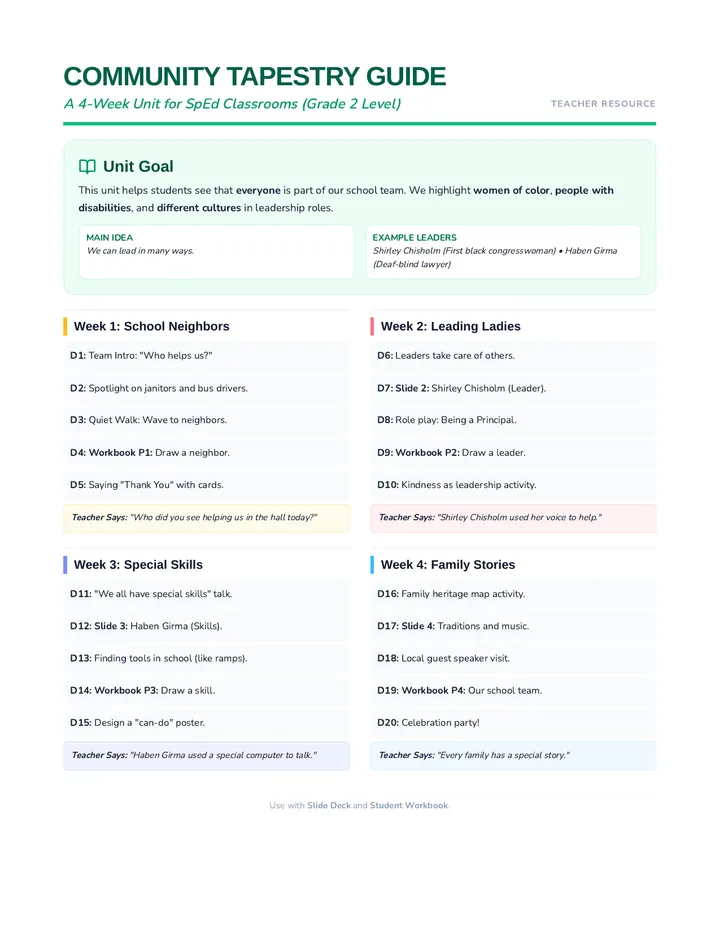
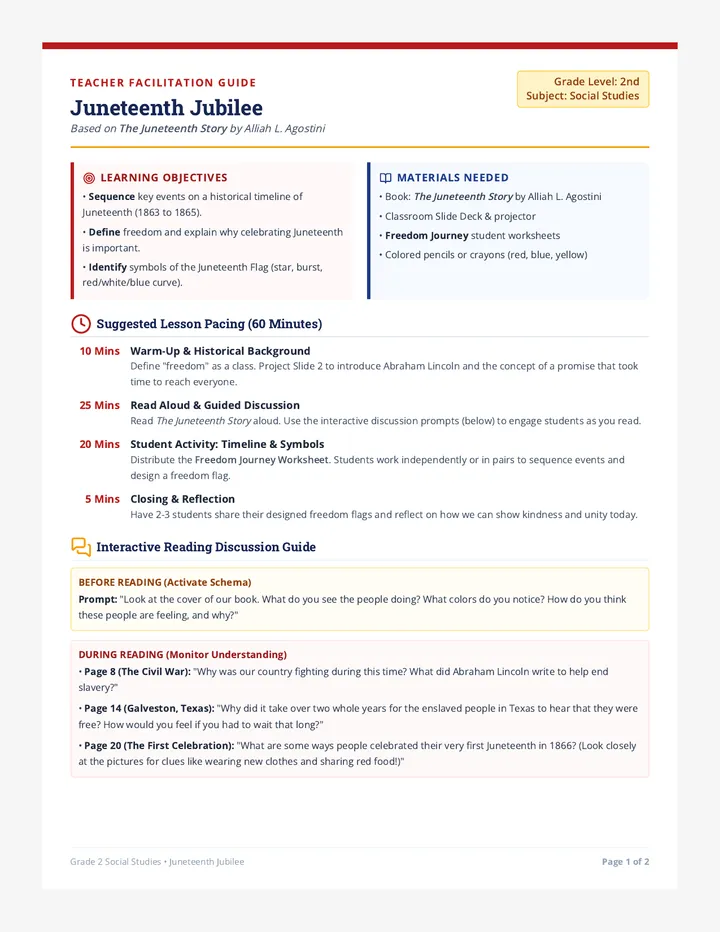
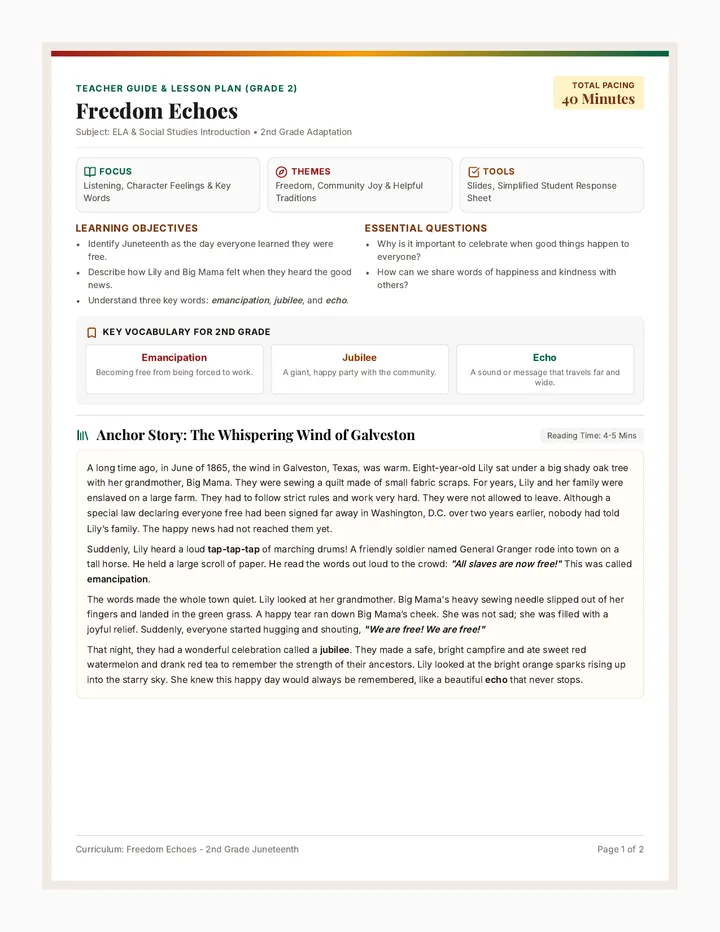
Steam Engine Lesson PlanFull Steam Ahead The Steam Engine & Transportation Revolution 2nd Grade Duration 60 Minutes Objective Understand the steam engine's role in changing transportation. Audience Classroom (Tier 1) Teaching Approach Experiential & Active Learning Blended Learning (Video & Print) Inquiry-Based Discussion Collaborative Group Activity Materials Needed Dry Erase Boards & Markers Presentation Slides Reading Handout Discussion Guide Student Worksheet Activity Instructions Exit Ticket & Quiz Lesson Sequence 5m Intro Engage & Hook Discuss how we travel today (cars, planes). Introduce the steam engine as the "great-grandfather" of modern travel. 5m Video Visual Learning Show the video explaining how steam power works. Note the move from animal power to machine power. 10m Read Background Reading Hand out "History of the Steam Engine." Pair ELL students with peers. Focus on the contrast between horses and trains. 10m Discuss Guided Discussion Use provided questions. SCAFFOLD: Provide sentence starters for ELL: "The steam engine was better because..." 15m Activity Engine Diagrams & Roleplay Groups draw engine diagrams. Then, act out a "Horse vs. Train" race to demonstrate efficiency. 10m Work Individual Reflection Students complete the "Steam Engine Worksheet." Use keyword lists for ELL students. 5m Assess Quiz & Exit Ticket Brief quiz to check for understanding. One surprising fact exit ticket. Differentiation & ELL Support Pair ELL students with fluent peers for reading. Read quiz questions aloud. Use visual aids during discussion (images of old trains/boats). Allow verbal responses for the exit ticket if needed.
Steam Engine Presentation Slides2nd Grade History Full Steam Ahead! How the Steam Engine Changed the World Transportation Revolution Before Steam Power... People had to rely on animal power or their own two feet! Horses were strong but got tired. Wind pushed boats, but only when it blew! Travel was very, very SLOW. 🐎 ⛵ 🚶 How does a Steam Engine work? Watch closely to see how hot water makes things move! Embedded media Faster and Further! 🚄 Trains Iron horses that didn't need to rest. They could carry hundreds of people at once! 🚢 Steamboats Boats that could go against the wind and current. They crossed oceans faster than ever. Activity Time! 1 Draw a diagram of a steam engine on your board. 2 Label the Boiler (hot water) and the Piston (moving part). 3 Roleplay: Can your group move as fast as a steam train? Choo Choo!
History of the Steam Engine Reading HandoutThe History of the Steam Engine Non-Fiction Reading • 2nd Grade History A long time ago, traveling to a different city was very difficult. Most people had to walk or ride a horse. This was slow work! Horses got tired, and walking took a long time. People could only carry a few things with them. "The steam engine changed everything. It was like a giant machine that never got tired!" The steam engine was invented in the late 1600s. It became the most important machine of the Industrial Revolution. Instead of using muscles, this machine used the power of boiling water. The steam from the hot water pushed metal parts called pistons to make things move. Soon, steam engines were put inside big vehicles. They created the first trains (called locomotives) and steamboats. These new machines could travel much faster than horses. They could also carry heavy goods like coal, food, and clothes over very long distances. Because of the steam engine, transportation became more efficient and reliable. People could visit friends in far-away places and buy things from all over the world. It was the start of a transportation revolution! Word Bank Revolution A big change in the way people live or work. Efficient Doing something well without wasting time or energy. Steam Engine Revolution Page 1 of 1
Steam Engine Discussion GuideTeacher Resource • Discussion Guide Steam Engine Discussion Facilitating a deep dive into the transportation revolution. 1 How did the steam engine change the way people traveled? Encourage students to compare life "then" vs "now." Discussion Points: Speed: Trains moved faster than horses. Endurance: Machines don't get tired; animals do. Capacity: One train can carry hundreds of people; a carriage only holds a few. Reliability: Steamboats could go against the current/wind. 2 What were the challenges and advantages of using steam engines? Think about safety, cost, and fuel. Advantages (+) Faster travel Carries more goods Creates new jobs Connects distant cities Challenges (-) Very noisy and dirty Need coal/wood for fuel Could be dangerous (explosions) Expensive to build tracks Support for All Learners Sentence Starters: "The steam engine was better than horses because..." "Traveling on a steamboat was different from a sailboat because..." Tip: Show the slide of the horse vs. train again during Question 1 to provide a visual anchor.
Steam Engine WorksheetSteam Engine Report Transportation Revolution Worksheet Student Name Date 1 Name two ways the steam engine improved transportation. Think about speed and how far people could go! 2 What types of transportation used steam engines? Consider both things that moved on land and in the water. Vehicle Type 1 Vehicle Type 2 Summary Idea: In your own words, why was the steam engine a "Revolution"?
Steam Engine QuizSteam Engine Quiz Checking Our Progress Name Date 1 What is one major benefit of the steam engine? It made transportation slower It made transportation faster It used less fuel 2 What types of vehicles used steam engines? Cars and airplanes Trains and boats Bicycles and scooters
Steam Engine Exit TicketExit Ticket Full Steam Ahead! Name What is one surprising fact you learned today about the steam engine? Exit Ticket Full Steam Ahead! Name What is one surprising fact you learned today about the steam engine?
Steam Engine Answer KeyAnswer Key Teacher Resource • Steam Engine Revolution Student Worksheet Answers 1. Name two ways the steam engine improved transportation. Speed and Distance Reasoning: The steam engine allowed for much faster travel and the ability to move goods over longer distances. 2. What types of transportation used steam engines? Trains and Boats Reasoning: Both trains (locomotives) and boats (steamboats) were commonly powered by steam engines. Quiz Answers 1. What is one major benefit of the steam engine? It made transportation slower It made transportation faster It used less fuel 2. What types of vehicles used steam engines? Cars and airplanes Trains and boats Bicycles and scooters Grading Tip For Question 1 on the worksheet, students may also mention "Machines not getting tired" or "Carrying more goods" which are also correct based on the reading.