Squish Science Slides
Primary Science Exploration
Touch & Test Lab
Squishy Science!
What happens to soft materials when we push, squeeze, and press them?
🧽 Soft Materials
Pressure & Force
Shape & Size Shift
Get ready to squeeze, observe, and discover!
Slide 1
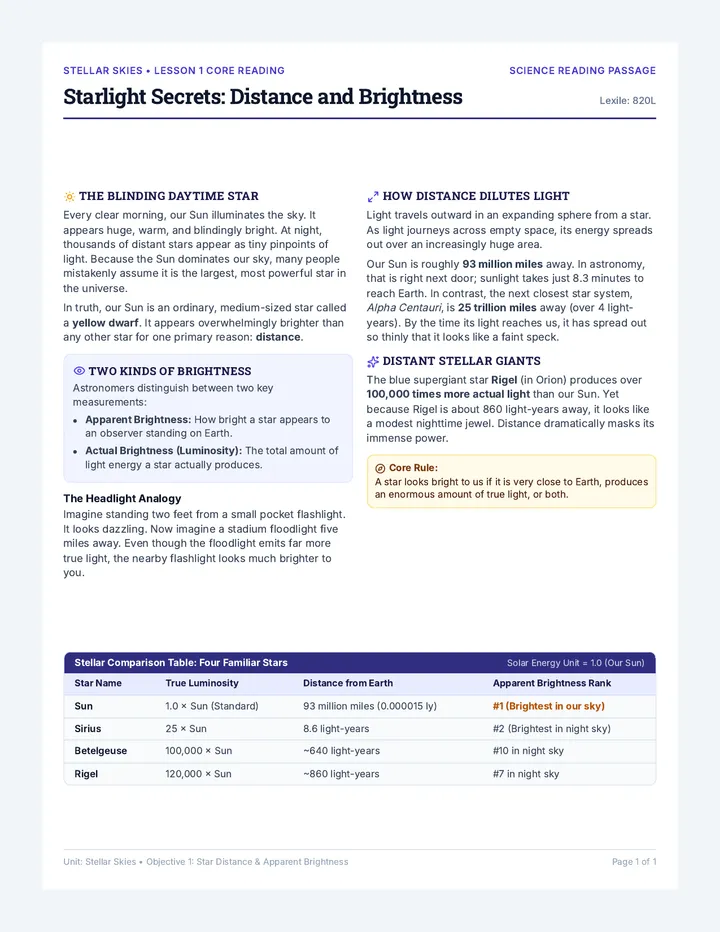
Properties of Matter
What Makes Something Squishy?
Touch & Feel
🧱 Hard Materials Rigid
When you press down, their shape and size stay the same. They do not give way.
🪵 Wood Block
🪨 Rock
🪙 Coin
🧽 Squishy Materials Flexible
When you press down, they compress. Tiny air pockets or flexible bonds let them bend!
🧽 Bath Sponge
🟡 Play Dough
☁️ Marshmallow
Key Idea: Squishy materials can be compressed by force. Slide 2
The Science of Forces
What Happens When You Apply Pressure?
Cause & Effect
1
At Rest
No hands touching it. The material holds its natural size and shape.
🧽
2
Pressure (Push!)
You apply downward force with your palm or fingers.
Flattened!
3
Compression
The material squeezes into a smaller height and spreads outward!
Height gets shorter
Width gets wider
Pressure = Force spread across a surface area. Slide 3
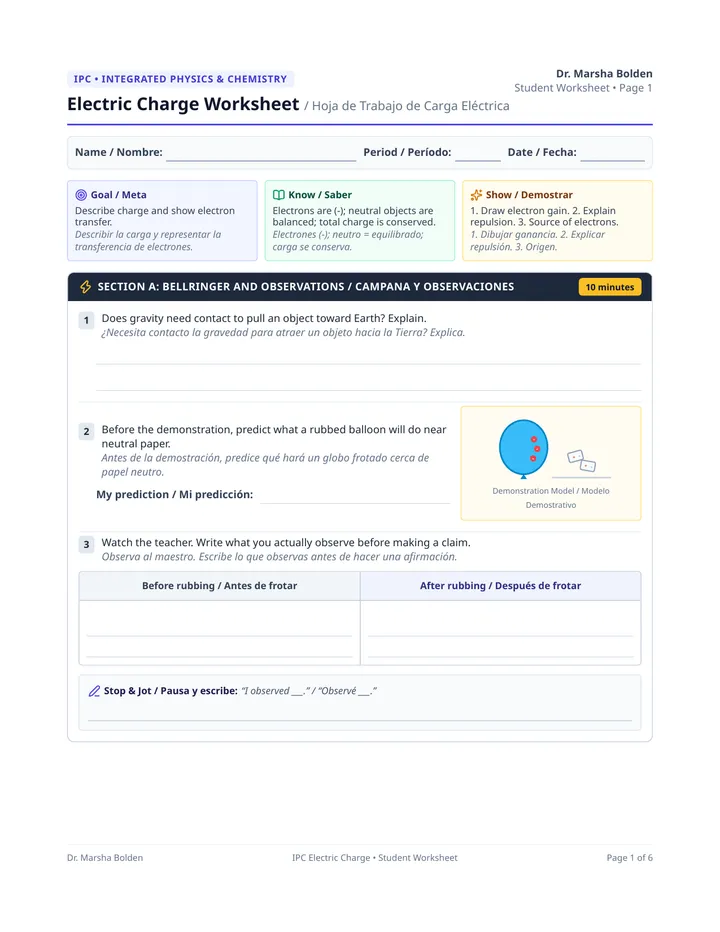
Before vs. During
Look at the Size Shift!
Measurement Mystery
BEFORE SQUISHING Tall & Narrow
Tall
🟡 Original Size
Standard Width
👉 Height is at its maximum.
👉 Width is at its normal size.
DURING SQUISHING! Flat & Wide
Heavy Pressure!
Shorter!
🟡 Squished Pancake!
Wider!
⬇️ Height shrinks down (compresses).
↔️ Width spreads out in all directions!
The material didn't vanish—it moved outward! Slide 4
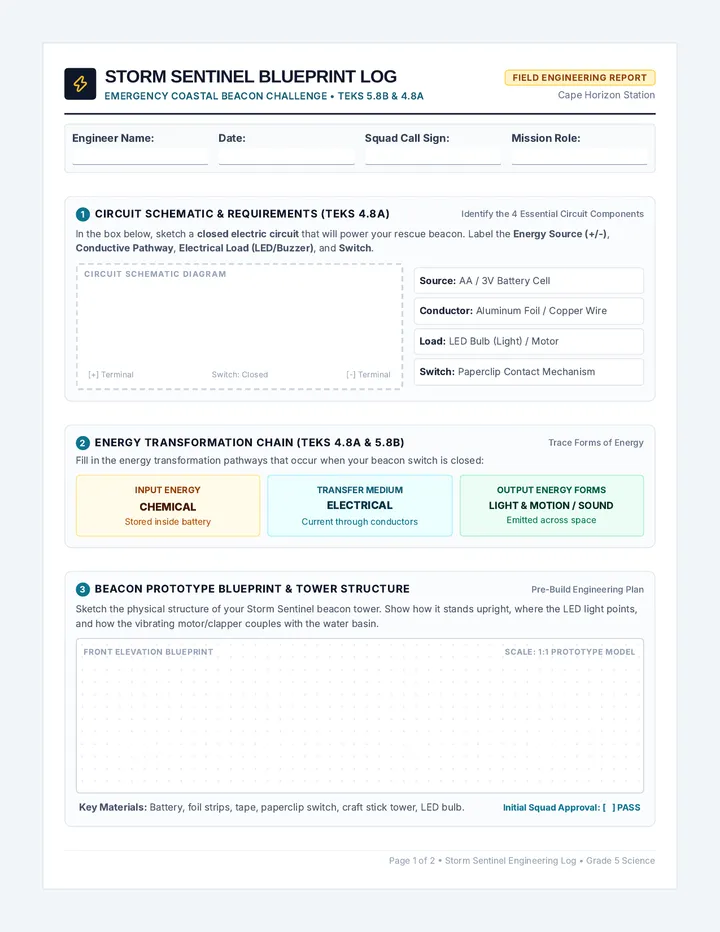
The Big Science Question
What Happens When You Let Go?
Release the Force!
1. It Bounces Back!
Scientific Word: Elastic
When you stop pressing, the material springs right back to its original height and size!
Real-Life Examples:
🧽 Sponge
🎾 Tennis Ball
🛋️ Foam Pillow
2. It Stays Squished!
Scientific Word: Moldable
When you let go, it keeps the new flat shape until you reshape it with your hands.
Real-Life Examples:
🏺 Modeling Clay
🟡 Play Dough
🏖️ Kinetic Sand
Some bounce back instantly; others stay in their new form! Slide 5
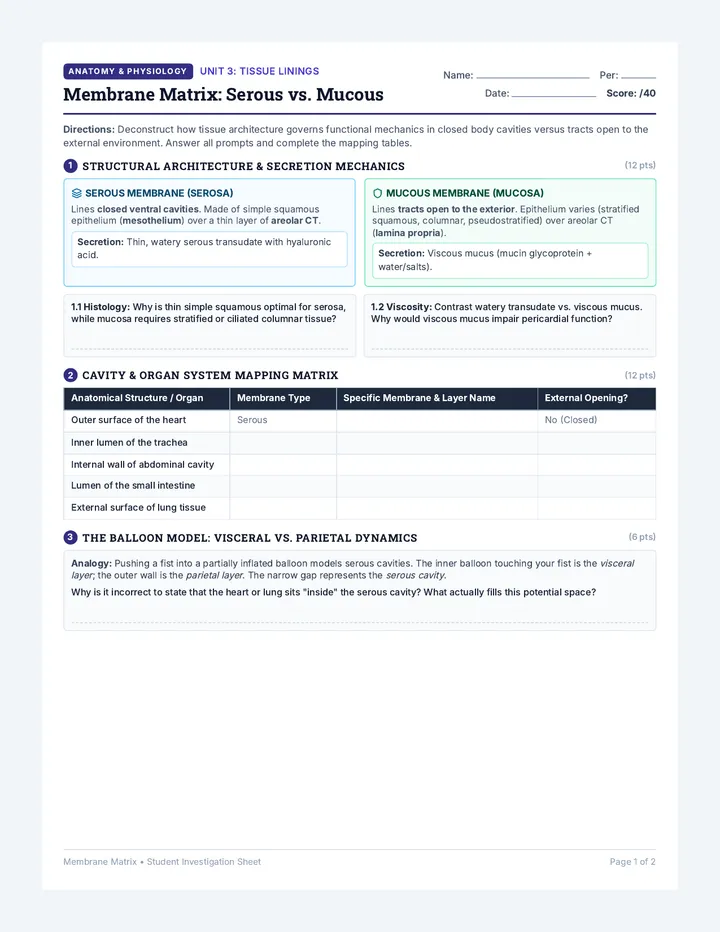
Observation Scale
The Squish-O-Meter!
Scientist Rating Guide
🧱
Level 0: Rigid
Does not squish at all! Resists force completely.
Example: Stone or Wooden Block
🎾
Level 1: Firm
Requires strong pressure to change size just a little bit.
Example: Tennis Ball or Apple
🧽
Level 2: Squishy
Easy to squeeze! Shrinks to half its height easily.
Example: Kitchen Sponge
☁️
Level 3: Ultra Soft
Squishes flat with just a gentle fingertip tap!
Example: Marshmallow or Cotton
How squishy are the materials at your table? Slide 6
Hands-on Investigation
Your Lab Mission: Test the Squish!
Lab Time
1
Look & Touch
Observe your item resting on the desk. Note its normal height and width.
2
Predict
Will it squish flat? Will it bounce back, or will it stay squished?
3
Press & Measure
Press down firmly with your palm! Watch the height shrink and width grow.
4
Let Go!
Release the pressure and record on your lab sheet: Did it bounce back?
Scientist Rule: Press with steady palm pressure. Do not tear, bite, or throw test items!
Slide 7
Squish Test Lab Worksheet
Primary Science Hands-On Lab
Squish Test Lab Worksheet
Name:
Date:
Class:
💡 Scientist Focus: What happens to an object’s height (tallness) and width (thickness) when you push down?
Push = Pressure
1
Test Material A: Kitchen Sponge 🧽
Test #1
1. Draw Shape Before Squish
Original Height & Width
2. Press Down with Palm!
Height becomes:
Shorter ⬇️ Taller ⬆️
Width becomes:
Wider ↔️ Narrower 🤏
Circle what you see
3. Release! What Happened?
Did it bounce back?
⚪ Yes! Bounced back ⚪ No! Stayed squished
Rating: 0 · 1 · 2 · 3 (Circle)
Elastic or Moldable?
2
Test Material B: Play Dough Ball 🟡
Test #2
1. Draw Shape Before Squish
Original Round Ball
2. Press Down with Palm!
Height becomes:
Shorter ⬇️ Taller ⬆️
Width becomes:
Wider ↔️ Narrower 🤏
Circle what you see
3. Release! What Happened?
Did it bounce back?
⚪ Yes! Bounced back ⚪ No! Stayed squished
Rating: 0 · 1 · 2 · 3 (Circle)
Elastic or Moldable?
🔍 Checkpoint: Did both materials get flatter when pressed? ⚪ Yes ⚪ No
Page 1 of 2
Part 2: More Materials & Scientific Findings
Comparing Flexibility
3
Test Material C: Marshmallow or Cotton ☁️
Test #3
1. Draw Before Squishing
When pressed down:
Height: Shorter or Same
Width: Spreads Wide or Same
After you release:
⚪ Bounces back ⚪ Stays flat
Squish Rating: 0 · 1 · 2 · 3
4
Test Material D: Wood Block or Rock 🪵
Test #4 (Hard)
1. Draw Before Squishing
When pressed down:
Height: Shorter or No change
Width: Wider or No change
Why didn't it squish?
⚪ It is rigid and hard.
Squish Rating: 0 · 1 · 2 · 3
Scientist Conclusions
1. Complete the rule: When we push down on a squishy material, its height gets and its width gets .
Squish Lab Teacher Guide
Educator Guide & Lesson Plan
Squish Lab Teacher Guide
Target: Grades K–3 • Time: 45–55 Mins
Standard Alignment
NGSS 2-PS1-1 & 2-PS1-2: Classify materials by observable properties; test how materials react to force and pressure.
Big Science Idea
Compression changes an object’s dimensions: downward force reduces height while forcing volume outward horizontally.
Key Vocabulary
Pressure, Compress, Elastic (springs back), Moldable (stays squished), Rigid (hard).
Materials Needed Per Group (Tables of 3–4)
Setup: 10 mins
🧽 1 Kitchen sponge
🟡 1 Golf-ball size clay
☁️ 1 Large marshmallow
🪵 1 Wooden block/rock
Step-by-Step Instructional Pacing
10 Mins
Hook & Intro
Slide Presentation (Slides 1–3)
Hold up a dry sponge and a wooden block. Ask: "If I push down as hard as I can, will they both look the same?" Introduce the word pressure (a push spread over an area).
15 Mins
Concept Demo
The Size Shift & Bounce-Back (Slides 4–6)
Demonstrate with a ball of play dough. Emphasize: "Did any clay disappear? No! It got flatter, so the dough was pushed outwards to the sides!" Define elastic vs. moldable.
20 Mins
Hands-On Lab
Squish Station Exploration (Student Worksheet)
Students rotate through or test the 4 materials at their desks. Circulate to prompt: "Watch the sides of the sponge when you press your palm down! Where does it bulge?"
10 Mins
Debrief & Exit
Synthesis & Engineering Connection (Page 2 of Worksheet)
Connect findings to real-world objects: sneakers, bicycle seats, car tires, and mattress cushions.
Squishy Science • Teacher Guide Page 1 of 2
Lab Assessment & Teaching Notes
Answer Key & Supports
Common Misconceptions to Address
Misconception 1: "Squishing makes it smaller."
Scientific Fact: The material’s total mass/volume does not vanish. Height decreases, but width increases as particles or pockets are displaced laterally.
Misconception 2: "All soft things bounce back."
Scientific Fact: Sponges and foam have elastic internal structures that restore shape; dough and clay deform plastically and stay in the pressed shape.