Seed Sprout Showdown Slides Hands-On Botany Inquiry
Grade Level 3–5 Science
Seed Sprout Showdown
Do seeds grow better in a damp bag? Test how moisture levels wake up dormant seeds and launch new life!
Controlled Experiment
Moisture Variables
10-Day Observation
The Big Science Mystery
Can Seeds Sprout Without Soil?
What We Think
Most plants grow outdoors in dark soil. But inside every dry seed is a tiny sleeping embryo waiting for the right signal to awaken!
Key Question: Does more water always mean faster growth?
The "Window Bag" Window
By putting seeds inside a clear plastic baggie with a paper towel, we can watch roots and shoots appear right before our eyes!
Observation Advantage: Zero digging required to inspect roots!
Hypothesis Prompt: Predict which moisture level will sprout fastest: bone dry, lightly damp, or soaking wet.
Experimental Design
Fair Test: Controlling Variables
Independent
Moisture Level
The one factor we deliberately change:
Bag A: Bone Dry (0 mL)
Bag B: Damp (5 mL)
Bag C: Soaked (20 mL)
Dependent
Seed Growth
What we observe and measure every 2 days:
Day seed coat cracks
Root length (mm/cm)
Shoot & leaf height
Controlled
Kept the Same
Must stay identical across all bags:
Same seed type & count (3)
Same bag & paper towel
Same window location & heat
Only change one variable at a time to know what caused the outcome!
Protocol
How to Build Your Sprout Bags
1
Label Bags
Write team name, date, and treatment: Dry, Damp, or Soaked.
Use permanent marker
2
Moisten Towel
Fold towel to fit flat. Add exact water: Dry (0 mL), Damp (squeeze until not dripping), Soaked (puddle in bottom).
Measure carefully
3
Place 3 Seeds
Rest 3 bean seeds midway on towel, spaced 2 inches apart. Press gently so they touch the damp paper.
Space evenly
4
Seal & Mount
Zip tightly to lock in moisture and humidity. Tape bags side by side at eye level on the sunny classroom window.
Same window warmth
Pro Tip: Do not crush the seeds when pressing the bag! Leave a little air pocket inside.
Observation Guide
Stages of Seed Germination
Stage 1: Imbibition
Swelling
The seed drinks in water, plumps up, and the protective outer seed coat wrinkles and splits open.
Stage 2: Radicle
First Root
A small white root tips downward (geotropism). Tiny root hairs emerge to absorb moisture.
Stage 3: Hypocotyl
The Shoot
The stem forms a curved arch, pushing upward toward the light while roots anchor and branch.
Stage 4: Cotyledons
Seed Leaves
Seed halves open like book covers and reveal the first true green leaves ready for photosynthesis!
Daily Measurement: Place your clear metric ruler against the outside of the bag. Measure from seed base to root tip without disturbing the bag!
The Science Explained
Why Does Dampness Win?
The Damp "Goldilocks" Zone
Seeds are living organisms that need two critical things to wake up:
1. Water: Softens the seed coat and triggers metabolic enzymes to burn stored starch.
2. Oxygen: Seeds must breathe cellular oxygen! Damp paper towels have pockets of air.
The Danger of the Extremes
Bone Dry: Zero water means enzymes stay asleep. The seed remains completely dormant.
Soaking Wet: Water floods all air spaces. The seed drowns from lack of oxygen and rots or molds!
Investigation Wrap-up: Formulate your Claim, Evidence, and Reasoning! Lab Team Ready
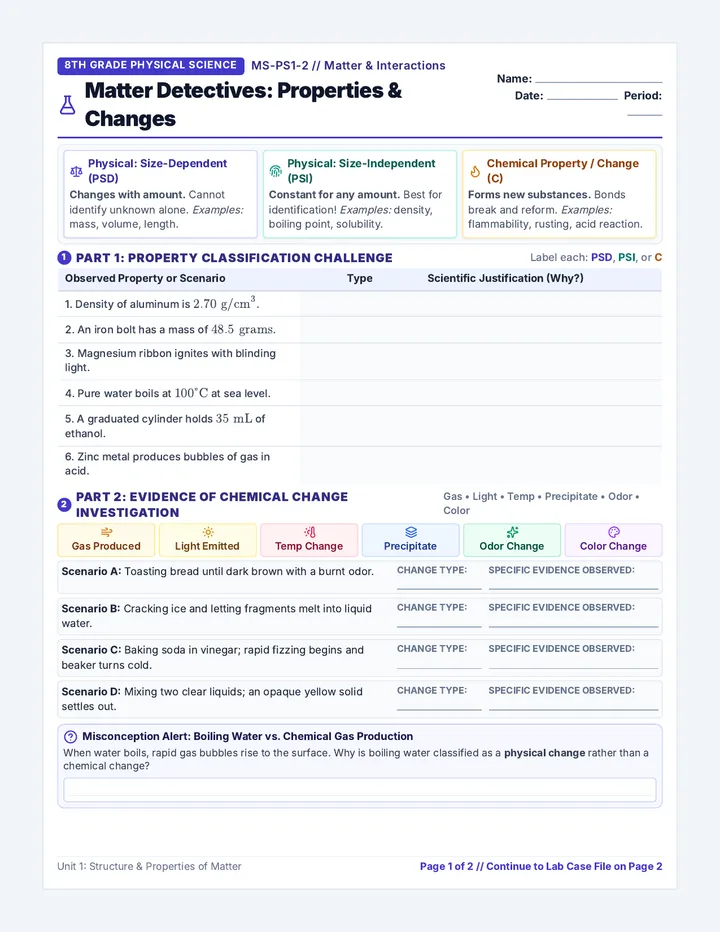
Sprout Lab Investigation Journal Sprout Lab Investigation Journal
Botany Inquiry • Seed Germination in a Bag
Controlled Experiment
Scientist Name:
Lab Partner(s):
Date Started:
Seed Variety:
Part 1: The Driving Question & Hypothesis
Question: How does the amount of moisture (bone dry, lightly damp, or soaking wet) in a sealed clear bag affect bean seed germination and early root growth?
Write your hypothesis using an "If... then... because..." format:
IF seeds are
THEN they will
BECAUSE
Part 2: Experimental Variables
Independent Variable
What We Deliberately Change:
The moisture level in each bag (Dry vs. Damp vs. Soaked).
Dependent Variable
What We Observe & Measure:
Day of seed sprouting, root length (mm), and seedling condition.
Controlled Variables
Constants Kept Exactly Equal:
Same seed type (3 per bag), bag brand, window warmth, light.
Part 3: Bag Setup Blueprint & Initial Prediction
3 Seeds Per Bag
Bag A: Bone Dry 0 mL H₂O
Paper towel remains dry. 3 seeds placed flat.
Day 1 Setup Sketch
Predicted Sprout Day:
Bag B: Lightly Damp ~5 mL H₂O
Towel moist, wrung out so no puddles drip.
Day 1 Setup Sketch
Predicted Sprout Day:
Bag C: Soaking Wet ~20 mL H₂O
Towel dripping wet with a standing pool at bottom.
Day 1 Setup Sketch
Predicted Sprout Day:
Seed Sprout Showdown • Student Investigation Packet Page 1 of 2
Part 4: 10-Day Observation Log
Measure root & shoot length in millimeters (mm)
Timeline
Bag A (Bone Dry) Sprouted? • Root Length
Bag B (Lightly Damp) Sprouted? • Root Length
Bag C (Soaking Wet) Sprouted? • Root Length
Key Observations Color, mold, odor, changes
Day 1
Day 3
Day 5
Day 7
Day 10
Part 5: Scientific Conclusion (Claim • Evidence • Reasoning)
1. CLAIM: Answer the original question in one clear statement (Which moisture condition led to best growth?).
2. EVIDENCE: Cite specific data from your table (mention sprout days, measurements in mm, comparisons).
3. REASONING: Explain the scientific "why" (What did the seed need to awaken? Why did dry or soaked bags fail?).
Part 6: Synthesis & Next Steps
Question A: Once the seedling has sprouted roots and leaves, could it survive in this sealed plastic bag forever? Why or why not? What would it eventually need?
Question B: If you repeated this experiment, what is one new variable you would be curious to test (e.g., light vs. dark, temperature, seed type)?
Seed Sprout Showdown • Student Investigation Packet Page 2 of 2
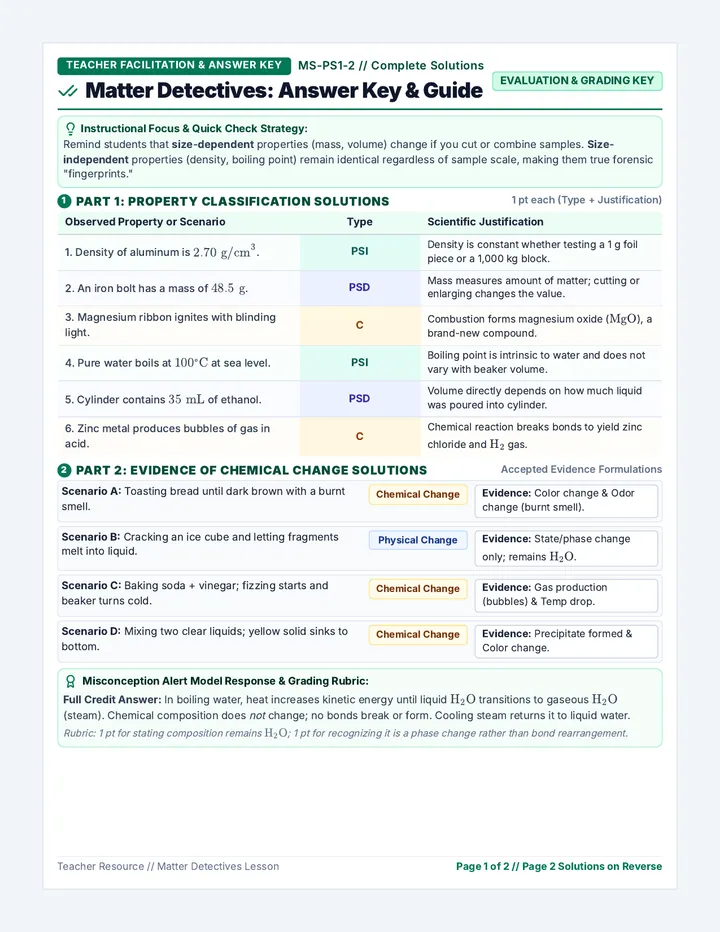
Sprout Experiment Teacher Guide Sprout Experiment Teacher Guide
Instructional Blueprint & Lab Facilitation Notes
Grades 3–5 • 10-Day Arc
Investigation Essence
Students investigate how varying levels of moisture (dry, lightly damp, soaking wet) affect seed germination inside clear zip-top baggies taped to a classroom window. Through daily logging and metric measurement, students discover that seeds require both moisture (for imbibition and enzymatic activation) and cellular oxygen, making the damp condition optimal while preventing seed drowning and rot.
Standards Alignment (NGSS)
Performance Expectations:
5-LS1-1: Support an argument that plants get the materials they need for growth chiefly from air and water.3-LS1-1: Develop models to describe that organisms have unique and diverse life cycles.
Science & Engineering Practices:
Planning & Carrying Out Investigations: Controlling variables and testing dampness.Constructing Explanations & CER: Citing empirical data to justify conclusions.
Materials Needed (Per Student Team of 2–3)
Prep Time: ~15 mins
Seeds & Bags:
• 9 dried bean seeds (pinto, lima, or kidney; unroasted)
• 3 clear quart or sandwich zip-top plastic bags
Paper Towels & Water:
• 3 sheets standard white paper towel (folded to bag size)
• Graduated cylinder or pipette/dropper for measuring
Tools & Mounting:
• 1 permanent marker for bag labels
• Masking tape or painter's tape
• 1 clear metric ruler (mm/cm)
Investigation Pacing Schedule
Day 1: Launch & Lab Setup 45 Minutes
Present slides, frame driving question, form hypotheses, label bags, prepare moisture conditions, mount on window.
Days 2–9: Daily Monitoring 5–8 Mins Every Other Day
Quick observations on Days 3, 5, 7. Measure root length in mm through the bag without opening. Record observations in log.
Day 10: Analysis & CER 40 Minutes
Final measurements, compile class trend charts, write CER scientific explanations, discuss seed anatomy and cellular respiration.
Targeting Common Misconceptions
Student Misconception
Scientific Truth & How to Address
"Seeds must be buried in dirt/soil to germinate."
Seeds contain their own stored food (cotyledons). They only need moisture, oxygen, and warmth to germinate. Soil is needed later for minerals.
"More water always makes plants grow faster."
Seeds are living tissues that perform cellular respiration. Submerged seeds suffocate due to lack of oxygen and rot before sprouting.
Seed Sprout Showdown • Teacher Facilitation Guide Page 1 of 2
Facilitation Script & Troubleshooting Protocols
Classroom Delivery Support
Teacher Dialogue & Guiding Prompts
Setup Launch Prompt:
"Look at this hard, dry bean in your hand. Is it dead, or is it sleeping? What signal does it need to wake up? Today, we will test whether seeds need just a drink, or a whole swimming pool!"
Check for Understanding: Have students point out why we must use the exact same type of seed and the exact same window for all three bags (to keep it a fair test).
Mid-Way Check-in (Day 5 Prompt):
"Look closely at Bag B versus Bag C through your magnifying glass. Do you see the tiny root tip breaking out? Why do you think Bag C has condensation but the seed looks squishy and dark?"
Key Vocabulary: Highlight radicle (the first embryonic root) and geotropism (roots growing downward).
Lab Troubleshooting & Quality Control
Issue / Obstacle
Immediate Teacher Solution
White fuzzy mold in Bag C (Soaked)
Keep bag sealed! This is a valuable data point showing excessive moisture + stagnant air breeds fungal decomposers while suffocating the embryo.
Bag B (Damp) dries out by Day 5
Check zipper seal. If window is intensely hot, open corner and add exactly 1–2 mL water with a pipette, resealing immediately. Record intervention in log.
Seeds slip to bottom of baggie
Insert a single staple horizontally through the middle of the baggie right below the paper towel line to create a shelf for the seeds to rest upon.
Exemplar CER Student Answer Key
Claim: Bean seeds grow best in a lightly damp bag because they sprouted fastest and developed the longest, healthiest roots and shoots.
Evidence: In Bag B (damp), all 3 seeds sprouted by Day 3 and roots reached an average of 42 mm by Day 10. In Bag A (dry), 0 seeds sprouted (0 mm growth). In Bag C (soaked), 1 seed cracked on Day 5 but stopped at 4 mm and developed black rot and mold.
Reasoning: Seeds need water to soften their seed coats and activate food-digesting enzymes. However, seeds also need oxygen for cellular respiration. The damp towel provided both moisture and air pockets, while the dry bag lacked water and the soaking bag drowned the seeds by blocking oxygen.
Differentiation & Extension Challenges
Scaffolding / Support:
Provide sentence stems for daily notes ("Today I observed the seed coat..."). Pair students with supportive peer partners for ruler measurement and sketching.
Inquiry Extensions:
1. The Dark Chamber: Wrap one damp bag in aluminum foil to test if light is necessary for germination.2. Transplant Day: Transfer Day 10 seedlings into soil pots to track photosynthesis!
Seed Sprout Showdown • Teacher Facilitation Guide Page 2 of 2
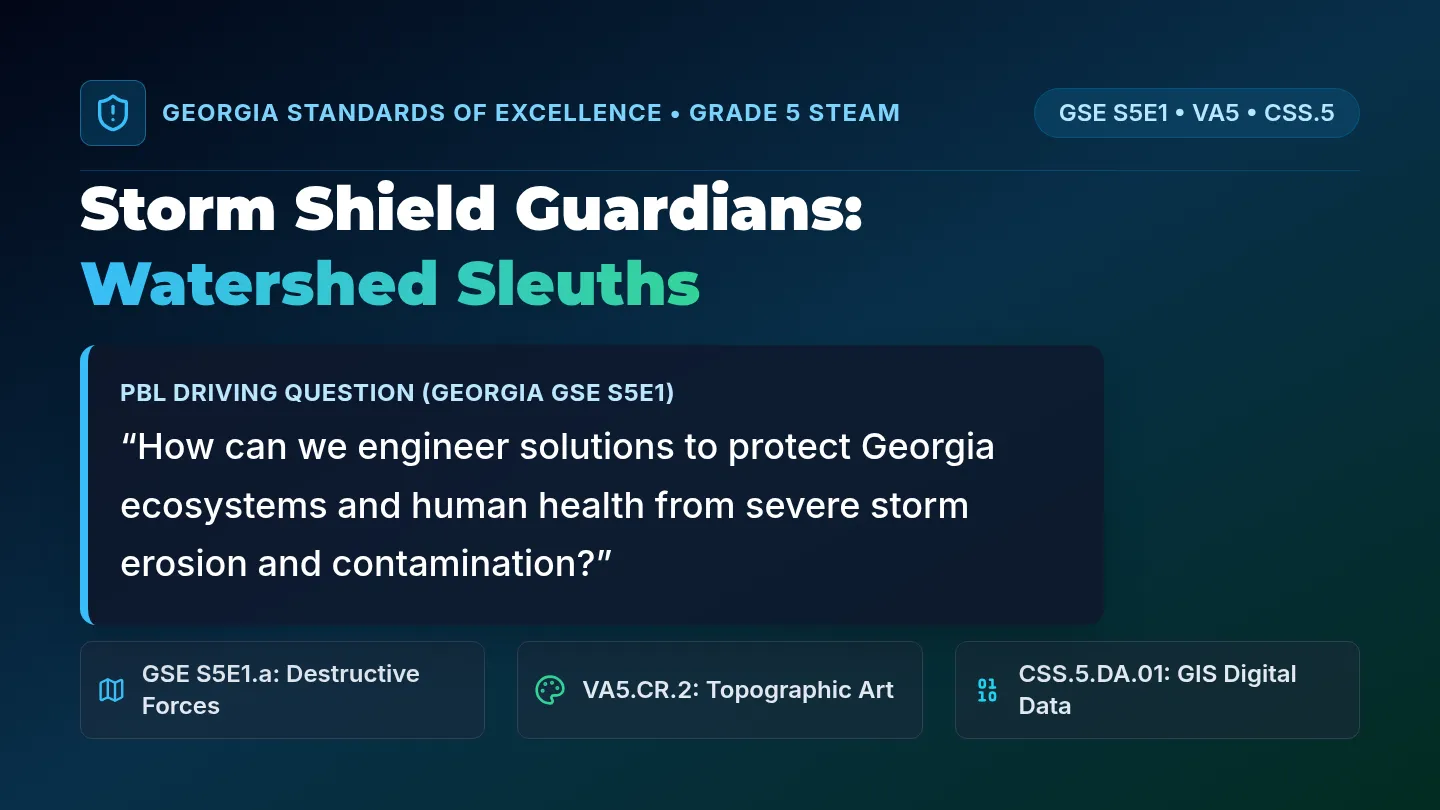
Seed Power Reading Passage The Secret Backpack: How Seeds Sprout in a Bag
Botany Science Reader • Grade 3–5 Informational Text
Science Concept Reader
Imagine packing for a journey where you carry all the food, water, and building supplies you will ever need inside a tiny, armored backpack. That is exactly what a plant seed does! Even though most adult plants live anchored in dark, rich garden dirt, a seed can wake up and grow in an ordinary zip-top bag with nothing more than a damp paper towel and fresh air. How is this possible?
1. Inside the Seed: The Pre-Packed Lunchbox
A dry bean seed looks like a lifeless pebble, but inside lies a complete miniature plant called the embryo . Surrounding the embryo are large fleshy halves called cotyledons (pronounced kah-tuh-LEE-duns ).
These cotyledons are packed with rich carbohydrates, starches, and proteins. Because the seed carries its own pantry of food, it does not need soil minerals or fertilizer to begin growing! Protecting everything from bugs and drying out is a tough outer shell called the seed coat (or testa ).
Cotyledon (Stored Food) Embryo Seed Coat Cross-Section of a Bean Seed
2. The Awakening: What Happens in the Damp Bag?
Step 1: Imbibition
The dry seed acts like a sponge, drinking in water through a tiny pore called the micropyle. The seed swells up to double its size, causing the tough seed coat to wrinkle and split open!
Step 2: Enzyme Ignition
Water activates dormant enzymes inside the cotyledons. These chemical helpers break down solid starch into liquid sugars that the baby plant drinks for rapid energy and growth.
Step 3: Breathing Oxygen
To burn stored sugars, seeds need oxygen (cellular respiration)! The damp paper towel holds moisture while leaving tiny air pockets. A submerged seed drowns and suffocates.
The Built-In Gravity GPS
No matter which way you tape the seed inside your bag, special cells in the root tip sense Earth's gravity (geotropism ). The primary root (radicle ) always grows downward to search for water, while the stem (hypocotyl ) arches upward toward sunlight!
When Does It Need Soil?
After 10–14 days, the stored food in the cotyledons is completely consumed. The cotyledons shrivel and drop off. Once the first green leaves unfold, the plant begins photosynthesis and requires soil for nitrogen, phosphorus, and root support!
Seed Sprout Showdown • Student Science Reader Page 1 of 2
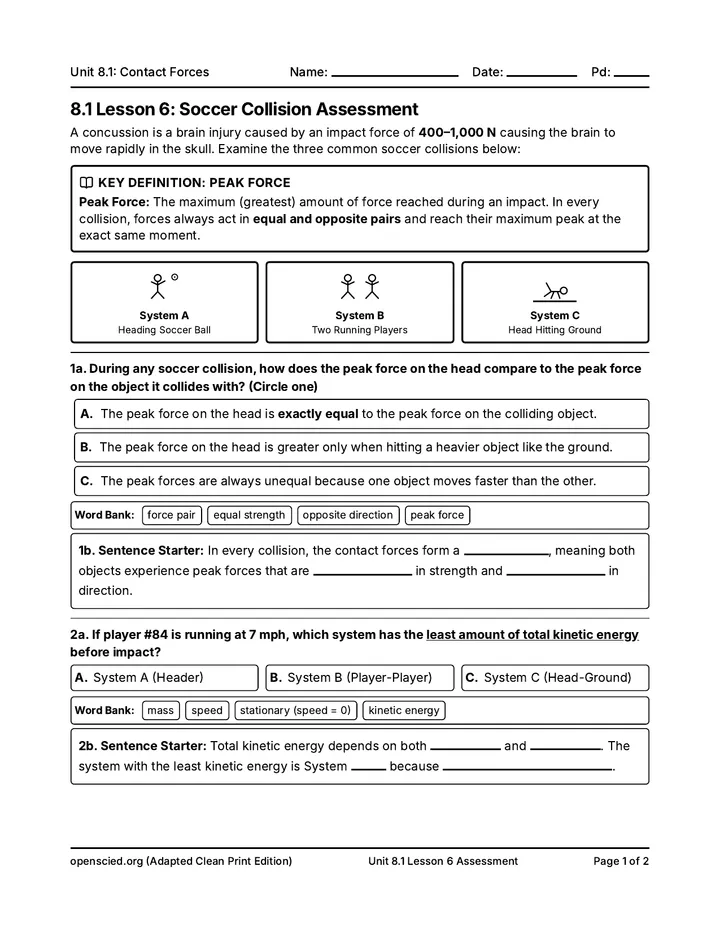
Reading Comprehension & Diagram Studio
Name: Date:
Part A: Anatomy Labeling Studio
Word Bank: Embryo • Seed Coat • Cotyledon • Radicle (Root) • Hypocotyl (Shoot)
1. Inside the Bean Seed
A. Outer protective shell:
B. Food storage halves:
C. Sleeping baby plant:
2. Sprouted Seedling (Day 5)
D. Downward first root:
E. Upward green stem:
F. Wrinkled food stores:
Part B: Deep Thinking Questions (Answer in Complete Sentences)
1. Why can a seed germinate and grow in a clear plastic bag without any soil for its first 10 days? Cite evidence from the text.
2. Why does a seed in a soaking wet bag drown and rot, while a seed on a lightly damp towel sprouts successfully? What gas is missing?
3. Imagine you accidentally taped your seed upside down in your window bag. What will the root and stem do? What scientific term explains this?
Part C: Science Word Connections (Write the correct letter)
1. Imbibition: [____] A. The embryonic root that grows downward
2. Cotyledon: [____] B. A seed soaking up water and swelling
3. Radicle: [____] C. Plant growth directed by gravity
4. Geotropism: [____] D. Stored food halves inside the seed coat
Seed Sprout Showdown • Student Science Reader Page 2 of 2