Students will debunk common spatial misconceptions about Latin America by categorizing countries into their specific sub-regions (North, Central, South, and Caribbean) and creating a color-coded reference map.
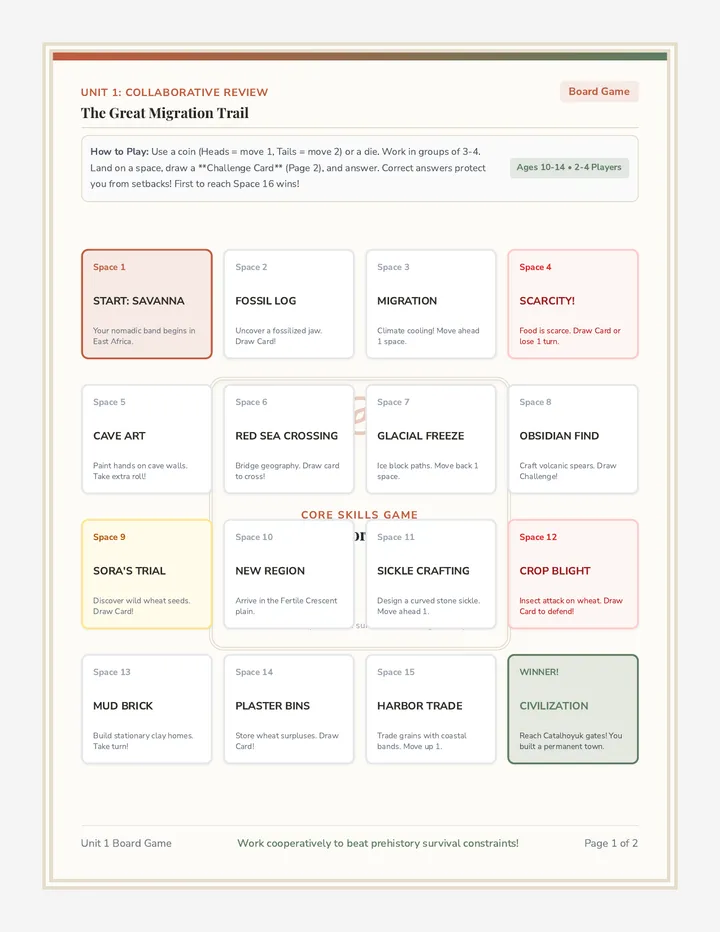
A final comparison of the four civilizations, focusing on shared characteristics like irrigation, social classes, and writing systems, culminating in a unit assessment.
Focusing on the Huang He (Yellow River), the early dynasties, the concept of the Mandate of Heaven, and the development of Confucianism and Taoism.
Investigating the advanced urban planning of Harappa and Mohenjo-Daro, the mystery of their undeciphered script, and their extensive trade networks.
An analysis of the Nile River's role in Egyptian life, the power of Pharaohs, the construction of pyramids, and the religious beliefs of the afterlife.
An exploration of the Tigris and Euphrates rivers, the development of city-states, the Code of Hammurabi, and the social hierarchy of Sumer.
A comprehensive look at the classic novel 'The Watsons Go to Birmingham – 1963', including a complete plot summary and a comparative analysis between the book and its film adaptation.
A jigsaw activity where students become experts on specific facets of globalization—definitions, drivers/impacts, and economic consequences—before sharing their findings with peers to form a complete understanding of the topic.
A Social Studies and Creative Writing lesson where students analyze modern cultural objects as future archaeological artifacts to evaluate societal values and legacy.
An exploration of Ancient Roman religion, from the polytheistic pantheon and state rituals to the historical transition toward Christianity.
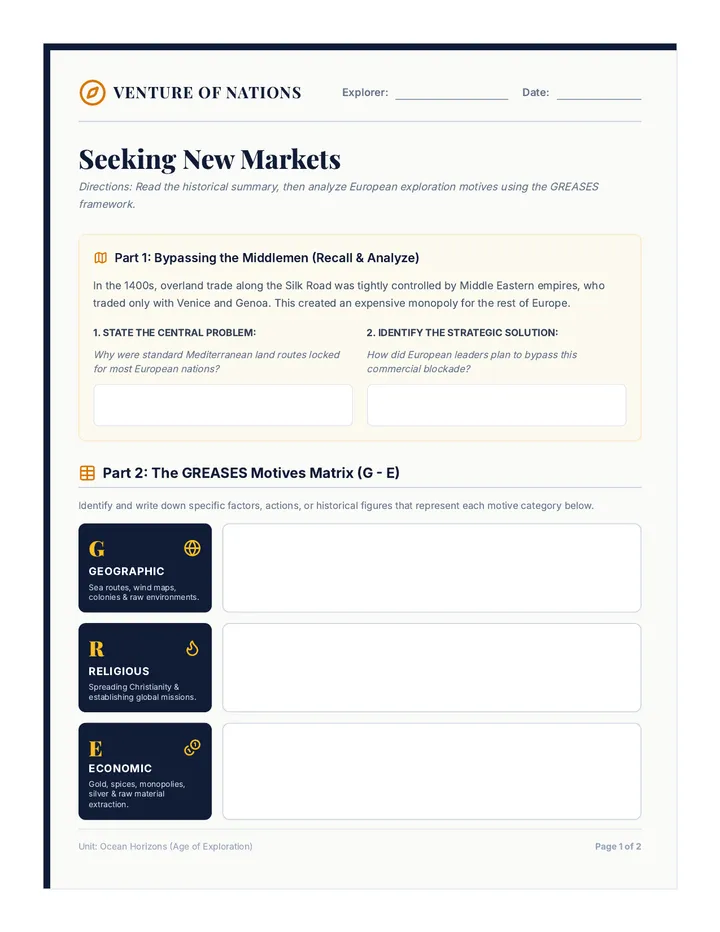
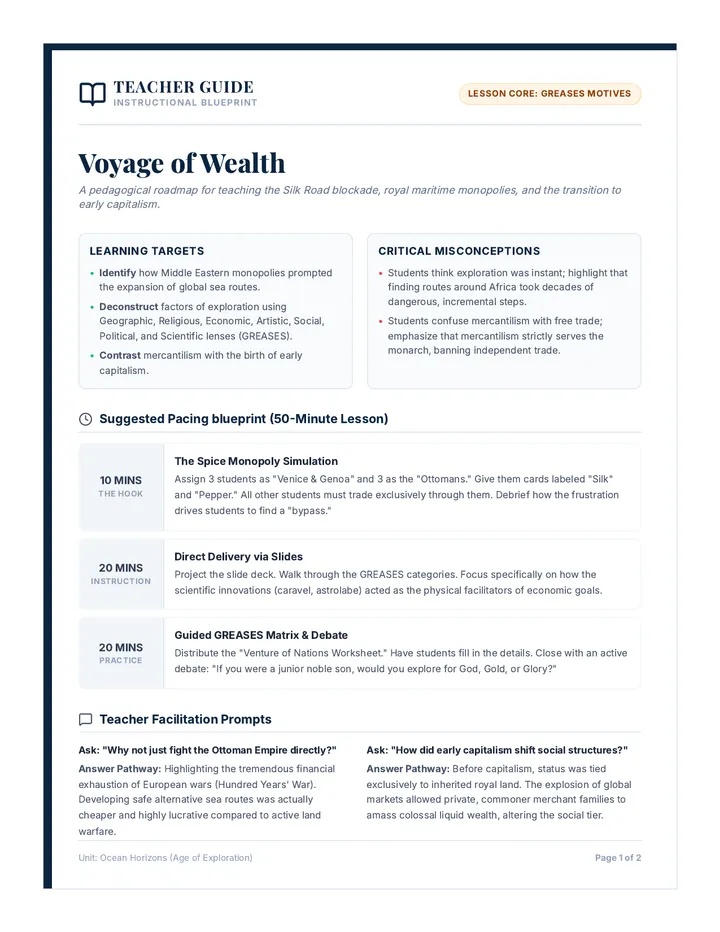
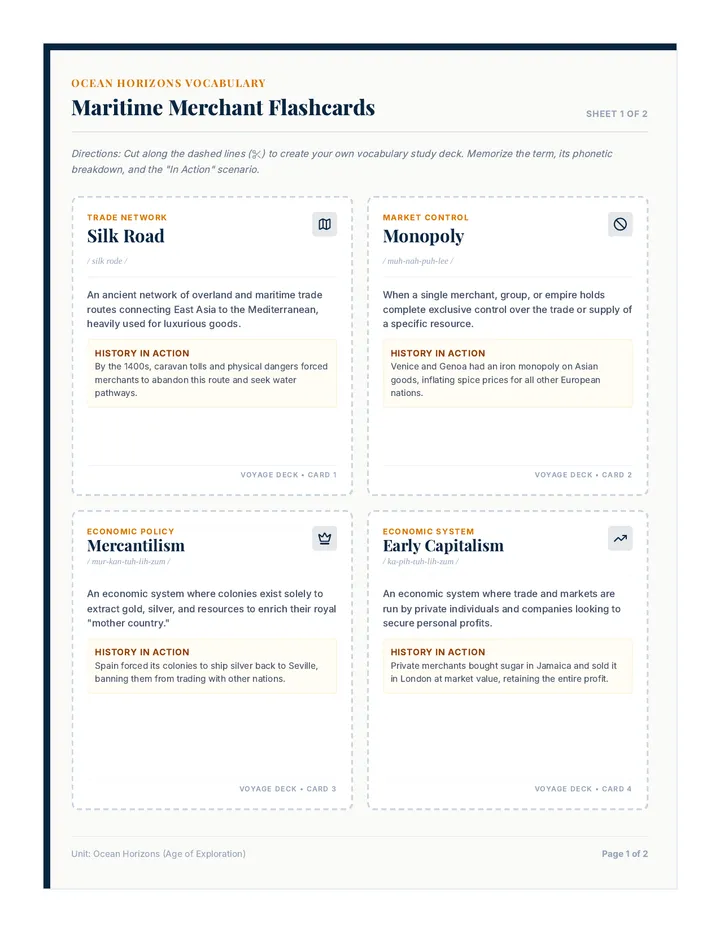
A deep dive into the Age of Exploration, comparing the motivations, encounters, and global impact of famous maritime explorers from around the world.
A 40-minute introductory lesson exploring the geopolitical, military, and economic motivations behind the US involvement in the Panama Canal's construction and Panamanian independence.