Keystone Mysteries Lesson Plan
Grade 5 Science Ecosystem Dynamics NGSS 5-LS2-1
Keystone Mysteries: Lesson Plan
Investigating Trophic Cascades and Ecosystem Resilience • 60-Minute Inquiry Lesson
Unit: Web of Survival
Format: Collaborative Lab
Duration: 60 Minutes
Driving Question & Phenomenon
Phenomenon: In the 1990s, when Pacific sea otters disappeared from Alaskan bays, underwater giant kelp forests vanished into barren underwater deserts. How can the loss of a single creature collapse an entire undersea world?
Key NGSS Standard
5-LS2-1: Develop a model to describe the movement of matter among plants, animals, decomposers, and the environment.
Learning Objectives (SWBAT)
- Model a 4-tier trophic cascade resulting from the removal of an apex or keystone organism.
- Analyze evidence from mystery case cards to deduce which organism acts as the ecological keystone.
- Construct an evidence-based scientific claim explaining how keystone species maintain community stability.
Required Materials
- 1 set of Keystone Mystery Dossier Cards per group of 4 (4 biomes).
- 1 Ecosystem Detective Investigation Worksheet per student.
- Keystone Mysteries Interactive Presentation Slides.
- Colored dry-erase markers or colored pencils (green, yellow, red).
Essential Academic Vocabulary
Keystone Species An organism whose impact is disproportionately large relative to its abundance.
Trophic Cascade A chain reaction across multiple feeding levels triggered by the top predator.
Apex Predator A top consumer that occupies the highest trophic level and has no natural predators.
Urchin Barren A desolate seabed created when unchecked herbivores overgraze kelp holdfasts.
Instructional Sequence • Part 1 (Hook & Direct Instruction)
Phase 1: The Vanishing Kelp Phenomenon (Hook & Anchor) 10 Minutes
Display Slide 2 showing lush underwater kelp forest vs. barren ocean floor. Prompt students with "Think-Pair-Share": What caused the underwater forest to disappear without humans logging it? Introduce students to the concept of architectural keystones using the arch visual on Slide 3.
Phase 2: Trophic Cascades & Ripple Effects (Guided Modeling) 15 Minutes
Demonstrate the sea otter → sea urchin → giant kelp cascade. Draw the cause-and-effect cascade: when otters decline (↓), urchin populations explode (↑), causing kelp density to crash (↓), eliminating habitat for fish (↓). Introduce the Domino Metaphor.
Keystone Mysteries • Grade 5 Science Curriculum Page 1 of 2
Keystone Mysteries: Lesson Plan (Continued)
Investigation Facilitation & Assessment
Instructional Sequence • Part 2 (Inquiry, Debrief & Formative Check)
Phase 3: Case File Mystery Investigation (Collaborative Work) 20 Minutes
Distribute mystery dossiers to teams of 4 (1 assigned biome per team: Yellowstone Wolves, Intertidal Sea Stars, African Savanna Elephants, or Mangrove Crabs). Assign group roles:
Chief Investigator: Guides inquiry steps Data Analyst: Interprets population graphs Web Modeler: Traces causal arrows Spokesperson: Delivers findings
Phase 4: Synthesis Cross-Biome Summit (Whole-Class Debrief) 10 Minutes
Each biome group shares their "Keystone Reveal" and domino chain. Highlight universal pattern: Keystone loss does not just affect its direct prey; it alters the physical landscape and biodiversity of the entire ecosystem.
Phase 5: Exit Ticket / Scientific Claim (Formative Assessment) 5 Minutes
Students independently write a CER (Claim-Evidence-Reasoning) response on Section 4 of their investigation worksheet answering: "Why are keystone species compared to the central stone of an arch rather than just another building block?"
Target Misconceptions & Coaching Strategies
| Common Student Misconception | Instructional Coaching Move |
|---|
| The most abundant species is always the keystone species. | Clarify that keystones often exist in relatively low numbers (like apex wolves or sea stars), yet hold immense systemic sway. |
| Predators only harm the ecosystem by eating other animals. | Demonstrate that predators protect plant life by preventing herbivore overgrazing and disease transmission. |
| If one species disappears, animals will easily switch foods with zero consequences. | Show how specialized diets and rapid overpopulation overload alternate food sources, triggering cascading collapse. |
Tiered Differentiation & Multilingual Support
Scaffolded Support
Provide pre-printed arrow sentence frames ("When [A] decreases, [B] increases because..."). Pair with a peer mentor.
Extension & Challenge
Students model ecological reintroduction (e.g., return of wolves to Yellowstone) and predict recovery timeframes and human community trade-offs.
Multilingual Learners
Use visual trophic food chain icons, dual-coded cause/effect symbols (↑, ↓, ⇄), and allow bilingual food web labeling.
Keystone Mysteries • Grade 5 Science Curriculum Page 2 of 2
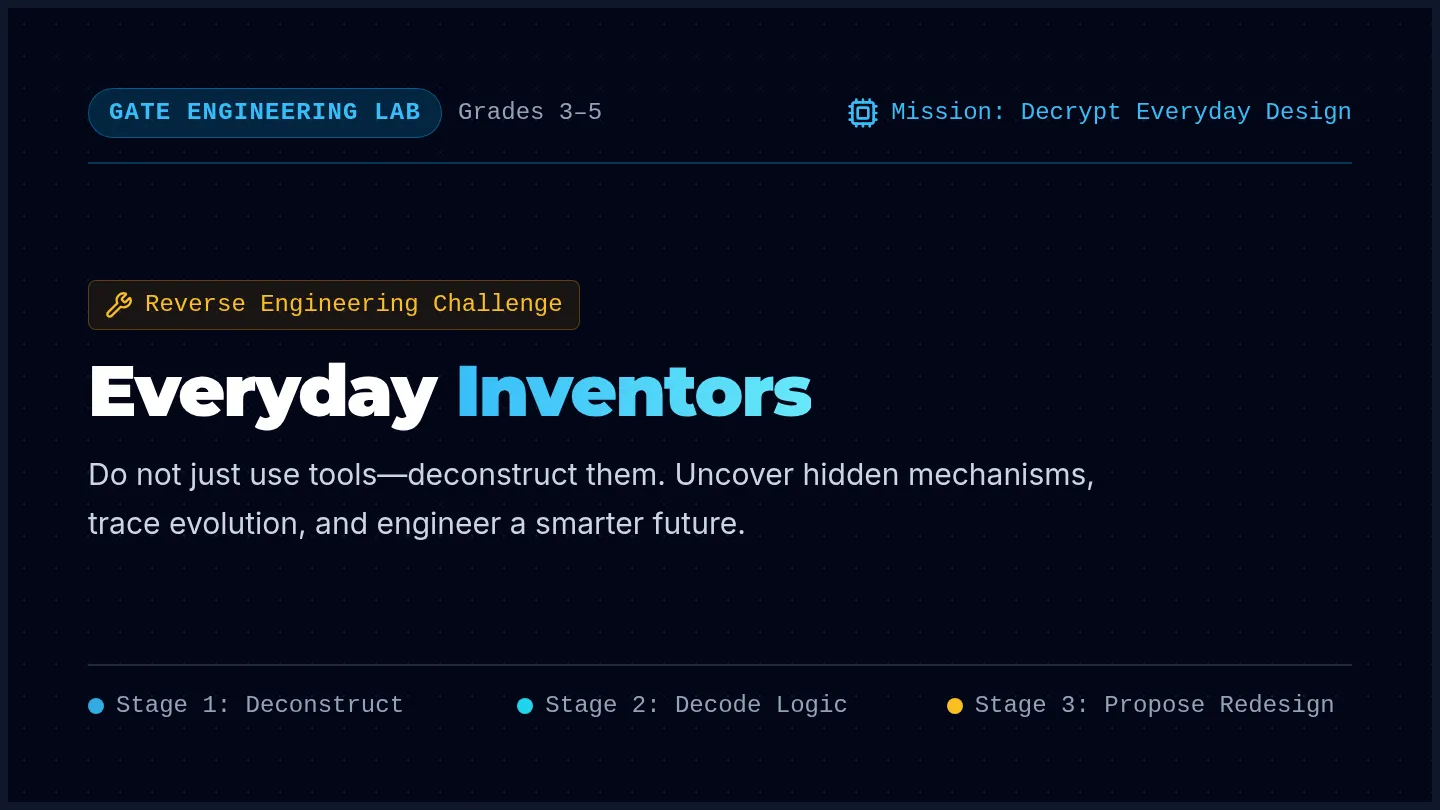
Keystone Mysteries Slides
5th Grade Science Ecosystem Dynamics
NGSS 5-LS2-1
Keystone Mysteries:
The Secret Web of Survival
What happens when a single creature vanishes from an ecosystem? Step inside real scientific field investigations to uncover the ripple effect.
Field Detective Mission • Trophic Cascades
Slide 1 of 6
The Case of the Vanishing Forest
Ecological Phenomenon
Condition 1: 1980
Lush Giant Kelp Forest
Towering 60-foot kelp provide food and shelter for hundreds of fish, seals, octopuses, and otters.
Status: Thriving, high biodiversity
Condition 2: 1995
Urchin Barren Desert
The kelp forest is completely gone. Only millions of spiny purple urchins carpet the empty seafloor.
Status: Collapsed, fish vanished
Detective Question: No humans chopped down the kelp. What invisible chain reaction caused an entire underwater forest to disappear?
What Is a Keystone Species?
Core Concept
The Stone Arch Clue
In ancient Roman architecture, the wedge-shaped keystone at the top locks every other stone into place under pressure.
Remove that single top stone, and the entire arch instantly crashes down!
Ecological Rule
A keystone species is an organism that has a huge effect on its environment compared to how many of them exist.
They may be small in population, but they hold the entire community together!
Key Idea: Without its keystone, an ecosystem drastically changes or collapses completely.
Trophic Cascade: The Domino Effect
Cause & Effect
When a top predator is removed, changes ripple down all feeding levels:
Level 1
Sea Otters
Decrease (↓)
Hunted or moved, apex control is lost.
Level 2
Sea Urchins
Explode (↑)
Without predators, herbivores multiply fast.
Level 3
Giant Kelp
Crash (↓)
Millions of urchins chew the kelp roots away.
Level 4
Biodiversity
Collapses (↓)
Fish, seals, and crabs lose food and home.
Scientific Rule: A trophic cascade flows top-down from consumer to producer!
Detective Mission: Crack Your Case