Lenny.com
Explore
Create
ActivitiesNewMathEnglish Language ArtsScience & EngineeringSocial StudiesGlobal LanguagesHealth & Physical EducationSpecial EducationCounseling & Life SkillsArts & CreativityESL
Lenny.com
Lenny.com
Explore
Create
ActivitiesNewMathEnglish Language ArtsScience & EngineeringSocial StudiesGlobal LanguagesHealth & Physical EducationSpecial EducationCounseling & Life SkillsArts & CreativityESL
Lenny.com
Lenny.com

Solutions

Lenny for EducatorsLenny for SchoolsLenny for Districts

Product

ExploreSign inCreateSupportAbout

Resources

Getting startedMTSS Acceleration Program

Newsletters

School Funding Newsletter

© 2026 Lenny Learning Inc.

TermsPrivacyAccessibility
LinkedInInstagramX
Lenny
Science & EngineeringLife ScienceLiving ThingsAnimalsPlantsBody SystemsTraitsAdaptationsCellsEcosystemsHeredityGenes to TraitsCell DivisionPhysicsComparing MaterialsShapes and PropertiesMagnetsMagnetismLightSoundLight and SoundMatterStates of MatterChanges of StateMixturesPhysical and Chemical ChangeHeating and CoolingHeat and Thermal EnergyEnergyForce and MotionElectrical CircuitsAtoms and MoleculesPeriodic TableMotion in One DimensionMotion in Two DimensionsScalars and VectorsForces and Laws of MotionCircular Motion and GravityMomentum and ImpulseWork, Energy, and PowerWavesElectromagnetic WavesGeometric OpticsElectricity and MagnetismSimple Harmonic MotionThermodynamicsNuclear PhysicsEarth Science & AstronomyWeatherWater CycleRocks and MineralsFossilsEarth's FeaturesEarth's ResourcesEarth's StructureWeather and ClimateEarth EventsFossils and Geologic TimePlate TectonicsHuman ImpactsAstronomyChemistryUnits and MeasurementAtomic StructurePeriodic TrendsChemical BondingNomenclatureMolecular StructureIntermolecular ForcesThe MoleStoichiometryProperties of GasesSolutionsChemical ReactionsBalancing EquationsEnergy ChangesRates of ReactionsEquilibriumAcids and BasesQuantum ModelBiologyClassificationCell StructureThe Chemistry of LifeBiomoleculesCellular TransportCell EnergyCell Growth and DivisionDNAProtein SynthesisMeiosis and Sexual ReproductionPatterns of InheritanceMulticellular OrganismsEvolutionEcologyBiodiversityComputer ScienceAlgorithms and Computational ThinkingProgramming LanguagesComputing SystemsNetworks and InternetData AnalysisCybersecurityAI and Machine LearningSoftware Design and DevelopmentBlockchainEngineering & AIDesigning ExperimentsEngineering PracticesDesign ThinkingEngineering Design ProcessMechanical EngineeringElectrical EngineeringMaterials and StructuresCAD and 3D DesignRoboticsArtificial Intelligence BasicsVibe CodingMachine LearningAI Ethics and SocietySystems ThinkingEntrepreneurship & InnovationEntrepreneurial MindsetBusiness Idea DevelopmentBusiness Plan BasicsMarketing & Customer DiscoveryFinancial Management for Startups

Keystone Cascade

Students investigate trophic cascades, energy flow, and ecosystem resilience using an authentic NYSSLS Regents-style phenomenon cluster based on eastern forest predator-prey dynamics and nutrient cycling.

CCCaitlin Corr

Keystone Cascade

Students investigate trophic cascades, energy flow, and ecosystem resilience using an authentic NYSSLS Regents-style phenomenon cluster based on eastern forest predator-prey dynamics and nutrient cycling.

CCCaitlin Corr

Mathematical Setup: \(\text{Energy Transfer} = \frac{24\,\text{kcal (Wolves)}}{24,000\,\text{kcal (Producers)}} \times 100\% = 0.001 \times 100\% = 0.1\%\).

Scoring Criteria: [1 pt] Correct mathematical ratio setup with numbers from Diagram 1. [1 pt] Correct numerical answer (0.1% or 1/1,000th).

Question 5 (Energy Dissipation) [2 pts]

Acceptable Processes (Identify 2): Cellular respiration (generating ATP for movement, body warmth), thermal energy loss (heat), undigested metabolic waste/feces, or unconsumed bones/fur.

[1 pt each correct biological mechanism]

Question 6 (Matter Cycling) [2 pts]

Exemplar: Reduced deer browsing allows more plant biomass and leaf litter to accumulate (3.6 cm in Zone B vs 0.8 cm in Zone A). Fungal decomposers break down this organic matter, mineralizing nitrogen into soil nitrates for oak seedlings.

[1 pt for litter accumulation; 1 pt for decomposer role]

NYS Life Sciences: Biology Assessment Framework Page 1 of 2

Part C Rubric & Instructional Notes

Extended Constructed Response Rubric & Misconceptions

Target Score: 6 pts (Q7)

Question 7: Regents Constructed Response Rubric (6 Points Total) Claim (1 pt) + Evidence (2 pts) + Reasoning (2 pts) + Resilience (1 pt)

1. Scientific Claim [1 pt] 1 pt or 0 pt

Criteria: Student explicitly refutes the committee's claim and asserts that apex predators regulate ecosystem stability, soil fertility, and stream geomorphology through top-down trophic cascades.
Exemplar: "The committee is incorrect; reintroducing wolves directly restores stream bank integrity and soil nutrient levels by altering herbivore feeding patterns."

2. Quantitative Evidence [2 pts] 1 pt per distinct valid stimulus

Criteria: Student accurately cites TWO distinct pieces of quantitative evidence from different stimuli.
Acceptable Evidence 1: Table 1 (sapling survival jumped from 4.2% to 41.6%; songbirds increased from 12 to 54 pairs).
Acceptable Evidence 2: Table 2 (soil nitrogen increased from 0.11% in Zone A to 0.34% in Zone B; leaf litter increased from 0.8 cm to 3.6 cm).
Acceptable Evidence 3: Stimulus 5 (stream bank erosion dropped 62%; water suspended sediment plummeted from 420 mg/L to 78 mg/L; water cooled by 2.8°C).

3. Scientific Reasoning [2 pts] 2 pts, 1 pt, or 0 pt

Criteria: Connects evidence to underlying ecological mechanisms. Explains that wolf presence creates a "landscape of fear" that prevents deer from overgrazing riparian zones. Willow and alder root systems anchor bank soil (preventing erosion) and provide canopy shade (lowering water temperatures). Additionally, increased leaf fall supplies organic substrate for decomposers, elevating soil nitrate levels.
[2 pts for complete chain of causation connecting predator -> herbivore behavior -> vegetative growth -> abiotic soil/water stabilization; 1 pt for partial or vague link]

4. Ecosystem Resilience & Drought Prediction [1 pt] 1 pt or 0 pt

Criteria: Predicts that loss of willow trees during drought will increase solar radiation (raising water temperature beyond trout thermal tolerance) and/or increase bank erosion/sedimentation, smothering trout eggs and reducing trout survival.

Common Regents Misconceptions & Diagnostic Corrections

Student MisconceptionDiagnostic Feedback & Correction Guidance
"Energy is recycled by decomposers back into plants."Energy enters as radiant sunlight and dissipates irrevocably as metabolic heat; it is NOT recycled. Only matter/nutrients (carbon, nitrogen, phosphorus) cycle continuously through decomposers.
"Predators only affect the organisms they directly kill."Emphasize behavioral cascades: prey alter foraging locations due to predation risk, which indirectly protects vulnerable primary producers in floodplains without requiring 100% kill rates.
"90% of energy is destroyed between trophic levels."Reinforce the First Law of Thermodynamics: energy cannot be destroyed. It is transformed into cellular respiration, movement, and dissipated as thermal energy (heat).

Differentiation & Scaffolding Strategies:

• For ELL / Emerging Bilinguals: Provide sentence frames for Question 7: "The evidence from Table 1 shows that when wolves returned, sapling survival changed from ___ to ___. This indicates that..."
• For Conceptual Reinforcement: Have students trace matter (pencil lead) vs energy (yellow highlighter) on Stimulus 1 to visually contrast linear energy dissipation against closed-loop nutrient cycling.

NYS Life Sciences: Biology Assessment Framework Page 2 of 2
You might also like

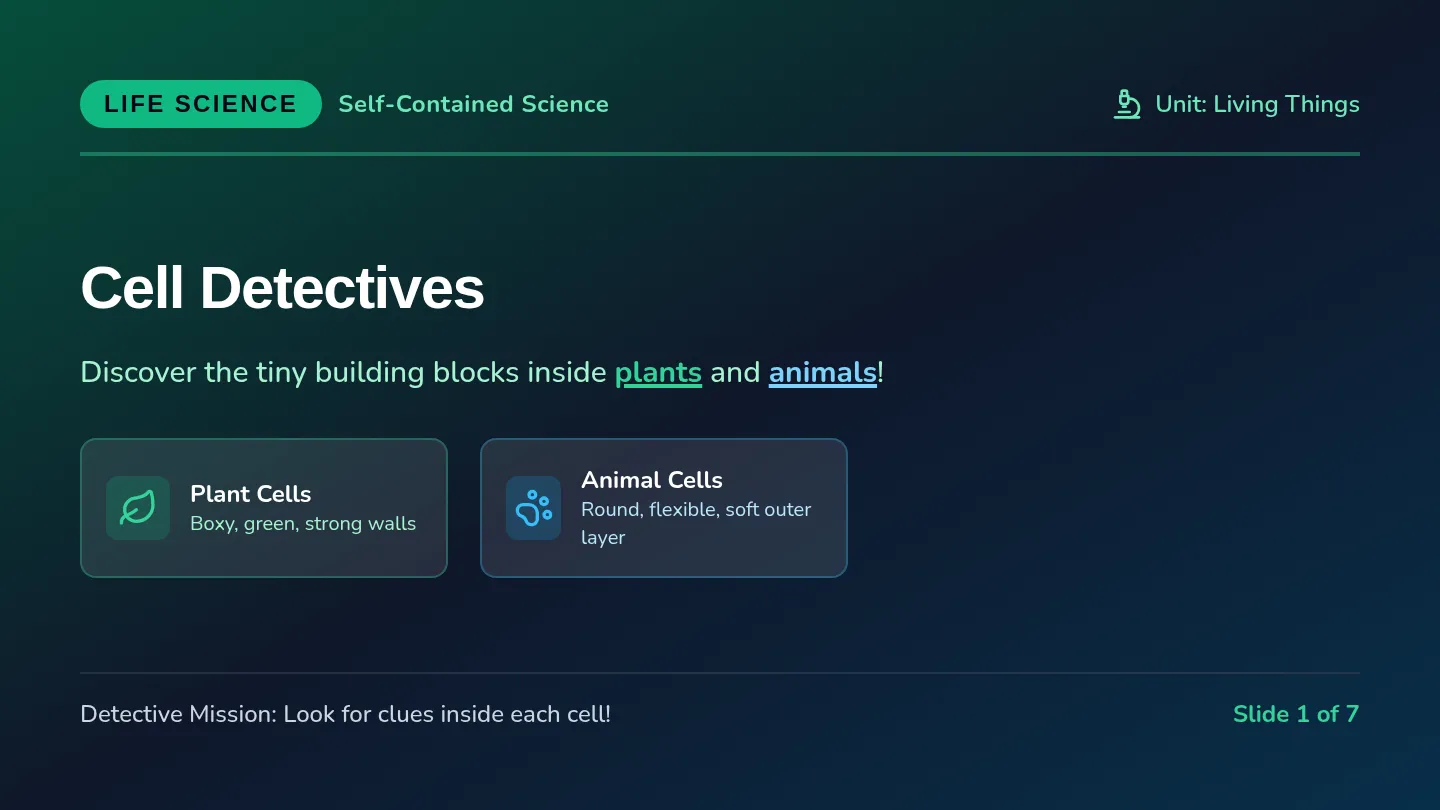
Cell Detectives Slides

Cell Explorers

A foundational life science unit for self-contained learners exploring the microscopic world of cells, organelle jobs, and how specialized cells work in teams to build living things.

CF

Carissa Fenner

8
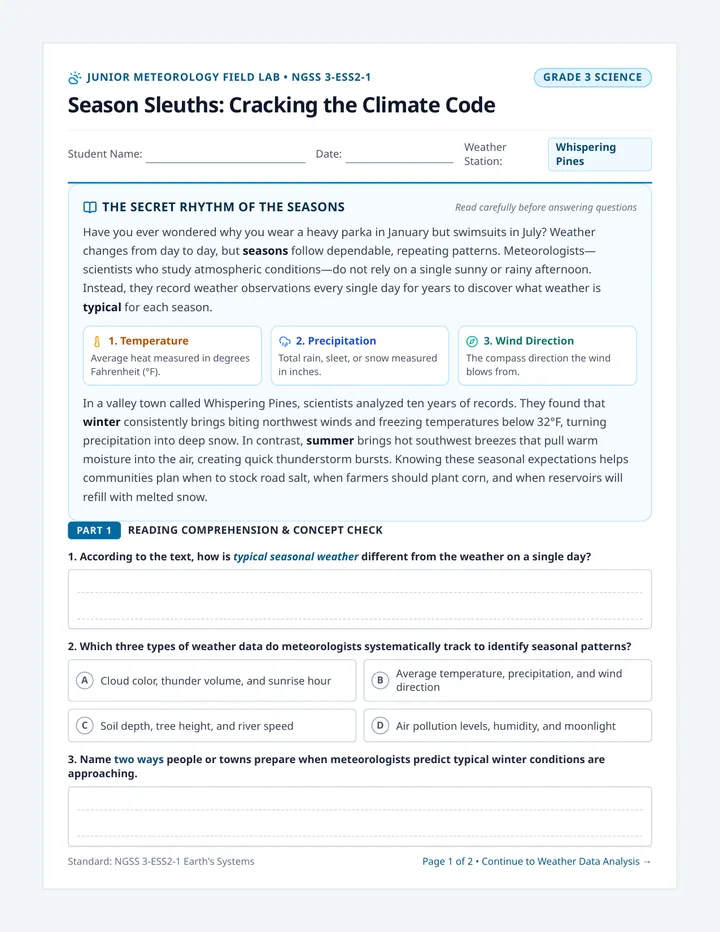
Season Sleuths Student Lab

Season Sleuths Weather Lab

A 40-minute 3rd-grade integrated science and ELA lesson exploring seasonal weather patterns, data analysis, and predictive writing aligned to NGSS 3-ESS2-1. Designed specifically for a small group of 9 students with read-aloud guidance, data table and graph analysis, and claim-evidence writing.

HE

Hannah Ely

3
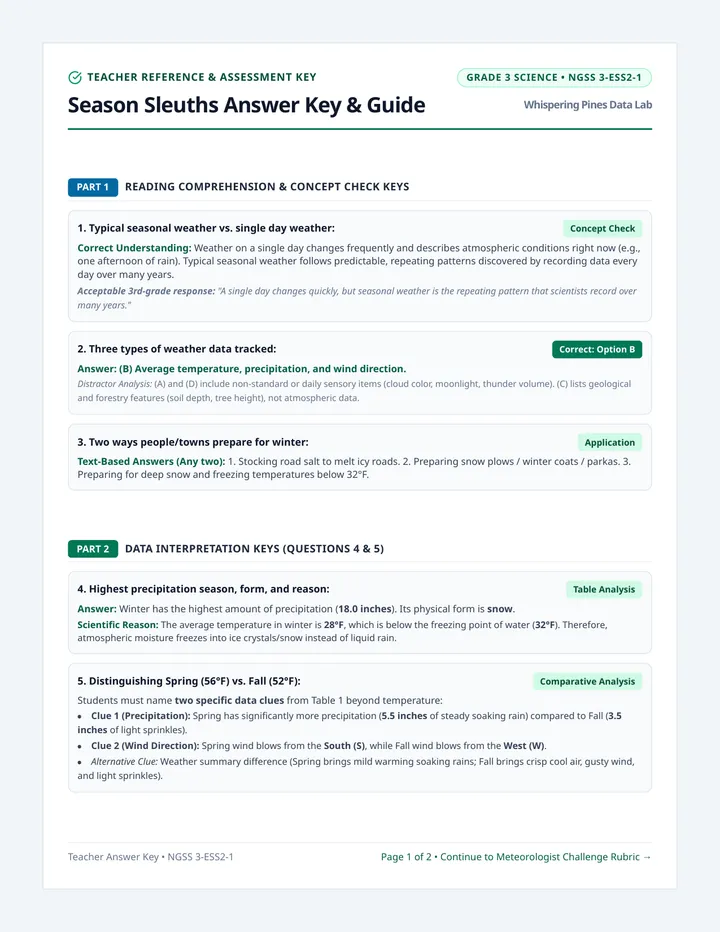
Season Sleuths Answer Key

Season Sleuths Answer Key

A comprehensive 2-page teacher answer key and assessment guide featuring exemplar student responses, CER rubric, common misconceptions, and data analysis explanations.

HE

Hannah Ely

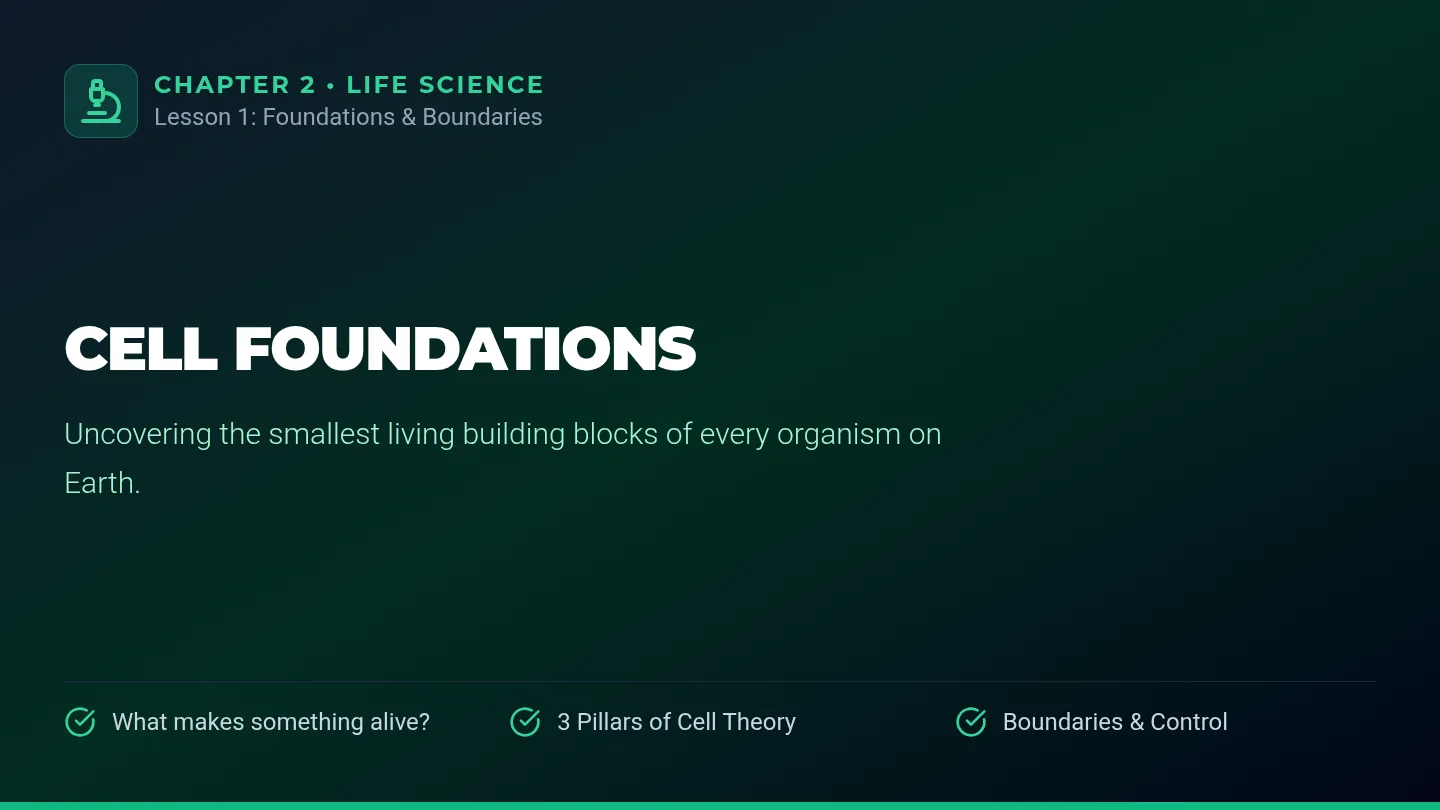
Cell Foundations Slides

Cell City Quest

A two-part life science sequence exploring cell theory, cellular architecture, and organelle functions through the lens of a bustling microscopic city. Students progress from fundamental cell characteristics to intricate organelle operations across two interactive class sessions.

CP

Carmen Pavlovsky

7
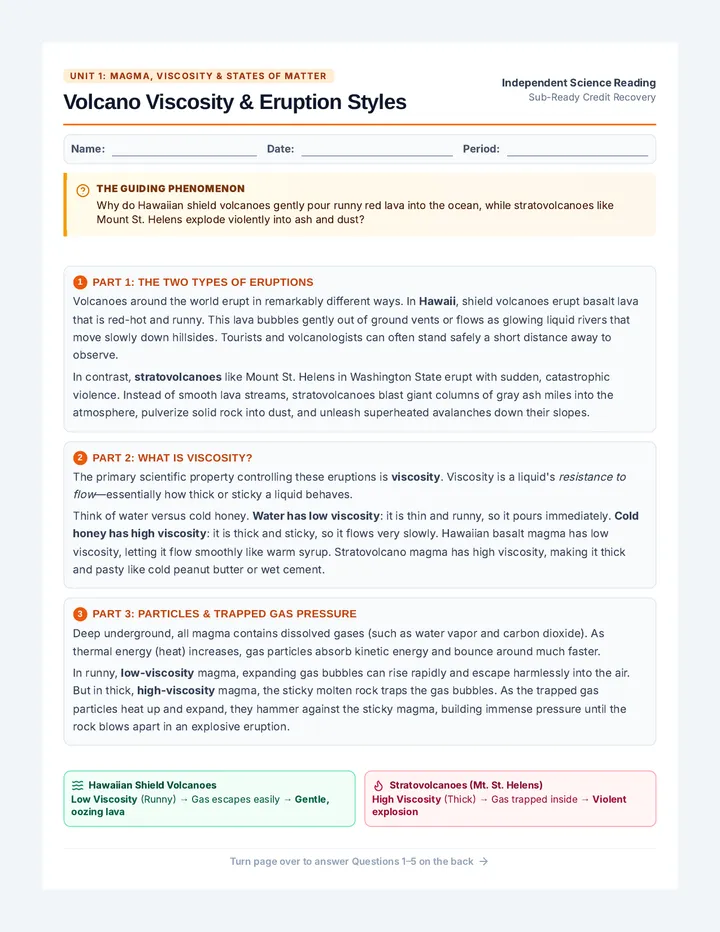
Volcano Viscosity Reading Worksheet

Volcano Viscosity

A middle-school science lesson exploring magma viscosity, particle motion, and volcanic eruption styles through reading analysis, CER writing, and conceptual modeling.

MH

Meagan Hudson

2
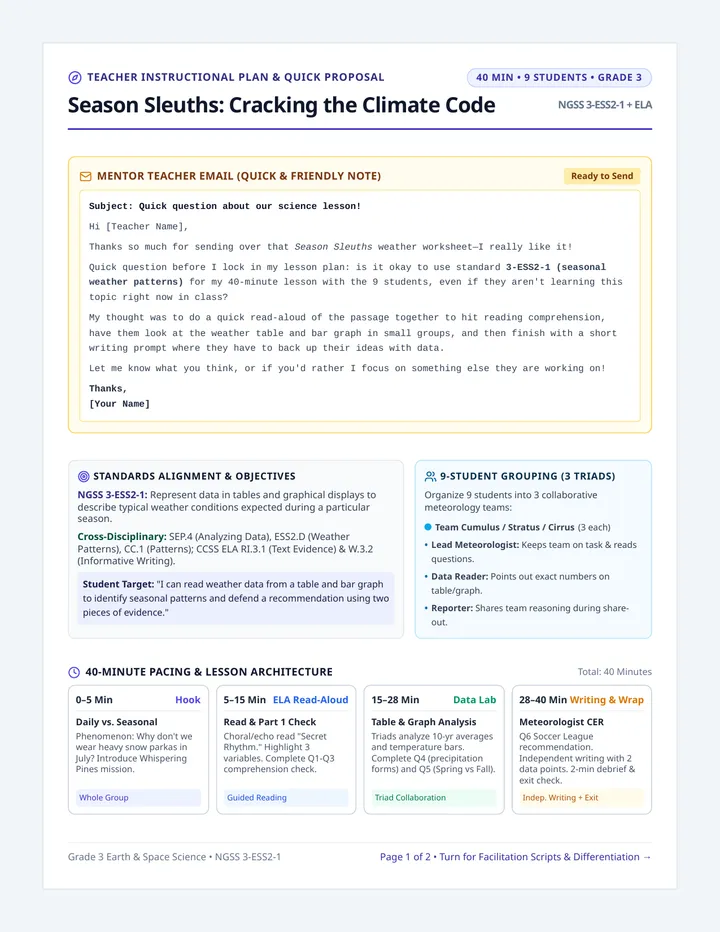
Season Sleuths Lesson Plan

Season Sleuths Lesson Plan

A comprehensive 40-minute teacher guide and proposal for 9 third graders integrating NGSS 3-ESS2-1 and CCSS ELA, complete with a copy-paste mentor teacher approval email, step-by-step facilitation, read-aloud prompts, and differentiation.

HE

Hannah Ely

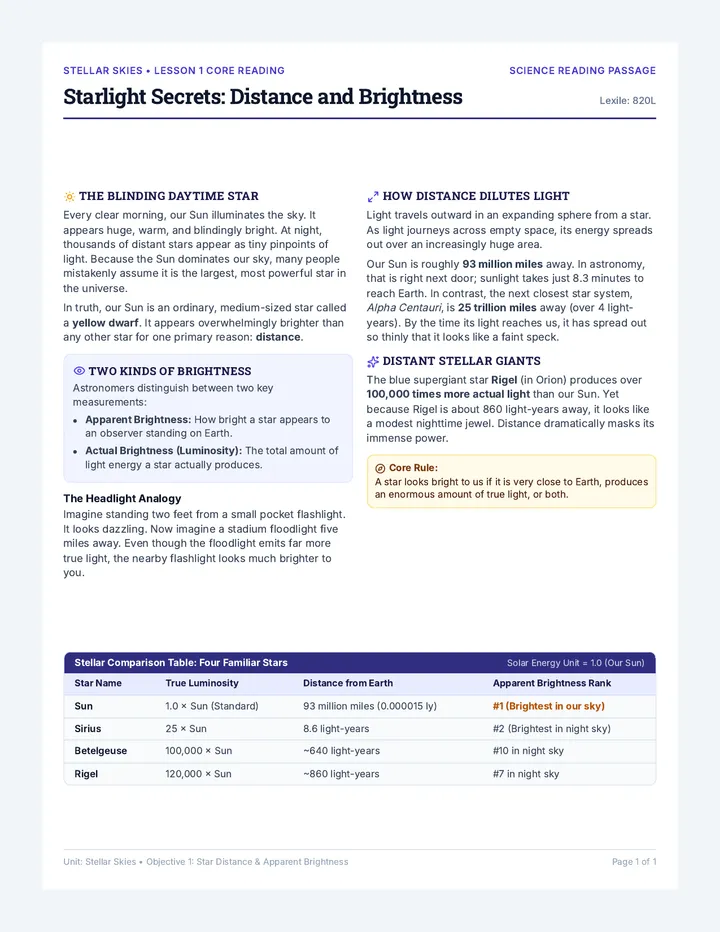
Starlight Secrets Reading Passage

Stellar Skies

A two-lesson science sequence investigating star brightness, apparent versus absolute luminosity, nightly sky rotation, and yearly seasonal constellations.

DB

Danny Brooks

8
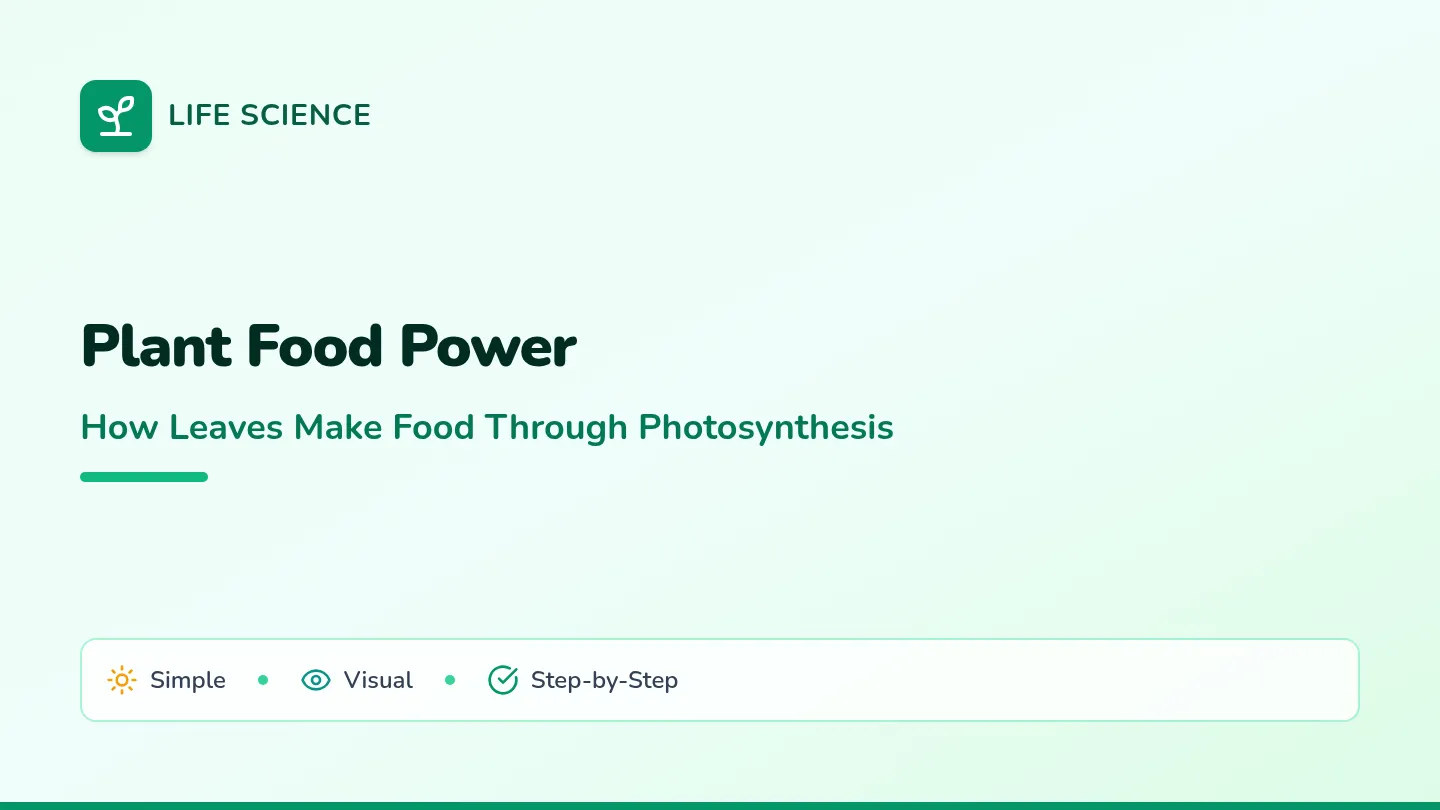
Plant Food Slides

Plant Food Power

A clear, concise, and accessible lesson introducing the fundamentals of photosynthesis, tailored for special education with high-clarity visuals and scaffolded guided notes.

BS

Baylee Snell

4
Season Sleuths Student Lab

Season Sleuths Student Lab

A print-ready 2-page student investigation lab featuring a weather science reading passage, vocabulary anchors, comprehension checks, a 10-year seasonal data table, a temperature bar graph, and a CER meteorologist challenge.

HE

Hannah Ely

Helix Studio Slides

Candy Code Sequence

A multi-day competency-based biology sequence exploring DNA architecture, complementary base pairing, and semi-conservative replication through tactile candy modeling and evidence-based assessment.

TM

Teri Minami

6
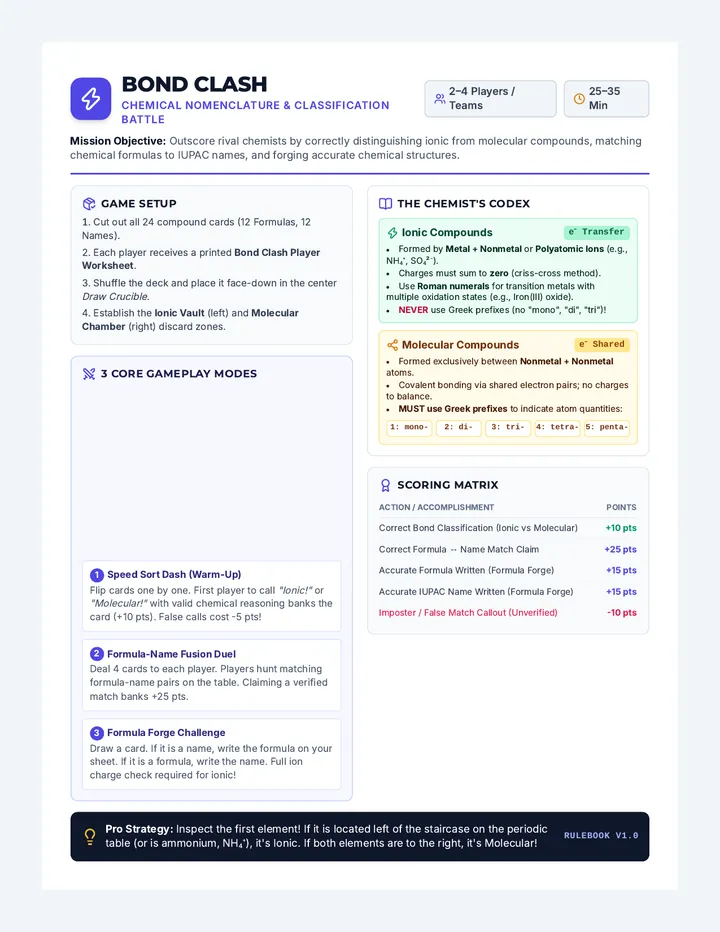
Bond Clash Rules Guide

Bond Clash

A competitive chemistry game bundle where students classify ionic and molecular compounds, decode chemical nomenclature, and practice formula-writing through card sorting and challenge duels.

BL

Burris Laboratory School

4
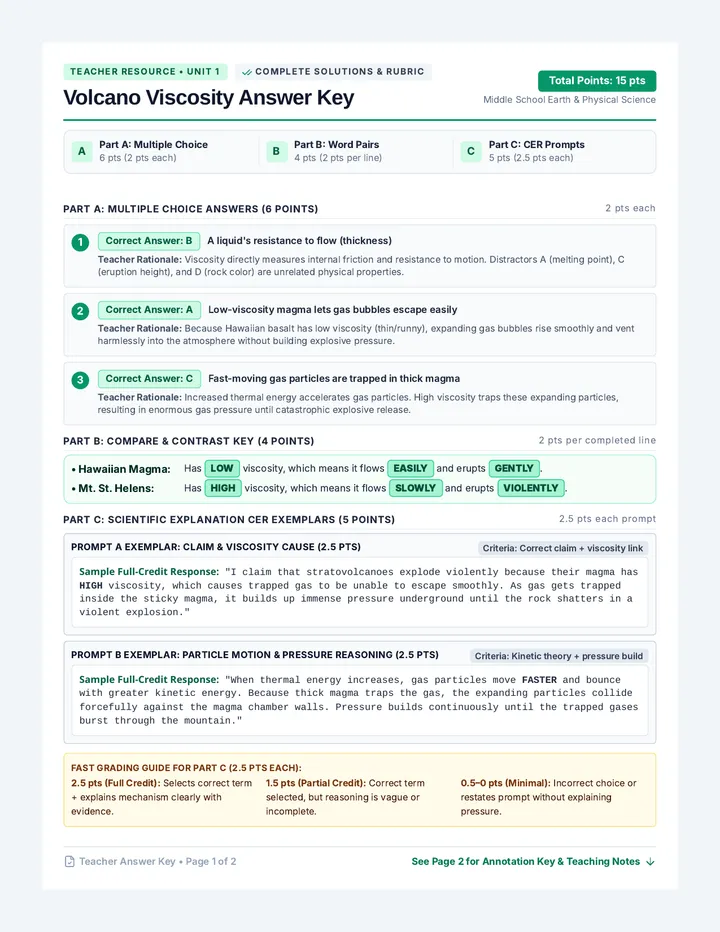
Volcano Viscosity Answer Key

Volcano Viscosity Answer Key

A comprehensive 2-page teacher answer key and scoring guide for the Volcano Viscosity reading worksheet, featuring complete question solutions, CER exemplars, scoring rubrics, annotated text passages, and misconception notes.

MH

Meagan Hudson