Lenny.com
Explore
Create
ActivitiesNewMathEnglish Language ArtsScience & EngineeringSocial StudiesGlobal LanguagesHealth & Physical EducationSpecial EducationCounseling & Life SkillsArts & CreativityESL
Lenny.com
Lenny.com
Explore
Create
ActivitiesNewMathEnglish Language ArtsScience & EngineeringSocial StudiesGlobal LanguagesHealth & Physical EducationSpecial EducationCounseling & Life SkillsArts & CreativityESL
Lenny.com
Lenny.com

Solutions

Lenny for EducatorsLenny for SchoolsLenny for Districts

Product

ExploreSign inCreateSupportAbout

Resources

Getting startedMTSS Acceleration Program

© 2026 Lenny Learning Inc.

TermsPrivacyAccessibility
LinkedInInstagramX
Lenny
Science & EngineeringLife ScienceLiving ThingsAnimalsPlantsBody SystemsTraitsAdaptationsCellsEcosystemsHeredityGenes to TraitsCell DivisionPhysicsComparing MaterialsShapes and PropertiesMagnetsMagnetismLightSoundLight and SoundMatterStates of MatterChanges of StateMixturesPhysical and Chemical ChangeHeating and CoolingHeat and Thermal EnergyEnergyForce and MotionElectrical CircuitsAtoms and MoleculesPeriodic TableMotion in One DimensionMotion in Two DimensionsScalars and VectorsForces and Laws of MotionCircular Motion and GravityMomentum and ImpulseWork, Energy, and PowerWavesElectromagnetic WavesGeometric OpticsElectricity and MagnetismSimple Harmonic MotionThermodynamicsNuclear PhysicsEarth Science & AstronomyWeatherWater CycleRocks and MineralsFossilsEarth's FeaturesEarth's ResourcesEarth's StructureWeather and ClimateEarth EventsFossils and Geologic TimePlate TectonicsHuman ImpactsAstronomyChemistryUnits and MeasurementAtomic StructurePeriodic TrendsChemical BondingNomenclatureMolecular StructureIntermolecular ForcesThe MoleStoichiometryProperties of GasesSolutionsChemical ReactionsBalancing EquationsEnergy ChangesRates of ReactionsEquilibriumAcids and BasesQuantum ModelBiologyClassificationCell StructureThe Chemistry of LifeBiomoleculesCellular TransportCell EnergyCell Growth and DivisionDNAProtein SynthesisMeiosis and Sexual ReproductionPatterns of InheritanceMulticellular OrganismsEvolutionEcologyBiodiversityComputer ScienceAlgorithms and Computational ThinkingProgramming LanguagesComputing SystemsNetworks and InternetData AnalysisCybersecurityAI and Machine LearningSoftware Design and DevelopmentBlockchainEngineering & AIDesigning ExperimentsEngineering PracticesDesign ThinkingEngineering Design ProcessMechanical EngineeringElectrical EngineeringMaterials and StructuresCAD and 3D DesignRoboticsArtificial Intelligence BasicsVibe CodingMachine LearningAI Ethics and SocietySystems ThinkingEntrepreneurship & InnovationEntrepreneurial MindsetBusiness Idea DevelopmentBusiness Plan BasicsMarketing & Customer DiscoveryFinancial Management for Startups

Energy Web

A high school life science lesson designed for WIDA Level 1 English learners exploring trophic levels, energy flow, and food webs through visual vocabulary, chunked texts, and sentence frames.

Energy Web

A high school life science lesson designed for WIDA Level 1 English learners exploring trophic levels, energy flow, and food webs through visual vocabulary, chunked texts, and sentence frames.

Water BeetleEats algae / plants
Big Trout FishEats water beetles & minnows
Osprey HawkEats big trout fish

4 Part 4: Language Frames (Speaking & Writing)

Fill in the blanks using words from the diagram

1 Explain a Producer:

The algae is a because it makes food using .

2 Explain a Primary Consumer:

The water beetle is a because it eats .

3 Trace the Energy Flow:

Energy flows from the to the because the trout eats the beetle.

4 Explain the Apex Predator:

The osprey hawk is at the of the pyramid, so it has the (most / least) energy.

Oral Practice: Read Frame 3 out loud with your partner! Check each other's answers.

Page 2 of 2

Step-by-Step Facilitation & WIDA Scaffolding Protocols

Teacher Reference

Crucial ESL Level 1 Misconception: Arrow Direction in Food Webs

Almost all beginning language learners assume the arrow points from predator to prey because the predator is "stronger" or "attacks". Correction Protocol: Write "Grass ➔ Deer" on the board. Point to the arrowhead and state: "Energy moves INTO the deer's belly. The arrow is an energy delivery truck!" Have students physically point their arms forward to model the delivery.

Phase 1: Visual Vocabulary & TPR Intro (Slides 1-5) Choral Practice

Introduce one trophic level at a time. Have students repeat the term 3 times (whisper, normal, loud) while performing the TPR hand gesture. Explicitly reference the Spanish cognate (Productor, Consumidor) to leverage home-language literacy.

Phase 2: Structured A/B Partner Routine (Slide 7) Speaking Scaffold

Pair Level 1 students strategically with a bilingual partner or Level 2 peer. Partner A points to an organism on Slide 7 and asks the prompt. Partner B must use the sentence strip. Circulate and stamp/praise full sentence completions rather than one-word answers.

Phase 3: Graphic Organizer Practice Sheet (Pages 1-2) Writing Scaffold

Model Item 1 of the Pyramid tier on the board first. Highlight that the biggest tier is at the bottom (Producers = 10,000 J). Encourage students to use their colored pencils (Green for Producers, Blue for Primary, Purple for Secondary, Red for Apex).

Differentiation Guide for English Proficiency Levels

WIDA Level 1 (Entering) Scaffolds

  • Allow pointing, circling, and letter matching on Part 1.
  • Provide pre-cut word tiles for the Energy Pyramid tiers.
  • Accept oral answers with sentence frame fill-ins.
  • Encourage the use of home-language scientific glossaries.

WIDA Level 2 (Emerging) Extensions

  • Require students to write a complete sentence explaining why 90% of energy is lost as heat.
  • Challenge them to add a decomposer (fungi/bacteria) to the web.
  • Have students predict what happens if all primary consumers disappear.

Quick Formative Check (Thumbs Up / Side / Down):

"Does the arrow point to the eater or to the organism that gets energy?"

Target: 100% Correct

High School Biology • Energy Web Unit Energy Web Lesson Plan Page 2 of 2

Secondary Consumer (Level 3)
Osprey HawkBig trout fishApex Predator (Level 4)

Part 4: Language Sentence Frames Solutions (8 Points)

2 pts per frame (1 pt concept, 1 pt vocabulary)

1. Producer Frame:

"The algae is a producer because it makes food using sunlight (or the Sun)."
Acceptable: "light", "sun", "solar energy", "photosynthesis".

2. Primary Consumer Frame:

"The water beetle is a primary consumer because it eats algae (or plants)."

Acceptable: "green plants", "producers", "leaves".

3. Energy Flow Frame:

"Energy flows from the beetle to the trout because the trout eats the beetle."

Caution: Ensure students put beetle FIRST and trout SECOND, showing energy direction!

4. Apex Predator Frame:

"The osprey hawk is at the top of the pyramid, so it has the least energy."

Key concept: 10 Joules is the LEAST amount of energy in this pyramid.

WIDA Level 1 Evaluative Scoring Matrix

Approaching (1-2 pts)

Identifies 1-2 trophic levels with extensive teacher prompt; reverses arrow flow; leaves frames partially blank.

Proficient Target (3 pts)

Accurately identifies all 4 trophic levels; correctly places organisms in pyramid; completes frames with word bank support.

Exceeding (4 pts)

Explains why energy is lost (heat/metabolism); reads frames fluently to partner; traces complex multi-path food webs.

High School Biology • Energy Web Unit Energy Web Answer Key Page 2 of 2

You might also like

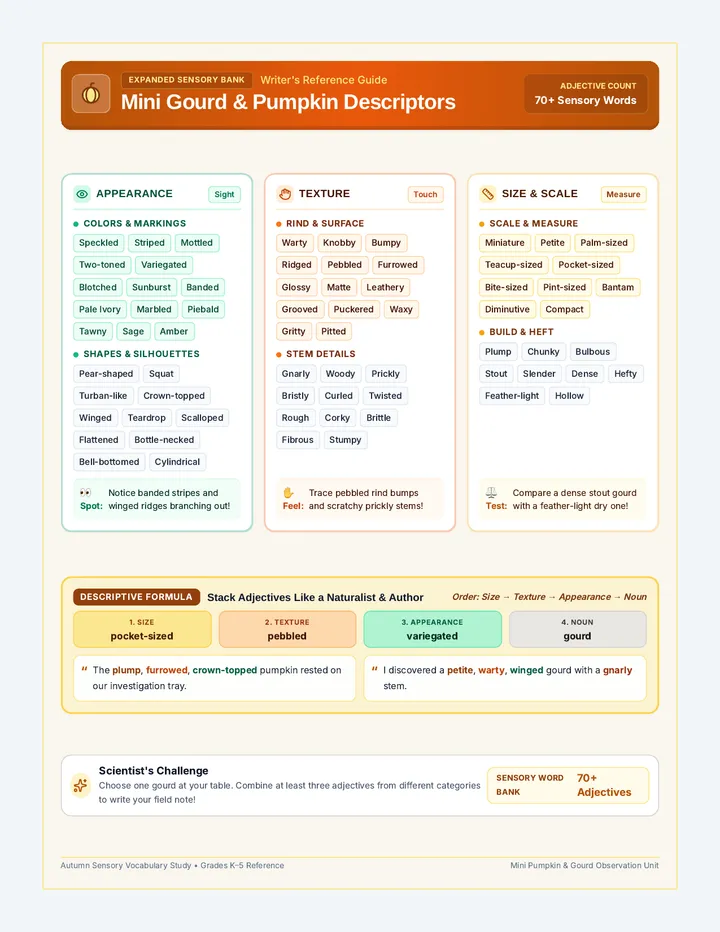
Gourd Descriptors Anchor Chart

Seasonal Detectives

An elementary inquiry unit exploring temporal concepts, natural cycles, seasonal changes, and sensory observations of the natural world.

VD

Victoria Dinjian

4
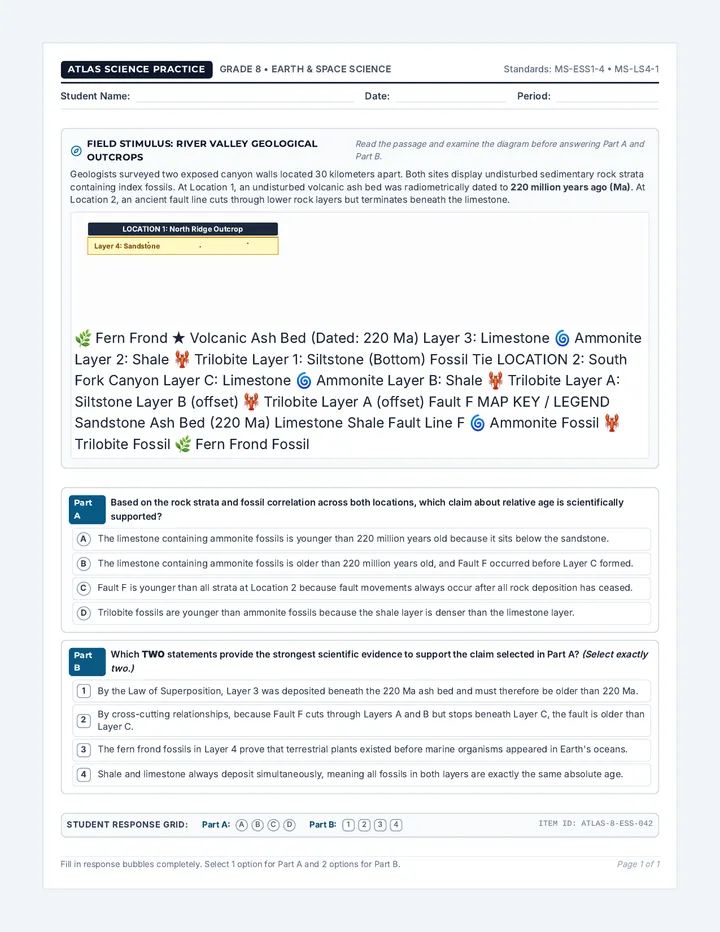
Strata Sleuths Assessment Item

Strata Sleuths

An 8th-grade science assessment lesson evaluating student mastery of rock strata, relative dating principles, and fossil succession aligned to NGSS and ATLAS assessment standards. Students analyze geological cross-sections and fossil distributions to reconstruct Earth's historical timeline.

CS

Chad Sturkie

2
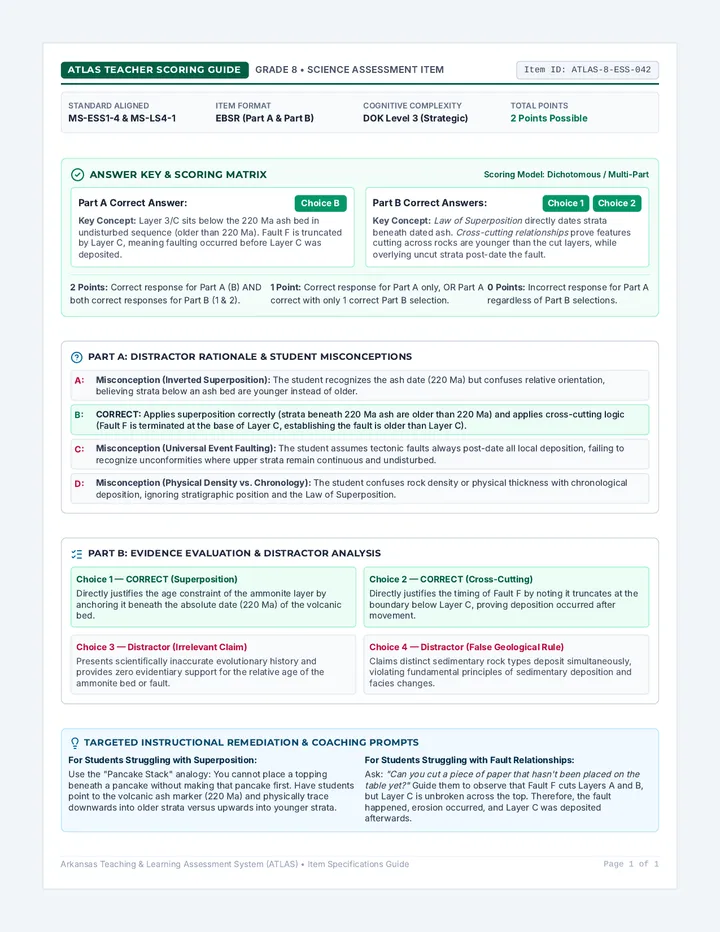
Strata Sleuths Scoring Guide

Strata Sleuths Scoring Guide

Comprehensive teacher scoring guide, standards alignment matrix, scoring rubric, and detailed distractor rationale for the 8th-grade rock strata and fossils assessment item.

CS

Chad Sturkie

Pesky Biters Slides

Bug Busters

A two-part fifth-grade science sequence investigating how insects can be annoying nuisances, bite and sting, and damage crops and homes. Specially scaffolded with high-visual supports, decodable text chunks, and guided practice for lower-literacy learners.

Lenny Avatar
Lenny
11
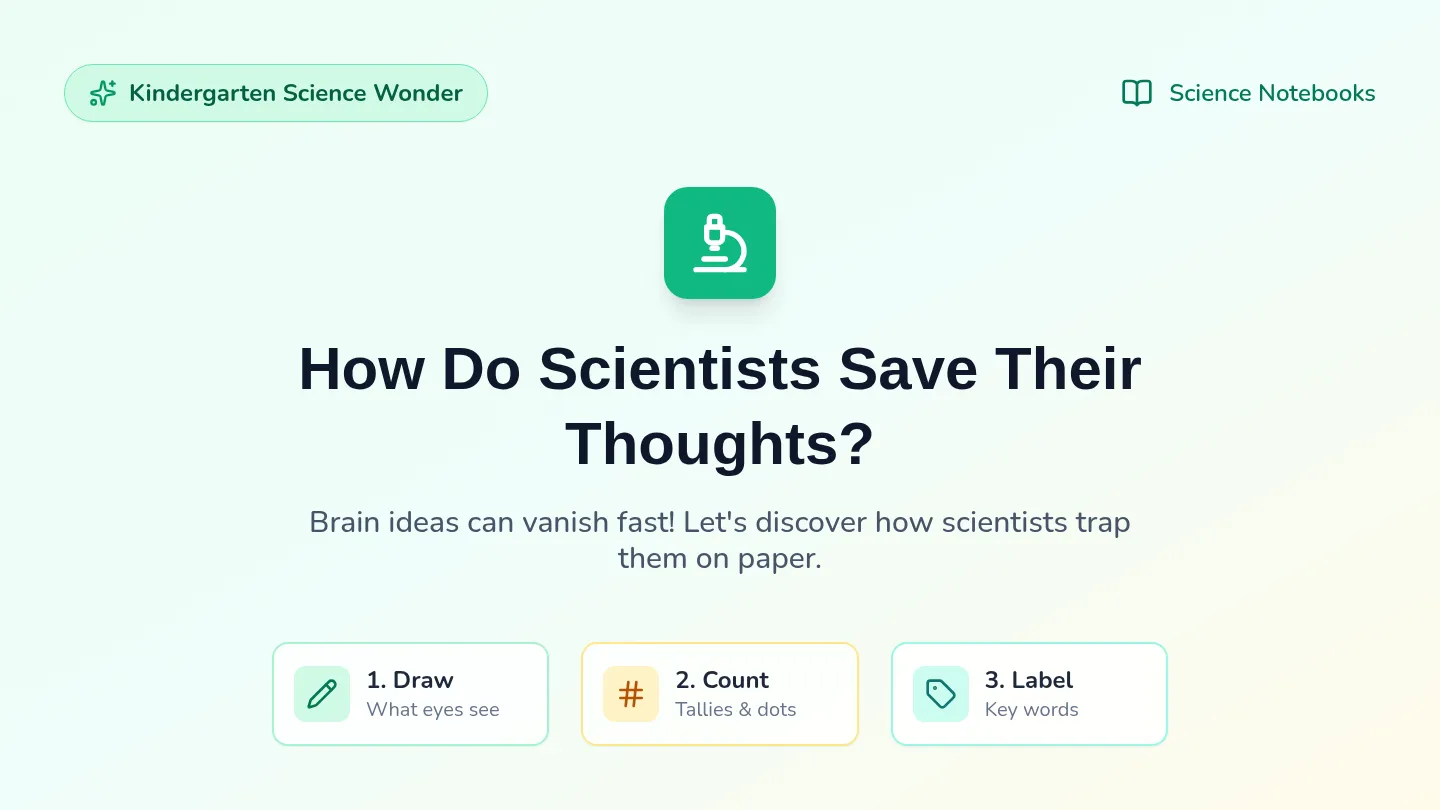
Scientist Clues Slides

Little Science Thinkers

A fun and simple kindergarten introduction to how scientists record their observations and ideas using drawings, labels, and numbers. Students explore real ways scientists keep notes and practice recording a mystery object of their own.

NS

Neelab Sayah

2
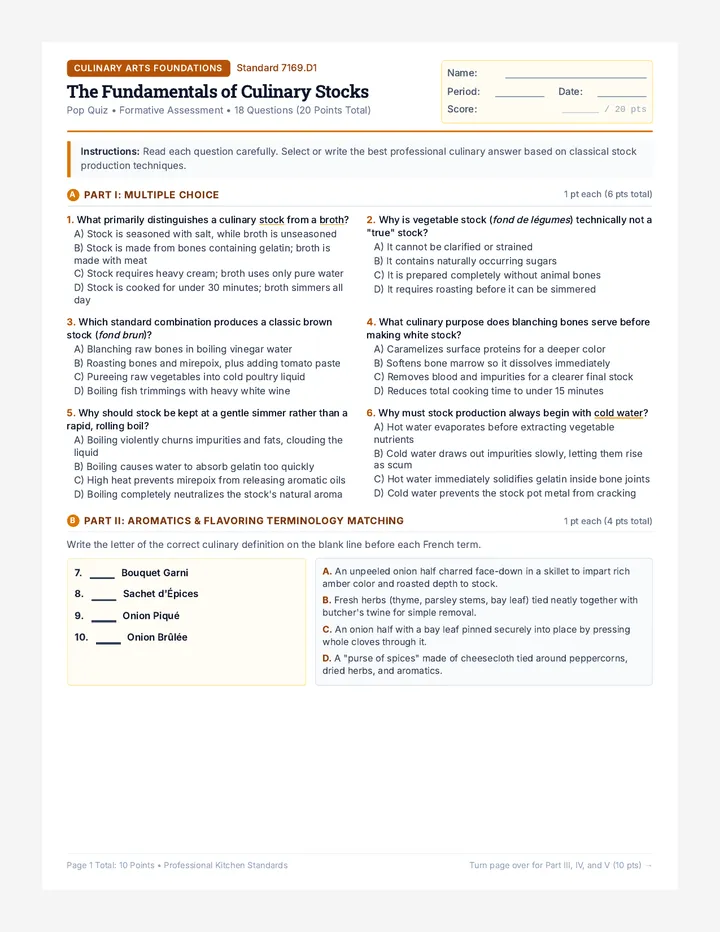
Culinary Stocks Pop Quiz

Culinary Stocks Pop Quiz

A comprehensive 18-question mixed-format pop quiz assessing culinary students on stock classifications, stocks versus broths, ingredients, mirepoix ratios, flavoring sachets, and professional preparation methods, re-scaled to a 20-point total.

B

Bonnie.Gomez

Helix Studio Slides

Candy Code Sequence

A multi-day competency-based biology sequence exploring DNA architecture, complementary base pairing, and semi-conservative replication through tactile candy modeling and evidence-based assessment.

TM

Teri Minami

4
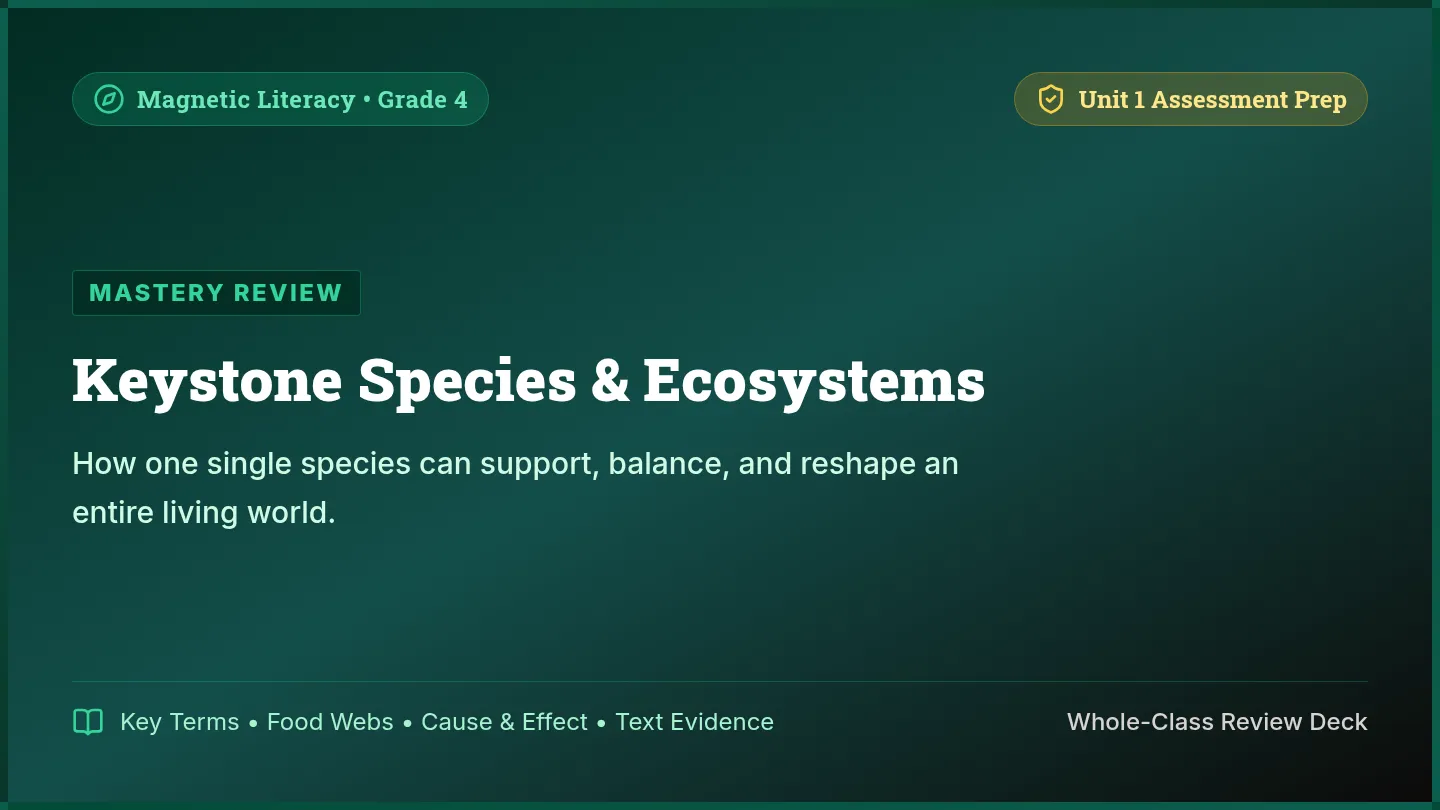
Keystone Species Review Slides

Keystone Species Review

A targeted 4th-grade review lesson for Magnetic Literacy Unit 1 on keystone species, food webs, and informational text structures. Students review core academic vocabulary, examine ecological cause-and-effect relationships through real-world case studies, and complete assessment-aligned practice questions.

AC

Anne Castillo

4
Strata Sleuths Assessment Item

Strata Sleuths Assessment Item

An 8th-grade standardized assessment item modeled on ATLAS and NGSS science assessments. Students evaluate two geological cross-sections with rock strata, index fossils, an unconformity fault, and a dated volcanic ash layer to complete a two-part evidence-based selected response task.

CS

Chad Sturkie

Habitability Blueprint Slides

Life Beyond Limits

A one-week interdisciplinary astrobiology sequence investigating Earth's habitability, extreme biological adaptations across eleven Earth species, and the plausibility of life on other celestial bodies.

M

Megan.Tanner

7
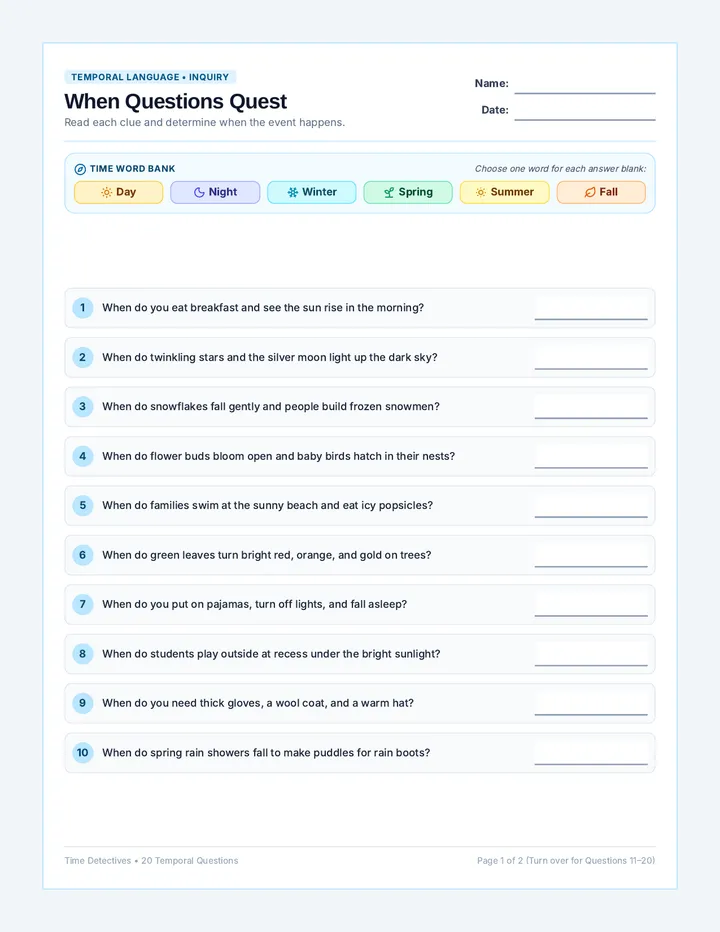
When Questions Worksheet

Time Detectives

A temporal language and science lesson featuring 20 'When' questions categorized by time of day (day, night) and the four seasons (winter, spring, summer, fall).

VD

Victoria Dinjian

2
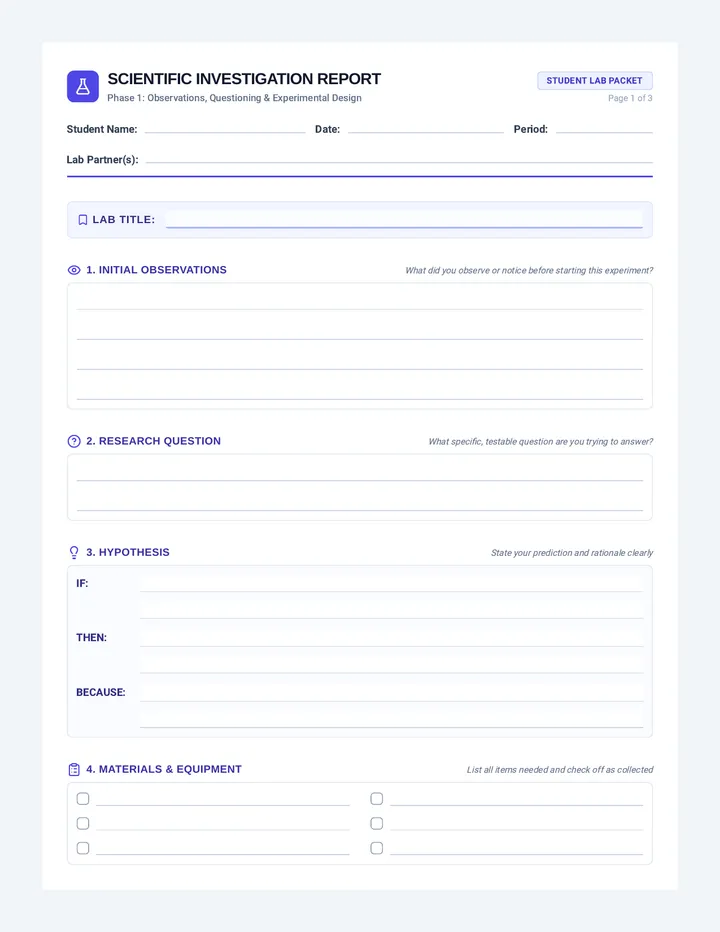
Discovery Lab Report Template

Discovery Lab Report Template

An expanded three-page printable laboratory investigation template designed for student-led inquiry, featuring extensive writing space for observations, questions, hypotheses, materials, detailed procedural steps with ample handwriting room, data collection tables, and structured conclusions.

SF

Steven Flint