Lenny.com
Explore
Create
ActivitiesNewMathEnglish Language ArtsScience & EngineeringSocial StudiesGlobal LanguagesHealth & Physical EducationSpecial EducationCounseling & Life SkillsArts & CreativityESL
Lenny.com
Lenny.com
Explore
Create
ActivitiesNewMathEnglish Language ArtsScience & EngineeringSocial StudiesGlobal LanguagesHealth & Physical EducationSpecial EducationCounseling & Life SkillsArts & CreativityESL
Lenny.com
Lenny.com

Solutions

Lenny for EducatorsLenny for SchoolsLenny for Districts

Product

ExploreSign inCreateSupportAbout

Resources

Getting startedMTSS Acceleration Program

© 2026 Lenny Learning Inc.

TermsPrivacyAccessibility
LinkedInInstagramX
Lenny
Science & EngineeringLife ScienceLiving ThingsAnimalsPlantsBody SystemsTraitsAdaptationsCellsEcosystemsHeredityGenes to TraitsCell DivisionPhysicsComparing MaterialsShapes and PropertiesMagnetsMagnetismLightSoundLight and SoundMatterStates of MatterChanges of StateMixturesPhysical and Chemical ChangeHeating and CoolingHeat and Thermal EnergyEnergyForce and MotionElectrical CircuitsAtoms and MoleculesPeriodic TableMotion in One DimensionMotion in Two DimensionsScalars and VectorsForces and Laws of MotionCircular Motion and GravityMomentum and ImpulseWork, Energy, and PowerWavesElectromagnetic WavesGeometric OpticsElectricity and MagnetismSimple Harmonic MotionThermodynamicsNuclear PhysicsEarth Science & AstronomyWeatherWater CycleRocks and MineralsFossilsEarth's FeaturesEarth's ResourcesEarth's StructureWeather and ClimateEarth EventsFossils and Geologic TimePlate TectonicsHuman ImpactsAstronomyChemistryUnits and MeasurementAtomic StructurePeriodic TrendsChemical BondingNomenclatureMolecular StructureIntermolecular ForcesThe MoleStoichiometryProperties of GasesSolutionsChemical ReactionsBalancing EquationsEnergy ChangesRates of ReactionsEquilibriumAcids and BasesQuantum ModelBiologyClassificationCell StructureThe Chemistry of LifeBiomoleculesCellular TransportCell EnergyCell Growth and DivisionDNAProtein SynthesisMeiosis and Sexual ReproductionPatterns of InheritanceMulticellular OrganismsEvolutionEcologyBiodiversityComputer ScienceAlgorithms and Computational ThinkingProgramming LanguagesComputing SystemsNetworks and InternetData AnalysisCybersecurityAI and Machine LearningSoftware Design and DevelopmentBlockchainEngineering & AIDesigning ExperimentsEngineering PracticesDesign ThinkingEngineering Design ProcessMechanical EngineeringElectrical EngineeringMaterials and StructuresCAD and 3D DesignRoboticsArtificial Intelligence BasicsVibe CodingMachine LearningAI Ethics and SocietySystems ThinkingEntrepreneurship & InnovationEntrepreneurial MindsetBusiness Idea DevelopmentBusiness Plan BasicsMarketing & Customer DiscoveryFinancial Management for Startups

Energy Coasters

An engaging physical science lesson exploring gravitational potential energy, kinetic energy, and the law of conservation of energy through roller coaster engineering. Students analyze mechanical energy transitions at various track heights and evaluate how friction converts mechanical energy into thermal energy.

Acoustic Energy

The roaring sound and vibrations of the train transfer energy into the surrounding air molecules.

Total Conservation

No energy is destroyed! Total energy remains equal: \( E_{total} = PE + KE + E_{thermal} \).

⚠️ Engineering Consequence: Because of friction, every subsequent hill MUST be lower than the previous peak unless external energy is added.


Active Lab Mission

Engineer Your Energy Track

Track Design Criteria

Criterion 1: Start

Cart starts from rest at Summit Hill 1 (100% GPE budget).

Criterion 2: Loop

Cart must successfully clear a loop without rolling backward.

Criterion 3: Safety

Enter final brake zone safely with friction energy accounted for.

📝 Turn to Part 3 of your Energy Coaster Lab Worksheet to construct and justify your track profile.

Coaster Physics • Slide 6 of 7 Design Challenge


Synthesis & Debrief

Key Takeaways & Exit Reflection

Core Takeaways

  • Height determines potential energy (\( PE \)).
  • Speed is converted from potential energy (\( KE \)).
  • In an ideal system, \( PE + KE = \text{Constant} \).
  • Friction transforms mechanical energy to thermal energy.

Exit Question

"If a roller coaster cart has 40,000 J of Potential Energy at the summit, how much Kinetic Energy does it have at the valley floor (assuming 4,000 J lost to friction)?"

💡 Record your calculation on Question 4 of your worksheet!

Coaster Physics • Slide 7 of 7 Physical Science

Design & Justify

Design a thrilling yet safe track profile. Your track MUST include: (1) Initial Lift Hill, (2) One vertical loop, (3) One secondary hill, and (4) Final braking zone.

Summit (High PE) Loop Section Bunny Hill Brake Run (0 PE)

Sketch your coaster track curve above and label Heights at each peak.

5. Engineering Defense: Why MUST your loop’s maximum height be lower than your first hill?

6. Safety Consideration: How does the brake run safely stop the coaster at the end? Where does the remaining kinetic energy go?

Coaster Physics • Student Lab Worksheet Page 2 of 2

Maximum possible climb height = \( \frac{42,000}{50,000} \times 50\text{m} = 42\text{ m} \).

Part 3: Engineering Challenge Rubric & Defense (4 pts)

Exemplar Blueprint Criteria

Lift Hill #1 Highest Point

Must be tallest to supply entire energy budget.

Vertical Loop Height < Peak 1

Must retain sufficient KE at crest to avoid stalling.

Bunny Hill Height < Loop

Accounts for progressive friction energy loss.

Brake Run Ground Level

Smooth deceleration to 0 m/s via friction.

5. Model Defense for Loop Height:

"The loop crest must be significantly lower than Hill 1 because the coaster cart needs both potential energy (due to its height) AND kinetic energy (speed) at the very top of the loop. If the loop were as tall as Hill 1, all energy would turn into PE, leaving 0 KE—meaning the cart would stop dead and fall straight down instead of traveling through the loop curve."

6. Model Defense for Brake Run Energy Dissipation:

"Brakes use mechanical friction (or eddy current magnetic resistance) to do negative work on the train. The remaining kinetic energy is completely converted into thermal energy in the brake pads/fins and sound energy (screeching), bringing the velocity safely to 0 m/s without destroying any energy."
Coaster Physics • Teacher Answer Key Page 2 of 2

You might also like

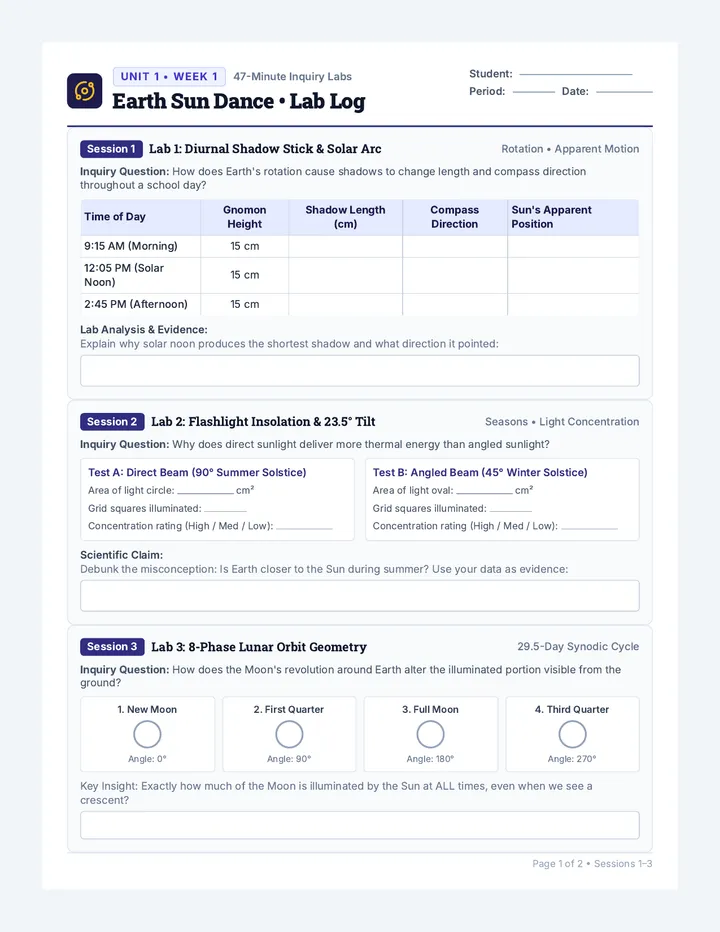
Earth Sun Dance Lab Log

Stellar Explorers

A four-week, 20-session astronomy lab and enrichment curriculum for sixth-grade public school students, structured for 47-minute class periods. Spanning Earth-Sun-Moon celestial mechanics, comparative planetary science, stellar lifecycles and galaxies, and modern space exploration engineering.

B

bfox

8
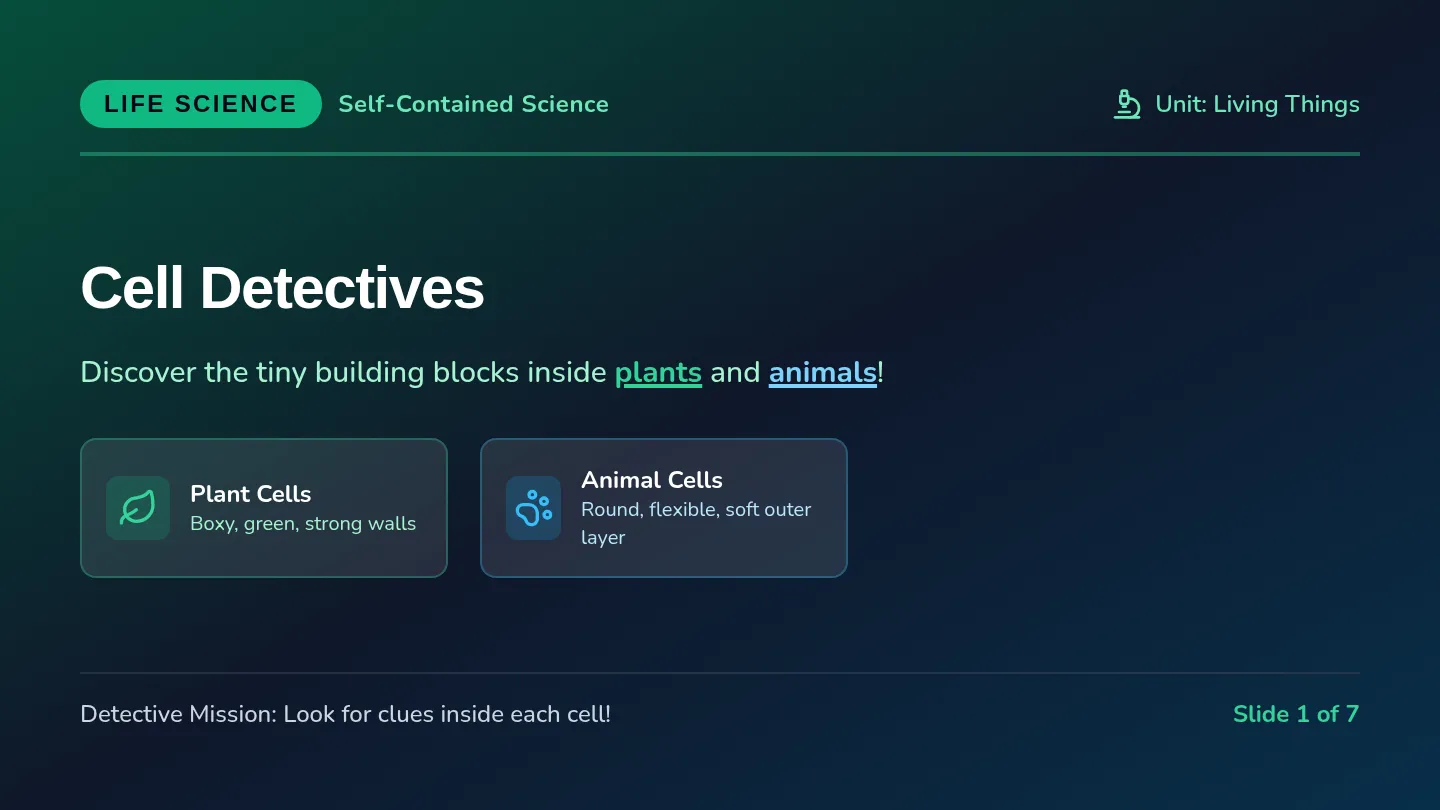
Cell Detectives Slides

Cell Detectives

A foundational life science lesson introducing plant and animal cells for self-contained classrooms, featuring high-contrast visual diagrams, simple analogies, and hands-on matching.

CF

Carissa Fenner

4
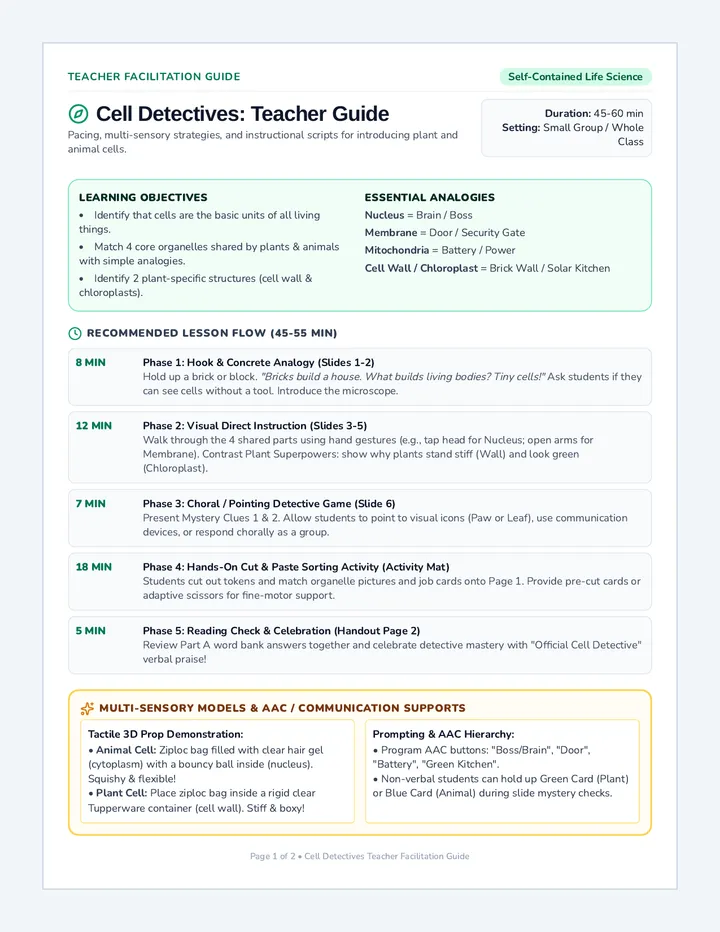
Cell Detectives Teacher Guide

Cell Detectives Teacher Guide

A 2-page instructional guide for teachers containing lesson pacing, multi-sensory accommodations, communication support cues, full answer keys, and tiered rubrics.

CF

Carissa Fenner

Helix Studio Slides

Candy Code Sequence

A multi-day competency-based biology sequence exploring DNA architecture, complementary base pairing, and semi-conservative replication through tactile candy modeling and evidence-based assessment.

TM

Teri Minami

6
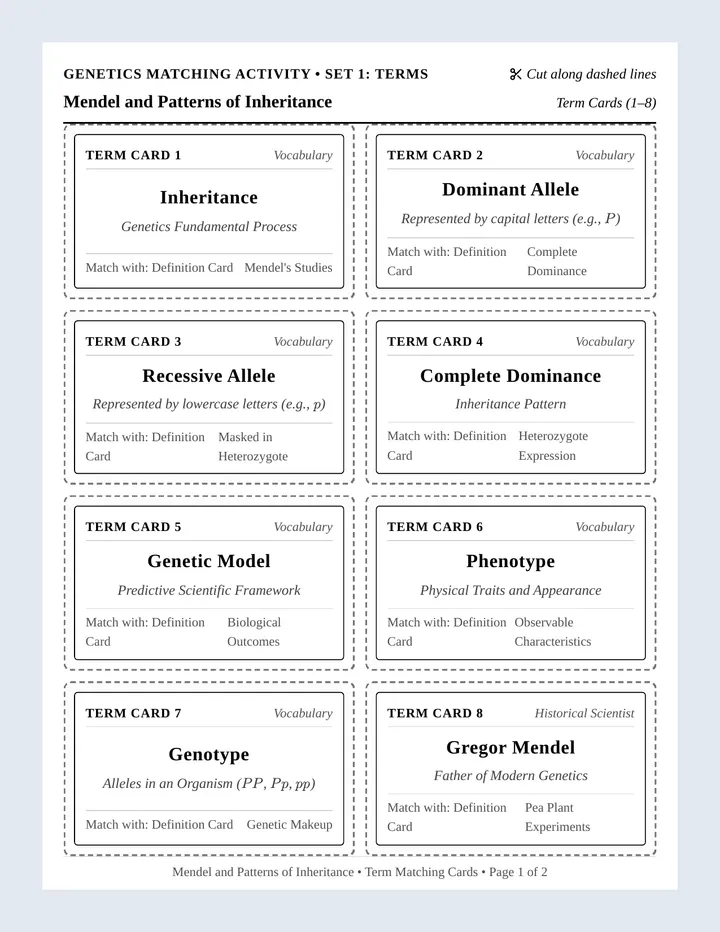
Mendel Inheritance Matching Cards

Mendel Inheritance

An introductory genetics lesson exploring Gregor Mendel's foundational pea plant experiments, inheritance patterns, allele types, genotype versus phenotype, and complete dominance.

MB

Marsha Bolden

4
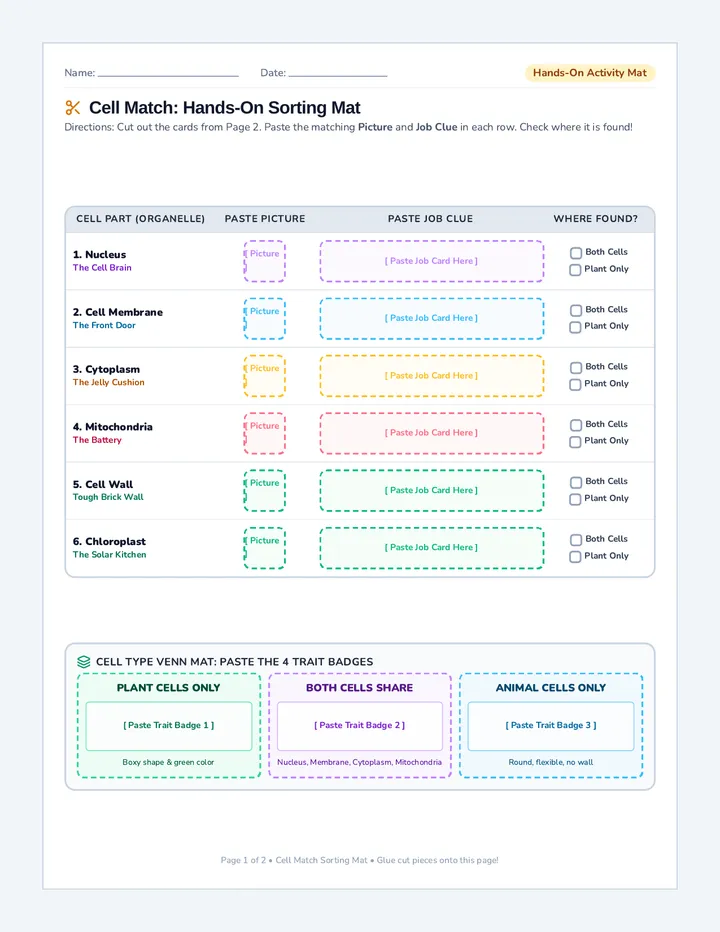
Cell Match Sorting Activity

Cell Match Sorting Activity

A 2-page hands-on cut-and-paste sorting activity featuring a structured matching mat on Page 1 and tactile cut-out tokens (pictures, names, and job analogies) on Page 2 for self-contained learners.

CF

Carissa Fenner

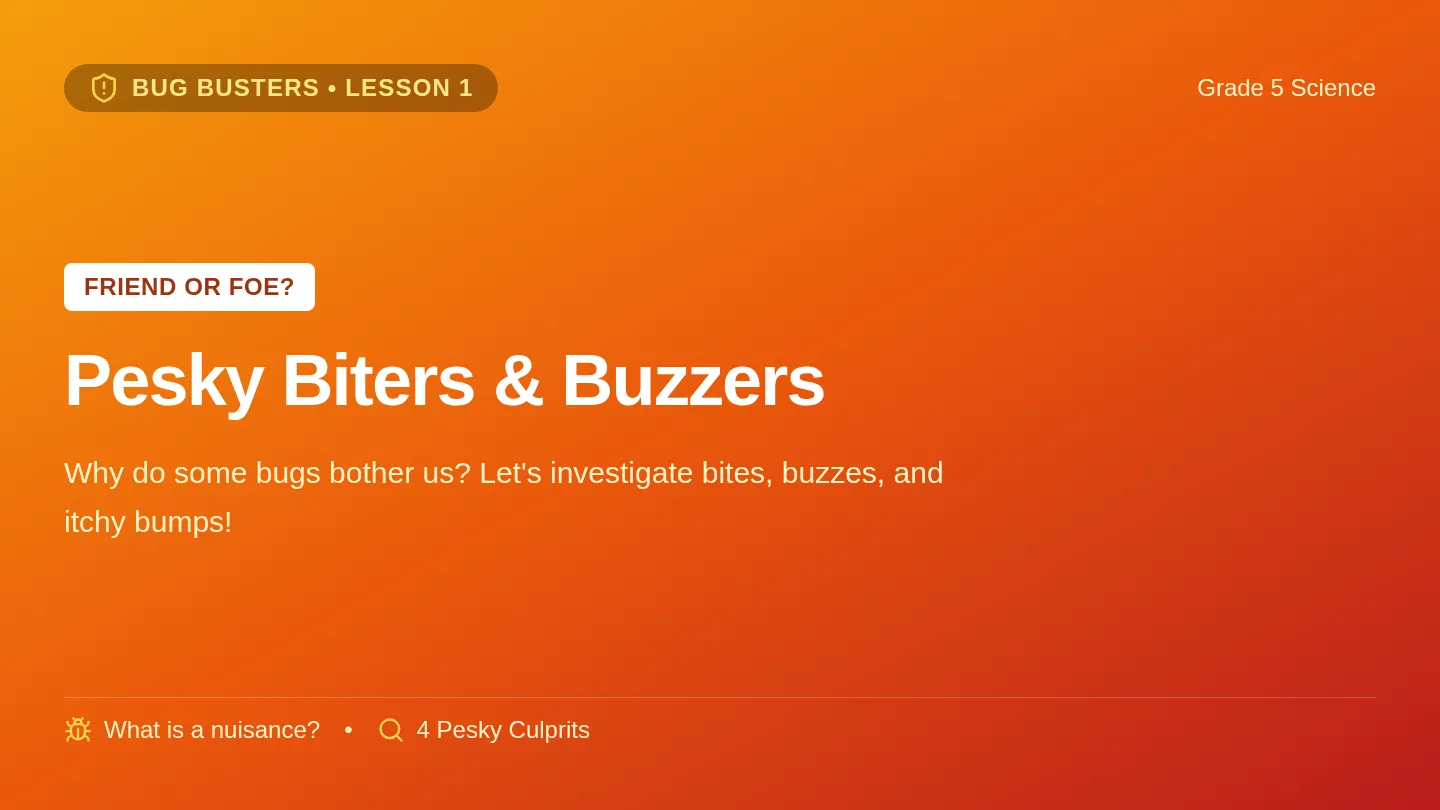
Pesky Biters Slides

Bug Busters

A two-part fifth-grade science sequence investigating how insects can be annoying nuisances, bite and sting, and damage crops and homes. Specially scaffolded with high-visual supports, decodable text chunks, and guided practice for lower-literacy learners.

Lenny Avatar
Lenny
11
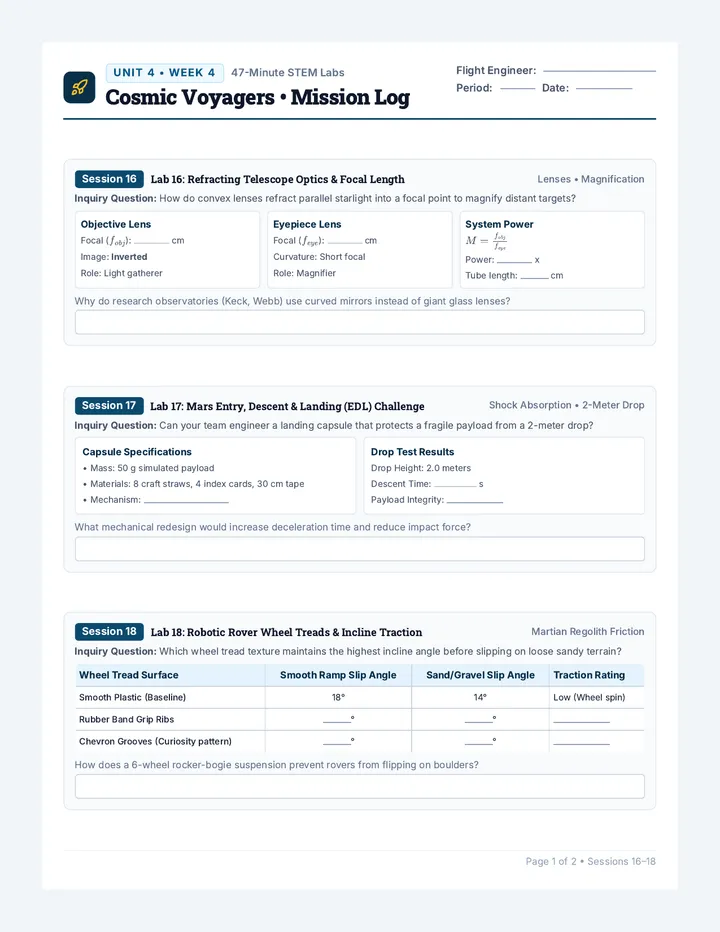
Cosmic Voyagers Lab Log

Cosmic Voyagers

Week four covers sessions 16 through 20, focusing on space mission architecture, telescope optics, robotic rover mobility engineering, radio signal communication delays, and exoplanet transit detection. Sixth graders apply engineering design and observational techniques in daily 47-minute periods.

B

bfox

2
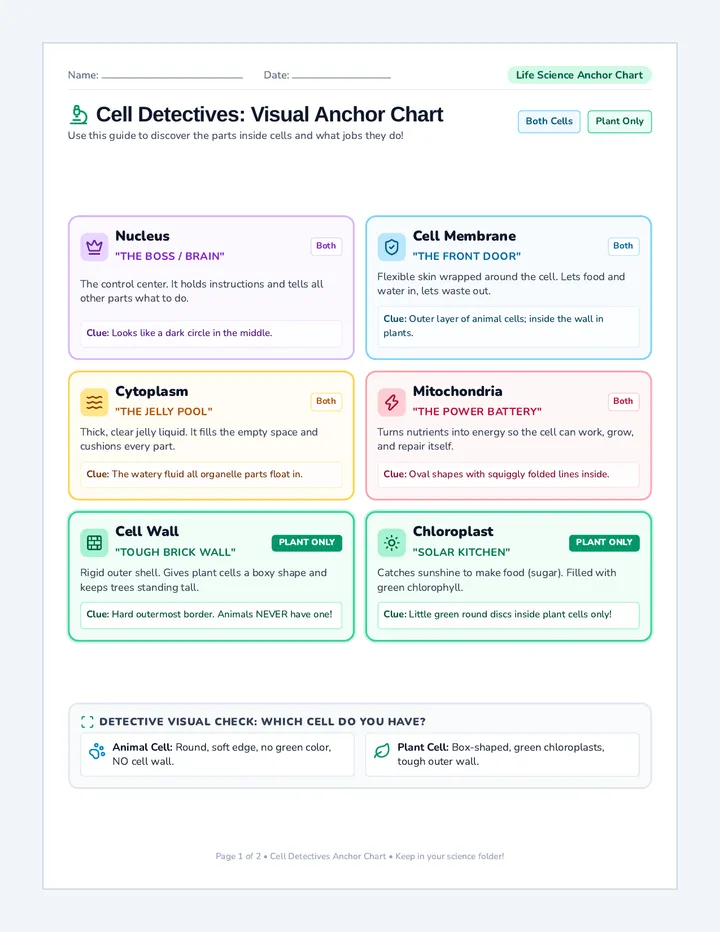
Cell Parts Anchor Handout

Cell Parts Anchor Handout

A 2-page visual anchor chart and simplified reading passage introducing cell organelles, plain-language job analogies, and structured comprehension questions tailored for self-contained learners.

CF

Carissa Fenner

Habitability Blueprint Slides

Life Beyond Limits

A one-week interdisciplinary astrobiology sequence investigating Earth's habitability, extreme biological adaptations across eleven Earth species, and the plausibility of life on other celestial bodies.

M

Megan.Tanner

7
Stellar Forge Lab Log

Stellar Forge

Week three covers sessions 11 through 15, investigating stellar lifecycles, the Hertzsprung-Russell diagram, stellar spectroscopy, 3D constellation parallax, and galaxy morphological classification. Students explore cosmic nucleosynthesis and deep space structures in daily 47-minute periods.

B

bfox

2
Cell Detectives Slides

Cell Detectives Slides

A 7-slide visual presentation introducing plant and animal cells with large high-contrast text, clear visual analogies, side-by-side comparisons, and interactive check questions for self-contained life science learners.

CF

Carissa Fenner