Lenny.com
Explore
Create
ActivitiesNewMathEnglish Language ArtsScience & EngineeringSocial StudiesGlobal LanguagesHealth & Physical EducationSpecial EducationCounseling & Life SkillsArts & CreativityESL
Lenny.com
Lenny.com
Explore
Create
ActivitiesNewMathEnglish Language ArtsScience & EngineeringSocial StudiesGlobal LanguagesHealth & Physical EducationSpecial EducationCounseling & Life SkillsArts & CreativityESL
Lenny.com
Lenny.com

Solutions

Lenny for EducatorsLenny for SchoolsLenny for Districts

Product

ExploreSign inCreateSupportAbout

Resources

Getting startedMTSS Acceleration Program

© 2026 Lenny Learning Inc.

TermsPrivacyAccessibility
LinkedInInstagramX
Lenny
Science & EngineeringLife ScienceLiving ThingsAnimalsPlantsBody SystemsTraitsAdaptationsCellsEcosystemsHeredityGenes to TraitsCell DivisionPhysicsComparing MaterialsShapes and PropertiesMagnetsMagnetismLightSoundLight and SoundMatterStates of MatterChanges of StateMixturesPhysical and Chemical ChangeHeating and CoolingHeat and Thermal EnergyEnergyForce and MotionElectrical CircuitsAtoms and MoleculesPeriodic TableMotion in One DimensionMotion in Two DimensionsScalars and VectorsForces and Laws of MotionCircular Motion and GravityMomentum and ImpulseWork, Energy, and PowerWavesElectromagnetic WavesGeometric OpticsElectricity and MagnetismSimple Harmonic MotionThermodynamicsNuclear PhysicsEarth Science & AstronomyWeatherWater CycleRocks and MineralsFossilsEarth's FeaturesEarth's ResourcesEarth's StructureWeather and ClimateEarth EventsFossils and Geologic TimePlate TectonicsHuman ImpactsAstronomyChemistryUnits and MeasurementAtomic StructurePeriodic TrendsChemical BondingNomenclatureMolecular StructureIntermolecular ForcesThe MoleStoichiometryProperties of GasesSolutionsChemical ReactionsBalancing EquationsEnergy ChangesRates of ReactionsEquilibriumAcids and BasesQuantum ModelBiologyClassificationCell StructureThe Chemistry of LifeBiomoleculesCellular TransportCell EnergyCell Growth and DivisionDNAProtein SynthesisMeiosis and Sexual ReproductionPatterns of InheritanceMulticellular OrganismsEvolutionEcologyBiodiversityComputer ScienceAlgorithms and Computational ThinkingProgramming LanguagesComputing SystemsNetworks and InternetData AnalysisCybersecurityAI and Machine LearningSoftware Design and DevelopmentBlockchainEngineering & AIDesigning ExperimentsEngineering PracticesDesign ThinkingEngineering Design ProcessMechanical EngineeringElectrical EngineeringMaterials and StructuresCAD and 3D DesignRoboticsArtificial Intelligence BasicsVibe CodingMachine LearningAI Ethics and SocietySystems ThinkingEntrepreneurship & InnovationEntrepreneurial MindsetBusiness Idea DevelopmentBusiness Plan BasicsMarketing & Customer DiscoveryFinancial Management for Startups

Dihybrid Crosses

A comprehensive high school biology lesson exploring dihybrid crosses and Mendel's Law of Independent Assortment. Students practice gamete determination using the FOIL method, calculate phenotypic ratios across 16-box Punnett squares, and evaluate genetic evidence.

JTJulie Taylor

Dihybrid Crosses

A comprehensive high school biology lesson exploring dihybrid crosses and Mendel's Law of Independent Assortment. Students practice gamete determination using the FOIL method, calculate phenotypic ratios across 16-box Punnett squares, and evaluate genetic evidence.

JTJulie Taylor

Page 2 of 2

2 Problem 2: Fruit Fly Cross (Ggvv × GgVv) Solutions

10 Pts Total

Male (Ggvv) Gametes: Gv, Gv, gv, gv

Female (GgVv) Gametes: GV, Gv, gV, gv

Completed 16-Box Grid:

♀ \ ♂GvGvgvgv
GVGGVvGGVvGgVvGgVv
GvGGvvGGvvGgvvGgvv
gVGgVvGgVvggVvggVv
gvGgvvGgvvggvvggvv

Expected Phenotype Fractions:

PhenotypeFraction
Gray, Normal (G_V_)6 / 16 (3/8)
Gray, Vestigial (G_vv)6 / 16 (3/8)
Black, Normal (ggV_)2 / 16 (1/8)
Black, Vestigial (ggvv)2 / 16 (1/8)

Percent black, vestigial: 2/16 = 12.5%

Why 9:3:3:1 is absent:

The classic 9:3:3:1 ratio only occurs when both parents are double heterozygotes (AaBb × AaBb). Because the male is homozygous recessive for wing length (vv), phenotypic outcome collapses into a 6:6:2:2 (or 3:3:1:1) distribution.

3 Problem 3: Scientific Investigation & Reasoning Key

8 Pts Total

A. Deduced Parental Genotypes: 4 pts (2 pts per parent)

Parent 1: TTHh (or TtHh if P2 is TThh)

Parent 2: TThh (or tthh if P1 is TTHh)

Rationale: 100% tall offspring (400/400) requires at least one parent to be TT. A ~1:1 texture split (204 hairy : 196 hairless) requires a heterozygous cross with a homozygous recessive trait (Hh × hh). Accepted pairs: TTHh × TThh or TTHh × tthh.

B. Exemplar Response (Full Credit Rubric): 4 pts

“Mendel's Law of Independent Assortment states that alleles for different traits segregate independently during gamete formation. Cellularly, during Metaphase I and Anaphase I of meiosis, homologous chromosome pairs line up randomly at the metaphase plate and separate independently. Because the height gene and texture gene reside on non-homologous chromosomes (unlinked), which allele a gamete receives for height has no bearing on which allele it receives for stem texture.”

• Mentions random alignment in Meiosis I (2 pts) • Explains independent distribution of unlinked genes (2 pts)

High School Biology • Master Grading Rubric • Total: 30 Points Page 2 of 2

You might also like

Helix Studio Slides

Candy Code Sequence

A multi-day competency-based biology sequence exploring DNA architecture, complementary base pairing, and semi-conservative replication through tactile candy modeling and evidence-based assessment.

TM

Teri Minami

4
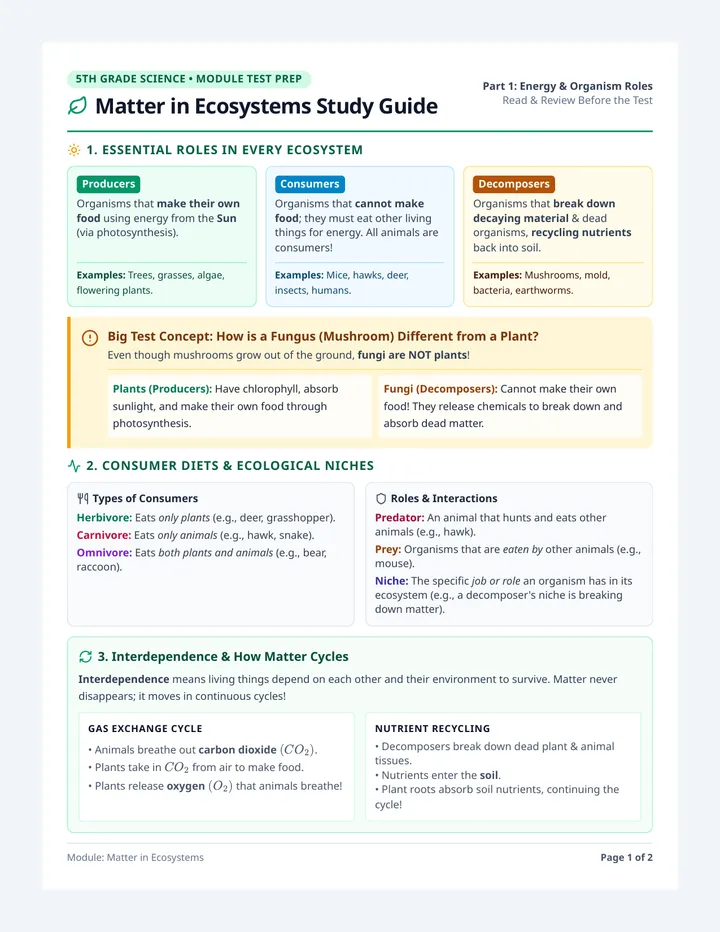
Ecosystem Matter Study Guide

Ecosystem Matter Review

A 5th grade science review lesson covering matter cycles and energy flow in ecosystems. Prepares students for the module test with comprehensive concept reviews, targeted practice, and experimental analysis.

AA

Ashley Atmanavicius

3
Prefix Code Bellwork

Prefix Code Bellwork

A focused, print-ready 5-minute bellwork activity introducing and reinforcing the Greek/Latin prefixes mono-, di-, poly-, and macro- through prefix decoding, word analysis, and biomolecule application.

S

stewart

Habitability Blueprint Slides

Life Beyond Limits

A one-week interdisciplinary astrobiology sequence investigating Earth's habitability, extreme biological adaptations across eleven Earth species, and the plausibility of life on other celestial bodies.

M

Megan.Tanner

7
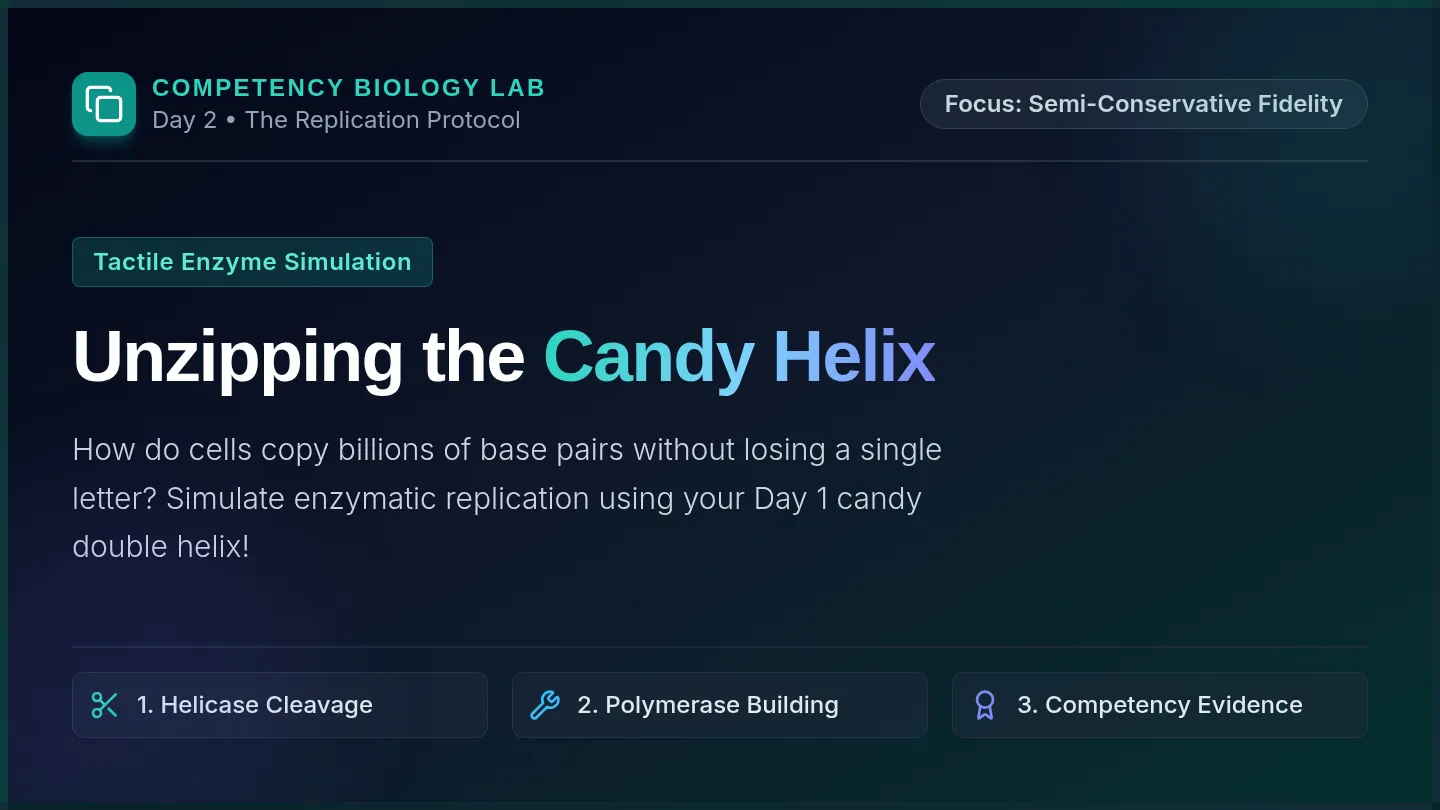
Replication Protocol Slides

Replication Protocol

Students simulate semi-conservative DNA replication by enzymatically unzipping candy strands and building complementary daughter helices, demonstrating competency through lab evidence and knowledge checks.

TM

Teri Minami

2
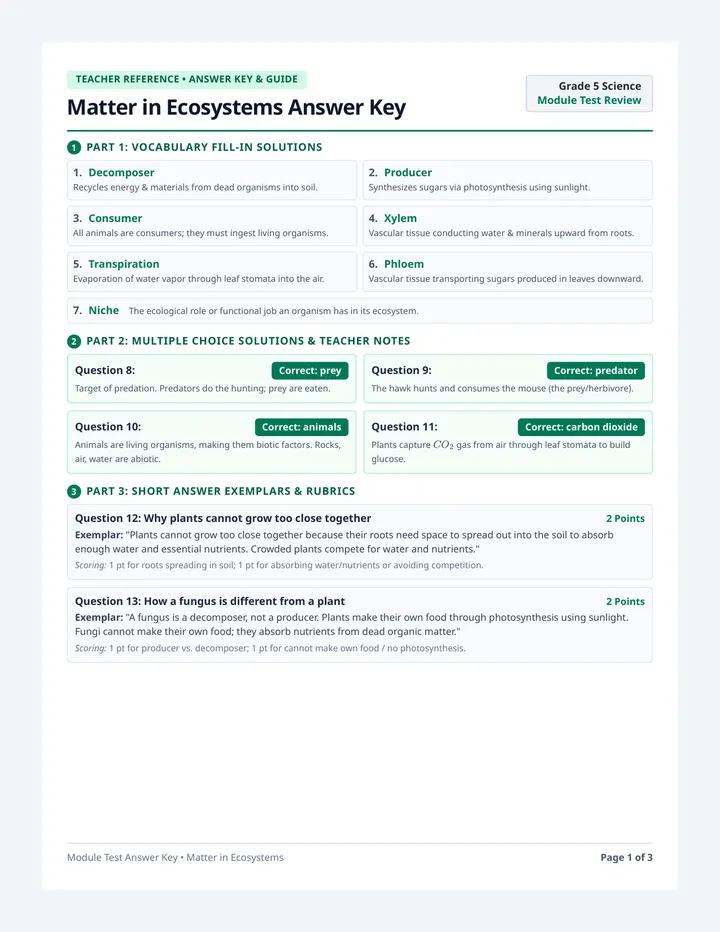
Ecosystem Review Answer Key

Ecosystem Review Answer Key

A comprehensive 3-page teacher answer key and scoring guide for the Ecosystem Review Worksheet, featuring complete answer explanations for vocabulary including niche, experimental CER analysis, and the plant anatomy labeling page.

AA

Ashley Atmanavicius

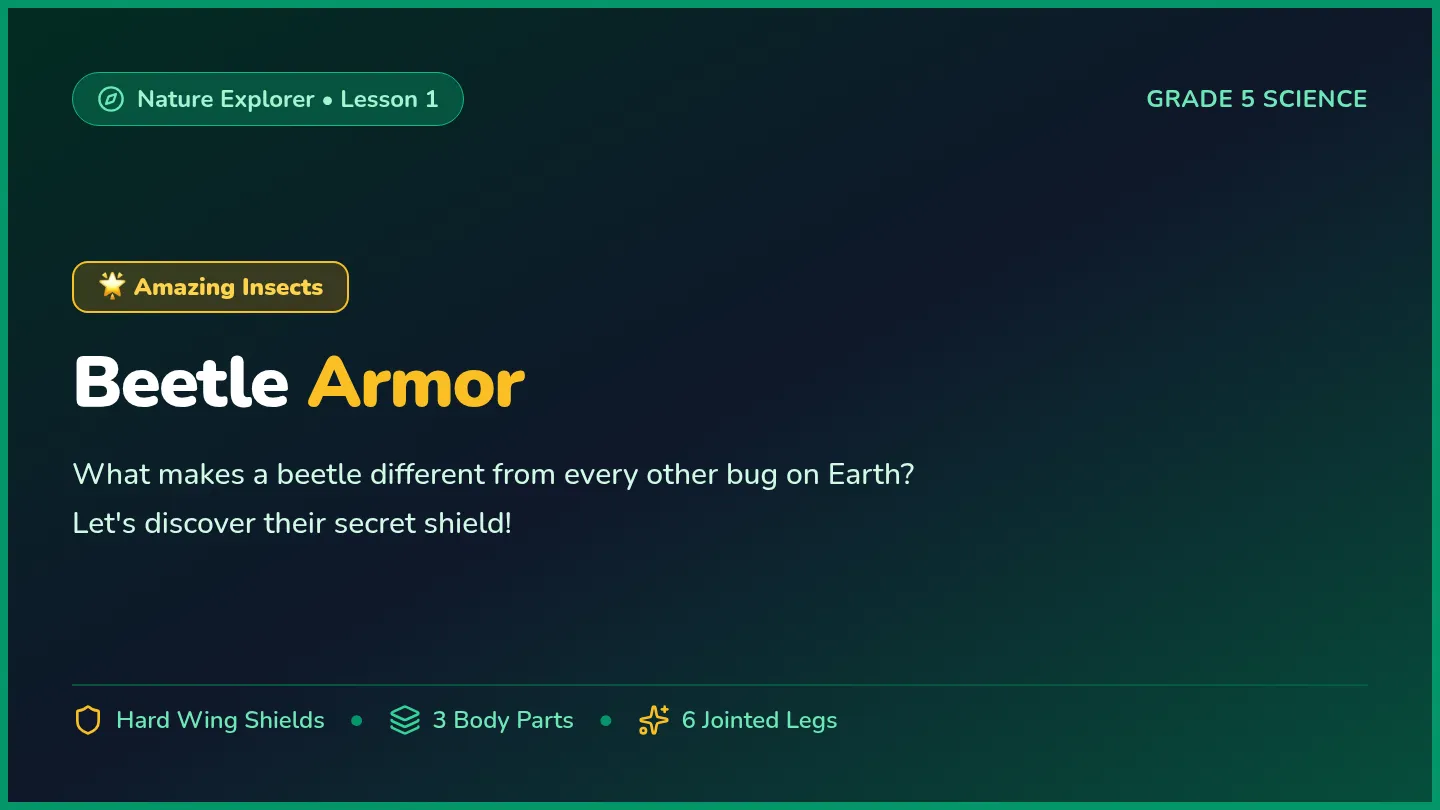
Beetle Armor Slides

Beetle Power

A high-interest, accessible science unit for fifth-grade developing readers exploring beetle anatomy, unique adaptations, and diverse beetle species. Incorporates visual vocabulary, supportive sentence frames, and clear graphic organizers.

A

amy_oshea

9
Helix Studio Slides

Helix Studio

Students dissect nucleotide anatomy and discover base pairing rules by engineering an accurate candy double helix model with complementary nitrogenous bases and sugar-phosphate backbones.

TM

Teri Minami

2
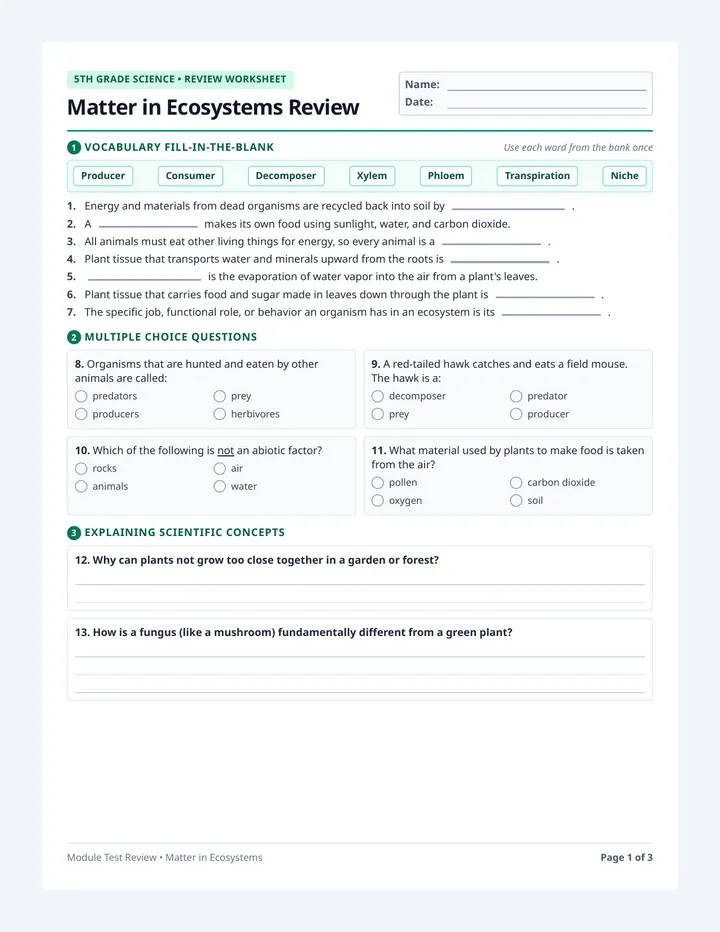
Ecosystem Review Worksheet

Ecosystem Review Worksheet

A 3-page print-ready review worksheet for 5th grade students covering matter in ecosystems, including vocabulary with niche, xylem, and phloem, experimental analysis, and a dedicated plant anatomy labeling page for roots, stem, xylem, phloem, stomata, leaf, and flower.

AA

Ashley Atmanavicius

Broadcast Breakthroughs Slides

Broadcast Tech Spotlight

A dynamic multimedia project sequence where students investigate cutting-edge sports broadcasting technologies, craft scripted storyboards, and produce professional recorded voiceover presentations.

S

Stacy.Bogart

5
Atomic Blueprint Slides

Atomic Blueprint

A comprehensive introduction to the Periodic Table, exploring how elements are organized by atomic number, the significance of groups and periods, and the distinct properties of metals, non-metals, and metalloids through real-world examples.

LP

LeShonda Price

9
Ecosystem Matter Study Guide

Ecosystem Matter Study Guide

A comprehensive 2-page visual study guide for 5th grade students reviewing matter and energy in ecosystems, updated to include xylem, phloem, and plant vascular transport alongside producers, consumers, and decomposers.

AA

Ashley Atmanavicius