A lesson designed to teach and practice key literacy and inquiry skills—Observation, Inference, Primary Source, Secondary Source, Fact, and Opinion—through a highly engaging junior detective simulation.
A comprehensive writing workshop sequence helping students write powerful historical arguments. Covers general transitions, cause-and-effect connections, and specialized argument structures for U.S. History.
A playful and bright exploration of life during the Stone Age, covering early humans, ice age giants, and ancient cave art. Students discover how prehistoric people survived and created through engaging visual slides and cooperative activities.
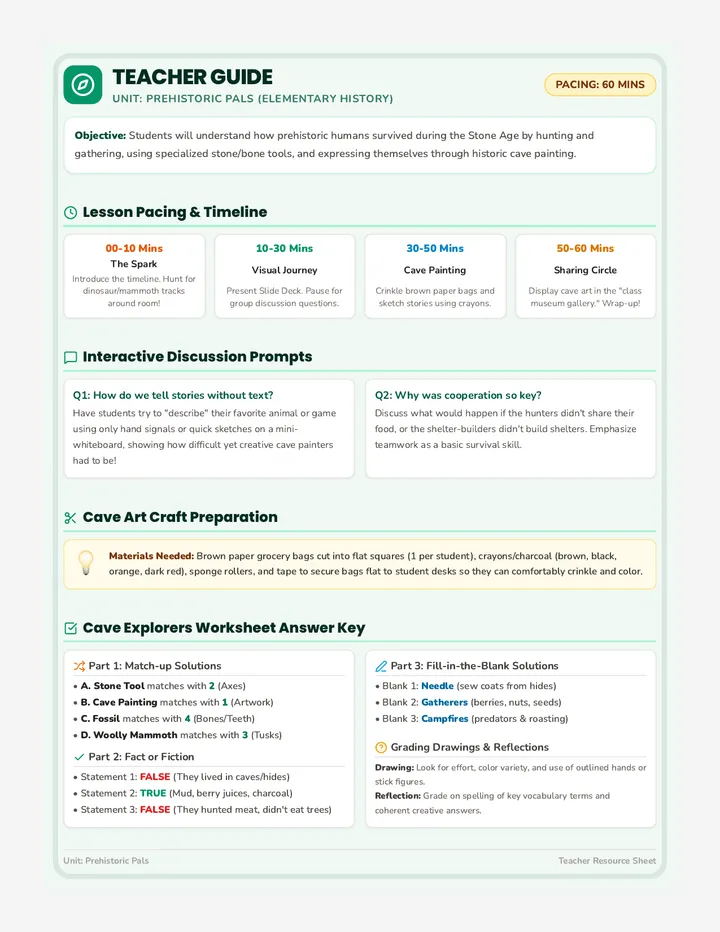
An essential 1-page teacher reference guide containing lesson plans, pacing recommendations, engaging discussion prompts, and the complete answer key for the student worksheet.
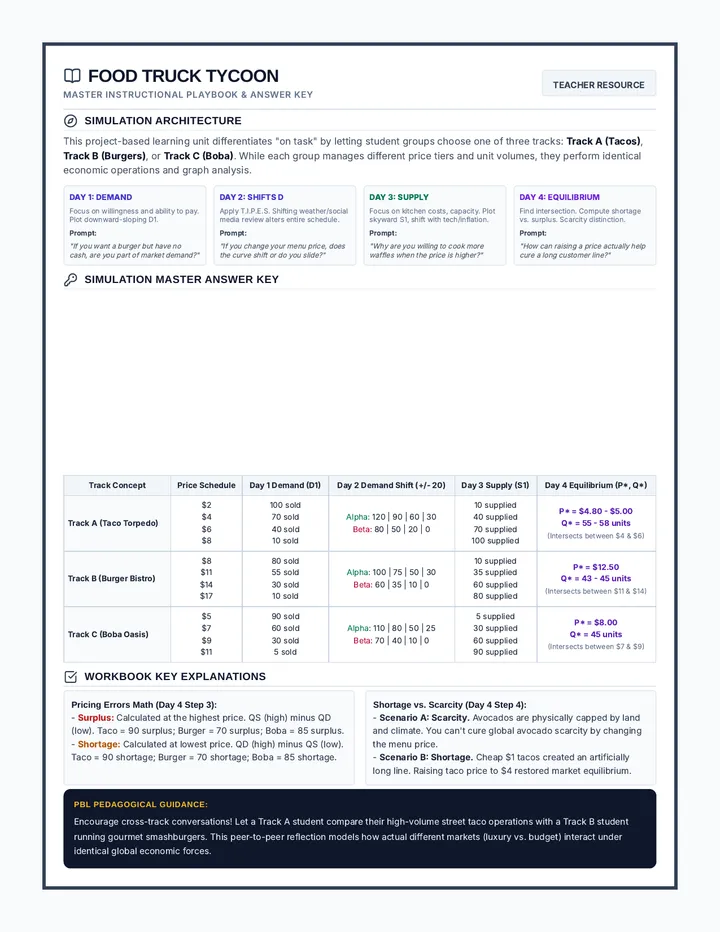
A comprehensive 4-day project-based learning unit where students design and run a simulated food truck business. Through this hands-on scenario, they discover, graph, and apply the principles of demand, supply, shifting markets, and market equilibrium.
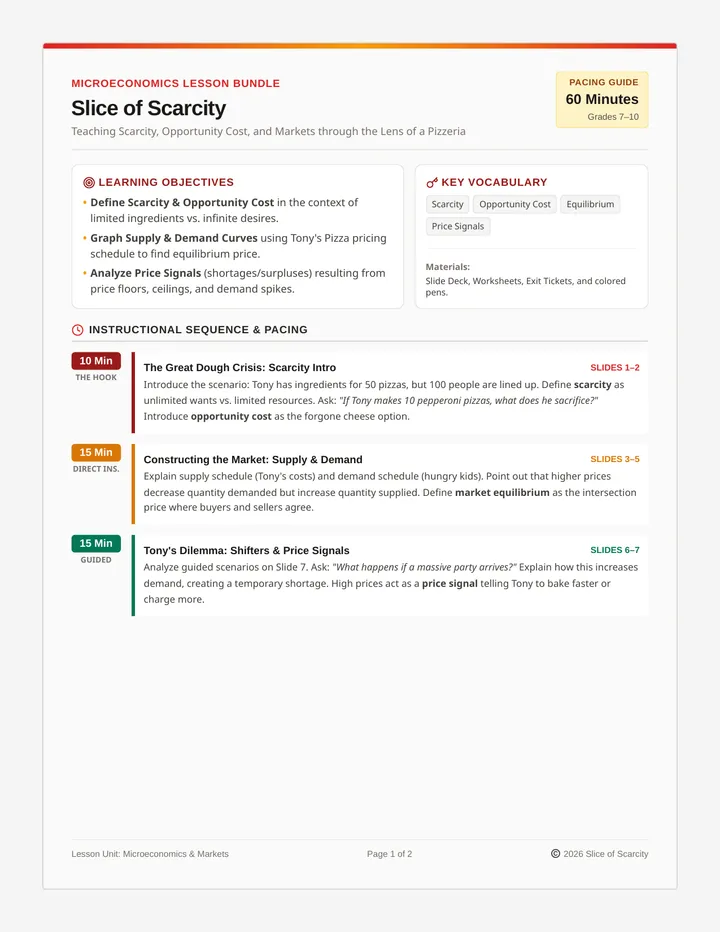
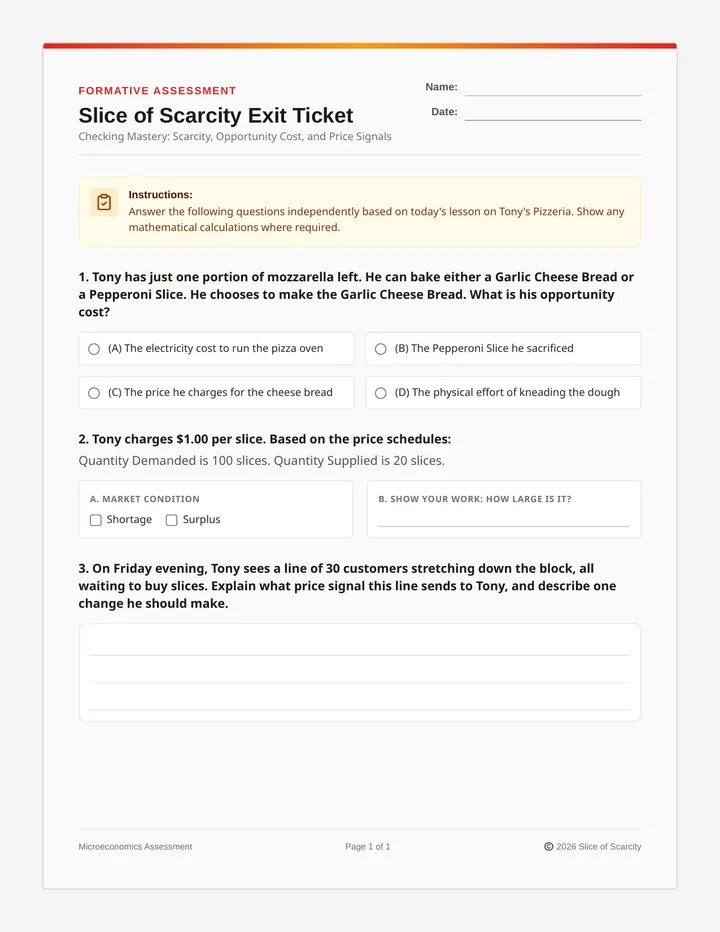
A comprehensive, pizza-themed microeconomics lesson covering scarcity, opportunity cost, supply and demand, and price signals using a real-world restaurant scenario. Includes a complete teacher guide, interactive slides, a guided student worksheet, and a quick exit ticket.
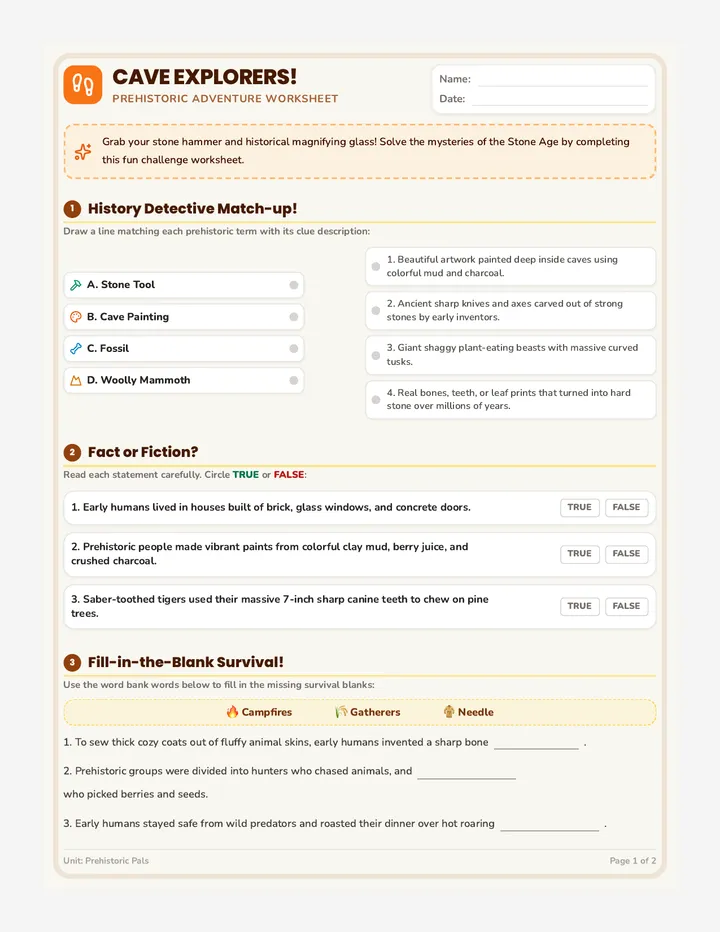
A fun, printable 2-page student worksheet that tests reading comprehension, encourages artistic expression with a 'Design Your Own Cave Art' section, and features interactive matching activities on prehistoric life.
A behavioral economics sequence for 8th graders that explores the psychological triggers of spending. Students analyze Maslow's hierarchy, emotional triggers, the Diderot effect, and marketing tactics to design personal friction strategies for better impulse control.
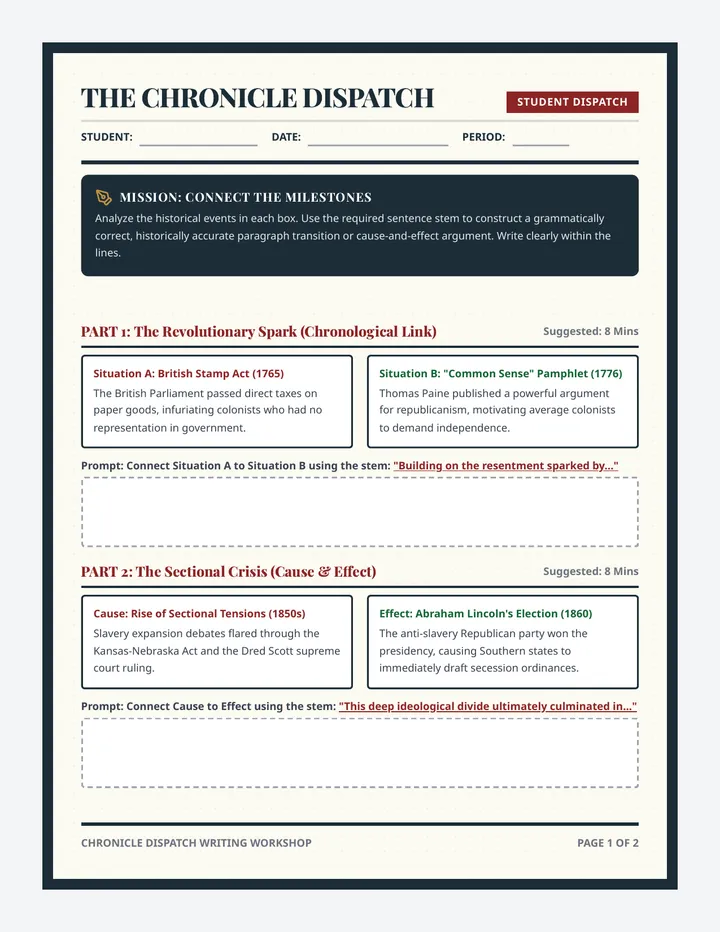
A writing-focused lesson where students apply transition and cause-and-effect sentence stems to major events in U.S. History, from the colonial era through the modern civil rights movement.
An adorable, playful, and bright 6-slide presentation that introduces elementary students to life in prehistoric times, including early humans, ice age giants, and cave art. Features whimsical borders, custom doodle accents, and high-contrast typography.
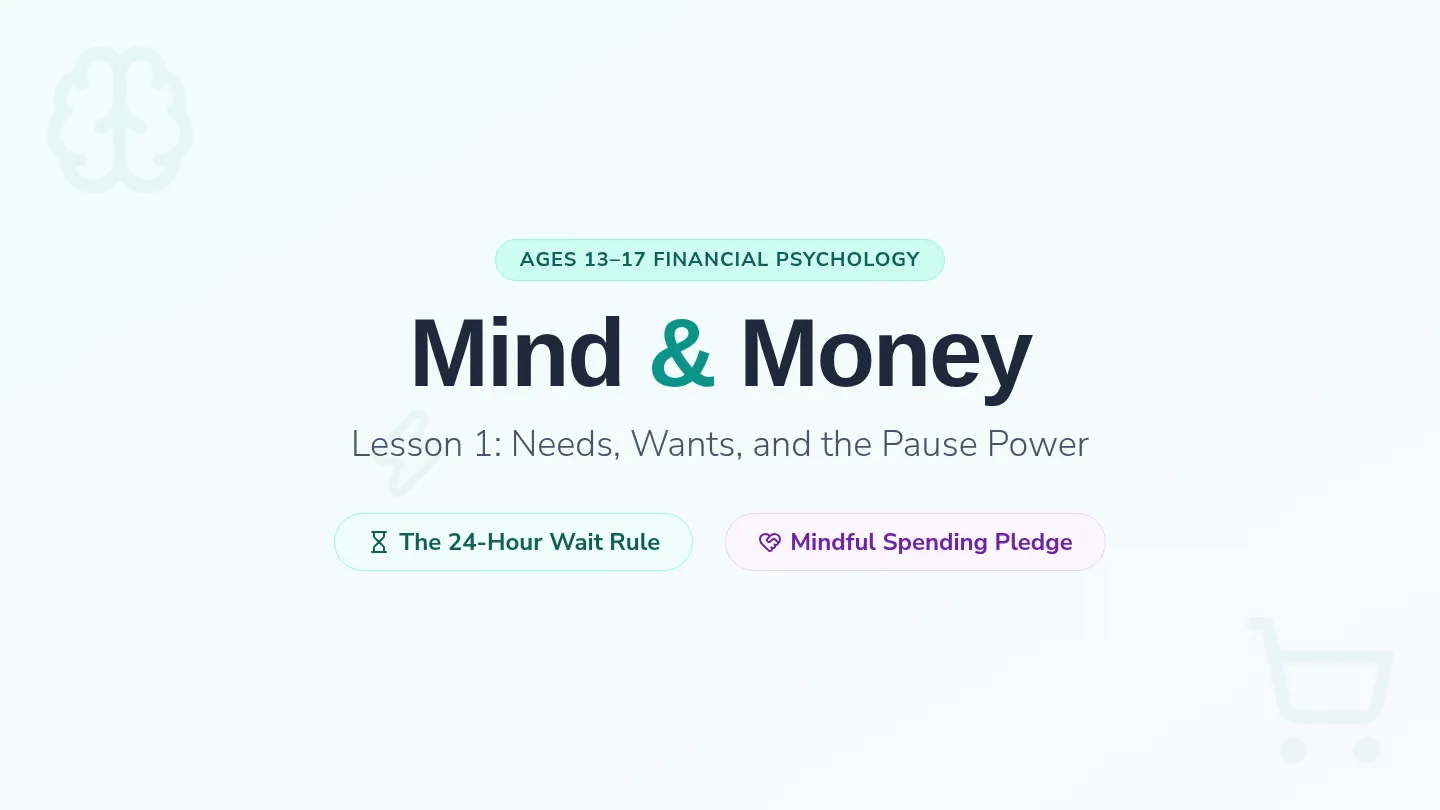
A behavioral economics sequence for 8th graders that explores the psychological triggers of spending. Students analyze needs versus wants using Maslow's hierarchy and examine how emotional triggers like stress or boredom drive impulsive financial decisions.
A practical lesson teaching students how to write historical arguments using transition and cause-and-effect sentence stems. Includes interactive slides, a fast-paced task card warm-up, and a teacher guide.
A 1-page quick exit ticket formative assessment. Features scenario-based questions focusing on opportunity cost, shortages vs. surpluses, and interpreting price signals in the market. Includes student name and date fields.