An exploration of early human migration, the transition from hunter-gatherers to agrarian societies, and the rise of the first river valley civilizations in Mesopotamia and ancient Egypt.
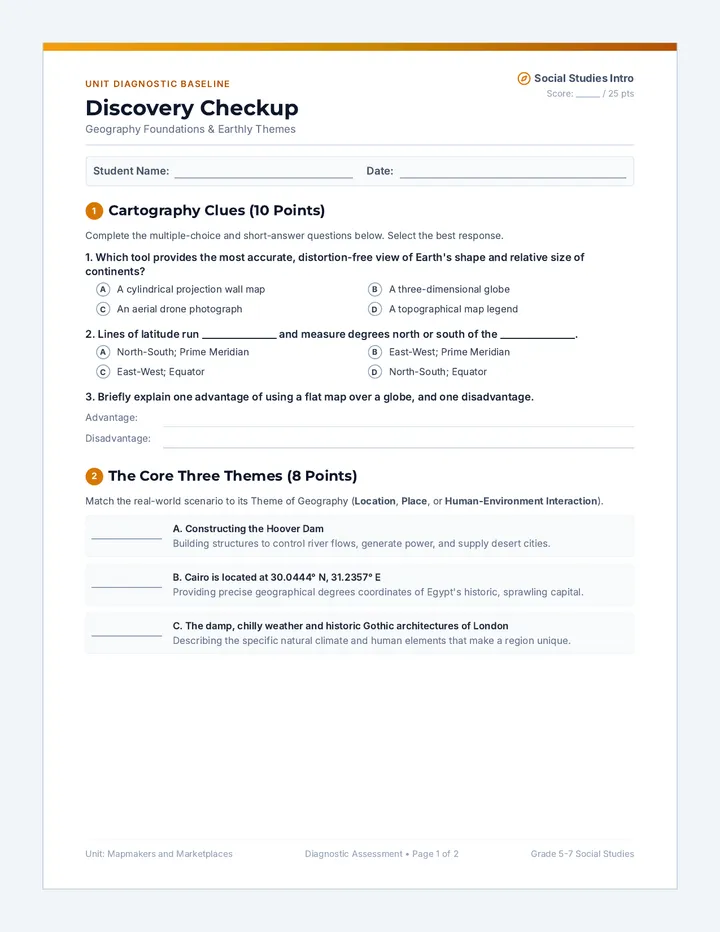
An introductory social studies sequence exploring geography foundations, core geographical themes, and basic economics. Students participate in highly interactive lessons, readings, task cards, and hands-on worksheets.
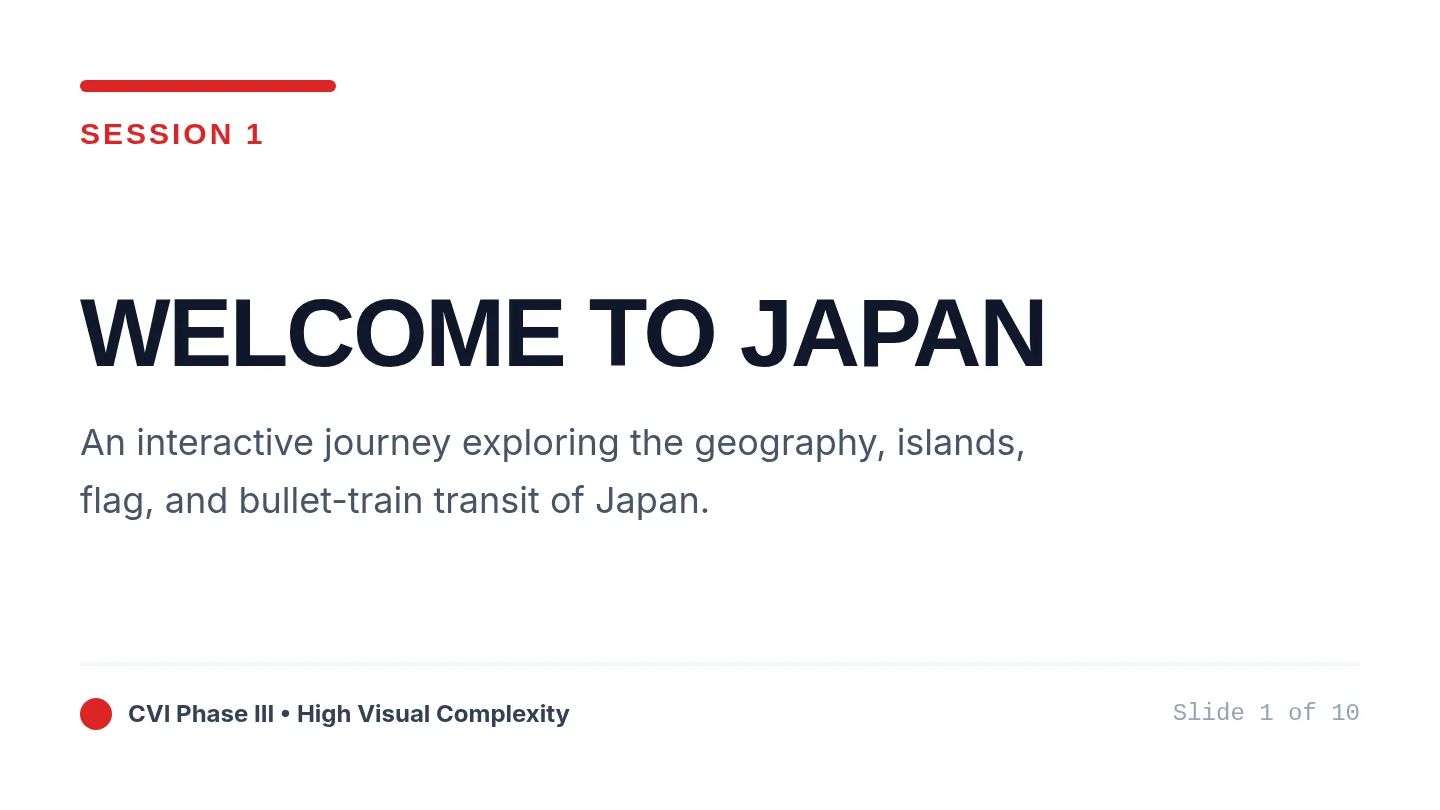
An introductory lesson exploring Japan's geographical location, island features, national flag, and a virtual bullet-train route, adapted for students with CVI Phase III.
A visually rich, light-background slide presentation designed for students in Phase III CVI with high visual complexity. Features a dedicated island pronunciation guide with clear phonetic spellings and syllables, elegant visual targets, and clean sans-serif typography.
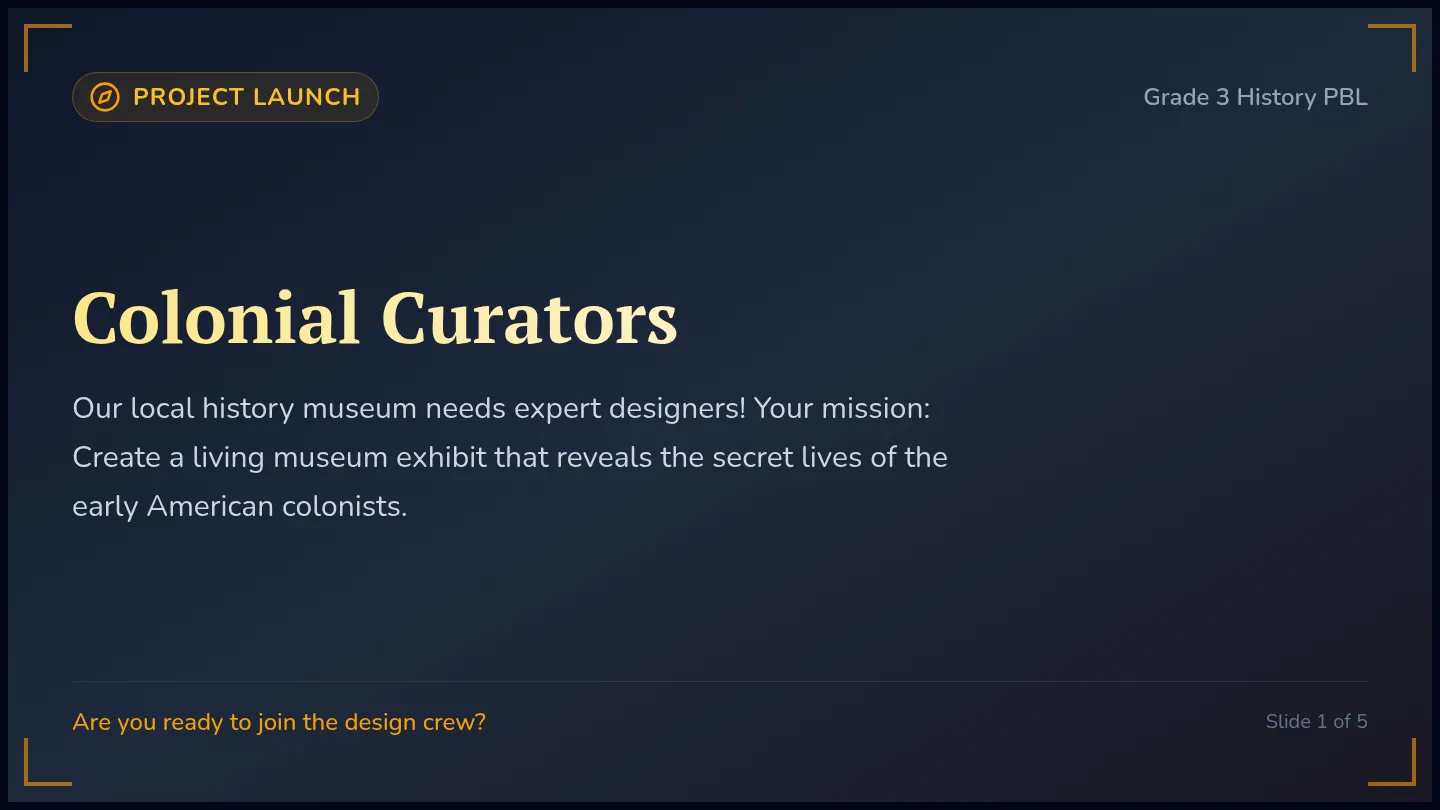
An immersive 3rd-grade Project-Based Learning unit where students act as museum curators to design and exhibit a living history museum, answering the driving question: How did where colonist lived shape how they lived?
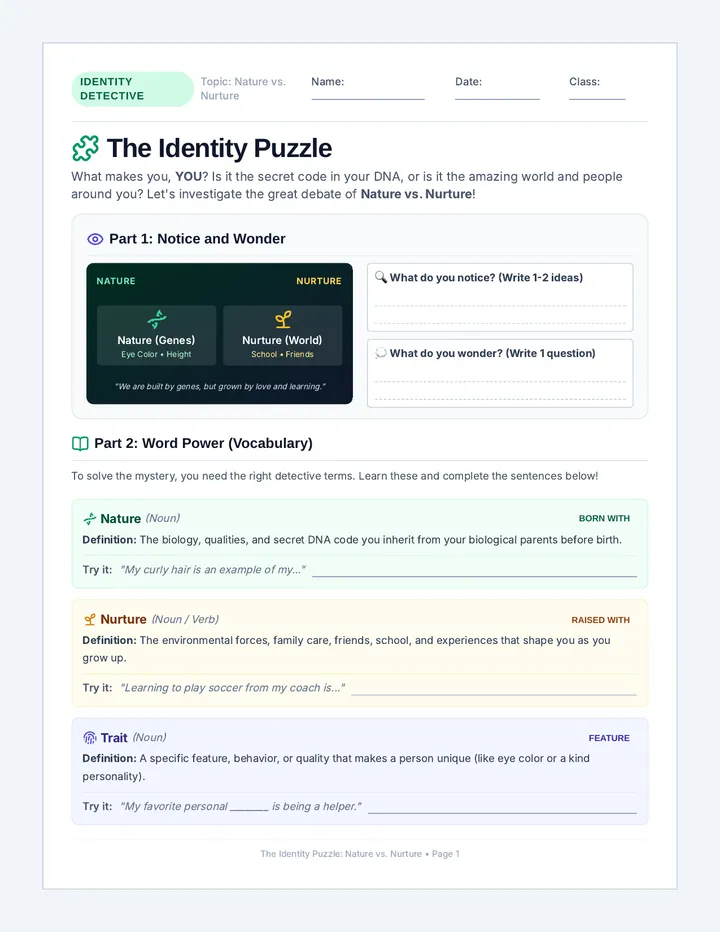
A simplified 6th-grade lesson exploring the classic nature vs. nurture debate. Students learn key vocabulary, read a graphic-organizer-style text, and answer scaffolded comprehension and reflection questions.
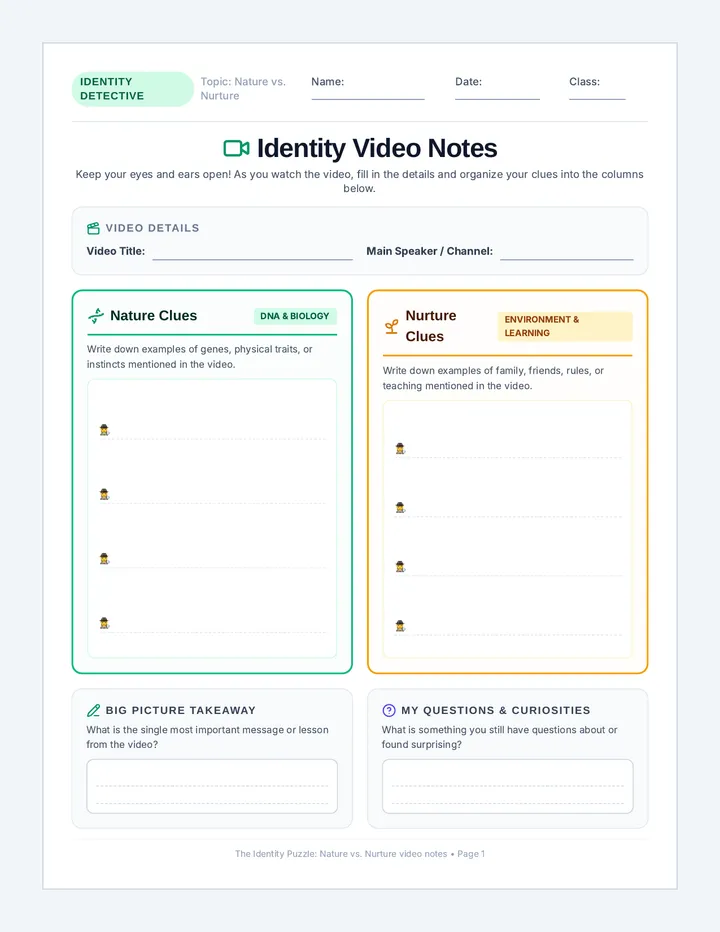
A single-page student video note-taking sheet with themed columns for nature and nurture observations, a video details block, and sections for writing a big-picture summary and outstanding questions.
A comprehensive unit on child development from birth through age 18, focusing on physical, cognitive, and social-emotional growth across early childhood, middle childhood, and adolescence.
Explores fundamental economic concepts such as trade, natural and human resources, and the balance of supply and demand through simulations and worksheets.
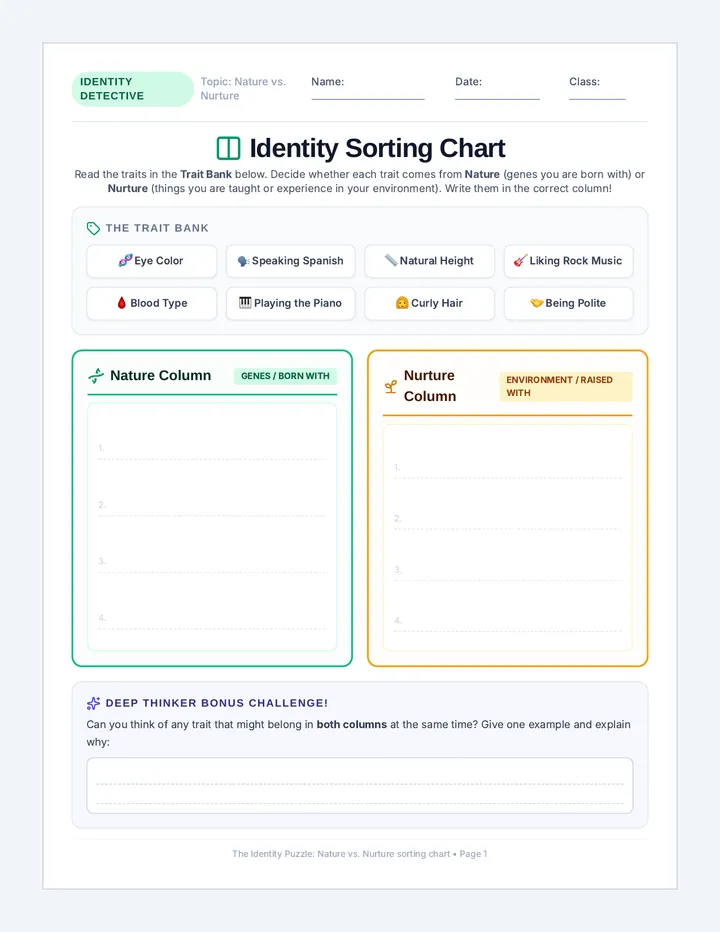
A single-page student sorting activity featuring a themed Word Bank of 8 kid-friendly traits and a beautifully styled, spacious Nature vs. Nurture T-chart for 6th-grade students to complete.
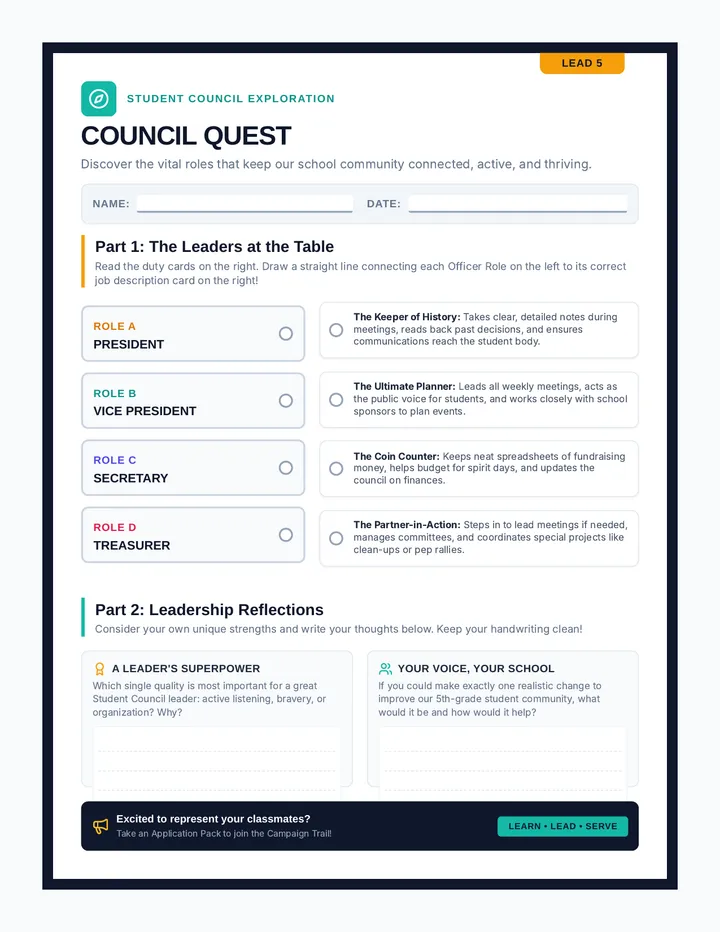
A comprehensive program to establish and run an active 5th-grade student council. It covers introductory roles, democratic campaigning, leadership training, and meeting protocols.
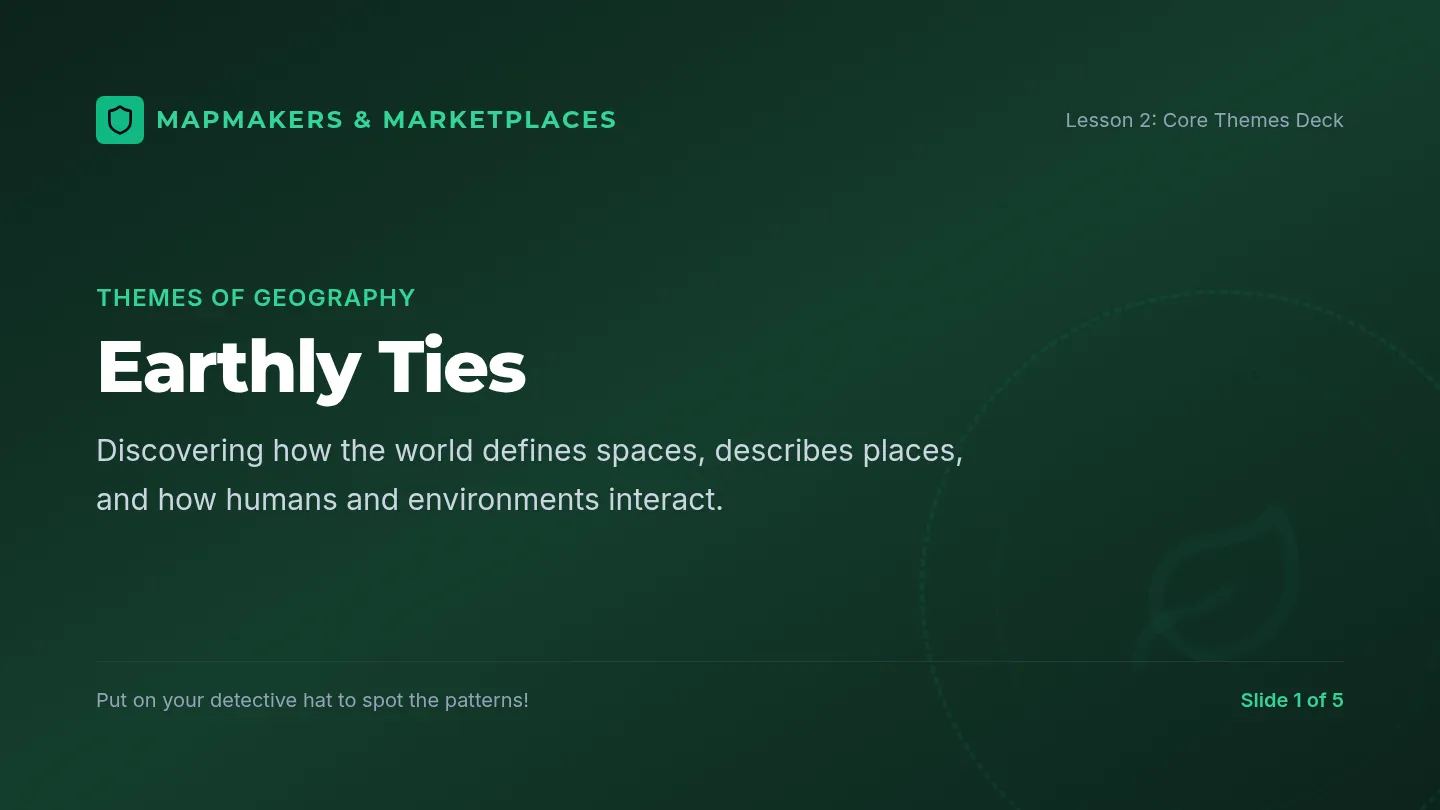
Introduces three major themes of geography: Location, Place, and Human-Environment Interaction. Includes station task cards and guided reading passages.
A 3-page, highly scaffolded, 6th-grade student worksheet packet on the Nature vs. Nurture debate. Includes a notice-and-wonder hook, kid-friendly vocabulary cards, a simplified graphic-organizer reading passage, and matching, multiple-choice, short-answer, and personal reflection questions.