Lenny.com
Explore
Create
ActivitiesNewMathEnglish Language ArtsScience & EngineeringSocial StudiesGlobal LanguagesHealth & Physical EducationSpecial EducationCounseling & Life SkillsArts & CreativityESL
Lenny.com
Lenny.com
Explore
Create
ActivitiesNewMathEnglish Language ArtsScience & EngineeringSocial StudiesGlobal LanguagesHealth & Physical EducationSpecial EducationCounseling & Life SkillsArts & CreativityESL
Lenny.com
Lenny.com

Solutions

Lenny for EducatorsLenny for SchoolsLenny for Districts

Product

ExploreSign inCreateSupportAbout

Resources

Getting startedMTSS Acceleration Program

© 2026 Lenny Learning Inc.

TermsPrivacyAccessibility
LinkedInInstagramX
Lenny

Heat and Thermal Energy

Kinetic molecular theory, temperature scales, and heat transfer via conduction, convection, and radiation. Addresses specific heat capacity, thermal equilibrium, and phase changes.

Science & EngineeringLife ScienceLiving ThingsAnimalsPlantsBody SystemsTraitsAdaptationsCellsEcosystemsHeredityGenes to TraitsCell DivisionPhysicsComparing MaterialsShapes and PropertiesMagnetsMagnetismLightSoundLight and SoundMatterStates of MatterChanges of StateMixturesPhysical and Chemical ChangeHeating and CoolingHeat and Thermal EnergyEnergyForce and MotionElectrical CircuitsAtoms and MoleculesPeriodic TableMotion in One DimensionMotion in Two DimensionsScalars and VectorsForces and Laws of MotionCircular Motion and GravityMomentum and ImpulseWork, Energy, and PowerWavesElectromagnetic WavesGeometric OpticsElectricity and MagnetismSimple Harmonic MotionThermodynamicsNuclear PhysicsEarth Science & AstronomyWeatherWater CycleRocks and MineralsFossilsEarth's FeaturesEarth's ResourcesEarth's StructureWeather and ClimateEarth EventsFossils and Geologic TimePlate TectonicsHuman ImpactsAstronomyChemistryUnits and MeasurementAtomic StructurePeriodic TrendsChemical BondingNomenclatureMolecular StructureIntermolecular ForcesThe MoleStoichiometryProperties of GasesSolutionsChemical ReactionsBalancing EquationsEnergy ChangesRates of ReactionsEquilibriumAcids and BasesQuantum ModelBiologyClassificationCell StructureThe Chemistry of LifeBiomoleculesCellular TransportCell EnergyCell Growth and DivisionDNAProtein SynthesisMeiosis and Sexual ReproductionPatterns of InheritanceMulticellular OrganismsEvolutionEcologyBiodiversityComputer ScienceAlgorithms and Computational ThinkingProgramming LanguagesComputing SystemsNetworks and InternetData AnalysisCybersecurityAI and Machine LearningSoftware Design and DevelopmentBlockchainEngineering & AIDesigning ExperimentsEngineering PracticesDesign ThinkingEngineering Design ProcessMechanical EngineeringElectrical EngineeringMaterials and StructuresCAD and 3D DesignRoboticsArtificial Intelligence BasicsVibe CodingMachine LearningAI Ethics and SocietySystems ThinkingEntrepreneurship & InnovationEntrepreneurial MindsetBusiness Idea DevelopmentBusiness Plan BasicsMarketing & Customer DiscoveryFinancial Management for Startups

Videos

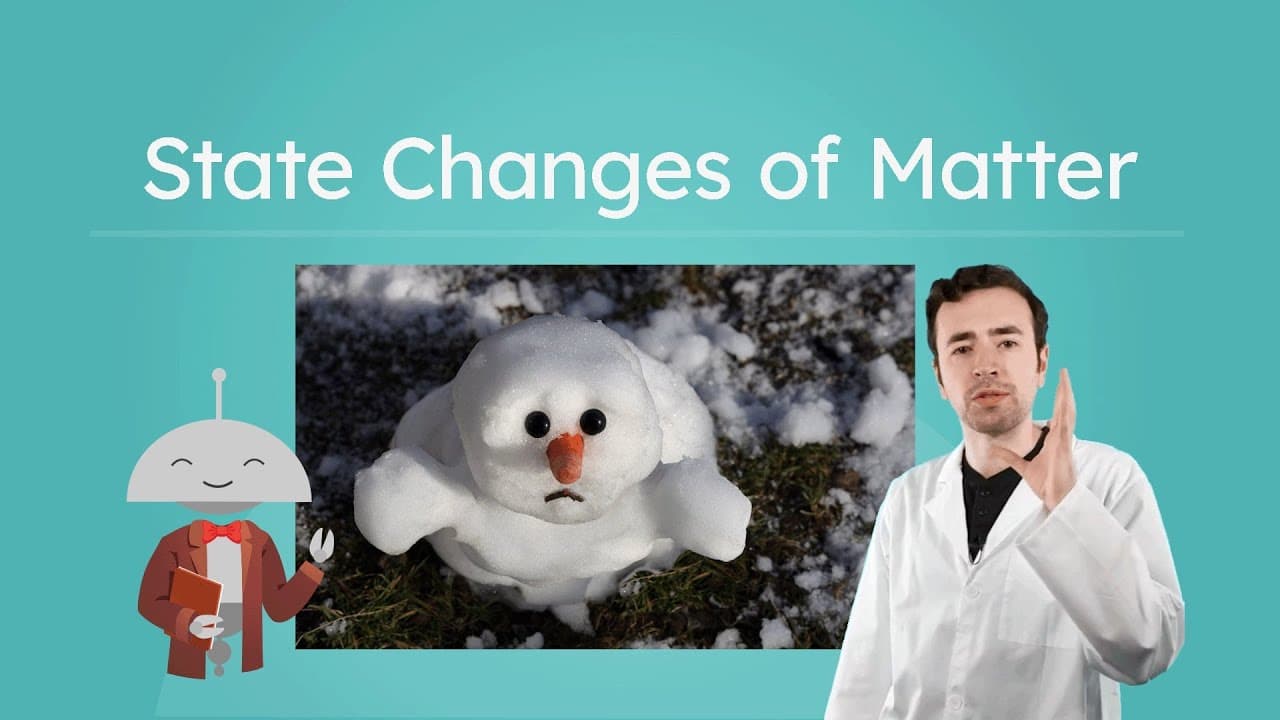
How Heat Changes the States of Matter

How Heat Changes the States of Matter

This educational video explores the science behind how matter changes between solid, liquid, and gas states through the addition and removal of heat energy. Using the relatable example of melting ice cream, the instructor guides students through the molecular behavior of matter, explaining how atoms speed up and spread apart when heated (melting, evaporation) and slow down and condense when heat is removed (condensation, freezing). The video effectively uses particle animations to visualize these invisible processes, making abstract concepts concrete for young learners. Key themes include the relationship between heat energy and particle movement, the specific terms for phase changes (melting, freezing, evaporation, boiling, condensation), and the distinction between "cold" as an energy versus the absence of heat. The instructor also addresses the conservation of mass, demonstrating that while matter changes form, its amount remains constant. This resource is highly valuable for elementary science classrooms as it covers core physical science standards regarding states of matter. It provides clear definitions, addresses common misconceptions about "cold energy," and connects scientific concepts to everyday phenomena like drying towels, morning dew, and boiling water. The built-in pauses for note-taking and reflection make it an excellent interactive tool for direct instruction or independent study.
Miacademy & MiaPrep Learning ChannelMiacademy & MiaPrep Learning Channel

8mins 58s

Exploring Sources of Heat Energy

Exploring Sources of Heat Energy

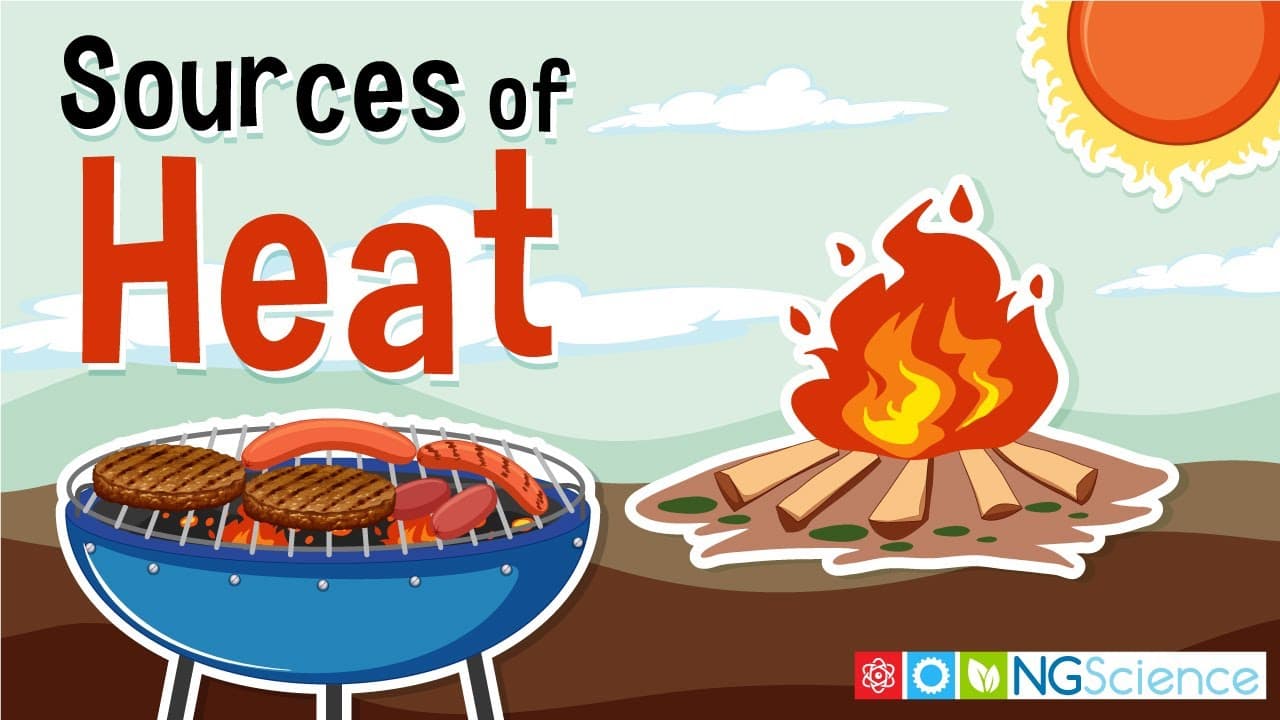
This educational video introduces young learners to the fundamental concept of heat energy and its various sources. It begins by defining heat as a form of energy that makes things feel warm and defines a "source of heat" as anything that produces this energy. The narrative highlights the Sun as Earth's primary and most critical heat source, explaining its vital role in sustaining life and warming the planet's non-living elements like rocks, soil, and water. The video transitions from natural heat sources to human-managed ones, exploring how burning fuels like wood, gas, and oil generate both heat and light. It provides concrete examples of these chemical reactions in settings like campfires and cooking. This distinction helps students understand that heat can be naturally occurring or generated through specific actions. Finally, the content connects these concepts to students' daily lives by examining common household appliances. It lists familiar items such as ovens, kettles, toasters, clothes dryers, irons, and hair dryers as examples of technology that act as sources of heat. This practical application allows teachers to discuss energy transformation and safety in the home, making the abstract concept of "energy" tangible for primary students.

Next Generation ScienceNext Generation Science

1min 52s

How Heat and Work Change Energy

How Heat and Work Change Energy

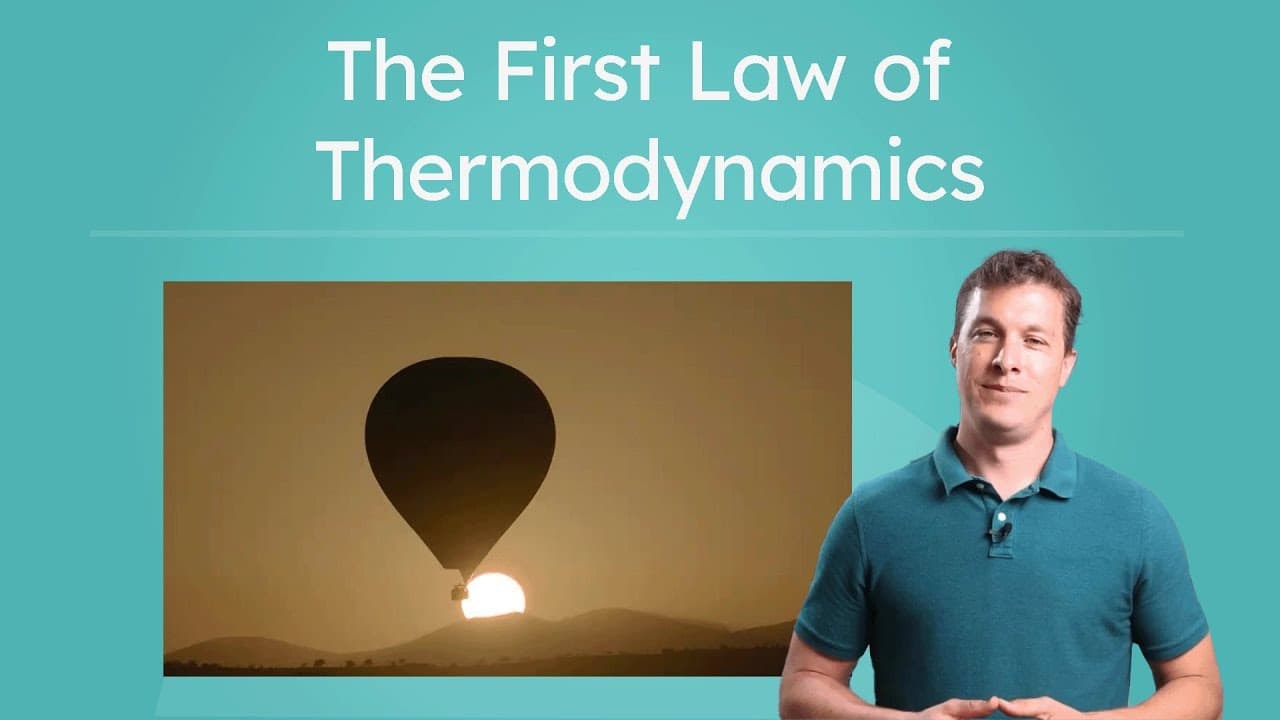
This engaging video lesson provides a clear and practical introduction to the First Law of Thermodynamics, using real-world examples like the SR-71 Blackbird spy plane and hot air balloons to ground abstract physics concepts. The narrator explains the fundamental relationship between heat ($q$), work ($w$), and the change in internal energy ($ΔE$), demonstrating that energy is conserved and can only be transferred, not created or destroyed. The video breaks down the mathematical formula $ΔE = q + w$ and provides specific rules for determining positive and negative signs based on whether a system gains or loses energy. Key themes explored include the definitions of thermodynamic systems and surroundings, the conversion of heat into mechanical work, and the principle of conservation of energy. The video specifically focuses on the crucial skill of identifying sign conventions—understanding when heat and work values should be positive or negative in calculations. It walks students through multiple practice problems, moving from conceptual identification to calculating energy changes in kilojoules. For educators, this video is an excellent resource for high school chemistry or physics units on thermodynamics. It bridges the gap between conceptual understanding and mathematical application. The step-by-step problem-solving sections allow for natural pause points where students can attempt calculations before seeing the solution, making it ideal for direct instruction or flipped classroom models. The use of the SR-71 Blackbird as a hook effectively demonstrates how thermodynamic principles solve real engineering problems.

Miacademy & MiaPrep Learning ChannelMiacademy & MiaPrep Learning Channel

12mins 34s

How Tornadoes Form and How We Measure Them

How Tornadoes Form and How We Measure Them

This educational video explores the science behind weather patterns, specifically focusing on extreme weather events and the formation of tornadoes. Hosted from the "Lighthouse Lab," the presenter guides students from observing daily weather changes to understanding complex meteorological phenomena. The video uses clear animations to break down the physics of how tornadoes form when cool, dry air meets warm, moist air, and explains the resulting atmospheric instability.

Next Generation ScienceNext Generation Science

5mins 59s

How Salt Prevents Ice From Forming on Sidewalks

How Salt Prevents Ice From Forming on Sidewalks

In this engaging science demonstration, the host Anthony and his robot mouse companion Squeaks explore why we put salt on sidewalks during winter. Through a simple comparative experiment using two cups of water—one with salt and one without—placed in a freezer, the video visually demonstrates how salt affects the freezing process of water. The experiment clearly shows that while fresh water freezes into solid ice at standard temperatures, saltwater remains liquid. The video introduces key chemistry and physics concepts including states of matter (solids and liquids), freezing points, and freezing point depression. It explains that water normally freezes at 0°C (32°F), but adding salt lowers this temperature threshold, requiring much colder conditions for ice to form. This scientific principle is then directly applied to the real-world scenario of keeping sidewalks safe for walking. Finally, the video encourages critical thinking about the environmental impact of using salt, noting how runoff can harm local waterways. This leads to an open-ended inquiry prompt where students are encouraged to design their own experiments to test eco-friendly alternatives like sand, sugar, or rocks, making it an excellent springboard for classroom hands-on learning.

SciShow KidsSciShow Kids

4mins 34s

How Hot Air Balloons Fly and Function

How Hot Air Balloons Fly and Function

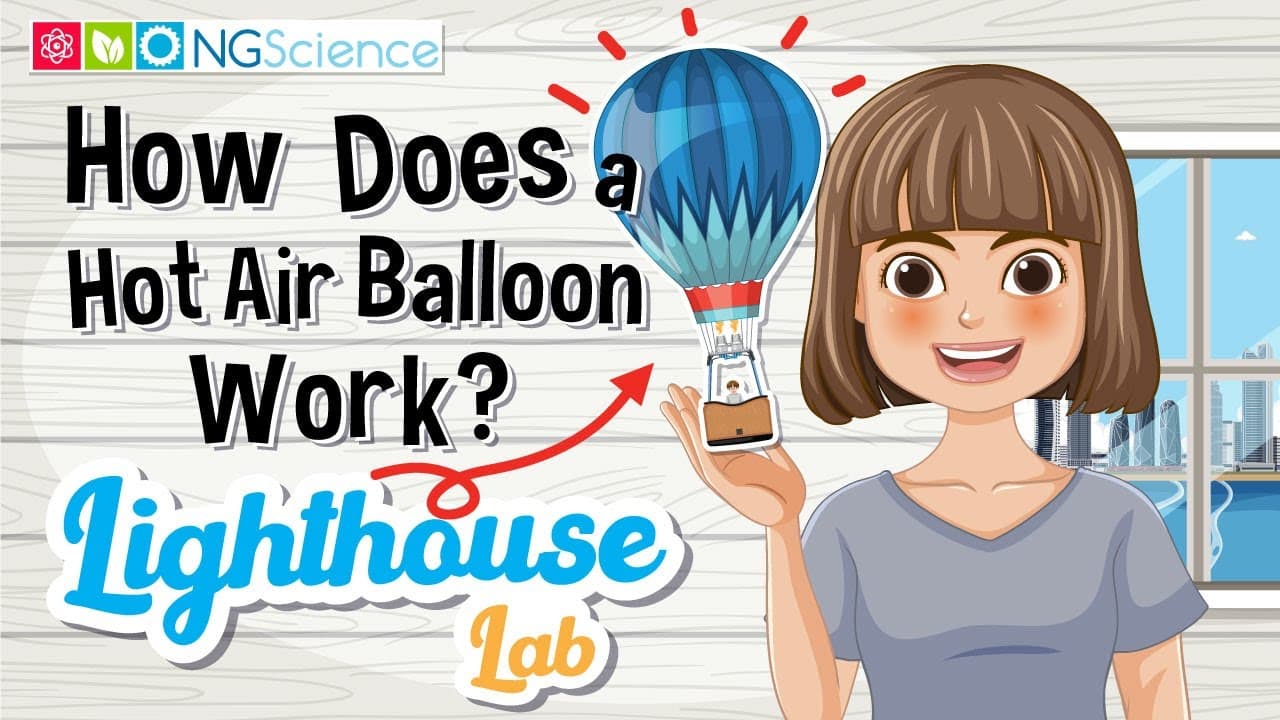
In this engaging episode of Lighthouse Lab, host Halle takes students on a virtual journey to understand the science and engineering behind hot air balloons. The video combines live-action hosting with clear animations to break down the mechanics of flight, transitioning from a field setting to a laboratory environment to explain the core concepts before demonstrating a launch. It provides a accessible introduction to aerodynamics and states of matter. The content focuses on two main areas: the anatomy of a hot air balloon and the physics of lift. Viewers learn about the three essential components—the envelope, the burner, and the basket—and the specific materials used. Crucially, the video simplifies the complex concept of density, using particle animations to show how heating air causes it to expand and become less dense than the surrounding cooler air, generating lift. It also explains how pilots navigate vertically by controlling the temperature using the burner and top vents. This video is an excellent resource for elementary and middle school science classrooms introducing units on matter, energy, or forces. It provides a practical, real-world application for abstract concepts like density and thermal expansion. Teachers can use this video to anchor lessons on particle theory, to illustrate how heat changes matter, or as a case study in engineering design.

Next Generation ScienceNext Generation Science

3mins 55s

Materials

State Changes Anchor Chart

State Changes Anchor Chart

A black-and-white, printer-friendly bilingual (English-Spanish) anchor chart visual for 6th-grade science with no code switching in the quick reminder section.

AA

Aline Araujo Teixeira

Heat on the Move Reading Guide

Heat on the Move Reading Guide

An illustrated science reading guide explaining the three types of heat transfer: conduction, convection, and radiation. Features clear real-world examples, visual diagrams, a 3-in-1 campfire connection, and a detective check.

AA

Ashley Adams

Fizz Factor Lab Handout

Fizz Factor Lab Handout

A student-friendly, print-ready 2-page lab handout testing how water temperature affects Alka-Seltzer dissolving time. Features student-driven identification of independent, dependent, and controlled variables, plus a blank graphing activity where students label the title, axes, and plot their results.

S

stewart

Wind Chasers Worksheet

Wind Chasers Worksheet

An accessible, single-page science worksheet for 3rd graders focused on how wind moves, defining wind as moving air, showing warm and cool air movement without pressure jargon, and featuring gentle comprehension questions.

EG

Emily Gianni

Roof Modification Challenge Slides

Roof Modification Challenge Slides

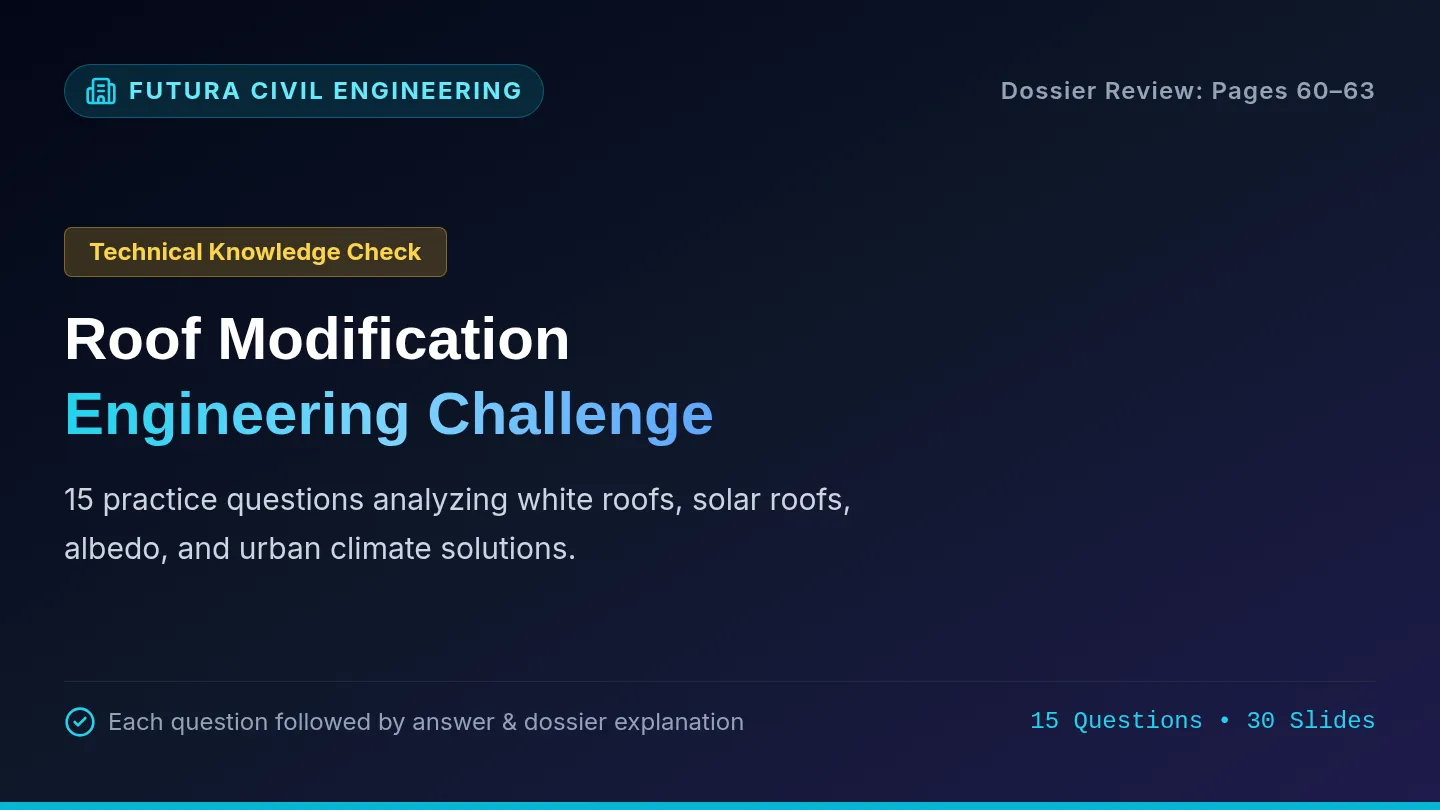
A 31-slide interactive presentation featuring 15 multiple-choice questions covering pages 60-63 of the Futura Engineering Dossier (White Roofs and Solar Roofs). Each question slide is followed immediately by an answer and explanation slide, fully adhering to font size guidelines and answer length constraints.

K

KATIE.CADLE

Heavy Air Reading Passage

Heavy Air Reading Passage

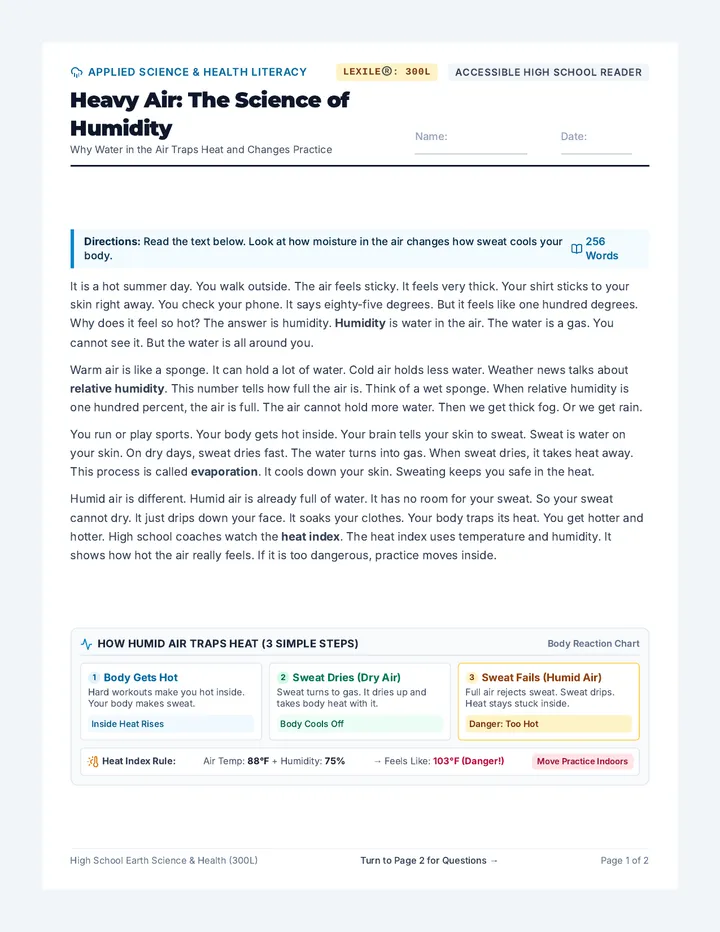
A high-school appropriate reading comprehension passage on humidity rewritten to an accessible 300 Lexile level, featuring 5 literal questions and 5 inferential questions with an evaporative cooling diagram and heat index chart.

EB

Emily Bear

Sequences

Induction Insight Map Handout

Magnetic Forces Investigation

A 5-day intensive exploration of magnetic forces and fields, focusing on atomic-level causes, field interactions, and mathematical modeling of forces on charged particles. Students progress from anchoring phenomena to complex mathematical applications and a comprehensive unit review.

OM

Olutoyin Makinde

68
Mission Scoring Rubric

Physics Frontiers Research Project

A partner-based research project for 9th-grade conceptual physics students focusing on diverse topics from celestial mechanics to the physics of dance. Students move through a structured research process with mandatory teacher checkpoints for source reliability.

C

ckroeker

13
Climate Crisis Slides

Science Essentials Vault

A comprehensive collection of core science units covering Environmental Science, Biology, and Physical Science. This sequence provides high-impact instructional slides, hands-on lab experiences, guided notes, and differentiated assessments for five major scientific domains.

CB

Chloe Brown

25
Hess Pathfinders Slides

Energy in Chemical Bonds

A five-day high school chemistry unit exploring thermochemistry, collision theory, enthalpy diagrams, and calorimetry through the lens of body heat and chemical reactions. Students investigate the anchoring phenomenon of exercise-induced heat while mastering TEKS C.13 standards.

OM

Olutoyin Makinde

48
Pressure Poster Workshop Handout

Pressure Power

A comprehensive 5-day chemistry unit investigating the relationships between gas pressure, volume, temperature, and moles using lab inquiries, mathematical modeling, and real-world applications.

OM

Olutoyin Makinde

69
KMT Field Manual Packet

Molecular Mayhem Gas Unit

A 10-day exploration of the Behavior of Gases using Kinetic Molecular Theory, various gas laws, and real-world phenomena to understand gas behavior at both molecular and macroscopic scales. Students will investigate compressibility, gas variables, ideal behavior, and mixtures.

OM

Olutoyin Makinde

26

Lessons

Heat Flow Teacher Guide

Particle Behavior Review

A lesson focusing on the states of matter (solid, liquid, gas) and the behavior of particles at the molecular level. Students will model particle motion and arrangement, as well as the energy changes that drive phase transitions.

EA

Erica Andre

54
Quake Coords Map Activity

Tectonic Tremors

A comprehensive GED science lesson on tectonic activity, focusing on seismic wave analysis, seismograms, and the Richter scale. Students will learn to calculate S-P intervals and interpret map data to locate epicenters and volcanic hotspots.

CL

Carmela Leone

5
Tableau Progression Annuelle Sciences CM

Progression Sciences CM1 CM2

Outil de planification annuelle et de progression pour l'enseignement des sciences et technologies en classe de CM1/CM2, conforme au BO de juin 2026. Ce guide propose une répartition claire des volumes horaires et des thèmes entre l'année A et l'année B pour éviter les redondances dans les classes à double niveau.

LP

LAURENT PERCHE

40
Evidence Detectives Slides

Evidence Detectives

A 50-minute lesson focusing on the CERNU conclusion framework (Claim, Evidence, Reasoning, Next steps, Unanswered questions). Students learn to analyze experimental data, connect claims to evidence, and formulate professional scientific conclusions using a detective-themed investigation approach.

CP

Carmen Pavlovsky

10
Flow State Reading Guide Expanded

Flow State

This lesson explores the fundamental properties of fluids, including the molecular differences between solids, liquids, and gases, the concept of density, and the characteristics of ideal fluids. Students will learn to distinguish states of matter through atomic interactions and apply the density formula to various substances.

CM

Chuguna Murugesan

33
Oscillation Station Slides

SHM Fundamentals

A comprehensive introduction to Simple Harmonic Motion, covering restoring forces, kinematics, and energy conservation in oscillating systems.

CM

Chuguna Murugesan

42