Fundamental principles of force, motion, and energy across classical and modern contexts. Examines matter properties, wave behavior, thermodynamics, and electromagnetism through mechanics and atomic studies.
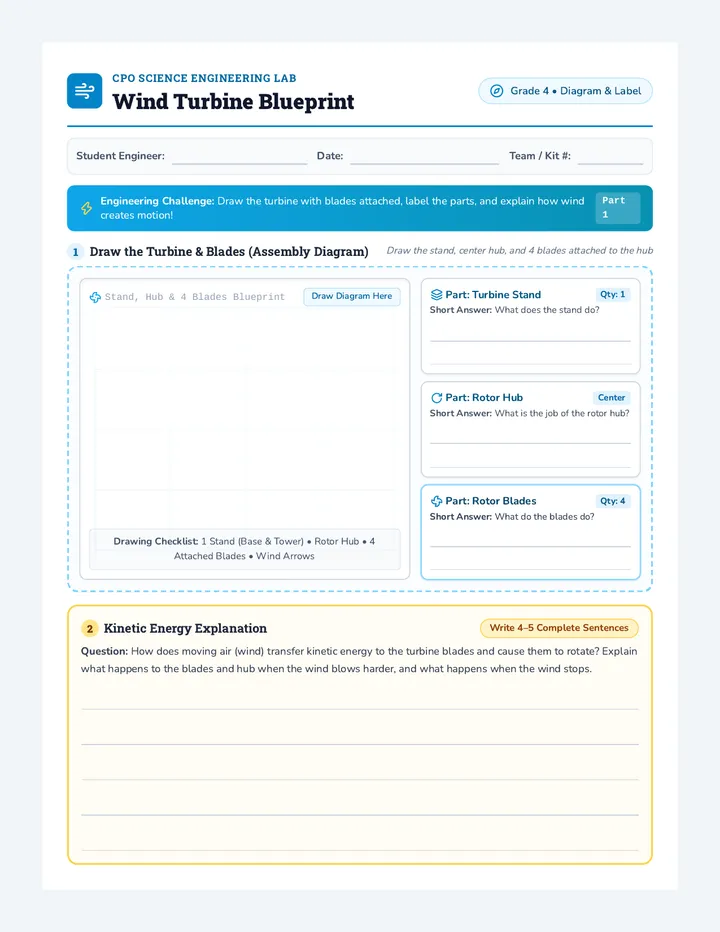
A two-page fourth-grade science diagram and labeling worksheet for the CPO Science Wind Turbine. Page 1 features drawing the turbine assembly, defining exterior component functions, and a dedicated 4-5 sentence kinetic energy explanation; Page 2 covers the electromagnetic generator parts and energy chain.
An Upper Elementary science anchor chart poster comparing magnetic and non-magnetic everyday objects, featuring key ferromagnetic metals (iron, steel, nickel, cobalt), common non-magnetic metals (aluminum, copper), non-metals, and misconception alerts.
A refined 6-page guided research packet for 3rd-grade science projects. It features a standards-aligned topic menu, dedicated sections for scientific explanation with evidence, real-world connections, model planning, and a final mission checklist.
An engaging, visually rich 9-slide presentation for upper elementary students (grades 3-5) featuring in-depth coverage of magnetic vs. non-magnetic materials, magnetic poles, attraction and repulsion, magnetic fields, Earth's magnetism, and real-world tech.
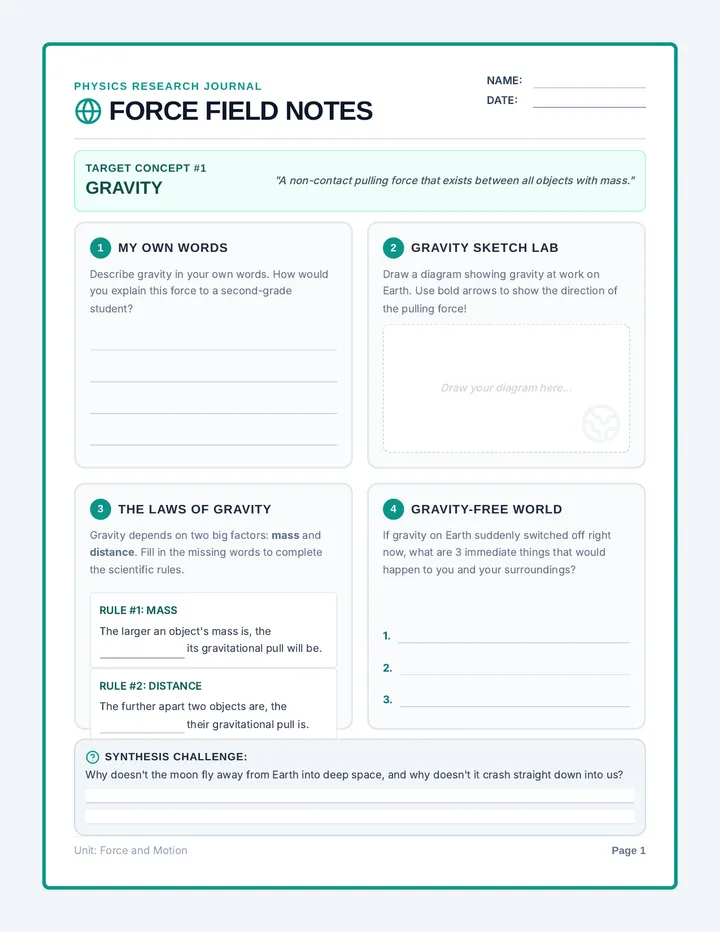
A 4-page student vocabulary graphic organizer packet on force and motion, themed as 'Force Field Notes' for upper elementary. Features highly structured, customized Frayer models and semantic maps for Gravity, Friction, Balanced Forces, and Magnetism.
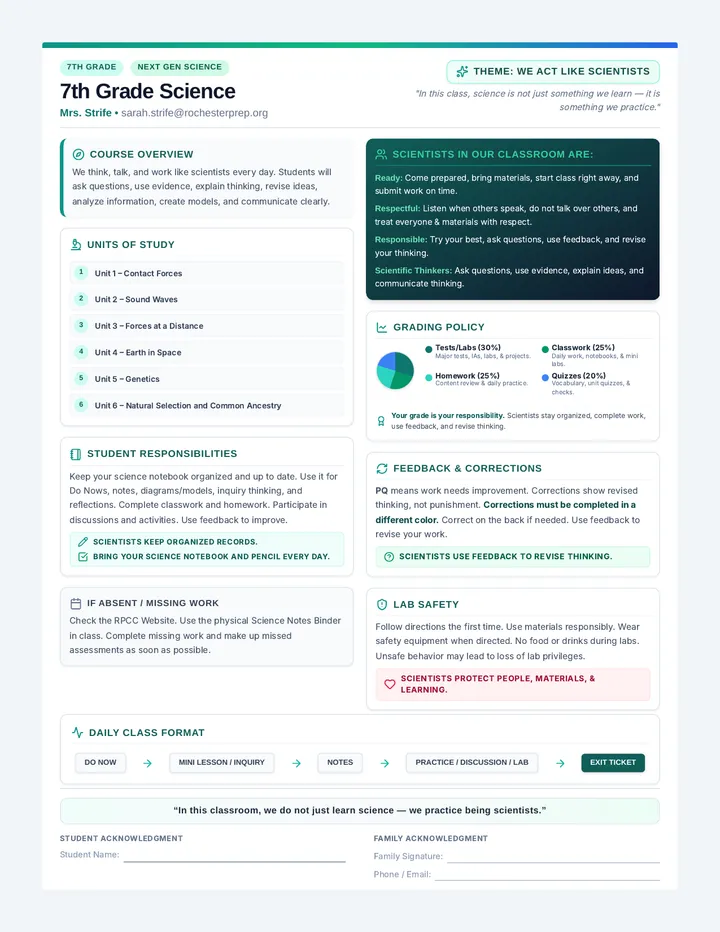
An updated 1-page 7th Grade Science Syllabus for Mrs. Strife. Formatted in a clean, professional, and visually engaging dual-column layout with organized boxes, bold headings, blue/green accent themes, and custom science icons. Includes a newly designed visual 'Grading Policy' section with a clean CSS-based donut chart. Perfect for student and parent onboarding.
A two-page printable science practice worksheet exploring how energy is detected through observable evidence like light, sound, heat, and motion. Students analyze everyday scenarios to identify evidence clues and explain how invisible energy reveals its presence.
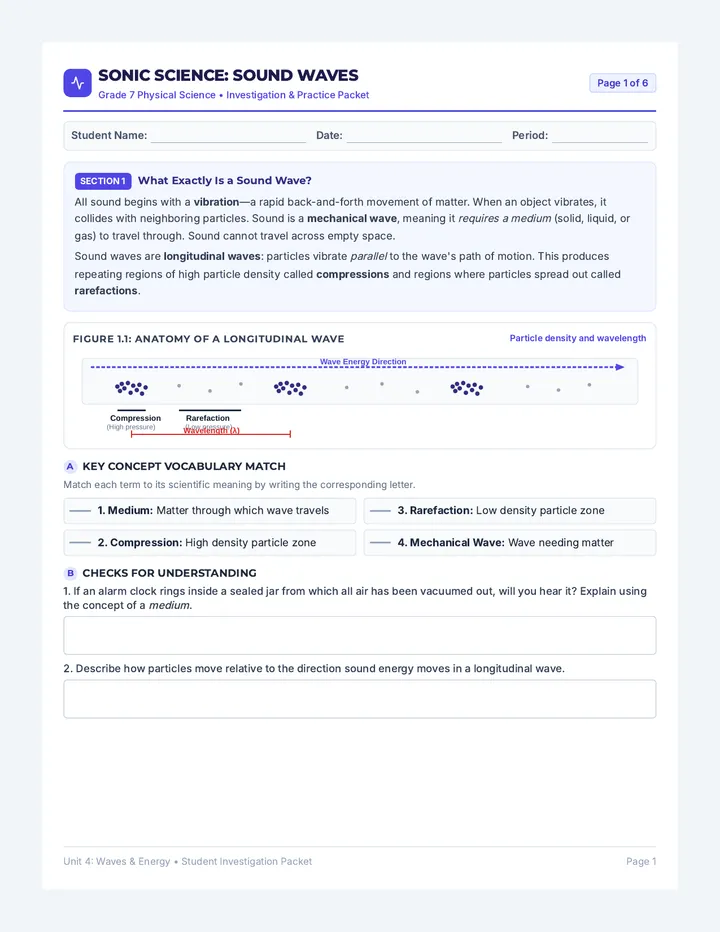
A comprehensive 6-page student exploration and practice packet on sound waves for 7th grade physical science. Covers wave anatomy, pitch and loudness, sound transmission across solids, liquids, and gases, hands-on lab station investigations, and scenario problem-solving.
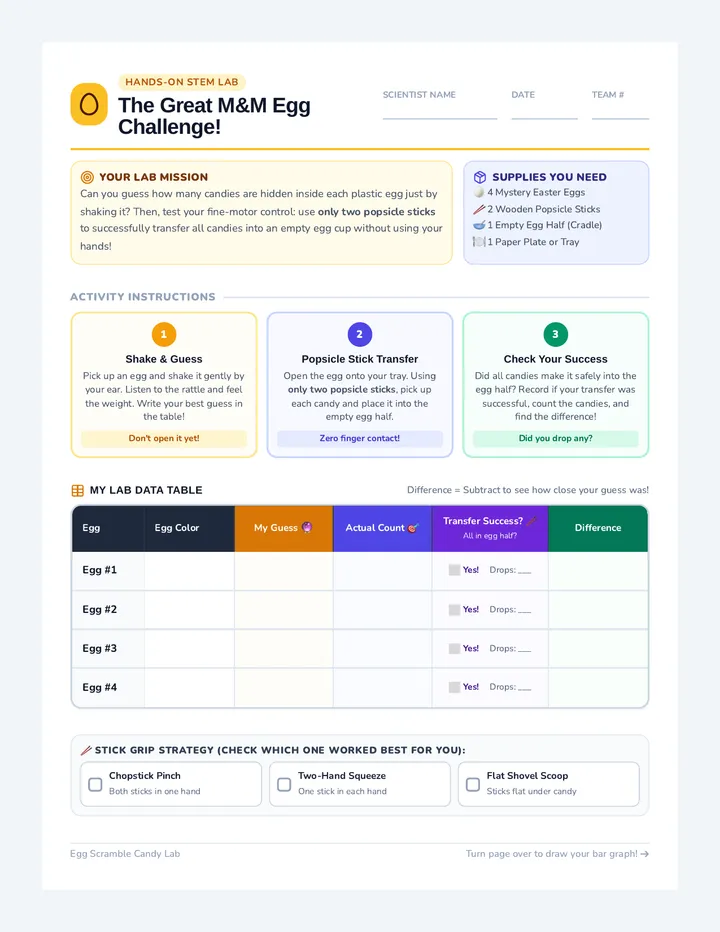
A student-friendly two-page printable lab sheet for elementary and middle schoolers to shake and guess M&M counts in Easter eggs, test transfer success using two popsicle sticks without dropping candies, record data, color a comparative bar graph, and answer reflection questions.
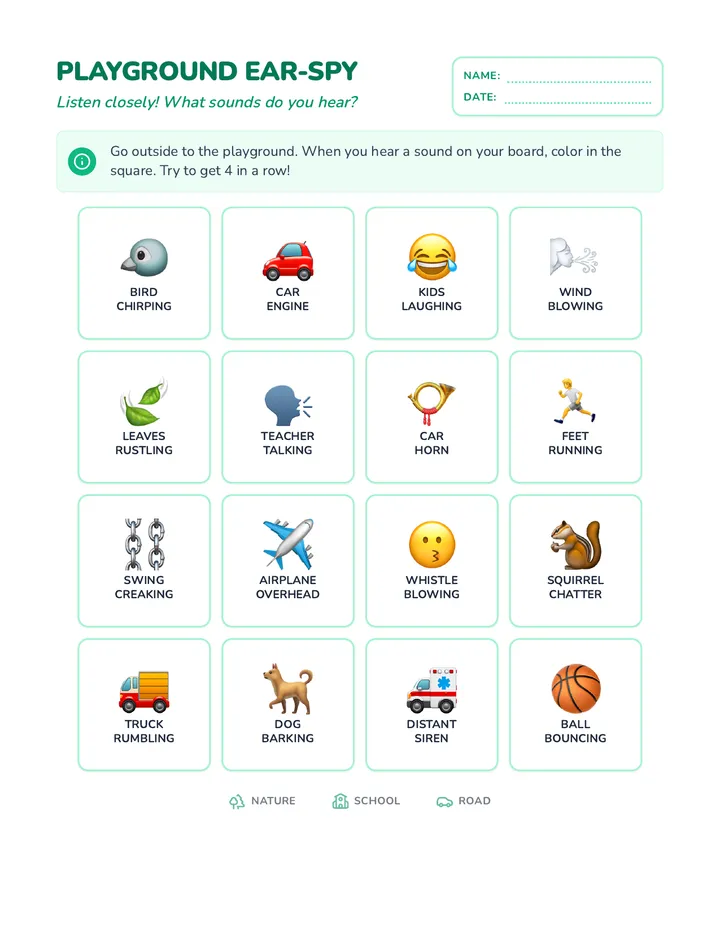
A single-page 4x4 bingo board for first graders to identify school playground sounds, featuring large emojis and bold labels for easy recognition.
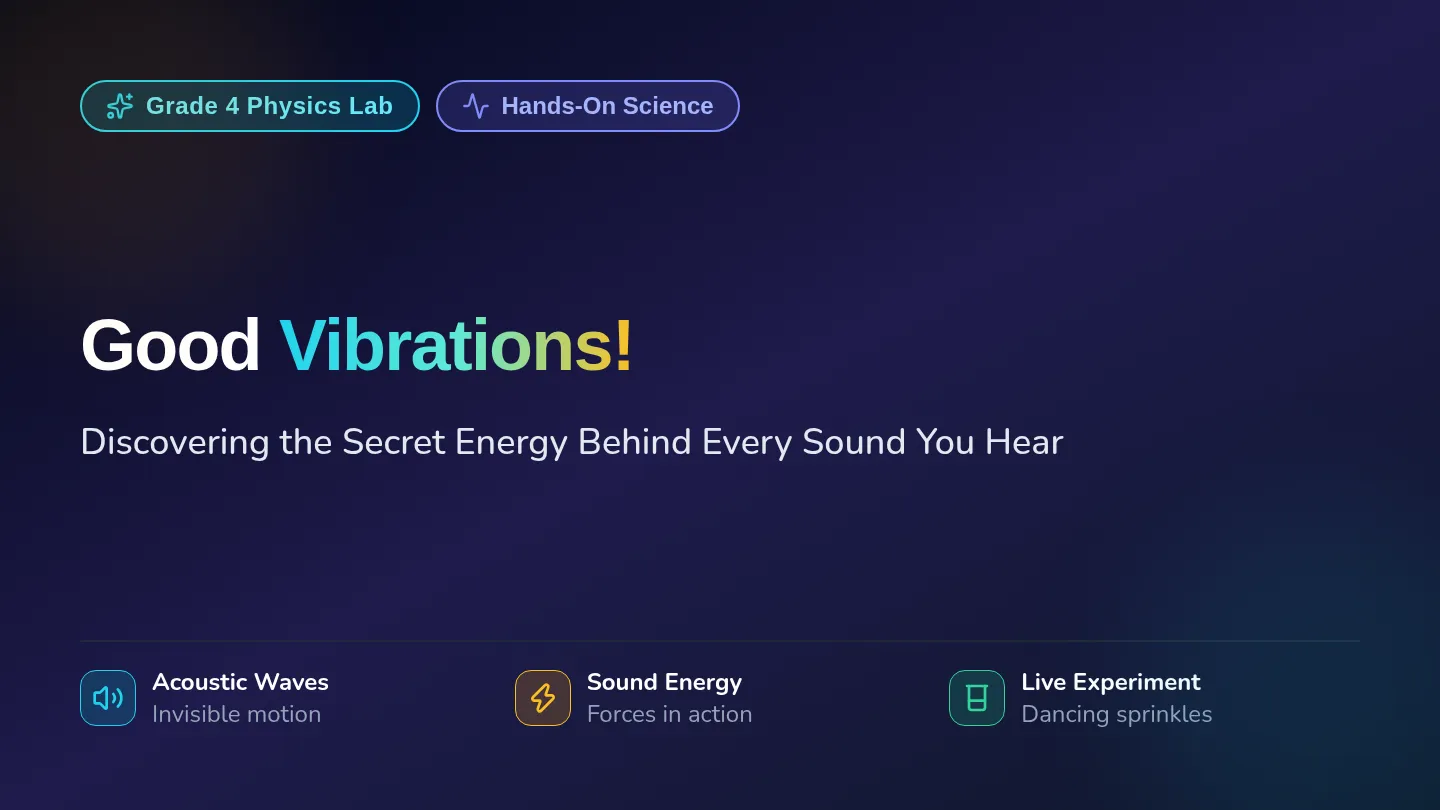
An engaging, visual 8-slide presentation introducing 4th grade students to the physics of sound and vibration through the Dancing Sprinkles experiment. It covers acoustic vibrations, wave energy transfer, sound variables, and step-by-step lab procedures.
A comprehensive unit on rotational mechanics, mapping the transition from linear motion to angular dynamics through technical analysis and real-world applications.
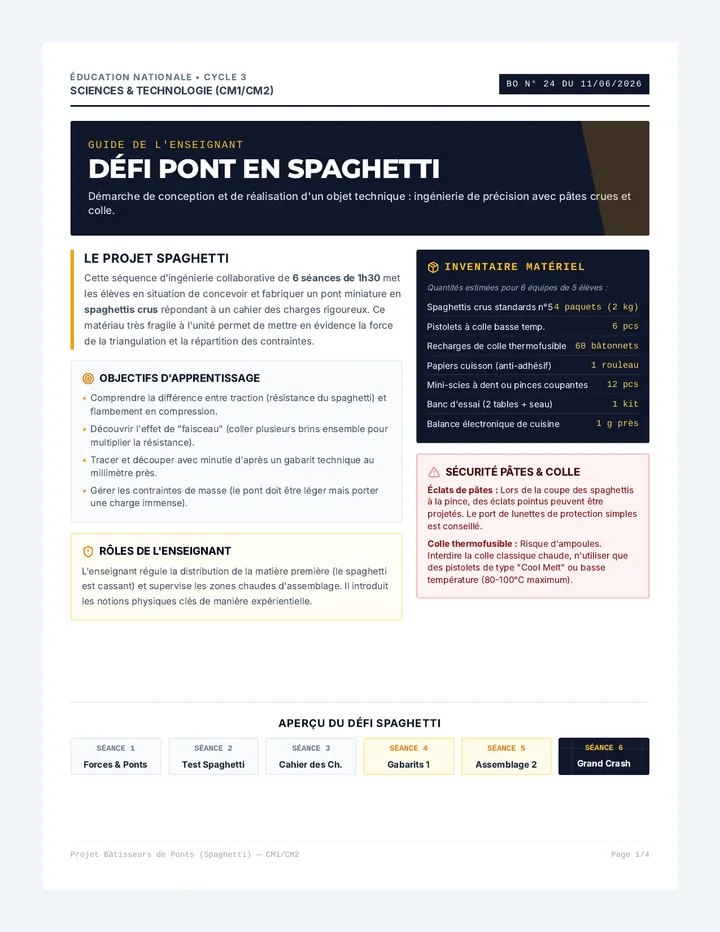
Une séquence complète de 6 séances d'1h30 en sciences et technologie pour CM1/CM2, axée sur la démarche d'investigation et de conception technologique pour réaliser une maquette de pont résistante. Séquence conforme aux programmes du BO n° 24 du 11 juin 2026.
A comprehensive STEM sequence for grades 1-5 focusing on structural engineering and physics. Students progress from exploring material properties and shapes to designing complex, efficient structures, building their understanding of forces, stability, and the engineering design process.
An undergraduate-level exploration of solid-state crystallography, moving from real-space lattice geometry and packing efficiency to the mathematical abstraction of reciprocal space and X-ray diffraction analysis. Students master the geometric principles that govern material properties at the atomic scale.
This sequence bridges the gap between abstract geometry and physical law by introducing group theory as a tool for analyzing physical systems. Students classify shapes, translate operations into matrix algebra, derive conservation laws via Noether's Theorem, and apply symmetry to quantum selection rules.
This sequence explores the physics of rotational inertia through the lens of geometry. Students transition from point-mass calculations to analyzing extended rigid bodies, investigating how the spatial distribution of mass affects an object's resistance to angular acceleration.
A comprehensive Hi-Lo unit for 6th graders exploring the scale of the universe, our place in the Milky Way, the technology used to explore space, and the history of human spaceflight.
A comprehensive physics unit covering the behavior of mechanical and electromagnetic waves. Students transition from hands-on slinky exploration to advanced optical modeling and mathematical derivations.
A comprehensive 5-lesson unit for 4th graders exploring the properties of light energy, including how it travels, reflects, refracts, and interacts with different materials.
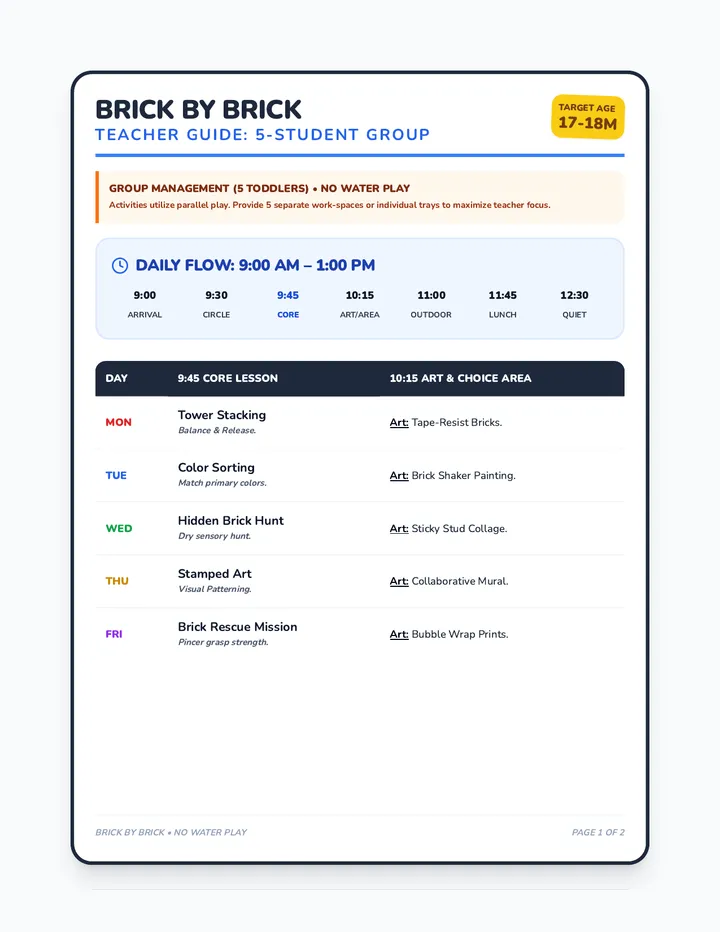
A collection of comprehensive week-long curricula for toddlers aged 17-18 months. Each themed week focuses on developmental play, sensory exploration, and fine motor skills for a group of 5 students with zero water play.
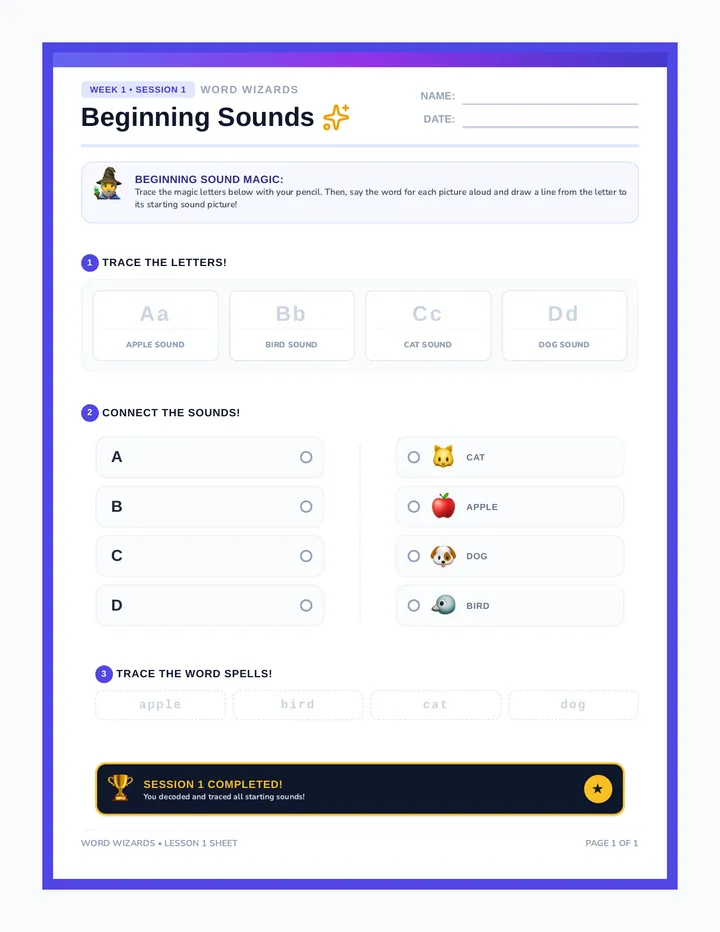
An engaging, high-impact 4-week literacy skills program for young learners. Features highly visual, fun printable worksheets focusing on beginning letter sounds, CVC phonics blending, sight word reading, and short stories.
A five-day high school chemistry unit exploring thermochemistry, collision theory, enthalpy diagrams, and calorimetry through the lens of body heat and chemical reactions. Students investigate the anchoring phenomenon of exercise-induced heat while mastering TEKS C.13 standards.