Collision theory and activation energy principles used to explain chemical kinetics. Examines how temperature, concentration, surface area, and catalysts influence the speed of chemical reactions.
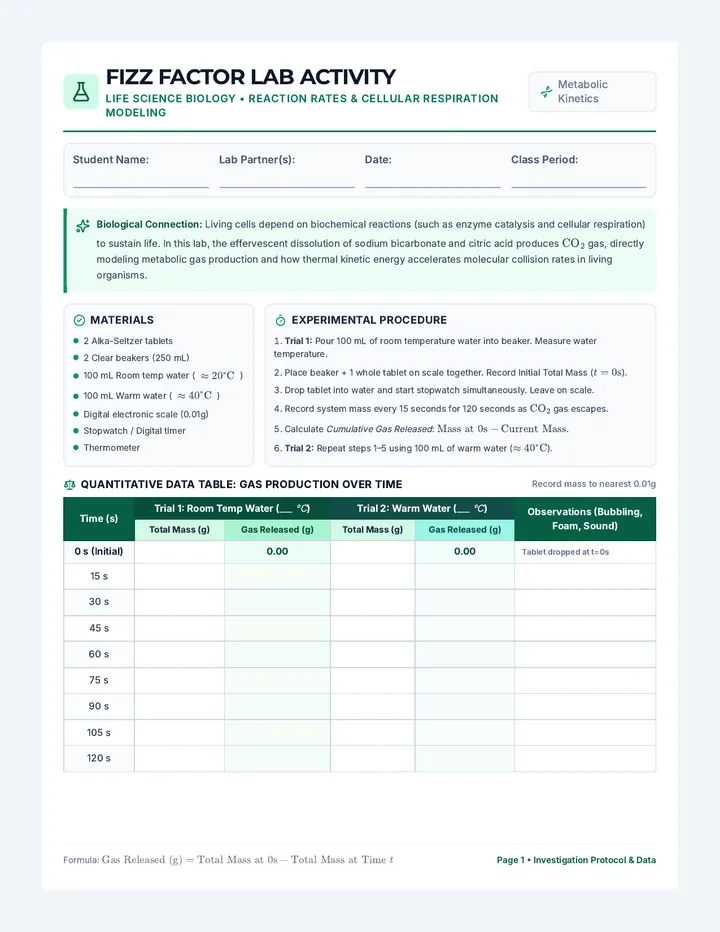
A hands-on life science lab investigation where students measure the effervescence reaction rate of Alka-Seltzer tablets across temperatures, plot comparative line graphs, and analyze kinetic models of cellular metabolism.
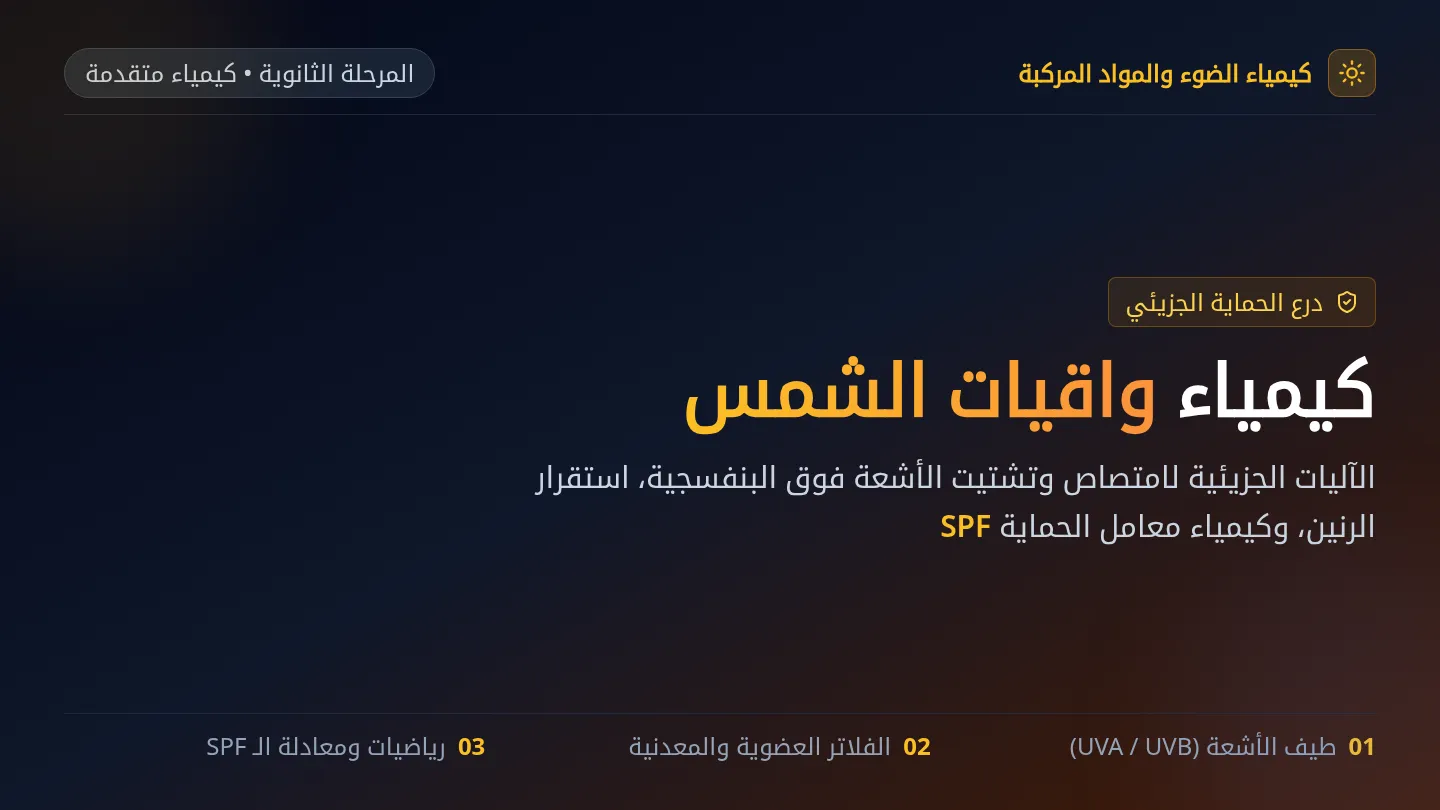
عرض تقديمي تفاعلي وتفصيلي لمادة الكيمياء للمرحلة الثانوية يستعرض كيمياء واقيات الشمس، وطيف الأشعة فوق البنفسجية، والآليات الجزيئية لامتصاص وتشتيت الإشعاع، بالإضافة إلى فيزياء فجوة النطاق وحسابات عامل الحماية SPF.
A five-day high school chemistry unit exploring thermochemistry, collision theory, enthalpy diagrams, and calorimetry through the lens of body heat and chemical reactions. Students investigate the anchoring phenomenon of exercise-induced heat while mastering TEKS C.13 standards.
A comprehensive 5-day chemistry unit investigating the relationships between gas pressure, volume, temperature, and moles using lab inquiries, mathematical modeling, and real-world applications.
This unit explores how chemical reactions occur and how they reach a state of balance. Students investigate reaction kinetics, energy changes, and the principles of dynamic equilibrium through modeling and laboratory investigation.
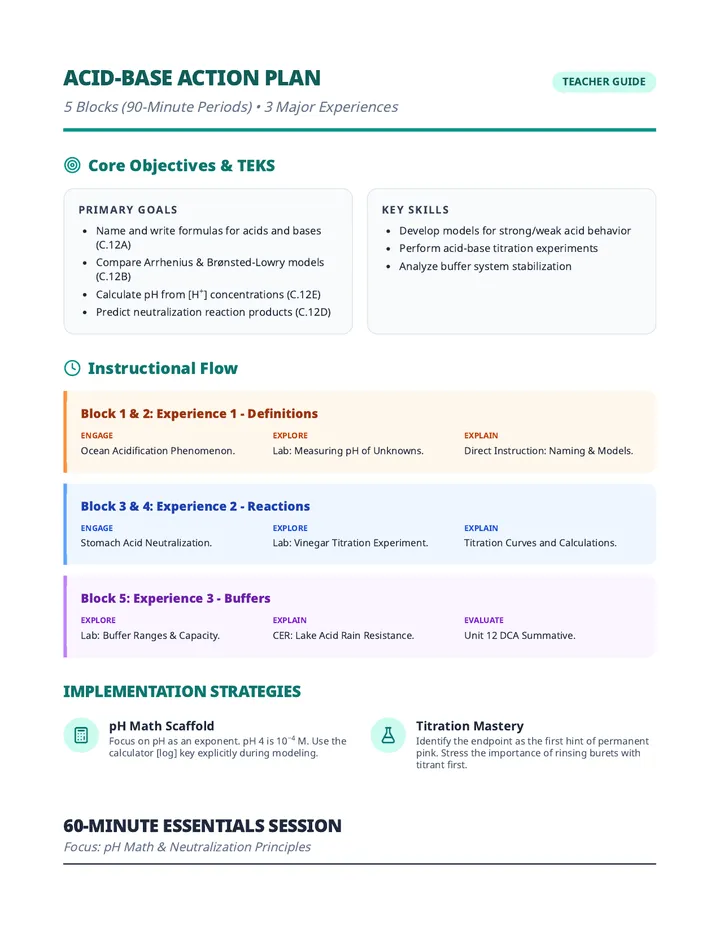
A comprehensive unit exploring the properties, reactions, and mathematical relationships of acids and bases, featuring pH calculations, titrations, and buffer systems.
A comprehensive review package for CHEM 1406, featuring in-depth study guides for key topics and a full practice exam with detailed solutions.
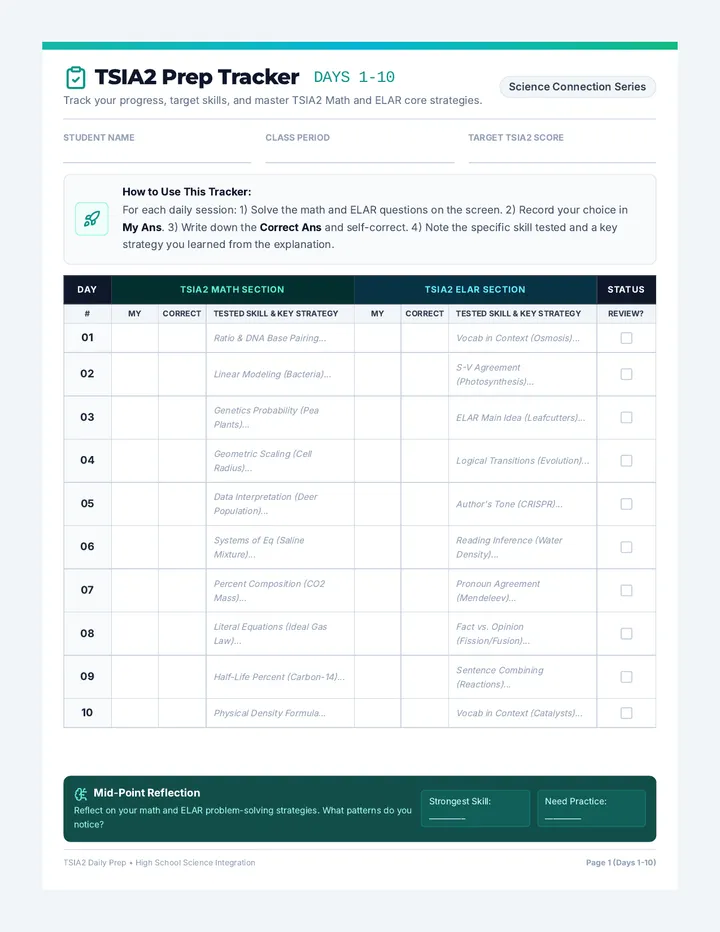
A comprehensive 20-day daily practice sequence designed to prepare students for the TSIA2 Math and ELAR assessments. Each day features high school science-themed questions with detailed explanations, hints, and a robust tracking system.
A comprehensive assessment on Indiana Biology standards focusing on homeostasis, levels of organization, and feedback loops, including ILEARN-style item types and CER responses.
A comprehensive review lesson focused on enzyme characteristics, their roles in human digestion, the concept of denaturation, and graph analysis of enzyme activity. Students will explore how environmental factors like pH and temperature influence biological reactions.
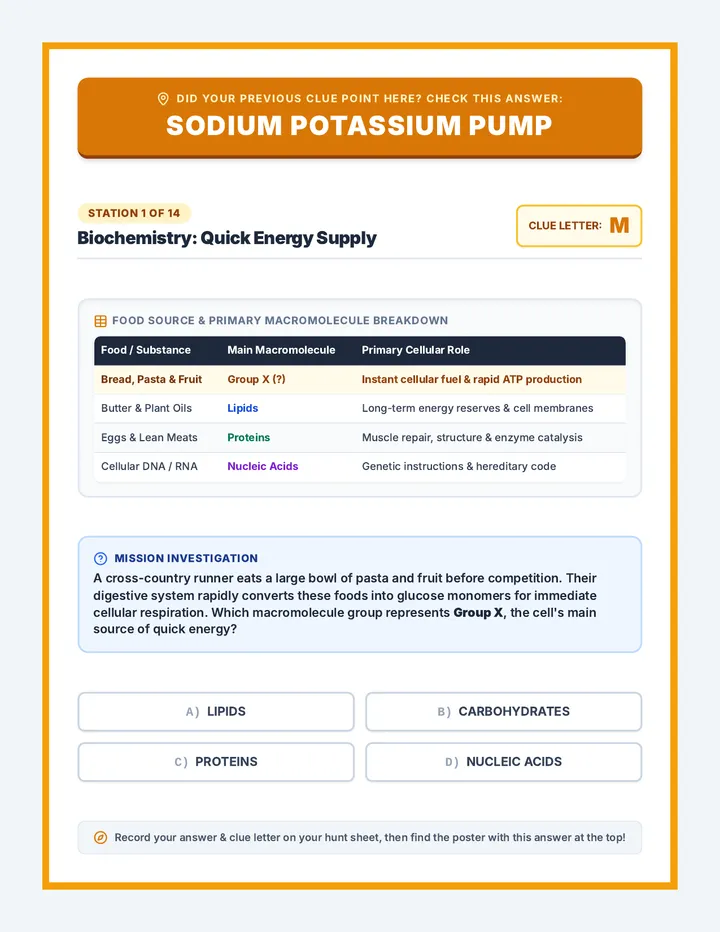
A high-engagement around-the-room looping scavenger hunt covering biochemistry, macromolecules, enzyme kinetics, and cellular membrane transport. Students move dynamically through 16 clue-linked stations that form a continuous self-checking loop, featuring dedicated pure definition stations alongside graph and chart analysis.
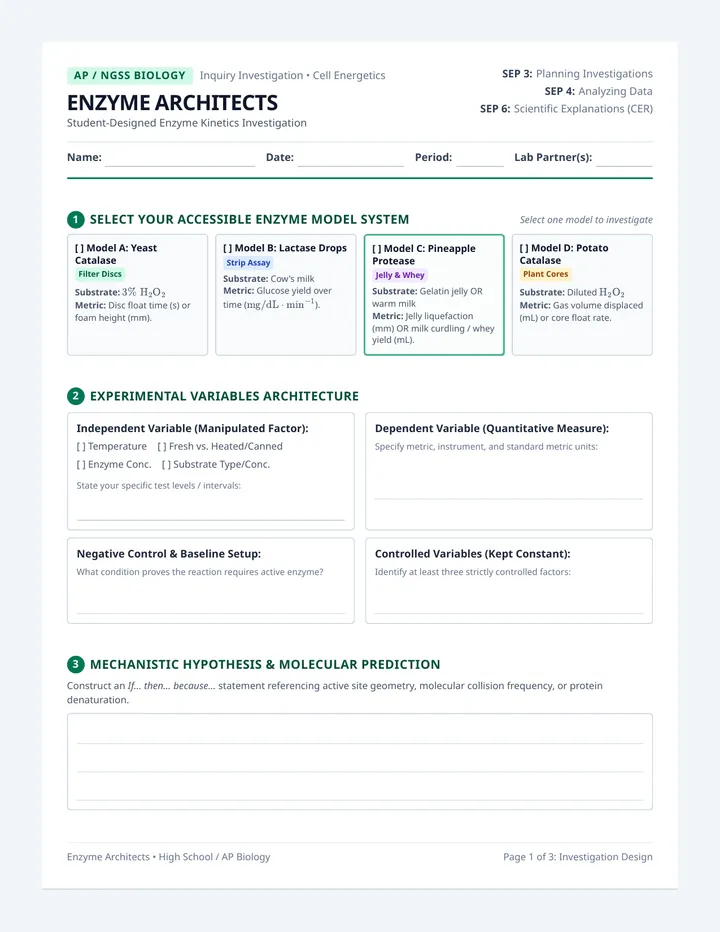
A competency-based biology inquiry lesson where students select from accessible household enzyme models to design, conduct, and analyze controlled experiments on enzyme kinetics.
A comprehensive introduction to radiometric dating, explaining how scientists use radioactive isotopes to determine the absolute age of rocks and fossils, and comparing it to relative dating methods.
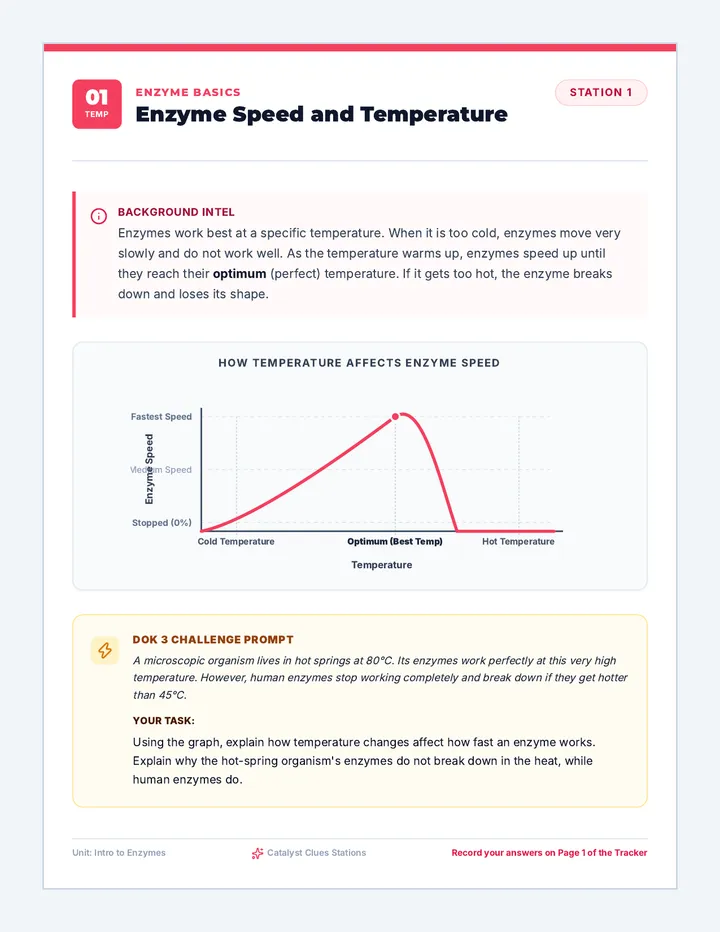
An active learning lesson where students rotate through stations to discover how enzymes work, analyze graphs, and solve real-world cellular mysteries.