Lenny.com
Explore
Create
ActivitiesNewMathEnglish Language ArtsScience & EngineeringSocial StudiesGlobal LanguagesHealth & Physical EducationSpecial EducationCounseling & Life SkillsArts & CreativityESL
Lenny.com
Lenny.com
Explore
Create
ActivitiesNewMathEnglish Language ArtsScience & EngineeringSocial StudiesGlobal LanguagesHealth & Physical EducationSpecial EducationCounseling & Life SkillsArts & CreativityESL
Lenny.com
Science & EngineeringLife ScienceLiving ThingsAnimalsPlantsBody SystemsTraitsAdaptationsCellsEcosystemsHeredityGenes to TraitsCell DivisionPhysicsComparing MaterialsShapes and PropertiesMagnetsMagnetismLightSoundLight and SoundMatterStates of MatterChanges of StateMixturesPhysical and Chemical ChangeHeating and CoolingHeat and Thermal EnergyEnergyForce and MotionElectrical CircuitsAtoms and MoleculesPeriodic TableMotion in One DimensionMotion in Two DimensionsScalars and VectorsForces and Laws of MotionCircular Motion and GravityMomentum and ImpulseWork, Energy, and PowerWavesElectromagnetic WavesGeometric OpticsElectricity and MagnetismSimple Harmonic MotionThermodynamicsNuclear PhysicsEarth Science & AstronomyWeatherWater CycleRocks and MineralsFossilsEarth's FeaturesEarth's ResourcesEarth's StructureWeather and ClimateEarth EventsFossils and Geologic TimePlate TectonicsHuman ImpactsAstronomyChemistryUnits and MeasurementAtomic StructurePeriodic TrendsChemical BondingNomenclatureMolecular StructureIntermolecular ForcesThe MoleStoichiometryProperties of GasesSolutionsChemical ReactionsBalancing EquationsEnergy ChangesRates of ReactionsEquilibriumAcids and BasesQuantum ModelBiologyClassificationCell StructureThe Chemistry of LifeBiomoleculesCellular TransportCell EnergyCell Growth and DivisionDNAProtein SynthesisMeiosis and Sexual ReproductionPatterns of InheritanceMulticellular OrganismsEvolutionEcologyBiodiversityComputer ScienceAlgorithms and Computational ThinkingProgramming LanguagesComputing SystemsNetworks and InternetData AnalysisCybersecurityAI and Machine LearningSoftware Design and DevelopmentBlockchainEngineering & AIDesigning ExperimentsEngineering PracticesDesign ThinkingEngineering Design ProcessMechanical EngineeringElectrical EngineeringMaterials and StructuresCAD and 3D DesignRoboticsArtificial Intelligence BasicsVibe CodingMachine LearningAI Ethics and SocietySystems ThinkingEntrepreneurship & InnovationEntrepreneurial MindsetBusiness Idea DevelopmentBusiness Plan BasicsMarketing & Customer DiscoveryFinancial Management for Startups

Patterns of Inheritance

Mendelian genetics, Punnett squares, and mechanisms of trait transmission. Examines dominant, recessive, and complex patterns including incomplete dominance, codominance, and sex-linked inheritance.

Lenny.com

Solutions

Lenny for EducatorsLenny for SchoolsLenny for Districts

Product

ExploreSign inCreateSupportAbout

Resources

Getting startedMTSS Acceleration Program

Newsletters

School Funding Newsletter

© 2026 Lenny Learning Inc.

TermsPrivacyAccessibility
LinkedInInstagramX
Lenny

Videos

How Non-Mendelian Genetics Creates Diversity

How Non-Mendelian Genetics Creates Diversity

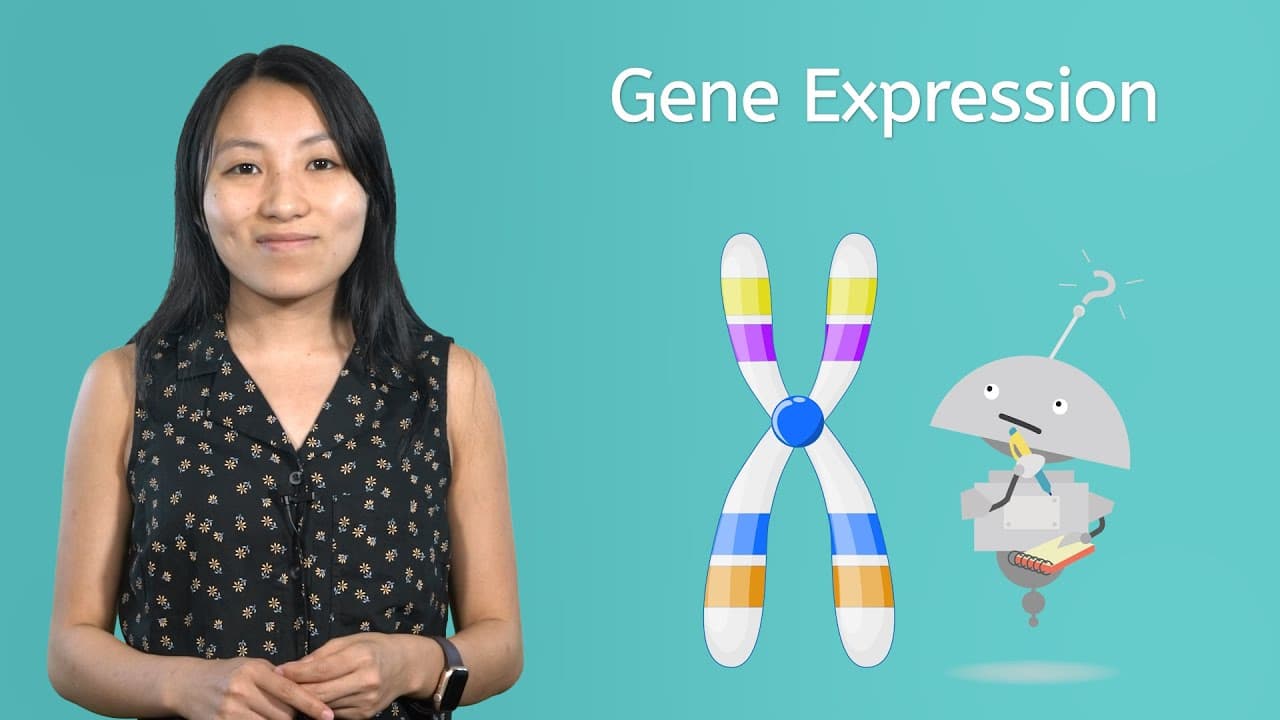
This educational video serves as a comprehensive introduction to Non-Mendelian genetics, exploring the complex patterns of inheritance that defy Gregor Mendel's simple dominant and recessive rules. It clarifies why the natural world exhibits such a vast diversity of phenotypes—like pink flowers coming from red and white parents, or the spectrum of human skin colors—that cannot be explained by binary genetic laws alone. The narrator breaks down three specific types of non-Mendelian inheritance: incomplete dominance, codominance, and polygenic traits, providing clear biological mechanisms for each. The video covers several key themes central to high school biology curricula. It distinguishes between incomplete dominance (blending of traits) and codominance (simultaneous expression of traits), using classic examples like snapdragon flowers and roan horses. It also delves into multiple alleles through the lens of human blood types, demonstrating how to construct and interpret complex Punnett squares. Finally, it addresses polygenic traits, using human skin color and melanin production to explain how multiple genes interact to create continuous variation within a population. For educators, this video is an invaluable tool for moving students beyond the basics of genetics. It effectively bridges the gap between simple Mendelian theory and the complex reality of biological diversity. The clear visual demonstrations of Punnett squares for non-standard inheritance patterns make it excellent for direct instruction, while the real-world examples of blood types and skin color adaptation provide fertile ground for classroom discussions about evolution, human health, and diversity.

Miacademy & MiaPrep Learning ChannelMiacademy & MiaPrep Learning Channel

13mins 51s

Introduction to Genetics: Blue Lobsters and Sickle Cell Traits

Introduction to Genetics: Blue Lobsters and Sickle Cell Traits

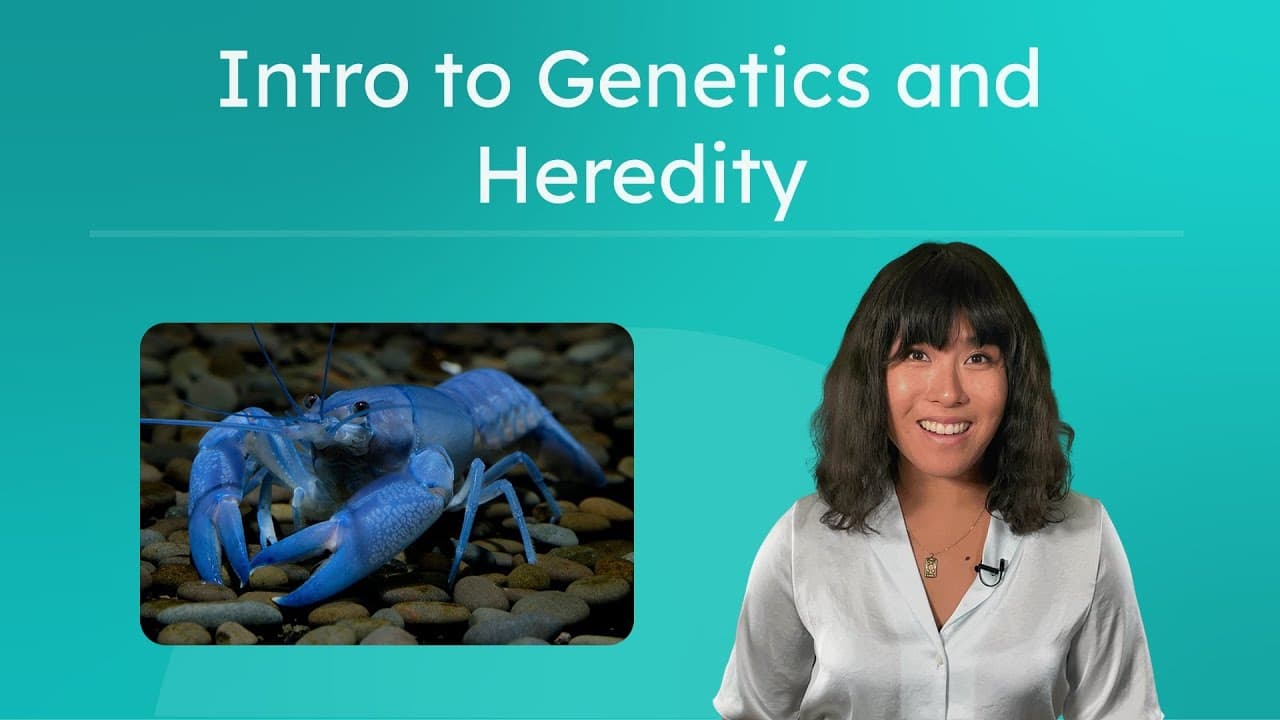
This engaging biology video serves as an introduction to genetics, bridging the gap between DNA structure and observable traits. The narrator, B, reviews the concept of meiosis and gametes to explain how offspring receive half their genetic material from each parent. The video defines key terms such as genes and alleles, laying the groundwork for understanding inheritance patterns before diving into specific case studies. Key themes include genetic inheritance, mutations, and adaptation. The video uses two distinct real-world examples to illustrate these concepts: the rare genetic mutation that causes blue coloration in lobsters and the human condition of sickle cell anemia. It explains how recessive traits (like the blue lobster) require two copies of an allele, while also introducing the complex evolutionary relationship between sickle cell traits and malaria resistance, highlighting how mutations can be harmful, neutral, or contextually beneficial. This resource is excellent for introducing a genetics unit in middle or high school classrooms. It moves beyond abstract definitions by providing concrete, memorable examples that demonstrate probability and natural selection. Teachers can use the blue lobster segment to discuss recessive inheritance and the sickle cell segment to explore adaptations and the interaction between genetics and the environment.

Miacademy & MiaPrep Learning ChannelMiacademy & MiaPrep Learning Channel

7mins 16s

Genetics 101: Understanding Traits and Punnett Squares

Genetics 101: Understanding Traits and Punnett Squares

This educational video provides a comprehensive introduction to the fundamentals of genetics, using dogs as a primary example to make abstract concepts relatable. It explores the core mechanisms of heredity, explaining how DNA, chromosomes, genes, and alleles function to pass characteristics from parents to offspring. The video also covers the history of genetics, specifically Gregor Mendel's discoveries in the 1850s regarding dominant and recessive traits and the independent assortment of alleles. Key themes include the distinction between genotypes (the genetic code) and phenotypes (the physical trait), simple dominance, and the use of Punnett squares to predict genetic probabilities. The video uses clear visual aids to differentiate between homozygous dominant, heterozygous, and homozygous recessive combinations, illustrating how these genetic makeups result in specific physical appearances, such as curly versus straight fur in dogs. For educators, this video is a valuable tool for Life Science curriculums in middle and early high school. It includes built-in pause points for active learning, asking students to predict phenotypes and complete a Punnett square along with the narrator. This interactive format allows teachers to assess understanding in real-time, making it an excellent resource for introducing the study of heredity, probability in biology, and the basics of selective breeding.
Miacademy & MiaPrep Learning ChannelMiacademy & MiaPrep Learning Channel

9mins 21s

How Meiosis Creates Unique Reproductive Cells

How Meiosis Creates Unique Reproductive Cells

This educational video provides a comprehensive overview of meiosis, the process of cell division responsible for creating reproductive cells (gametes). It explains the necessity of reducing chromosome numbers by half to maintain genetic stability across generations, distinguishing between diploid somatic cells and haploid gametes. The narration breaks down the stages of Meiosis I and Meiosis II, highlighting key events like homologous pairing, crossing over, and random assortment. Key themes include the mechanics of inheritance, the difference between mitosis and meiosis, and the sources of genetic variation. The video uses clear animations to demonstrate how DNA from both parents is shuffled and combined to create genetically unique offspring. It clarifies complex vocabulary such as homologous chromosomes, sister chromatids, zygotes, and alleles. For educators, this video serves as an excellent core resource for units on genetics and cell biology. It visualizes abstract microscopic processes, making them accessible to students. The clear distinction between the two rounds of division and the focus on genetic variation provides a solid foundation for subsequent lessons on heredity, Punnett squares, and evolution.

Miacademy & MiaPrep Learning ChannelMiacademy & MiaPrep Learning Channel

13mins 40s

How to Analyze Pedigrees in Genetics Using Fruit Flies

How to Analyze Pedigrees in Genetics Using Fruit Flies

This educational video provides a comprehensive guide to understanding and analyzing pedigrees in the context of high school biology genetics. Using the model organism Drosophila melanogaster (fruit flies), the host explains how to interpret family tree diagrams to track the inheritance of specific traits through multiple generations. The lesson covers foundational concepts such as pedigree symbols, differentiating between wild-type and mutant traits, and the definitions of dominant, recessive, autosomal, and sex-linked inheritance.

Miacademy & MiaPrep Learning ChannelMiacademy & MiaPrep Learning Channel

15mins 29s

How Random Luck Shapes Evolution: Understanding Genetic Drift

How Random Luck Shapes Evolution: Understanding Genetic Drift

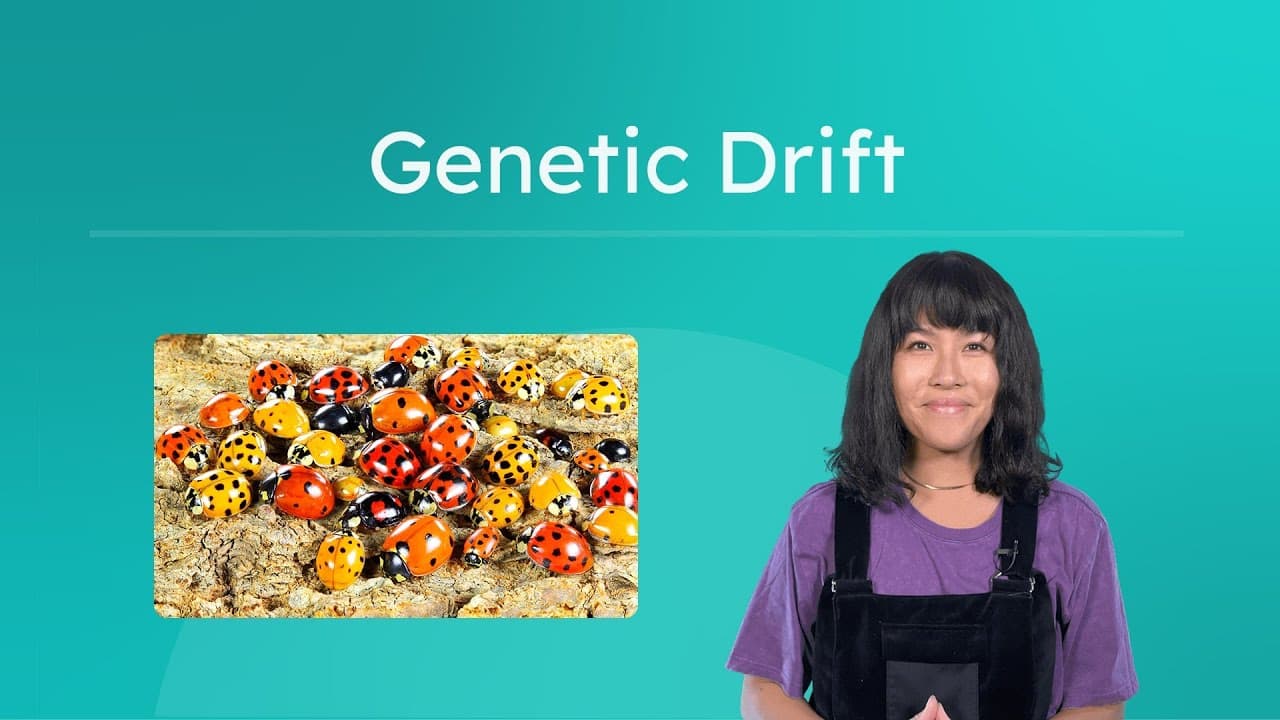
This educational video provides a clear and engaging exploration of genetic drift, a mechanism of evolution driven by random chance rather than adaptation. Through dynamic examples and clear visual aids, the host explains how random events—like storms, fires, or migration—can dramatically alter the genetic makeup of a population. The video contrasts genetic drift with natural selection, emphasizing that survivors of these events are often just "lucky" rather than better adapted.

Miacademy & MiaPrep Learning ChannelMiacademy & MiaPrep Learning Channel

12mins 36s

Materials

Science Action Syllabus

Science Action Syllabus

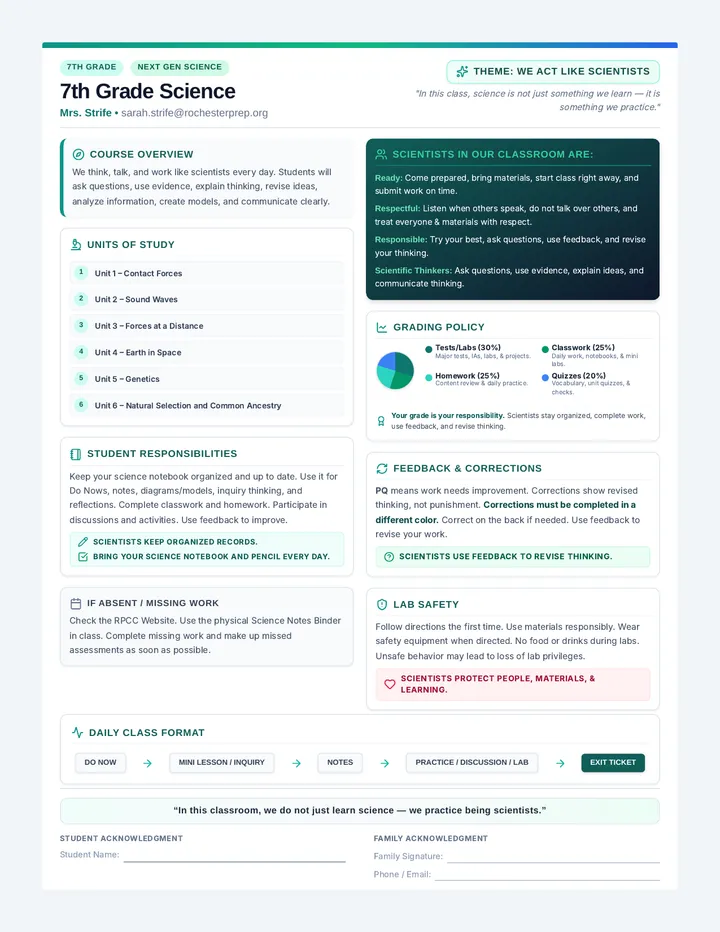
An updated 1-page 7th Grade Science Syllabus for Mrs. Strife. Formatted in a clean, professional, and visually engaging dual-column layout with organized boxes, bold headings, blue/green accent themes, and custom science icons. Includes a newly designed visual 'Grading Policy' section with a clean CSS-based donut chart. Perfect for student and parent onboarding.

SS

Sarah Strife

Trait Tracker Homework Extra Compact

Trait Tracker Homework Extra Compact

Final ultra-compact version of the Trait Tracker Homework, featuring a minimized header to maximize page space for student answers while retaining the engaging detective theme and core objectives. Question 4 has been moved to a separate page for easier printing.

AC

Aaron Conlin

Biology Exam Record Sheet

Biology Exam Record Sheet

A professional, biotechnology-themed answer record sheet for a 50-question Biology Final Exam. Features organized entry columns, scoring sections, and an academic integrity statement.

MB

Marsha Bolden

Reverse Genetics Investigation Worksheet

Reverse Genetics Investigation Worksheet

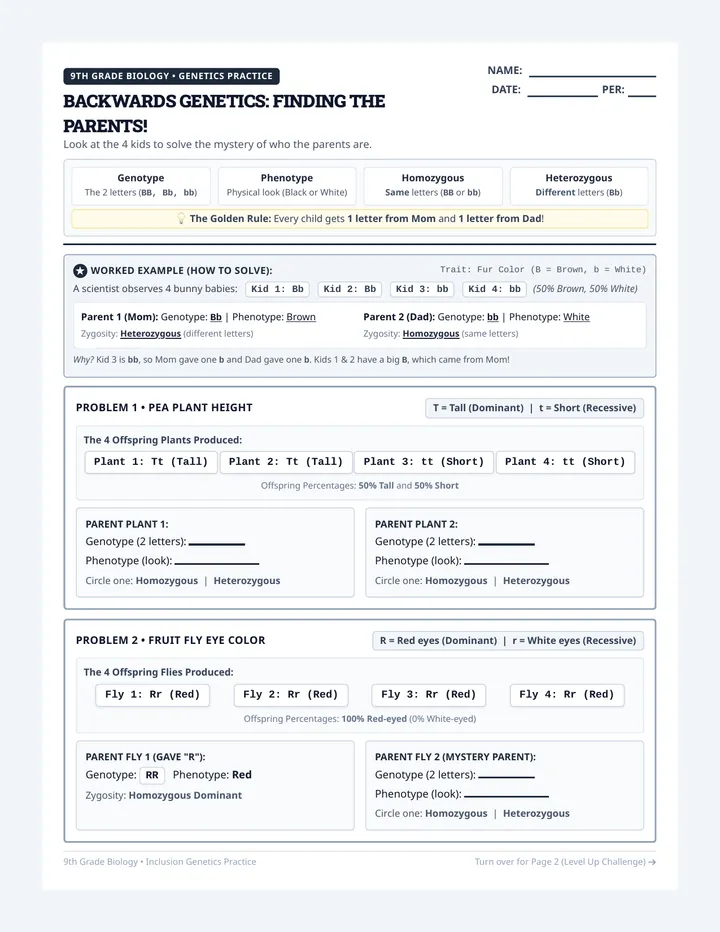
A simplified, inclusion-friendly two-page genetics worksheet where Page 1 provides the offspring genotypes directly, and Page 2 challenges students to first translate heterozygous/homozygous descriptions into alleles before deducing the parents.

RA

Richard Alan Frazier

Inheritance Blueprint Reading Article

Inheritance Blueprint Reading Article

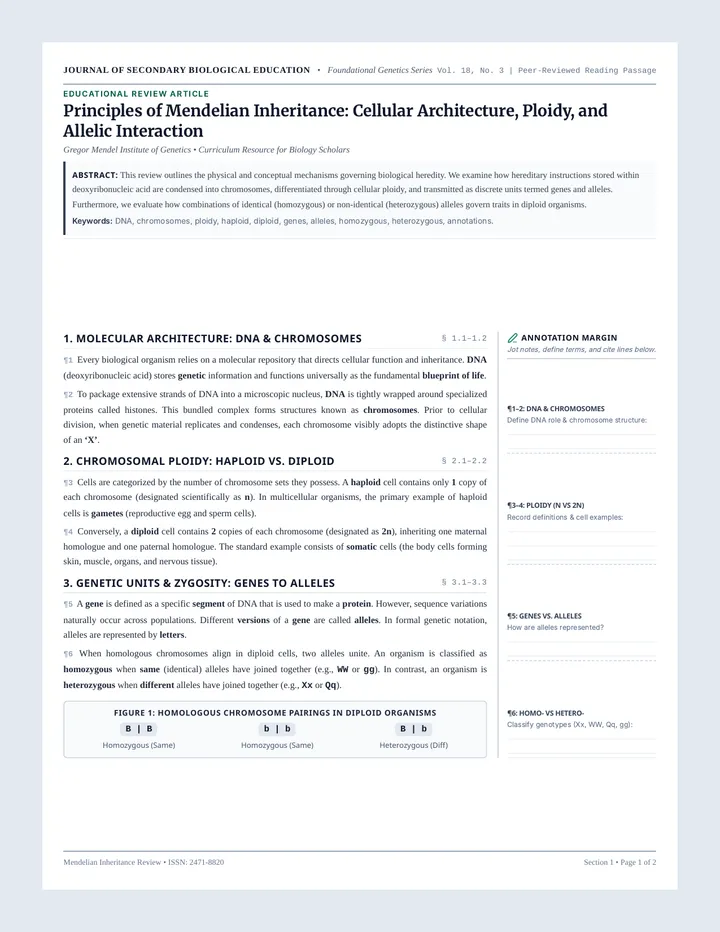
A two-page scholarly academic journal article on Mendelian inheritance, designed in an authoritative journal format with paragraph numbering, abstract, scientific figures, and a dedicated right-hand annotation margin with writing rules for student marginalia.

RJ

Rachel Jones

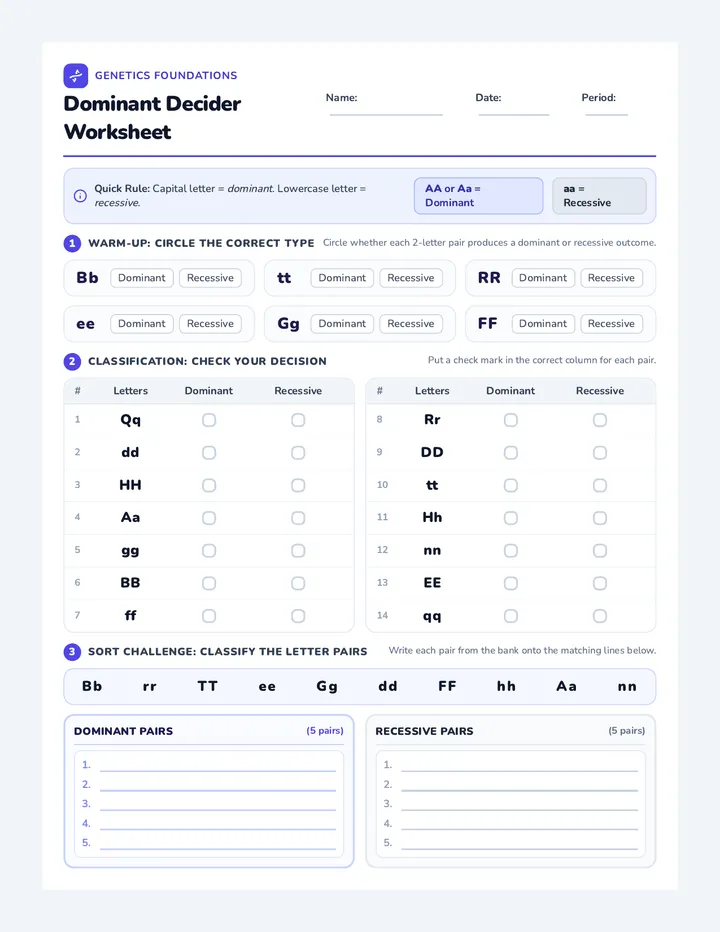
Dominant Decider Worksheet

Dominant Decider Worksheet

A friendly, highly readable genetics worksheet using the approachable Nunito font and letters with unmistakable capital and lowercase shapes (such as B/b, D/d, E/e, G/g, R/r, T/t). Eliminates ambiguous letters and robotic styling.

BS

Baylee Snell

Sequences

Climate Crisis Slides

Science Essentials Vault

A comprehensive collection of core science units covering Environmental Science, Biology, and Physical Science. This sequence provides high-impact instructional slides, hands-on lab experiences, guided notes, and differentiated assessments for five major scientific domains.

CB

Chloe Brown

25
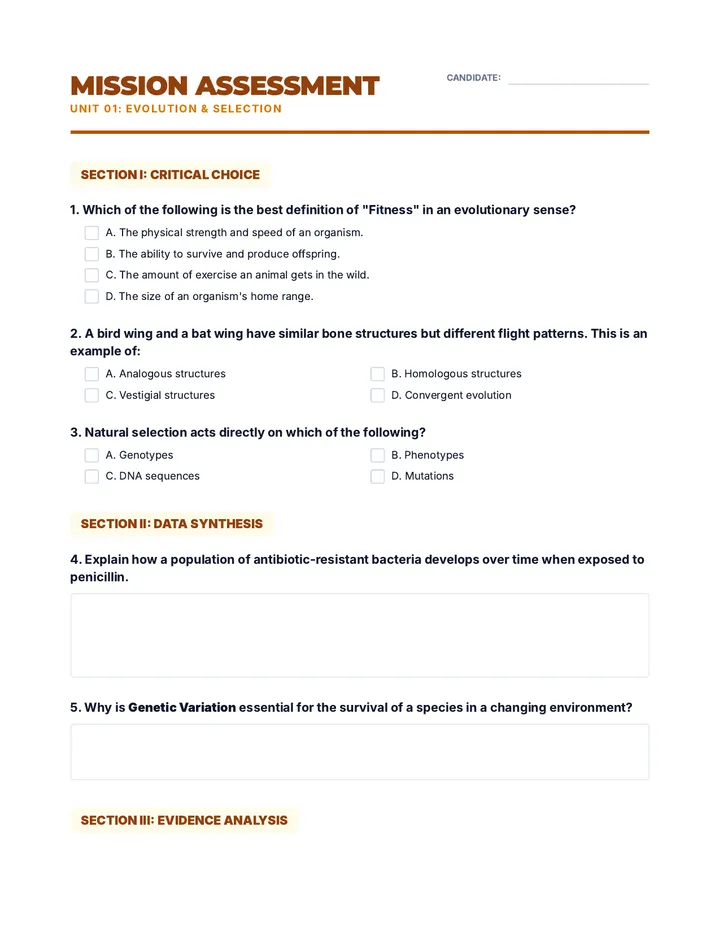
Evolution Assessment Quiz

Biology Recovery Sprint

A high-intensity biology credit recovery program focused on high-yield standards: Evolution, Systems, Viruses, and Cellular Genetics.

PB

Priyadarshini Bharath

15
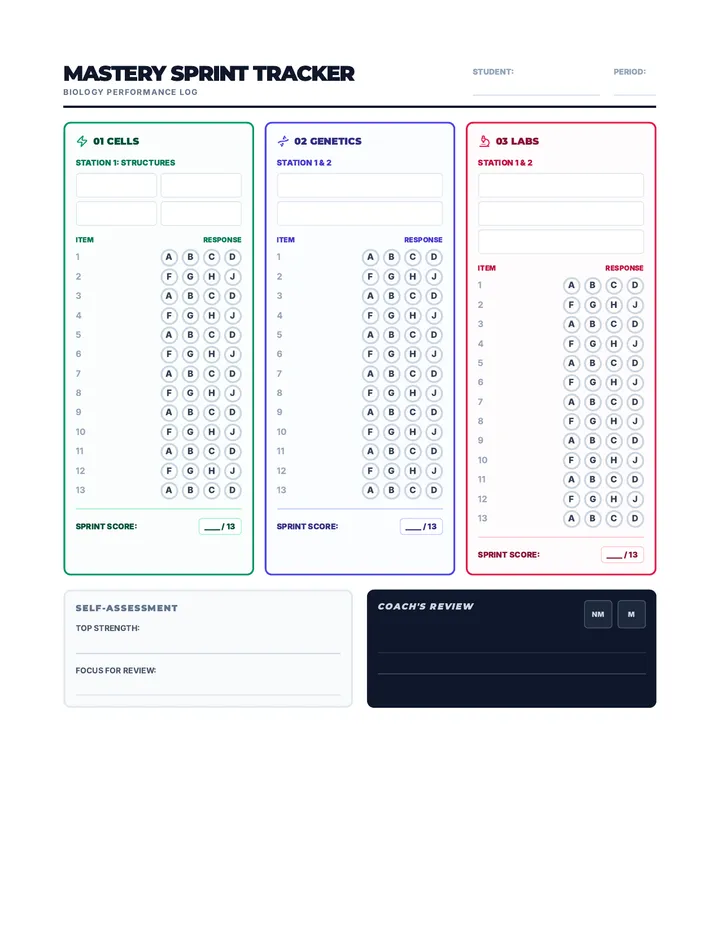
Sprint Mastery Tracker Worksheet

Biology Mastery Sprint

A high-intensity review sequence designed to move students from 'not met' to 'mastery' in Biology through vocabulary immersion and STAAR-style practice.

PB

Priyadarshini Bharath

10
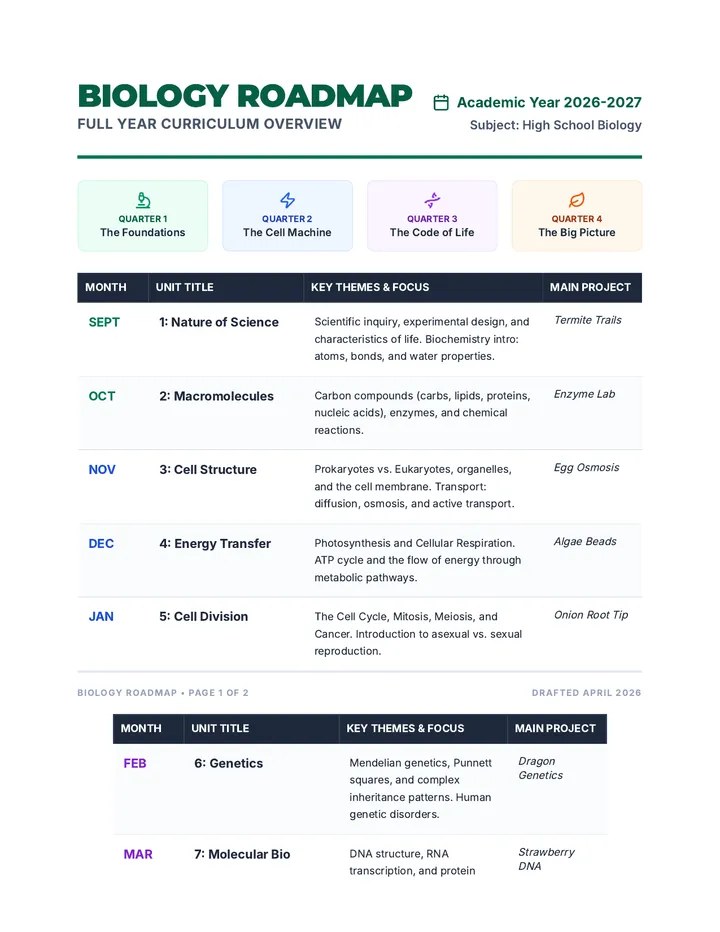
Biology Roadmap Document Trimmed

Biology Blueprint

A comprehensive full-year planning framework for high school Biology, including pacing, unit objectives, lab requirements, and assessment strategies.

A

AMY.MILLER

7
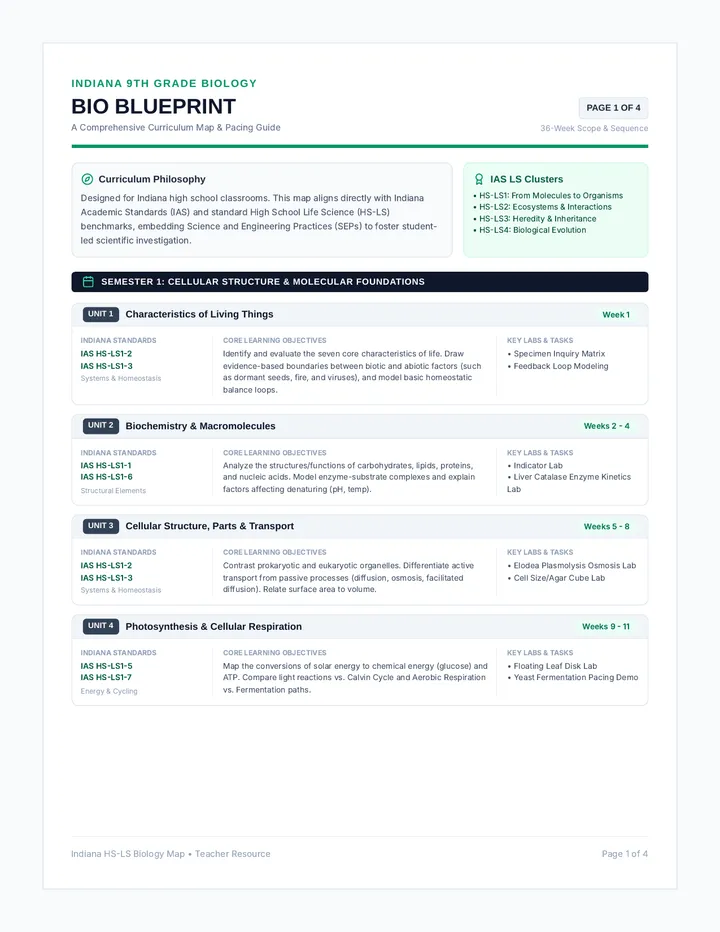
Bio Blueprint Curriculum Map

Indiana Biology Curriculum

A comprehensive biology curriculum aligned with Indiana Academic Standards, spanning twelve core units from the characteristics of living things to human impact, designed for 9th-grade on-level students.

M

MELANIE.ROBERTS

5
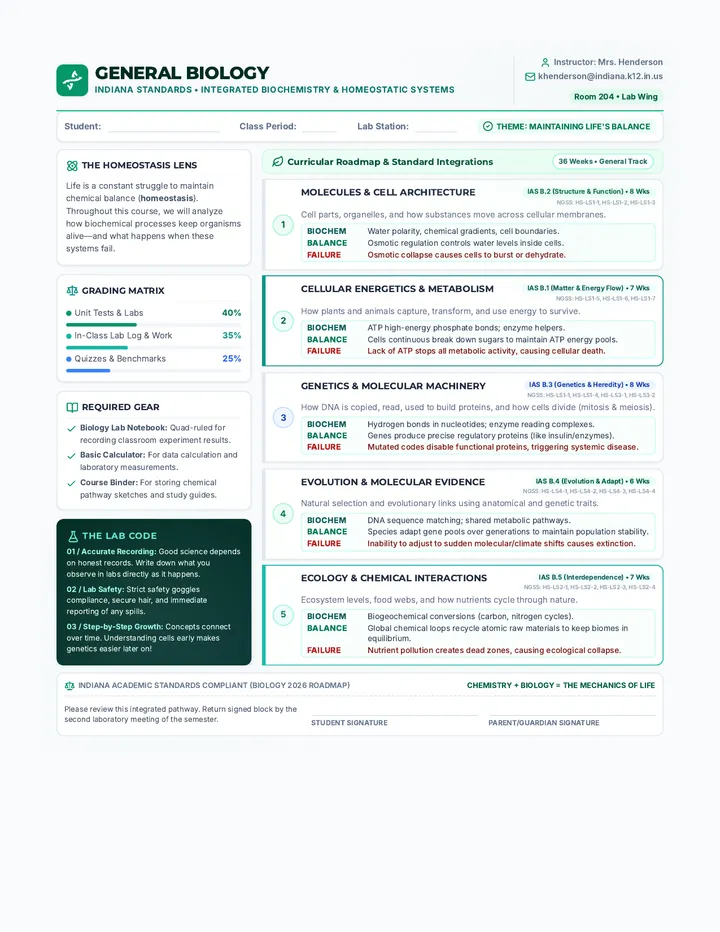
Biology Syllabus Infographic

Indiana Biology and Biochemistry

A comprehensive, 36-week General Biology curriculum aligned with Indiana Academic Standards, emphasizing the integration of biochemical foundations and metabolic homeostasis across all units.

J

Jennifer.Tetrick

7

Lessons

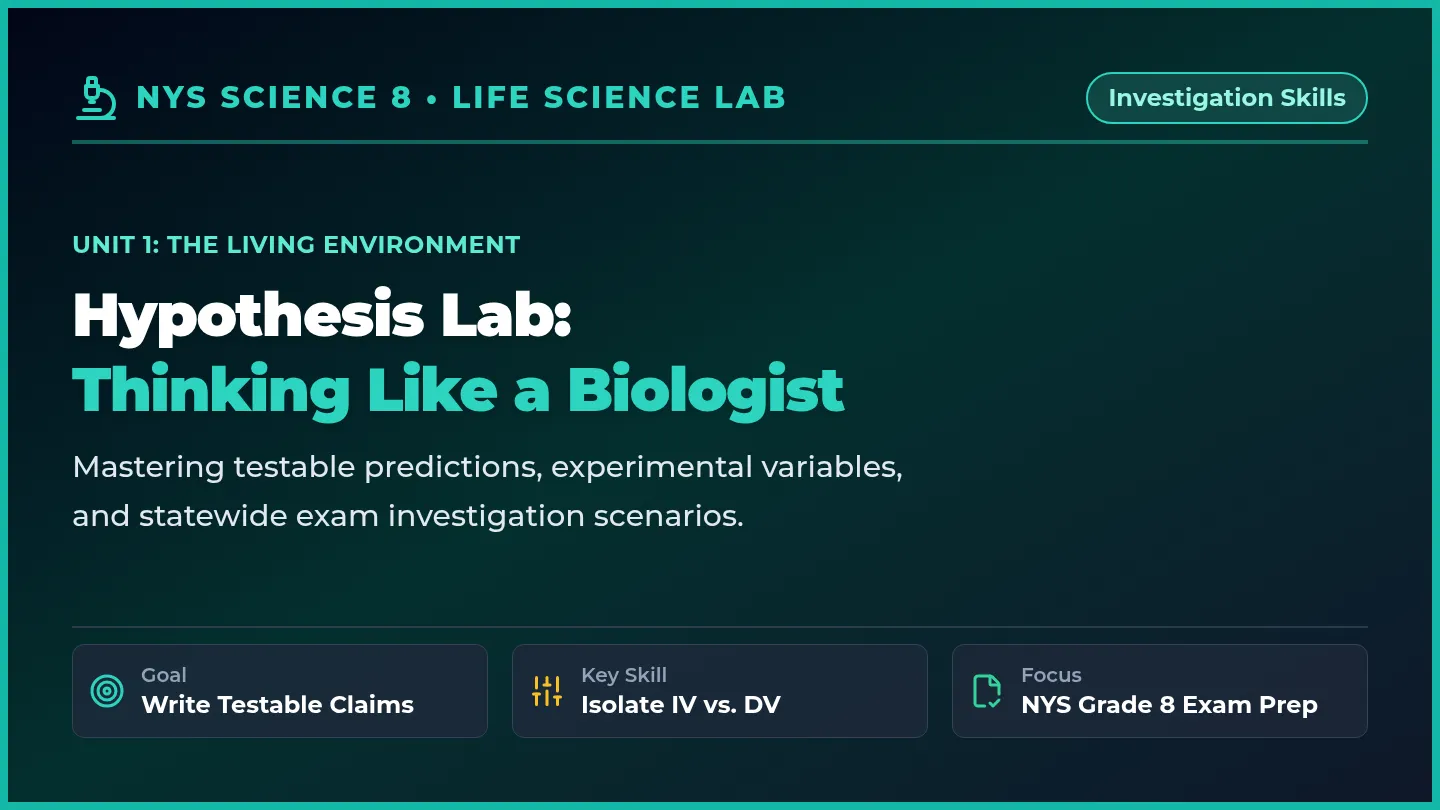
Hypothesis Lab Slides

Hypothesis Lab

An eighth-grade life science investigation lesson where students analyze New York statewide science exam biology scenarios to master hypothesis generation, independent and dependent variable identification, and experimental testing.

J

jelterman

7
Biology Syllabus Infographic

Course Launch

An introductory framework establishing course policies, Indiana state biology standards, and the integrated biochemistry roadmap for the academic year.

M

MELANIE.ROBERTS

4
Alien Alleles Slides

Monster Genetics

A lesson exploring genetic inheritance using alien and monster traits, focusing on genotypes, phenotypes, and Punnett square probability. Includes visual aids with color-coded alleles and scaffolded analysis prompts.

S

speargl

3
Cell and Genetics Quiz

HSED Life Science Prep

A comprehensive high-school equivalency preparation module focusing on Wisconsin HSED Life Science standards. This modular quiz series integrates key Reading Language Arts (RLA) skills, including text feature analysis, drawing conclusions, and interpreting scientific data, alongside life science concepts.

VL

V Lundgren

4
Gene Decoder Worksheet

Genetic Code Crackers

A hands-on station-based lesson focusing on the fundamental vocabulary of genetics, including alleles, genotypes, and phenotypes through matching activities and conceptual comparisons.

MB

Marsha Bolden

9
Genetics Glimpse Exit Ticket

Genetics Fundamentals

A short lesson introducing 10 key genetics terms through application and practice.

JD

Jonathan de la Fuente

3