Lenny.com
Explore
Create
ActivitiesNewMathEnglish Language ArtsScience & EngineeringSocial StudiesGlobal LanguagesHealth & Physical EducationSpecial EducationCounseling & Life SkillsArts & CreativityESL
Lenny.com
Lenny.com
Explore
Create
ActivitiesNewMathEnglish Language ArtsScience & EngineeringSocial StudiesGlobal LanguagesHealth & Physical EducationSpecial EducationCounseling & Life SkillsArts & CreativityESL
Lenny.com
Lenny.com

Solutions

Lenny for EducatorsLenny for SchoolsLenny for Districts

Product

ExploreSign inCreateSupportAbout

Resources

Getting startedMTSS Acceleration Program

© 2026 Lenny Learning Inc.

TermsPrivacyAccessibility
LinkedInInstagramX
Lenny
Science & EngineeringLife ScienceLiving ThingsAnimalsPlantsBody SystemsTraitsAdaptationsCellsEcosystemsHeredityGenes to TraitsCell DivisionPhysicsComparing MaterialsShapes and PropertiesMagnetsMagnetismLightSoundLight and SoundMatterStates of MatterChanges of StateMixturesPhysical and Chemical ChangeHeating and CoolingHeat and Thermal EnergyEnergyForce and MotionElectrical CircuitsAtoms and MoleculesPeriodic TableMotion in One DimensionMotion in Two DimensionsScalars and VectorsForces and Laws of MotionCircular Motion and GravityMomentum and ImpulseWork, Energy, and PowerWavesElectromagnetic WavesGeometric OpticsElectricity and MagnetismSimple Harmonic MotionThermodynamicsNuclear PhysicsEarth Science & AstronomyWeatherWater CycleRocks and MineralsFossilsEarth's FeaturesEarth's ResourcesEarth's StructureWeather and ClimateEarth EventsFossils and Geologic TimePlate TectonicsHuman ImpactsAstronomyChemistryUnits and MeasurementAtomic StructurePeriodic TrendsChemical BondingNomenclatureMolecular StructureIntermolecular ForcesThe MoleStoichiometryProperties of GasesSolutionsChemical ReactionsBalancing EquationsEnergy ChangesRates of ReactionsEquilibriumAcids and BasesQuantum ModelBiologyClassificationCell StructureThe Chemistry of LifeBiomoleculesCellular TransportCell EnergyCell Growth and DivisionDNAProtein SynthesisMeiosis and Sexual ReproductionPatterns of InheritanceMulticellular OrganismsEvolutionEcologyBiodiversityComputer ScienceAlgorithms and Computational ThinkingProgramming LanguagesComputing SystemsNetworks and InternetData AnalysisCybersecurityAI and Machine LearningSoftware Design and DevelopmentBlockchainEngineering & AIDesigning ExperimentsEngineering PracticesDesign ThinkingEngineering Design ProcessMechanical EngineeringElectrical EngineeringMaterials and StructuresCAD and 3D DesignRoboticsArtificial Intelligence BasicsVibe CodingMachine LearningAI Ethics and SocietySystems ThinkingEntrepreneurship & InnovationEntrepreneurial MindsetBusiness Idea DevelopmentBusiness Plan BasicsMarketing & Customer DiscoveryFinancial Management for Startups

Reaction Detectives

A 4-week middle school chemistry sequence aligned to MS-PS1-2 using the 5E inquiry model. Students investigate characteristic properties, atomic rearrangement, and macroscopic evidence of chemical reactions through engaging hands-on labs and data analysis.

SHSarah Hale
Baggie Reaction Engage

Students launch their investigation with the classic Reaction in a Baggie phenomenon, observing temperature shifts, gas production, and color changes. Includes Day 4 substitute-ready data case files.

Property Hunters Explore

Students explore characteristic physical and chemical properties including density, solubility, melting point, and flammability across known and unknown substances to build identification patterns.

Atomic Shuffle Explain

Students explain how atoms regroup during chemical processes, demonstrating that new substances with distinct properties form because reactant bonds break and reform into products.

Chemical Verdict Evaluate

Students synthesize their learning in a culminating mystery powder lab assessment and CER argument, supported by a comprehensive 20-day bellwork journal tracking daily mastery.

Reaction Detectives

A 4-week middle school chemistry sequence aligned to MS-PS1-2 using the 5E inquiry model. Students investigate characteristic properties, atomic rearrangement, and macroscopic evidence of chemical reactions through engaging hands-on labs and data analysis.

SHSarah Hale

Case Evidence Tables & Critical Thinking

Independent Analysis

2 Case File #2: Heating Candle Wax (Paraffin)

Physical vs Chemical Contrast

Property TestedSolid Wax (Before Heating)Melted Wax (After Gentle Heat)Soot/Gas (From Flame)
State of MatterSolidLiquidGas / Solid Particles
Density (\(\text{g/cm}^3\))\(0.90\text{ g/cm}^3\)\(0.82\text{ g/cm}^3\)\(0.0019\text{ g/cm}^3\) (\(\text{CO}_2\))
Solubility in WaterInsolubleInsolubleSlightly soluble
Reversible when Cooled?N/AYes (returns to solid wax)No (cannot reform wax)

Compare: Explain why melting the wax is a physical change, but the flame burning is a chemical reaction:

3 Case File #3: Zinc Metal Interaction with Hydrochloric Acid

Clarification Standard Example

PropertyReactant 1: Zinc MetalReactant 2: \(\text{HCl}\) LiquidResulting Gas Produced
State of MatterSolidLiquid (Clear)Colorless Gas
FlammabilityDoes not burnDoes not burnHighly Explosive (Pops with flame)
Density\(7.14\text{ g/cm}^3\)\(1.18\text{ g/cm}^3\)\(0.000089\text{ g/cm}^3\) (\(\text{H}_2\text{ gas}\))

Evidence Claim: Why does the flammability of the gas prove a new substance was created?

4 Scientific Reasoning Synthesis

A classmate says: "If two substances mix and change temperature or color, atoms disappeared into thin air." Correct this misconception using what you learned about atomic rearrangement:

• Please write your name on Page 1 and place your completed paper into the class turn-in bin for the substitute teacher •

MS-PS1-2 Evidence Investigation • Day 4 Sub-Plan Page 2 of 2

Do not mix dry yet

2

Liquid Cup

Stand 10 mL phenol red cup upright in the center of the bag. Keep it standing!

Zero spills inside cup

3

Airtight Seal

Gently squeeze excess air out of the bag and seal zipper completely shut.

Check zipper twice!

4

Tip & Observe

Tip over the cup from outside the bag. Swirl gently and feel the temperature changes!

Record all 4 senses

Key Question: What evidence proves that brand-new substances formed inside the bag? Record on Lab Handout Page 2


Evidence of a Chemical Reaction

Observable Patterns

01

Temperature Shift

Energy is released (feels hot) or absorbed (feels cold) without an external heat source.

02

Gas Production

Bubbles, foaming, or a bag inflating indicate a brand-new gas formed from liquid/solid reactants.

03

Unexpected Color Change

The final color cannot be explained by simple mixing (e.g. red turning bright yellow or white).

04

Precipitate / New Solid

A solid powder forms when two clear liquids mix, settling to the bottom.

NGSS MS-PS1-2 Evidence Statement 3 Characteristic Properties Must Change!

Candle Wax / ParaffinLow (\(< 60^\circ\text{C}\))
Sucrose (Sugar)Medium (\(186^\circ\text{C}\))
Sodium Chloride (Salt)High (\(801^\circ\text{C}\))

4 Station 4: Flammability & Odor Data Analysis

Chemical Property Data

Isopropyl Alcohol Odor: Sharp, medicinal Flammability: Highly Flammable Boiling Point: \(82.6^\circ\text{C}\)

Distilled Water Odor: Odorless Flammability: Non-flammable Boiling Point: \(100.0^\circ\text{C}\)

Mineral Oil Odor: Mild, faint oily Flammability: Combustible at high heat Boiling Point: \(300+^\circ\text{C}\)

Why is flammability considered a chemical property, while boiling point is a physical property?

5 Mystery Substance Identification Matrix

Using your data from Stations 1 through 4, identify Mystery White Powder #1:

Identity Claim:

Supporting Characteristic Evidence:

Target Check: "I can identify pure substances using characteristic properties regardless of sample size." [ ] Mastered [ ] Practicing

MS-PS1-2 Characteristic Properties • Explore Phase Page 2 of 2

Mass ÷ Volume

2

Solubility Well

Add 1 scoop into water and 1 scoop into oil. Stir for 20 seconds. Does it dissolve?

Clear vs. Cloudy

3

Melting Bath

Observe small samples in an \(80^\circ\text{C}\) water bath. Which substance liquefies first?

Phase Transition

4

Flammability Data

Analyze chemical property evidence cards for alcohol, mineral oil, and water.

Chemical Property

Rotation Reminder: Leave each station clean and dry before rotating to the next table. Record all data in Handout


The Golden Rule of Matter

Core Conceptual Model

Non-Characteristic Properties

Changes with Size

  • Mass: More stuff = more mass.
  • Volume: More stuff = takes up more space.
  • Shape: Cutting, crushing, or pouring changes it.

Cannot be used to identify an unknown substance!

Characteristic Properties

Always Constant

  • Density: Ratio of mass to volume is fixed.
  • Melting / Boiling Point: Exact change temp.
  • Solubility & Flammability: Inherent to substance.

True fingerprints used to solve chemical mysteries!

DCI PS1.A: Structure and Properties of Matter MS-PS1-2 Target

1. Evaporation Test: If we evaporate the water from Scenario A, what substance will be left in the dish? Why?

2. Permanent Property Transformation: Can you scrape the rust off the steel wool and turn it back into shiny, flexible iron metal using only physical cooling or drying? Explain using atomic bonds:

3. Connecting Microscopic to Macroscopic (CCC Patterns): Complete the cause-and-effect chain:

Microscopic Cause: Atoms in reactants break bonds and regroup into new molecules \(\longrightarrow\) Macroscopic Effect: (Describe what scientists observe with their eyes/tools):

Explain & Elaborate Target Self-Check

I can explain that in a chemical reaction, atoms regroup into new molecules with different properties. I can distinguish between physical dissolving (molecules disperse) and chemical reacting (bonds break/reform).

MS-PS1-2 Atomic Rearrangement • Explain Phase Page 2 of 2

Ex: \(\text{NaHCO}_3 + \text{Acid}\)

Step 2: Interaction

Bonds Break

Colliding molecules break existing bonds. Atoms freely rearrange into new groupings.

→ ENERGY SHIFT →

Step 3: Products

Brand-New Bonds

New molecules form with completely different physical and chemical properties.

Ex: \(\text{CO}_2\text{ gas} + \text{H}_2\text{O}\)

Rule: Same exact atoms before and after — only their connections changed! Conservation of Mass


Dissolving vs. Reacting

Crucial Distinction

Dissolving (Physical)

No New Substance

  • Molecules simply separate and spread out between water molecules.
  • Internal chemical bonds inside each molecule remain intact.
  • Easily reversible by evaporating or boiling off the solvent.

Reacting (Chemical)

New Substance

  • Internal chemical bonds break and atoms swap into new molecules.
  • Brand-new characteristic properties emerge (density, boiling pt, odor).
  • Cannot be reversed by simple physical filtration or boiling.

CCC.1: Macroscopic patterns relate to microscopic atomic structure MS-PS1-2 Evidence Statement 3

MS-PS1-2 Mastery Scoring Rubric

CriterionLevel 3: MasteredLevel 2: DevelopingScore
Data OrganizationTables 1 & 2 completely and accurately filled with pre/post properties.Data partially recorded; some properties missing./ 4
Claim & EvidenceAccurate claim with ≥2 specific characteristic property data points cited.Claim stated but cites only general observations without data./ 4
Scientific ReasoningExplicitly connects property changes to atomic rearrangement into new molecules.Mentions a reaction occurred but does not explain atomic rearrangement./ 4

MS-PS1-2 Summative Evaluation • Evaluate Phase Page 2 of 2

DAY 19: Conservation Law 2 min

State the Law of Conservation of Mass in your own words:

DAY 20: Unit Reflection 2 min

Which lab investigation best proved that atoms rearrange?

4-Week "I Can" Mastery Self-Tracker Check off each target as mastered

W1: I can record property changes in the Baggie Lab. W2: I can identify substances using density & solubility. W3: I can model how reactant atoms regroup into products. W4: I can write a complete CER verdict using data evidence.

MS-PS1-2 Daily Bellwork Journal • Weeks 3 & 4 Page 2 of 2

You might also like

Habitability Blueprint Slides

Life Beyond Limits

A one-week interdisciplinary astrobiology sequence investigating Earth's habitability, extreme biological adaptations across eleven Earth species, and the plausibility of life on other celestial bodies.

M

Megan.Tanner

7
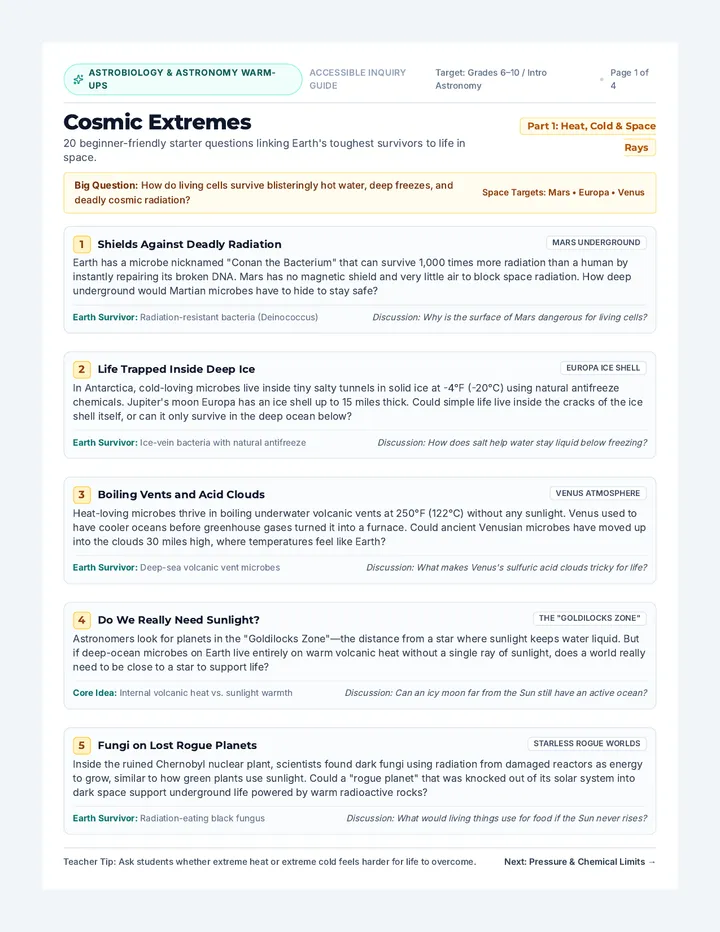
Cosmic Extremes Question Bank

Cosmic Extremes

An astrobiology exploration unit connecting Earth's most resilient extremophiles to planetary exploration across the solar system, habitable zones, and the search for alien life.

M

Megan.Tanner

3
Cell Clash Comparison Chart

Cell Clash Comparison Chart

A side-by-side visual comparison infographic and structured reference chart analyzing the key structural and functional differences between plant and animal cells. Features category-by-category breakdowns, shared cellular organelles, and microscope identification cues.

Lenny Avatar
Lenny
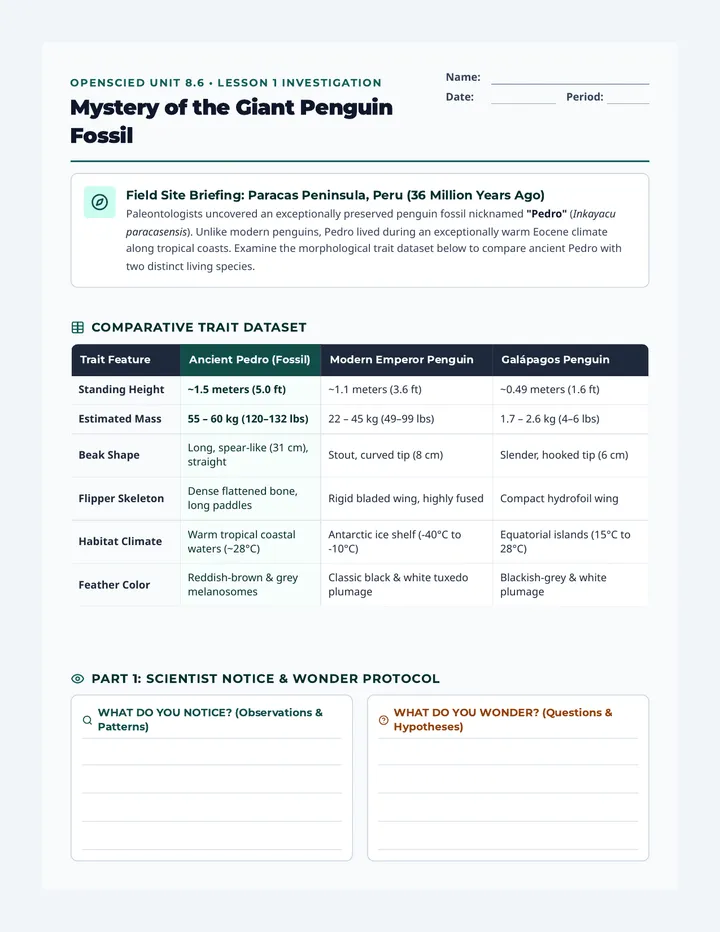
Giant Bones Investigation Handout

Ancient Giants Modern Survivors

An eighth-grade science unit investigating natural selection, adaptations, and evolutionary history through ancient giant penguin fossils and modern species. Students model trait shifts across generations, analyze anatomical and embryological evidence, and construct scientific explanations for how environmental pressures shape biodiversity. Aligned to the OpenSciEd Unit 8.6 storyline.

CS

Chad Sturkie

10
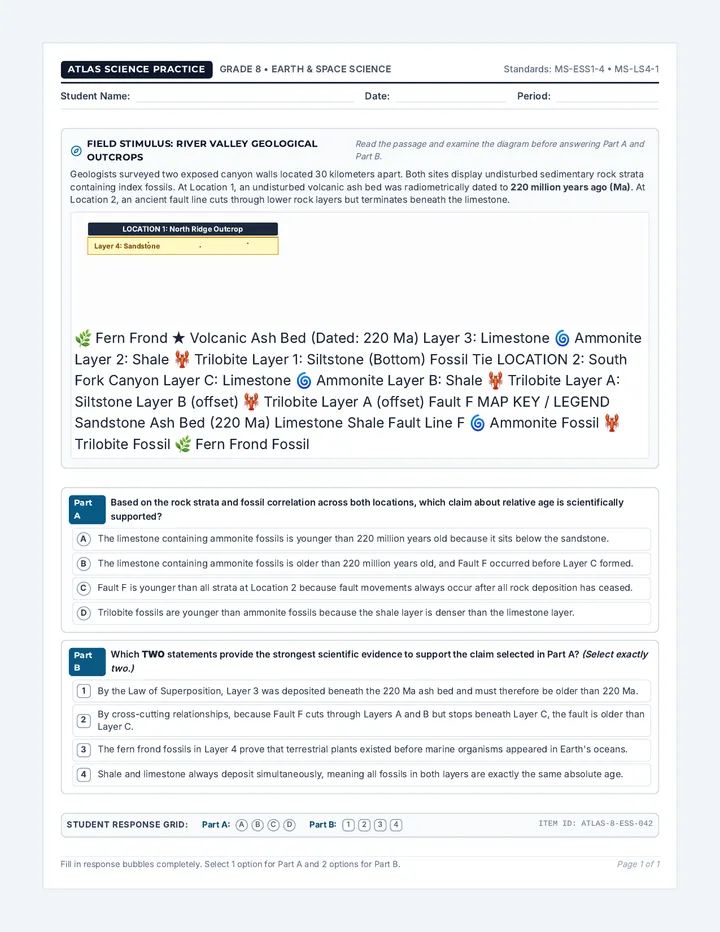
Strata Sleuths Assessment Item

Strata Sleuths

An 8th-grade science assessment lesson evaluating student mastery of rock strata, relative dating principles, and fossil succession aligned to NGSS and ATLAS assessment standards. Students analyze geological cross-sections and fossil distributions to reconstruct Earth's historical timeline.

CS

Chad Sturkie

2
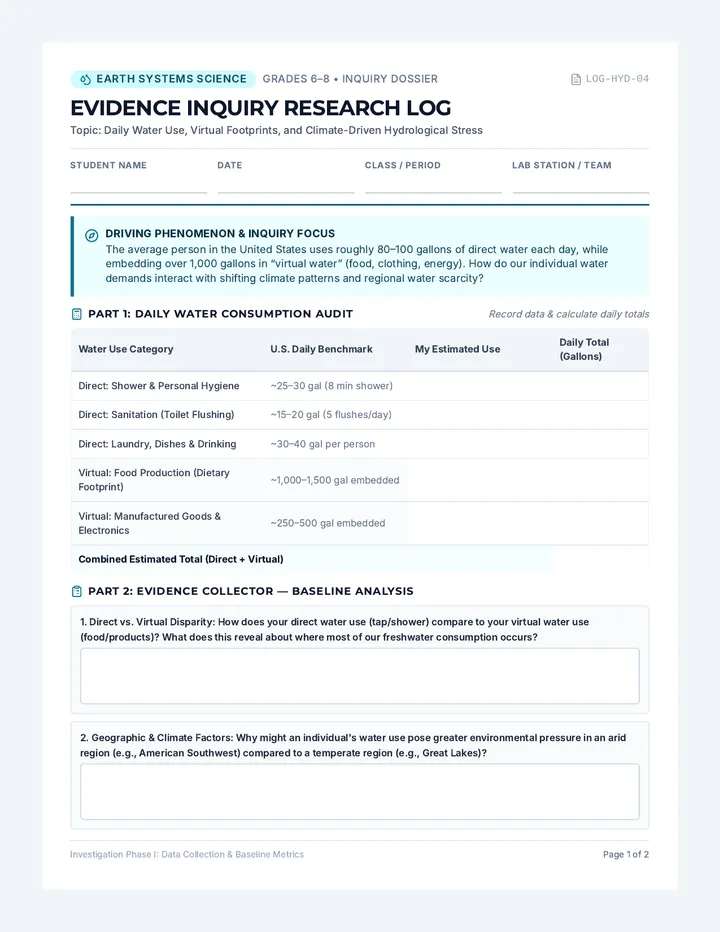
Water Climate Inquiry Log

Water Climate Inquiry Log

A two-page printable Evidence Inquiry Research Log for Grades 6–8 investigating personal water footprints, virtual water consumption, and their connections to climate change impacts on Earth's freshwater systems.

Lenny Avatar
Lenny
Building Blocks Slides

Atomic Foundations

A 3-part comprehensive scaffolded unit exploring matter, atomic architecture, subatomic particles, nuclear calculations, and atomic variations like ions and isotopes.

M

meagan_asp

6
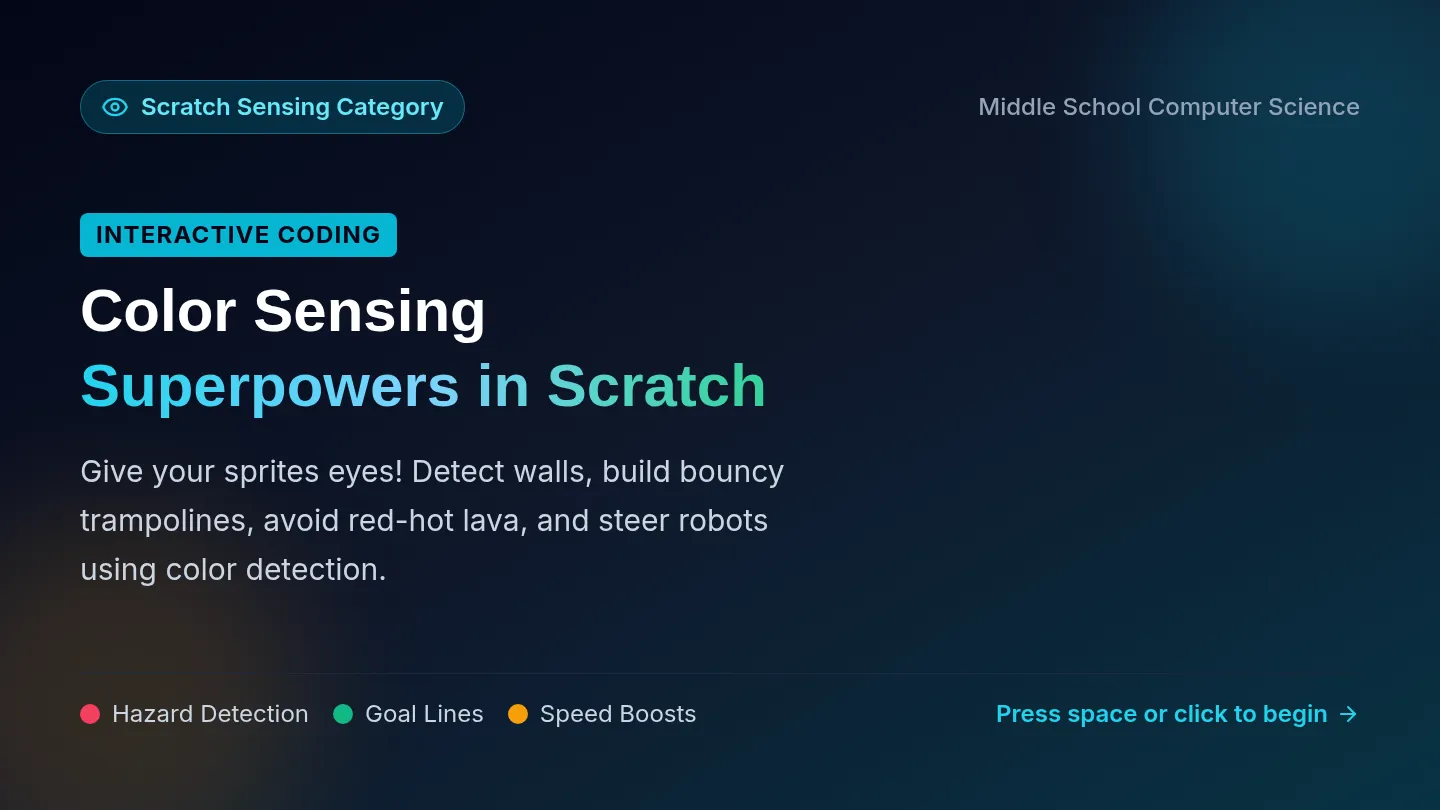
Color Vision Slides

Color Vision Quest

A hands-on Scratch computer science lesson for middle schoolers exploring color sensing blocks, collision detection, and autonomous navigation.

JB

Jennifer Burrow

3
Cosmic Extremes Answer Sheet

Cosmic Extremes Answer Sheet

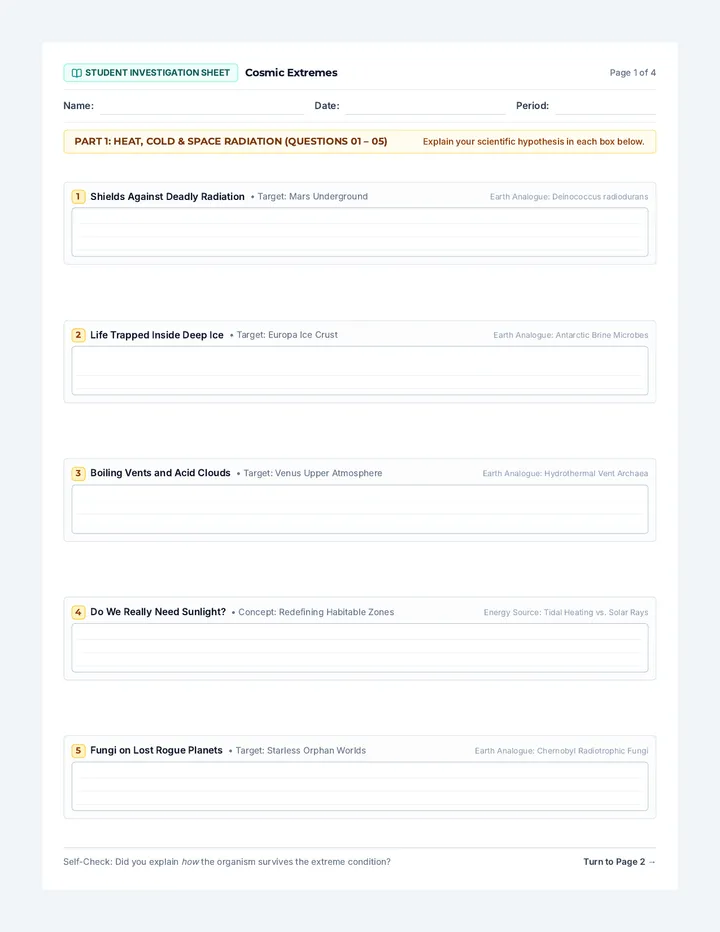
A print-ready 4-page student recording and answer sheet designed for the 20 Cosmic Extremes inquiry questions. Includes structured fields for student hypothesis formulation, Earth extremophile connections, and celestial target analysis.

M

Megan.Tanner

Living Matter Slides

Life Science Odyssey

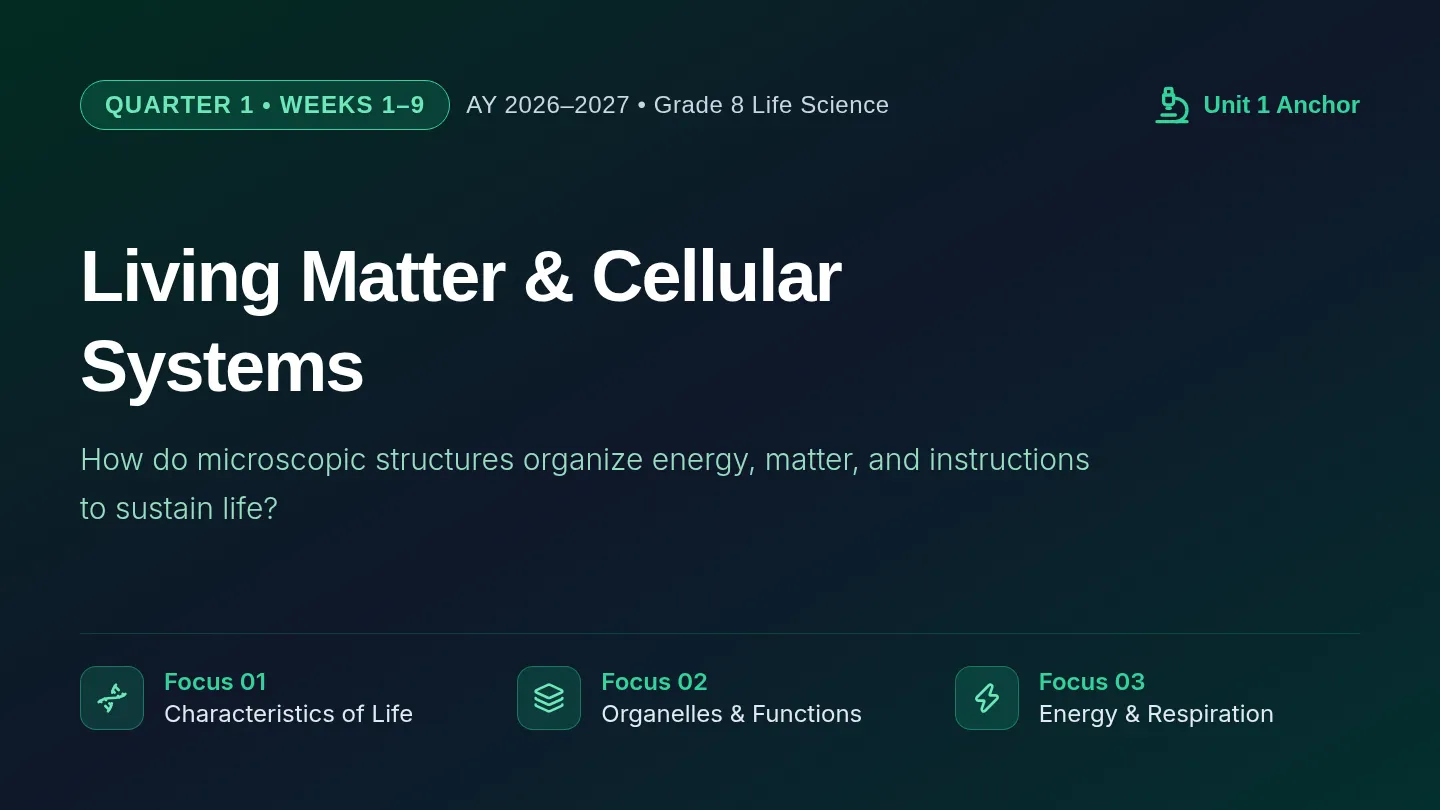
A comprehensive Grade 8 life science sequence spanning four instructional quarters across the 2026–2027 academic year. Students investigate cellular foundations, hereditary mechanisms, evolutionary adaptations, and ecological networks through inquiry and evidence-based reasoning.

JE

Jeffrey Elterman

4
Solar Spotlight Slides

Solar Spotlight

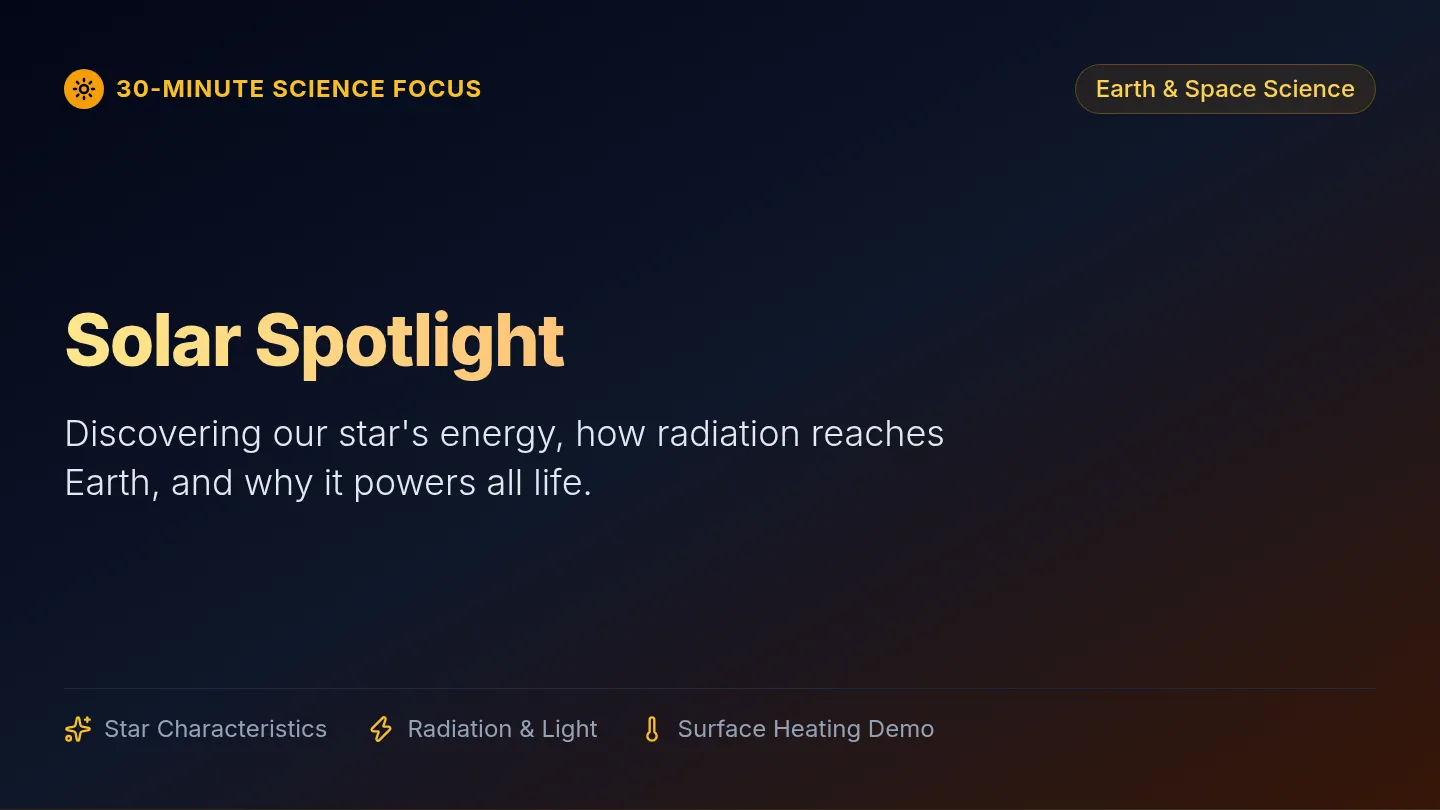
A fast-paced 30-minute science lesson exploring the Sun's physical properties, stellar proximity, radiation transfer, and surface heating effects on Earth.

KB

Krista Bodkin

3
Cosmic Extremes Answer Key

Cosmic Extremes Answer Key

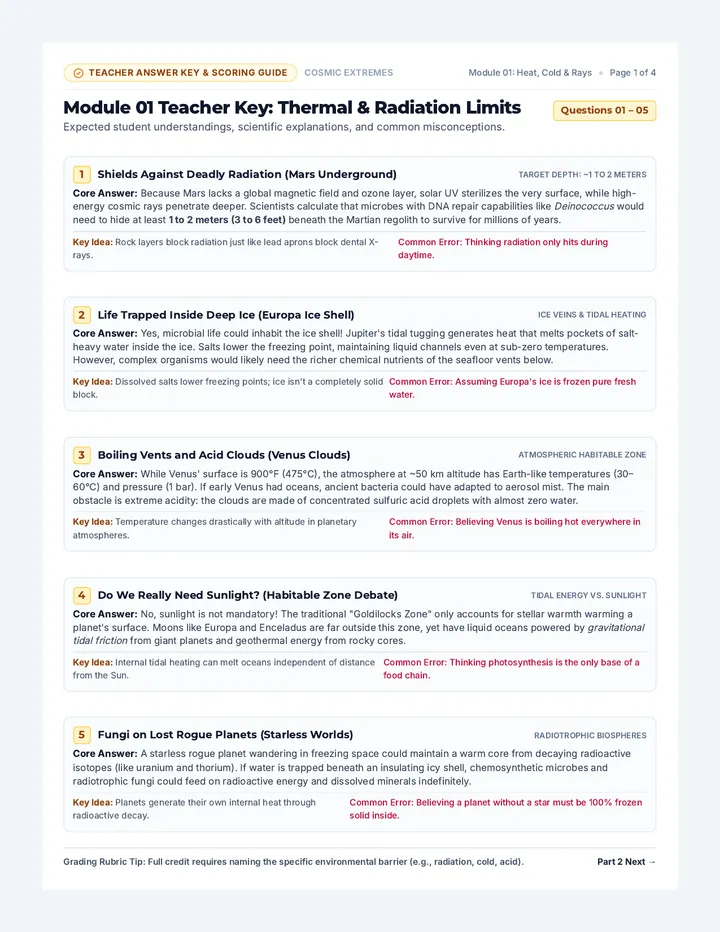
A complete 4-page teacher answer key and guide for the 20 Cosmic Extremes questions. Provides clear model answers, core scientific principles, and common student misconceptions for each question across all four modules.

M

Megan.Tanner