Station Life Activity Sheet
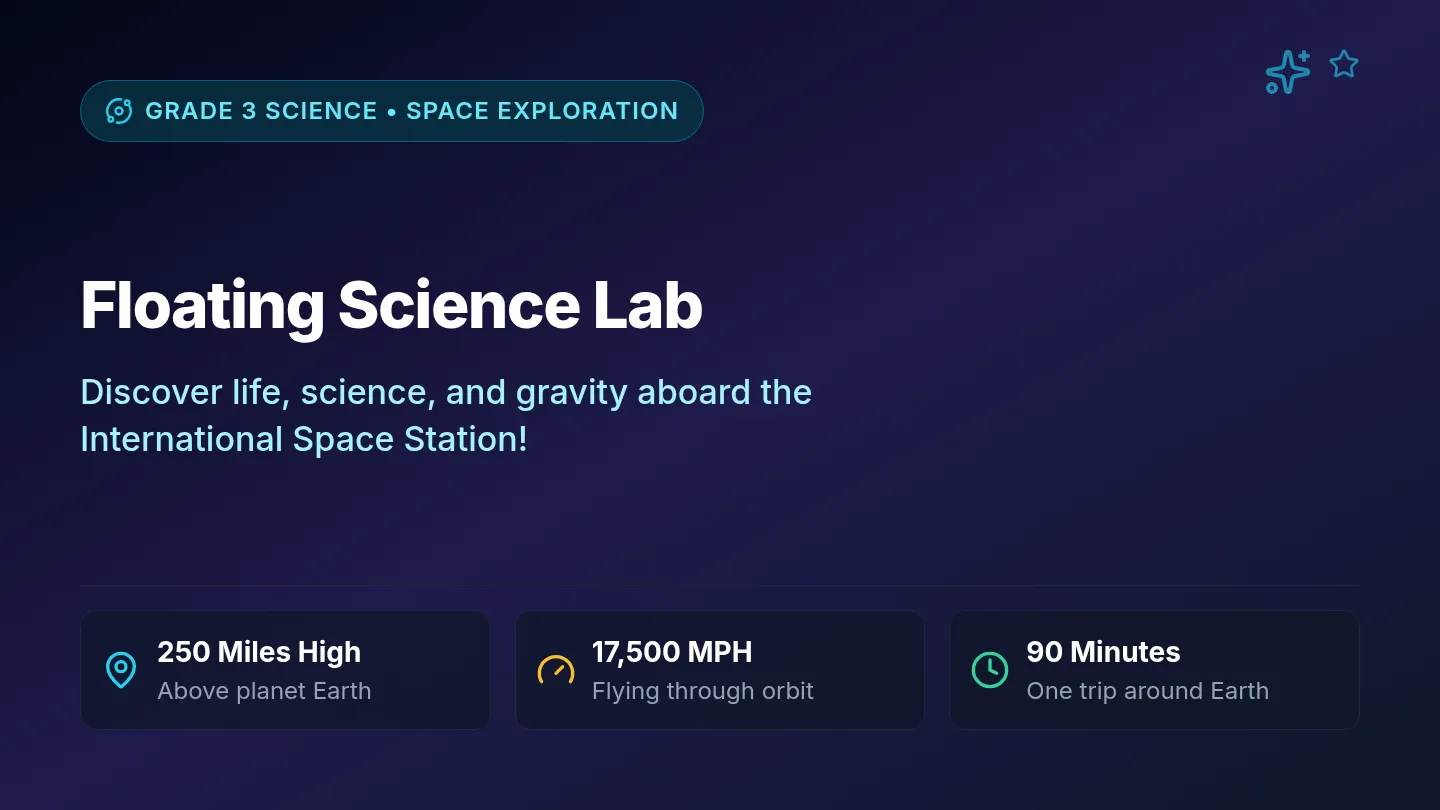
Grade 3 Space Science ISS Orbit: 254 Miles Above Earth
Station Life Activity Sheet
Mission Log
CREW SURVIVAL LAB
Astronaut Name:
Mission Date:
Mission Briefing
All living things need air, water, food, and shelter to survive. But on the International Space Station (ISS), there is no atmosphere, open water, or grocery store! Investigate the 4 station systems below to see how astronauts survive in orbit.
System 1: Air to Breathe
Oxygen
The ISS uses an Oxygen Generator that splits water molecules into breathable oxygen gas and scrubs away harmful carbon dioxide.
1. How do astronauts get oxygen inside the ISS?
A) They open space shuttle windows each morning B) Station machines make oxygen and filter the air C) They carry large air balloons on their backs
Earth Comparison: What makes oxygen on Earth?
System 2: Clean Water
Recycling
Water is too heavy to constantly blast into orbit. The Water Recovery System recycles sweat, breath moisture, and shower water into pure drinking water!
2. Why must water be recycled on the ISS?
A) Launching fresh water from Earth is heavy & costly B) Water easily floats out into space forever C) Space station astronauts only drink fruit juice
Station Stat: How much water is recycled?
[ ] ~15% [ ] ~50% [ ] ~98%
System 3: Space Food
Nutrition
Space food is freeze-dried (water removed) or sealed in pouches so it stays fresh without a refrigerator. Astronauts eat with tortillas instead of bread!
3. Why do astronauts eat tortillas instead of bread?
A) Bread is much too heavy to lift onto a rocket B) Bread crumbs float and can get in eyes or machines C) Tortillas stay warm forever without heating
Prep Check: What must be added to freeze-dried meals?
[ ] Hot Water [ ] Milk [ ] Butter
System 4: Orbital Shelter
Protection
The ISS metal hull protects crew from extreme heat (+250°F), deep cold (-250°F), and solar radiation. Inside, sleeping bags are tied to the walls!
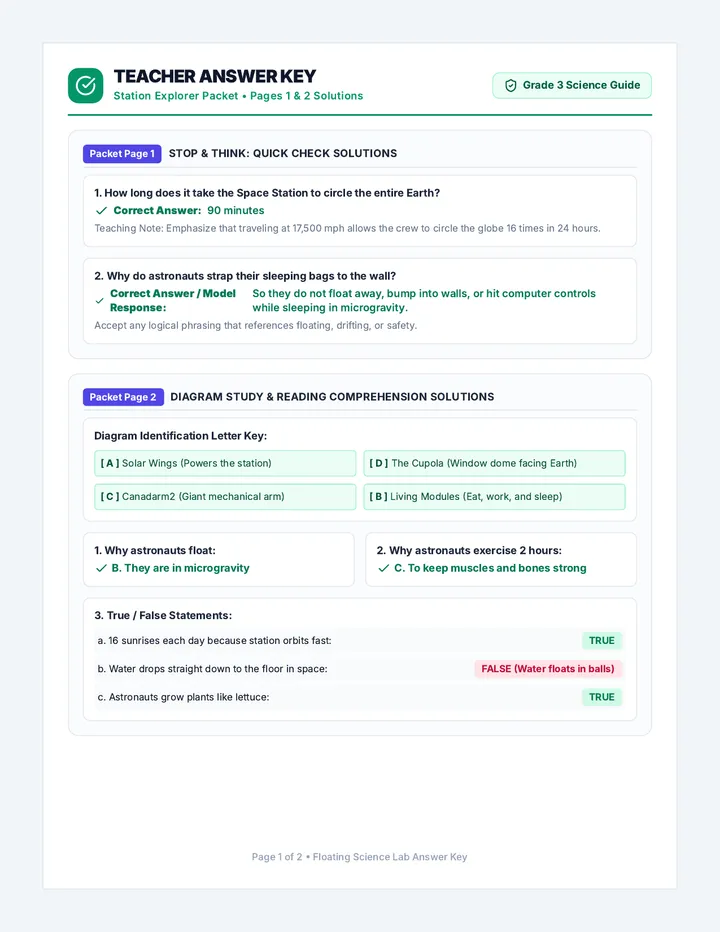
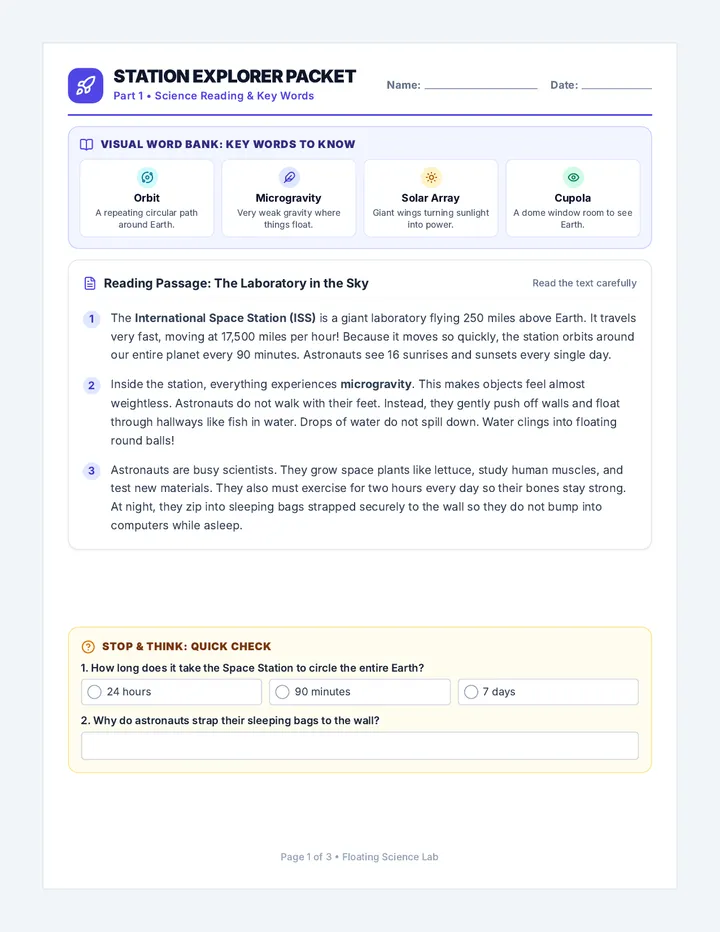
4. Why do astronauts strap sleeping bags to the wall?
A) To stop themselves from drifting and bumping into things B) Because beds cannot fit through the station hatches C) Sleeping vertically makes astronauts grow taller
Space Shield: The station protects against:
[ ] Extreme Heat & Cold [ ] Ocean Waves
Mission Debrief: Compare Earth vs. Space
Written Response
Choose one need (Air, Water, Food, or Shelter). In 1–2 complete sentences, explain how getting it on the ISS is different from getting it in your home on Earth.