Reversible reactions and the balance between forward and reverse reaction rates. Addresses Le Chatelier's principle, equilibrium constants, and the impact of temperature, pressure, and concentration changes.
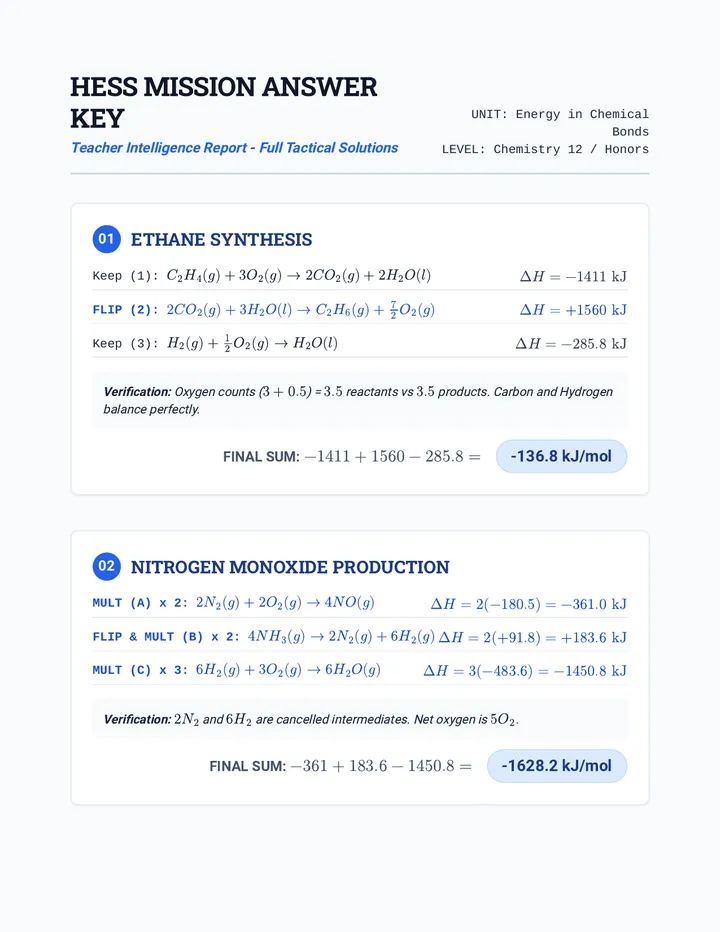
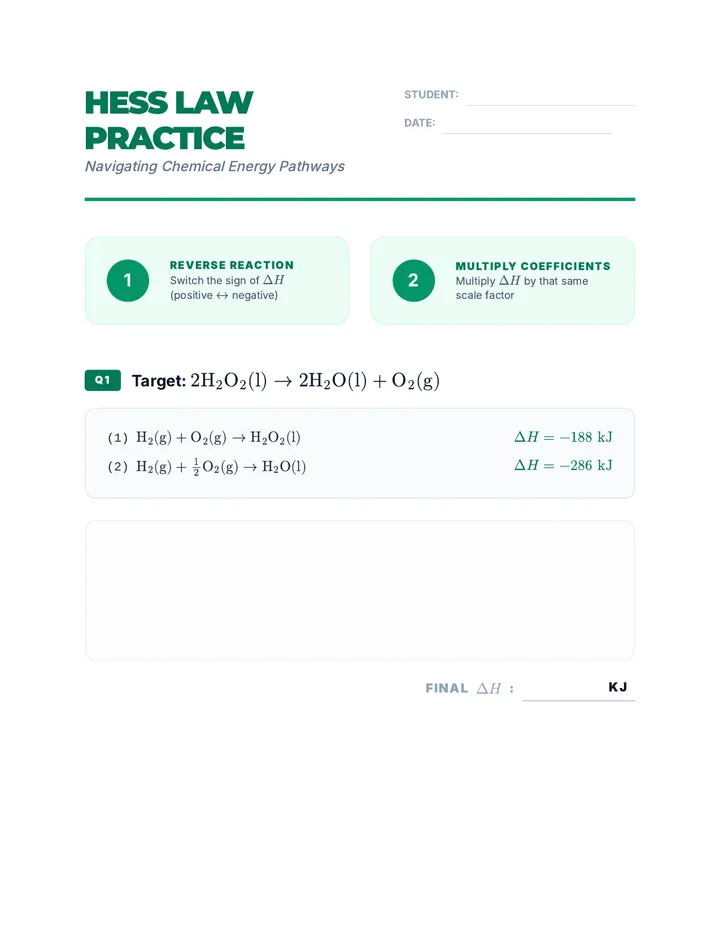
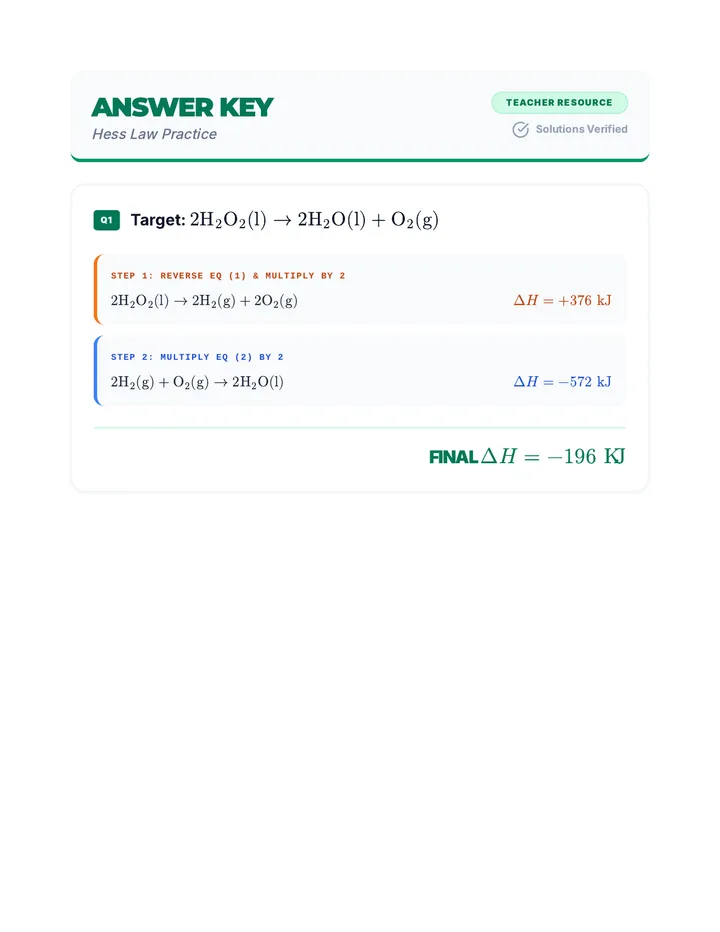
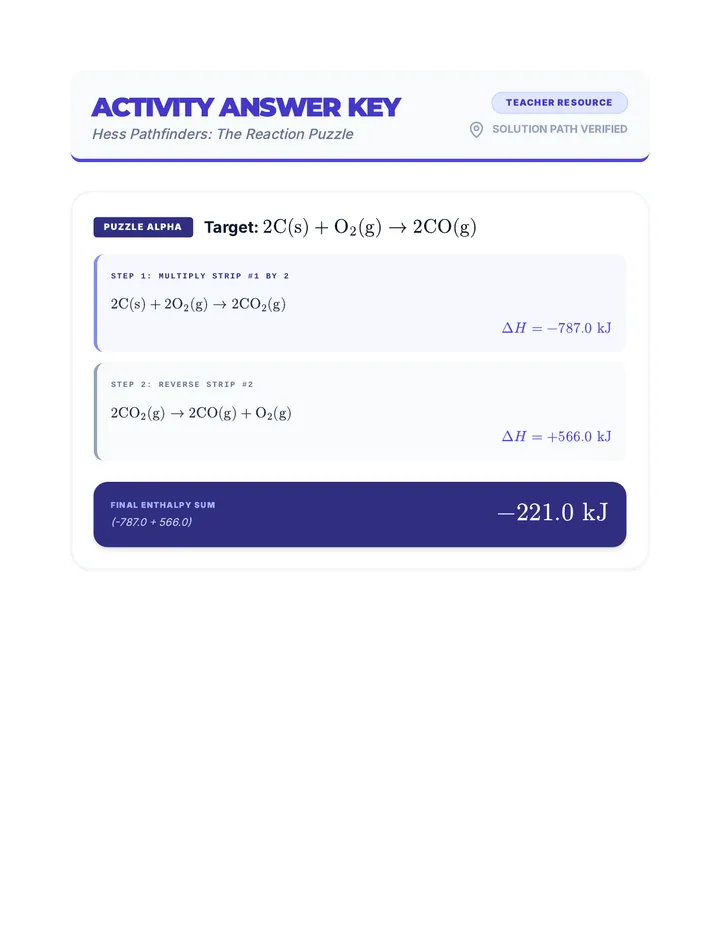
A five-day high school chemistry unit exploring thermochemistry, collision theory, enthalpy diagrams, and calorimetry through the lens of body heat and chemical reactions. Students investigate the anchoring phenomenon of exercise-induced heat while mastering TEKS C.13 standards.
A comprehensive 5-day chemistry unit investigating the relationships between gas pressure, volume, temperature, and moles using lab inquiries, mathematical modeling, and real-world applications.
This unit explores how chemical reactions occur and how they reach a state of balance. Students investigate reaction kinetics, energy changes, and the principles of dynamic equilibrium through modeling and laboratory investigation.
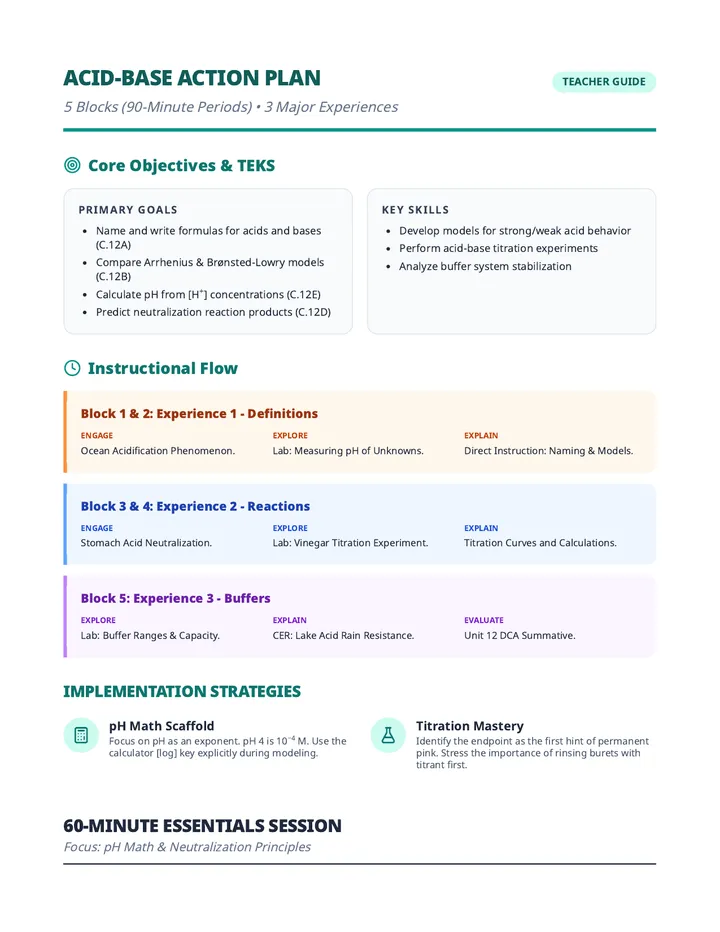
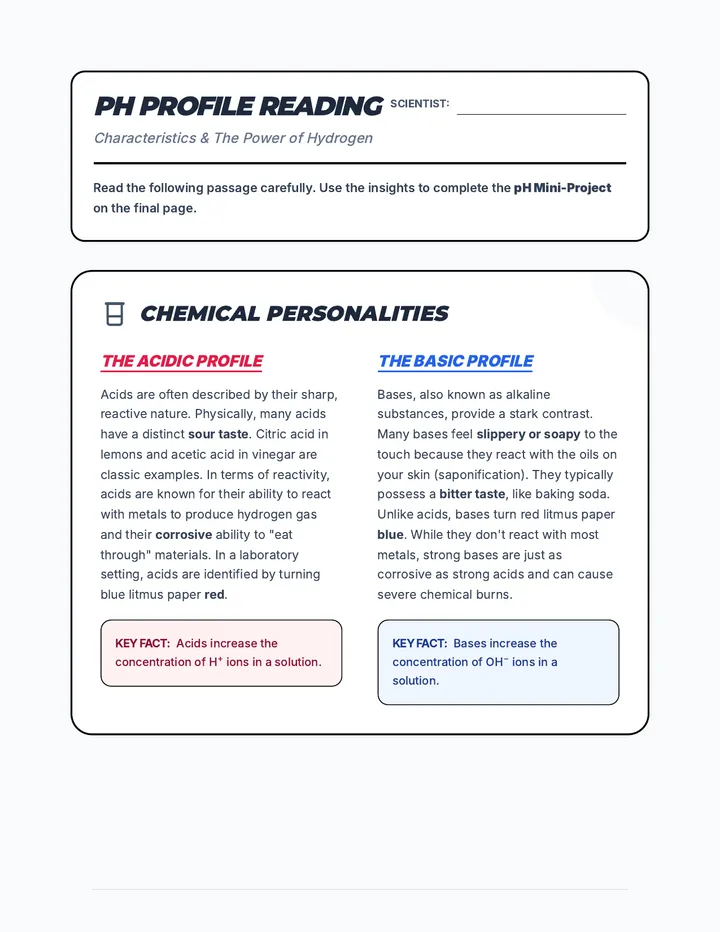
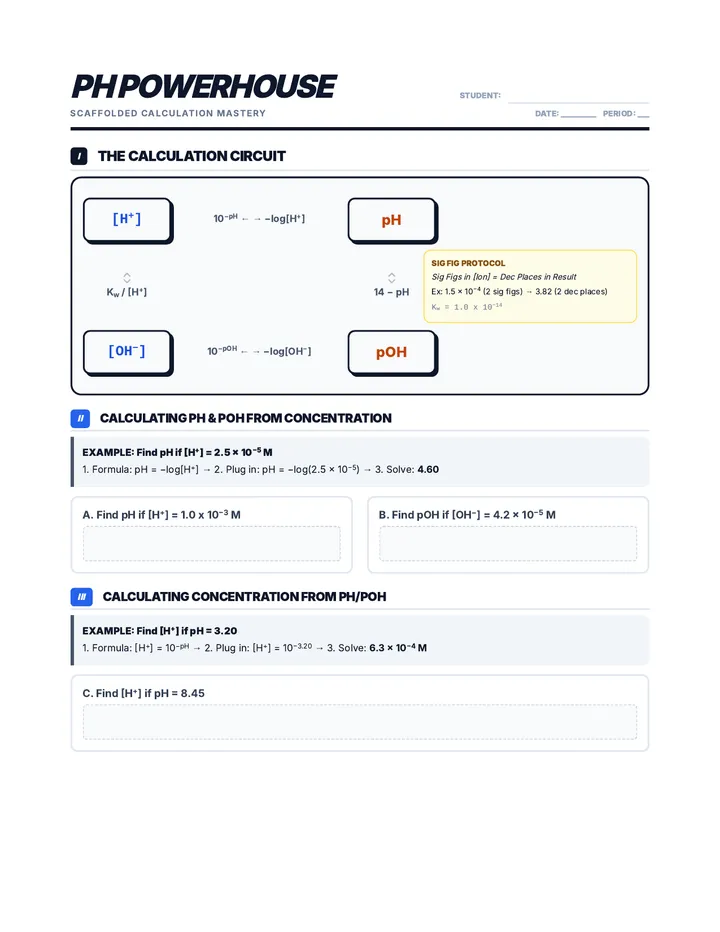
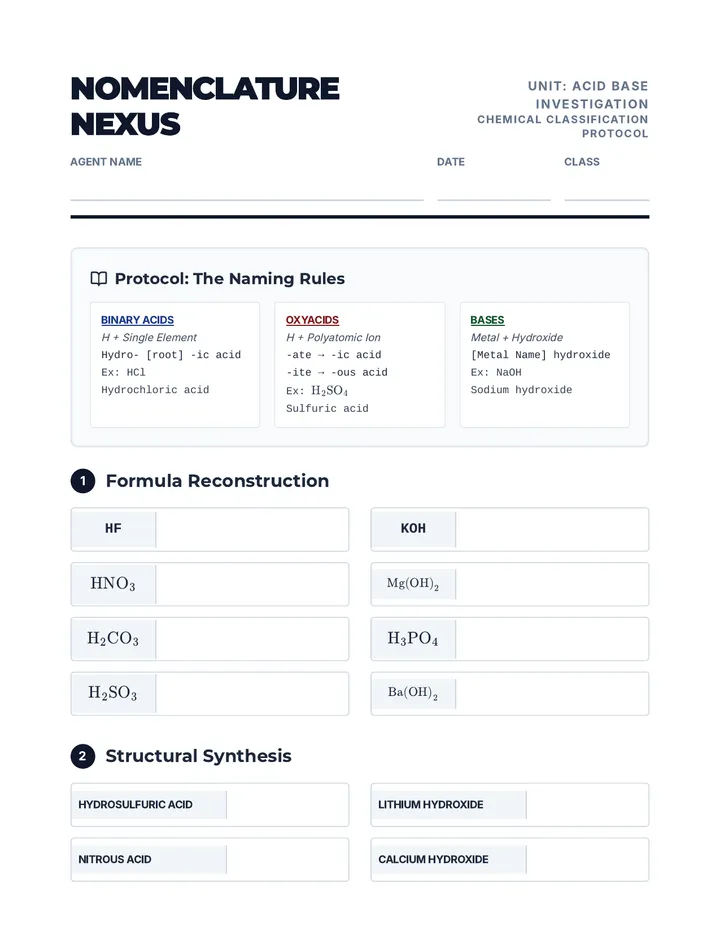
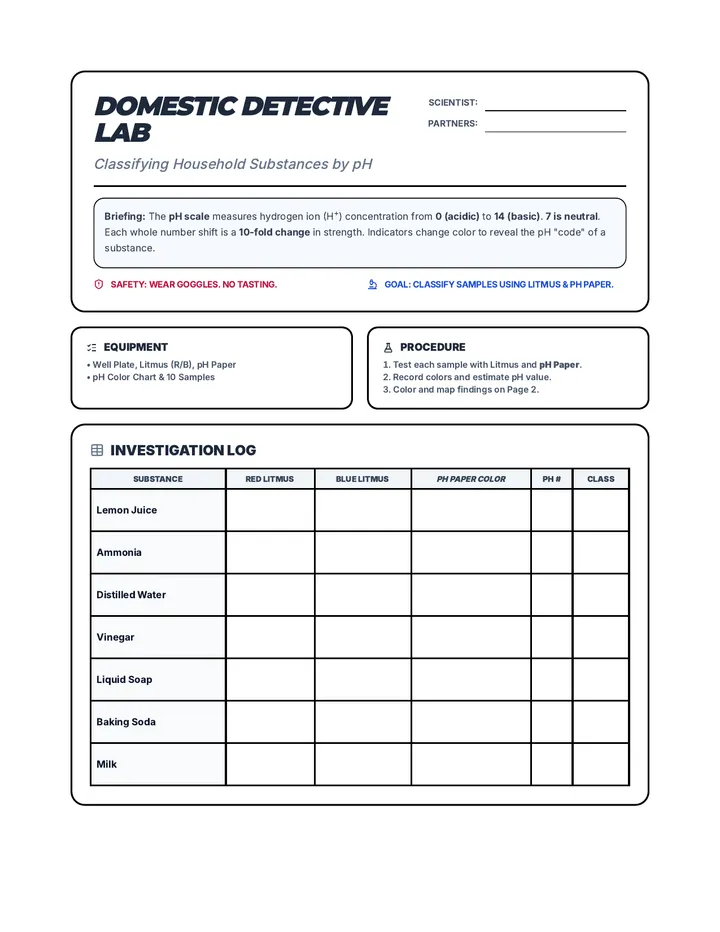
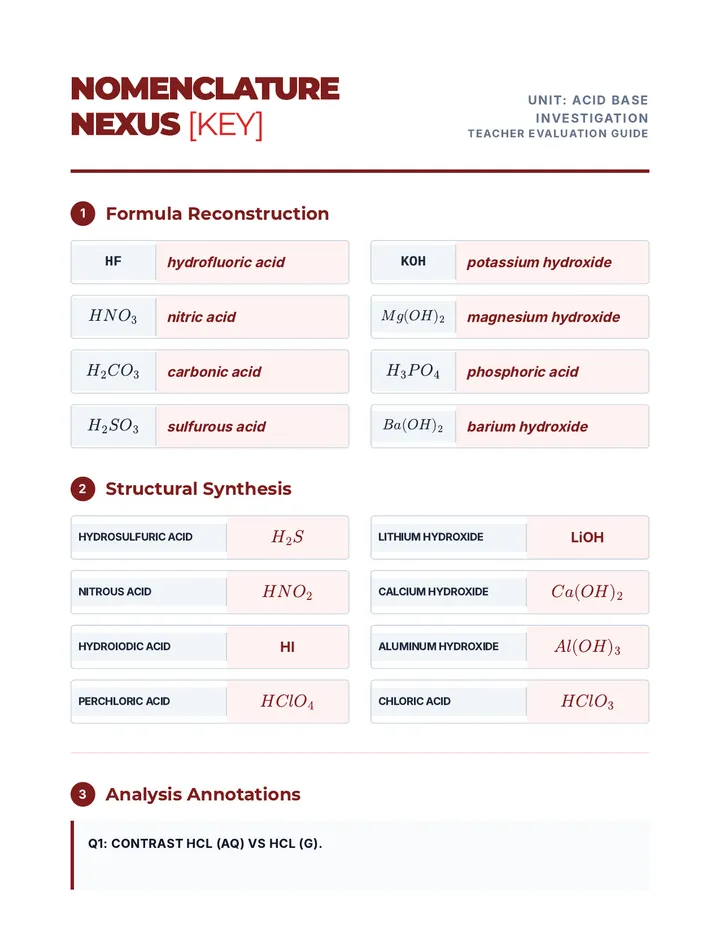
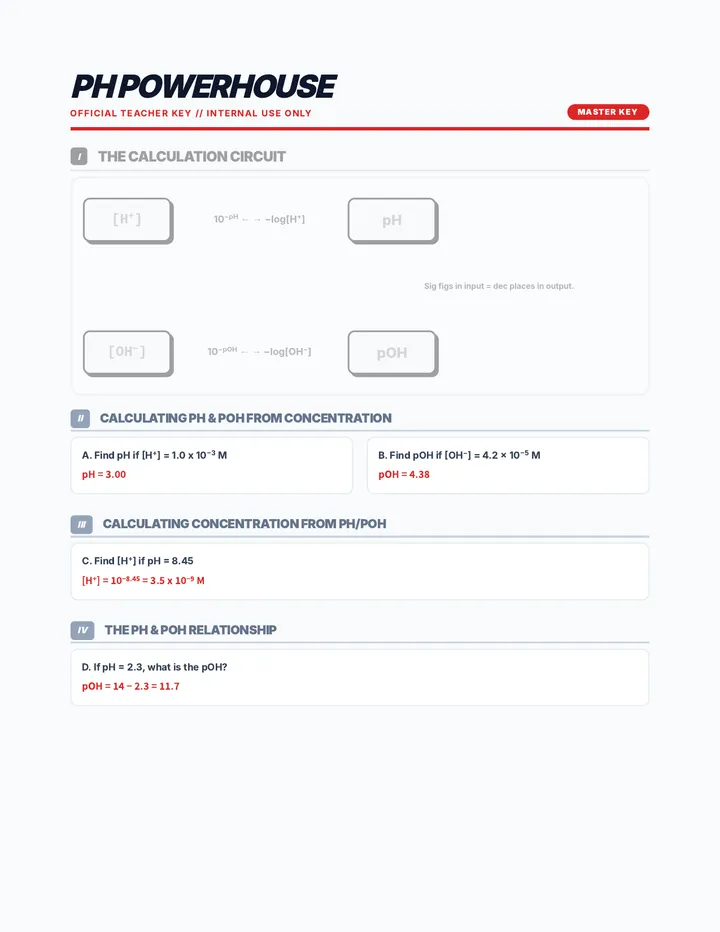
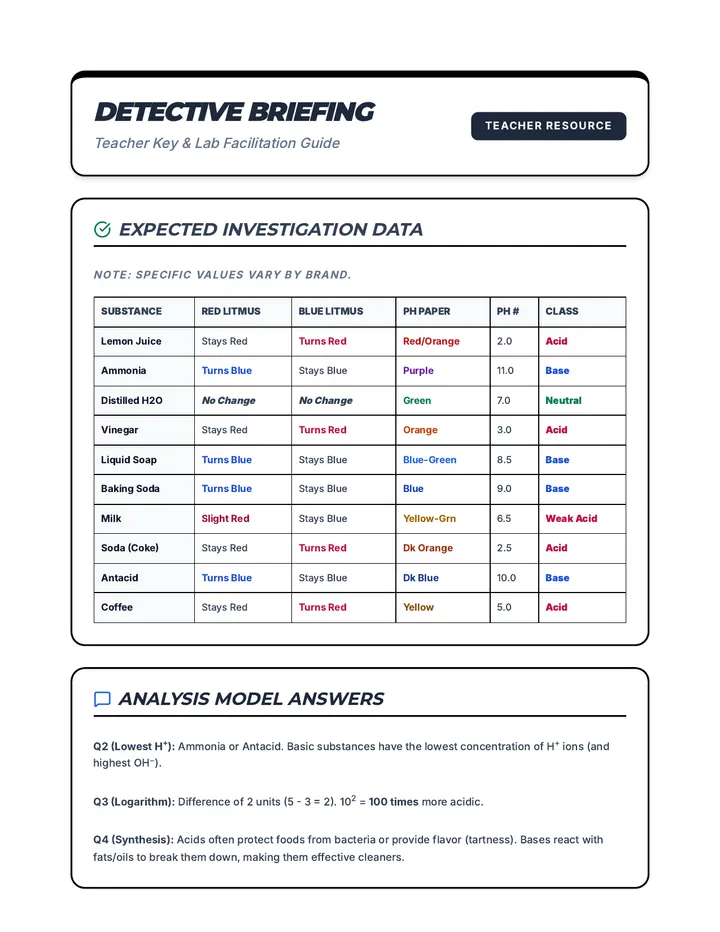
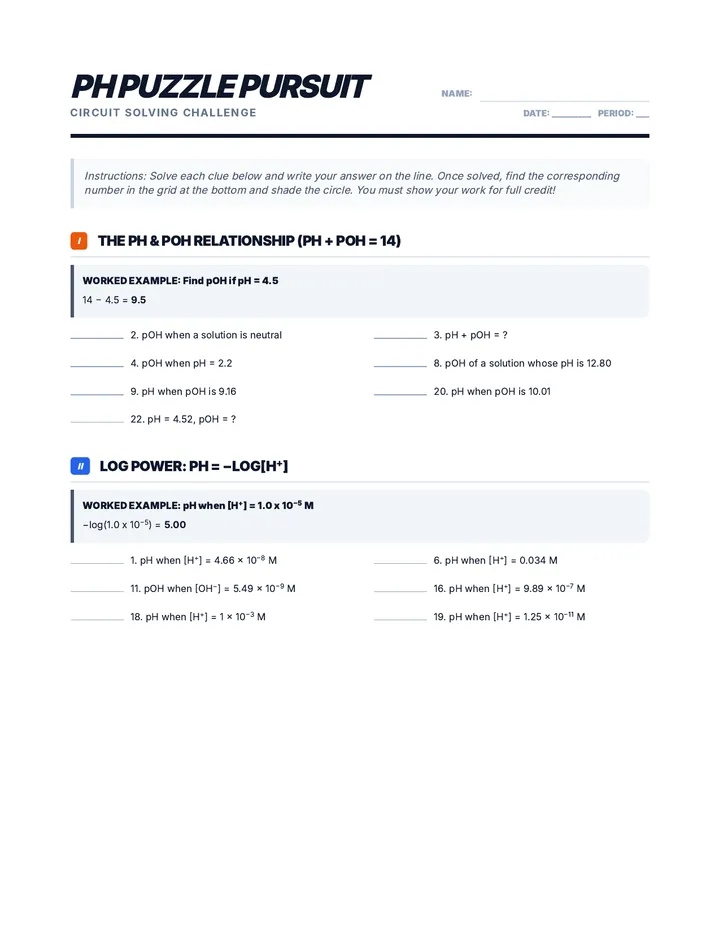
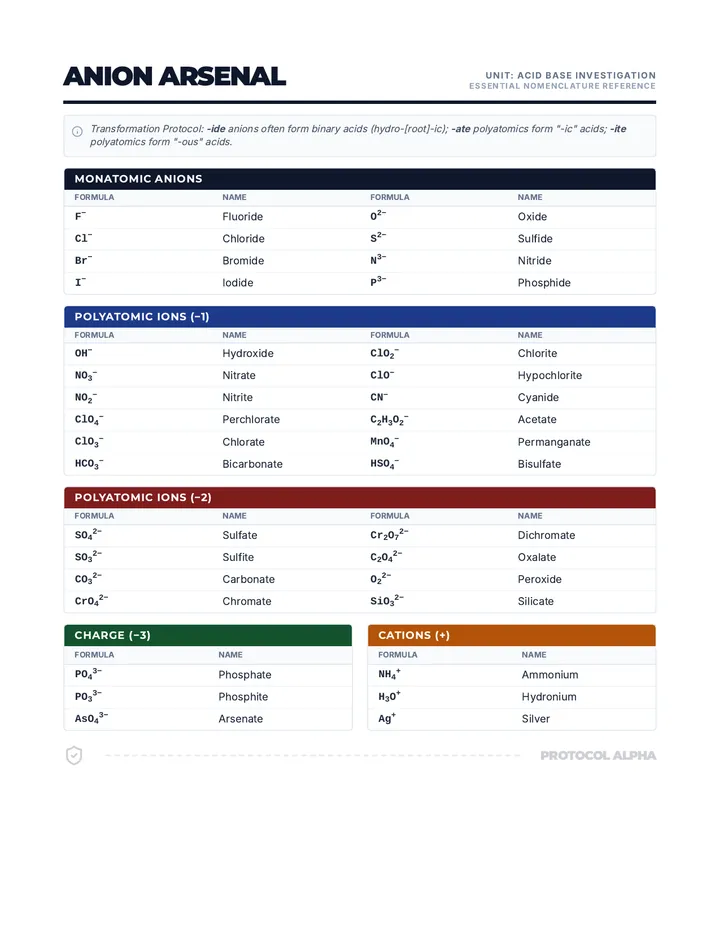
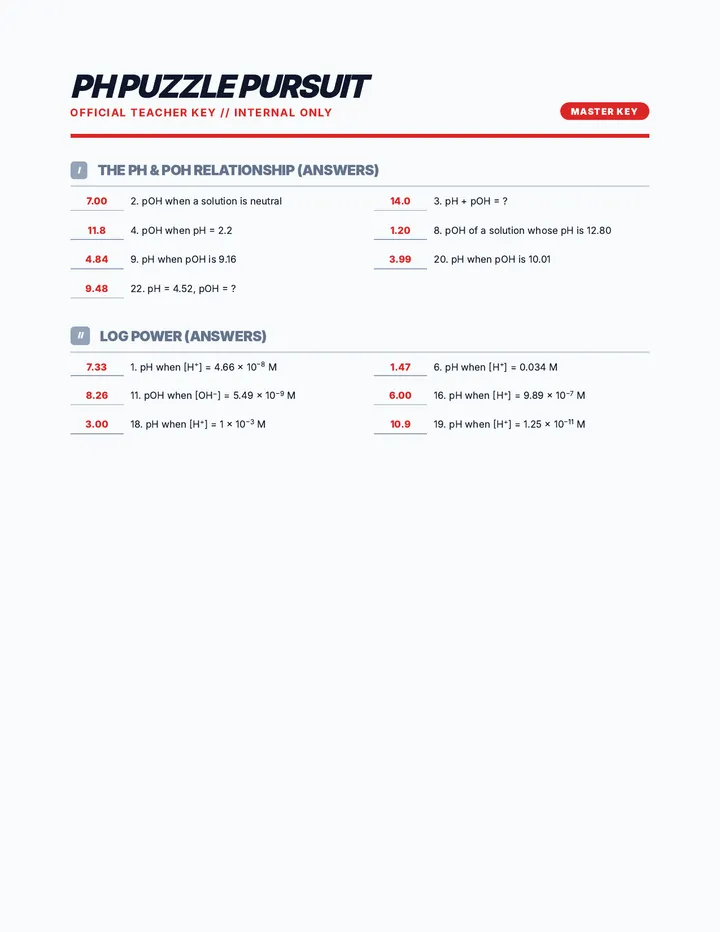
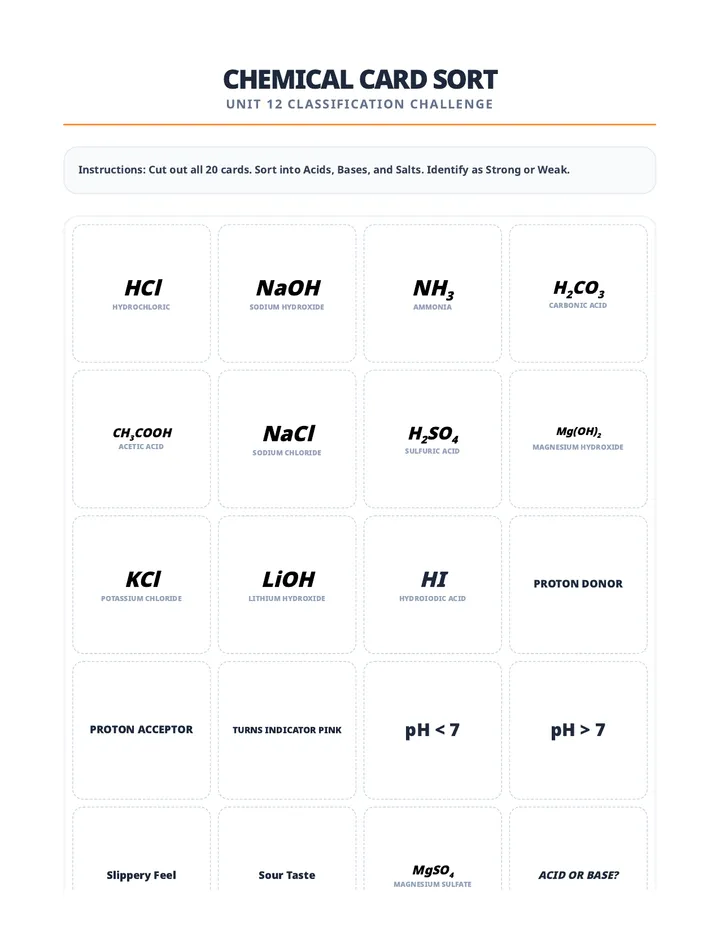
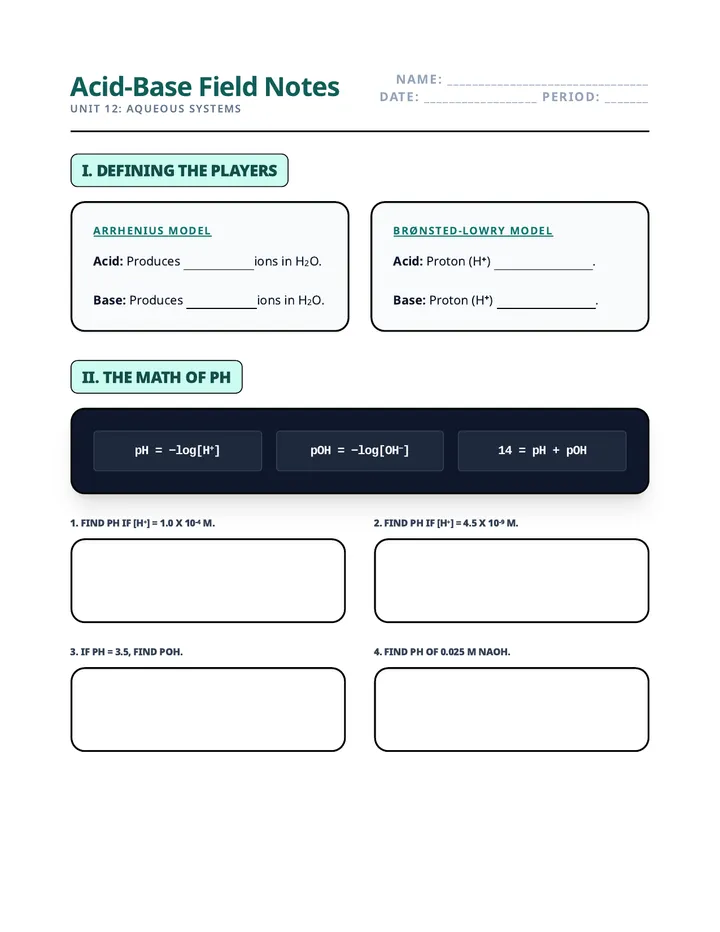
A comprehensive unit exploring the properties, reactions, and mathematical relationships of acids and bases, featuring pH calculations, titrations, and buffer systems.
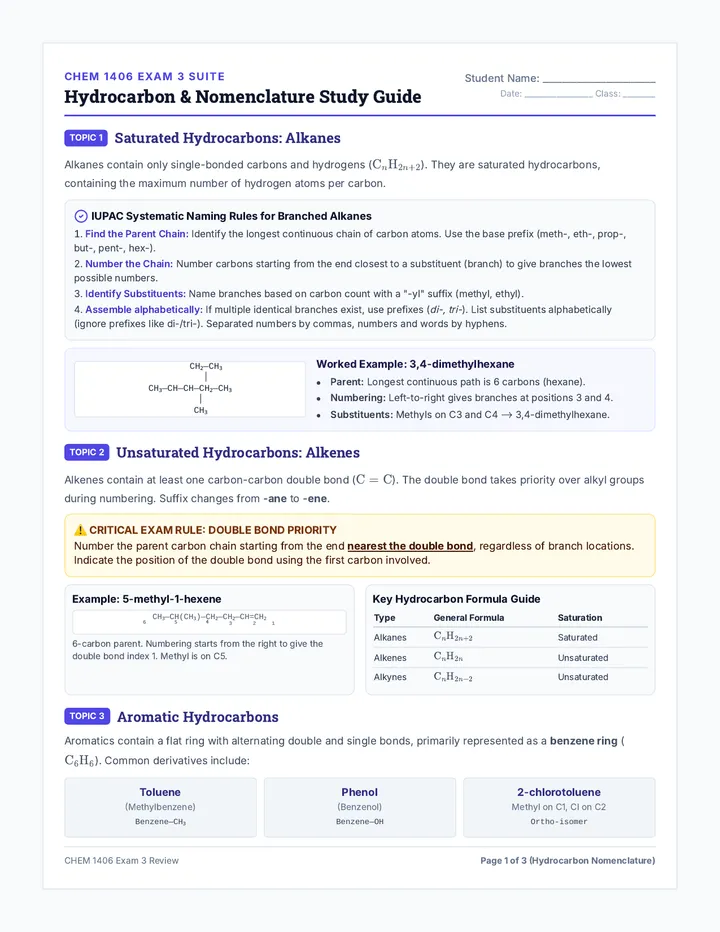
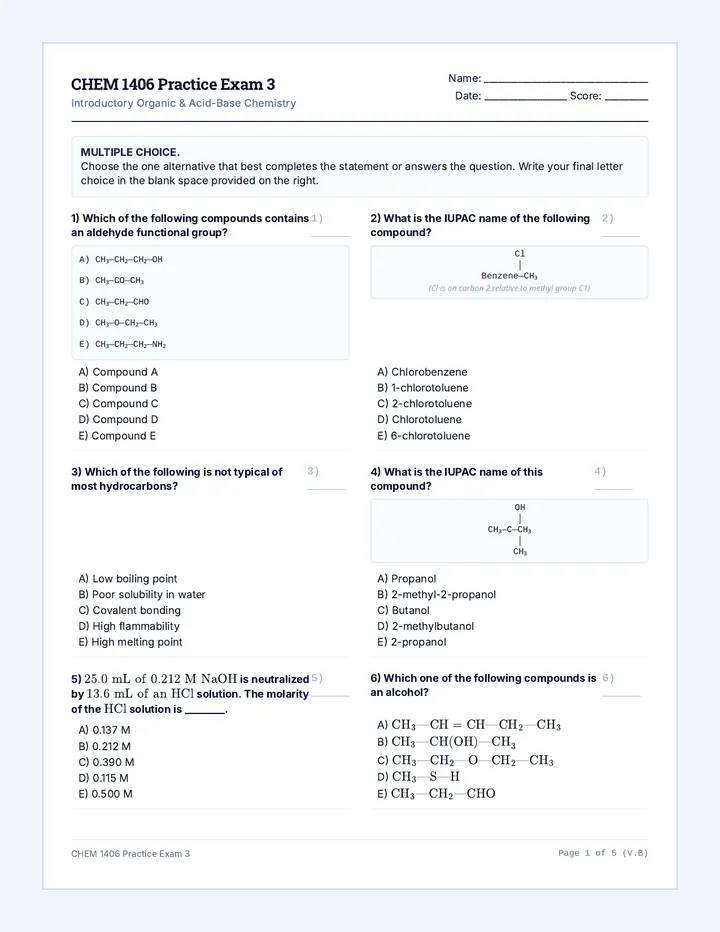
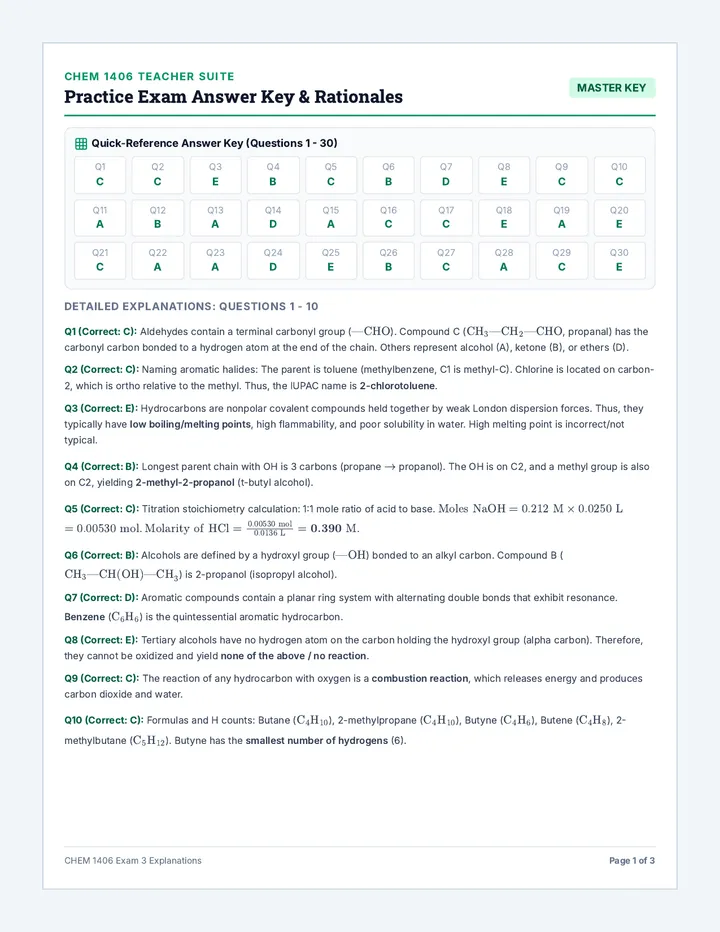
A comprehensive study and exam preparation sequence covering introductory organic chemistry (hydrocarbons, functional groups, reactions) and aqueous acid-base equilibria (pH, neutralization, buffers) designed for college-level introductory chemistry.
A comprehensive 3-week unit exploring the unique physical properties of water, its role in life and geological processes, and the dynamics of watershed systems. Students investigate polarity, cohesion, and universal solubility through hands-on labs while connecting these traits to climate moderation and the health of the Chesapeake Bay.
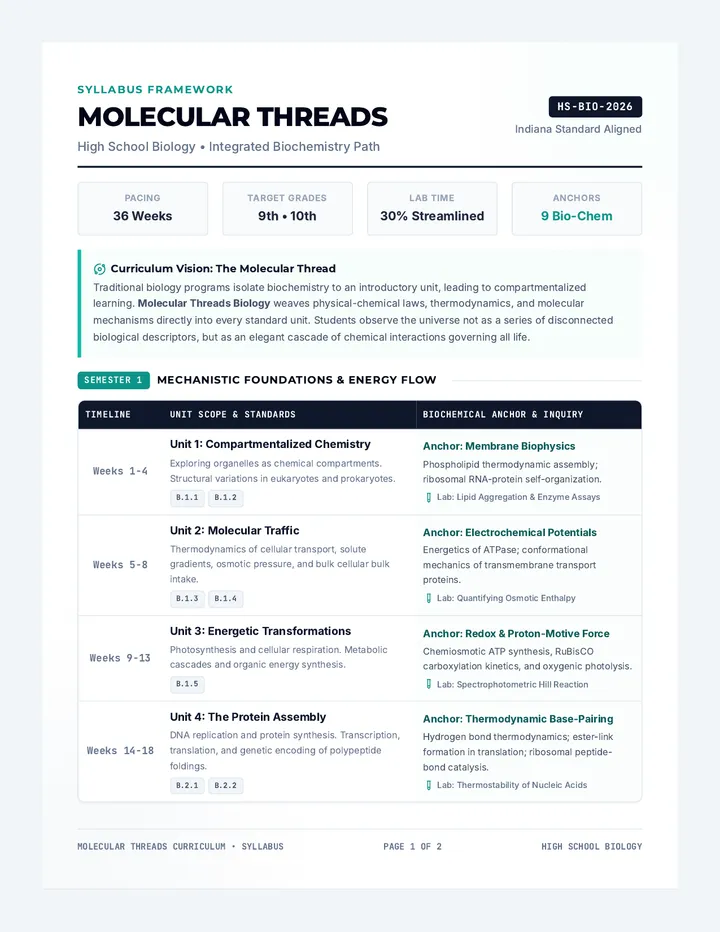
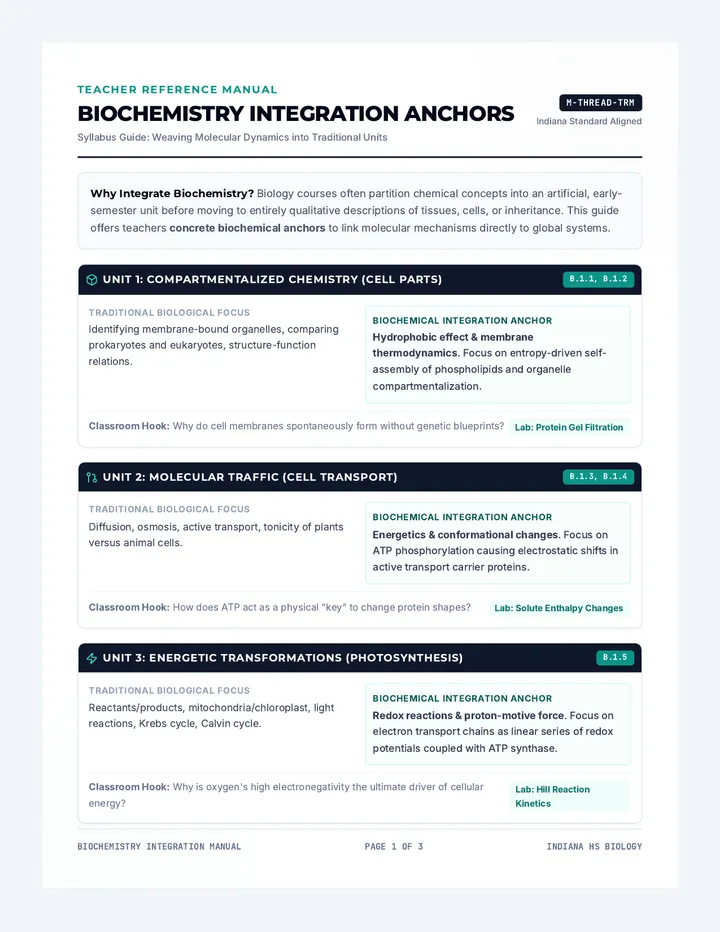
A high school biology curriculum that weaves molecular and biochemical mechanisms into every major traditional unit, fully aligned to the Indiana Academic Standards for Biology.
A 5th-grade chemistry sequence exploring the environmental impacts of pH. Students take on the role of environmental scientists to investigate acid rain, soil health, ocean acidification, and water treatment solutions.
A high-school level exploration of thermodynamics, focusing on the connection between entropy, enthalpy, and Gibbs Free Energy to predict chemical spontaneity.
A comprehensive workshop-based sequence exploring thermal separation techniques, from basic evaporation to industrial fractional distillation. Students master the physics of phase changes and boiling points to separate liquid mixtures.
This sequence explores the thermodynamic principles governing the separation of mixtures through phase changes. Students analyze intermolecular forces, vapor pressure (Raoult's Law), fractional distillation, crystallization kinetics, and membrane-based desalination, bridging the gap between molecular physics and industrial applications.
A 2nd-grade science sequence investigating how solids dissolve in liquids to form solutions, moving from basic observations to the concept of saturation.
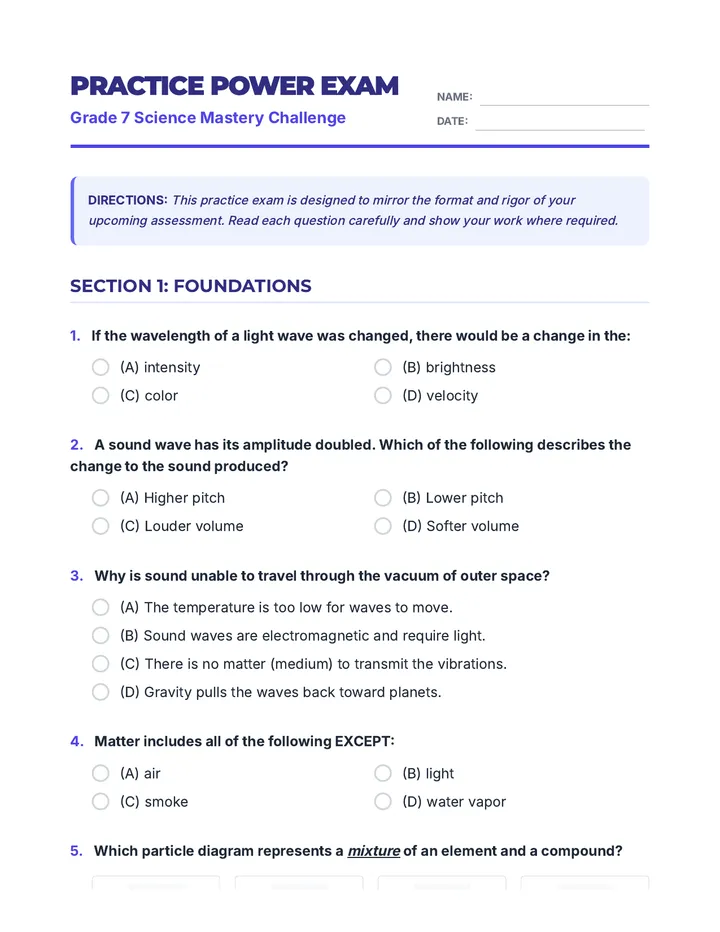
A lesson focusing on the states of matter (solid, liquid, gas) and the behavior of particles at the molecular level. Students will model particle motion and arrangement, as well as the energy changes that drive phase transitions.
An AP Chemistry lesson exploring solubility rules, net ionic equations, particulate representations, and the mathematical link to Ksp and equilibrium shifts. Students engage with interactive station-based task cards simulating real laboratory precipitates.
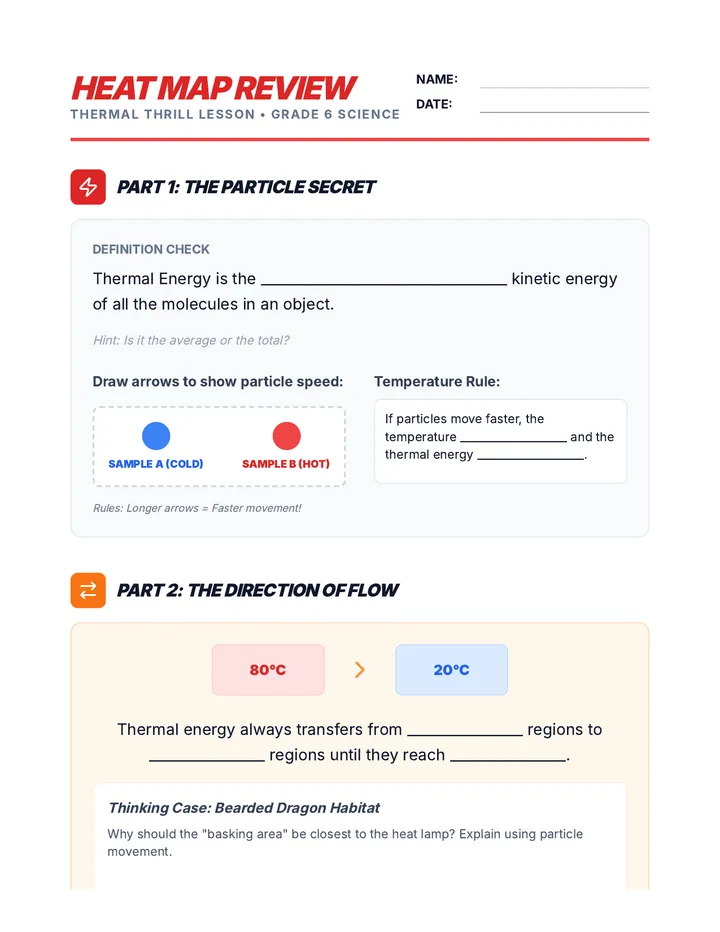
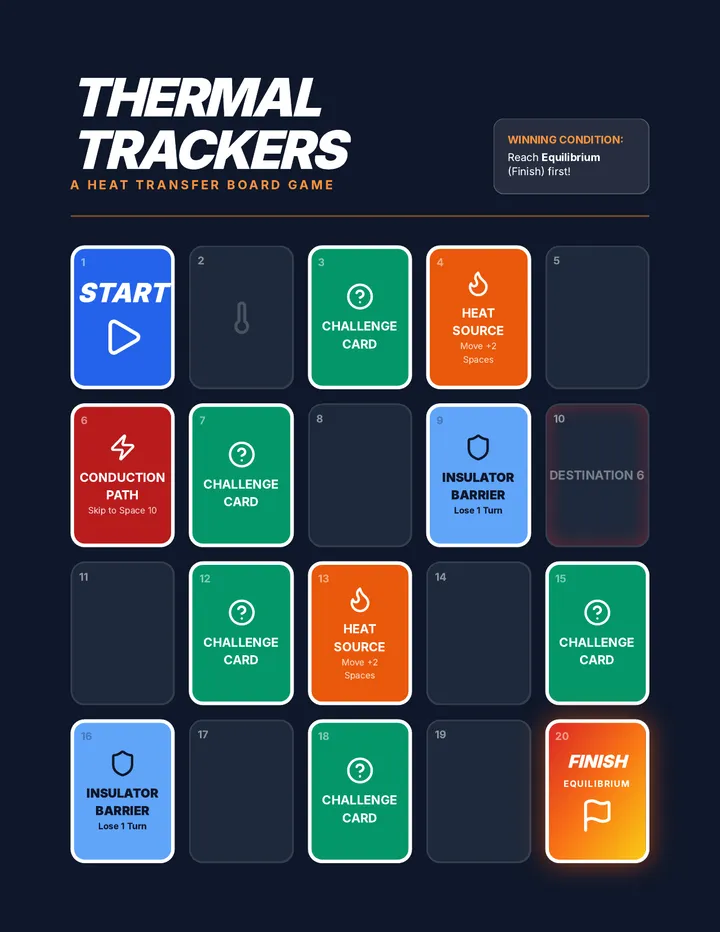
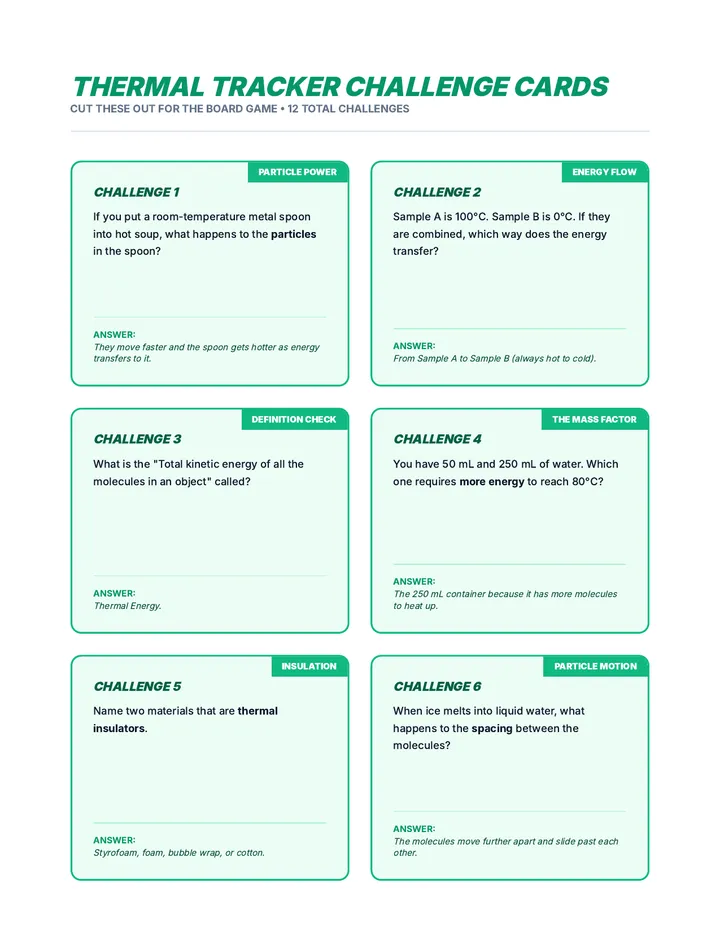
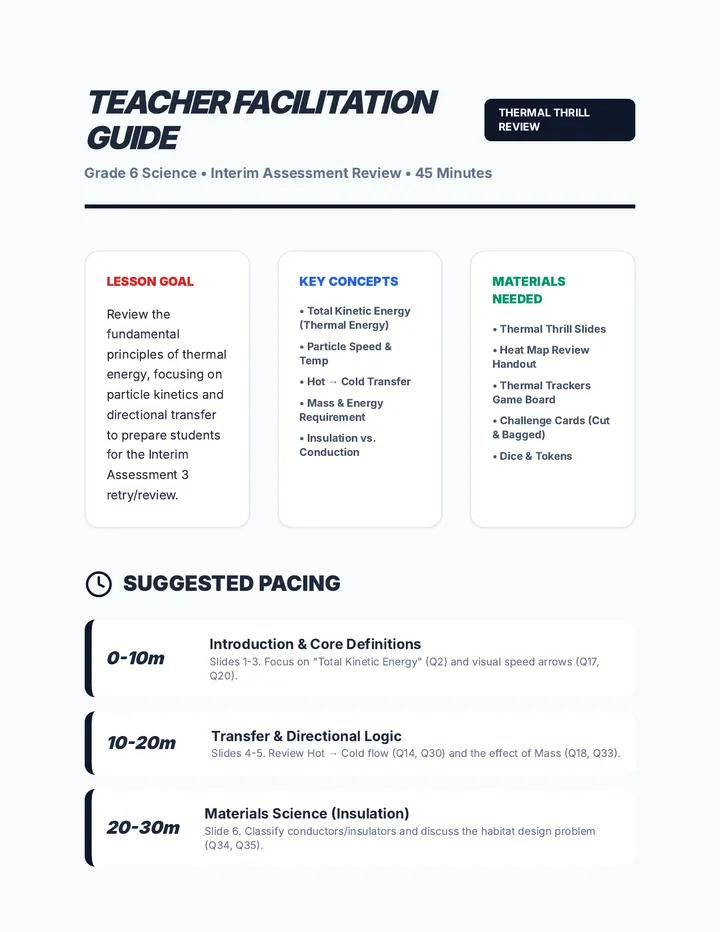
A comprehensive 45-minute review lesson focusing on thermal energy, particle movement, and heat transfer. Students revisit key concepts from their interim assessment through interactive slides and a collaborative board game.
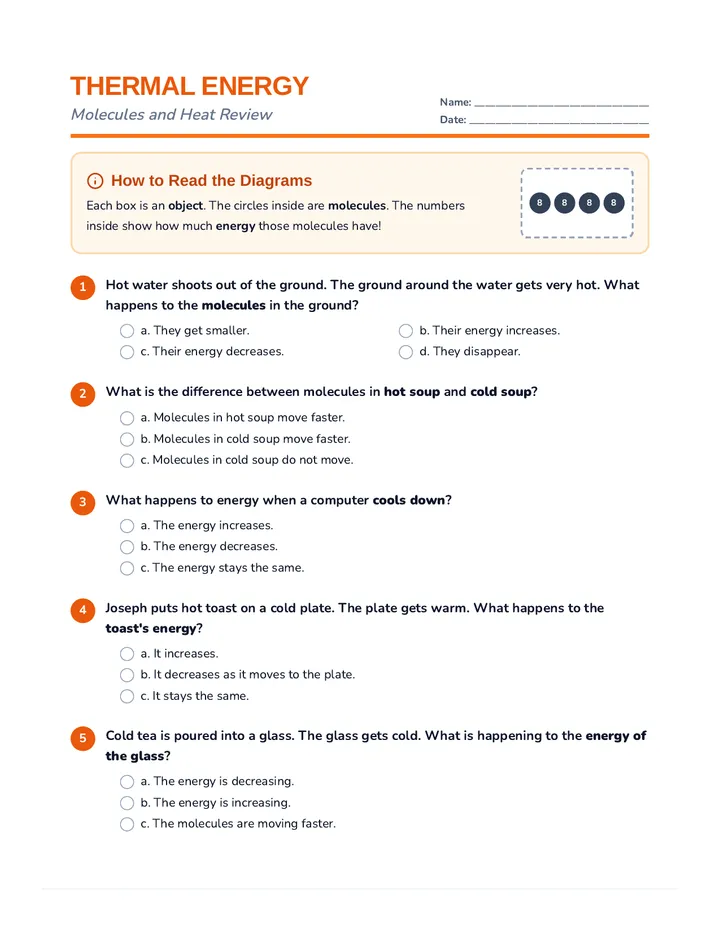
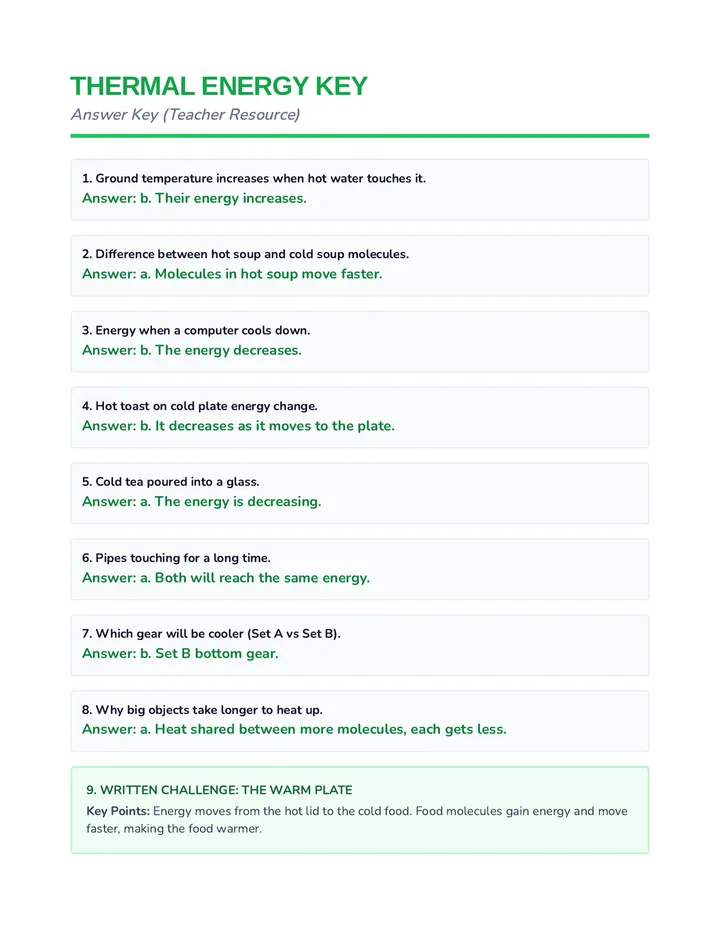
This lesson introduces 3rd-grade students to thermal energy, molecules, and heat transfer using visual diagrams. Students will explore how energy moves between objects and how the speed of molecules relates to temperature.
An 11th-grade chemistry engineering challenge where students design, build, and optimize salt-water powered vehicles to master redox reactions and circuit completion.