Liquid Highways Slides
Scientific Method in Action
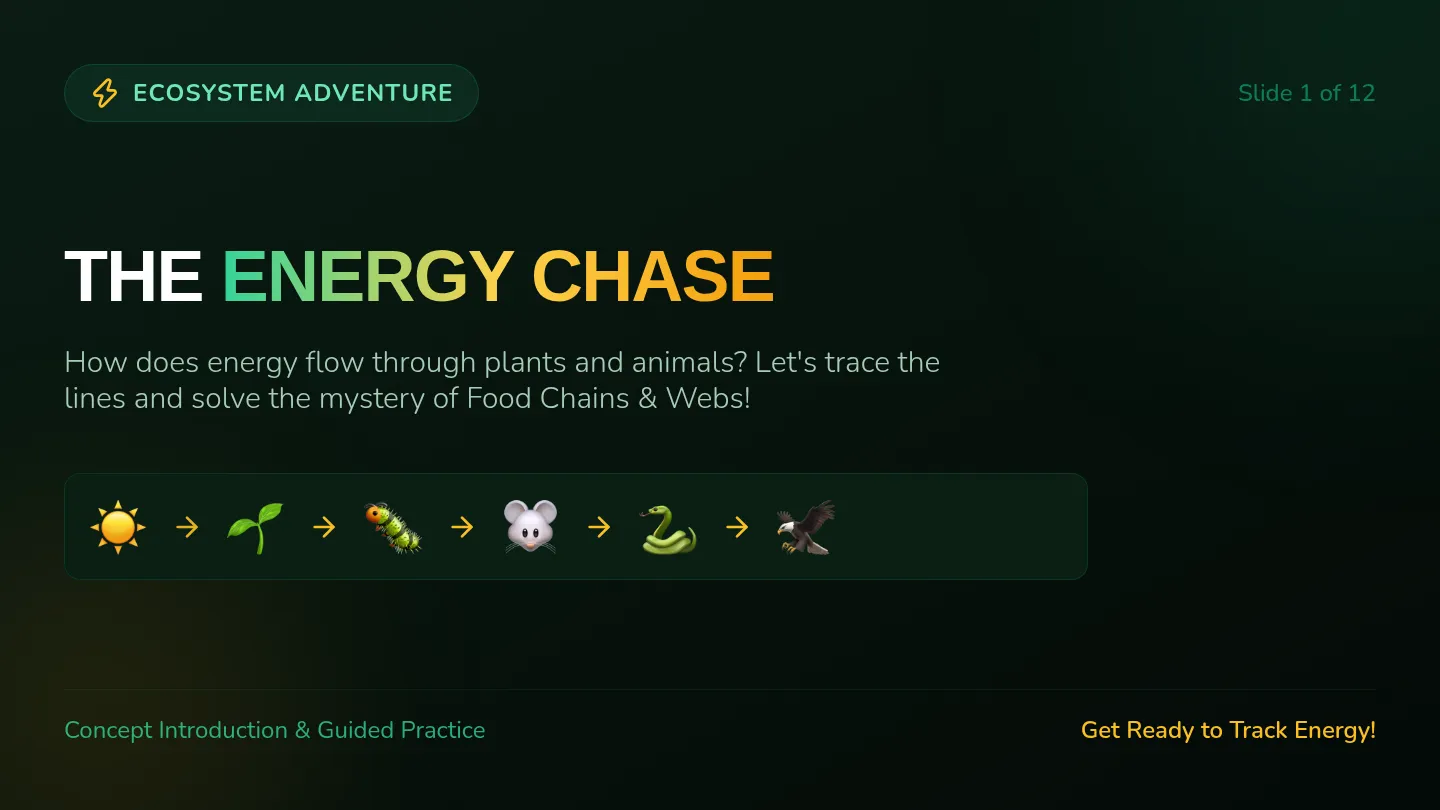
WALKING WATER
How does water walk? Explore variables, craft hypotheses, and track color journeys over time.
Bell Ringer
The Gravity Puzzle
Water normally flows down hills and drops from clouds. Gravity pulls it down.
Can you name three everyday places or items where water climbs upward or gets pulled into something?
Write down ideas in your log book!
The Walking Water Experiment
Slide 1 of 8
Step 1: Observation & Wonder
The Phenomenon
Can Water Climb Against Gravity?
In nature, water flows down hills, drops from the sky, and pools on the ground. Gravity pulling it down seems absolute.
But what if water could climb straight up?
Think: How does a massive redwood tree get water from its underground roots all the way to leaves 300 feet in the air?
01
Cups & Color
Empty space separates active vibrant color pools.
02
Paper Towels
The bridges linking the dry to the saturated.
03 THE MYSTERY
What will happen where they meet?
How long before empty spaces host new, combined liquid streams?
Observe first. Ask questions second. Slide 2 of 8
Step 2: Define the Variables
Experimental Control
A scientific experiment is a fair test. To make it fair, we must identify and lock down our variables!
Independent WE CHANGE
The Setup
The arrangement of liquid cups (red, empty, yellow, empty, blue, empty) and paper towel bridges.
Dependent WE MEASURE
The Movement
The water level height, current position, and the changing hues inside the empty cups over time.
Controlled WE KEEP CONSTANT
The Constants
Paper towel brand, volume of starting water, cup size, environmental temperature, and food coloring ratio.
Changing one thing allows us to isolate the exact cause. Slide 3 of 8
Step 3: Craft a Hypothesis
Predicting the Future
The Scientific Prediction Blueprint
A hypothesis isn't a random guess. It is a logical, structured prediction based on evidence and scientific concepts.
We use a standard, powerful logical framework:
IF [What we set up]
THEN [What we expect to measure]
BECAUSE [The physical science reason]
Let's Try It!
Before we place our paper towels, draft your hypothesis on your worksheet. Consider:
- Will color travel past the empty cups?
- How will the secondary colors look?
- Which colors will blend the fastest?
A testable prediction is the backbone of real science. Slide 4 of 8
Step 4: Build the Experiment
Procedure Setup
The Walking Water Blueprint
1
Line Up
Arrange 6 identical clear cups side-by-side in a straight row on a flat surface.
2
Water & Dye
Fill cups 1, 3, and 5 with water. Add 5 drops of Red (Cup 1), Yellow (Cup 3), Blue (Cup 5). Cups 2, 4, 6 stay empty!
3
Prep Bridges
Fold 5 half-sheets of paper towel lengthwise into sturdy, 1-inch strips, creating firm bridge ribbons.
4
Launch!
Insert bridges connecting Cup 1 to 2, 2 to 3, 3 to 4, 4 to 5, and 5 to 6. Watch the capillary lift start immediately!
Handle paper towel folds with care to ensure identical structural dimensions. Slide 5 of 8
Step 5: Systematic Observation
Tracking over Time
Patience is a Scientific Virtue
Some scientific processes happen in milliseconds. Others take centuries. Our liquid highways will evolve right before our eyes, but require methodical checkpoints.
Why systematic intervals?
Recording at predetermined intervals removes confirmation bias and logs exact rates of physical movement.
Our Standardized Observation Protocol
0 MINUTES Immediate Absorption Watch liquid climb the dry fibers.
30 MINUTES The Bridge Crossing Water approaches cup rims.
2 HOURS The First Drops Water pools in empty cups.
24 HOURS The Great Mixing Secondary colors and equilibrium.
Make sketches or snap photos at each checkpoint to verify observations. Slide 6 of 8
Step 6: The Secret Physics
Scientific Concepts
Capillary Action
The primary driver of our walking water. The fibers in the paper towel act as microscopic tubes that pull water upward, defying gravity!
The adhesive forces between the cellulose fibers and water molecules exceed the gravitational pull down.
Molecular Teamwork
Two physical forces make this capillary journey possible:
Adhesion
Water clinging tightly to the paper fibers.
Cohesion
Water molecules gripping neighboring water molecules, pulling them along.
Together, Adhesion and Cohesion create a powerful capillary transport system. Slide 7 of 8
Ready for Liftoff
Mission Debrief
Now, Prepare Your Laboratory!
As you return to your lab tables, remember your duties as systematic scientists:
Log Every Detail
Draw accurately and note differences in water heights across each cup.
Protect Constants
Keep cups spaced identically and don't shake the surface!
GO FORTH & INVESTIGATE
Slide 8 of 8
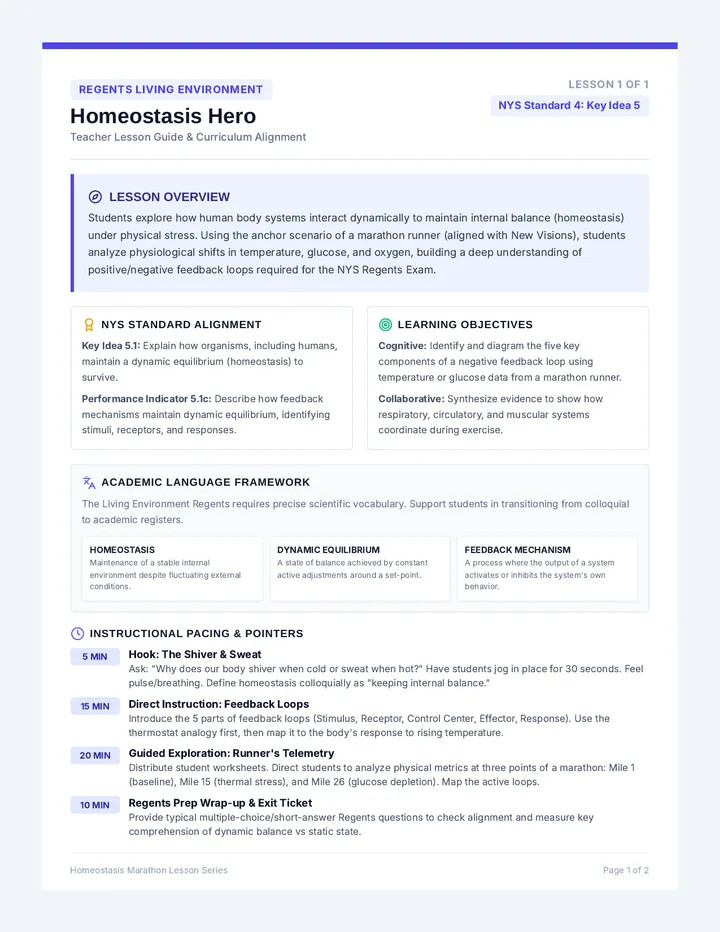
Liquid Highways Lesson Plan
Teacher Guide & Lesson Plan
LIQUID HIGHWAYS
Demystifying the Scientific Method via Capillary Action
Grade 3-5 Inquiry Active: 60 Mins | Cycle: 24 Hrs
Lesson Overview
In this investigation, students build the "Walking Water" experiment to systematically observe liquid transfer. Using this concrete, highly visual phenomenon, they learn to isolate variables, write formal "If-Then-Because" hypotheses, gather structured quantitative/qualitative data, and draw evidence-based conclusions.
NGSS Alignment
- 3-5-ETS1-3: Plan and carry out fair tests in which variables are controlled and failure points are considered.
- SEP: Planning/Carrying Out Investigations; Analyzing Data.
Required Lab Materials (Per Group)
6 Clear plastic cups (9 oz works best)
Primary food coloring (Red, Yellow, Blue)
5 Sheets of highly absorbent paper towel
Water pitcher & cleaning rag
Student Observation Sheet / Pencil
Sticky notes & ruler (for measurements)
Pacing & Lesson Flow
| Time | Phase | Teacher Action & Content Objective |
|---|
| 10-15 Mins | Engage | Hook students with a "gravity-defying" prompt. Set up the slide deck to introduce the phenomenon. |
| 10 Mins | Define | Differentiate independent, dependent, and controlled variables using Slide 3. |
| 10 Mins | Hypothesize | Guide students to write "If... Then... Because..." predictions based on known physics of liquids. |
| 20 Mins | Explore | Students assemble the 6-cup array, fold paper towels, and record 0-min observations. |
| Overnight | Observe | Systematic checks at 30 mins, 2 hours, and 24 hours. Record heights and blending hues. |
| 15 Mins (D2) | Explain & Close | Unpack capillary action, cohesion, adhesion (Slide 7). Compare results with original hypotheses. |
Phase 1: Engage & Hook Script
Guiding Question:
"If I drop water onto this table, which way does it flow? Downward, right? Now look at this paper towel. What happens when I dip just the very edge of it into the water? Why does it look like it's climbing up on its own, fighting gravity?"
Instructional Tip: Do not immediately give them the terms . Let them describe the water's behavior using colloquial words ("soaking", "creeping", "climbing"). Use of the deck to frame this visual mystery.
Liquid Highways Lab Guide
Student Laboratory Guide
WALKING WATER
Scientist Name
Date
Lab Group / Team
Part 1: The Inquiry Challenge
Can water walk uphill? In this investigation, we will connect water bridges to create a flowing highway of color. Your job is to construct a fair test, keep all variable constants locked, and record how colors travel and blend over time.
Part 2: Setup Checklist
1. Line Up: Arrange 6 clear cups side-by-side in a straight, level line.
2. Fill & Dye: Fill cups 1, 3, and 5 with water to the brim. Leave cups 2, 4, and 6 empty.
3. Drop Color: Add 5 drops of dye: Red (Cup 1), Yellow (Cup 3), Blue (Cup 5).
4. Create Bridges: Fold 5 paper towels lengthwise into sturdy 1-inch wide ribbons.
5. Insert: Bridge Cup 1 to 2, 2 to 3, 3 to 4, 4 to 5, and 5 to 6. Ensure they reach the bottom of each cup.
Part 3: Form Your Hypothesis
Fill in the blueprint below to predict what will happen once the paper towel bridges are put in place:
IF we connect the wet and dry cups with the paper towel bridges,
THEN I predict the water levels and colors will...
BECAUSE I think water climbs paper fibers because...
Part 4: Observation Log
0 Minutes
Initial state
Notes:
30 Minutes
Climbing up
Notes:
2 Hours
First blending
Notes:
24 Hours
Equilibrium
Notes:
Be a meticulous scientist! Record what you actually see, not what you expect to see. Page 1 of 1