Lenny.com
Explore
Create
ActivitiesNewMathEnglish Language ArtsScience & EngineeringSocial StudiesGlobal LanguagesHealth & Physical EducationSpecial EducationCounseling & Life SkillsArts & CreativityESL
Lenny.com
Lenny.com
Explore
Create
ActivitiesNewMathEnglish Language ArtsScience & EngineeringSocial StudiesGlobal LanguagesHealth & Physical EducationSpecial EducationCounseling & Life SkillsArts & CreativityESL
Lenny.com
Lenny.com

Solutions

Lenny for EducatorsLenny for SchoolsLenny for Districts

Product

ExploreSign inCreateSupportAbout

Resources

Getting startedMTSS Acceleration Program

Newsletters

School Funding Newsletter

© 2026 Lenny Learning Inc.

TermsPrivacyAccessibility
LinkedInInstagramX
Lenny

Work, Energy, and Power

Kinetic and potential energy transformations, the work-energy theorem, and mathematical calculations of power. Examines conservation laws and mechanical efficiency in physical systems.

Science & EngineeringLife ScienceLiving ThingsAnimalsPlantsBody SystemsTraitsAdaptationsCellsEcosystemsHeredityGenes to TraitsCell DivisionPhysicsComparing MaterialsShapes and PropertiesMagnetsMagnetismLightSoundLight and SoundMatterStates of MatterChanges of StateMixturesPhysical and Chemical ChangeHeating and CoolingHeat and Thermal EnergyEnergyForce and MotionElectrical CircuitsAtoms and MoleculesPeriodic TableMotion in One DimensionMotion in Two DimensionsScalars and VectorsForces and Laws of MotionCircular Motion and GravityMomentum and ImpulseWork, Energy, and PowerWavesElectromagnetic WavesGeometric OpticsElectricity and MagnetismSimple Harmonic MotionThermodynamicsNuclear PhysicsEarth Science & AstronomyWeatherWater CycleRocks and MineralsFossilsEarth's FeaturesEarth's ResourcesEarth's StructureWeather and ClimateEarth EventsFossils and Geologic TimePlate TectonicsHuman ImpactsAstronomyChemistryUnits and MeasurementAtomic StructurePeriodic TrendsChemical BondingNomenclatureMolecular StructureIntermolecular ForcesThe MoleStoichiometryProperties of GasesSolutionsChemical ReactionsBalancing EquationsEnergy ChangesRates of ReactionsEquilibriumAcids and BasesQuantum ModelBiologyClassificationCell StructureThe Chemistry of LifeBiomoleculesCellular TransportCell EnergyCell Growth and DivisionDNAProtein SynthesisMeiosis and Sexual ReproductionPatterns of InheritanceMulticellular OrganismsEvolutionEcologyBiodiversityComputer ScienceAlgorithms and Computational ThinkingProgramming LanguagesComputing SystemsNetworks and InternetData AnalysisCybersecurityAI and Machine LearningSoftware Design and DevelopmentBlockchainEngineering & AIDesigning ExperimentsEngineering PracticesDesign ThinkingEngineering Design ProcessMechanical EngineeringElectrical EngineeringMaterials and StructuresCAD and 3D DesignRoboticsArtificial Intelligence BasicsVibe CodingMachine LearningAI Ethics and SocietySystems ThinkingEntrepreneurship & InnovationEntrepreneurial MindsetBusiness Idea DevelopmentBusiness Plan BasicsMarketing & Customer DiscoveryFinancial Management for Startups

Videos

How Simple Machines Make Work Easier: The Lever

How Simple Machines Make Work Easier: The Lever

This educational video introduces students to the concept of simple machines through the lens of physics and history. Using the Great Pyramids of Giza as a hook, the narrator explores how ancient civilizations accomplished massive engineering feats without modern technology. The video specifically defines "work" in a scientific context—applying force to move an object over a distance—and explains how machines reduce the effort required to perform this work. The content primarily focuses on the first of six simple machines: the lever. Through clear diagrams and relatable examples like seesaws and wheelbarrows, the video breaks down the anatomy of a lever (beam, fulcrum, load, and effort). It illustrates how levers function by changing the direction or magnitude of force, making heavy lifting manageable. This resource is highly valuable for elementary and middle school science classrooms introducing force, motion, and engineering. It bridges historical inquiry with physical science, providing a compelling narrative for why simple machines matter. Teachers can use this video to anchor lessons on mechanical advantage, initiate hands-on experiments with levers, or clarify the scientific definition of "work" versus everyday chores.

Miacademy & MiaPrep Learning ChannelMiacademy & MiaPrep Learning Channel

7mins 27s

How Heat and Work Change Energy

How Heat and Work Change Energy

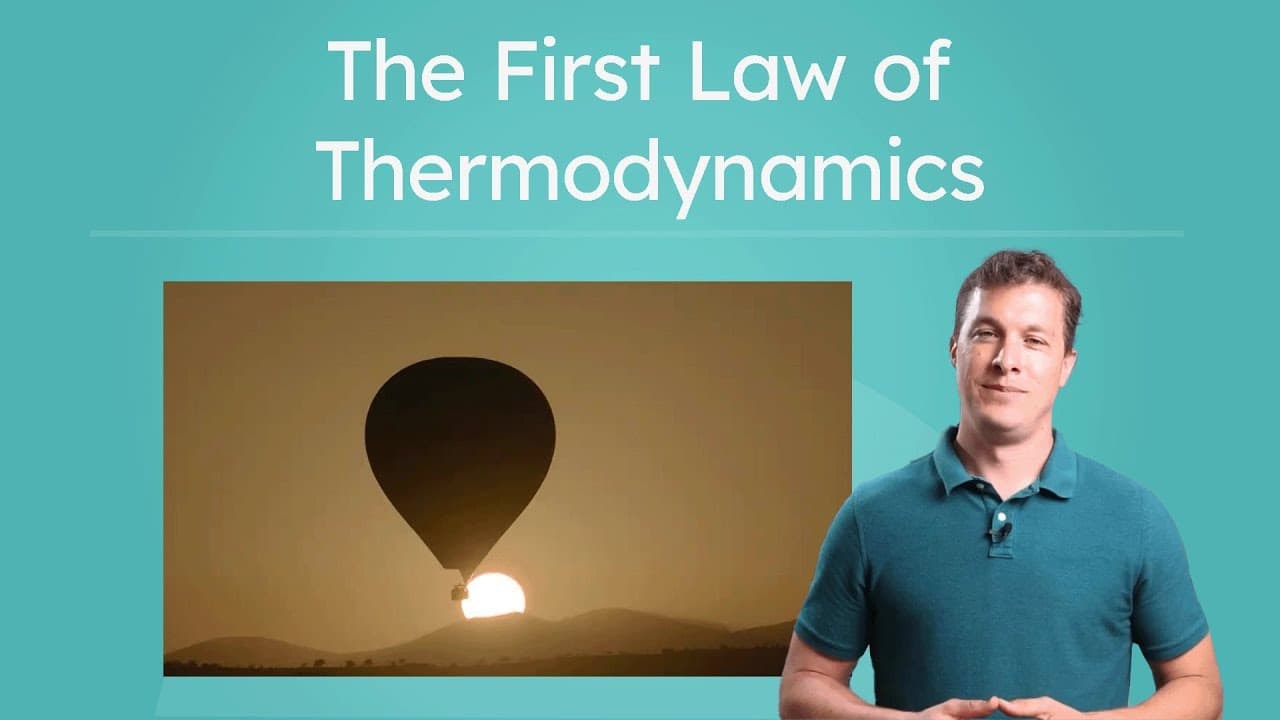
This engaging video lesson provides a clear and practical introduction to the First Law of Thermodynamics, using real-world examples like the SR-71 Blackbird spy plane and hot air balloons to ground abstract physics concepts. The narrator explains the fundamental relationship between heat ($q$), work ($w$), and the change in internal energy ($ΔE$), demonstrating that energy is conserved and can only be transferred, not created or destroyed. The video breaks down the mathematical formula $ΔE = q + w$ and provides specific rules for determining positive and negative signs based on whether a system gains or loses energy. Key themes explored include the definitions of thermodynamic systems and surroundings, the conversion of heat into mechanical work, and the principle of conservation of energy. The video specifically focuses on the crucial skill of identifying sign conventions—understanding when heat and work values should be positive or negative in calculations. It walks students through multiple practice problems, moving from conceptual identification to calculating energy changes in kilojoules. For educators, this video is an excellent resource for high school chemistry or physics units on thermodynamics. It bridges the gap between conceptual understanding and mathematical application. The step-by-step problem-solving sections allow for natural pause points where students can attempt calculations before seeing the solution, making it ideal for direct instruction or flipped classroom models. The use of the SR-71 Blackbird as a hook effectively demonstrates how thermodynamic principles solve real engineering problems.

Miacademy & MiaPrep Learning ChannelMiacademy & MiaPrep Learning Channel

12mins 34s

How Energy Changes Form and Powers Our World

How Energy Changes Form and Powers Our World

This educational video provides a comprehensive introduction to the concept of energy, exploring its various forms and the fundamental principle of energy conversion. It begins by defining energy as the capacity to do work and illustrates its ubiquity in daily life, from powering household appliances to fueling transportation and biological processes. The narration clearly distinguishes between key types of energy, such as kinetic, potential, thermal, light, chemical, and electrical, using relatable real-world examples like riding a bicycle, boiling water, and eating food.

Next Generation ScienceNext Generation Science

9mins 51s

How Wind Turbines Generate Clean Energy

How Wind Turbines Generate Clean Energy

This educational video provides a clear and concise overview of wind energy, explaining how wind turbines function to generate electricity. It begins by establishing the importance of electricity in modern life before diving into the mechanics of energy conversion—specifically how kinetic energy from wind is transformed into electrical power through generators. The video utilizes clear diagrams to illustrate the internal components of a wind turbine, making complex engineering concepts accessible to students. Beyond just the mechanics, the video explores the broader implications of wind energy. It introduces the concept of "wind farms" and how they can power entire cities. Crucially, it discusses the environmental benefits of wind power as a clean, renewable resource that doesn't produce emissions. This sets the stage for discussions about sustainable living and alternative energy sources. The video concludes by presenting a balanced view, addressing the disadvantages of wind turbines, including their potential impact on wildlife like birds and bats, noise pollution, and high maintenance costs. This balanced perspective is excellent for critical thinking exercises, allowing students to weigh the pros and cons of renewable energy technologies and understand that engineering solutions often involve trade-offs.

Next Generation ScienceNext Generation Science

1min 45s

Exploring Energy Transformations in Everyday Life

Exploring Energy Transformations in Everyday Life

This educational video provides a clear and visually engaging introduction to the concept of energy transformations. It defines energy as a pervasive force that shifts forms and systematically explores various types of conversions, such as chemical to thermal, thermal to chemical, light to chemical, and the interplay between kinetic and potential energy (elastic and gravitational). Through high-quality demonstrations involving everyday items like candles, cooking eggs, glow sticks, and toys, the video makes abstract physics concepts concrete and observable. Key themes include the law of conservation of energy (demonstrated through transformation), the specific mechanics of potential versus kinetic energy, and the role of energy in biological processes like photosynthesis. The video breaks down complex interactions—such as how the mechanical action of snapping a glow stick initiates a chemical reaction—into easy-to-understand segments labeled with clear text overlays. It covers a wide spectrum of energy types including thermal, chemical, light, elastic, kinetic, and gravitational potential energy. For educators, this resource serves as an excellent visual anchor for units on physics and matter. It is particularly useful for bridging the gap between textbook definitions and real-world phenomena. Teachers can use the segmented examples to introduce specific energy types or as a review tool to check student understanding of how energy changes form. The varied examples, from archery to cooking, ensure that the content appeals to diverse student interests and provides multiple entry points for discussion.
Next Generation ScienceNext Generation Science

5mins 1s

How Fossil Fuels Generate Electricity

How Fossil Fuels Generate Electricity

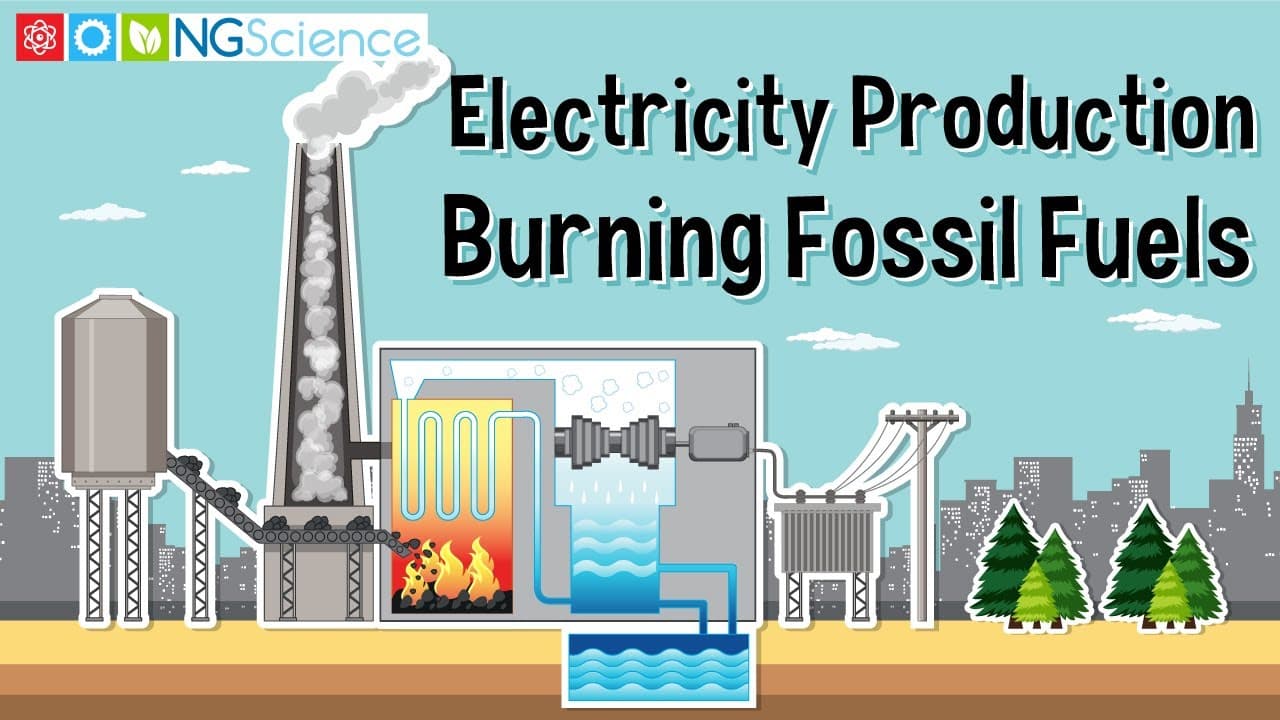
This concise educational video explains the step-by-step process of generating electricity using fossil fuels. It begins by identifying the three primary fossil fuels—coal, natural gas, and petroleum—and visualizes their extraction and industrial use. The core of the video utilizes a clear, animated cross-section of a power plant to demonstrate the chain of energy transformations required to produce power: converting chemical energy in fuel to heat, heat to mechanical energy via steam and turbines, and finally into electrical energy through a generator. The video explores key themes of physical science and environmental science, specifically focusing on energy conversion and the environmental impact of human activity. It breaks down complex machinery like turbines and generators into understandable visual components. Furthermore, it honestly addresses the ecological cost of this process, highlighting how the combustion of these fuels releases harmful gases into the atmosphere, contributing to air pollution and climate change. For educators, this video serves as an excellent visual anchor for units on energy, natural resources, or environmental stewardship. The clear schematic animation helps students visualize the abstract concept of energy transfer, making it tangible. Teachers can use this resource to introduce the mechanics of electricity generation before diving into deeper discussions about renewable vs. non-renewable resources, the efficiency of energy transfer, or the engineering challenges of modern power grids.

Next Generation ScienceNext Generation Science

1min 47s

Sequences

Planet Profile Slides

Infinite Frontier

A comprehensive Hi-Lo unit for 6th graders exploring the scale of the universe, our place in the Milky Way, the technology used to explore space, and the history of human spaceflight.

JS

Janette Sullivan

54
Naval Architect Challenge Answer Key

Fluid Dynamics

A series of lessons exploring the physics of fluids, including buoyancy, pressure, and fluid flow.

CM

Chuguna Murugesan

28
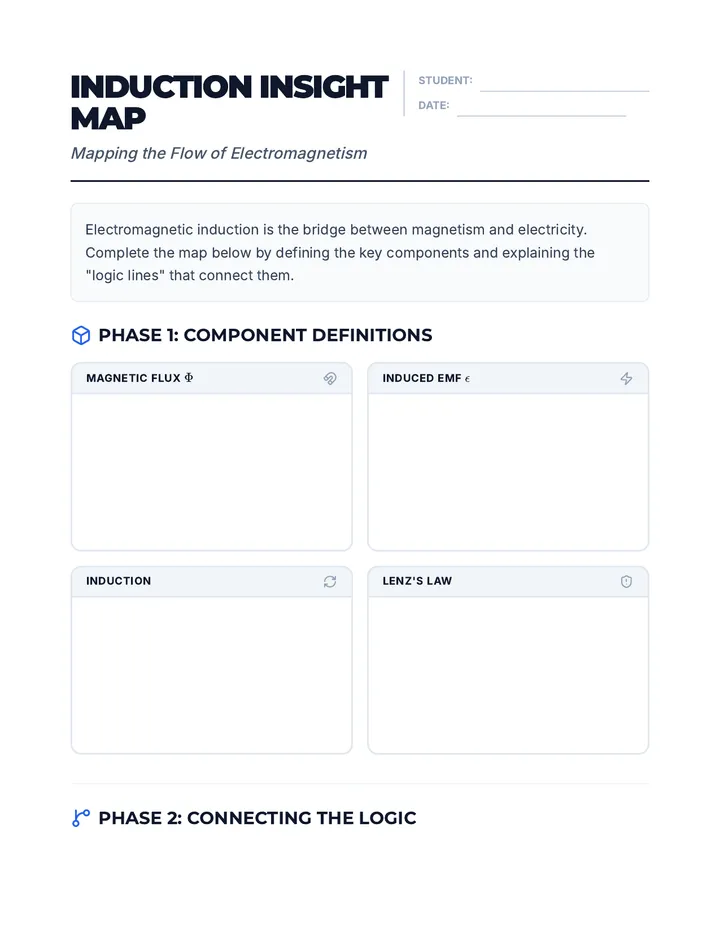
Induction Insight Map Handout

Magnetic Forces Investigation

A 5-day intensive exploration of magnetic forces and fields, focusing on atomic-level causes, field interactions, and mathematical modeling of forces on charged particles. Students progress from anchoring phenomena to complex mathematical applications and a comprehensive unit review.

OM

Olutoyin Makinde

68
Mission Scoring Rubric

Physics Frontiers Research Project

A partner-based research project for 9th-grade conceptual physics students focusing on diverse topics from celestial mechanics to the physics of dance. Students move through a structured research process with mandatory teacher checkpoints for source reliability.

C

ckroeker

13
Climate Crisis Slides

Science Essentials Vault

A comprehensive collection of core science units covering Environmental Science, Biology, and Physical Science. This sequence provides high-impact instructional slides, hands-on lab experiences, guided notes, and differentiated assessments for five major scientific domains.

CB

Chloe Brown

25
Hess Pathfinders Slides

Energy in Chemical Bonds

A five-day high school chemistry unit exploring thermochemistry, collision theory, enthalpy diagrams, and calorimetry through the lens of body heat and chemical reactions. Students investigate the anchoring phenomenon of exercise-induced heat while mastering TEKS C.13 standards.

OM

Olutoyin Makinde

48

Lessons

Flow State Reading Guide Expanded

Flow State

This lesson explores the fundamental properties of fluids, including the molecular differences between solids, liquids, and gases, the concept of density, and the characteristics of ideal fluids. Students will learn to distinguish states of matter through atomic interactions and apply the density formula to various substances.

CM

Chuguna Murugesan

33
Oscillation Station Slides

SHM Fundamentals

A comprehensive introduction to Simple Harmonic Motion, covering restoring forces, kinematics, and energy conservation in oscillating systems.

CM

Chuguna Murugesan

42
Mechanics Mastery Reading

Newtonian Mechanics Mastery

An in-depth, algebra-based investigation of forces, friction, and coupled systems designed for AP Physics 1. This lesson develops physical intuition, vector decomposition skills, and systemic problem-solving using Newton's Laws.

CM

Chuguna Murugesan

13
Imagineer Lab Reading

Magic Mechanics

In this lesson, students explore the world of theme park engineering by identifying simple machines within famous attractions. They will apply their knowledge through a hands-on design challenge and a vocabulary matching game.

KB

Krista Bodkin

4
Are You Working Lesson Plan

Are You Working? Or Just Moving Stuff?

A 45-minute science lesson for 7th graders that introduces the scientific definition of work, distinguishing it from everyday effort using the formula W=Fd and real-world scenarios.

II

Ike Ionel

4
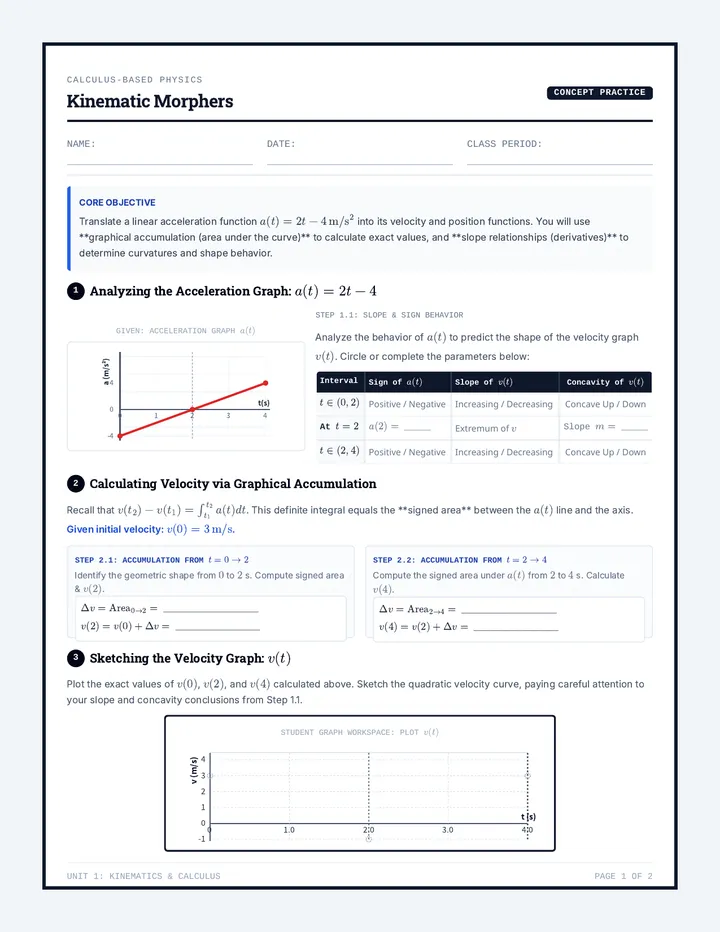
Kinematic Morphers Worksheet

Motion Morphers

A calculus-based physics lesson focused on translating motion graphs (acceleration to velocity to position) using graphical accumulation (area under the curve) and slope relationship analysis, featuring scaffolded practice and a visual reference poster.

CM

Chuguna Murugesan

7