Lenny.com
Explore
Create
ActivitiesNewMathEnglish Language ArtsScience & EngineeringSocial StudiesGlobal LanguagesHealth & Physical EducationSpecial EducationCounseling & Life SkillsArts & CreativityESL
Lenny.com
Lenny.com
Explore
Create
ActivitiesNewMathEnglish Language ArtsScience & EngineeringSocial StudiesGlobal LanguagesHealth & Physical EducationSpecial EducationCounseling & Life SkillsArts & CreativityESL
Lenny.com
Lenny.com

Solutions

Lenny for EducatorsLenny for SchoolsLenny for Districts

Product

ExploreSign inCreateSupportAbout

Resources

Getting startedMTSS Acceleration Program

© 2026 Lenny Learning Inc.

TermsPrivacyAccessibility
LinkedInInstagramX
Lenny

Mixtures

Distinguishes between homogeneous and heterogeneous substances through physical properties and separation techniques. Examines methods like filtration, evaporation, and chromatography for isolating components based on particle size and solubility.

Science & EngineeringLife ScienceLiving ThingsAnimalsPlantsBody SystemsTraitsAdaptationsCellsEcosystemsHeredityGenes to TraitsCell DivisionPhysicsComparing MaterialsShapes and PropertiesMagnetsMagnetismLightSoundLight and SoundMatterStates of MatterChanges of StateMixturesPhysical and Chemical ChangeHeating and CoolingHeat and Thermal EnergyEnergyForce and MotionElectrical CircuitsAtoms and MoleculesPeriodic TableMotion in One DimensionMotion in Two DimensionsScalars and VectorsForces and Laws of MotionCircular Motion and GravityMomentum and ImpulseWork, Energy, and PowerWavesElectromagnetic WavesGeometric OpticsElectricity and MagnetismSimple Harmonic MotionThermodynamicsNuclear PhysicsEarth Science & AstronomyWeatherWater CycleRocks and MineralsFossilsEarth's FeaturesEarth's ResourcesEarth's StructureWeather and ClimateEarth EventsFossils and Geologic TimePlate TectonicsHuman ImpactsAstronomyChemistryUnits and MeasurementAtomic StructurePeriodic TrendsChemical BondingNomenclatureMolecular StructureIntermolecular ForcesThe MoleStoichiometryProperties of GasesSolutionsChemical ReactionsBalancing EquationsEnergy ChangesRates of ReactionsEquilibriumAcids and BasesQuantum ModelBiologyClassificationCell StructureThe Chemistry of LifeBiomoleculesCellular TransportCell EnergyCell Growth and DivisionDNAProtein SynthesisMeiosis and Sexual ReproductionPatterns of InheritanceMulticellular OrganismsEvolutionEcologyBiodiversityComputer ScienceAlgorithms and Computational ThinkingProgramming LanguagesComputing SystemsNetworks and InternetData AnalysisCybersecurityAI and Machine LearningSoftware Design and DevelopmentBlockchainEngineering & AIDesigning ExperimentsEngineering PracticesDesign ThinkingEngineering Design ProcessMechanical EngineeringElectrical EngineeringMaterials and StructuresCAD and 3D DesignRoboticsArtificial Intelligence BasicsVibe CodingMachine LearningAI Ethics and SocietySystems ThinkingEntrepreneurship & InnovationEntrepreneurial MindsetBusiness Idea DevelopmentBusiness Plan BasicsMarketing & Customer DiscoveryFinancial Management for Startups

Videos

4 Fun Indoor Science Experiments: Oobleck, Potions, Paint & Forts

4 Fun Indoor Science Experiments: Oobleck, Potions, Paint & Forts

In this engaging compilation of four hands-on science activities, Jessi and her robot rat friend Squeaks demonstrate how to turn a stuck-inside day into an exciting laboratory adventure. The video guides young viewers through creating Oobleck (a non-Newtonian fluid), mixing "potions" to understand solutions versus suspensions, creating homemade watercolor paints using a chemical reaction, and engineering blanket forts to learn about physics and tension. Each segment is practical, easy to follow, and uses common household items. The video explores fundamental scientific concepts across chemistry, physics, and engineering. Key topics include states of matter (solids, liquids, and things in between), the properties of mixtures (dissolving vs. separating), chemical reactions (acids and bases fizzing), color theory, and physical forces like tension that hold structures together. The content seamlessly blends fun activities with rigorous scientific vocabulary and explanation. For educators, this video is a treasure trove of ready-to-use classroom demonstrations or stations. It is ideal for introducing units on matter, mixtures, or simple machines/forces. The step-by-step instructions allow teachers to pause and have students predict outcomes or follow along in real-time. It transforms abstract concepts like "suspension" or "tension" into tangible, memorable experiences that students can touch, see, and build themselves.
SciShow KidsSciShow Kids

16mins 1s

Does Matter Just Disappear? Investigating the Conservation of Mass

Does Matter Just Disappear? Investigating the Conservation of Mass

This educational video explores the fundamental scientific principle of the Conservation of Mass. Through engaging visuals and clear examples, the host investigates whether matter can ever truly disappear or be created from nothing. The video distinguishes between physical changes (like dissolving sugar in tea) and chemical changes (like baking a cake), explaining how matter behaves in each scenario. It specifically addresses the common misconception that when something dissolves or evaporates, it is gone forever. The content breaks down complex terminology into accessible concepts, defining key terms such as reactants, products, and physical versus chemical changes. It uses a concrete experiment—weighing sugar and water before and after mixing—to provide empirical evidence that mass remains constant even when visible properties change. The narrative connects everyday observations, like a glass of water evaporating or sugar dissolving, to the broader scientific law that mass is never made or lost. For educators, this video is an excellent tool for introducing the particle nature of matter and the law of conservation of mass. It provides a ready-made demonstration that can be replicated in the classroom and offers clear definitions of vocabulary essential for upper elementary and middle school science curricula. The visual proof provided by the digital scale reading serves as a powerful anchor for students grappling with abstract concepts of invisible matter.

Crash Course KidsCrash Course Kids

4mins 9s

How Distillation Works: Separating Solutions Step-by-Step

How Distillation Works: Separating Solutions Step-by-Step

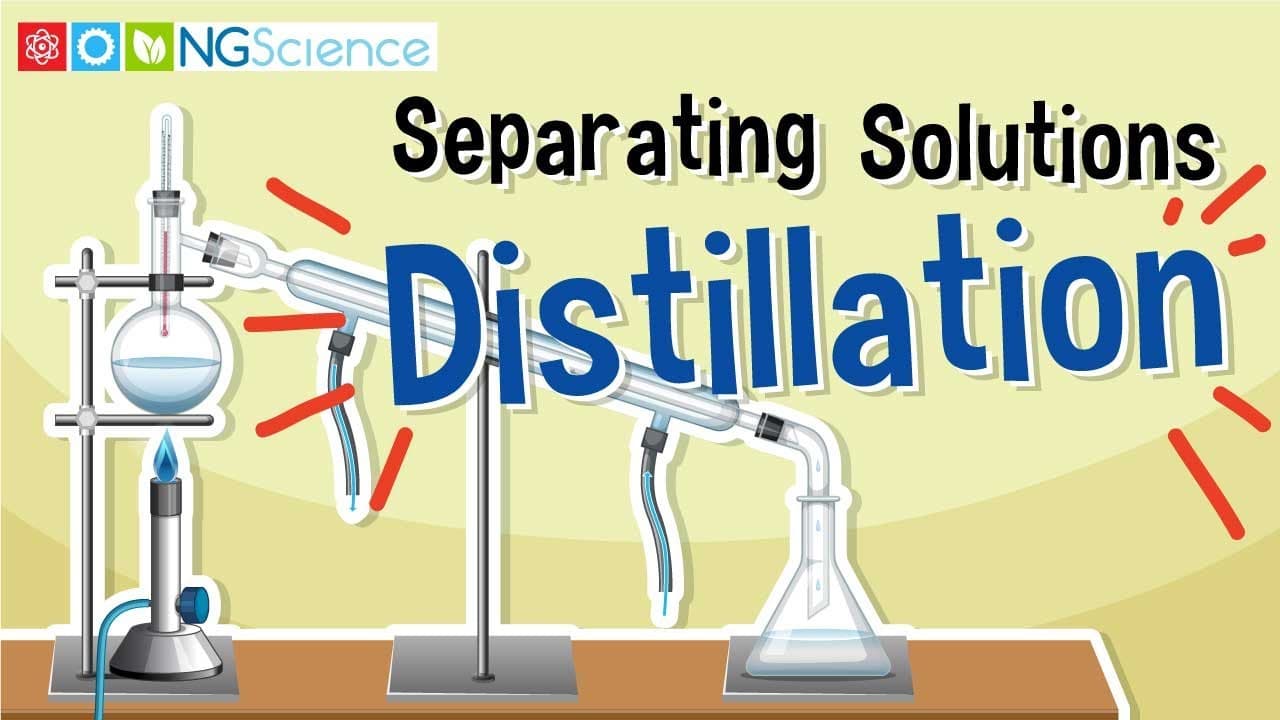
This educational animation provides a clear, step-by-step walkthrough of the scientific process of distillation, a method used to separate liquid solutions. The video breaks down the laboratory procedure into seven distinct steps, starting from the assembly of the necessary apparatus—including the burner, distillation flask, condenser, and receiving flask—to the final collection of the purified liquid. It utilizes detailed animated diagrams to visualize internal processes that are difficult to observe in a real-world setting, such as the flow of vapor and the cooling action of the condenser. Key themes explored include phase changes (vaporization and condensation), the importance of boiling points in separating mixtures, and the specific functions of laboratory equipment. The video explicitly differentiates between the 'distillate' (the purified liquid collected) and the 'residue' (the substance remaining in the original flask), helping students understand the conservation of matter during separation. It emphasizes the critical role of temperature control and the physical mechanics of the water-cooled condenser. For educators, this video serves as an excellent pre-lab visual aid or a substitute for live demonstrations when laboratory resources are limited. It connects abstract chemical concepts to tangible applications by concluding with real-world examples of distillation, such as water purification, perfume manufacturing, and essential oil production. The visual clarity makes it particularly useful for reinforcing vocabulary related to lab equipment and physical changes in matter.

Next Generation ScienceNext Generation Science

3mins 38s

How to Separate Mixtures Using Sifting

How to Separate Mixtures Using Sifting

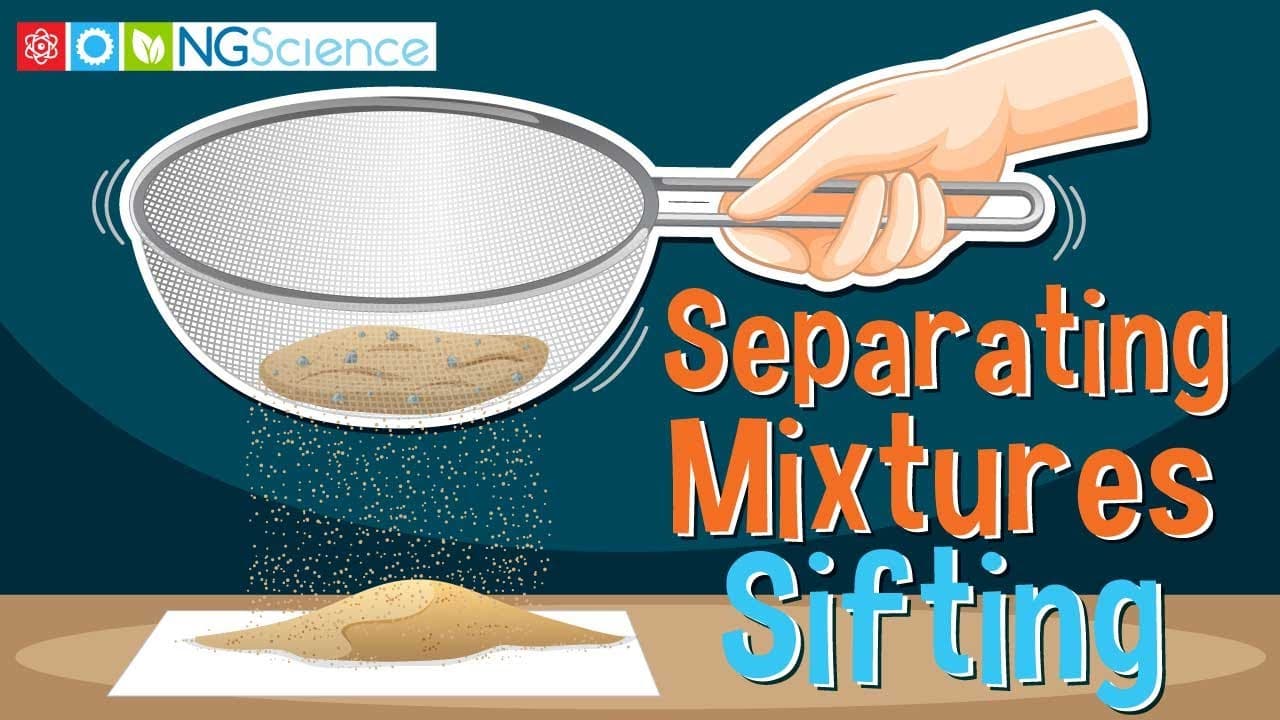
This animated science video provides a clear and accessible demonstration of how to separate mixtures based on particle size. It focuses specifically on separating a mixture of sand and gravel using a tool called a sieve. The video walks viewers through the entire scientific process: observing the individual properties of the materials, combining them to create a mixture, identifying a problem (how to separate them efficiently), and applying a solution using a specific tool.

Next Generation ScienceNext Generation Science

2mins 15s

How to Separate Mixtures Using Magnets

How to Separate Mixtures Using Magnets

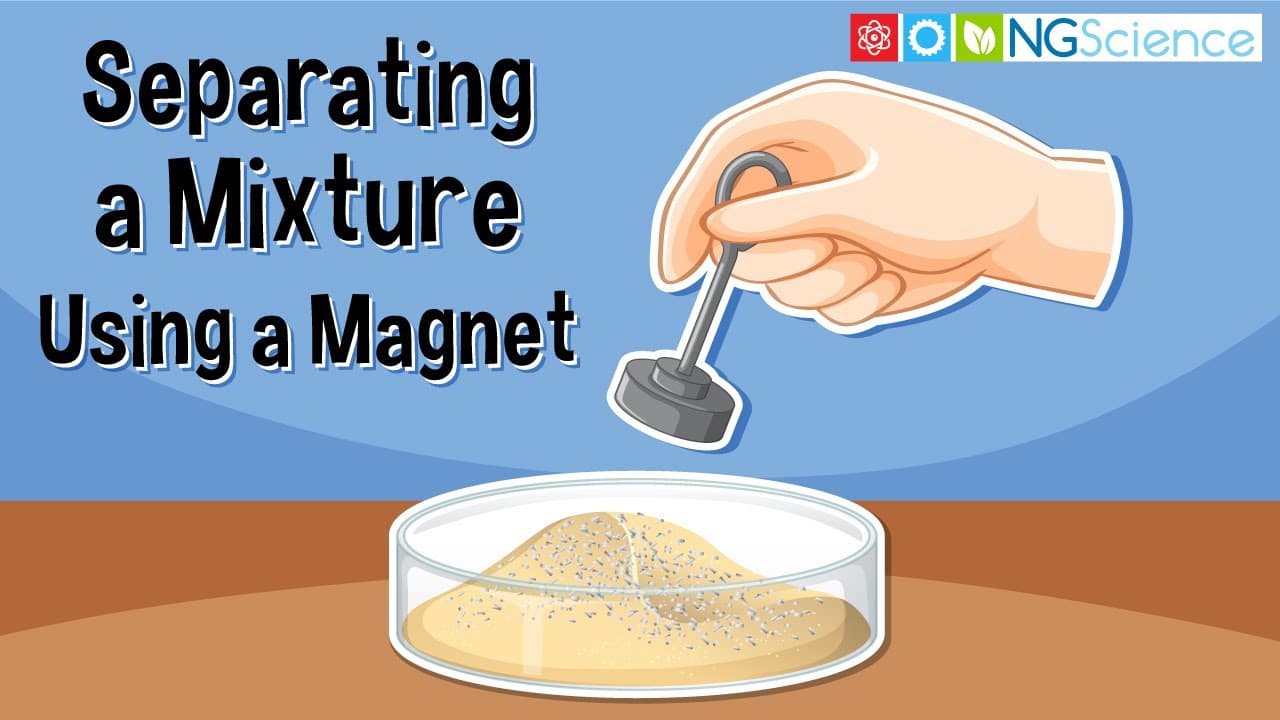
This concise science demonstration visualizes the concept of separating mixtures based on physical properties, specifically magnetism. The video guides viewers through a clear experiment where a heterogeneous mixture is created using white sand and black iron filings, followed by the use of a magnetic wand to separate the two substances. It explicitly defines the scientific principles at play, noting that separation is possible because one component is magnetic while the other is not. Key themes include the properties of matter, the definition of mixtures, and techniques for separating substances. The video serves as a fundamental introduction to physical science concepts, demonstrating that mixtures can be physically separated without chemical reactions. It highlights the difference between magnetic materials (iron) and non-magnetic materials (sand) as the basis for the separation technique. For educators, this video provides an excellent "hook" or visual aid for units on matter, mixtures, and solutions. It is particularly useful for demonstrating a concept that might be messy or difficult to manage individually in a large classroom setting. Teachers can use this clip to model scientific observation, prompt predictions about physical properties, or introduce a hands-on lab activity where students replicate the experiment to learn about sorting materials in real-world contexts like recycling.

Next Generation ScienceNext Generation Science

1min 8s

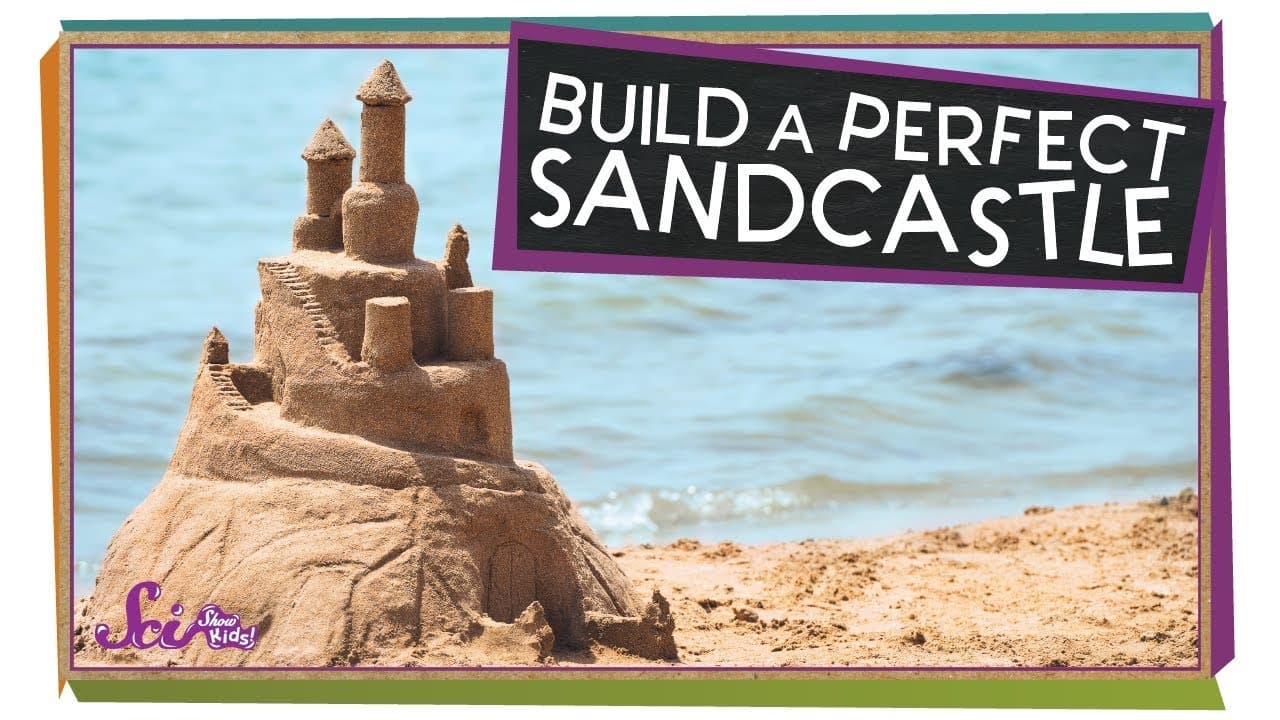
The Science of Building the Perfect Sandcastle

The Science of Building the Perfect Sandcastle

This engaging video from SciShow Kids explores the science and engineering behind building the perfect sandcastle. Host Jessi breaks down the process into four actionable steps, transforming a simple beach activity into a lesson on physics and structural engineering. The video explains why dry sand crumbles and how water acts as a binding agent to hold grains together, providing a clear, age-appropriate explanation of surface tension without getting bogged down in complex jargon. The content covers key scientific concepts such as the composition of sand, the role of water in creating cohesive forces between grains, and the importance of drainage and compression. Through clear animations, the video illustrates how microscopic water bridges form between sand grains to act like glue. It also emphasizes the engineering principle of building a strong, wide base to support taller structures, drawing parallels to real-world architecture like skyscrapers. For educators, this video serves as an excellent launchpad for lessons on matter, mixtures, and introductory physics. It encourages hands-on inquiry and problem-solving, making it perfect for STEM challenges where students must determine the optimal sand-to-water ratio. The video effectively combines play with scientific principles, helping students understand that the physical world follows rules that, when understood, can help them build better and stronger structures.

SciShow KidsSciShow Kids

3mins 43s

Sequences

Pressure Poster Workshop Handout

Pressure Power

A comprehensive 5-day chemistry unit investigating the relationships between gas pressure, volume, temperature, and moles using lab inquiries, mathematical modeling, and real-world applications.

OM

Olutoyin Makinde

69
Scene Observation Slides

Shadow Squad Investigations

A four-part immersive crime scene investigation where 7th-grade students act as forensic detectives to solve the mystery of the missing Golden Whistle trophy. This sequence guides students through scene processing, fingerprinting, ink chromatography, and final evidence synthesis.

CH

Collin Harney

11
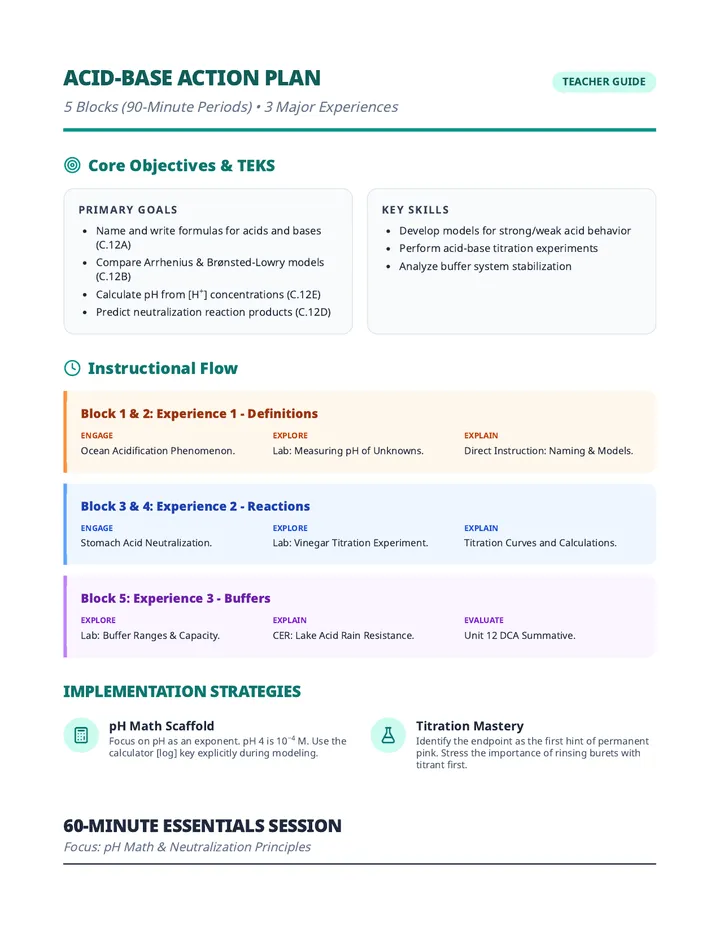
Acid Base Action Plan

Acid Base Investigation

A comprehensive unit exploring the properties, reactions, and mathematical relationships of acids and bases, featuring pH calculations, titrations, and buffer systems.

OM

Olutoyin Makinde

34
Bottle Magic Teacher Guide

Sensory Explorers

A four-day immersive sensory science sequence for K-3 students, exploring different materials, textures, and chemical mixtures through hands-on creation and observation.

VJ

Vicky Jaime

14
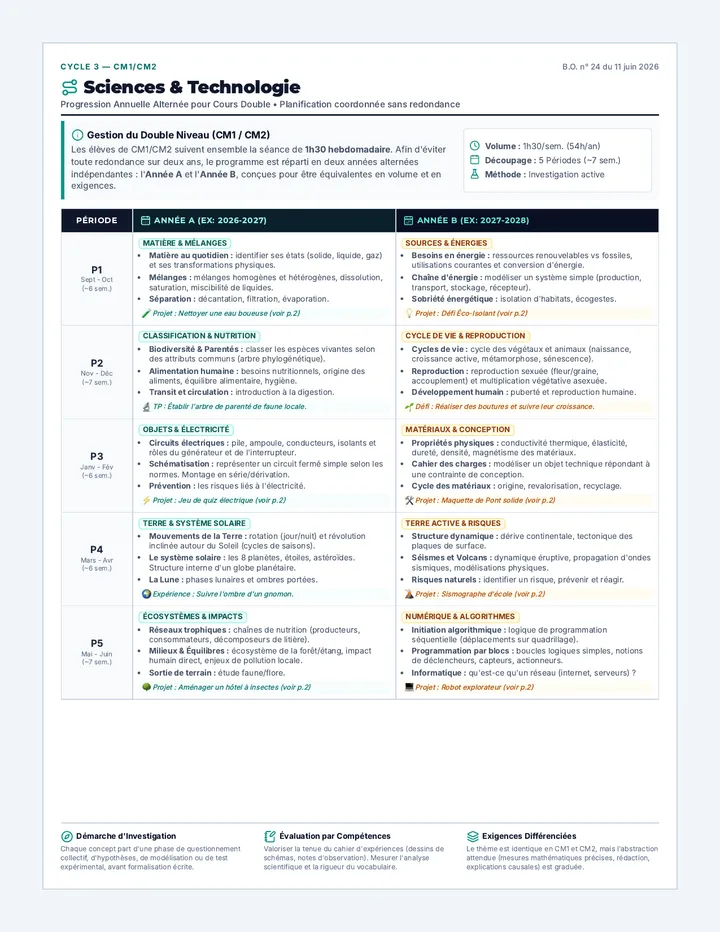
Progression Annuelle Document

Sciences et Technologie CM1 CM2

Progression annuelle de Sciences et Technologie pour double-niveau CM1/CM2, structurée selon le BO de juin 2026, alternant Année A et Année B.

LP

LAURENT PERCHE

1
Review Master Teacher Guide

Science Sprint Review

A comprehensive two-day review sequence designed to prepare 5th-grade students for their science interim assessment, covering matter, earth systems, and scientific inquiry.

MM

Monique Milligan

10

Lessons

Heat Flow Teacher Guide

Particle Behavior Review

A lesson focusing on the states of matter (solid, liquid, gas) and the behavior of particles at the molecular level. Students will model particle motion and arrangement, as well as the energy changes that drive phase transitions.

EA

Erica Andre

54
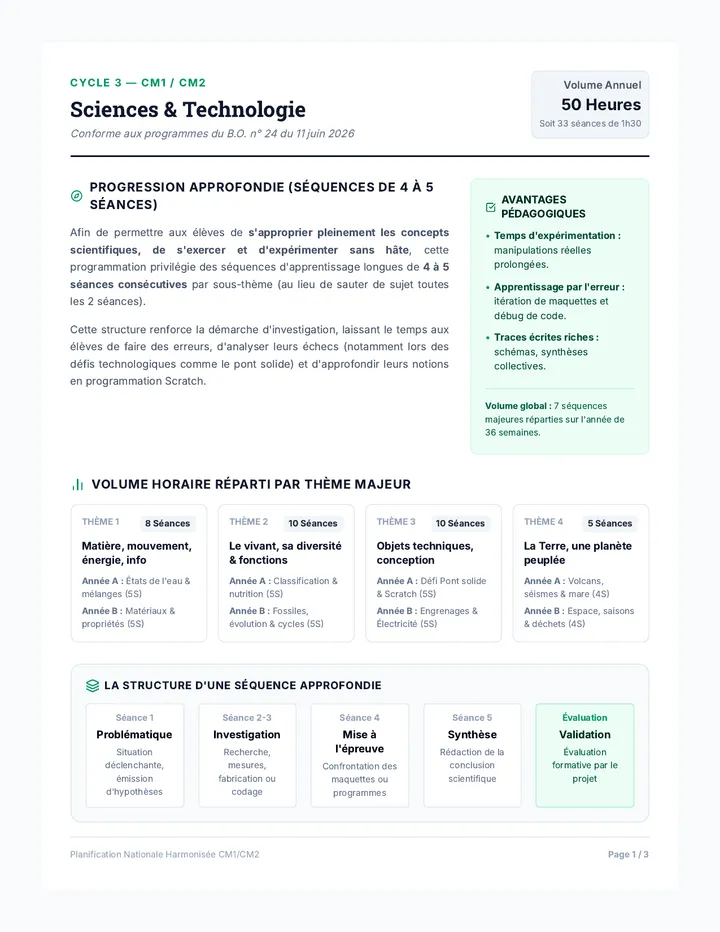
Tableau Progression Annuelle Sciences CM

Progression Sciences CM1 CM2

Outil de planification annuelle et de progression pour l'enseignement des sciences et technologies en classe de CM1/CM2, conforme au BO de juin 2026. Ce guide propose une répartition claire des volumes horaires et des thèmes entre l'année A et l'année B pour éviter les redondances dans les classes à double niveau.

LP

LAURENT PERCHE

40
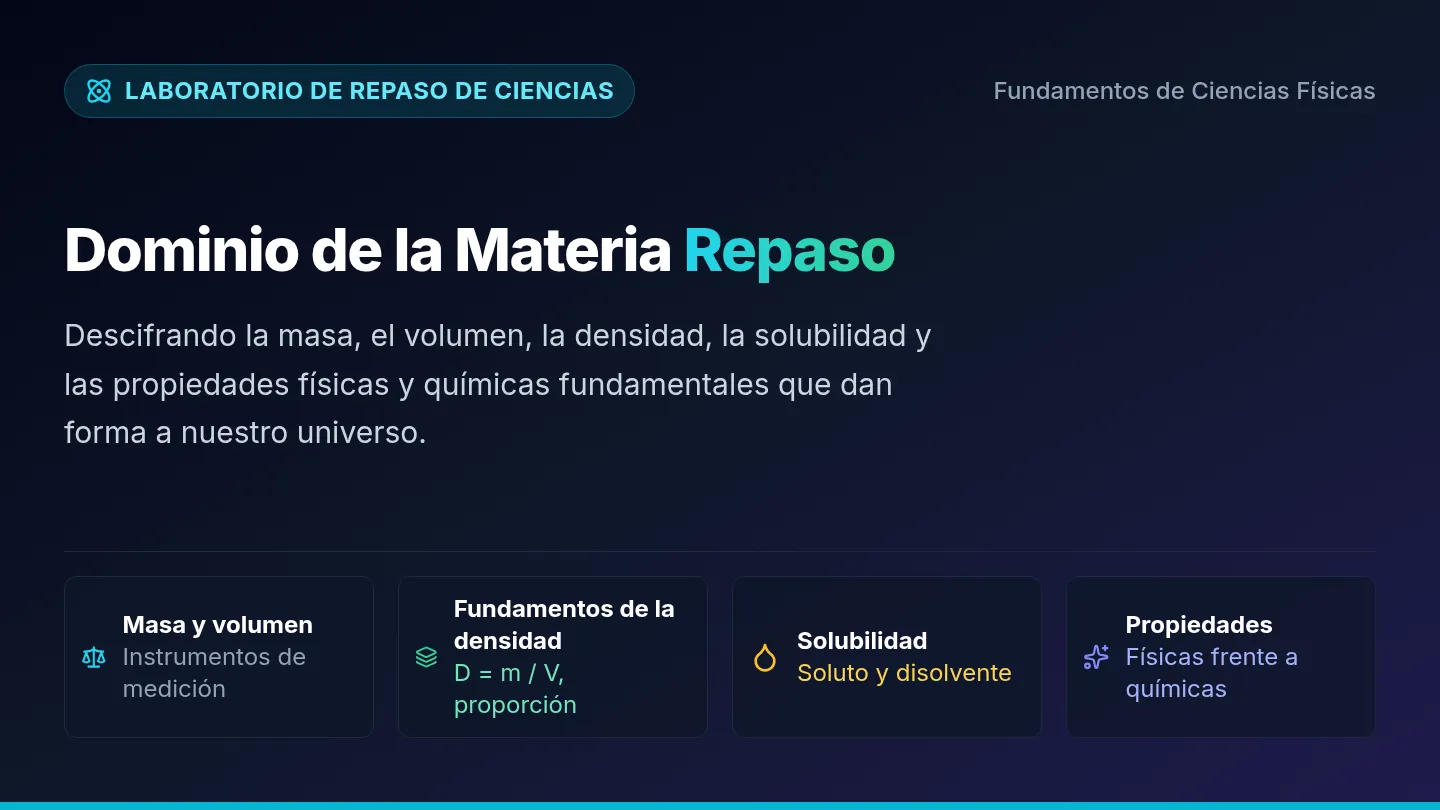
Matter Mastery Slides

Matter Mastery Review

A comprehensive review lesson on the properties of matter, mass, volume, density, temperature, solubility, and physical versus chemical changes. Features interactive instruction, scaffolded guided notes, mixed-format practice, and assessment.

MN

Monica Nicolas

9
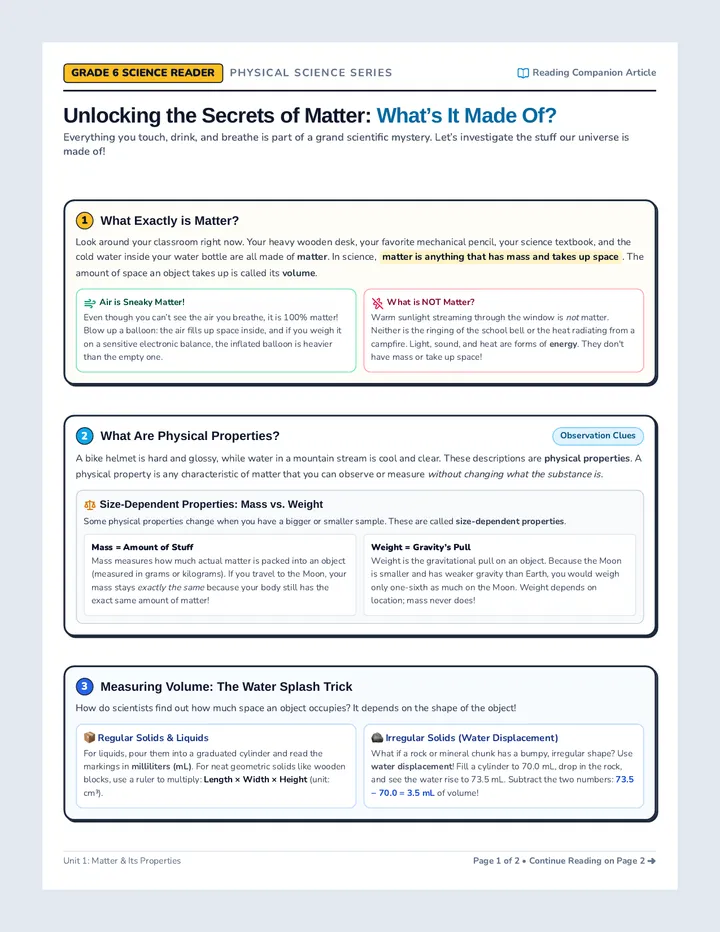
Matter Explorer Reading Passage

Matter Explorer

A foundational physical science lesson exploring the definition of matter, mass versus weight, volume calculation and displacement, size-dependent versus size-independent physical properties, and chemical reactivity. Students use doodle-style guided notes to synthesize key concepts and solve a property-based mystery substance deduction.

SS

Susan Stewart

4
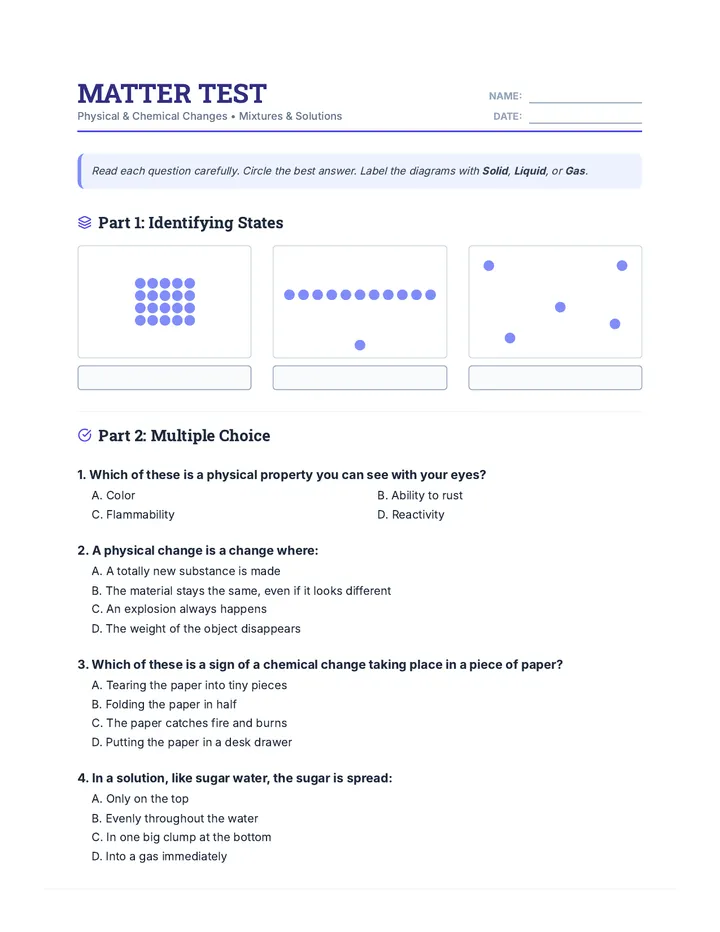
Matter Test Document

Matter Mastery Assessment

A comprehensive assessment for Grade 5 students covering physical and chemical properties, changes of state, and the characteristics of mixtures and solutions.

AD

Amanda Daniels

4
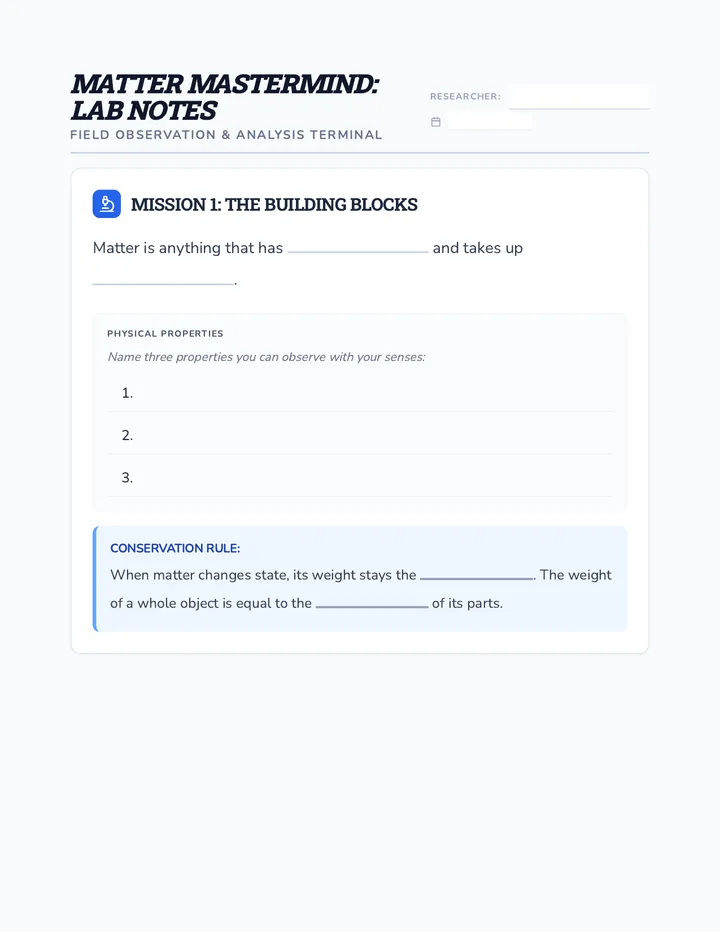
Matter Mastermind Lab Notes

Matter Mastermind

This integrated lesson explores the properties of matter and the forces of gravity. Students will analyze scientific claims by identifying the reasons and evidence used to support them, bridging physical science concepts with critical reading skills.

MW

Mr Whitfield

9