Lenny.com
Explore
Create
ActivitiesNewMathEnglish Language ArtsScience & EngineeringSocial StudiesGlobal LanguagesHealth & Physical EducationSpecial EducationCounseling & Life SkillsArts & CreativityESL
Lenny.com
Lenny.com
Explore
Create
ActivitiesNewMathEnglish Language ArtsScience & EngineeringSocial StudiesGlobal LanguagesHealth & Physical EducationSpecial EducationCounseling & Life SkillsArts & CreativityESL
Lenny.com
Lenny.com

Solutions

Lenny for EducatorsLenny for SchoolsLenny for Districts

Product

ExploreSign inCreateSupportAbout

Resources

Getting startedMTSS Acceleration Program

© 2026 Lenny Learning Inc.

TermsPrivacyAccessibility
LinkedInInstagramX
Lenny

Cell Division

Mechanisms of mitosis and meiosis for cellular reproduction, growth, and tissue repair. Examines cell cycle stages, chromosomal alignment, and genetic recombination.

Science & EngineeringLife ScienceLiving ThingsAnimalsPlantsBody SystemsTraitsAdaptationsCellsEcosystemsHeredityGenes to TraitsCell DivisionPhysicsComparing MaterialsShapes and PropertiesMagnetsMagnetismLightSoundLight and SoundMatterStates of MatterChanges of StateMixturesPhysical and Chemical ChangeHeating and CoolingHeat and Thermal EnergyEnergyForce and MotionElectrical CircuitsAtoms and MoleculesPeriodic TableMotion in One DimensionMotion in Two DimensionsScalars and VectorsForces and Laws of MotionCircular Motion and GravityMomentum and ImpulseWork, Energy, and PowerWavesElectromagnetic WavesGeometric OpticsElectricity and MagnetismSimple Harmonic MotionThermodynamicsNuclear PhysicsEarth Science & AstronomyWeatherWater CycleRocks and MineralsFossilsEarth's FeaturesEarth's ResourcesEarth's StructureWeather and ClimateEarth EventsFossils and Geologic TimePlate TectonicsHuman ImpactsAstronomyChemistryUnits and MeasurementAtomic StructurePeriodic TrendsChemical BondingNomenclatureMolecular StructureIntermolecular ForcesThe MoleStoichiometryProperties of GasesSolutionsChemical ReactionsBalancing EquationsEnergy ChangesRates of ReactionsEquilibriumAcids and BasesQuantum ModelBiologyClassificationCell StructureThe Chemistry of LifeBiomoleculesCellular TransportCell EnergyCell Growth and DivisionDNAProtein SynthesisMeiosis and Sexual ReproductionPatterns of InheritanceMulticellular OrganismsEvolutionEcologyBiodiversityComputer ScienceAlgorithms and Computational ThinkingProgramming LanguagesComputing SystemsNetworks and InternetData AnalysisCybersecurityAI and Machine LearningSoftware Design and DevelopmentBlockchainEngineering & AIDesigning ExperimentsEngineering PracticesDesign ThinkingEngineering Design ProcessMechanical EngineeringElectrical EngineeringMaterials and StructuresCAD and 3D DesignRoboticsArtificial Intelligence BasicsVibe CodingMachine LearningAI Ethics and SocietySystems ThinkingEntrepreneurship & InnovationEntrepreneurial MindsetBusiness Idea DevelopmentBusiness Plan BasicsMarketing & Customer DiscoveryFinancial Management for Startups

Videos

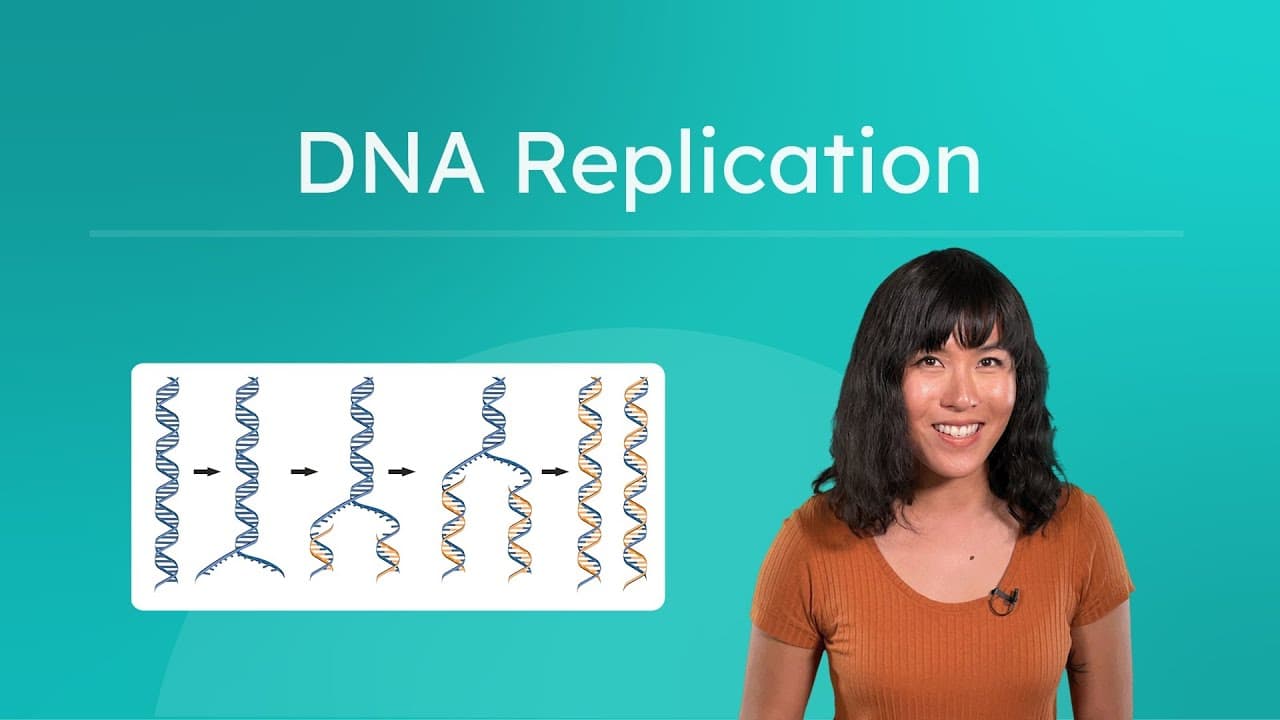
How DNA Replicates and Repairs Itself

How DNA Replicates and Repairs Itself

This comprehensive biology video breaks down the complex process of DNA replication, explaining how cells faithfully copy their genetic material before division. Using the analogy of copying tedious math formulas, the narrator introduces the sheer scale of cellular division in the human body—approximately 10 quadrillion times in a lifetime. The video visually demonstrates the semi-conservative nature of replication, where the double helix unwinds and unzips to create templates for new strands, ensuring genetic continuity.

Miacademy & MiaPrep Learning ChannelMiacademy & MiaPrep Learning Channel

10mins 57s

Exploring the World of Bacteria: Structure, Survival, and Impact

Exploring the World of Bacteria: Structure, Survival, and Impact

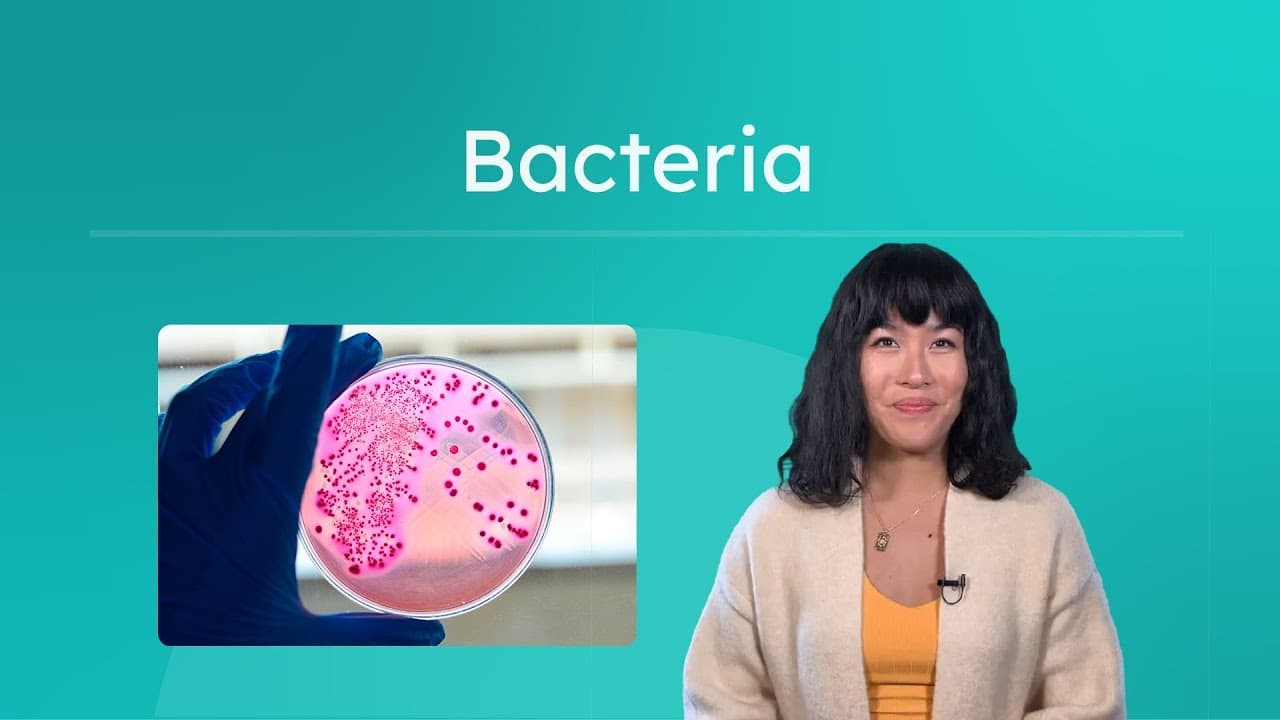
This comprehensive biology lesson introduces students to the microscopic world of bacteria, exploring their structure, classification, and diverse roles in our ecosystem. The video breaks down complex biological concepts into digestible segments, covering how bacteria are classified by shape (cocci, bacilli, spirillum) and cell wall composition (Gram-positive vs. Gram-negative). It also delves into bacterial physiology, explaining how they move, reproduce via binary fission, and introduce genetic variation through mutation and conjugation. The content highlights the dual nature of bacteria as both essential allies and dangerous adversaries. It illustrates their vital ecological roles as decomposers and nitrogen fixers, as well as their presence in the human gut to aid digestion. Conversely, it addresses pathogenic bacteria that cause diseases like tetanus, tuberculosis, and strep throat, explaining how toxins and infections affect the body. For educators, this video serves as an excellent core resource for units on microbiology, cell biology, or ecology. It provides clear visual models of cell structures, real-world examples of bacterial species, and addresses the critical concept of antibiotic resistance through the lens of cell wall structure. The recurring "Friend or Foe" theme offers a perfect framework for classroom debates and critical thinking exercises regarding the impact of microorganisms on human life.
Miacademy & MiaPrep Learning ChannelMiacademy & MiaPrep Learning Channel

14mins 2s

How Cell Processes Keep Living Things Alive and Connected

How Cell Processes Keep Living Things Alive and Connected

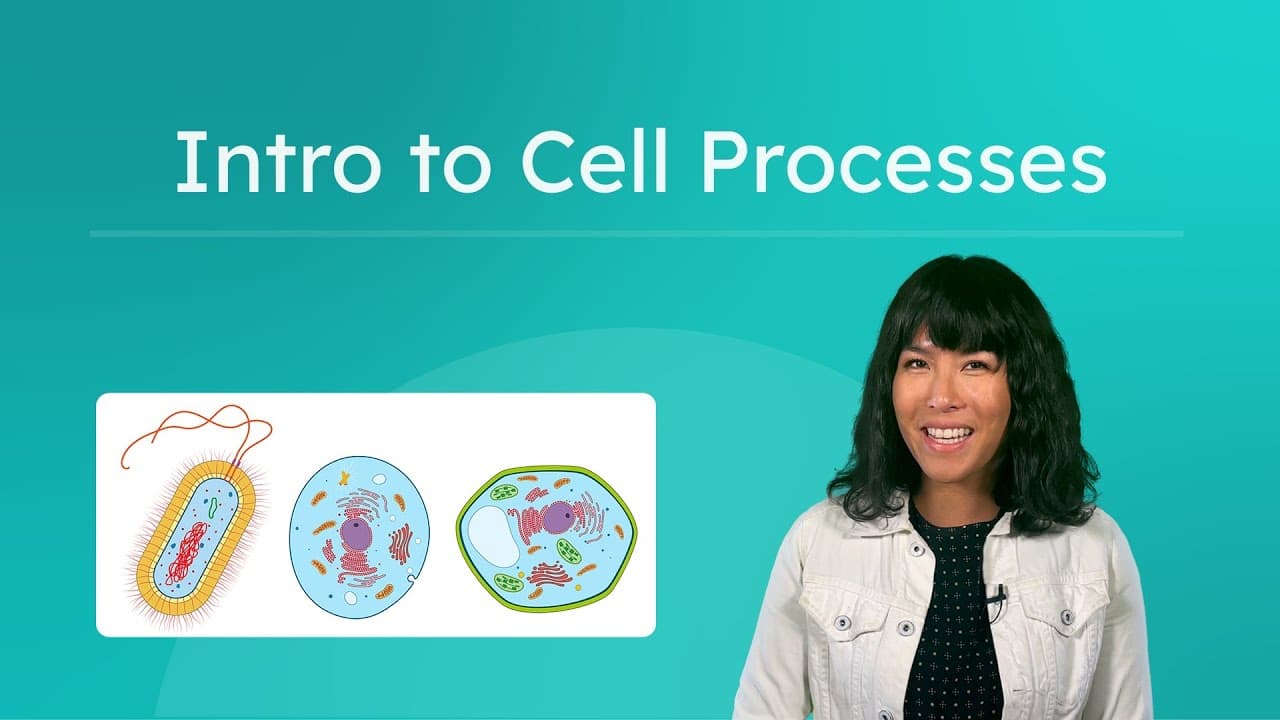
This video serves as an engaging introduction to a biology unit on cell processes, shifting the focus from cell structure (parts) to cell function (what they do). The host explains how cellular activities are essential for keeping organisms alive and highlights the deep interconnectedness of all living things. Through clear examples like breathing and eating, the video demonstrates how fundamental biological cycles link plants and animals in a continuous exchange of matter and energy. The content covers several foundational biological concepts including the definition of heterotrophs, the reciprocal relationship between photosynthesis and cellular respiration, and the concept of homeostasis. It explains how plants convert inorganic carbon dioxide into organic glucose and oxygen, while animals consume organic matter and oxygen to produce energy and carbon dioxide. The video also touches upon metabolism as the breakdown of macromolecules for energy and introduces the cell cycle as a necessary mechanism for growth and repair. For educators, this video is an excellent "anchor" resource to launch a unit on cellular energetics or life processes. It provides a high-level overview that connects abstract chemical equations to students' daily experiences, such as breathing and eating. The visual aids, including diagrams of gas exchange and the cell cycle, help students visualize invisible processes. It sets the stage for deeper dives into specific topics like mitosis, stoichiometry of respiration, and physiological feedback loops.

Miacademy & MiaPrep Learning ChannelMiacademy & MiaPrep Learning Channel

6mins 3s

Introduction to Molecular Genetics: How DNA Builds Life

Introduction to Molecular Genetics: How DNA Builds Life

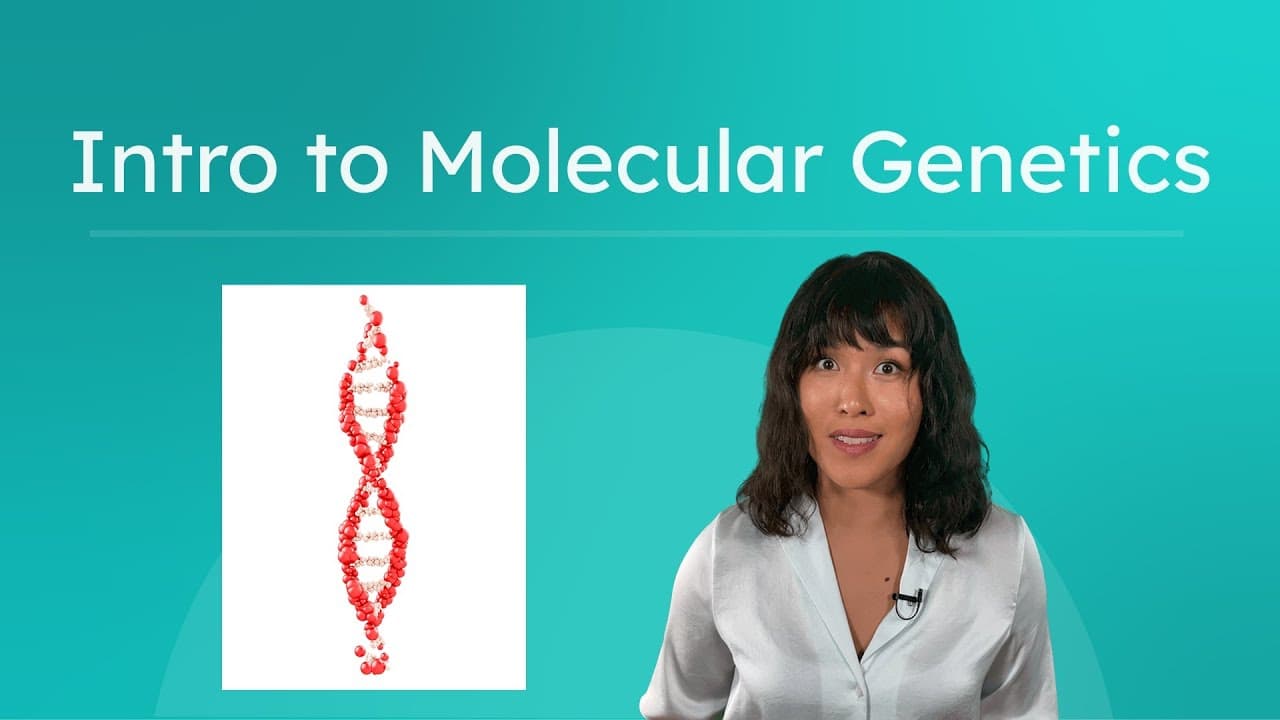
This educational video serves as a comprehensive introduction to a unit on molecular genetics, bridging the gap between basic cell biology and the complex molecular processes that drive life. The host, 'B', reviews foundational concepts like DNA and chromosomes before diving into the specific mechanisms of protein synthesis, explaining how DNA acts as the instruction manual for building proteins. The video clearly distinguishes between eukaryotic and prokaryotic cells in terms of DNA storage and introduces the central dogma of biology: DNA to RNA to Protein. Key themes include the structure of the DNA double helix, the relationship between DNA and chromosomes, the difference between transcription and translation, and the process of meiosis in inheritance. The video also touches upon genetic mutations—using a humorous visual of a giant frog—and real-world applications of genetics such as crime scene investigation and medical advancements. For educators, this video is an excellent hook or introductory resource for a middle or high school biology unit. It simplifies complex abstract concepts through clear animations and analogies (like the twisted ladder). It provides multiple natural pause points for checking prior knowledge about cells and setting the stage for hands-on activities regarding DNA modeling, protein synthesis simulations, or discussions about genetic engineering and forensics.

Miacademy & MiaPrep Learning ChannelMiacademy & MiaPrep Learning Channel

5mins 30s

The History of Cell Theory: Discovering the Microscopic World

The History of Cell Theory: Discovering the Microscopic World

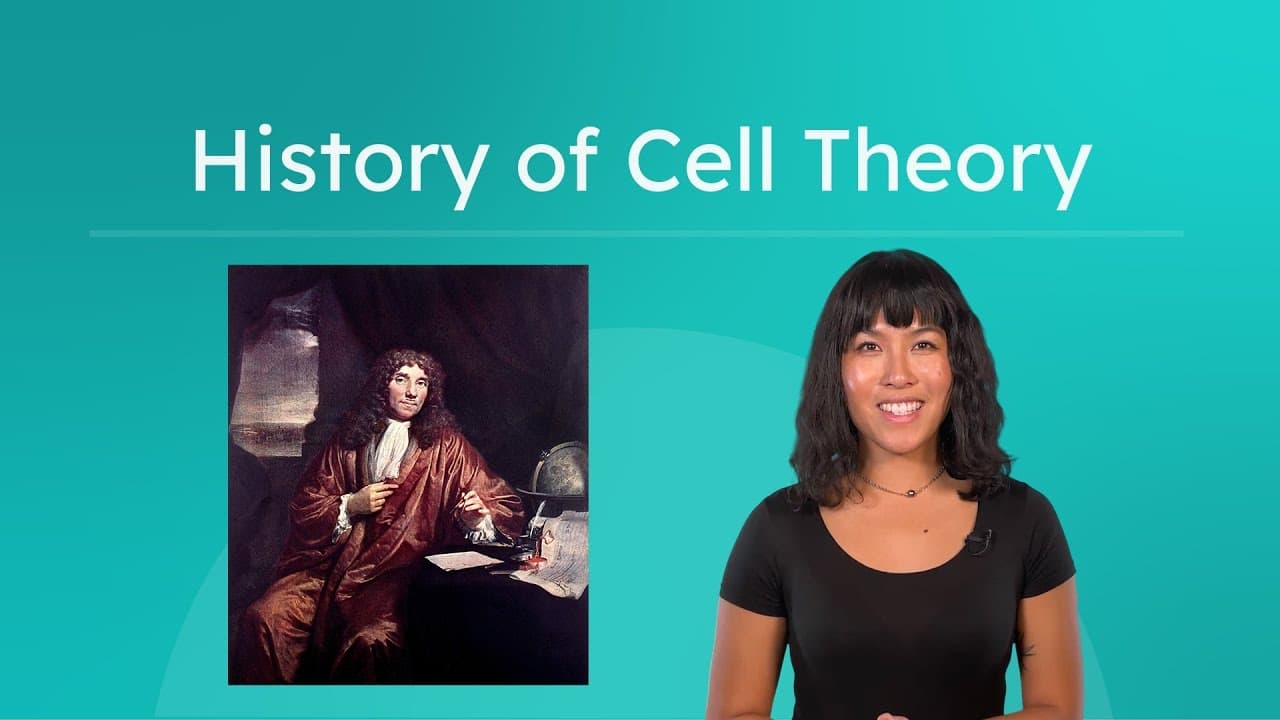
This engaging educational video traces the fascinating history of cell theory, guiding students from the invention of the earliest microscopes to the modern scientific understanding of life's building blocks. Hosted by an energetic presenter, the narrative introduces key historical figures like Robert Hooke, Antonie van Leeuwenhoek, Matthias Schleiden, Theodore Schwann, and Rudolph Virchow. It explains how their cumulative discoveries—often made centuries apart—transformed our understanding of the biological world from "animalcules" in pond water to complex multicellular organisms. The video explores central themes in the history of science, including the crucial role of technology (microscopes) in enabling new discoveries and the collaborative (and sometimes competitive) nature of scientific progress. It breaks down the three pillars of Classical Cell Theory: that all living things are made of cells, cells are the basic unit of life, and all cells come from pre-existing cells. Additionally, it touches upon Modern Cell Theory, introducing concepts like DNA transfer and energy flow within cells. For educators, this resource serves as an excellent introduction to a Biology or Life Science unit on cells. It humanizes the scientific process by sharing stories of specific scientists—including the controversy between Virchow and Remak—making abstract dates and names memorable. The video provides clear definitions, visual examples of unicellular and multicellular organisms, and natural pause points for class discussion, making it a versatile tool for introducing foundational biological concepts.

Miacademy & MiaPrep Learning ChannelMiacademy & MiaPrep Learning Channel

12mins 4s

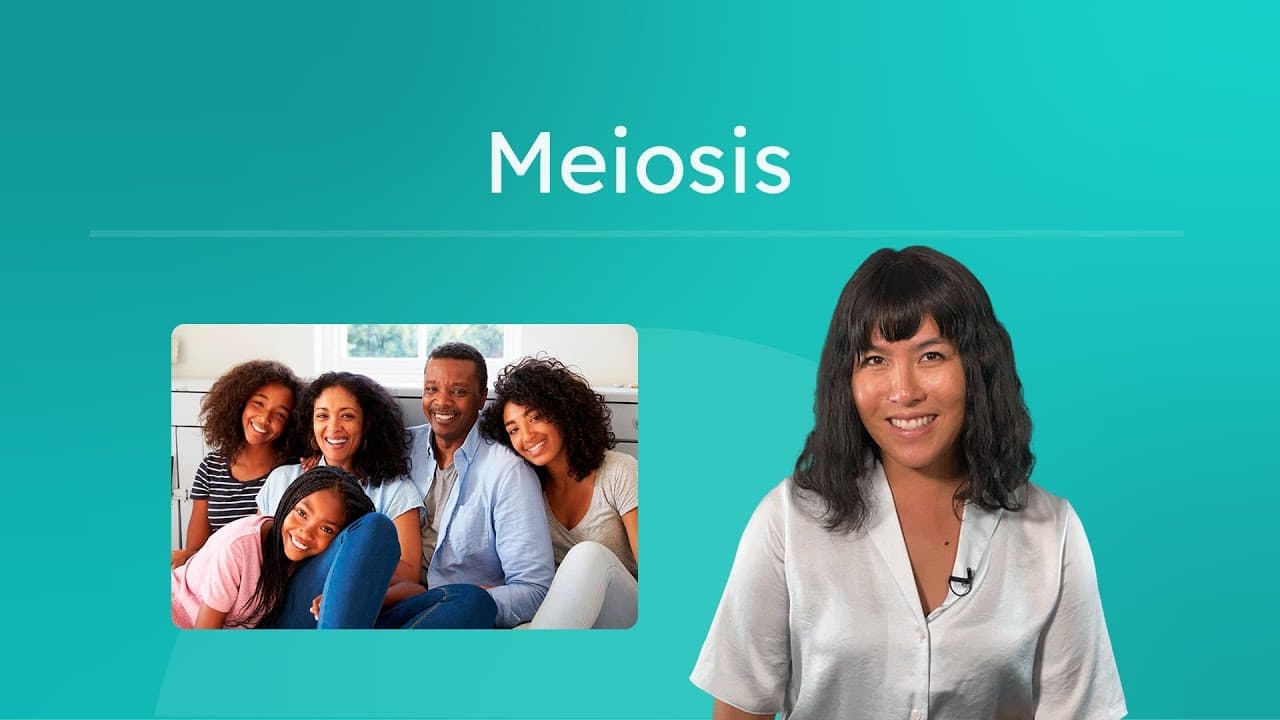
How Meiosis Creates Unique Reproductive Cells

How Meiosis Creates Unique Reproductive Cells

This educational video provides a comprehensive overview of meiosis, the process of cell division responsible for creating reproductive cells (gametes). It explains the necessity of reducing chromosome numbers by half to maintain genetic stability across generations, distinguishing between diploid somatic cells and haploid gametes. The narration breaks down the stages of Meiosis I and Meiosis II, highlighting key events like homologous pairing, crossing over, and random assortment. Key themes include the mechanics of inheritance, the difference between mitosis and meiosis, and the sources of genetic variation. The video uses clear animations to demonstrate how DNA from both parents is shuffled and combined to create genetically unique offspring. It clarifies complex vocabulary such as homologous chromosomes, sister chromatids, zygotes, and alleles. For educators, this video serves as an excellent core resource for units on genetics and cell biology. It visualizes abstract microscopic processes, making them accessible to students. The clear distinction between the two rounds of division and the focus on genetic variation provides a solid foundation for subsequent lessons on heredity, Punnett squares, and evolution.

Miacademy & MiaPrep Learning ChannelMiacademy & MiaPrep Learning Channel

13mins 40s

Materials

Curriculum Alignment Master Document

Curriculum Alignment Master Document

A comprehensive 4-page curriculum alignment guide and revised scope and sequence for Biology, Environmental Science, and Marine Biology, mapped to NGSS high school standards. Each subject is presented on its own page for clarity.

J

jcasey

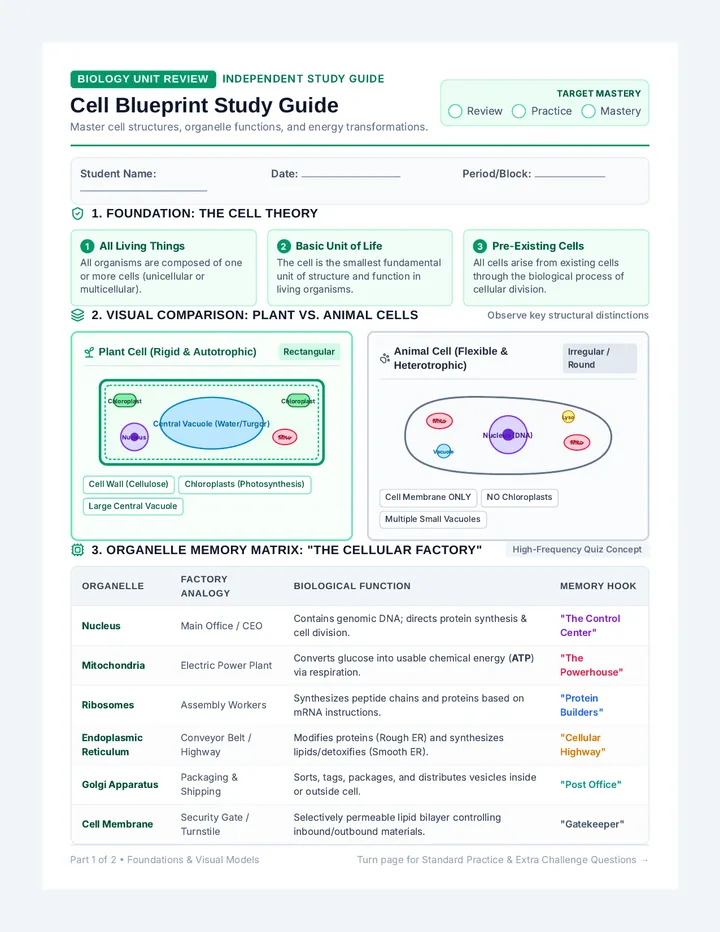
Cell Blueprint Study Guide

Cell Blueprint Study Guide

A comprehensive two-page independent review sheet for cell structure and function. Features visual diagrams, organelle memory aids, standard review exercises, and extra scenario-based practice questions.

Sequences

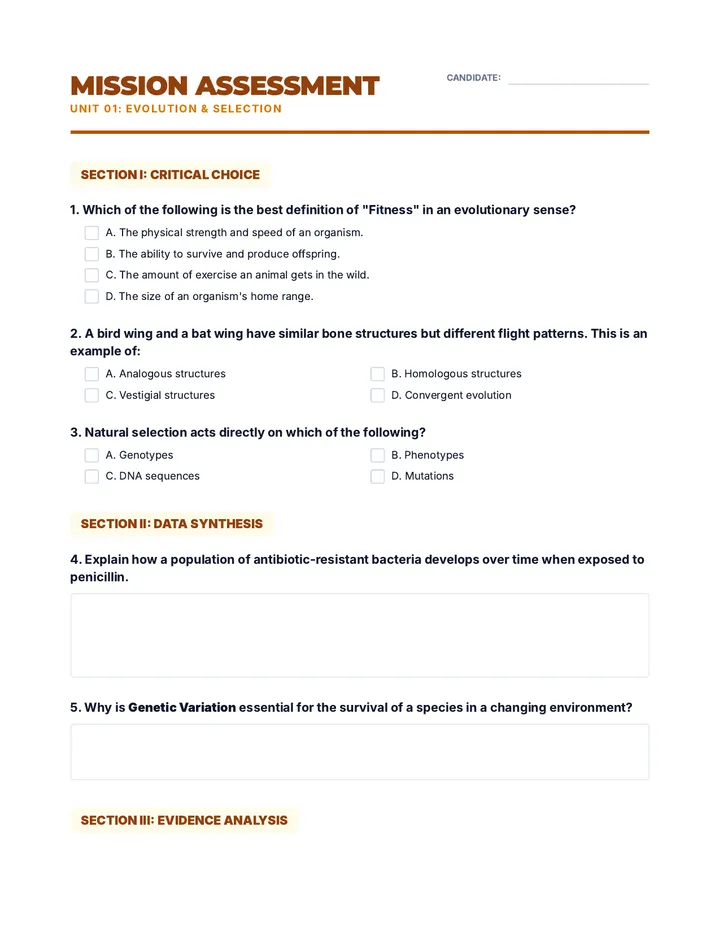
Evolution Assessment Quiz

Biology Recovery Sprint

A high-intensity biology credit recovery program focused on high-yield standards: Evolution, Systems, Viruses, and Cellular Genetics.

PB

Priyadarshini Bharath

15
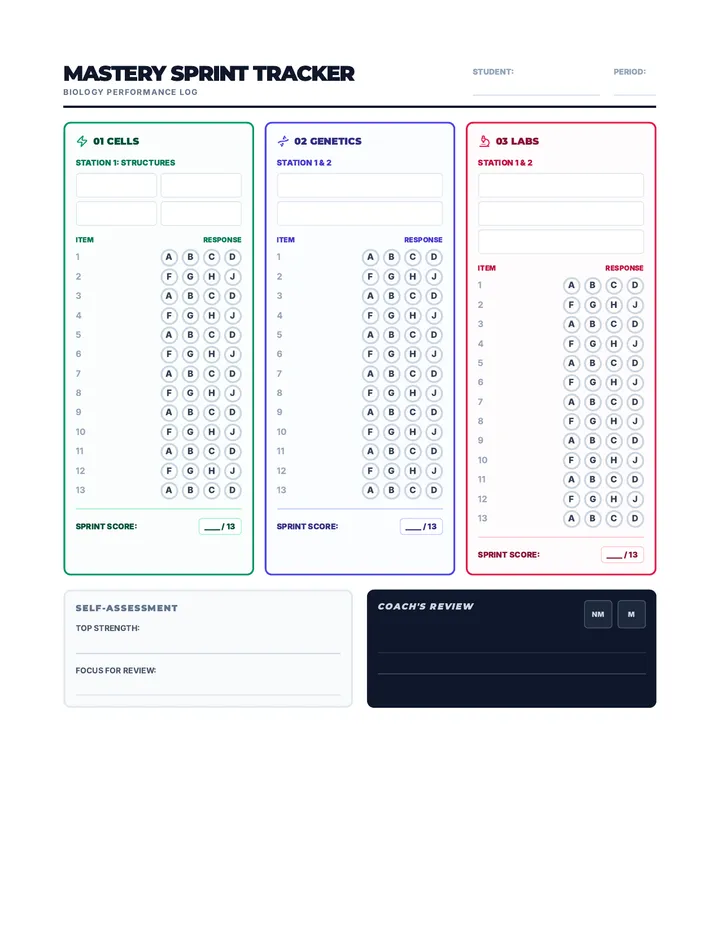
Sprint Mastery Tracker Worksheet

Biology Mastery Sprint

A high-intensity review sequence designed to move students from 'not met' to 'mastery' in Biology through vocabulary immersion and STAAR-style practice.

PB

Priyadarshini Bharath

10
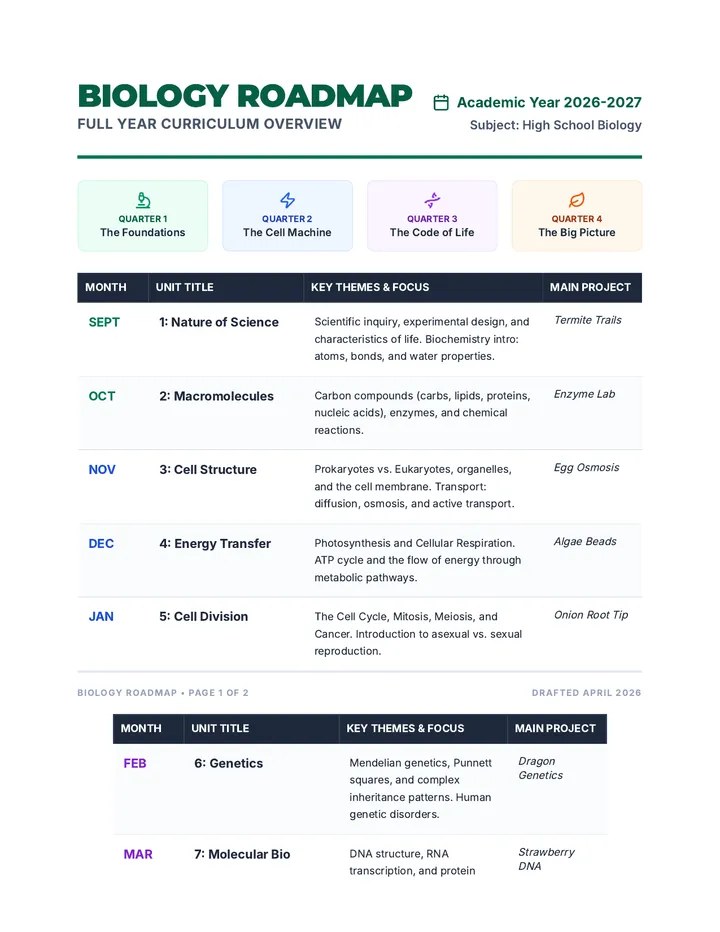
Biology Roadmap Document Trimmed

Biology Blueprint

A comprehensive full-year planning framework for high school Biology, including pacing, unit objectives, lab requirements, and assessment strategies.

A

AMY.MILLER

7
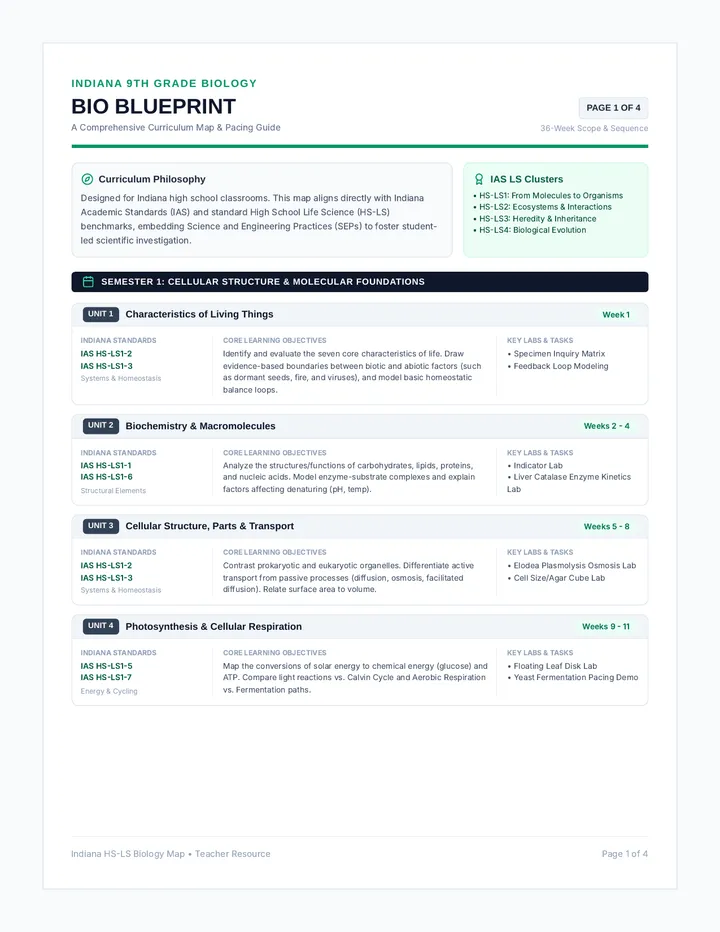
Bio Blueprint Curriculum Map

Indiana Biology Curriculum

A comprehensive biology curriculum aligned with Indiana Academic Standards, spanning twelve core units from the characteristics of living things to human impact, designed for 9th-grade on-level students.

M

MELANIE.ROBERTS

5
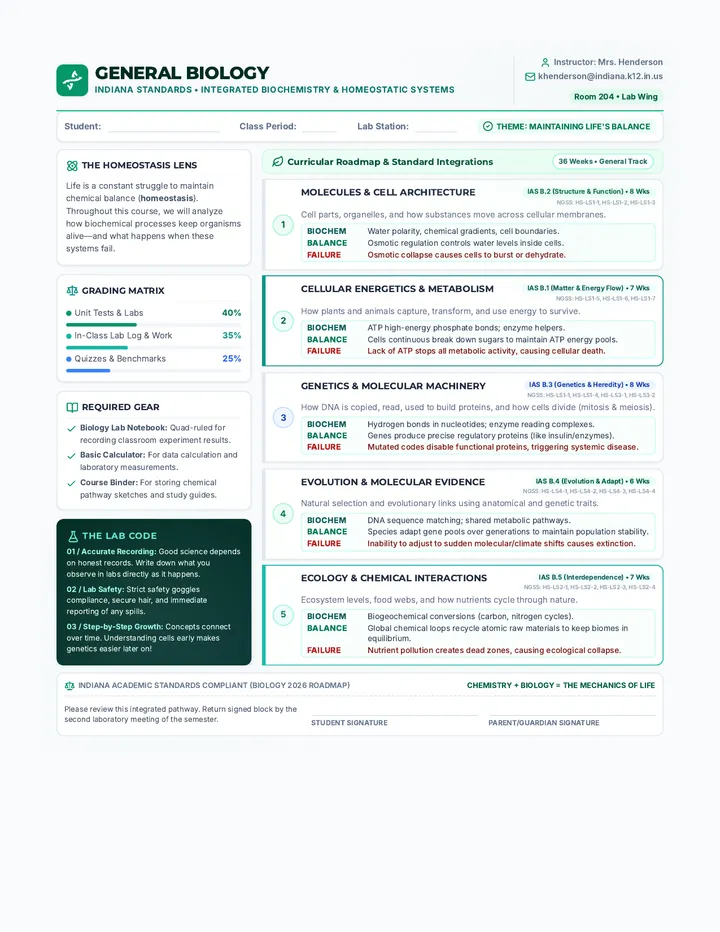
Biology Syllabus Infographic

Indiana Biology and Biochemistry

A comprehensive, 36-week General Biology curriculum aligned with Indiana Academic Standards, emphasizing the integration of biochemical foundations and metabolic homeostasis across all units.

J

Jennifer.Tetrick

7
Life Science Checkup Worksheet

Cellular and Genetic Science

A comprehensive science sequence covering cellular biology for 6th grade and genetic inheritance for 7th grade, aligned with state-level testing standards.

KA

Khalid Abdulla

37

Lessons

Biology Syllabus Infographic

Course Launch

An introductory framework establishing course policies, Indiana state biology standards, and the integrated biochemistry roadmap for the academic year.

M

MELANIE.ROBERTS

4
Biology Curriculum Map Document

Biology Course Blueprint

A comprehensive year-long curriculum map and planning guide for high school biology based on the 2026 Indiana Academic Standards.

J

Jennifer.Tetrick

9
Blueprint Slides

Genetic Blueprint

A comprehensive look at DNA structure, replication, and the Central Dogma, designed for 10th-grade biology students. Includes visual slides, a detailed reading passage, and comprehension assessments.

W

wilkinsj

5
Cell Theory Exhibit Posters

Cell Theory Chronicles

A hands-on gallery walk activity where students explore the history and tenets of cell theory by visiting scientific 'exhibit' stations and completing a chronological discovery log.

KA

Khalid Abdulla

8
Bio Boss Readiness Sheet

Biology STAAR Mastery

A focused review session for the Biology STAAR exam, centering on the five most-tested reporting categories through visual concept maps and question-stem alignment.

PB

Priyadarshini Bharath

4
Genetic Breach Station Cards

Genome Glitch Escape

An immersive genetics escape room activity where students solve puzzles related to chromosomal errors, mutations, and inheritance patterns to 'unlock' a breached genomic system.

MB

Marsha Bolden

5