Lenny.com
Explore
Create
ActivitiesNewMathEnglish Language ArtsScience & EngineeringSocial StudiesGlobal LanguagesHealth & Physical EducationSpecial EducationCounseling & Life SkillsArts & CreativityESL
Lenny.com
Lenny.com
Explore
Create
ActivitiesNewMathEnglish Language ArtsScience & EngineeringSocial StudiesGlobal LanguagesHealth & Physical EducationSpecial EducationCounseling & Life SkillsArts & CreativityESL
Lenny.com
Lenny.com

Solutions

Lenny for EducatorsLenny for SchoolsLenny for Districts

Product

ExploreSign inCreateSupportAbout

Resources

Getting startedMTSS Acceleration Program

© 2026 Lenny Learning Inc.

TermsPrivacyAccessibility
LinkedInInstagramX
Lenny

Units and Measurement

Standardized SI and customary units, conversion techniques, and precision in data collection. Equips students with dimensional analysis skills and the ability to use measurement tools accurately.

Science & EngineeringLife ScienceLiving ThingsAnimalsPlantsBody SystemsTraitsAdaptationsCellsEcosystemsHeredityGenes to TraitsCell DivisionPhysicsComparing MaterialsShapes and PropertiesMagnetsMagnetismLightSoundLight and SoundMatterStates of MatterChanges of StateMixturesPhysical and Chemical ChangeHeating and CoolingHeat and Thermal EnergyEnergyForce and MotionElectrical CircuitsAtoms and MoleculesPeriodic TableMotion in One DimensionMotion in Two DimensionsScalars and VectorsForces and Laws of MotionCircular Motion and GravityMomentum and ImpulseWork, Energy, and PowerWavesElectromagnetic WavesGeometric OpticsElectricity and MagnetismSimple Harmonic MotionThermodynamicsNuclear PhysicsEarth Science & AstronomyWeatherWater CycleRocks and MineralsFossilsEarth's FeaturesEarth's ResourcesEarth's StructureWeather and ClimateEarth EventsFossils and Geologic TimePlate TectonicsHuman ImpactsAstronomyChemistryUnits and MeasurementAtomic StructurePeriodic TrendsChemical BondingNomenclatureMolecular StructureIntermolecular ForcesThe MoleStoichiometryProperties of GasesSolutionsChemical ReactionsBalancing EquationsEnergy ChangesRates of ReactionsEquilibriumAcids and BasesQuantum ModelBiologyClassificationCell StructureThe Chemistry of LifeBiomoleculesCellular TransportCell EnergyCell Growth and DivisionDNAProtein SynthesisMeiosis and Sexual ReproductionPatterns of InheritanceMulticellular OrganismsEvolutionEcologyBiodiversityComputer ScienceAlgorithms and Computational ThinkingProgramming LanguagesComputing SystemsNetworks and InternetData AnalysisCybersecurityAI and Machine LearningSoftware Design and DevelopmentBlockchainEngineering & AIDesigning ExperimentsEngineering PracticesDesign ThinkingEngineering Design ProcessMechanical EngineeringElectrical EngineeringMaterials and StructuresCAD and 3D DesignRoboticsArtificial Intelligence BasicsVibe CodingMachine LearningAI Ethics and SocietySystems ThinkingEntrepreneurship & InnovationEntrepreneurial MindsetBusiness Idea DevelopmentBusiness Plan BasicsMarketing & Customer DiscoveryFinancial Management for Startups

Videos

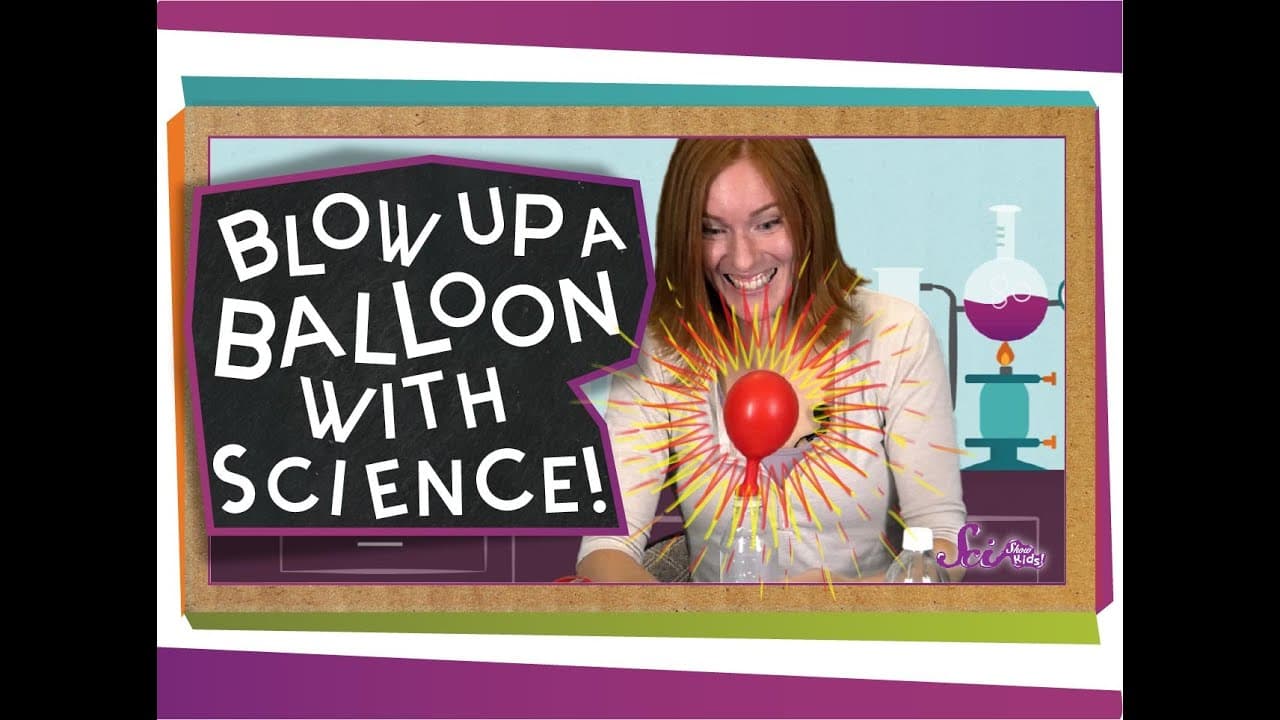
How Chemical Reactions Inflate a Balloon

How Chemical Reactions Inflate a Balloon

In this engaging episode of SciShow Kids, host Jessi and her robot friend Squeaks demonstrate a classic and exciting science experiment: inflating a balloon using a chemical reaction between baking soda and vinegar. The video breaks down the experiment step-by-step, making it easy for young learners to follow along, while simultaneously explaining the underlying scientific principles. It uses clear analogies, such as baking cookies, to simplify complex ideas like chemical changes. The video explores key chemistry themes including the definitions of "reactants" and "products," and the three states of matter: solids, liquids, and gases. It visually demonstrates how mixing a solid (baking soda) and a liquid (vinegar) creates a new substance—a gas (carbon dioxide)—which fills the balloon. The content encourages observation and critical thinking by asking students to predict what might happen if variables are changed. This resource is highly valuable for elementary classrooms as an introduction to chemistry and the scientific method. It provides a safe, accessible, and dramatic demonstration of abstract concepts. Teachers can use this video to anchor lessons on states of matter, to model how to set up an experiment, or as a hook for a unit on chemical reactions. The clear definitions and visual aids make it an excellent tool for building scientific vocabulary.

SciShow KidsSciShow Kids

4mins 25s

How to Think Like a Scientist: The Scientific Method Explained

How to Think Like a Scientist: The Scientific Method Explained

This educational video introduces students to the Scientific Method, presenting it as a structured way to investigate the world and solve problems like a detective. The host breaks down the process into five clear steps: stating a question, gathering information, forming a hypothesis, testing the hypothesis through experimentation, and analyzing results to draw conclusions. The video uses a relatable and engaging example—investigating how bubbles are formed—to demonstrate each step in practice, making abstract concepts concrete for young learners.

Miacademy & MiaPrep Learning ChannelMiacademy & MiaPrep Learning Channel

13mins 15s

How to Make Homemade Ice Cream Using Science

How to Make Homemade Ice Cream Using Science

In this engaging episode of SciShow Kids, host Jessi and her robot mouse friend Squeaks demonstrate how to make homemade ice cream using basic kitchen ingredients and the power of chemistry. The video guides viewers through a hands-on experiment that transforms liquid cream into solid ice cream without using a freezer, relying instead on a chemical reaction between ice and salt. The content focuses heavily on the scientific concepts of states of matter and freezing point depression. It explains in accessible terms why salt is added to ice (similar to salting icy roads in winter) and how this process lowers the freezing temperature of water. The video uses clear animations to visualize how melting ice draws heat away from the cream mixture, allowing it to freeze rapidly. This video is an excellent resource for elementary science classrooms as it combines a fun, edible reward with rigorous scientific inquiry. It provides a perfect practical application for lessons on phase changes, temperature, and following procedural texts. Teachers can use this video to introduce thermodynamics or simply as a guide for a beloved classroom activity that reinforces measuring skills and observation.

SciShow KidsSciShow Kids

4mins 10s

Exploring Solubility and Polarity Through Experiments

Exploring Solubility and Polarity Through Experiments

This educational science video provides a comprehensive introduction to solutions, solubility, and the molecular properties of water. Through a blend of clear animations and a guided laboratory experiment, the presenter explains the relationship between solvents and solutes, using lemonade as an initial analogy to define these terms. The video delves into the chemistry of water, illustrating how its polar nature and hydrogen bonds allow it to act as a universal solvent for other polar substances, while repelling nonpolar substances like oil. Key themes include the definitions of mixtures and solutions, the distinction between polar and nonpolar molecules, and the scientific method. The video breaks down the atomic structure of water molecules to explain *why* dissolving happens, visualizing how positive and negative charges interact. It then transitions into a practical demonstration, walking students through a four-part experiment testing salt, pepper, sugar, and oil to determine their solubility in water. For the classroom, this video serves as an excellent bridge between theoretical chemistry concepts and practical application. It models proper lab safety and experimental procedure, including hypothesis generation and observation. Teachers can use the built-in pause points to facilitate class discussions, allowing students to make predictions before seeing the results. The content is ideal for introducing unit on matter, mixtures, or basic chemistry.
Miacademy & MiaPrep Learning ChannelMiacademy & MiaPrep Learning Channel

13mins 58s

Does Matter Just Disappear? Investigating the Conservation of Mass

Does Matter Just Disappear? Investigating the Conservation of Mass

This educational video explores the fundamental scientific principle of the Conservation of Mass. Through engaging visuals and clear examples, the host investigates whether matter can ever truly disappear or be created from nothing. The video distinguishes between physical changes (like dissolving sugar in tea) and chemical changes (like baking a cake), explaining how matter behaves in each scenario. It specifically addresses the common misconception that when something dissolves or evaporates, it is gone forever. The content breaks down complex terminology into accessible concepts, defining key terms such as reactants, products, and physical versus chemical changes. It uses a concrete experiment—weighing sugar and water before and after mixing—to provide empirical evidence that mass remains constant even when visible properties change. The narrative connects everyday observations, like a glass of water evaporating or sugar dissolving, to the broader scientific law that mass is never made or lost. For educators, this video is an excellent tool for introducing the particle nature of matter and the law of conservation of mass. It provides a ready-made demonstration that can be replicated in the classroom and offers clear definitions of vocabulary essential for upper elementary and middle school science curricula. The visual proof provided by the digital scale reading serves as a powerful anchor for students grappling with abstract concepts of invisible matter.

Crash Course KidsCrash Course Kids

4mins 9s

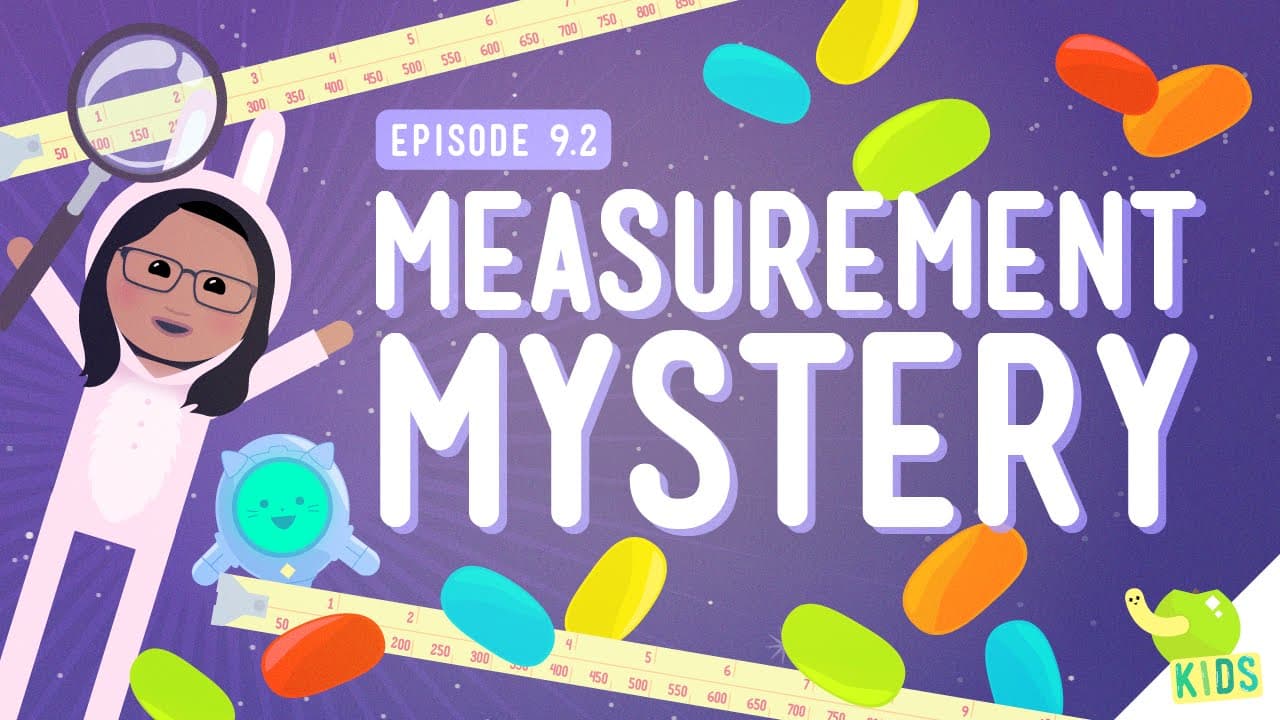
Solving Mysteries with the Metric System

Solving Mysteries with the Metric System

This engaging episode of Crash Course Kids, hosted by Sabrina Cruz, introduces students to the scientific method of identifying matter through observation and measurement. Using a relatable narrative about tripping over an unknown object in the dark, the video guides viewers through an investigation to solve a "Measurement Mystery." It transitions from qualitative observations to quantitative data collection, emphasizing the importance of standard units. The video explores key themes such as the properties of matter (specifically length, width, height, and mass) and the International System of Units (Metric System). It explains why standard units like meters, centimeters, and grams are necessary for accurate scientific communication, contrasting them with non-standard units like "jellybeans." The distinction between simply observing an object and measuring it to gather specific data is a central focus. For educators, this video serves as an excellent hook for units on the physical properties of matter, measurement, or the metric system. It models scientific inquiry by asking a question ("What is this thing?"), gathering evidence through measurement, and using that evidence to draw a conclusion. The video is particularly useful for transitioning students from using non-standard measurement to using rulers and scales with precision.

Crash Course KidsCrash Course Kids

3mins 45s

Materials

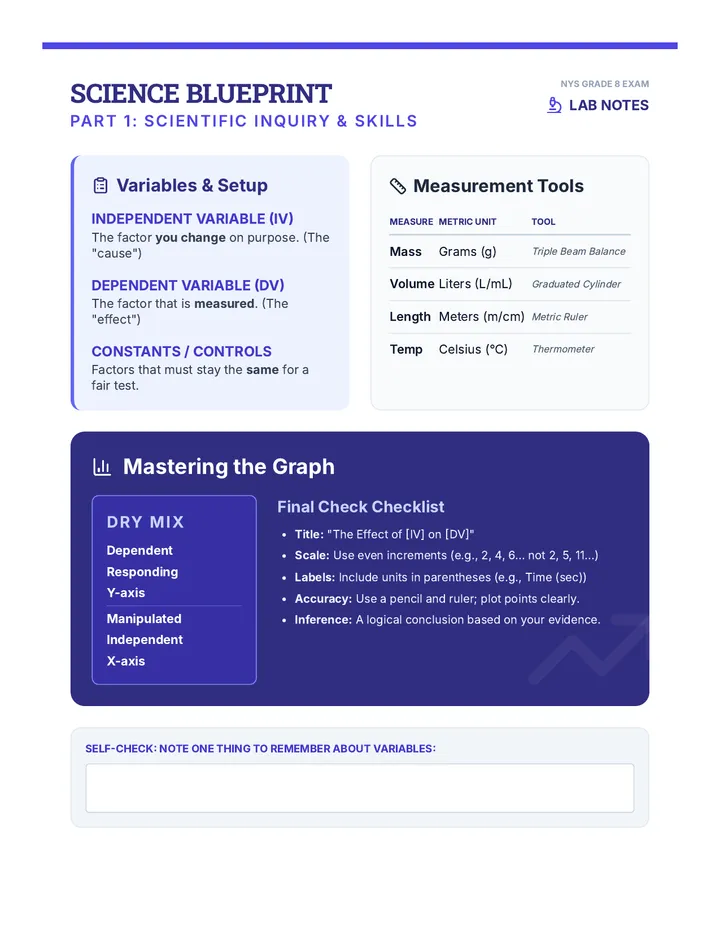
Lab Equipment Worksheet

Lab Equipment Worksheet

An 8th-grade science worksheet with detailed diagrams and a word bank for students to identify eight foundational lab tools, complete with dedicated spaces for tool names and primary functions.

JS

Jennifer Sundstrom

NYS Science Power Pack Study Guide

NYS Science Power Pack Study Guide

A fully optimized 4-page science study guide for the 8th-grade NYS science exam, featuring tight layout, fixed character encoding for chemical formulas with <sub> tags, improved student self-check areas, and clear domain summaries.

AW

Austin WIllis

Sequences

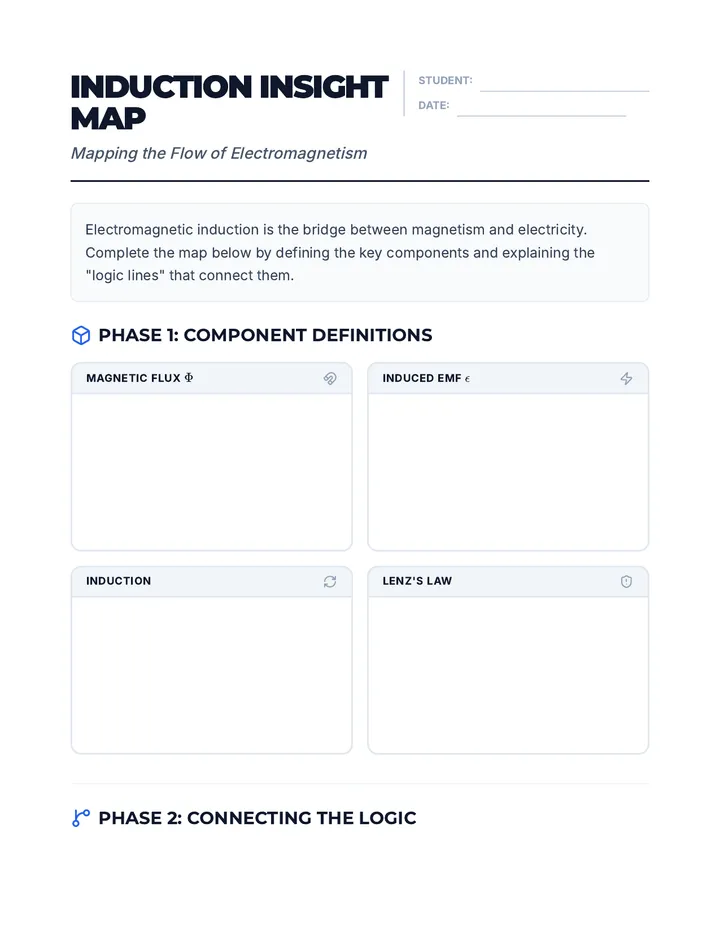
Induction Insight Map Handout

Magnetic Forces Investigation

A 5-day intensive exploration of magnetic forces and fields, focusing on atomic-level causes, field interactions, and mathematical modeling of forces on charged particles. Students progress from anchoring phenomena to complex mathematical applications and a comprehensive unit review.

OM

Olutoyin Makinde

68
Mission Scoring Rubric

Physics Frontiers Research Project

A partner-based research project for 9th-grade conceptual physics students focusing on diverse topics from celestial mechanics to the physics of dance. Students move through a structured research process with mandatory teacher checkpoints for source reliability.

C

ckroeker

13
Hess Pathfinders Slides

Energy in Chemical Bonds

A five-day high school chemistry unit exploring thermochemistry, collision theory, enthalpy diagrams, and calorimetry through the lens of body heat and chemical reactions. Students investigate the anchoring phenomenon of exercise-induced heat while mastering TEKS C.13 standards.

OM

Olutoyin Makinde

48
Pressure Poster Workshop Handout

Pressure Power

A comprehensive 5-day chemistry unit investigating the relationships between gas pressure, volume, temperature, and moles using lab inquiries, mathematical modeling, and real-world applications.

OM

Olutoyin Makinde

69
KMT Field Manual Packet

Molecular Mayhem Gas Unit

A 10-day exploration of the Behavior of Gases using Kinetic Molecular Theory, various gas laws, and real-world phenomena to understand gas behavior at both molecular and macroscopic scales. Students will investigate compressibility, gas variables, ideal behavior, and mixtures.

OM

Olutoyin Makinde

26
Scene Observation Slides

Shadow Squad Investigations

A four-part immersive crime scene investigation where 7th-grade students act as forensic detectives to solve the mystery of the missing Golden Whistle trophy. This sequence guides students through scene processing, fingerprinting, ink chromatography, and final evidence synthesis.

CH

Collin Harney

11