Lenny.com
Explore
Create
ActivitiesNewMathEnglish Language ArtsScience & EngineeringSocial StudiesGlobal LanguagesHealth & Physical EducationSpecial EducationCounseling & Life SkillsArts & CreativityESL
Lenny.com
Lenny.com
Explore
Create
ActivitiesNewMathEnglish Language ArtsScience & EngineeringSocial StudiesGlobal LanguagesHealth & Physical EducationSpecial EducationCounseling & Life SkillsArts & CreativityESL
Lenny.com
Science & EngineeringLife ScienceLiving ThingsAnimalsPlantsBody SystemsTraitsAdaptationsCellsEcosystemsHeredityGenes to TraitsCell DivisionPhysicsComparing MaterialsShapes and PropertiesMagnetsMagnetismLightSoundLight and SoundMatterStates of MatterChanges of StateMixturesPhysical and Chemical ChangeHeating and CoolingHeat and Thermal EnergyEnergyForce and MotionElectrical CircuitsAtoms and MoleculesPeriodic TableMotion in One DimensionMotion in Two DimensionsScalars and VectorsForces and Laws of MotionCircular Motion and GravityMomentum and ImpulseWork, Energy, and PowerWavesElectromagnetic WavesGeometric OpticsElectricity and MagnetismSimple Harmonic MotionThermodynamicsNuclear PhysicsEarth Science & AstronomyWeatherWater CycleRocks and MineralsFossilsEarth's FeaturesEarth's ResourcesEarth's StructureWeather and ClimateEarth EventsFossils and Geologic TimePlate TectonicsHuman ImpactsAstronomyChemistryUnits and MeasurementAtomic StructurePeriodic TrendsChemical BondingNomenclatureMolecular StructureIntermolecular ForcesThe MoleStoichiometryProperties of GasesSolutionsChemical ReactionsBalancing EquationsEnergy ChangesRates of ReactionsEquilibriumAcids and BasesQuantum ModelBiologyClassificationCell StructureThe Chemistry of LifeBiomoleculesCellular TransportCell EnergyCell Growth and DivisionDNAProtein SynthesisMeiosis and Sexual ReproductionPatterns of InheritanceMulticellular OrganismsEvolutionEcologyBiodiversityComputer ScienceAlgorithms and Computational ThinkingProgramming LanguagesComputing SystemsNetworks and InternetData AnalysisCybersecurityAI and Machine LearningSoftware Design and DevelopmentBlockchainEngineering & AIDesigning ExperimentsEngineering PracticesDesign ThinkingEngineering Design ProcessMechanical EngineeringElectrical EngineeringMaterials and StructuresCAD and 3D DesignRoboticsArtificial Intelligence BasicsVibe CodingMachine LearningAI Ethics and SocietySystems ThinkingEntrepreneurship & InnovationEntrepreneurial MindsetBusiness Idea DevelopmentBusiness Plan BasicsMarketing & Customer DiscoveryFinancial Management for Startups

Protein Synthesis

Transcription and translation processes that convert genetic instructions into functional polypeptide chains. Examines the roles of mRNA, tRNA, and ribosomes in decoding the genetic sequence into amino acids.

Lenny.com

Solutions

Lenny for EducatorsLenny for SchoolsLenny for Districts

Product

ExploreSign inCreateSupportAbout

Resources

Getting startedMTSS Acceleration Program

Newsletters

School Funding Newsletter

© 2026 Lenny Learning Inc.

TermsPrivacyAccessibility
LinkedInInstagramX
Lenny

Videos

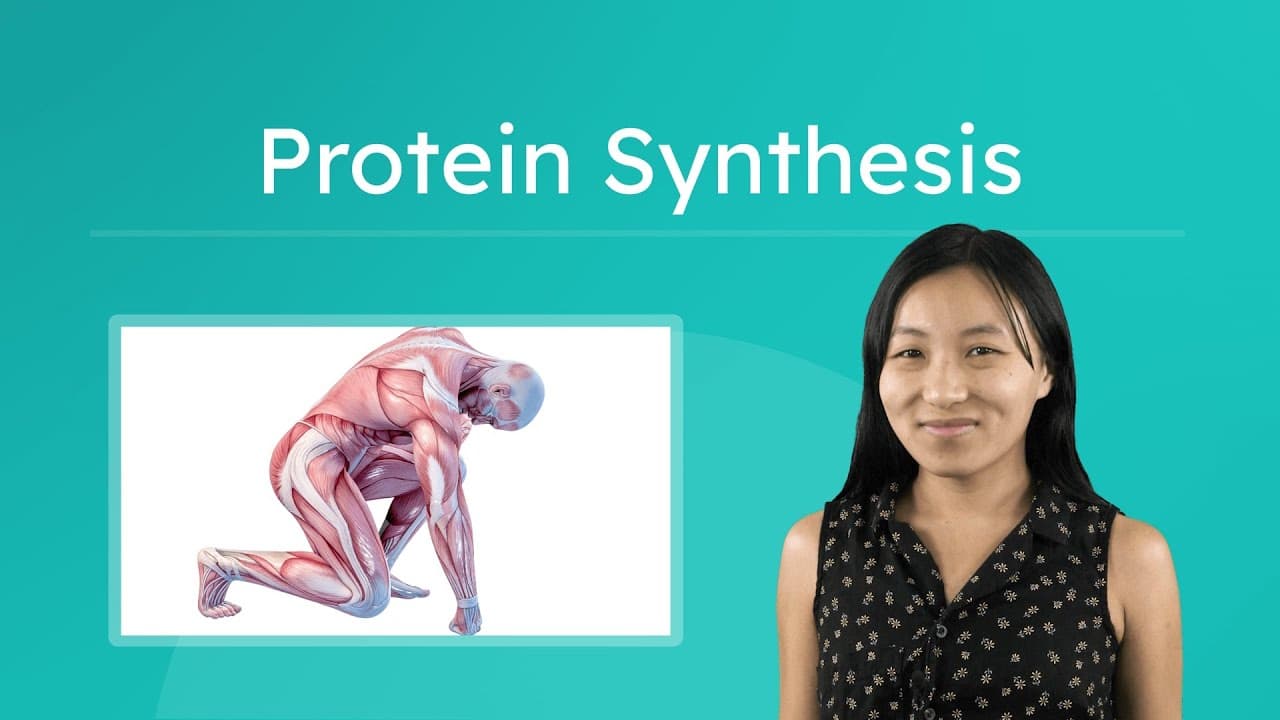
How Cells Build Proteins: The Process of Protein Synthesis

How Cells Build Proteins: The Process of Protein Synthesis

This educational video uses a relatable baking analogy to explain the complex biological process of protein synthesis. The presenter simplifies how cells utilize DNA instructions to build proteins, breaking the mechanism down into two understandable stages: transcription and translation. The video clearly illustrates the roles of DNA, mRNA, ribosomes, and amino acids in creating the structures that make up living organisms. Key themes explored include the function of proteins in the human body (beyond just muscles), the structure of amino acids, the difference between DNA and RNA, and the specific cellular machinery involved in synthesizing proteins. The video also touches upon cellular transport, metabolism, and the concept of denaturation, explaining why this continuous cycle is vital for homeostasis. This resource is highly valuable for biology teachers introducing genetics or cellular processes. By comparing the nucleus to a secure vault and mRNA to a copied recipe, it transforms abstract molecular concepts into concrete, memorable visualizations. It serves as an excellent foundational lesson for middle and high school students before diving into more advanced topics like genetics and heredity.
Miacademy & MiaPrep Learning ChannelMiacademy & MiaPrep Learning Channel

10mins 21s

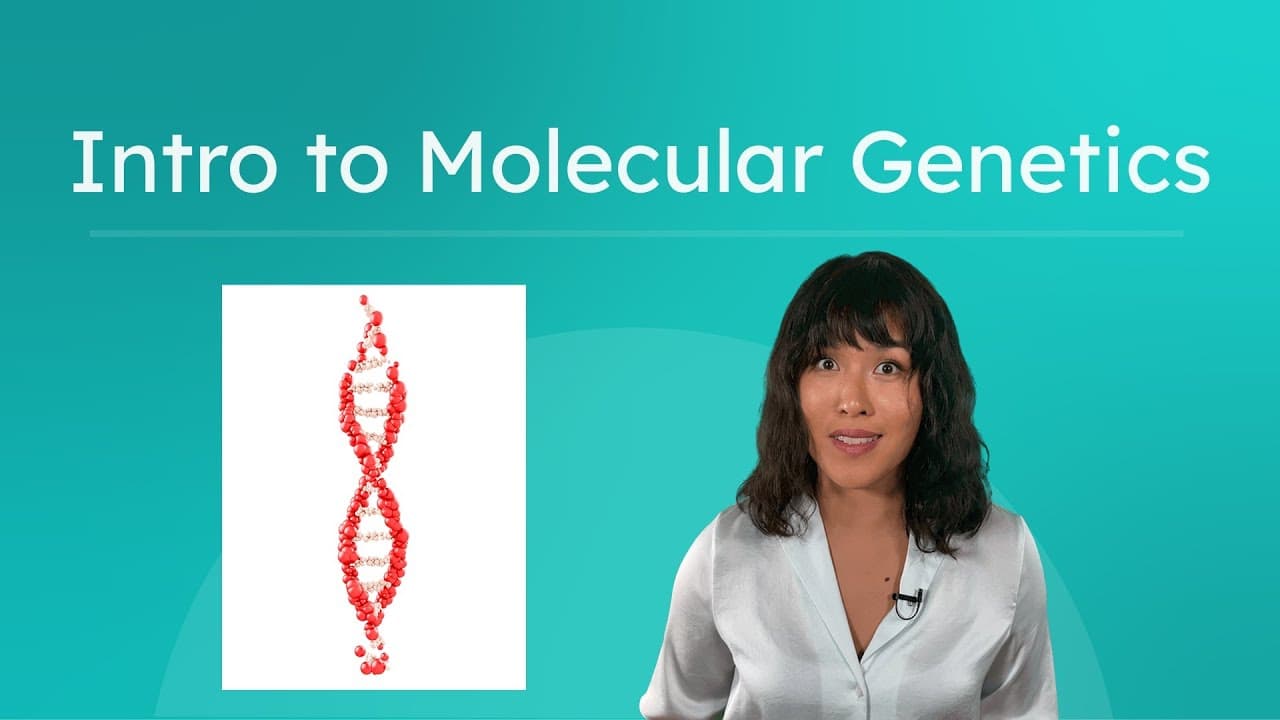
Introduction to Molecular Genetics: How DNA Builds Life

Introduction to Molecular Genetics: How DNA Builds Life

This educational video serves as a comprehensive introduction to a unit on molecular genetics, bridging the gap between basic cell biology and the complex molecular processes that drive life. The host, 'B', reviews foundational concepts like DNA and chromosomes before diving into the specific mechanisms of protein synthesis, explaining how DNA acts as the instruction manual for building proteins. The video clearly distinguishes between eukaryotic and prokaryotic cells in terms of DNA storage and introduces the central dogma of biology: DNA to RNA to Protein. Key themes include the structure of the DNA double helix, the relationship between DNA and chromosomes, the difference between transcription and translation, and the process of meiosis in inheritance. The video also touches upon genetic mutations—using a humorous visual of a giant frog—and real-world applications of genetics such as crime scene investigation and medical advancements. For educators, this video is an excellent hook or introductory resource for a middle or high school biology unit. It simplifies complex abstract concepts through clear animations and analogies (like the twisted ladder). It provides multiple natural pause points for checking prior knowledge about cells and setting the stage for hands-on activities regarding DNA modeling, protein synthesis simulations, or discussions about genetic engineering and forensics.

Miacademy & MiaPrep Learning ChannelMiacademy & MiaPrep Learning Channel

5mins 30s

How DNA Technology Solves Crimes and Cures Diseases

How DNA Technology Solves Crimes and Cures Diseases

This educational video introduces students to the fascinating world of DNA technology through the lens of a crime scene investigation. Hosted by a presenter named "B", the video explains how forensic scientists use biological evidence to solve crimes. It breaks down complex laboratory techniques like Polymerase Chain Reaction (PCR) and Gel Electrophoresis into understandable concepts using effective analogies and animations. The narrative solves a hypothetical crime while simultaneously teaching the underlying molecular biology principles.

Miacademy & MiaPrep Learning ChannelMiacademy & MiaPrep Learning Channel

17mins 13s

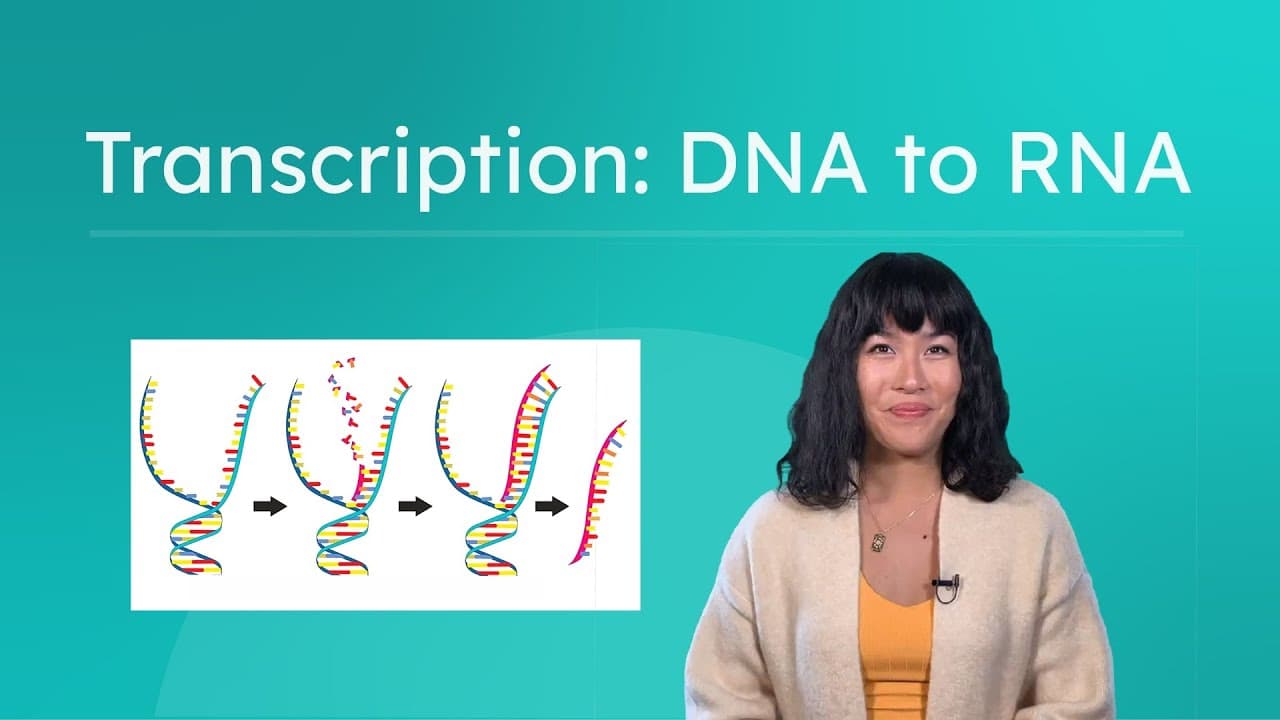
How DNA Makes RNA: The Process of Transcription

How DNA Makes RNA: The Process of Transcription

This comprehensive biology video breaks down the complex process of DNA transcription, using a clear real-world analogy of protecting original documents to explain why cells create RNA copies. The video guides students through the Central Dogma of molecular biology, detailing how genetic information flows from DNA to RNA to protein. It specifically focuses on the first step of this journey: transcription, exploring the structural differences between DNA and RNA, and introducing the key players like RNA polymerase.

Miacademy & MiaPrep Learning ChannelMiacademy & MiaPrep Learning Channel

10mins 35s

How Hormones Regulate Your Body and Mood

How Hormones Regulate Your Body and Mood

This engaging biology video explores the human endocrine system, breaking down how hormones function as the body's chemical messengers. The host, Bee, distinguishes between the nervous system's direct communication and the endocrine system's widespread broadcasting, using relatable analogies like texting versus television advertisements. The video dives deep into the molecular differences between steroidal and non-steroidal hormones, explaining how their chemical structures determine how they interact with target cells to regulate bodily functions.

Miacademy & MiaPrep Learning ChannelMiacademy & MiaPrep Learning Channel

12mins 28s

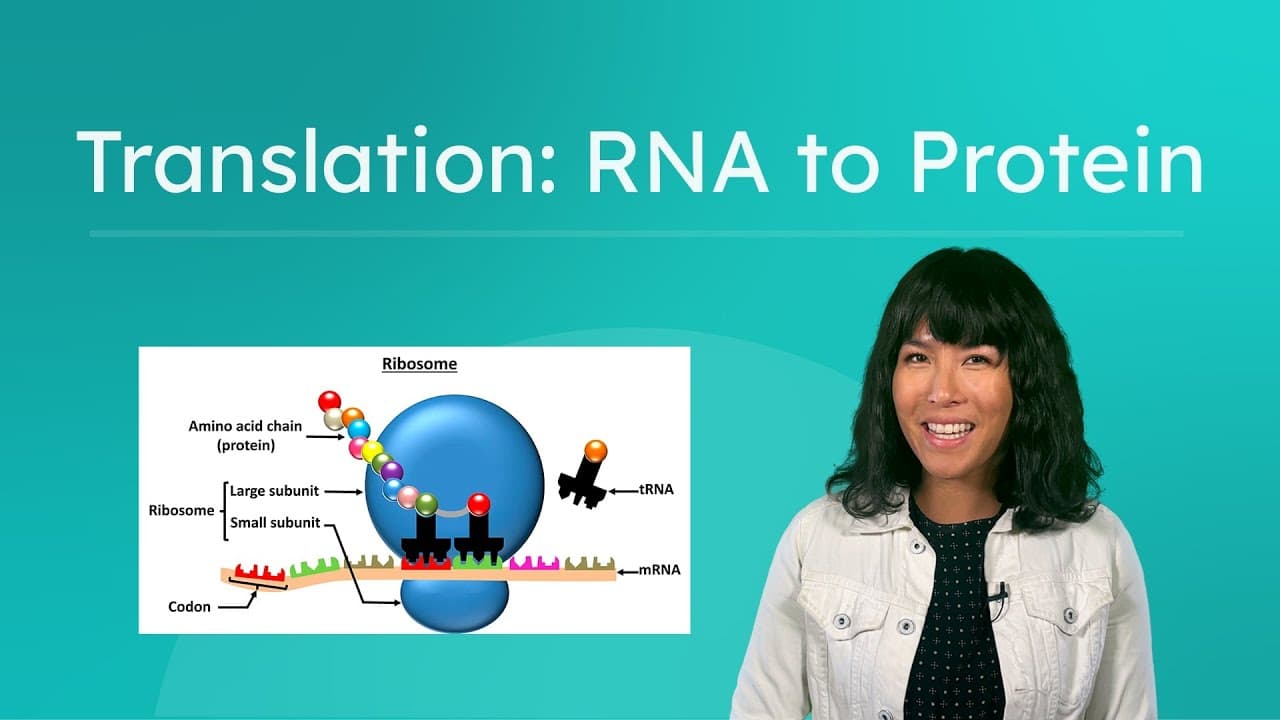
From RNA to Protein: The Process of Translation Explained

From RNA to Protein: The Process of Translation Explained

This educational video provides a comprehensive overview of translation, the biological process where cells convert genetic information from messenger RNA (mRNA) into proteins. Using the central dogma of biology as a foundation, the narrator explains how the "language" of nucleic acids (nucleotides) is translated into the "language" of proteins (amino acids). The video breaks down the mechanism step-by-step, detailing the roles of ribosomes, codons, anticodons, and transfer RNA (tRNA). The video utilizes clear graphics and animations to demonstrate how to read genetic code charts (both circular and tabular) to determine specific amino acid sequences. It explains the significance of start (AUG) and stop codons, introduces the structure of tRNA as "delivery trucks," and visualizes how polypeptide chains are assembled within the ribosome. The content also touches upon post-translational modifications in the Endoplasmic Reticulum and the universality of ribosomes across all living organisms, including prokaryotes. This resource is highly valuable for high school biology classrooms teaching genetics and protein synthesis. It simplifies abstract molecular concepts through analogies—like translating Latin to English or delivery trucks dropping off cargo—making the material accessible. Teachers can use this video to reinforce lectures on the central dogma, as a guide for activities involving genetic coding charts, or as a visual aid to help students conceptualize the microscopic machinery of the cell.

Miacademy & MiaPrep Learning ChannelMiacademy & MiaPrep Learning Channel

12mins 33s

Materials

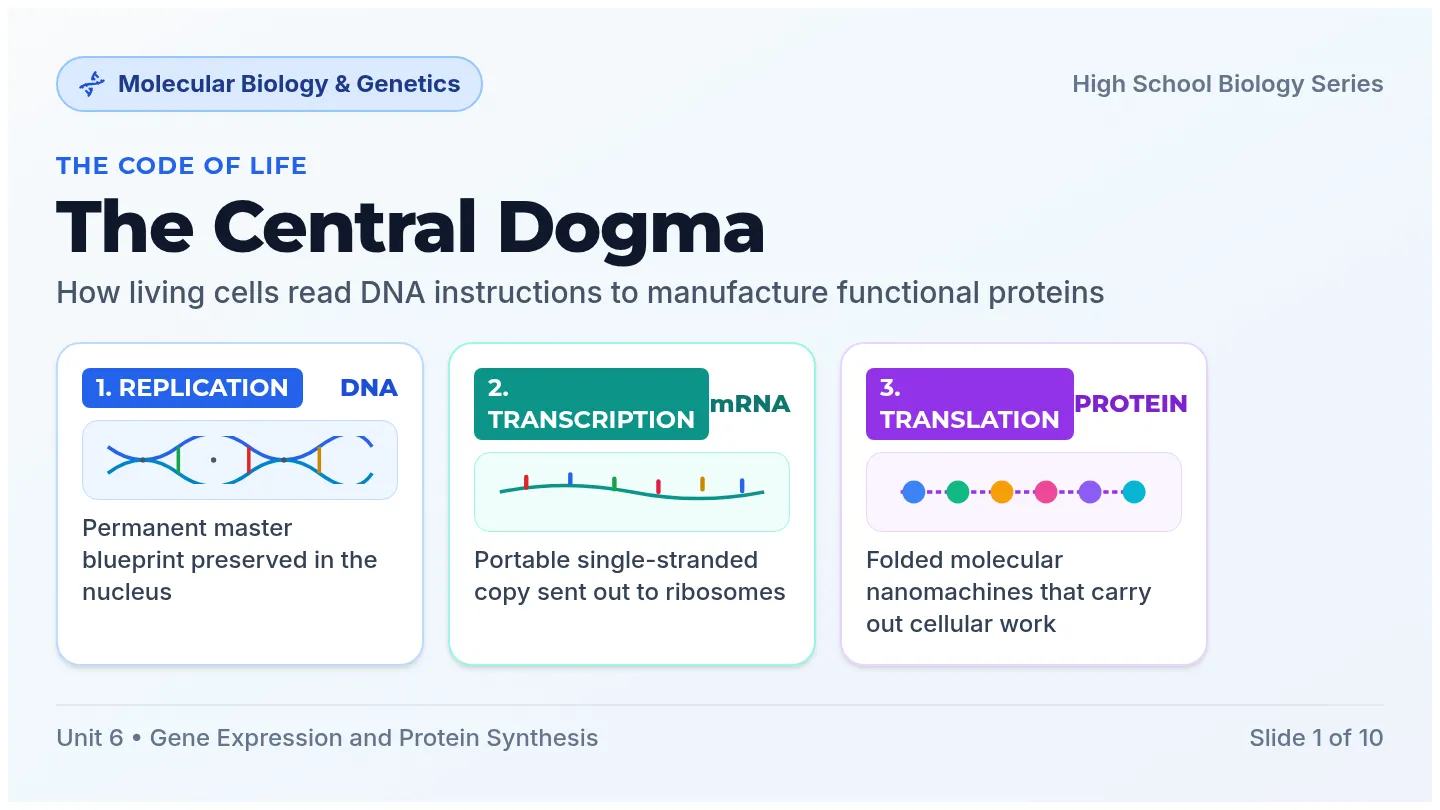
Central Dogma Slides

Central Dogma Slides

A light-themed, visually rich 10-slide presentation teaching the Central Dogma of Molecular Biology with detailed visual diagrams of DNA replication, transcription, RNA splicing, translation, and protein folding.

MM

Maureen Melanson

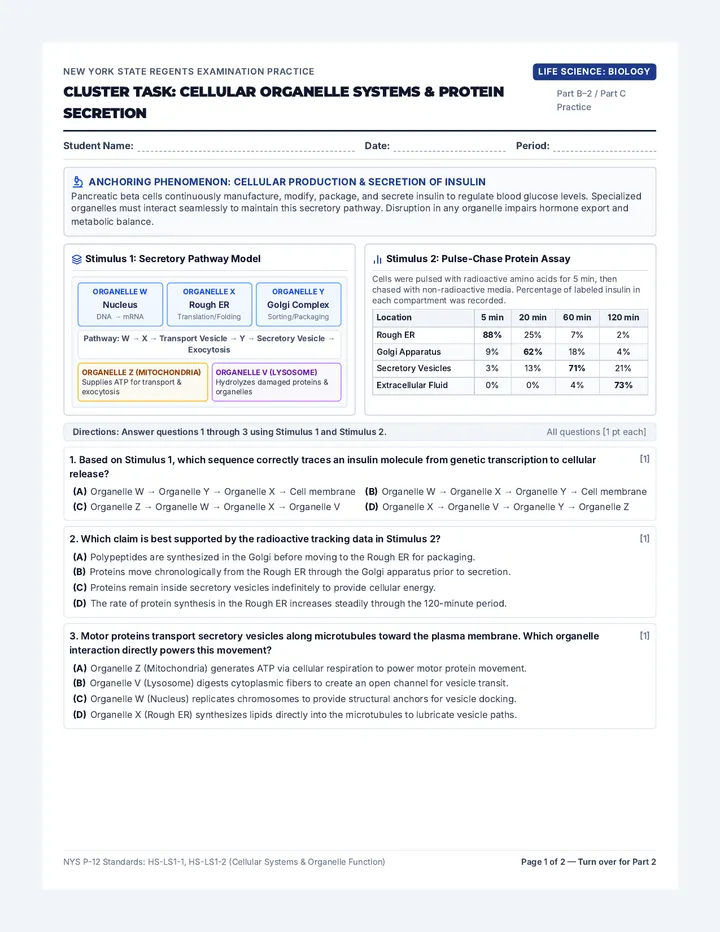
Cell Organelles Regents Cluster

Cell Organelles Regents Cluster

A New York State Life Science Biology Regents-style cluster assessment featuring three stimuli on cellular organelle trafficking and six exam-aligned questions.

S

stewart

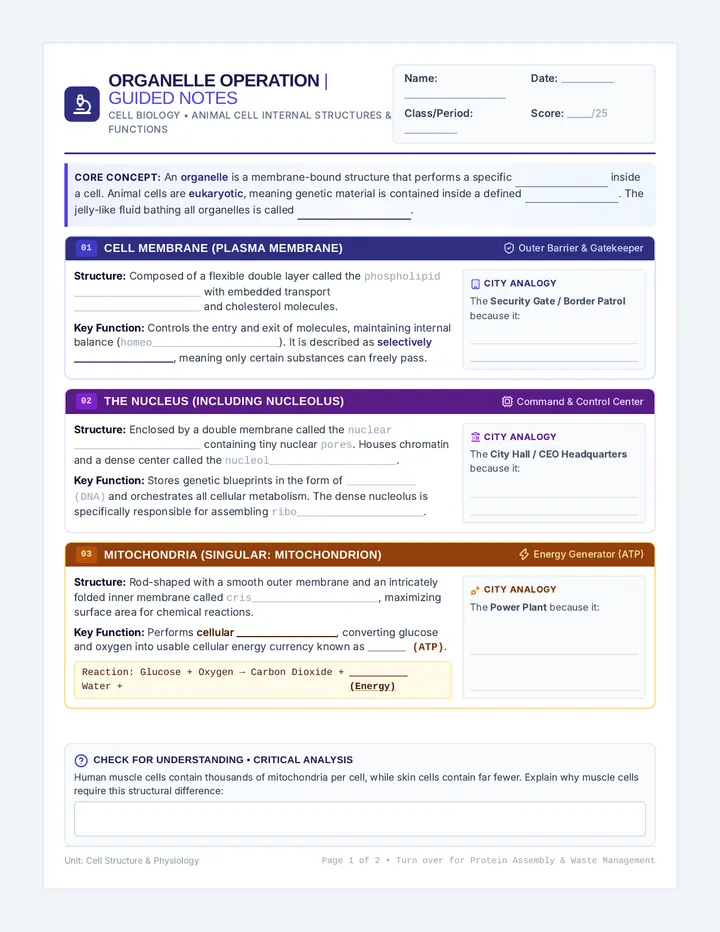
Organelle Operation Guided Notes

Organelle Operation Guided Notes

A comprehensive two-page guided notes handout exploring key animal cell organelles with structured sections for structure, function, and factory analogies. Includes focused analysis on the cell membrane, nucleus, mitochondria, lysosomes, ribosomes, endoplasmic reticulum, and Golgi bodies, concluding with a protein synthesis pathway challenge and scenario-based quick checks.

S

stewart

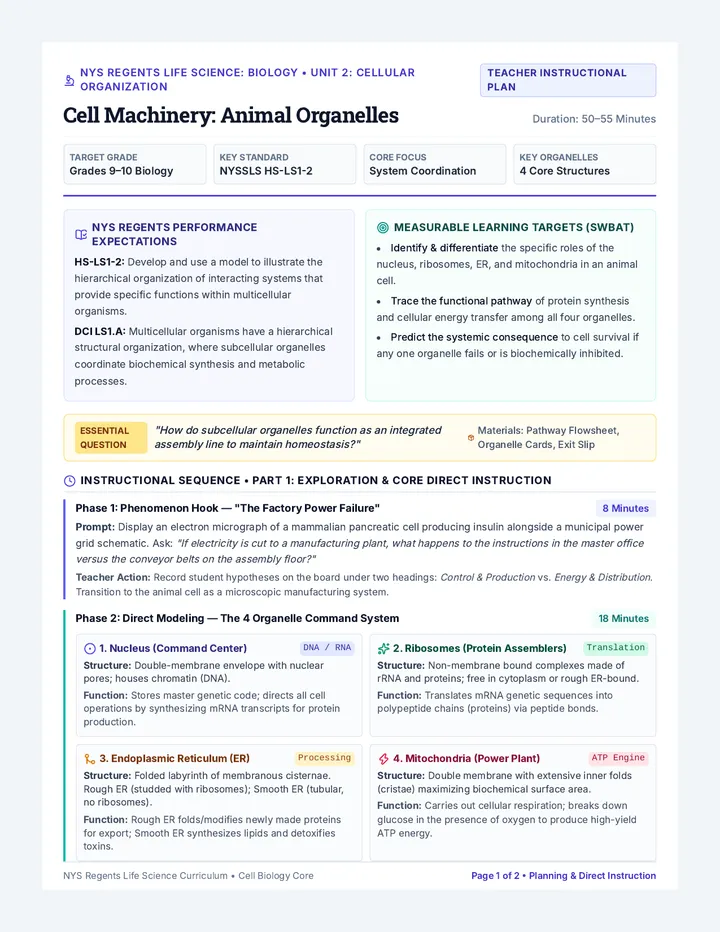
Cell Machinery Lesson Plan

Cell Machinery Lesson Plan

A comprehensive teacher-facing lesson plan aligned with New York State Regents Life Science standards covering animal cell organelles including the nucleus, mitochondria, ribosomes, and endoplasmic reticulum. It includes instructional phases, system modeling protocols, Regents-style assessments, and targeted differentiation strategies.

S

stewart

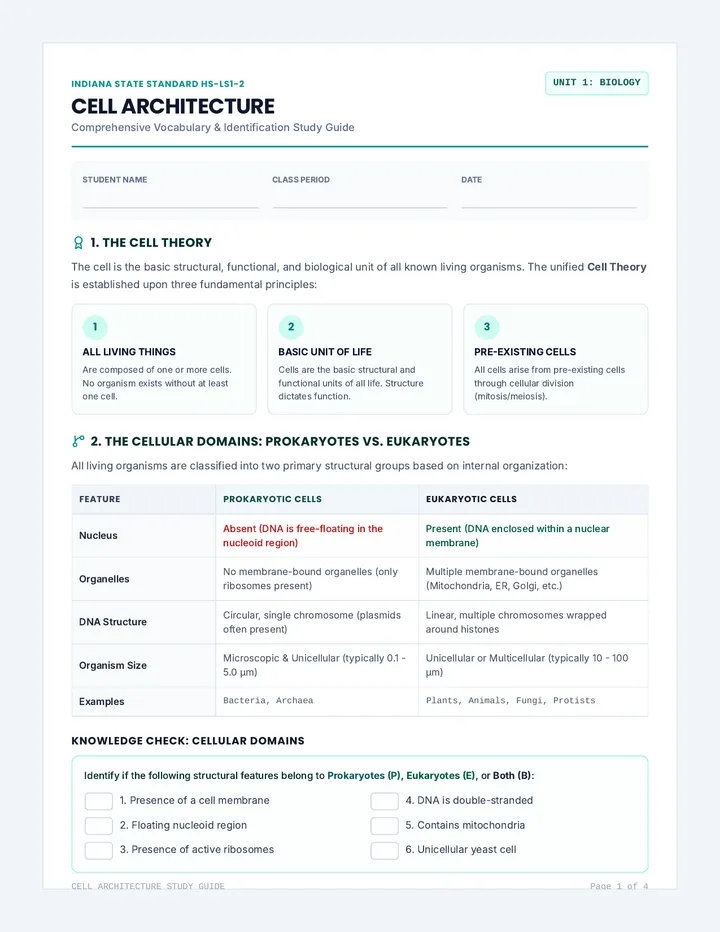
Cell Architecture Study Guide

Cell Architecture Study Guide

A comprehensive 4-page study guide focused on vocabulary and identification for Indiana State Standard HS-LS1-2 (Cell Theory, Prokaryotic vs. Eukaryotic cells, Organelles, Biomolecules, and Protein Synthesis). Designed in a beautiful 'Lab Notebook' style with clear diagrams, structured comparative tables, and print-ready student identification activities.

M

MELANIE.ROBERTS

Curriculum Alignment Master Document

Curriculum Alignment Master Document

A comprehensive 4-page curriculum alignment guide and revised scope and sequence for Biology, Environmental Science, and Marine Biology, mapped to NGSS high school standards. Each subject is presented on its own page for clarity.

J

jcasey

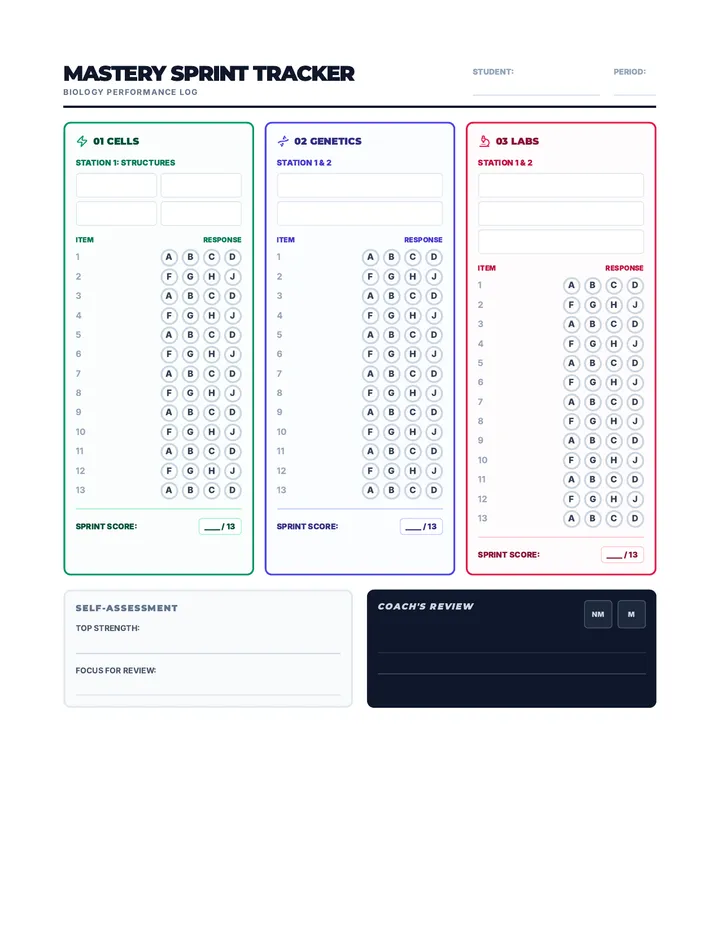
Sequences

Sprint Mastery Tracker Worksheet

Biology Mastery Sprint

A high-intensity review sequence designed to move students from 'not met' to 'mastery' in Biology through vocabulary immersion and STAAR-style practice.

PB

Priyadarshini Bharath

10
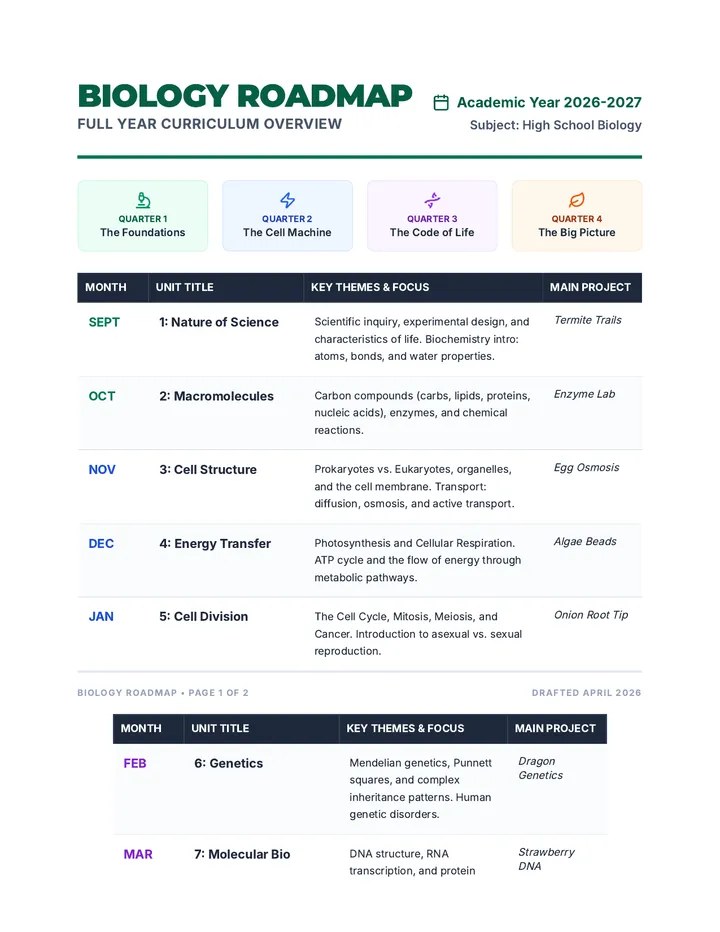
Biology Roadmap Document Trimmed

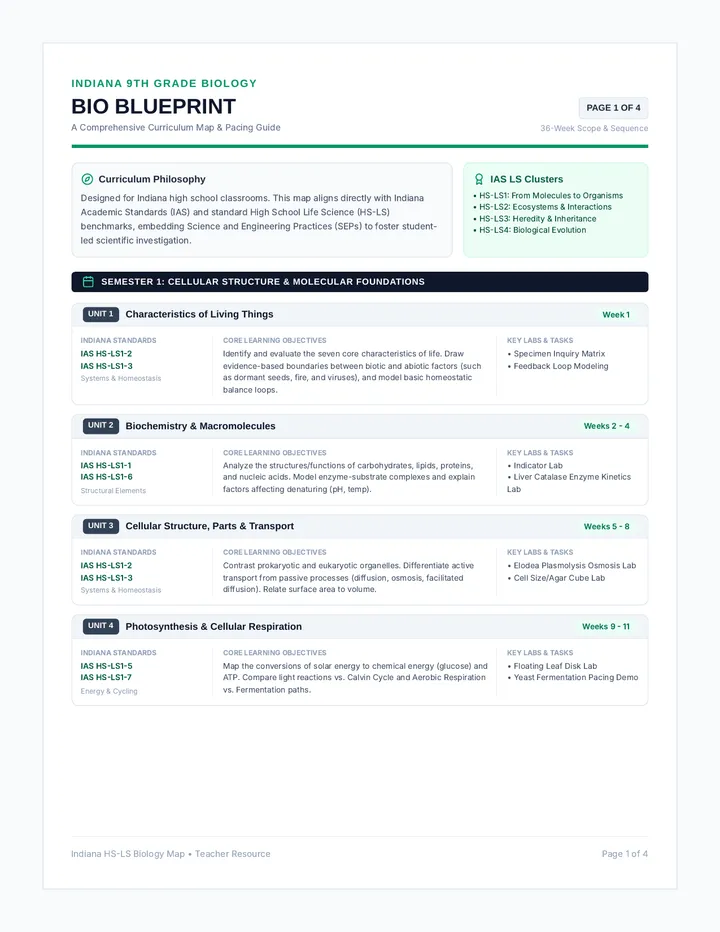
Biology Blueprint

A comprehensive full-year planning framework for high school Biology, including pacing, unit objectives, lab requirements, and assessment strategies.

A

AMY.MILLER

7
Bio Blueprint Curriculum Map

Indiana Biology Curriculum

A comprehensive biology curriculum aligned with Indiana Academic Standards, spanning twelve core units from the characteristics of living things to human impact, designed for 9th-grade on-level students.

M

MELANIE.ROBERTS

5
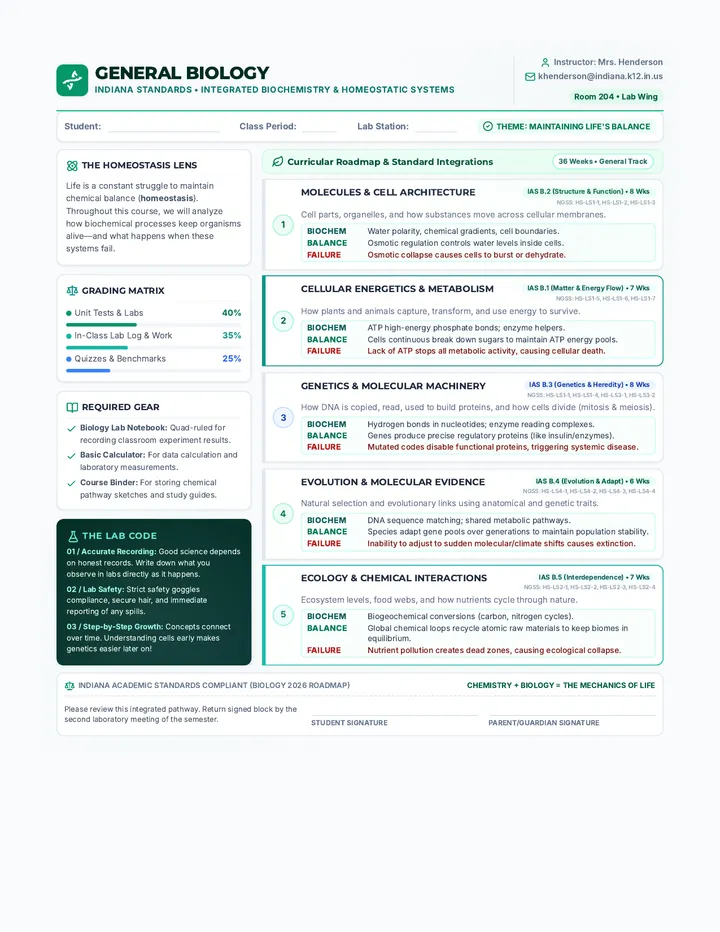
Biology Syllabus Infographic

Indiana Biology and Biochemistry

A comprehensive, 36-week General Biology curriculum aligned with Indiana Academic Standards, emphasizing the integration of biochemical foundations and metabolic homeostasis across all units.

J

Jennifer.Tetrick

7
Bio Blueprint Curriculum Map

Biology Blueprint

A complete 36-week high school biology curriculum designed for 9th-grade students, aligned with Indiana Academic Standards for Biology. This course progresses from microscopic biochemical foundations to macroscopic ecological systems.

A

AMY.MILLER

4
Protein Synthesis Slides

Protein Synthesis Pathway

A comprehensive exploration of the Central Dogma of biology, focusing on the processes of transcription and translation as required for the NYS Living Environment Regents exam. Students will learn how genetic information flows from DNA to RNA to proteins, determining an organism's traits.

JD

Jonathan de la Fuente

3

Lessons

Mutation Lab Teacher Guide

Mutation Lab

A comprehensive lesson on genetic mutations, exploring how changes in DNA structure affect protein function and organism traits through a high-tech laboratory lens.

D

david_malio

7
Biology Syllabus Infographic

Course Launch

An introductory framework establishing course policies, Indiana state biology standards, and the integrated biochemistry roadmap for the academic year.

M

MELANIE.ROBERTS

4
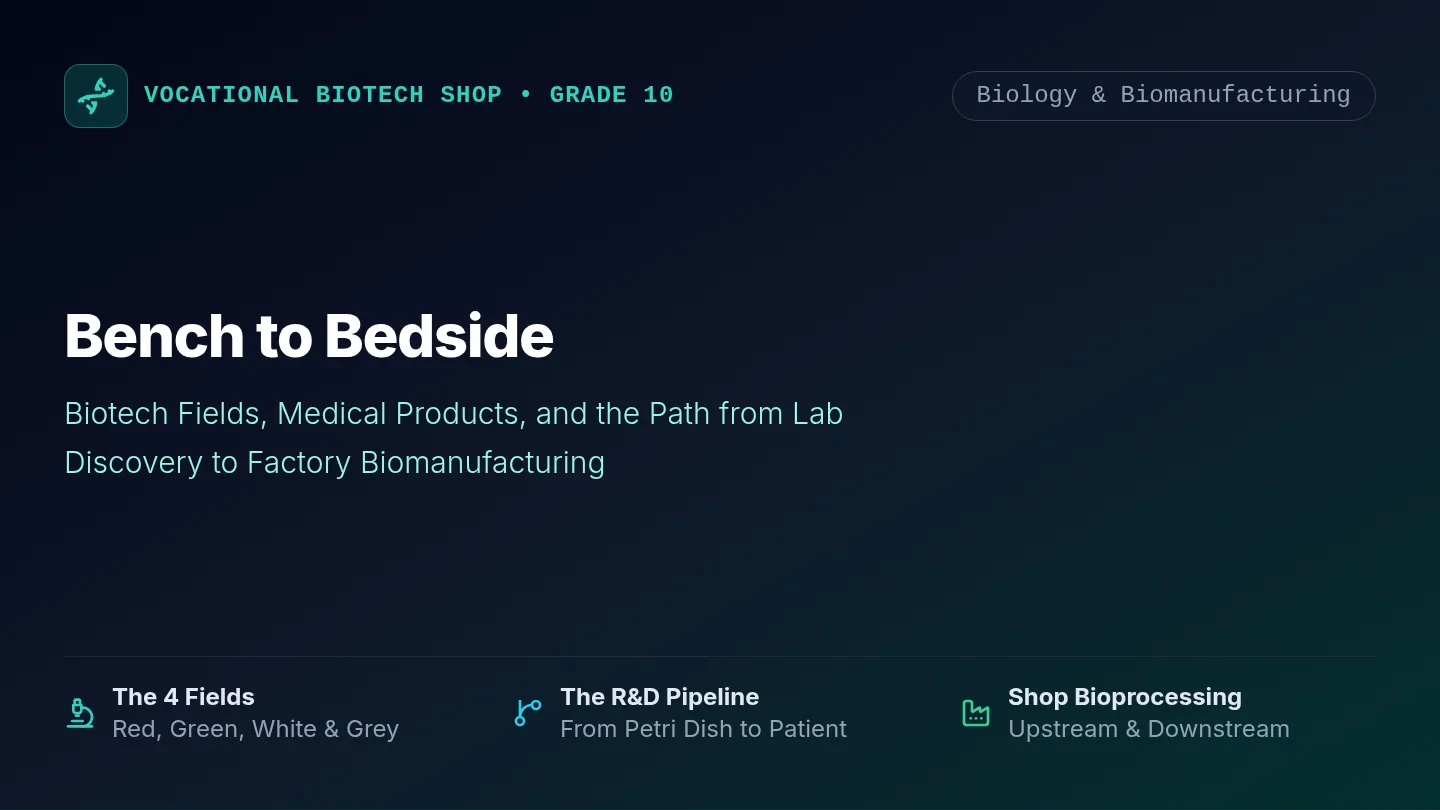
Bench to Bedside Slides

Bench to Bedside

A 10th-grade vocational biotechnology lesson connecting core biology concepts with career-ready biomanufacturing skills. Students explore biotechnology sectors, therapeutic products, and the R&D pipeline from molecular discovery to large-scale bioreactor production.

MM

Maureen Melanson

4
Biology Curriculum Map Document

Biology Course Blueprint

A comprehensive year-long curriculum map and planning guide for high school biology based on the 2026 Indiana Academic Standards.

J

Jennifer.Tetrick

9
Internal Systems Test v2

Body Balance Assessment

A comprehensive assessment on Indiana Biology standards focusing on homeostasis, levels of organization, and feedback loops, including ILEARN-style item types and CER responses.

J

Jennifer.Tetrick

10
Blueprint Slides

Genetic Blueprint

A comprehensive look at DNA structure, replication, and the Central Dogma, designed for 10th-grade biology students. Includes visual slides, a detailed reading passage, and comprehension assessments.

W

wilkinsj

5