Lenny.com
Explore
Create
ActivitiesNewMathEnglish Language ArtsScience & EngineeringSocial StudiesGlobal LanguagesHealth & Physical EducationSpecial EducationCounseling & Life SkillsArts & CreativityESL
Lenny.com
Lenny.com
Explore
Create
ActivitiesNewMathEnglish Language ArtsScience & EngineeringSocial StudiesGlobal LanguagesHealth & Physical EducationSpecial EducationCounseling & Life SkillsArts & CreativityESL
Lenny.com
Lenny.com

Solutions

Lenny for EducatorsLenny for SchoolsLenny for Districts

Product

ExploreSign inCreateSupportAbout

Resources

Getting startedMTSS Acceleration Program

© 2026 Lenny Learning Inc.

TermsPrivacyAccessibility
LinkedInInstagramX
Lenny

Meiosis and Sexual Reproduction

Chromosome reduction through meiosis I and II, including crossing over and independent assortment for genetic variation. Connects gamete formation to fertilization and the lifecycle of sexually reproducing organisms.

Science & EngineeringLife ScienceLiving ThingsAnimalsPlantsBody SystemsTraitsAdaptationsCellsEcosystemsHeredityGenes to TraitsCell DivisionPhysicsComparing MaterialsShapes and PropertiesMagnetsMagnetismLightSoundLight and SoundMatterStates of MatterChanges of StateMixturesPhysical and Chemical ChangeHeating and CoolingHeat and Thermal EnergyEnergyForce and MotionElectrical CircuitsAtoms and MoleculesPeriodic TableMotion in One DimensionMotion in Two DimensionsScalars and VectorsForces and Laws of MotionCircular Motion and GravityMomentum and ImpulseWork, Energy, and PowerWavesElectromagnetic WavesGeometric OpticsElectricity and MagnetismSimple Harmonic MotionThermodynamicsNuclear PhysicsEarth Science & AstronomyWeatherWater CycleRocks and MineralsFossilsEarth's FeaturesEarth's ResourcesEarth's StructureWeather and ClimateEarth EventsFossils and Geologic TimePlate TectonicsHuman ImpactsAstronomyChemistryUnits and MeasurementAtomic StructurePeriodic TrendsChemical BondingNomenclatureMolecular StructureIntermolecular ForcesThe MoleStoichiometryProperties of GasesSolutionsChemical ReactionsBalancing EquationsEnergy ChangesRates of ReactionsEquilibriumAcids and BasesQuantum ModelBiologyClassificationCell StructureThe Chemistry of LifeBiomoleculesCellular TransportCell EnergyCell Growth and DivisionDNAProtein SynthesisMeiosis and Sexual ReproductionPatterns of InheritanceMulticellular OrganismsEvolutionEcologyBiodiversityComputer ScienceAlgorithms and Computational ThinkingProgramming LanguagesComputing SystemsNetworks and InternetData AnalysisCybersecurityAI and Machine LearningSoftware Design and DevelopmentBlockchainEngineering & AIDesigning ExperimentsEngineering PracticesDesign ThinkingEngineering Design ProcessMechanical EngineeringElectrical EngineeringMaterials and StructuresCAD and 3D DesignRoboticsArtificial Intelligence BasicsVibe CodingMachine LearningAI Ethics and SocietySystems ThinkingEntrepreneurship & InnovationEntrepreneurial MindsetBusiness Idea DevelopmentBusiness Plan BasicsMarketing & Customer DiscoveryFinancial Management for Startups

Videos

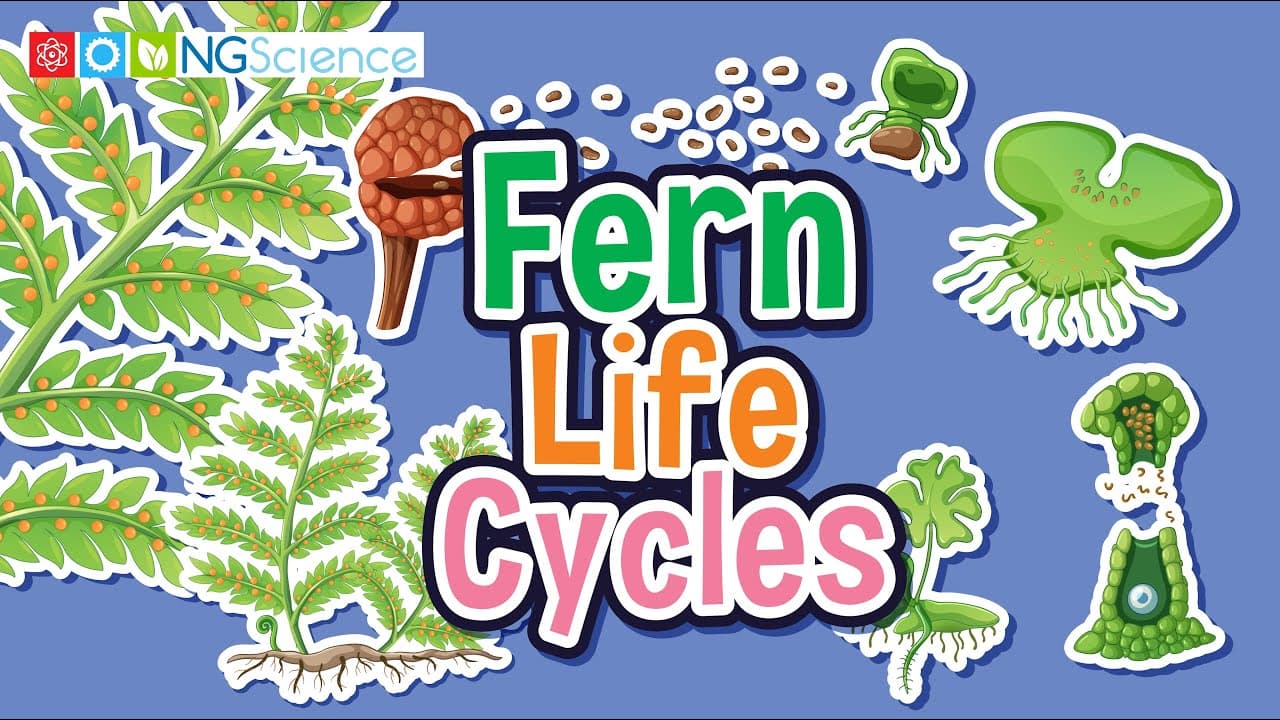
Exploring the Life Cycle of Ferns: From Spore to Frond

Exploring the Life Cycle of Ferns: From Spore to Frond

This educational video provides a clear, step-by-step biological explanation of the life cycle of ferns, illustrating the process of alternation of generations in a way accessible to upper elementary and middle school students. Through detailed animations, it breaks down the complex reproductive journey from the release of microscopic spores to the growth of the mature leafy plant we recognize in forests. The video specifically highlights the often-overlooked microscopic stages of fern development, distinguishing between the spore-producing sporophyte and the gamete-producing gametophyte. The content covers six distinct stages: the release of spores from sporangia, the germination of spores into the heart-shaped gametophyte, the production of sperm and egg cells, the water-dependent fertilization process, the growth of the new sporophyte, and finally, the maturation of the adult fern. It introduces essential botanical vocabulary such as 'sporangia', 'gametophyte', and 'sporophyte', explaining the function of each structure within the cycle. For educators, this resource is an excellent tool for biology units focused on plant diversity, reproduction, or life cycles. It visually demonstrates abstract concepts—like how a tiny heart-shaped plantlet (gametophyte) gives rise to the large fronds we see in nature—that are difficult to observe in a standard classroom setting. The video's emphasis on the necessity of water for fertilization also provides a perfect segue into discussions about plant habitats and adaptations.
Next Generation ScienceNext Generation Science

2mins 21s

Introduction to Genetics: Blue Lobsters and Sickle Cell Traits

Introduction to Genetics: Blue Lobsters and Sickle Cell Traits

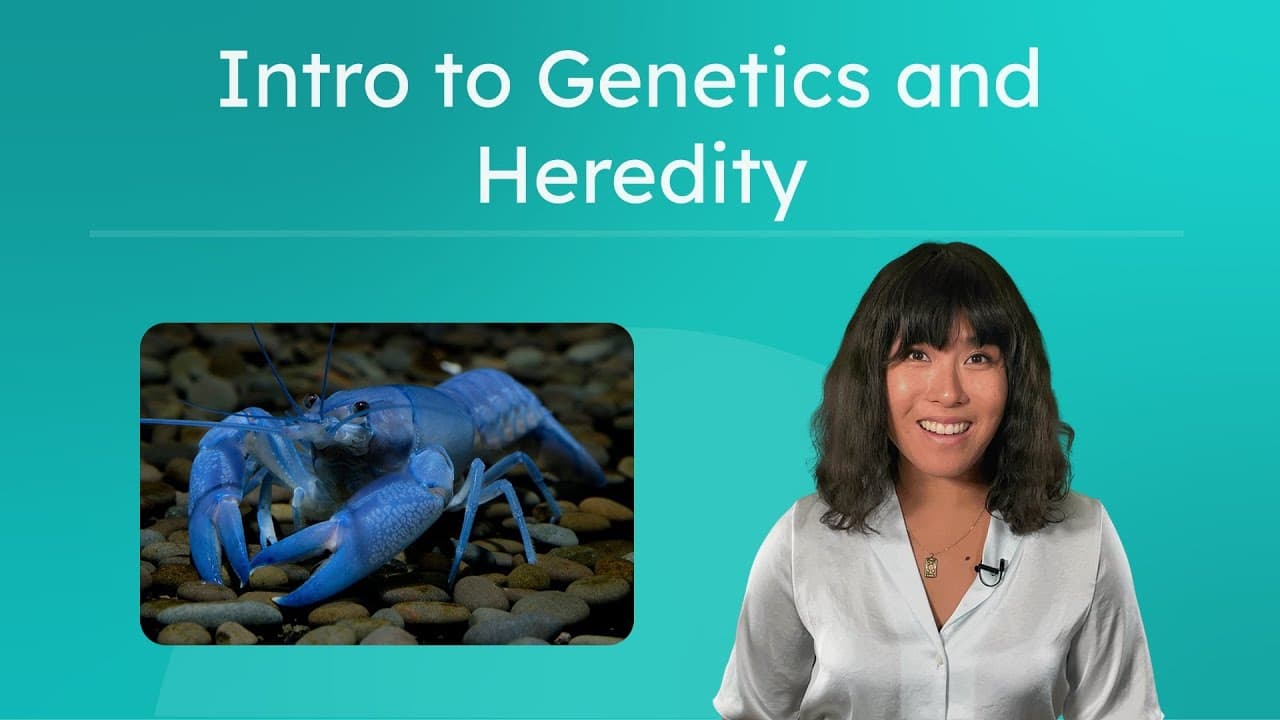
This engaging biology video serves as an introduction to genetics, bridging the gap between DNA structure and observable traits. The narrator, B, reviews the concept of meiosis and gametes to explain how offspring receive half their genetic material from each parent. The video defines key terms such as genes and alleles, laying the groundwork for understanding inheritance patterns before diving into specific case studies. Key themes include genetic inheritance, mutations, and adaptation. The video uses two distinct real-world examples to illustrate these concepts: the rare genetic mutation that causes blue coloration in lobsters and the human condition of sickle cell anemia. It explains how recessive traits (like the blue lobster) require two copies of an allele, while also introducing the complex evolutionary relationship between sickle cell traits and malaria resistance, highlighting how mutations can be harmful, neutral, or contextually beneficial. This resource is excellent for introducing a genetics unit in middle or high school classrooms. It moves beyond abstract definitions by providing concrete, memorable examples that demonstrate probability and natural selection. Teachers can use the blue lobster segment to discuss recessive inheritance and the sickle cell segment to explore adaptations and the interaction between genetics and the environment.

Miacademy & MiaPrep Learning ChannelMiacademy & MiaPrep Learning Channel

7mins 16s

How Moss Grows and Reproduces: A Step-by-Step Life Cycle

How Moss Grows and Reproduces: A Step-by-Step Life Cycle

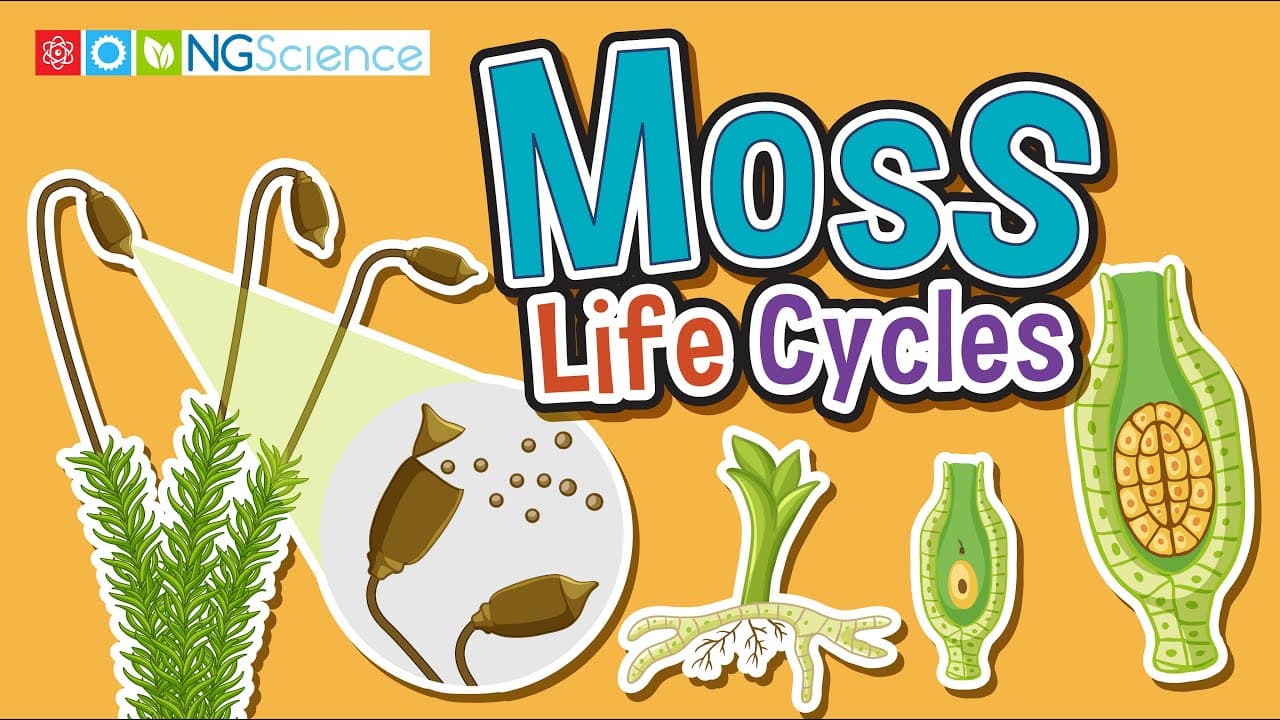
This educational animation provides a clear, step-by-step explanation of the life cycle of moss. Through calm narration and detailed graphics, the video breaks down the complex biological process into six distinct stages, starting from the release of microscopic spores and following their journey through germination, growth into leafy plants, and reproduction. The video specifically highlights the alternation of generations, distinguishing between the familiar green gametophyte and the stalk-like sporophyte. The content focuses on key biological themes including plant reproduction, the role of environmental factors like water in fertilization, and the cyclic nature of life in forest ecosystems. It simplifies advanced botanical concepts such as gametophytes, sporophytes, and the sexual reproduction of non-flowering plants, making the invisible microscopic world visible and understandable. For educators, this video serves as an excellent visual aid for science units on plant biology, life cycles, or forest ecology. It is particularly valuable for helping students visualize processes that are too small to see with the naked eye, such as spores floating in the air or sperm swimming to eggs during fertilization. The clear labeling and sequential structure allow teachers to pause at each step for discussion and note-taking.

Next Generation ScienceNext Generation Science

2mins 27s

How Meiosis Creates Unique Reproductive Cells

How Meiosis Creates Unique Reproductive Cells

This educational video provides a comprehensive overview of meiosis, the process of cell division responsible for creating reproductive cells (gametes). It explains the necessity of reducing chromosome numbers by half to maintain genetic stability across generations, distinguishing between diploid somatic cells and haploid gametes. The narration breaks down the stages of Meiosis I and Meiosis II, highlighting key events like homologous pairing, crossing over, and random assortment. Key themes include the mechanics of inheritance, the difference between mitosis and meiosis, and the sources of genetic variation. The video uses clear animations to demonstrate how DNA from both parents is shuffled and combined to create genetically unique offspring. It clarifies complex vocabulary such as homologous chromosomes, sister chromatids, zygotes, and alleles. For educators, this video serves as an excellent core resource for units on genetics and cell biology. It visualizes abstract microscopic processes, making them accessible to students. The clear distinction between the two rounds of division and the focus on genetic variation provides a solid foundation for subsequent lessons on heredity, Punnett squares, and evolution.

Miacademy & MiaPrep Learning ChannelMiacademy & MiaPrep Learning Channel

13mins 40s

The Seven Scientific Criteria That Define Life

The Seven Scientific Criteria That Define Life

This educational video provides a comprehensive introduction to the fundamental biological question: "What defines a living thing?" Hosted by Caroline, the lesson moves beyond simple intuition to establish a rigorous scientific framework for distinguishing living organisms from non-living matter. The video breaks down the seven essential criteria used by biologists—organization, response to stimuli, reproduction, adaptation, growth, homeostasis, and energy processing—explaining that an entity must meet *all* seven requirements to be scientifically classified as alive. The content systematically explores each criterion with clear definitions and relatable examples ranging from single-celled bacteria to complex multicellular humans. It utilizes diverse visuals, including microscopic views of cells, time-lapse footage of plant growth, and diagrams of DNA, to make abstract concepts concrete. A significant portion of the video is dedicated to a guided case study on coral, challenging viewers to apply what they've learned to determine if a stationary, rock-like structure is actually a living organism. For educators, this video serves as an excellent foundational resource for a Biology or Life Science unit. It actively models critical thinking by debunking common misconceptions (like the idea that movement is a requirement for life) and includes built-in pause points for student reflection. The concluding open-ended question about viruses provides a perfect springboard for advanced classroom debate and research, making this video versatile for introducing core biological concepts and the scientific method.

Miacademy & MiaPrep Learning ChannelMiacademy & MiaPrep Learning Channel

9mins 13s

The Life Cycle of a Pine Tree Explained

The Life Cycle of a Pine Tree Explained

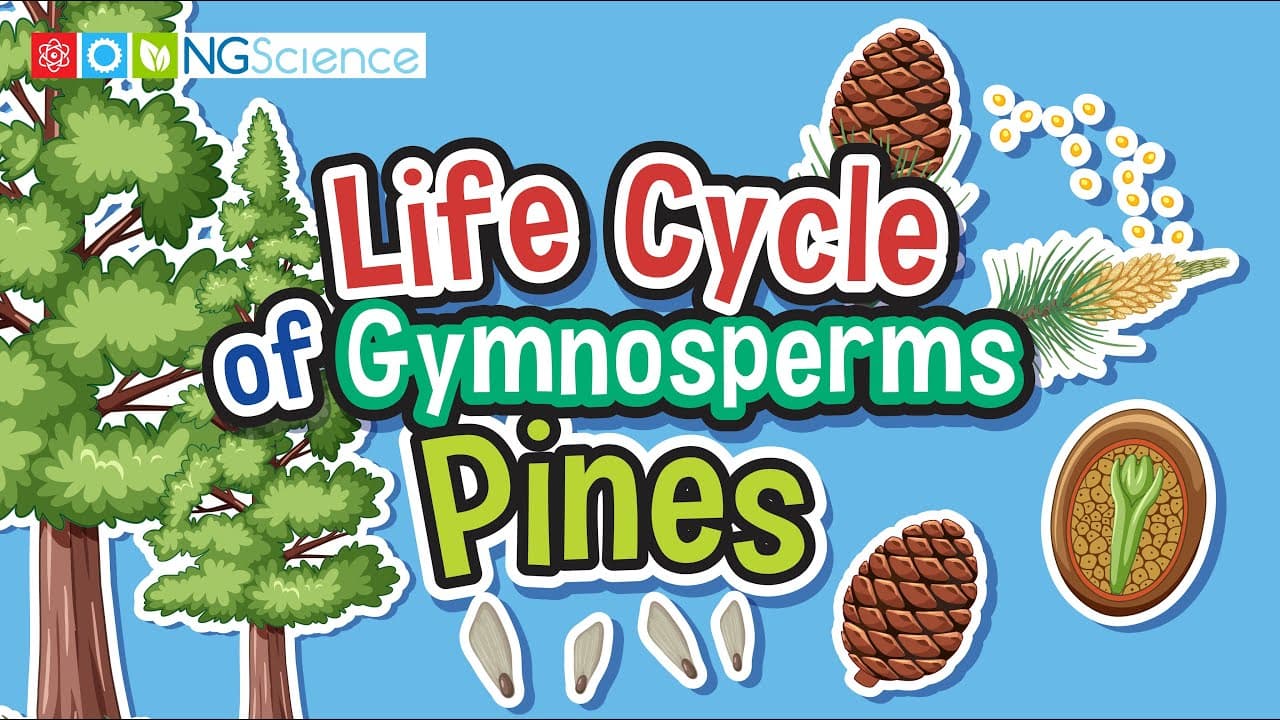
This educational animation provides a clear and detailed explanation of the life cycle of a pine tree, serving as a primary example of gymnosperm reproduction. The video follows the chronological journey from a mature tree producing cones through the intricate processes of pollination, fertilization, seed development, and germination. It visually demonstrates biological mechanisms that are often difficult for students to visualize, such as the growth of a pollen tube and the internal development of an embryo within a seed. Key biological themes explored include the differentiation between male and female reproductive structures (cones), the specific mechanics of wind pollination, and the stages of plant growth. The video introduces essential botanical vocabulary including germination, fertilization, embryo, sapling, and the distinction between gymnosperms and other plants. It highlights how environmental conditions, such as wind and proper soil placement, play crucial roles in the survival and propagation of the species. For educators, this video serves as an excellent visual anchor for units on plant biology, life cycles, or forest ecology. Its step-by-step narration paired with cross-section animations makes abstract concepts like fertilization and embryonic development accessible to upper elementary and middle school students. The clear distinction made between male and female cones offers a practical observation point that teachers can extend into outdoor learning activities or classroom specimen examinations.

Next Generation ScienceNext Generation Science

2mins 1s

Materials

Curriculum Alignment Master Document

Curriculum Alignment Master Document

A comprehensive 4-page curriculum alignment guide and revised scope and sequence for Biology, Environmental Science, and Marine Biology, mapped to NGSS high school standards. Each subject is presented on its own page for clarity.

J

jcasey

Sequences

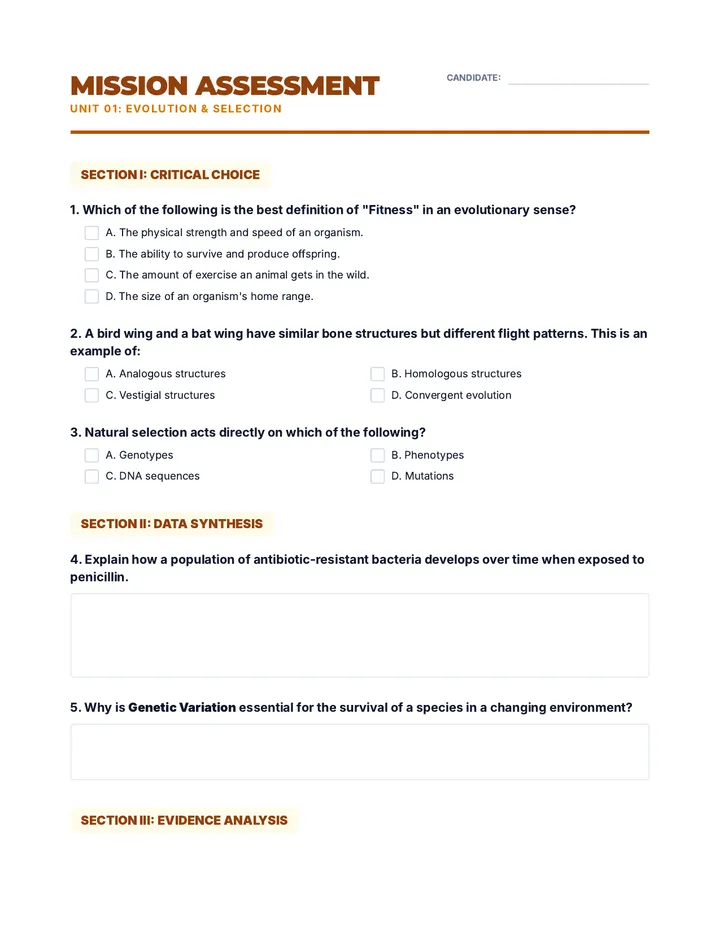
Evolution Assessment Quiz

Biology Recovery Sprint

A high-intensity biology credit recovery program focused on high-yield standards: Evolution, Systems, Viruses, and Cellular Genetics.

PB

Priyadarshini Bharath

15
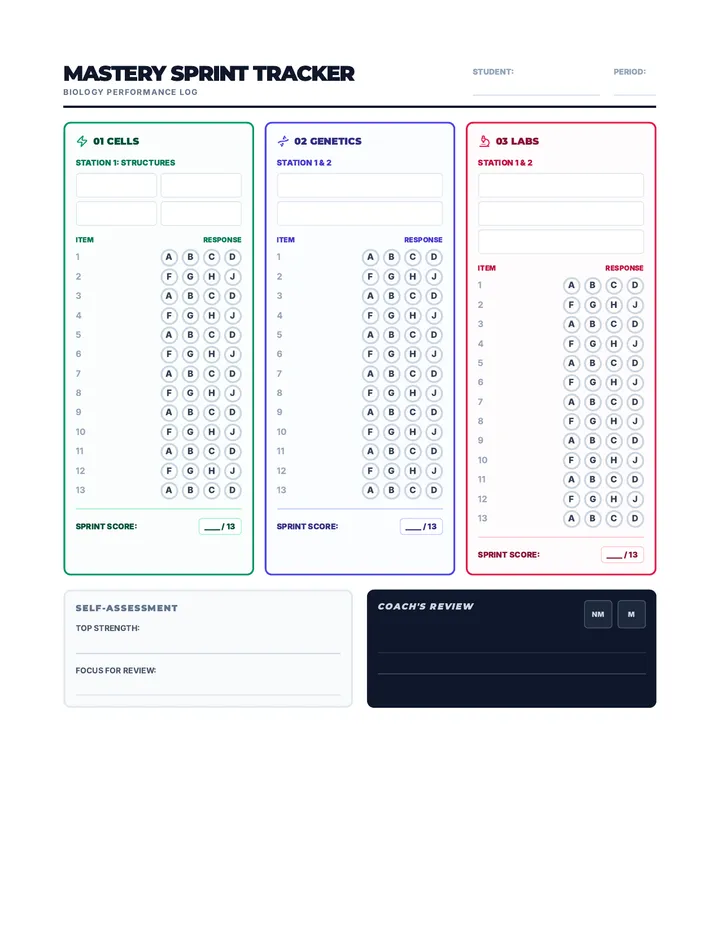
Sprint Mastery Tracker Worksheet

Biology Mastery Sprint

A high-intensity review sequence designed to move students from 'not met' to 'mastery' in Biology through vocabulary immersion and STAAR-style practice.

PB

Priyadarshini Bharath

10
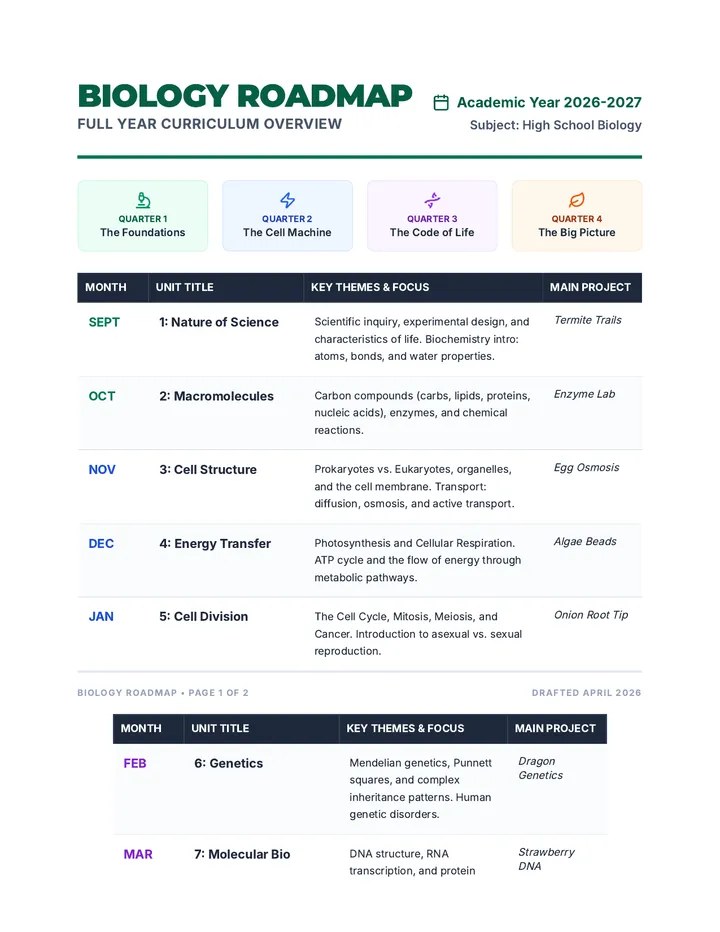
Biology Roadmap Document Trimmed

Biology Blueprint

A comprehensive full-year planning framework for high school Biology, including pacing, unit objectives, lab requirements, and assessment strategies.

A

AMY.MILLER

7
Bio Blueprint Curriculum Map

Indiana Biology Curriculum

A comprehensive biology curriculum aligned with Indiana Academic Standards, spanning twelve core units from the characteristics of living things to human impact, designed for 9th-grade on-level students.

M

MELANIE.ROBERTS

5
Synergy Bell Ringer

Animal System Secrets

A comprehensive unit exploring how animal systems interact to maintain homeostasis, process nutrients, reproduce, and respond to environmental stimuli. This sequence covers organization, regulation, and survival mechanisms across various animal taxa.

PB

Priyadarshini Bharath

13
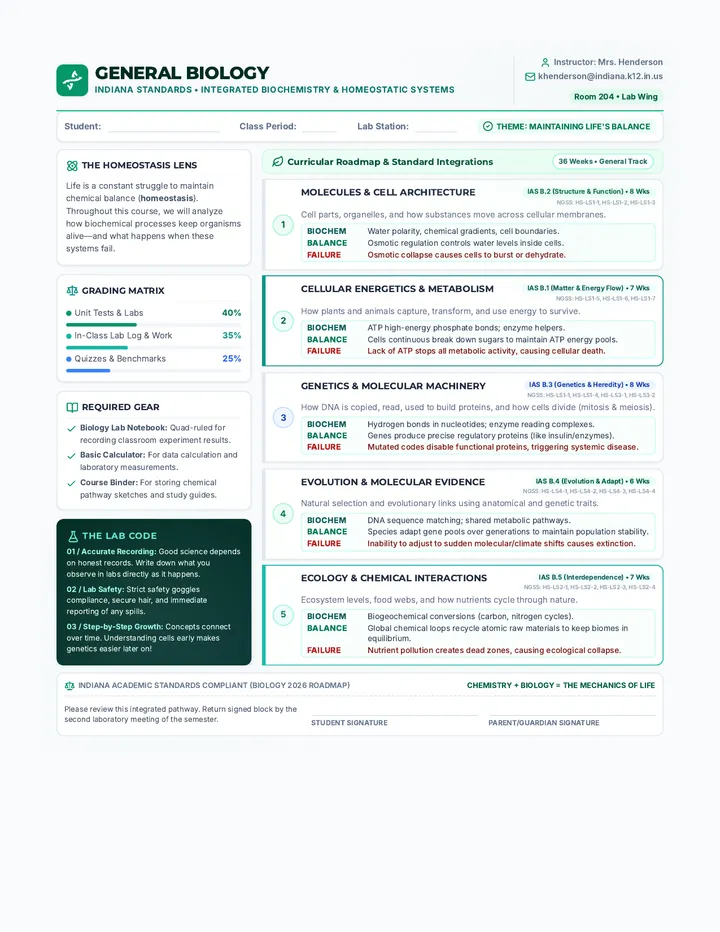
Biology Syllabus Infographic

Indiana Biology and Biochemistry

A comprehensive, 36-week General Biology curriculum aligned with Indiana Academic Standards, emphasizing the integration of biochemical foundations and metabolic homeostasis across all units.

J

Jennifer.Tetrick

7

Lessons

Biology Syllabus Infographic

Course Launch

An introductory framework establishing course policies, Indiana state biology standards, and the integrated biochemistry roadmap for the academic year.

M

MELANIE.ROBERTS

4
Gene Decoder Worksheet

Genetic Code Crackers

A hands-on station-based lesson focusing on the fundamental vocabulary of genetics, including alleles, genotypes, and phenotypes through matching activities and conceptual comparisons.

MB

Marsha Bolden

9
Biology Curriculum Map Document

Biology Course Blueprint

A comprehensive year-long curriculum map and planning guide for high school biology based on the 2026 Indiana Academic Standards.

J

Jennifer.Tetrick

9
Penny Genetics Lesson Plan

Penny Genetics Lab

A 60-minute hands-on lab exploring the relationship between Punnett square predictions and actual genetic outcomes using coin-flip simulations. Students compare theoretical probability with experimental data to understand how fertilization works.

S

ssneierson

4
Bio Boss Readiness Sheet

Biology STAAR Mastery

A focused review session for the Biology STAAR exam, centering on the five most-tested reporting categories through visual concept maps and question-stem alignment.

PB

Priyadarshini Bharath

4
Vascular Highway Anchor Chart

Plant Power

A series of visual anchor charts designed for reference during laboratory investigations into plant vascular systems, photosynthesis, and transpiration.

PB

Priyadarshini Bharath

5