Lenny.com
Explore
Create
ActivitiesNewMathEnglish Language ArtsScience & EngineeringSocial StudiesGlobal LanguagesHealth & Physical EducationSpecial EducationCounseling & Life SkillsArts & CreativityESL
Lenny.com
Lenny.com
Explore
Create
ActivitiesNewMathEnglish Language ArtsScience & EngineeringSocial StudiesGlobal LanguagesHealth & Physical EducationSpecial EducationCounseling & Life SkillsArts & CreativityESL
Lenny.com
Lenny.com

Solutions

Lenny for EducatorsLenny for SchoolsLenny for Districts

Product

ExploreSign inCreateSupportAbout

Resources

Getting startedMTSS Acceleration Program

© 2026 Lenny Learning Inc.

TermsPrivacyAccessibility
LinkedInInstagramX
Lenny

Classification

Taxonomic hierarchies, binomial nomenclature, and the criteria used to group organisms into domains and kingdoms. Examines evolutionary relationships through the analysis of shared morphological and genetic traits.

Science & EngineeringLife ScienceLiving ThingsAnimalsPlantsBody SystemsTraitsAdaptationsCellsEcosystemsHeredityGenes to TraitsCell DivisionPhysicsComparing MaterialsShapes and PropertiesMagnetsMagnetismLightSoundLight and SoundMatterStates of MatterChanges of StateMixturesPhysical and Chemical ChangeHeating and CoolingHeat and Thermal EnergyEnergyForce and MotionElectrical CircuitsAtoms and MoleculesPeriodic TableMotion in One DimensionMotion in Two DimensionsScalars and VectorsForces and Laws of MotionCircular Motion and GravityMomentum and ImpulseWork, Energy, and PowerWavesElectromagnetic WavesGeometric OpticsElectricity and MagnetismSimple Harmonic MotionThermodynamicsNuclear PhysicsEarth Science & AstronomyWeatherWater CycleRocks and MineralsFossilsEarth's FeaturesEarth's ResourcesEarth's StructureWeather and ClimateEarth EventsFossils and Geologic TimePlate TectonicsHuman ImpactsAstronomyChemistryUnits and MeasurementAtomic StructurePeriodic TrendsChemical BondingNomenclatureMolecular StructureIntermolecular ForcesThe MoleStoichiometryProperties of GasesSolutionsChemical ReactionsBalancing EquationsEnergy ChangesRates of ReactionsEquilibriumAcids and BasesQuantum ModelBiologyClassificationCell StructureThe Chemistry of LifeBiomoleculesCellular TransportCell EnergyCell Growth and DivisionDNAProtein SynthesisMeiosis and Sexual ReproductionPatterns of InheritanceMulticellular OrganismsEvolutionEcologyBiodiversityComputer ScienceAlgorithms and Computational ThinkingProgramming LanguagesComputing SystemsNetworks and InternetData AnalysisCybersecurityAI and Machine LearningSoftware Design and DevelopmentBlockchainEngineering & AIDesigning ExperimentsEngineering PracticesDesign ThinkingEngineering Design ProcessMechanical EngineeringElectrical EngineeringMaterials and StructuresCAD and 3D DesignRoboticsArtificial Intelligence BasicsVibe CodingMachine LearningAI Ethics and SocietySystems ThinkingEntrepreneurship & InnovationEntrepreneurial MindsetBusiness Idea DevelopmentBusiness Plan BasicsMarketing & Customer DiscoveryFinancial Management for Startups

Videos

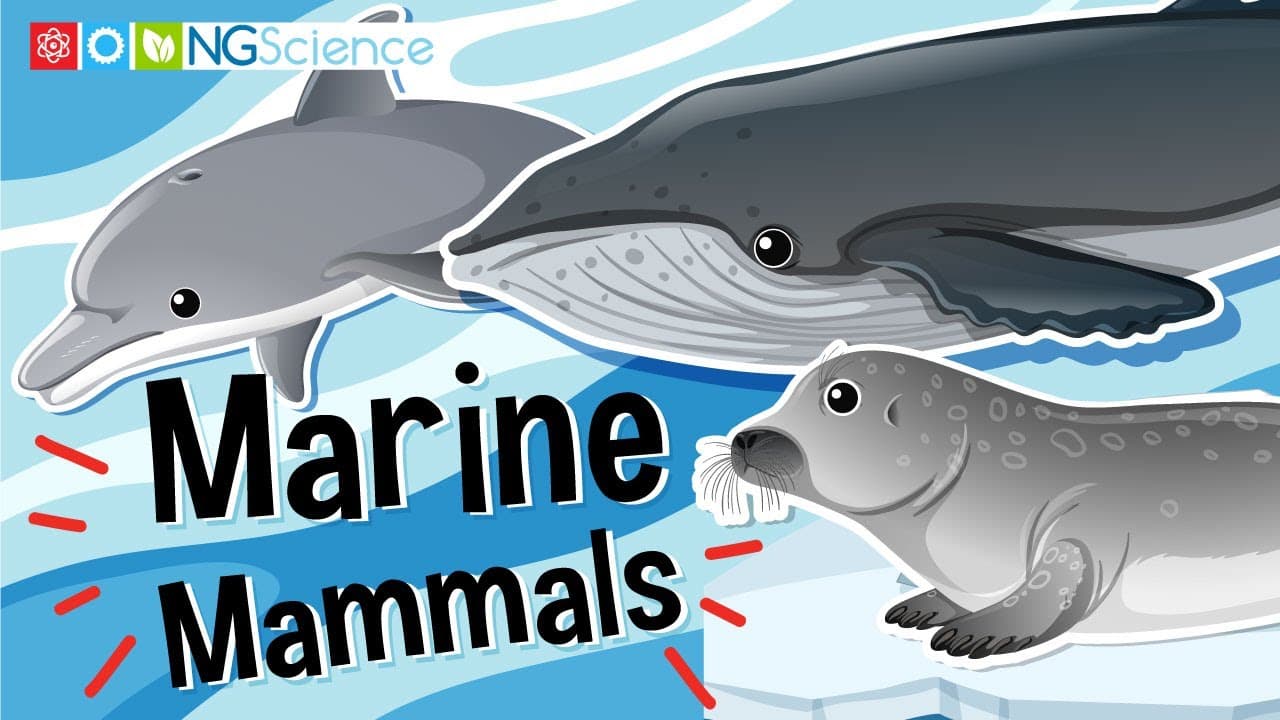
Exploring the World of Marine Mammals: Adaptations and Classification

Exploring the World of Marine Mammals: Adaptations and Classification

This educational video provides a comprehensive introduction to marine mammals, beginning with the fundamental characteristics that define all mammals—being warm-blooded, having hair or fur, giving birth to live young, producing milk, and breathing air with lungs. It seamlessly transitions into explaining how marine mammals share these traits while possessing unique adaptations that allow them to thrive in aquatic environments, such as oceans and coastal areas. The content is structured around the classification of marine mammals into four distinct groups: Cetaceans (whales, dolphins, porpoises), Pinnipeds (seals, sea lions, walruses), Sirenians (manatees, dugongs), and Marine Carnivores (polar bears, sea otters). The video details the specific physical and behavioral adaptations of each group, from the streamlined bodies and blowholes of cetaceans to the blubber layers of pinnipeds and the tool-using abilities of sea otters. Ideally suited for science classrooms, this video serves as an excellent resource for teaching biological classification, animal adaptations, and marine ecosystems. The clear categorization helps students organize complex information, while high-quality footage of animals in their natural habitats engages visual learners. It provides a solid foundation for lessons on how animals interact with their environment and the diversity of life within the ocean.
Next Generation ScienceNext Generation Science

5mins 40s

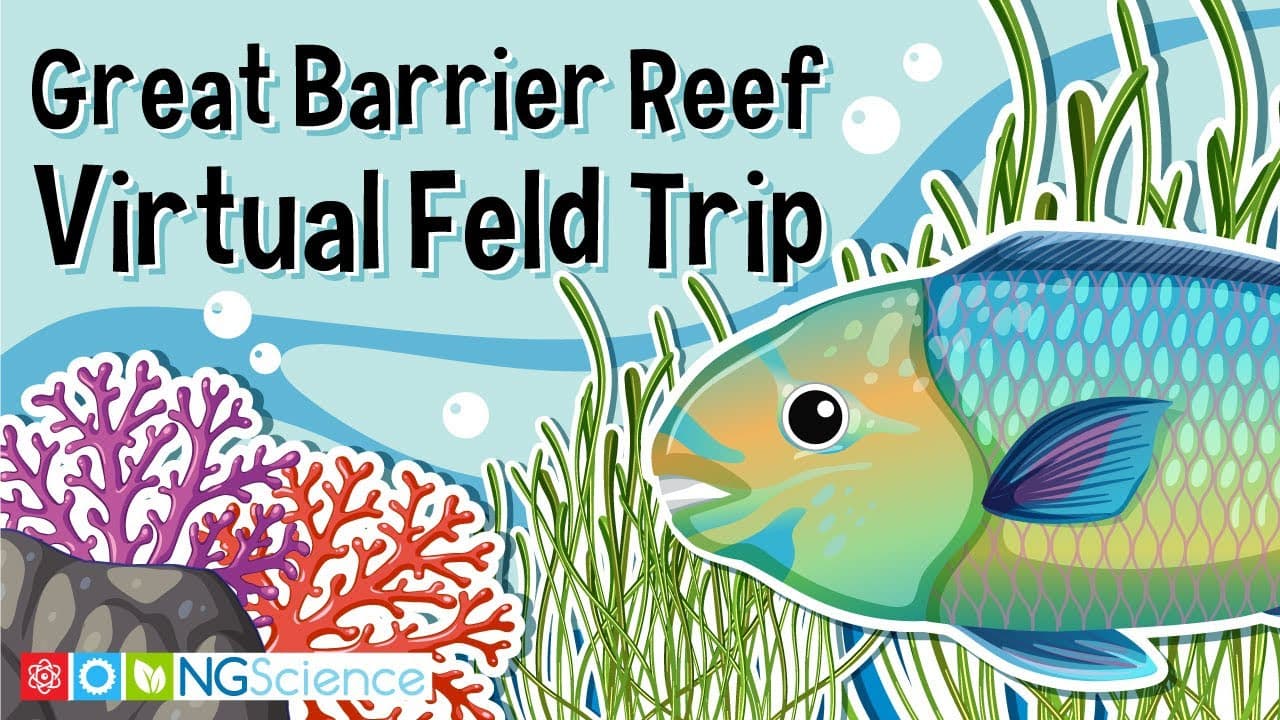
A Virtual Field Trip to the Great Barrier Reef

A Virtual Field Trip to the Great Barrier Reef

Join a virtual field trip to Australia's Great Barrier Reef, the largest living structure on Earth. This engaging video takes students from the dusty roads of Queensland directly into the underwater world to explore the incredible biodiversity of this marine ecosystem. Through stunning aerial and underwater footage, viewers discover how billions of tiny coral polyps create a habitat visible from space that supports thousands of different species. The video systematically introduces various categories of marine life found on the reef, moving beyond just fish to explore reptiles, mammals, and invertebrates. Key themes include animal classification (identifying specific species of fish, sharks, rays, turtles, and sea snakes), the definition of a coral reef system, and the staggering scale of this natural wonder. This resource is an excellent tool for biology and geography lessons, allowing teachers to vividly illustrate concepts of biodiversity and ecosystem interdependence. It provides concrete examples for animal classification units—differentiating between hard and soft corals, vertebrates and invertebrates—and offers a compelling visual hook for discussions about ocean conservation and Australian geography.

Next Generation ScienceNext Generation Science

4mins 38s

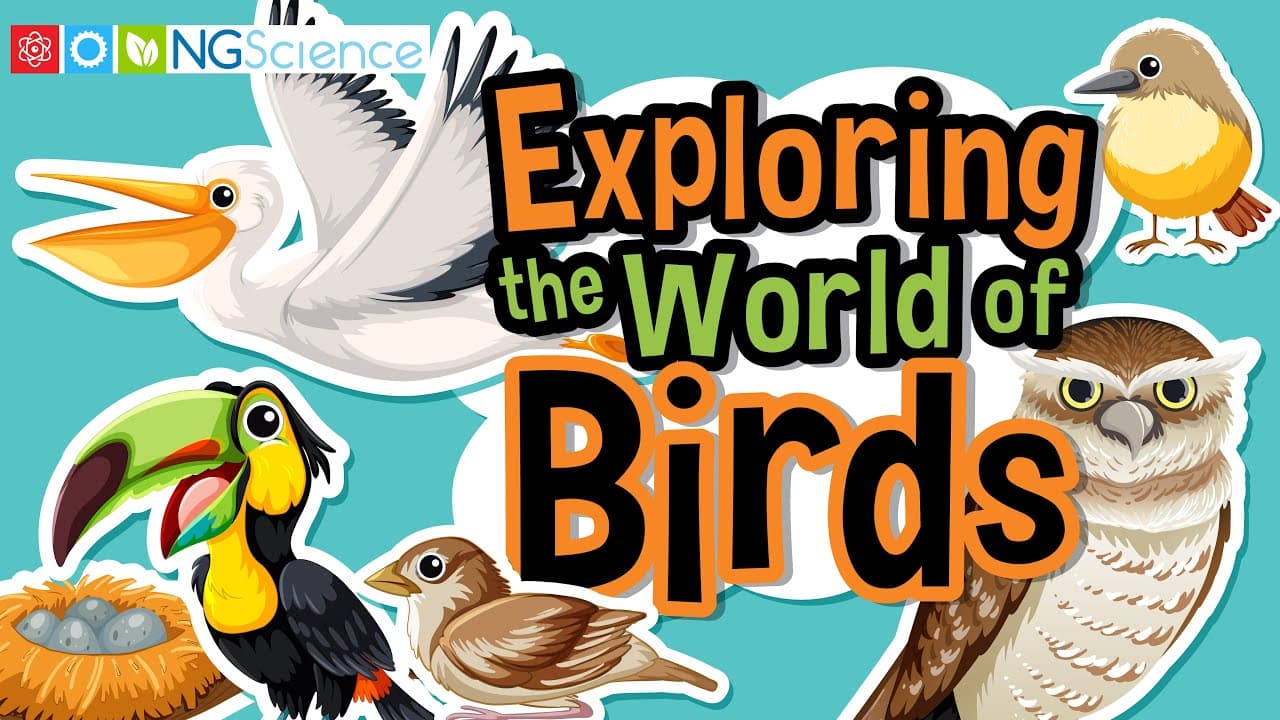
Exploring the Diverse World of Birds

Exploring the Diverse World of Birds

This educational video provides a comprehensive introduction to the diverse class of animals known as birds. It begins by exploring their wide range of habitats, from urban cities to the frozen landscapes of Antarctica, and outlines the fundamental characteristics shared by all bird species, including being warm-blooded, having feathers, laying eggs, and possessing wings. The video combines high-quality footage of various species—such as eagles, penguins, ostriches, and hummingbirds—to illustrate these traits vividly. Beyond basic classification, the video delves into specific adaptations and behaviors that allow birds to thrive in different environments. It highlights unique examples like the nocturnal vision of owls, the incredible running speed of the flightless ostrich, and the swimming abilities of penguins. The narrative also explains the concept of migration, featuring the record-breaking journey of the Arctic Tern, helping students understand how physical traits support survival strategies. Ideally suited for life science units, this resource emphasizes the ecological importance of birds. It explains their critical roles in ecosystems as pollinators, seed dispersers, and pest controllers. Teachers can use this video to launch discussions on biodiversity, animal adaptations, and the interdependence of living things within an ecosystem.

Next Generation ScienceNext Generation Science

4mins 34s

Introduction to the Great Ape Family

Introduction to the Great Ape Family

This educational video introduces students to the biological family of Great Apes, helping viewers understand humanity's place within the animal kingdom. Hosted in the "Lighthouse Lab," the video clearly identifies the five main types of Great Apes—Orangutans, Gorillas, Humans, Chimpanzees, and Bonobos—while explaining the broader classification of Primates. Through high-quality footage of animals in their natural habitats, students visualize the diversity of this group. The content focuses on the key physiological and cognitive distinctions between Great Apes and other primates such as monkeys and lemurs. It highlights specific evolutionary adaptations, including larger brain size, freely rotating shoulders for climbing, the absence of a tail, and a developed rib cage. The video also touches upon behavioral traits like high intelligence, tool use, and communication skills. For educators, this resource serves as an excellent introduction to units on animal classification, evolution, or biology. It simplifies complex taxonomical concepts into easy-to-understand categories and uses relatable comparisons (like humans at a computer or rock climbing) to demonstrate shared characteristics. The clear visual examples of different primate species provide a strong foundation for comparative anatomy or biodiversity lessons.

Next Generation ScienceNext Generation Science

4mins 21s

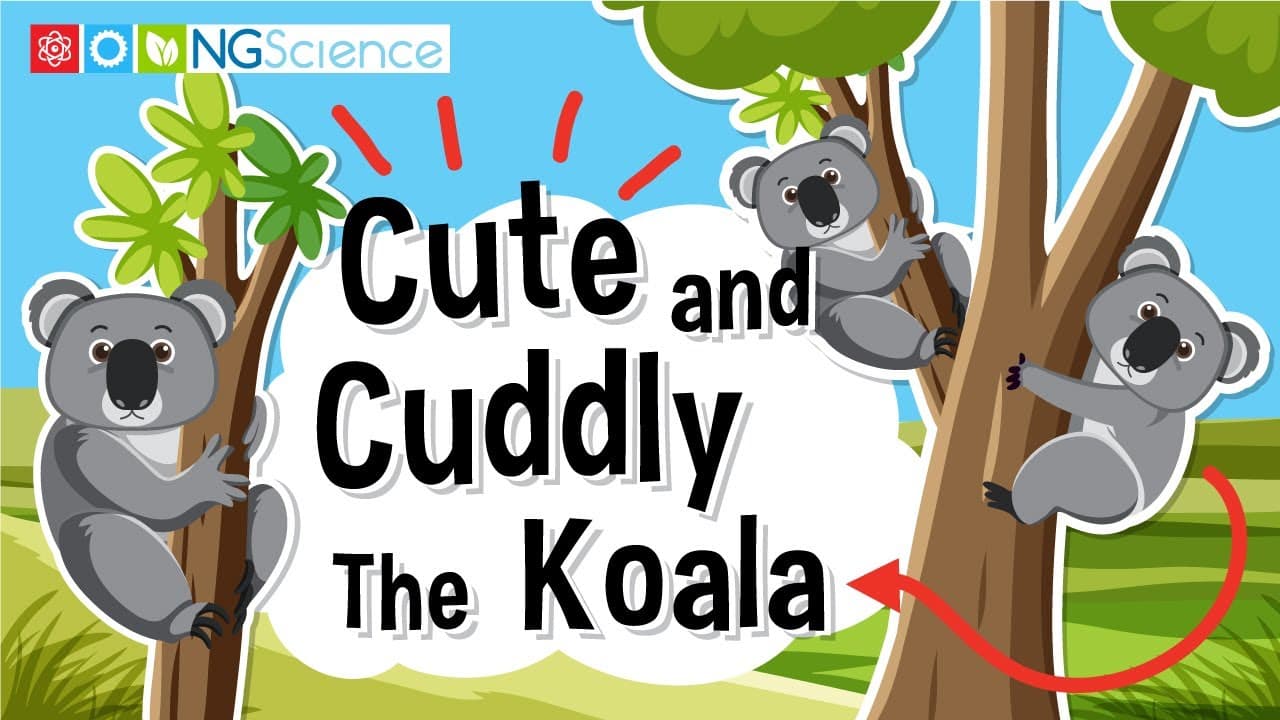
All About Koalas: Life in the Eucalyptus Forest

All About Koalas: Life in the Eucalyptus Forest

This educational video provides an in-depth look at the biology, behavior, and conservation status of the koala. It begins by correcting the common misconception that koalas are bears, clarifying their classification as marsupials—mammals that carry their young in a pouch. The video explores their physical characteristics, unique adaptations, and life cycle, taking viewers on a journey through the eucalyptus forests of Australia where these iconic animals live.

Next Generation ScienceNext Generation Science

7mins 8s

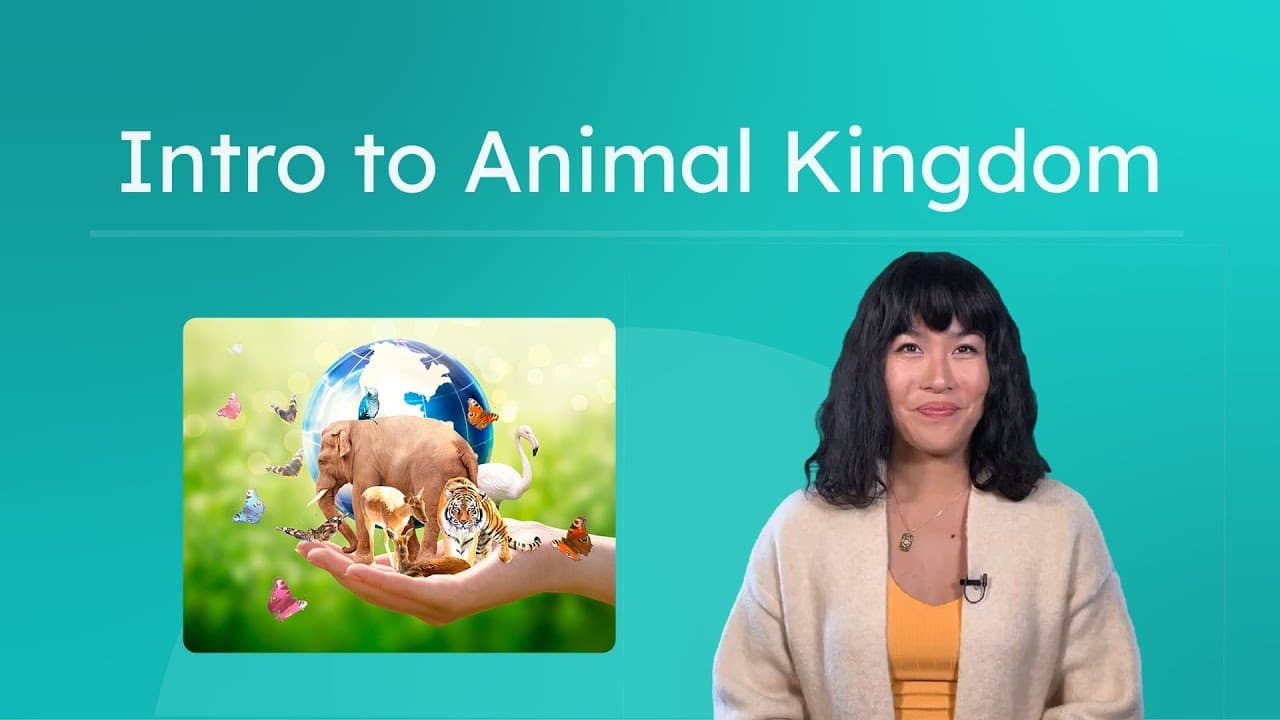
Introduction to the Animal Kingdom and Its Classifications

Introduction to the Animal Kingdom and Its Classifications

This video serves as a comprehensive introduction to the Animal Kingdom (Kingdom Animalia), the largest of all biological kingdoms. The narrator guides viewers through the fundamental definition of what constitutes an animal, breaking down the five essential characteristics that distinguish animals from plants, fungi, and other organisms. The lesson emphasizes biological diversity, noting that while viewers may be familiar with common animals, the kingdom includes over 9 million species ranging from complex mammals to simple sea sponges.

Miacademy & MiaPrep Learning ChannelMiacademy & MiaPrep Learning Channel

6mins 2s

Materials

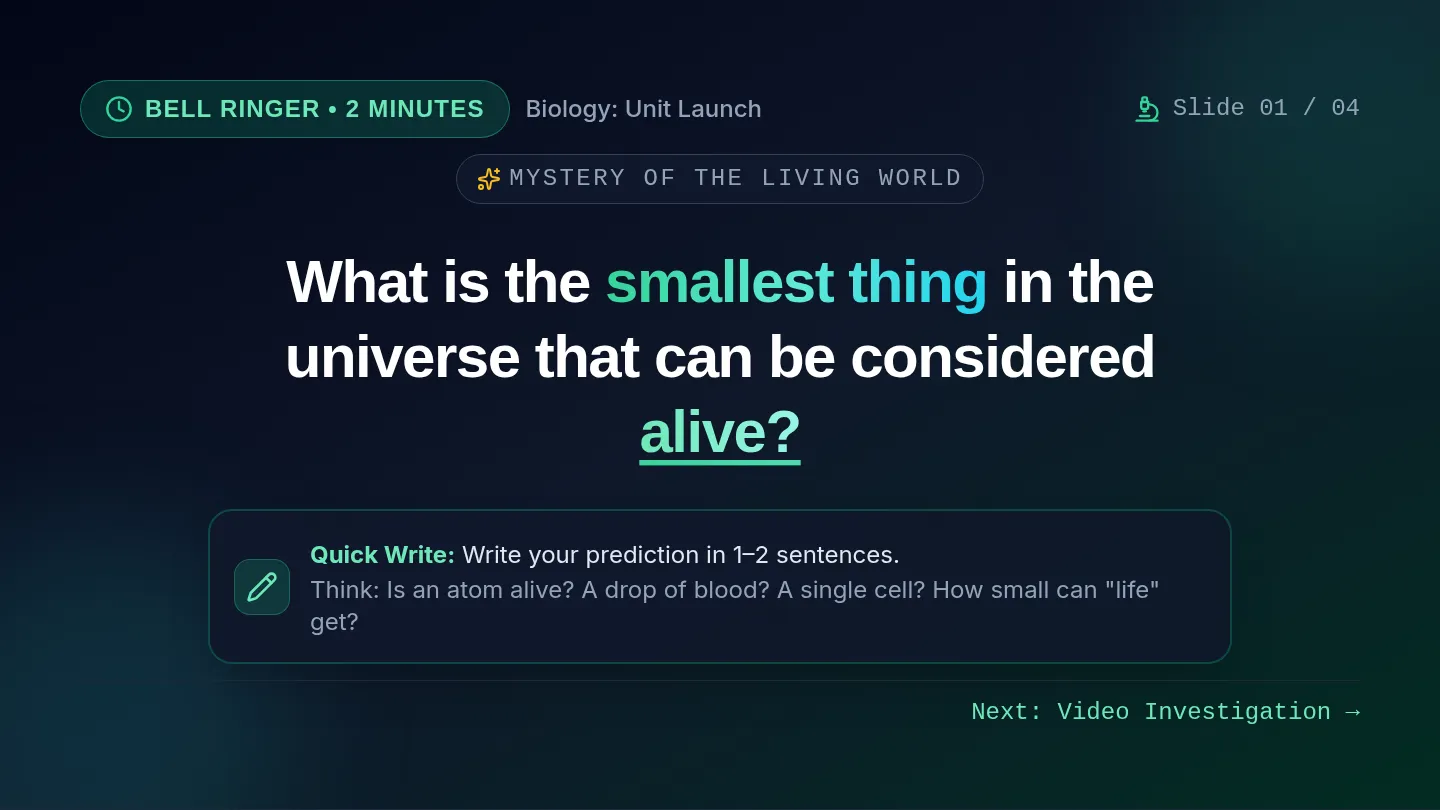
Cell Safari Slides

Cell Safari Slides

A four-slide interactive presentation introducing cell biology, featuring a simplified, high-impact bell ringer with a single large central question, an embedded screening slide for the Amoeba Sisters cell tour video, a core concepts breakdown, and a wrap-up check for understanding.

CP

Carmen Pavlovsky

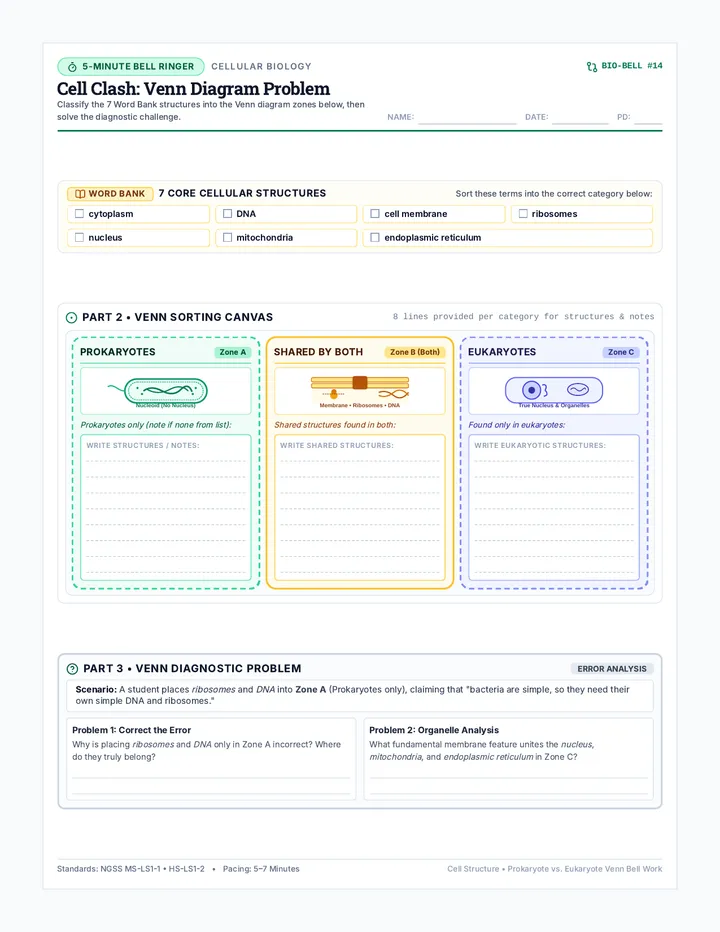
Cell Clash Bell Ringer

Cell Clash Bell Ringer

A print-ready 5-minute bell ringer featuring a dedicated 7-term vocabulary word bank (cytoplasm, DNA, cell membrane, ribosomes, nucleus, mitochondria, endoplasmic reticulum), a three-zone Venn diagram with custom vector graphics and 8 writing lines per category, and an analytical diagnostic challenge.

S

stewart

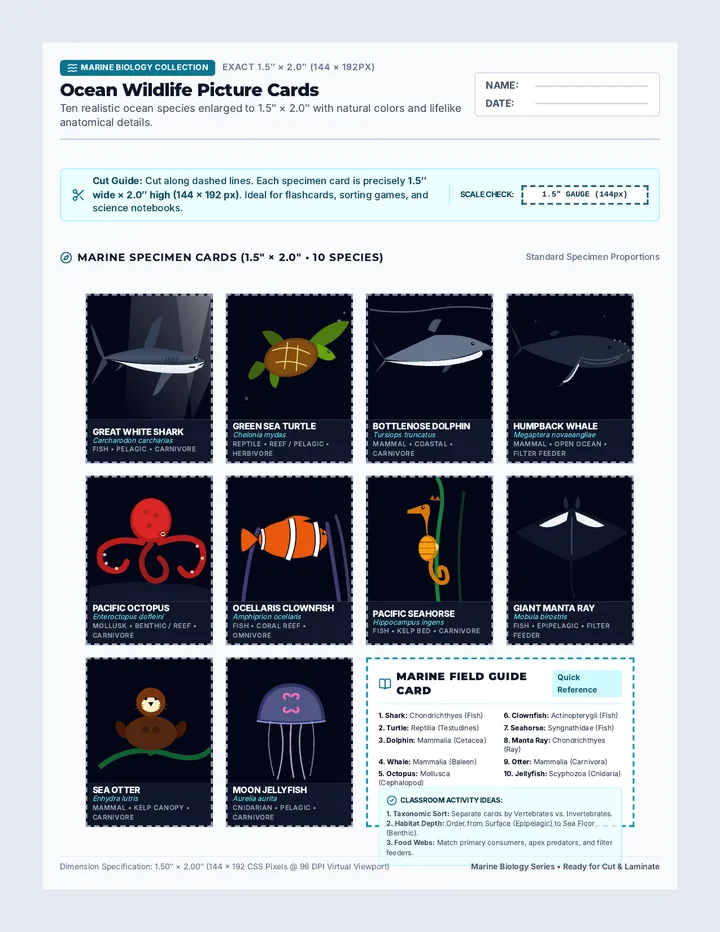
Ocean Wildlife Picture Cards

Ocean Wildlife Picture Cards

A printable classroom resource featuring ten realistic ocean animal picture cards enlarged to exactly 1.5 inches by 2 inches (144px by 192px), complete with cutting guides, a print calibration scale, scientific classification labels, and a field naturalist reference card.

E

emwilson

Cell Power Slides

Cell Power Slides

A visual, teacher-guided 10-slide presentation for 7th grade science exploring photosynthesis, cellular respiration, common biological misconceptions, and phytoplankton. Features clear diagrams, structured discussion prompts, and a concluding exit ticket check.

M

mcatt

Venomous Vanguard Fact Sheet

Venomous Vanguard Fact Sheet

A comprehensive fact sheet poster detailing the biological classification of venomous snakes, highlighting the differences between major families like Viperidae and Elapidae with a professional field-guide aesthetic.

T

TRACEY.STREIT

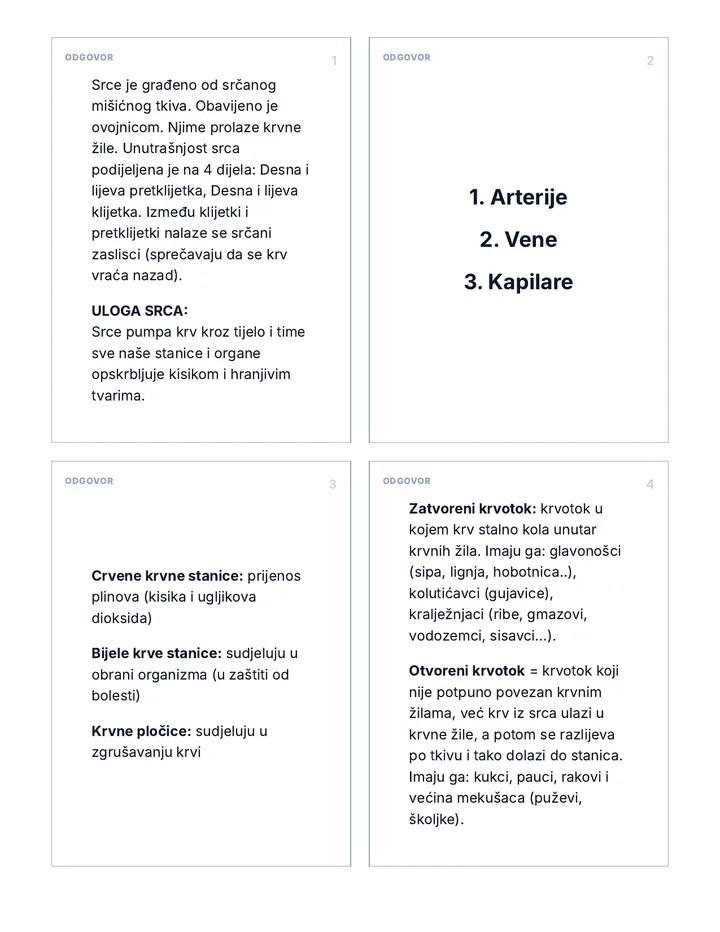
Krvotok Memorijske Kartice Student Material Verbatim

Krvotok Memorijske Kartice Student Material Verbatim

Set od 11 memorijskih kartica velikog formata (4 po stranici) s doslovnim tekstom odgovora o krvotoku. Dizajnirane su za ispis s jasnim rubovima i numeracijom radi lakšeg snalaženja. Sadrže sav tekst iz izvora bez skraćivanja.

A

Ana

Sequences

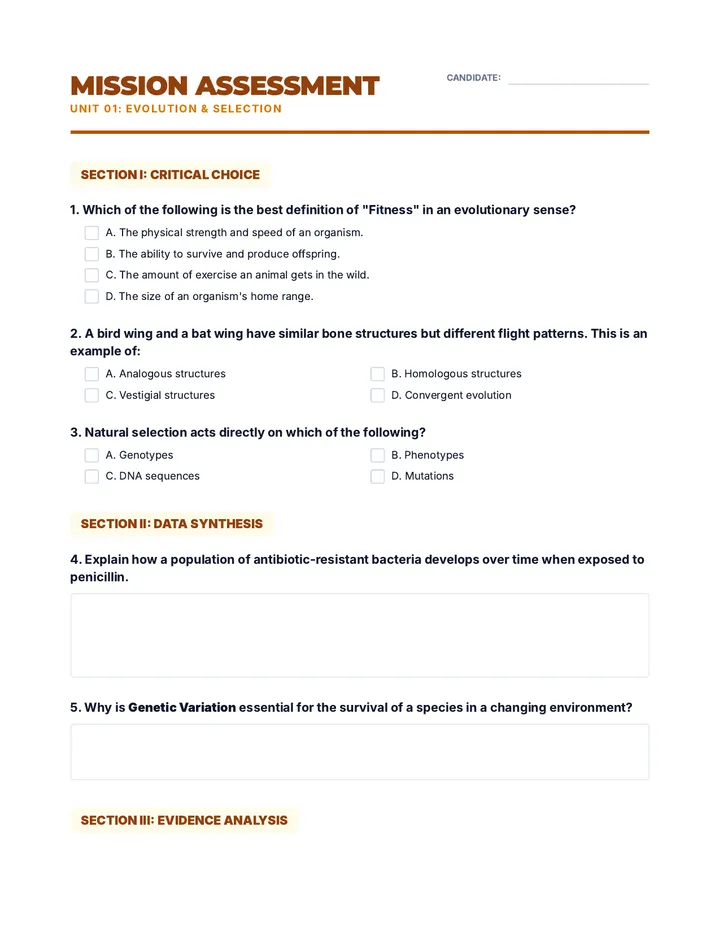
Evolution Assessment Quiz

Biology Recovery Sprint

A high-intensity biology credit recovery program focused on high-yield standards: Evolution, Systems, Viruses, and Cellular Genetics.

PB

Priyadarshini Bharath

15
Scene Observation Slides

Shadow Squad Investigations

A four-part immersive crime scene investigation where 7th-grade students act as forensic detectives to solve the mystery of the missing Golden Whistle trophy. This sequence guides students through scene processing, fingerprinting, ink chromatography, and final evidence synthesis.

CH

Collin Harney

11
Sea Parts Vocabulary Worksheet

Ocean Architects

A sequence of lessons exploring the specialized anatomy and physical structures of marine organisms, from basic fish biology to the complex adaptations that allow them to thrive in diverse oceanic environments.

JS

Jasmine Silva Villa

24
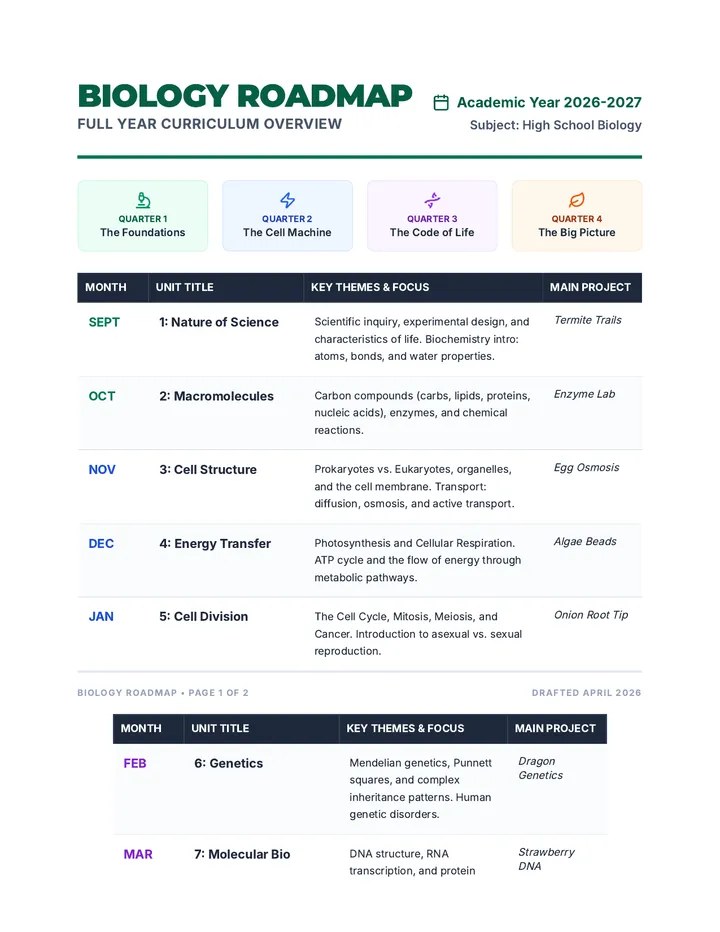
Biology Roadmap Document Trimmed

Biology Blueprint

A comprehensive full-year planning framework for high school Biology, including pacing, unit objectives, lab requirements, and assessment strategies.

A

AMY.MILLER

7
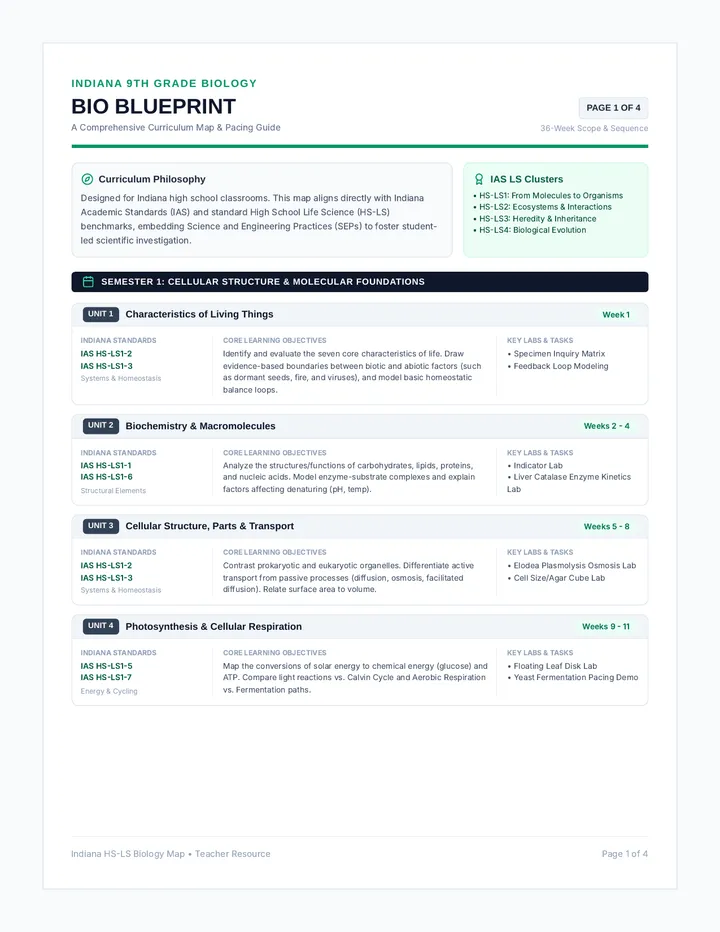
Bio Blueprint Curriculum Map

Indiana Biology Curriculum

A comprehensive biology curriculum aligned with Indiana Academic Standards, spanning twelve core units from the characteristics of living things to human impact, designed for 9th-grade on-level students.

M

MELANIE.ROBERTS

5
Life Science Checkup Worksheet

Cellular and Genetic Science

A comprehensive science sequence covering cellular biology for 6th grade and genetic inheritance for 7th grade, aligned with state-level testing standards.

KA

Khalid Abdulla

37

Lessons

Tableau Progression Annuelle Sciences CM

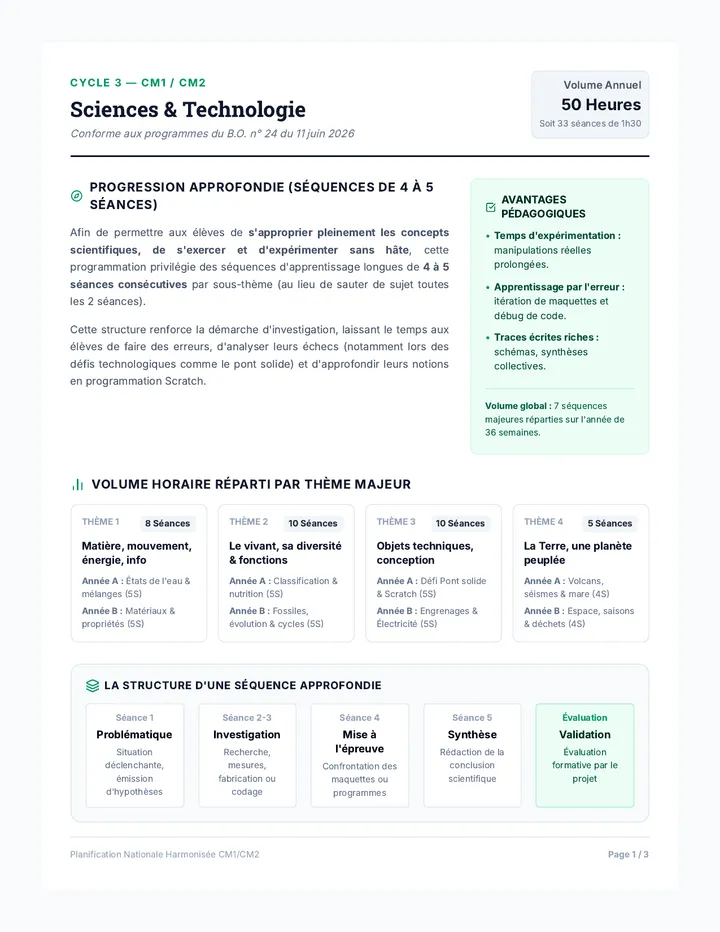
Progression Sciences CM1 CM2

Outil de planification annuelle et de progression pour l'enseignement des sciences et technologies en classe de CM1/CM2, conforme au BO de juin 2026. Ce guide propose une répartition claire des volumes horaires et des thèmes entre l'année A et l'année B pour éviter les redondances dans les classes à double niveau.

LP

LAURENT PERCHE

40
Evidence Log Worksheet

Detective Quest: The Missing Phone

A digital forensic escape room where students solve the mystery of a missing classroom phone by analyzing fingerprint evidence, identifying patterns, and matching minutiae.

PB

Priyadarshini Bharath

6
Scoring Scout Training Slides

Mammal Extremes Comparison

This lesson focuses on comparing the world's largest mammal, the blue whale, with some of the world's smallest mammals. Students will use the provided informational text and conduct their own research to create a comparative report.

E

ecreamer

9
Mission Eradication Packet v3

Tuberculosis Truths

A comprehensive study of John Green's 'Everything Is Tuberculosis', exploring the history, science, and advocacy surrounding the world's deadliest infectious disease. Students will analyze personal narratives, scientific discovery, and global health equity.

MJ

Mr. J. Pfluke

4
Semeurs du Maquis Slides

Semeurs du Maquis

Une formation de 4 jours (32 heures) destinée à un public de pépiniéristes, producteurs de plants et porteurs de projet en Province Nord pour maîtriser la production professionnelle de plants miniers pour la revégétalisation des sols latéritiques.

SV

Sévrine Valter

12
Creek Critters Teacher Guide

Creek Critters

A 45-minute introductory lesson on macroinvertebrates and their role as bioindicators, preparing students for a leaf pack study. Students will learn key ecosystem vocabulary and identification techniques across grades 5-9.

TM

Teri Minami

8