Plate Puzzles Slides Earth Science Unit
PLATE
PUZZLES
Exploring the Earth's Cracked Shell
The Cracked Shell
Imagine a hard-boiled egg. What happens if you tap it gently against the table?
The shell breaks into separate pieces .
The pieces can slide and move.
They stay together because of the soft layer underneath.
🥚
Model Representation
What's Underneath?
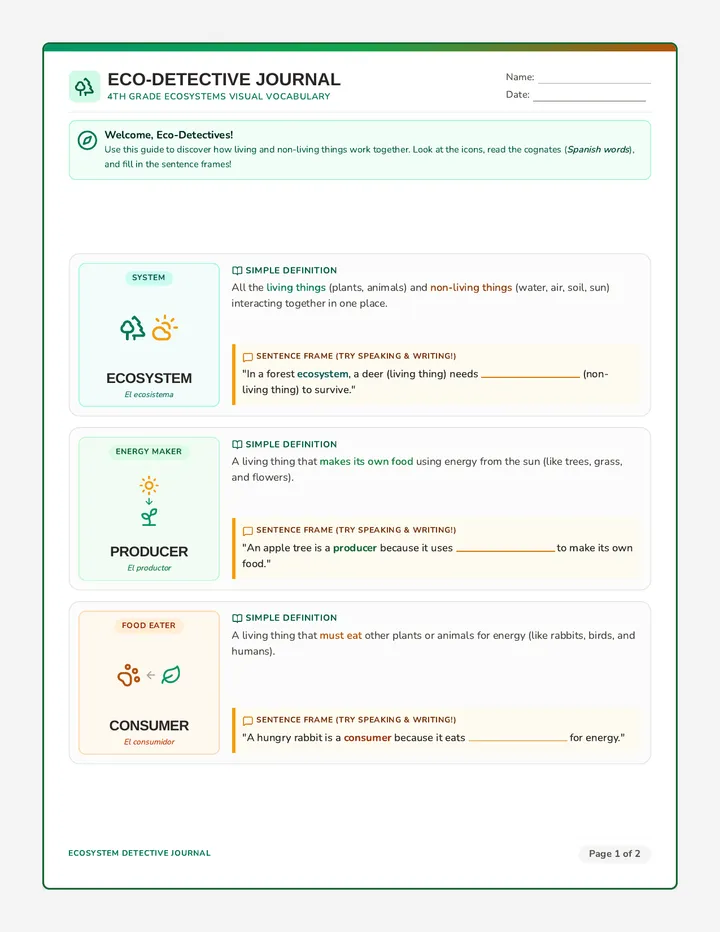
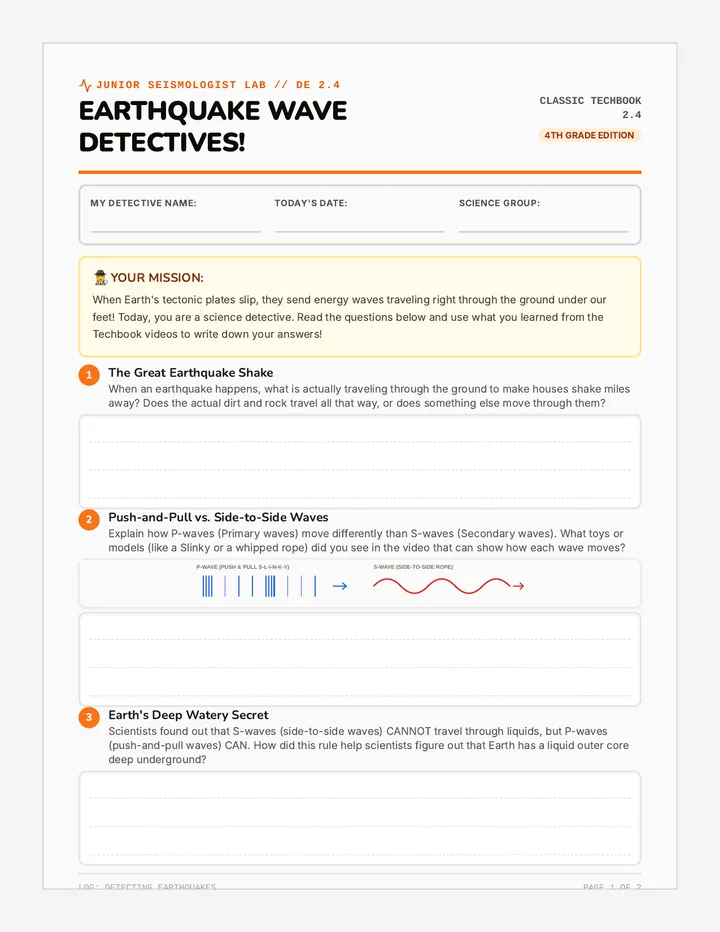
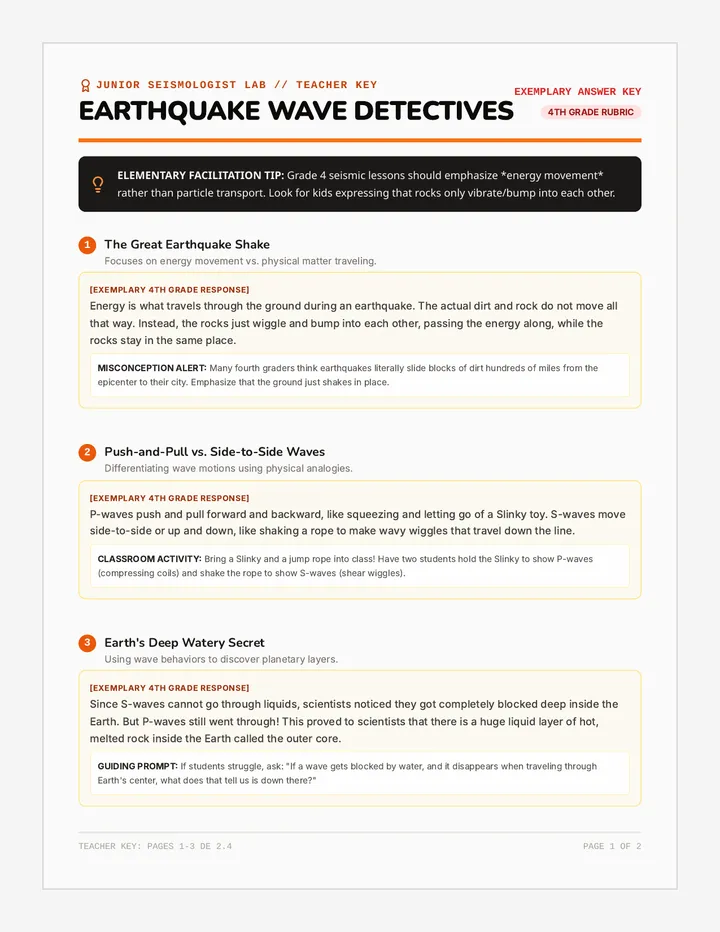
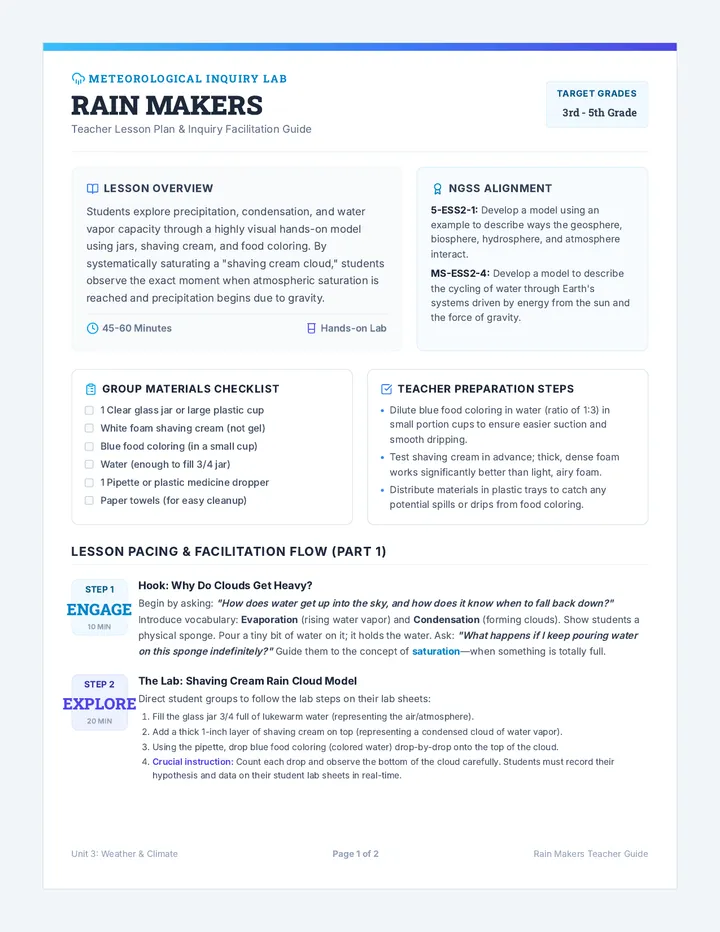
CRUST
The thin, solid outermost layer. This is the part we live on!
MANTLE
A hot, thick layer that acts like soft, gooey plastic. It's moving!
CORE
The incredibly hot, heavy center of the Earth.
Tectonic Plates
The Earth's crust isn't one solid piece. It is broken into about 15-20 large pieces called plates.
These plates float on the soft, moving mantle below.
Global Plate Map
(Teacher: Project current plate map here)
Where the
Action Happens
Most of Earth's biggest events (like earthquakes and volcanoes) happen right at the boundaries .
Think: What happens when bumper cars crash or slide past each other?
Plate Boundaries
Slide Past (Transform)
Pull Apart (Divergent)
Push Together (Convergent)
Plate Puzzle Worksheet Plate Puzzle Challenge
Topic: Earth's Moving Crust
Name:
Date:
The Big Idea
Just like the shell of a cracked egg, the Earth's crust is broken into separate pieces called tectonic plates . These plates aren't stuck in place; they move very slowly on top of the soft mantle below.
1 Inside the Earth
Label the three main layers of the Earth on the lines below:
A.
B.
C.
C
B
A
2 The Egg Model
In our class demonstration, what does each part of the egg represent?
The Shell Pieces
The Egg White
What happened to the shell pieces when you gently moved the egg?
3 Predicting Patterns
Look at the world map showing plate boundaries. Compare it to where earthquakes and volcanoes occur. What do you notice?
Observations
(Describe the connection between plate lines and geological events...)
Prediction
If you were a scientist looking for the next big earthquake, where would you start your search? Why?
Shifting Earth Patterns • Lesson 1 • Plate Puzzles
Volcano Simulation Slides Lesson 02: Simulation
FIRE & ICE
Modeling Volcanic Eruptions
Real-Time Creation
Observation
Lava Flowing into the Sea
Watch how new land is built in seconds.
(Teacher: Paste YouTube URL for recent lava flow here)
The Two Faces of Volcanoes
It's all about the thickness (viscosity) and gas!
Effusive
Thin, runny lava (like honey)
Lava "flows" gently
Builds broad, flat mountains
Explosive
Thick, sticky magma (like paste)
Traps gas until it POPS!
Blows ash and rocks high up
The Lab
Setup
Inquiry Mode
We will use baking soda and vinegar to model how gas pressure drives eruptions.
Your Mission
Predict how adding "thickener" (flour or dish soap) changes the eruption!
Magma Chamber
(Small Plastic Bottle)
The Cone
(Playdough or Soil)
The Gas
(Vinegar + Baking Soda)
Land Map
(Tray for Flow Mapping)
How does a rapid event like an eruption change the landscape forever?
Watch carefully: Where does the "land" build up? Does it stay the same shape every time?