A comprehensive STEM unit introducing block coding and robotics using Marty the Robot and Sphero Minis. Students explore sequencing, loops, and color-based commands across two weeks of rotating hands-on lab sessions.
A comprehensive unit on the human body's systems, focusing on anatomy, physiology, and health.
A comprehensive STEM sequence for grades 1-5 focusing on structural engineering and physics. Students progress from exploring material properties and shapes to designing complex, efficient structures, building their understanding of forces, stability, and the engineering design process.
A differentiated science unit exploring the life cycles, parts, and processes of plants for Kindergarten, 2nd, and 4th grade students.
A Grade 5 PBL sequence focused on the hydrosphere and human impact. Students investigate the connection between the particulate nature of matter and large-scale water systems, culminating in a community presentation on protecting their local watershed.
A Gold Standard PBL unit where students investigate Earth's systems and human impact to design a community exhibit for local endangered turtle conservation in the Nashoba Brook watershed. Students explore water distribution, sphere interactions, and engineering design through the lens of protecting their 'headstarted' Blanding's turtles.
A four-day introductory unit on the signs of spring, focusing on weather changes and nature's awakening. Includes a mix of outdoor exploration and indoor hands-on crafts designed for grades K-3.
A comprehensive set of 2nd-grade informational units covering healthy eating, animal habitats, weather patterns, and community helpers, designed with a field guide aesthetic.
A comprehensive substitute teacher packet for the 8th-grade 'Teen Challenges' course, focusing on the Inner Strength Lab and the novel Hatchet. Includes daily procedures, survival-themed activities, and feedback forms.
A comprehensive leadership development program for district administrators focused on high-quality curriculum implementation, review methodologies, and instructional coaching strategies to ensure district-wide coherence.
A comprehensive 1-week science unit for 3rd grade focusing on the skin as the body's largest organ and its vital role as a protective barrier and sensory interface. Students explore the functions of skin, clear up common misconceptions, and participate in a hands-on modeling experiment.
A comprehensive 2nd-week unit for 3rd Grade Science exploring the anatomy, functions, and protective nature of the human skin through experiments, models, and sensory activities.
A comprehensive 2-week unit for 3rd grade exploring the skeletal and muscular systems. Students will investigate how bones provide protection and support, while muscles enable movement through contraction and relaxation, culminating in hands-on modeling of joints and bicep movement.
A basic introduction to space concepts and the work of NASA, designed for early elementary students to build reading skills and scientific curiosity.
An engaging unit exploring the properties of matter, focusing on how substances combine, dissolve, and separate.
A comprehensive unit on the lunar cycle, combining scientific observation, technical vocabulary mastery, and evidence-based writing using the SRSD framework.
A two-day science unit for 6th graders exploring the relationship between thermal energy, particle motion, and phase changes through visual notes and kinesthetic modeling.
Une exploration complète des principes de la statique et de la dynamique, allant de l'équilibre des structures rigides à l'analyse des mouvements curvilignes.
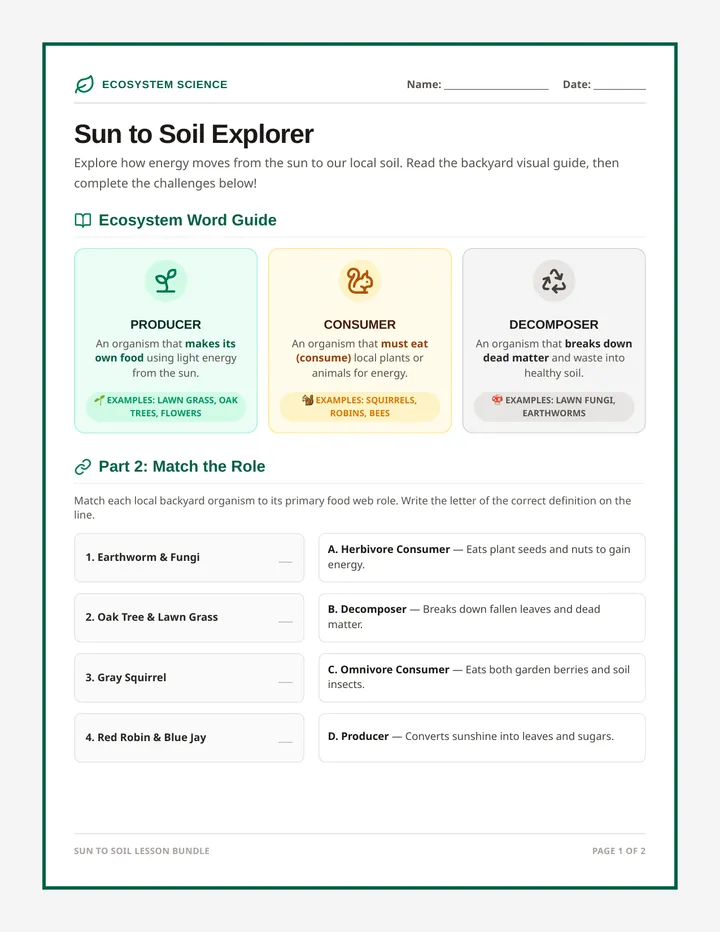
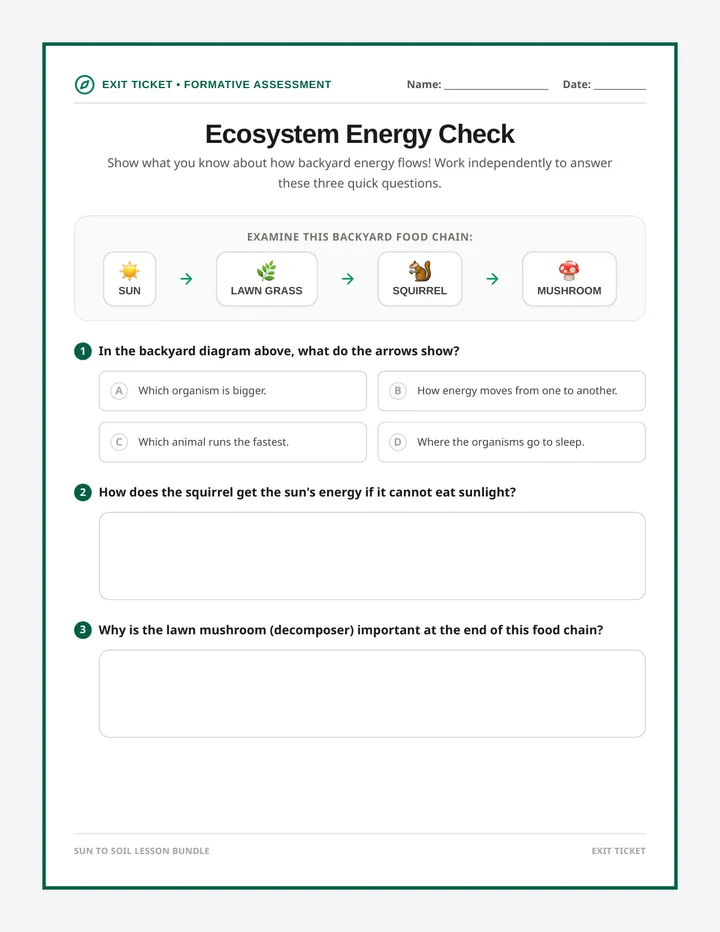
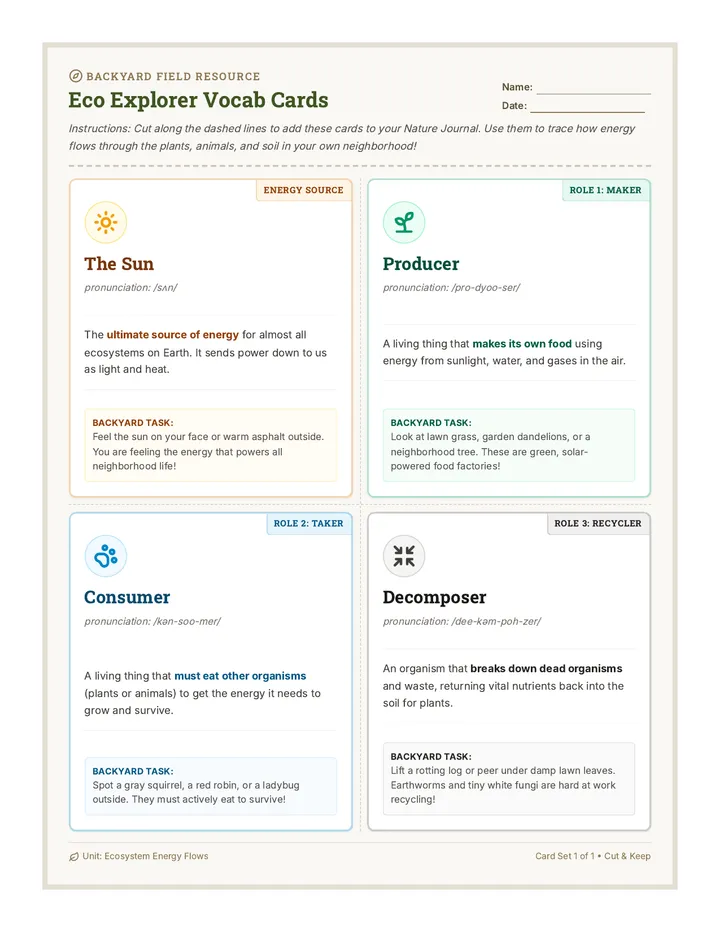
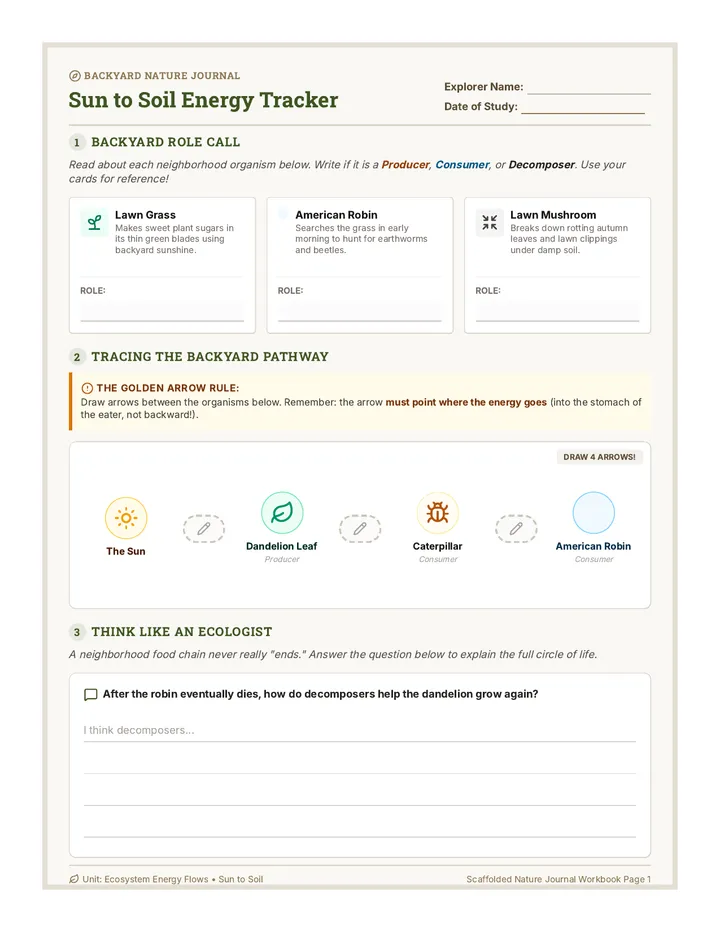
A comprehensive two-lesson sequence designed for Grade 5 ESL Level 4 students to master the concepts of food chains and food webs through visual instruction, simplified readings, and scaffolded activities. Students explore ecological roles, energy transfer, and the interconnectedness of ecosystems.
A series of lessons exploring the physics of fluids, including buoyancy, pressure, and fluid flow.
A project-based 6th-grade forensics course where students act as lead investigators to solve a campus mystery using scientific evidence, biology, and engineering principles. The course aligns with Iowa Science Standards covering cell theory, inheritance, and the engineering design process.
A comprehensive exploration of the Earth's water cycle, focusing on the processes of evaporation, condensation, and precipitation through visual instruction and hands-on experimentation.
A comprehensive two-week recovery sequence designed for students to master key concepts from Investigations 9-12, including evolution and biological systems. This unit provides condensed notes, visual aids, and targeted review questions to help students bridge learning gaps and achieve course credit.
A week-long after-school science unit for 4th graders exploring surface tension through hands-on experiments, including water droplets, soap reactions, and bubble engineering.
A 5-day after-school program exploring the science of surface tension through hands-on experiments, scientific observations, and engineering challenges. Students investigate how water molecules stick together and how substances like soap and salt can break those bonds.
A sequence of lessons exploring the specialized anatomy and physical structures of marine organisms, from basic fish biology to the complex adaptations that allow them to thrive in diverse oceanic environments.
A comprehensive unit designed to turn students into nature detectives, focusing on observation, documentation, and appreciation of the local environment for K-6 students.
A comprehensive unit on matter, focusing on the differences between physical and chemical changes, identifying indicators of each, and applying this knowledge to real-world scenarios.
A series of lessons exploring the power of nature's most impressive events, from volcanoes to tsunamis, tailored for early elementary learners.
A comprehensive investigation into the radioactive decay of elements in rock crystals from the Afar region, using simulations and mathematical modeling to reconstruct geologic history.
A first-grade science and safety sequence focused on understanding what earthquakes are, why they happen, and how to stay safe during one. It includes a comprehensive student packet, visual slides, and teacher resources.
Une série de leçons de cinématique appliquée, allant de l'étude des transports ferroviaires urbains aux duels de vitesse entre athlètes et animaux. La séquence permet de maîtriser les mouvements rectilignes uniformes et uniformément variés.
An immersive Earth Science unit exploring the rock cycle, weathering, erosion, and landforms through hands-on labs and creative design projects. Students act as geologists to understand how Earth's surface is constantly being reshaped.
A comprehensive STEM series focusing on Organisms and Environments, specifically designed to address high-probability STAAR concepts through hands-on engineering challenges. Students explore life cycles, structures, and ecosystem dynamics by solving real-world biological problems.
Exploring the internal heat and dynamic processes that shape our planet's surface and interior.
A four-day immersive sensory science sequence for K-3 students, exploring different materials, textures, and chemical mixtures through hands-on creation and observation.
A 9-day morning work series. Days 1-4 focus on RI.3.9 and 3.OA.A.3. Days 5-9 focus on RL.3.4/RI.3.4 (word meaning) and 3.NF.A.3 (equivalent fractions). Each day features a unique theme and mission-style layout.
A comprehensive two-day review sequence designed to prepare 5th-grade students for their science interim assessment, covering matter, earth systems, and scientific inquiry.