Lenny.com
Explore
Create
ActivitiesNewMathEnglish Language ArtsScience & EngineeringSocial StudiesGlobal LanguagesHealth & Physical EducationSpecial EducationCounseling & Life SkillsArts & CreativityESL
Lenny.com
Lenny.com
Explore
Create
ActivitiesNewMathEnglish Language ArtsScience & EngineeringSocial StudiesGlobal LanguagesHealth & Physical EducationSpecial EducationCounseling & Life SkillsArts & CreativityESL
Lenny.com
Lenny.com

Solutions

Lenny for EducatorsLenny for SchoolsLenny for Districts

Product

ExploreSign inCreateSupportAbout

Resources

Getting startedMTSS Acceleration Program

© 2026 Lenny Learning Inc.

TermsPrivacyAccessibility
LinkedInInstagramX
Lenny
Science & EngineeringLife ScienceLiving ThingsAnimalsPlantsBody SystemsTraitsAdaptationsCellsEcosystemsHeredityGenes to TraitsCell DivisionPhysicsComparing MaterialsShapes and PropertiesMagnetsMagnetismLightSoundLight and SoundMatterStates of MatterChanges of StateMixturesPhysical and Chemical ChangeHeating and CoolingHeat and Thermal EnergyEnergyForce and MotionElectrical CircuitsAtoms and MoleculesPeriodic TableMotion in One DimensionMotion in Two DimensionsScalars and VectorsForces and Laws of MotionCircular Motion and GravityMomentum and ImpulseWork, Energy, and PowerWavesElectromagnetic WavesGeometric OpticsElectricity and MagnetismSimple Harmonic MotionThermodynamicsNuclear PhysicsEarth Science & AstronomyWeatherWater CycleRocks and MineralsFossilsEarth's FeaturesEarth's ResourcesEarth's StructureWeather and ClimateEarth EventsFossils and Geologic TimePlate TectonicsHuman ImpactsAstronomyChemistryUnits and MeasurementAtomic StructurePeriodic TrendsChemical BondingNomenclatureMolecular StructureIntermolecular ForcesThe MoleStoichiometryProperties of GasesSolutionsChemical ReactionsBalancing EquationsEnergy ChangesRates of ReactionsEquilibriumAcids and BasesQuantum ModelBiologyClassificationCell StructureThe Chemistry of LifeBiomoleculesCellular TransportCell EnergyCell Growth and DivisionDNAProtein SynthesisMeiosis and Sexual ReproductionPatterns of InheritanceMulticellular OrganismsEvolutionEcologyBiodiversityComputer ScienceAlgorithms and Computational ThinkingProgramming LanguagesComputing SystemsNetworks and InternetData AnalysisCybersecurityAI and Machine LearningSoftware Design and DevelopmentBlockchainEngineering & AIDesigning ExperimentsEngineering PracticesDesign ThinkingEngineering Design ProcessMechanical EngineeringElectrical EngineeringMaterials and StructuresCAD and 3D DesignRoboticsArtificial Intelligence BasicsVibe CodingMachine LearningAI Ethics and SocietySystems ThinkingEntrepreneurship & InnovationEntrepreneurial MindsetBusiness Idea DevelopmentBusiness Plan BasicsMarketing & Customer DiscoveryFinancial Management for Startups

Cosmic Explorers

A multi-session outdoor preschool STEM sequence combining space exploration with sensory regulation, heavy work, and calming transitions. Young learners explore propulsion, geology, engineering, and orbital motion through whole-body outdoor play.

Astronaut Training Camp

Cadets test gravity, propulsion, and payload transport through energetic rocket stomping and heavy space-crate hauls before settling into gentle zero-gravity breathing and sensory crater excavations.

Lunar Base Builders

Preschool engineers build surface shelters and haul dense moon boulders before regulating with cool sand crater sifting and slow lunar dust raking.

Planet Pathfinders

Explorers navigate orbital obstacle courses and roll weighted asteroids before cooling down with floating parachute solar winds and quiet chalk constellation mapping.

Cosmic Explorers

A multi-session outdoor preschool STEM sequence combining space exploration with sensory regulation, heavy work, and calming transitions. Young learners explore propulsion, geology, engineering, and orbital motion through whole-body outdoor play.

PHASE 1 • HEAVY WORK 15 Mins

The Moon Quarry Boulder Haul

Cadets gather stones and weighted containers. They either carry them two-handed hugged against their bellies or partner-haul in buckets across marked cones.

STEM Question: "Which rock feels heavier in your hands: the dark gray flat one or the round white one?"

Proprioceptive Prompt: "Bear hug the boulder tight against your chest! Slow, heavy giant steps!"

Regulation target: Deep pressure inputs that ground restless children.

PHASE 2 • ACTIVE STEM 15 Mins

Moon Shelter Construction

Cadets place heavy rocks around a perimeter to weigh down cardboard panels and tarp walls, testing stability against pretend solar storms.

STEM Question: "Where should we put the heaviest rocks: at the very bottom or on top of the flimsy roof?"

Collaboration Prompt: "Two engineers hold the beam while one engineer pins the corner with a stone!"

Regulation target: Bilateral integration, visual-spatial reasoning, and team problem-solving.

PHASE 3 • CALMING TACTILE 10 Mins

Lunar Dust Zen Garden

Cadets sit on outdoor foam mats around shallow sand trays. Using miniature rakes and fingers, they create gentle wavy lines and nestle smooth pebbles.

STEM Question: "Feel this river rock and this lava rock. Which one feels smooth like ice?"

Calming Prompt: "Rake lines as slowly as a spaceship gliding through the stars. No rushing."

Regulation target: Fine motor down-regulation and tactile sensory grounding.

PHASE 4 • DEBRIEF 5 Mins

Habitat Safety Inspection

Cadets test if the shelter can hold all astronauts safely inside. They crawl in one by one and sit together in the shaded calm interior.

STEM Question: "Why did the heavy stones keep our base from flying away in the wind?"

Cozy Prompt: "Crawl inside our lunar shelter. Listen to the quiet space air."

Regulation target: Enclosed quiet sanctuary provides security after open-field play.

Teacher Adaptations for Sensory Profiles

For High-Energy Seekers: Assign them as the "Head Quarry Hauler"—give them two buckets with handles or encourage pushing a heavy tire filled with rocks.

For Tactile Sensitive Cadets: Provide gardening gloves for rough bark and rocks, or let them use rakes and tongs at the sand station instead of bare hands.

Engineering Pass: Lunar Base is structurally sound, wind-resistant, and sensory verified.

Mission 2 Passed

The Orbital Speed Run

Cadets run around the chalk orbital ring circles. When the teacher calls "Solar Eclipse!", all cadets drop flat onto grass like grounded satellites.

STEM Question: "Who is staying inside the Earth orbit ring and who is traveling all the way in Jupiter's wide loop?"

Movement Prompt: "Lean into your turn! 3-2-1... ECLIPSE! Belly flat on the grass!"

Regulation target: Motor exhilaration paired with inhibitory control (freeze).

STATION 2 • HEAVY WORK 15 Mins

Asteroid Boulder Roll

Cadets crawl on hands and knees pushing a weighted ball through an obstacle course between cones, or push in pairs across the field.

STEM Question: "Does your heavy asteroid roll faster when you give one giant push or many steady pushes?"

Movement Prompt: "Bear crawl! Push with your palms, keep your tummy tight!"

Regulation target: Heavy weight-bearing through hands, wrists, and shoulders to center attention.

STATION 3 • CALMING RHYTHM 10 Mins

Solar Wind Parachute Wave

All cadets hold the edge of the parachute. Slowly, everyone lifts it up on a big inhale, holds, and exhales as it gently lowers to their knees.

STEM Question: "Watch the foam stars bounce gently on the fabric. What makes them float up?"

Rhythm Prompt: "Up... breathe in the fresh outdoor air. Down... blow out slowly like a quiet breeze."

Regulation target: Group synchrony, shared rhythmic breathing, lowering hyper-arousal.

STATION 4 • GROUNDING FOCUS 10 Mins

Constellation Chalk Star Walk

Cadets walk heel-to-toe along straight and zig-zag chalk lines drawn on the asphalt, pausing at drawn star dots to balance on one foot for 3 seconds.

STEM Question: "Look at the Big Dipper constellation! How many chalk stars connect this line?"

Balance Prompt: "Walk like you are on a tightrope across the Milky Way. Quiet, slow feet."

Regulation target: Vestibular stabilization, focused visual attention, and body balance control.

Sequence Reflection & Classroom Re-Entry Protocol

Heavy Work Sensory Check: Have children rub palms together fast until warm, then cup them over their eyes. This sensory cue signals that active outdoor work is complete.

Transition to Indoor Learning: Cadets walk in a quiet "orbit line" holding hands or a rope with slow, grounded footsteps directly to water and handwashing stations.

Cosmic Explorers Sequence Complete: All 3 STEM outdoor missions successfully accomplished!

Mission 3 Passed

You might also like

Helix Studio Slides

Candy Code Sequence

A multi-day competency-based biology sequence exploring DNA architecture, complementary base pairing, and semi-conservative replication through tactile candy modeling and evidence-based assessment.

TM

Teri Minami

6
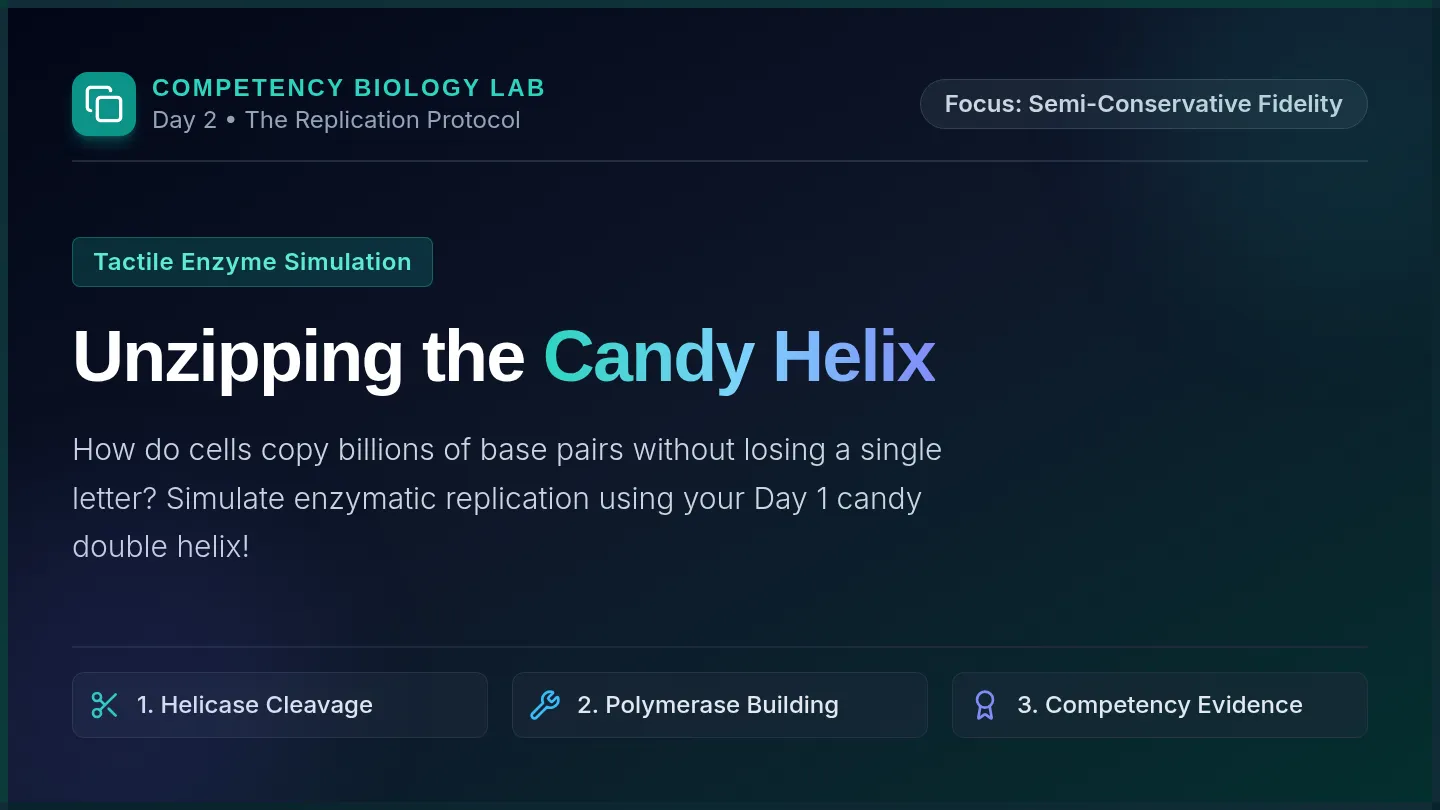
Replication Protocol Slides

Replication Protocol

Students simulate semi-conservative DNA replication by enzymatically unzipping candy strands and building complementary daughter helices, demonstrating competency through lab evidence and knowledge checks.

TM

Teri Minami

3
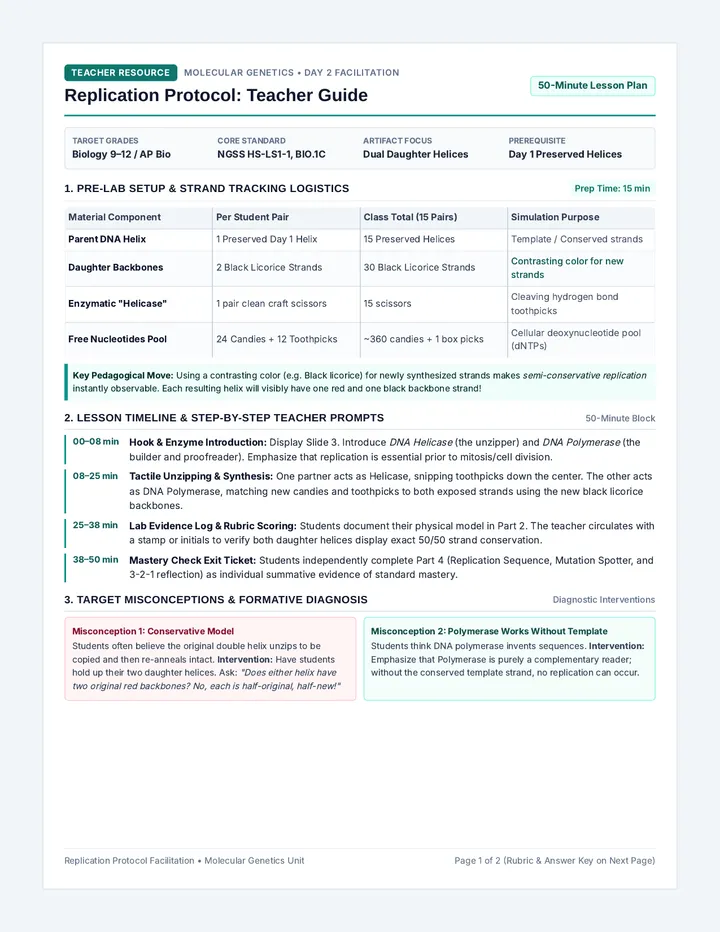
Replication Protocol Teacher Guide

Replication Protocol Teacher Guide

A complete 2-page teacher facilitation guide and rubric calibration key for Lesson 2 (Replication Protocol), detailing enzymatic unzipping logistics, strand tracking procedures, misconception remediation, and full answers for the competency assessment and exit ticket.

TM

Teri Minami

Pesky Biters Slides

Bug Busters

A two-part fifth-grade science sequence investigating how insects can be annoying nuisances, bite and sting, and damage crops and homes. Specially scaffolded with high-visual supports, decodable text chunks, and guided practice for lower-literacy learners.

Lenny Avatar
Lenny
11
Helix Studio Slides

Helix Studio

Students dissect nucleotide anatomy and discover base pairing rules by engineering an accurate candy double helix model with complementary nitrogenous bases and sugar-phosphate backbones.

TM

Teri Minami

3
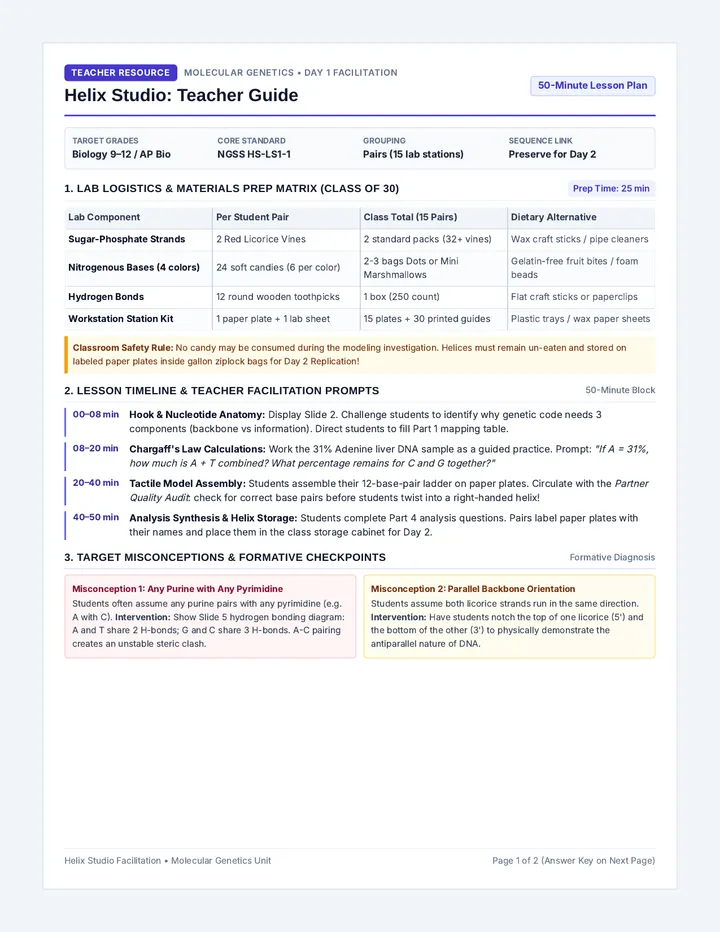
Helix Studio Teacher Guide

Helix Studio Teacher Guide

A comprehensive 2-page teacher facilitation guide and answer key for Lesson 1 (Helix Studio), featuring candy prep logistics, a 50-minute pacing timeline, misconception interventions, and complete mathematical and structural solutions for the student lab guide.

TM

Teri Minami

Habitability Blueprint Slides

Life Beyond Limits

A one-week interdisciplinary astrobiology sequence investigating Earth's habitability, extreme biological adaptations across eleven Earth species, and the plausibility of life on other celestial bodies.

M

Megan.Tanner

7
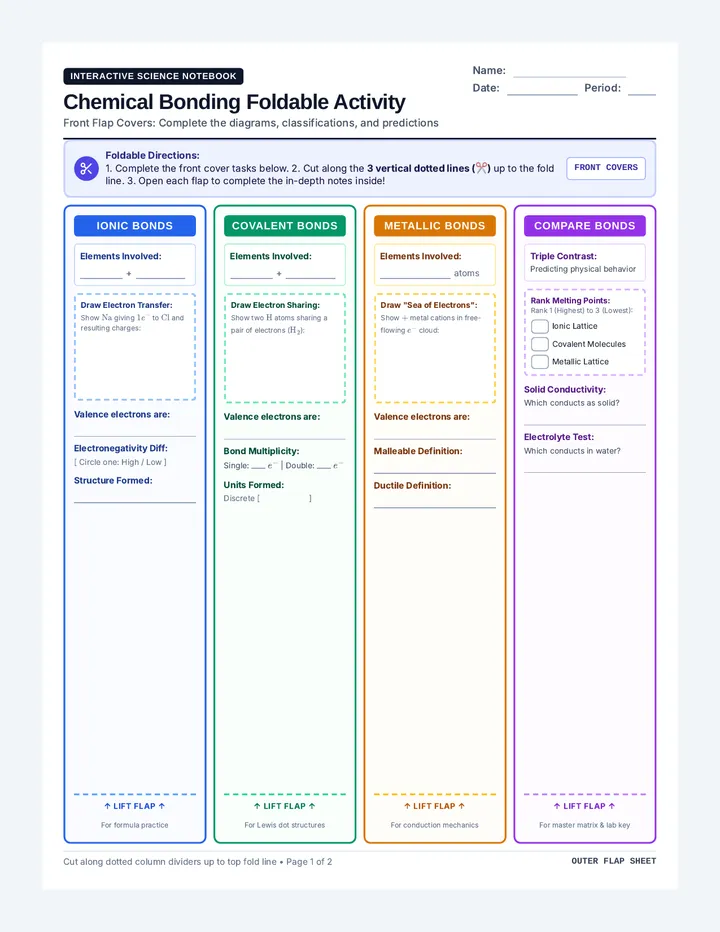
Chemical Bonding Foldable Activity

Chemical Bonding

A foundational chemistry lesson exploring ionic, covalent, and metallic bonding through interactive modeling, detailed reference notes, and comparative property analysis.

OM

Olutoyin Makinde

3
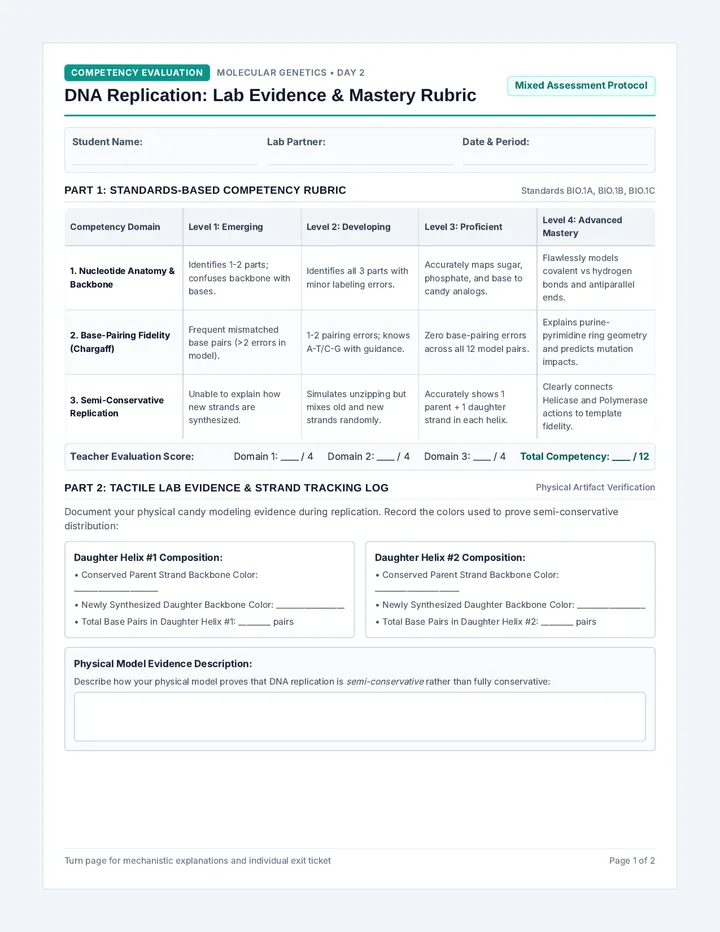
Replication Evidence Assessment

Replication Evidence Assessment

A multi-part competency assessment combining a 4-level standards rubric, tactile lab evidence documentation, mechanistic written explanations, and an individual exit ticket.

TM

Teri Minami

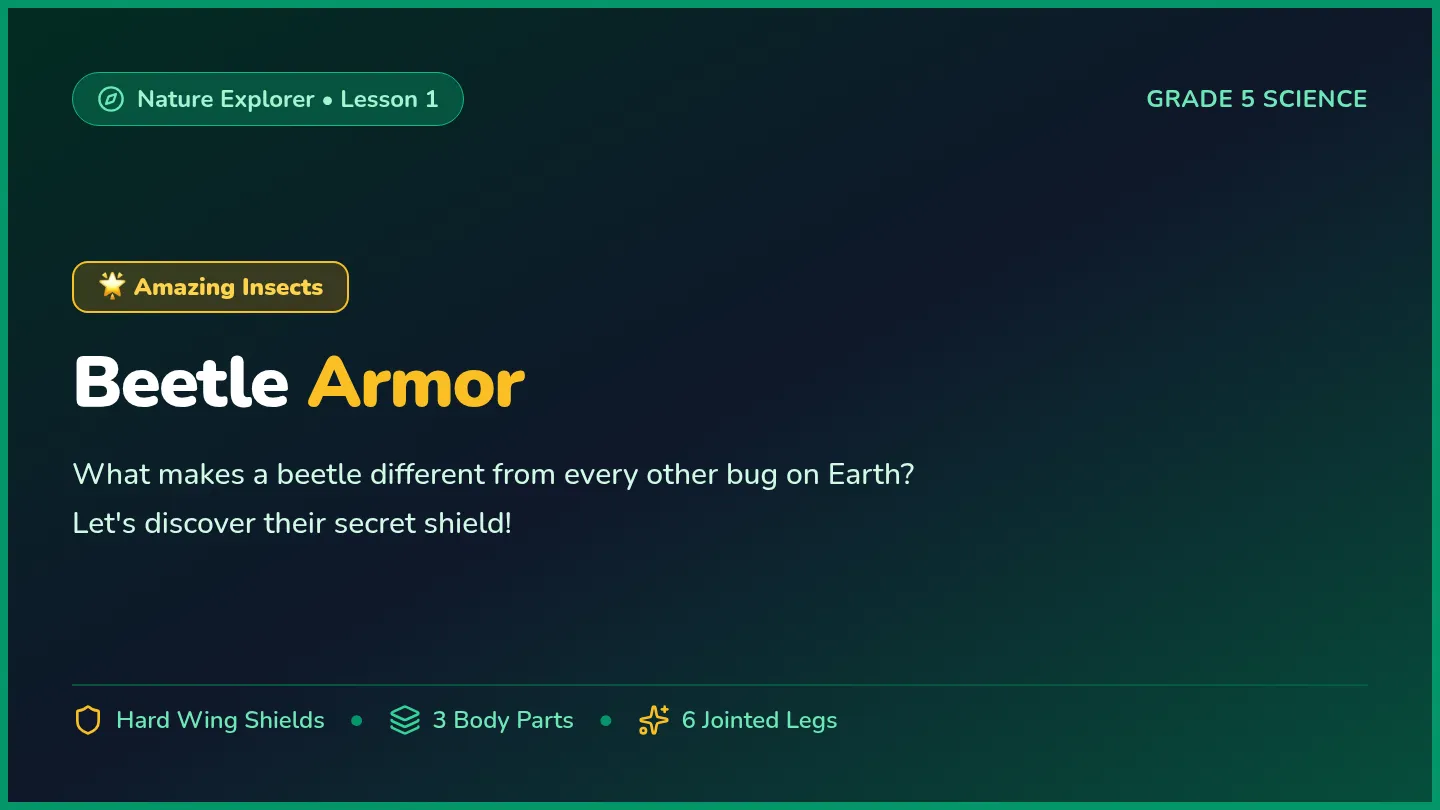
Beetle Armor Slides

Beetle Power

A high-interest, accessible science unit for fifth-grade developing readers exploring beetle anatomy, unique adaptations, and diverse beetle species. Incorporates visual vocabulary, supportive sentence frames, and clear graphic organizers.

A

amy_oshea

9
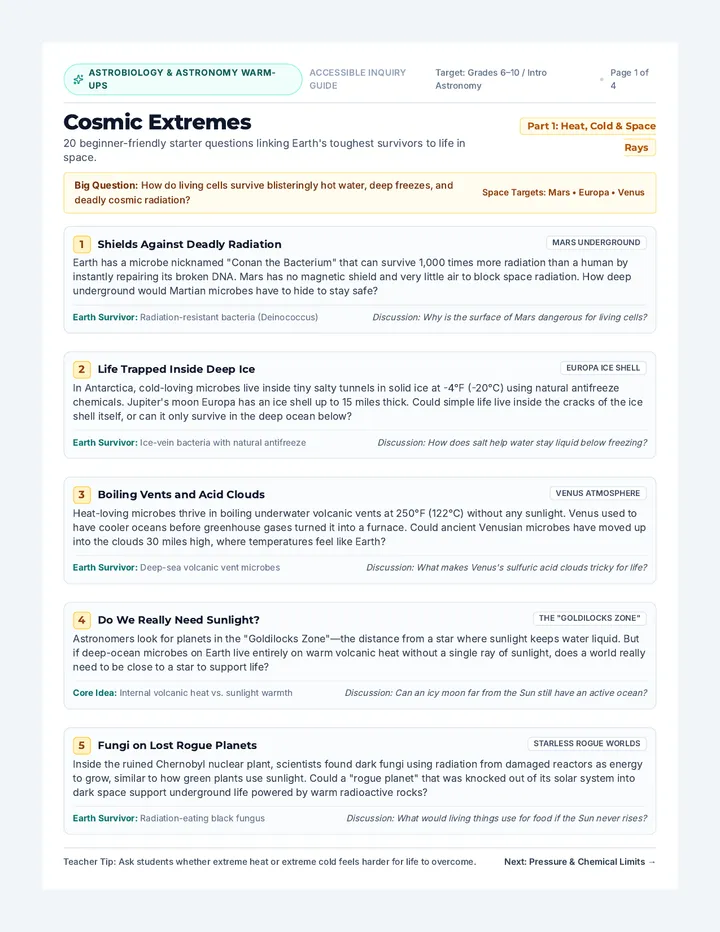
Cosmic Extremes Question Bank

Cosmic Extremes

An astrobiology exploration unit connecting Earth's most resilient extremophiles to planetary exploration across the solar system, habitable zones, and the search for alien life.

M

Megan.Tanner

3
Replication Protocol Slides

Replication Protocol Slides

Classroom presentation slides walking students through enzymatic unzipping, semi-conservative replication modeling with candy strands, proofreading fidelity, and lab evidence collection.

TM

Teri Minami