Winter Ready Lesson Plan
Grades 1–2 • Life Science Seasonal Animal Adaptations
Winter Ready Lesson Plan
50–60 Minutes
Page 1 of 2 • Instructional Guide
Big Guiding Question
How do woodland and backyard animals survive when autumn turns cold and food disappears?
NGSS & Science Standards
1-ESS1-2: Seasonal sunlight & behavior patterns.
2-LS4-1: Diversity of life in different habitats.
Materials Needed
Mystery Fall Box (pinecone, acorn, fleece swatch, feather), Animal Sort Picture Cards, Chart paper, Crayons.
Student Learning Objectives (SWBAT): 1. Identify the three primary ways animals survive winter: Migrate, Hibernate, and Adapt. 2. Classify at least 4 familiar animals (bear, Canada goose, gray squirrel, white-tailed deer) into their survival strategy. 3. Explain why autumn is the essential preparation window before freezing temperatures arrive.
Key Science Vocabulary (Teach with TPR Body Gestures)
Grade-Level Appropriate
1
Migrate
Travel to a warmer habitat where food is plentiful.
Gesture: Flap arms like goose wings.
2
Hibernate
Enter a deep, special winter sleep to conserve energy.
Gesture: Fold hands next to cheek & snore softly.
3
Adapt / Store
Grow thicker fur, change color, or bury seeds and nuts.
Gesture: Pretend to bury nuts like a squirrel.
Phase 1
Hook & Provocation: The Fall Mystery Box
8 Minutes • Whole Group
Teacher Hook: Hold up a mystery box. Pull out items one by one: a warm knitted mitten, an acorn, and a goose feather. Ask students: "When leaves turn red and the air turns crisp in October, you put on a sweater. But a bear doesn't have a sweater closet! What do animals do in the fall to prepare?"
Turn & Talk (1 min): Partners whisper one thing they have noticed squirrels or birds doing in their yard or neighborhood lately.
Anchor Chart Setup: Title chart: "How Animals Prepare in Autumn" with 3 columns labeled Migrate, Hibernate, and Adapt.
Phase 2
Explicit Modeling: The 3 Survival Super-Strategies
14 Minutes • Interactive Direct Instruction
1. Travelers (Migration): Display photos of Canada Geese flying in a V-formation and Monarch Butterflies. Key Concept: They travel south where it stays warm and food is not buried under snow. Practice the wing-flap gesture together.
2. Sleepers (Hibernation): Introduce Black Bears and Chipmunks. Explain hyperphagia (eating extra berries, acorns, and fish all autumn to build a thick layer of fat). In late fall, they curl into cozy dens. Practice sleeping gesture.
3. Stayers & Gatherers (Adaptation): Gray Squirrels cache thousands of acorns and pinecones. White-tailed Deer grow warm winter coats of hollow guard hairs that trap body heat. Practice stash gesture.
Winter Ready Lesson Plan • K–2 Science Curriculum Turn to Page 2 for Guided Practice, Differentiation & Rubrics
Part 2 • Practice & Assessment
Active Practice & Teacher Toolkit
Formative Evaluation
Page 2 of 2 • Implementation
Phase 3
Guided Practice: "Winter Prep Freeze & Move"
10 Minutes • Active Whole Group
Call out an animal and its autumn behavior. Students listen, freeze, and perform the matching gesture while chanting the scientific term:
• "Wild Geese honking high in the sky!" → Flap wings (Migrate)
• "Fat Black Bear crawling in log!" → Curl & Snore (Hibernate)
• "Squirrel burying twenty acorns!" → Dig & Store (Adapt)
• "Snowshoe Hare growing white fur!" → Brush coat (Adapt)
Phase 4
Partner Application: "Animal Autumn Job Sort"
12 Minutes • Small Group / Pairs
Task: Student pairs sort 6 animal cards (Bear, Deer, Goose, Chipmunk, Monarch Butterfly, Squirrel) into 3 columns: Fly Away (Migrate), Deep Sleep (Hibernate), and Stay & Prepare (Adapt).
Accountable Talk Prompt: "I placed the squirrel in Adapt because in fall it collects nuts to eat all winter."
Teacher Check: Probe reasoning: "Why can't a Monarch Butterfly simply sleep in our cold playground?"
Phase 5
Closure & Rapid Exit Ticket: "Animal Detective Riddle"
8 Minutes • Whole Group & Exit Formative
Gather on the rug. Read the riddle: "I eat berries in September, get super roly-poly, and sleep through snowstorms. Who am I and what do I do?" (Black Bear / Hibernate). Students complete a quick 1-question pictorial exit slip or thumbs check before dismissal.
Tier 1 / ELL Scaffolds
- Color-coded sorting mats matching vocabulary icons.
- Sentence frame: "In fall, the [animal] will [strategy]."
- Reinforce with tactile props (fur vs. feather).
Extension & Depth
- Investigate the Wood Frog (its body freezes in fall leaves).
- Map Monarch Butterfly migration paths to Mexico.
- Draw chipmunk underground food storage tunnels.
Common Misconceptions
- Misconception: Animals only prepare when snow falls. (Fall is the key prep window!).
- Misconception: Bears stay in a dead coma. (It is seasonal dormancy; they can wake up).
Formative Assessment Rubric (Observations & Exit Work)
Standards-Referenced
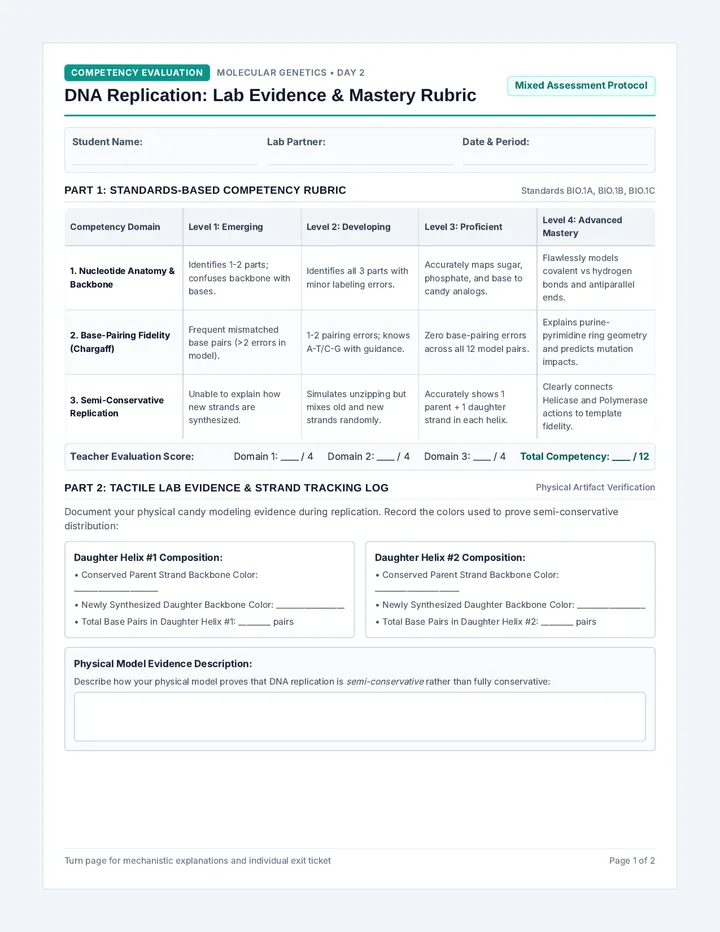
| Criteria | Exceeds (3) | Meets (2) | Developing (1) |
|---|
| 1. Strategy Vocabulary | Accurately uses all 3 terms and explains the difference clearly. | Uses terms with minimal teacher reminders or gesture cues. | Confuses hibernation with migration without prompts. |
| 2. Animal Sorting | Correctly classifies 5–6 animals and gives biological reasons. | Correctly classifies 4 animals with appropriate grouping. | Requires 1-on-1 support to sort more than 2 animals. |
| 3. Seasonal Timing | Explains why autumn preparation is vital before winter freezing occurs. | Connects fall actions (eating, storing) to surviving winter cold. | Identifies winter as cold but cannot link autumn preparation actions. |
Winter Ready Lesson Plan • Teacher Preparation & Delivery Kit Grade 1–2 Elementary Science