A wordless set of 12 full-size illustrated picture cards for first grade science, depicting push and pull forces purely through visual storytelling and directional force cues.
A multi-grade hands-on science sequence emphasizing experiential investigations, energy concepts, clear classroom procedures, proactive behavior management, and deep cognitive engagement.
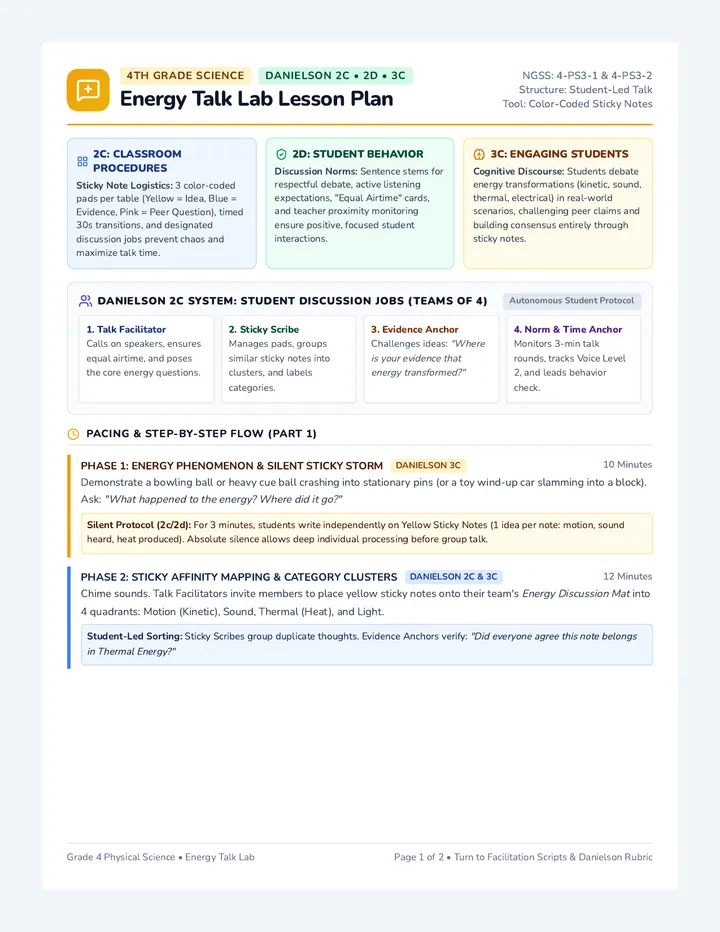
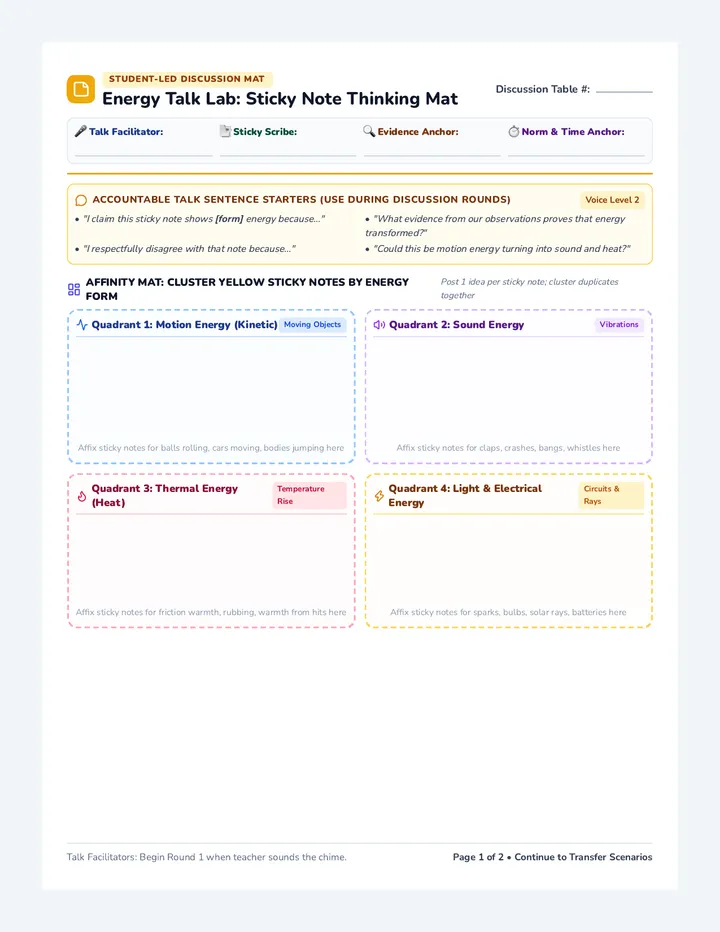
A 4th-grade physical science inquiry lesson on energy transfer and forms of energy powered by student-led sticky note discussions, silent affinity mapping, and structured peer discourse. Built directly to exemplify Danielson Rubric standards for managing classroom procedures (2c), managing student behavior during peer talk (2d), and engaging students in high-level intellectual discussions (3c).
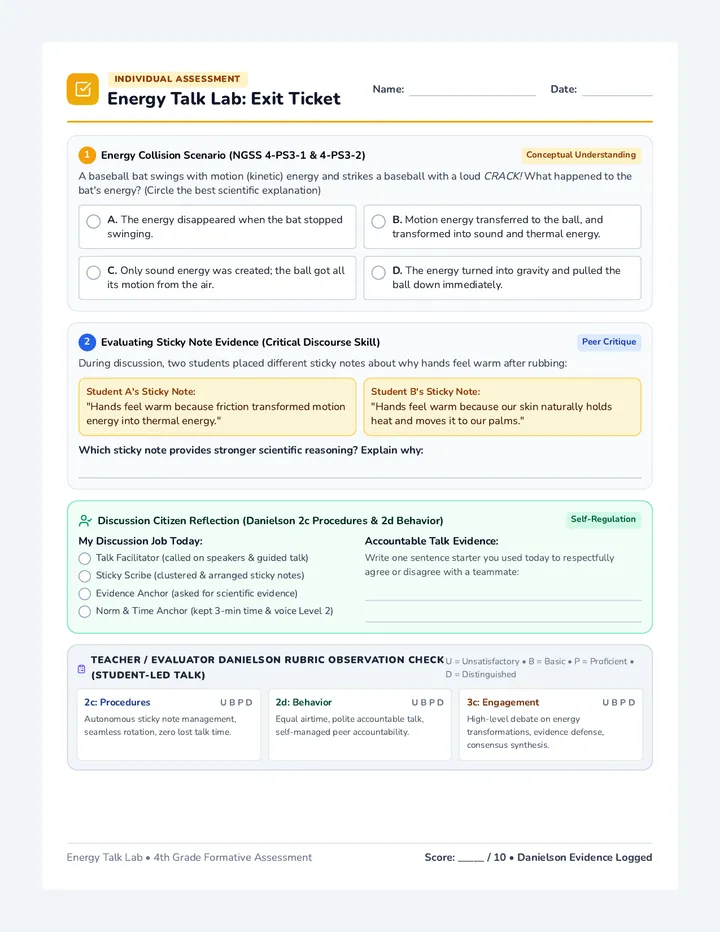
A single-page formative exit ticket and Danielson observation assessment for the Energy Talk Lab. Features conceptual energy transfer questions (3c), sticky-note evidence evaluation (3c), student discussion role and conduct reflection (2c/2d), and an administrator/teacher Danielson observation scoring guide.
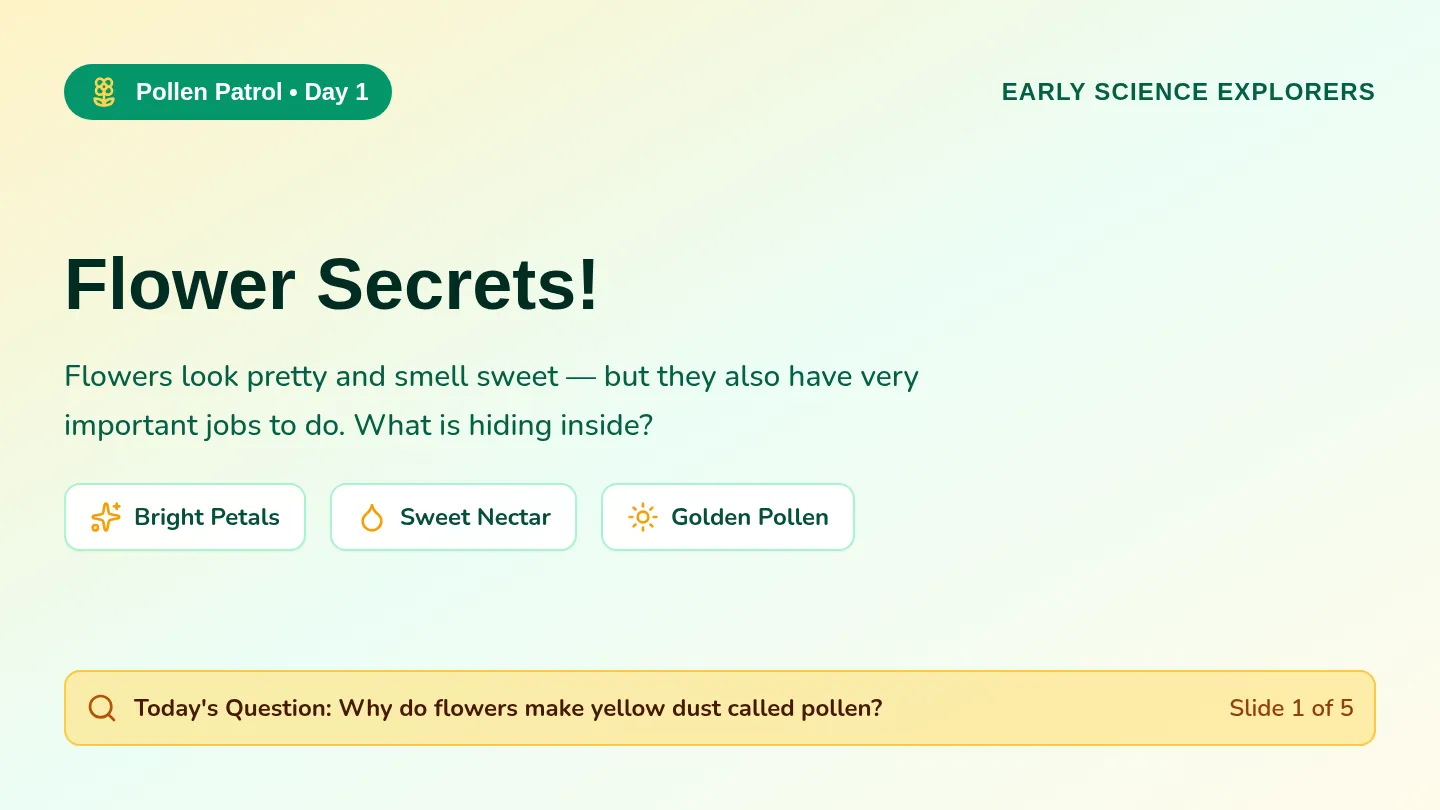
A hands-on, three-part early elementary science sequence exploring how flowers, pollinators, and food connect. Students discover flower parts, meet animal helpers, and see how pollination creates seeds and fruits.
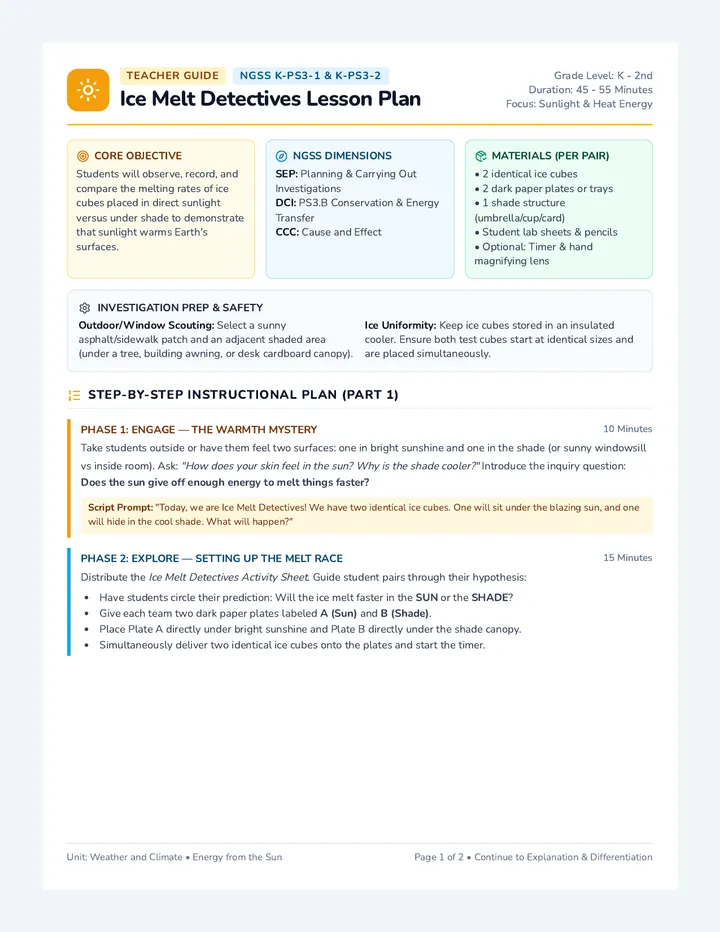
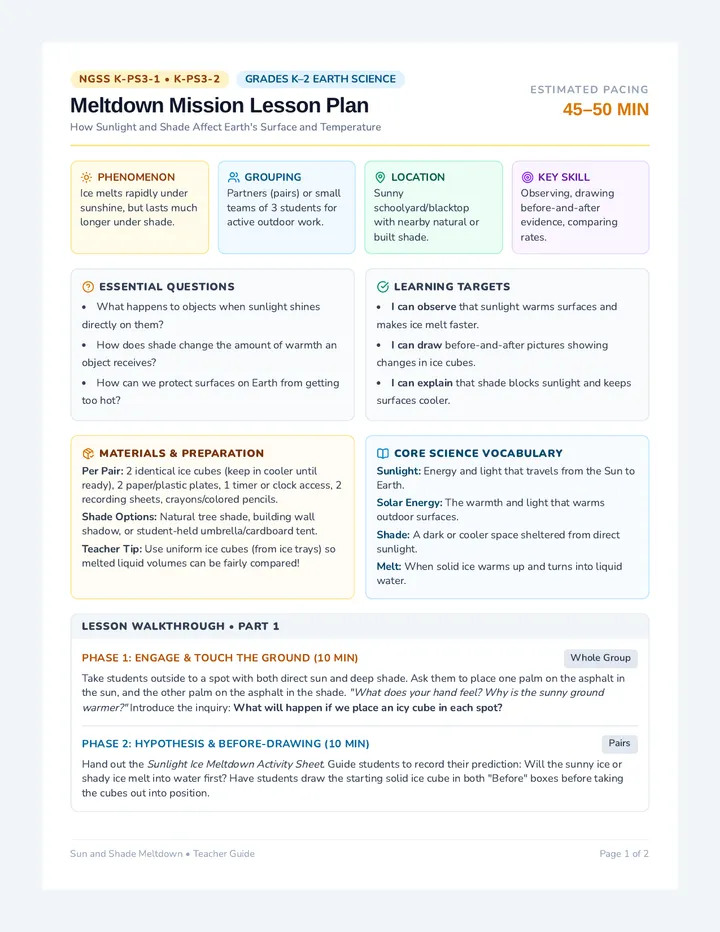
An early elementary science lesson where young scientists investigate how sunlight warms surfaces by observing and comparing ice cubes melting in direct sunlight versus under shade structures. Students make predictions, record before-and-after observations with drawings, and discover the cooling power of shade.
A two-page student-led discussion packet and sticky note thinking mat for 4th-grade energy investigations. Features cooperative discussion roles, accountable talk sentence stems, a four-quadrant energy affinity mat, energy transfer scenario analysis, and peer critique reflection.
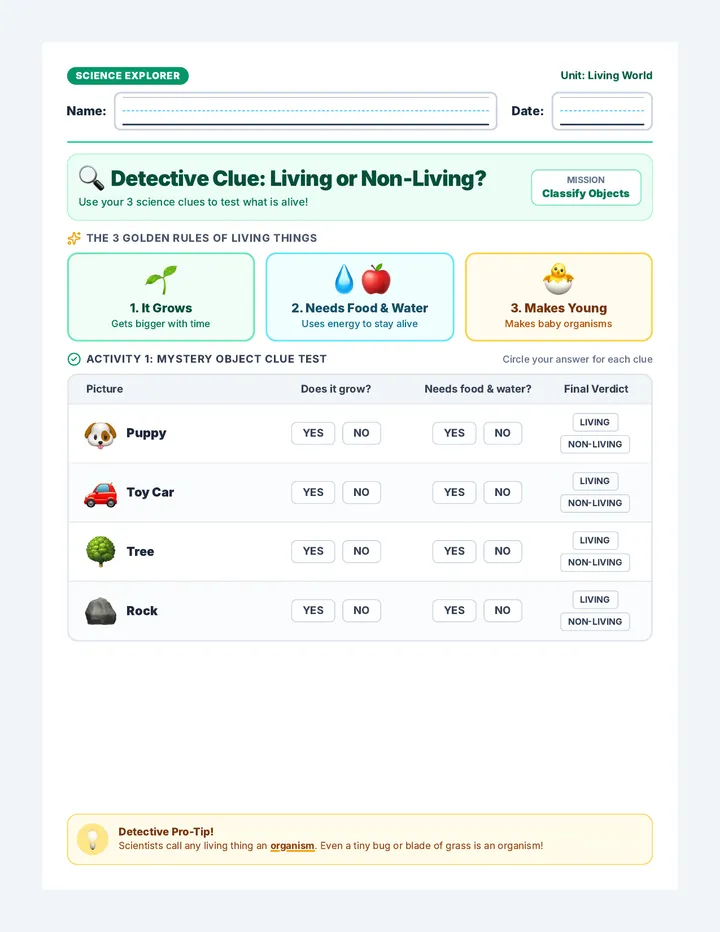
A high-engagement, hands-on science sequence exploring the natural world through classification, distinguishing living from non-living things and discovering animal traits. Designed with visual supports, accessible text, and playful sorting activities tailored for diverse learners.
A hands-on early elementary earth science lesson where students investigate how sunlight warms Earth's surface by comparing ice melting rates in direct sun versus shade. Students make predictions, build or locate shade structures, record observations through drawings, and discover how shade blocks solar energy.
A comprehensive two-page 4th-grade science lesson plan focusing on energy transfer through student-led sticky note discussions. Explicitly aligned to Danielson Framework components 2c (classroom procedures and sticky note logistics), 2d (discussion norms and behavioral self-monitoring), and 3c (high cognitive demand and peer scientific discourse).
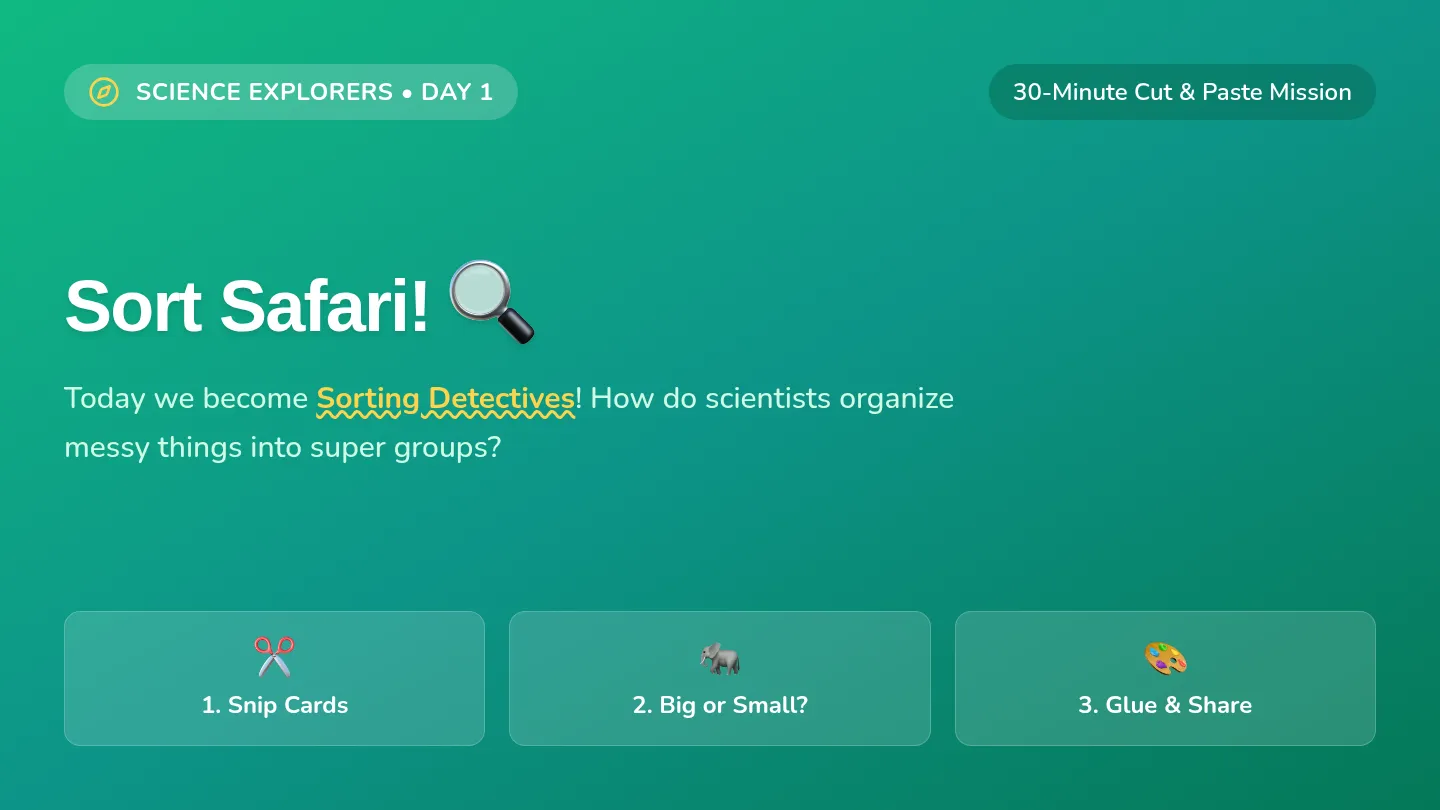
A two-day hands-on science sequence for 1st graders exploring sorting and the characteristics of living versus nonliving things. Students engage through active object sorting, BrainPOP Jr. investigation, movement games, and visual classification.
An engaging elementary science lesson exploring why deciduous trees shed their leaves in autumn, how chlorophyll hides colorful pigments, and how trees protect themselves for winter. Designed to accompany the Mystery Science mini-lesson with interactive slides, differentiated worksheets for Level 1 and Level 2, and teacher guides.
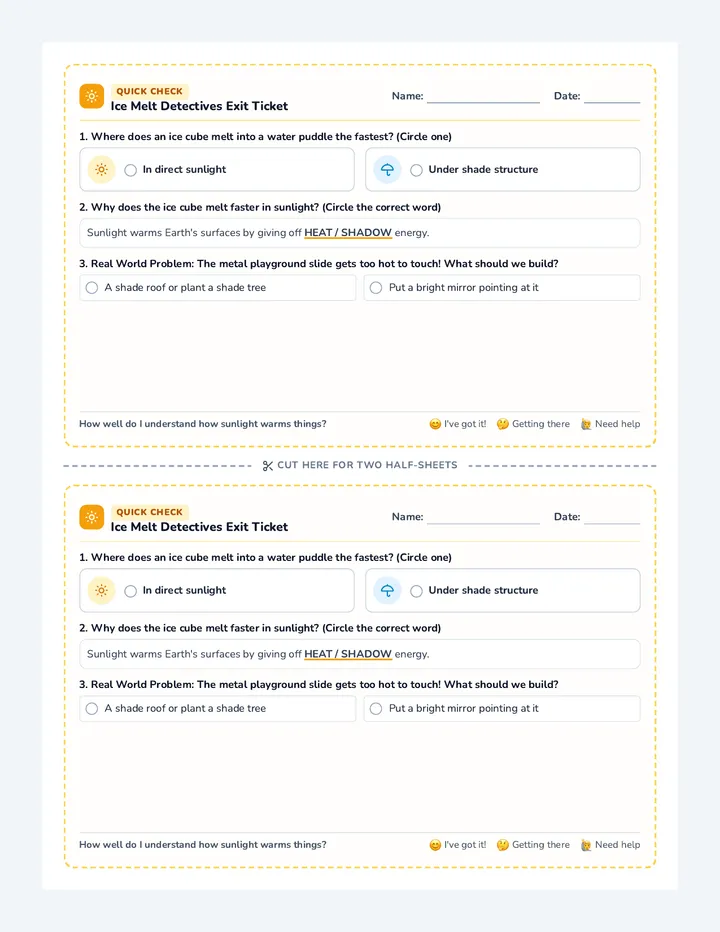
A two-up printable half-sheet exit ticket for the Ice Melt Detectives experiment. Features accessible pictorial multiple-choice questions on solar heating, cause-and-effect reasoning, real-world shade application, and a self-assessment scale.