Hillside Runoff Lab Worksheet
Grades 3–5 Earth Science Lab
Hillside Runoff Lab
Name:
Date:
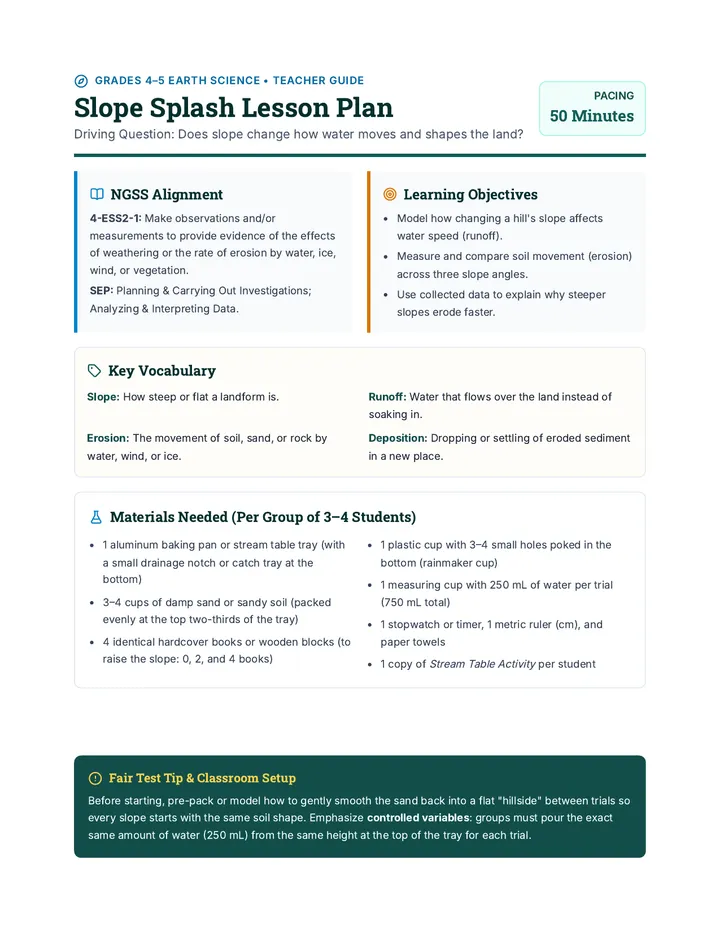
Investigation Question
How does the steepness (slope) of a hill affect how fast water runs off (runoff speed) and how much soil washes away (erosion)?
Part 1: Plan a Fair Test
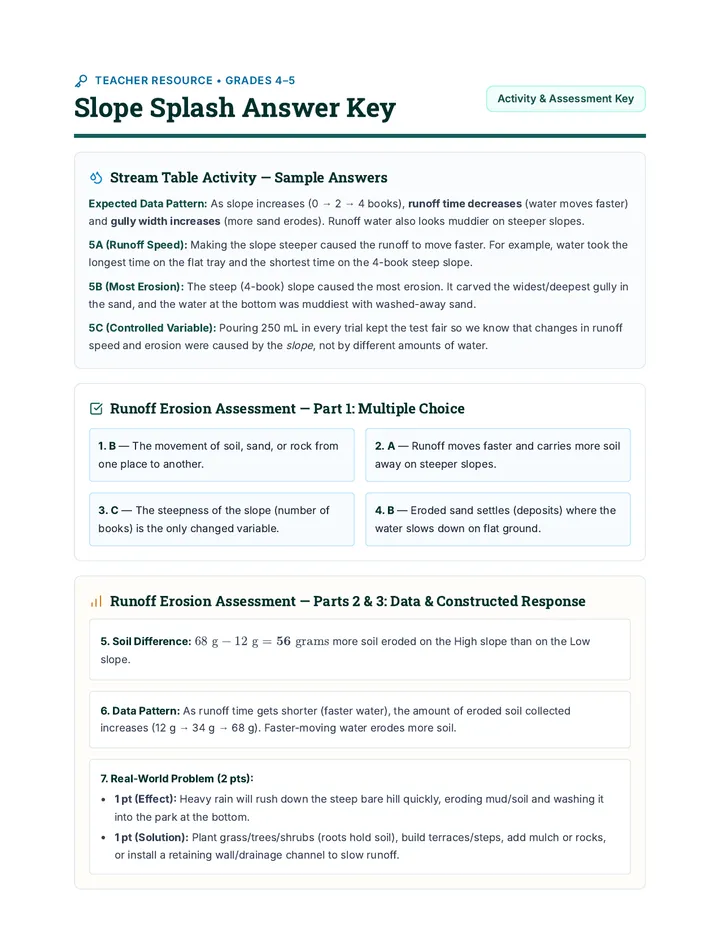
In a fair test, we only change one thing at a time so we know what caused our results. Everything else must stay the same!
1. What We Change
Slope Steepness
0, 1, 2, 3, and 4 books high
2. What We Measure
Runoff & Erosion
Water time (seconds) and amount of soil washed away
3. Keep the Same
Fair Test Controls
Same amount of water, same soil tray, same pour height
Why is it important to pour the exact same amount of water on every slope?
Part 2: Make a Prediction
Before you test, predict what will happen! Which slope (0 to 4 books) will have the fastest runoff and the most erosion? Explain your thinking.
Part 3: Observe & Record Data
5 Slope Trials
Pour the same amount of water at the top of each slope. Time how long it takes to reach the bottom, then record the runoff speed, soil erosion, and what you observe.
| Slope Setup | Time to Bottom (seconds) | Runoff Speed
(Slow / Med / Fast) | Soil Washed Away
(None / A Little / A Lot) | What I Observed
(Notes or Sketch) |
| --- | --- | --- | --- | --- |
|
Flat Slope
0 books high
| | | | |
|
Gentle Slope
1 book high
| | | | |
|
Medium Slope
2 books high
| | | | |
|
Steep Slope
3 books high
| | | | |
|
Very Steep
4 books high
| | | | |
Part 4: Cause-and-Effect Explanations
1. How did making the slope steeper affect the runoff speed? Use numbers from your data table to support your answer.
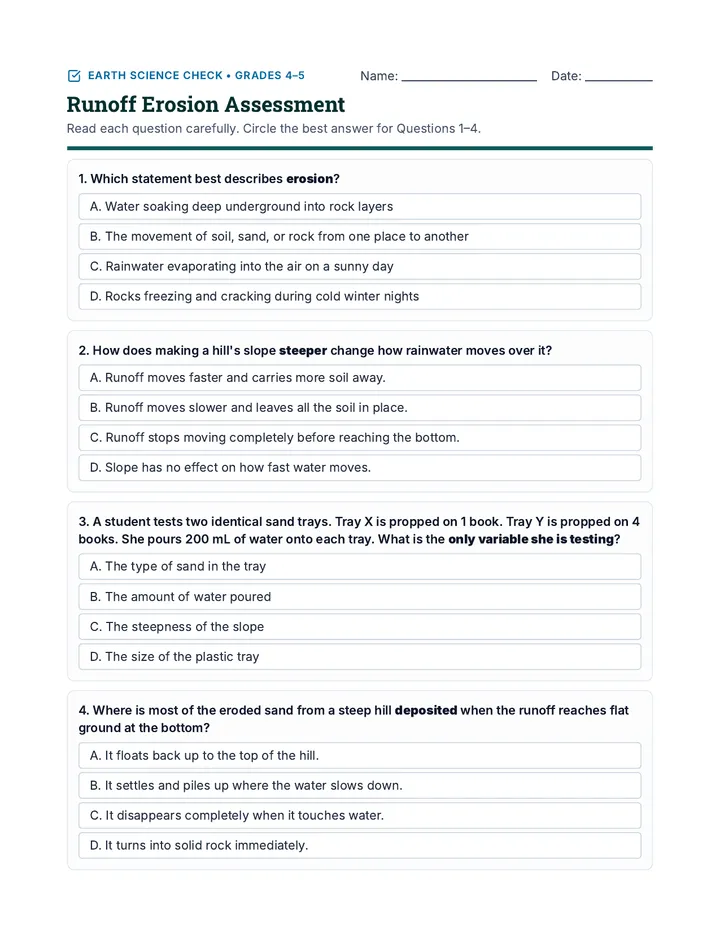
2. Explain the cause-and-effect link between steeper slopes, fast water, and soil erosion.
3. Real-World Connection: Why should builders or farmers be careful with steep, bare hillsides during a heavy rainstorm?