A reflection lesson designed for 2nd-grade students following a 'Wildlife on Wheels' animal visit, focusing on observation, curiosity, and creative expression.
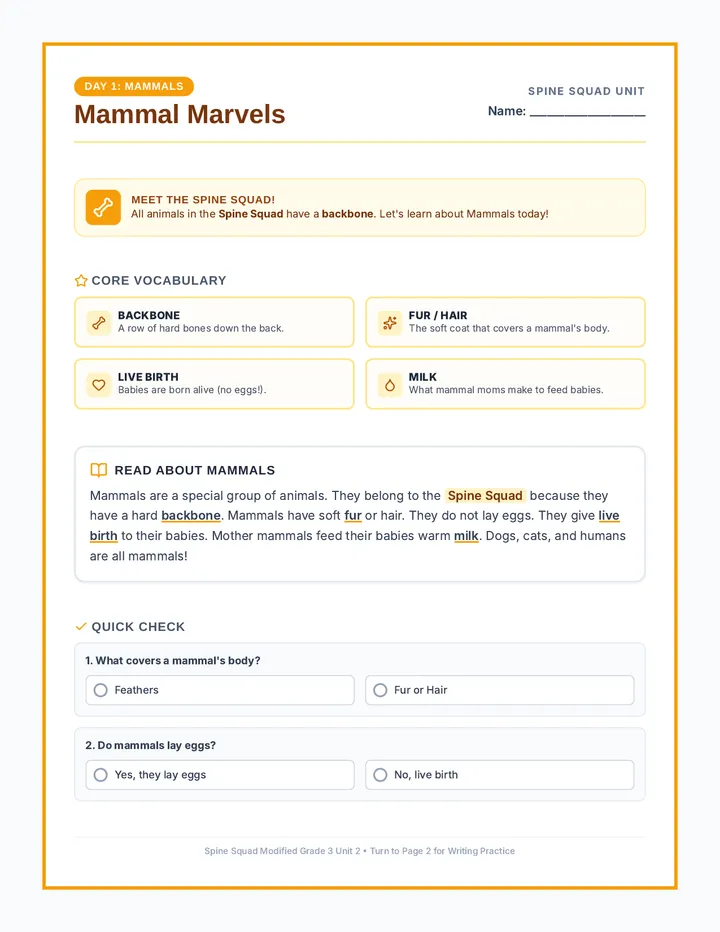
A five-day modified animal classification unit focusing on the five main vertebrate groups, designed with extensive visual support, sentence frames, and tracing options for modified learning.
An engaging and accessible mini-lesson on the water cycle designed for early elementary students. It features a simplified reading passage, a comprehension worksheet with word bank fill-in-the-blanks and picture identification, a hands-on cut-and-glue matching activity, and complete teacher answer keys.
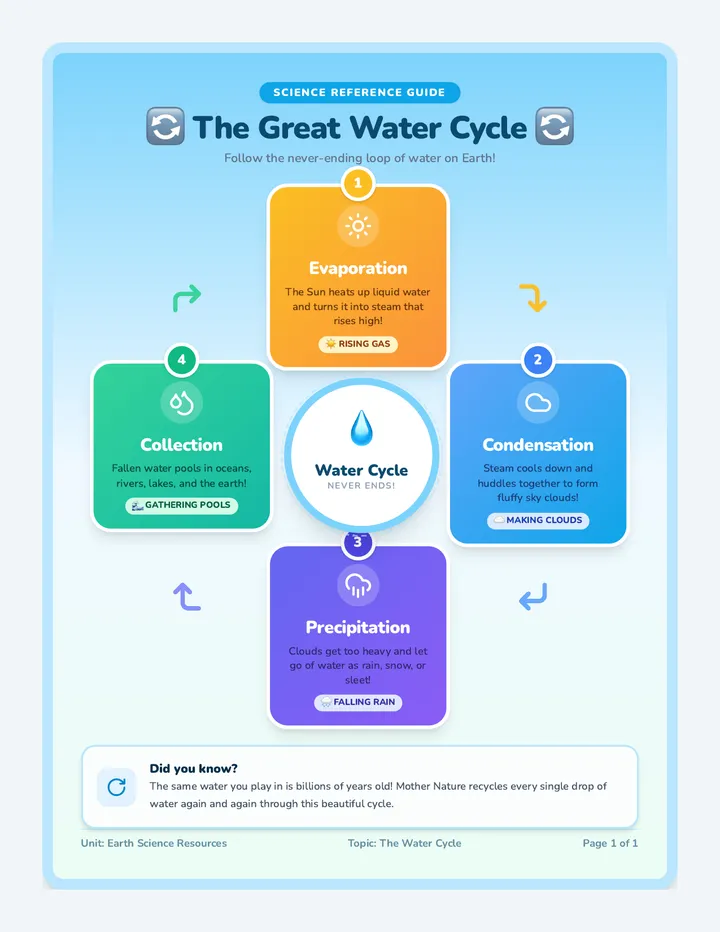
A visually stunning, high-contrast, educational water cycle diagram poster. It presents the full cycle (Evaporation, Condensation, Precipitation, and Collection) with large titles, clear arrows, friendly illustrations, and distinct sections, making it perfect for classroom display or desk reference.
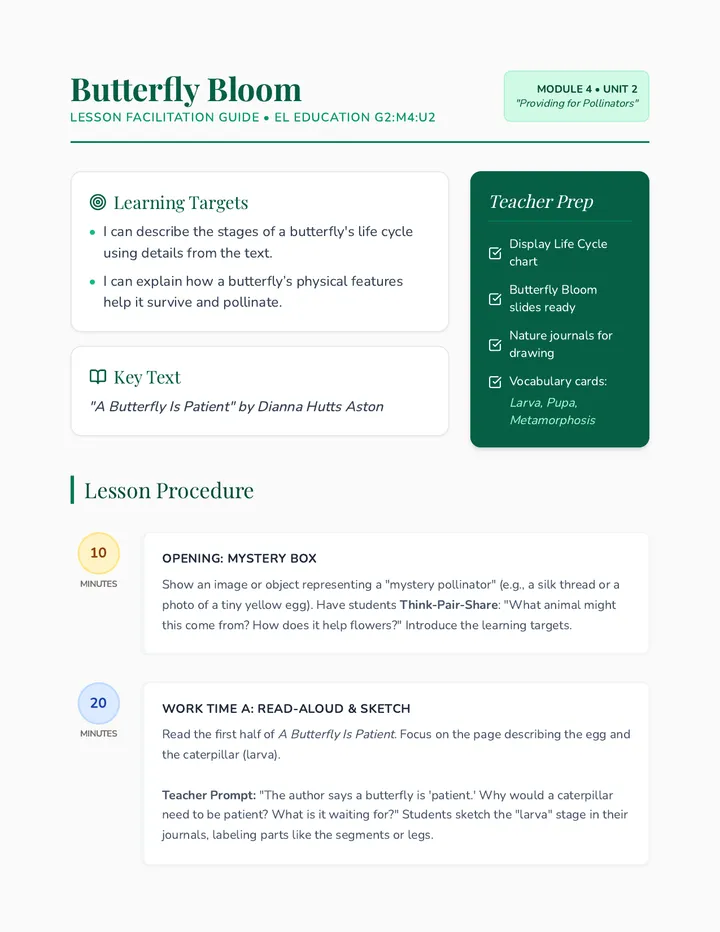
Grade 2, Module 4: 'Providing for Pollinators' focuses on the life cycles of pollinators, specifically butterflies, and how they interact with their habitats to support our environment. This sequence covers the core of Unit 2, moving from the physical characteristics and life cycles to the specific ways these insects provide for our ecosystem.
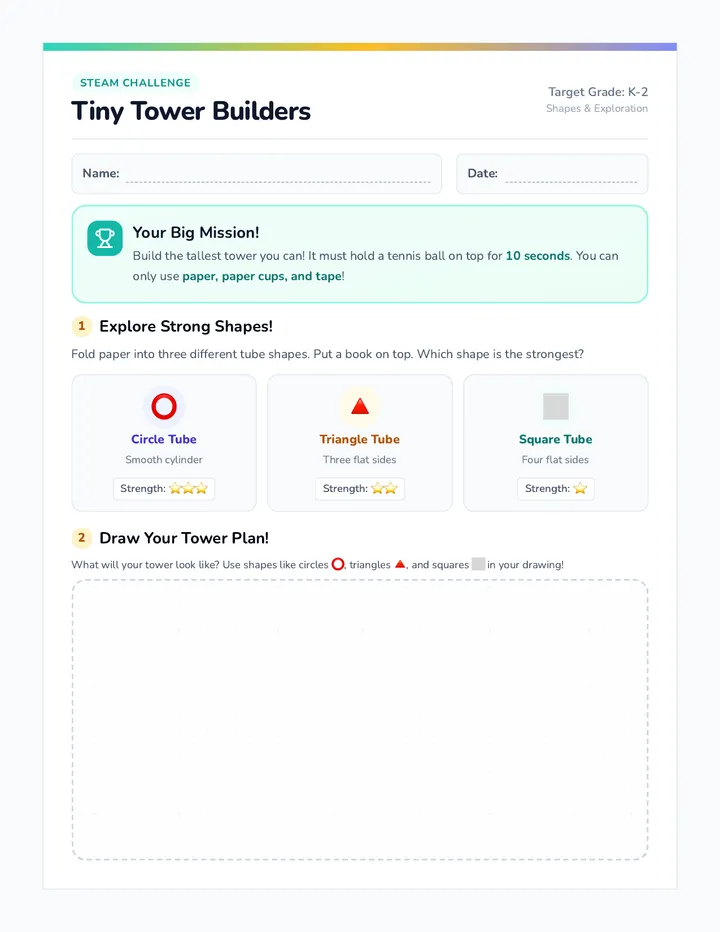
An engaging hands-on STEAM engineering challenge where students design, build, and test a tower made of simple materials to support a load. Includes differentiated guides for early elementary (K-2) focusing on shapes and exploration, and upper elementary (3-5) focusing on the engineering design process and collaboration.
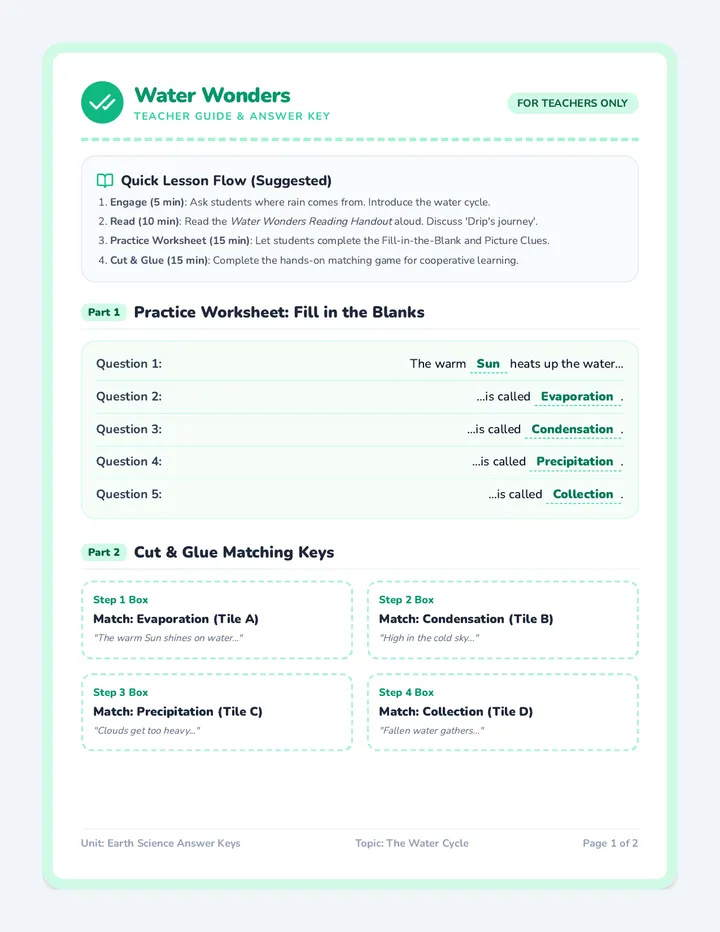
A complete teacher answer key and lesson guide. Page 1 provides a quick instructional outline and the correct answers for the Fill-in-the-Blank and Cut-and-Glue matching activities. Page 2 provides suggested answers and grading parameters for the Picture Clues student descriptions.
An unplugged computational thinking lesson for grades 2-4 where students help Zizi, a friendly coding mascot, navigate grids, learn about algorithms, and master basic debugging concepts.
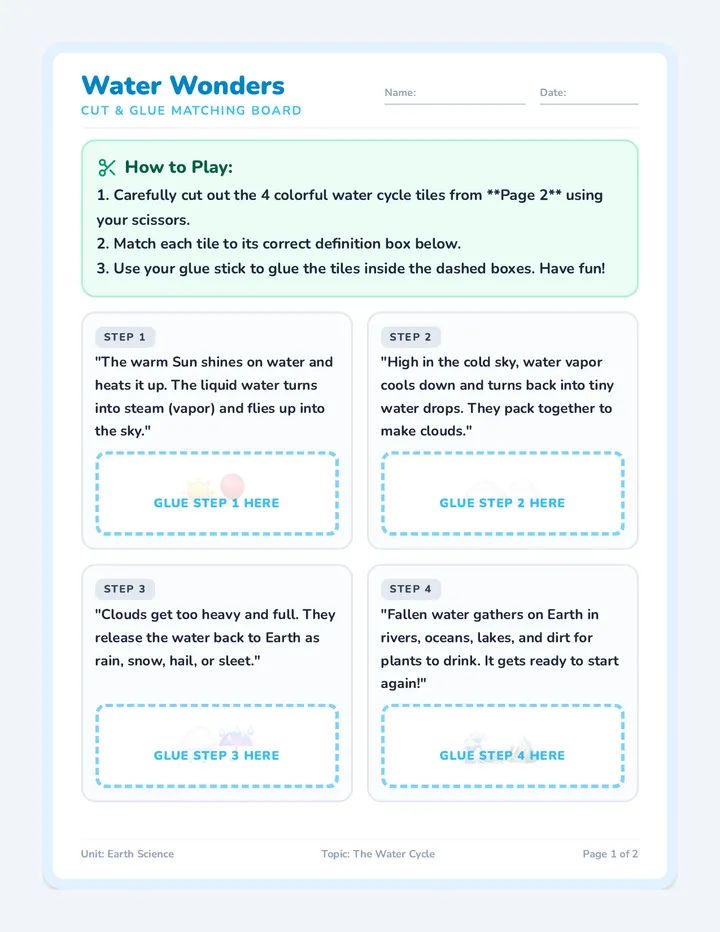
A fun, hands-on 2-page cut-and-glue matching activity. Page 1 is the 'Water Cycle Board' featuring definition boxes with cute dashed borders where students glue their answers. Page 2 contains four beautifully illustrated, easy-to-cut term tiles with visual icons and friendly slogans.
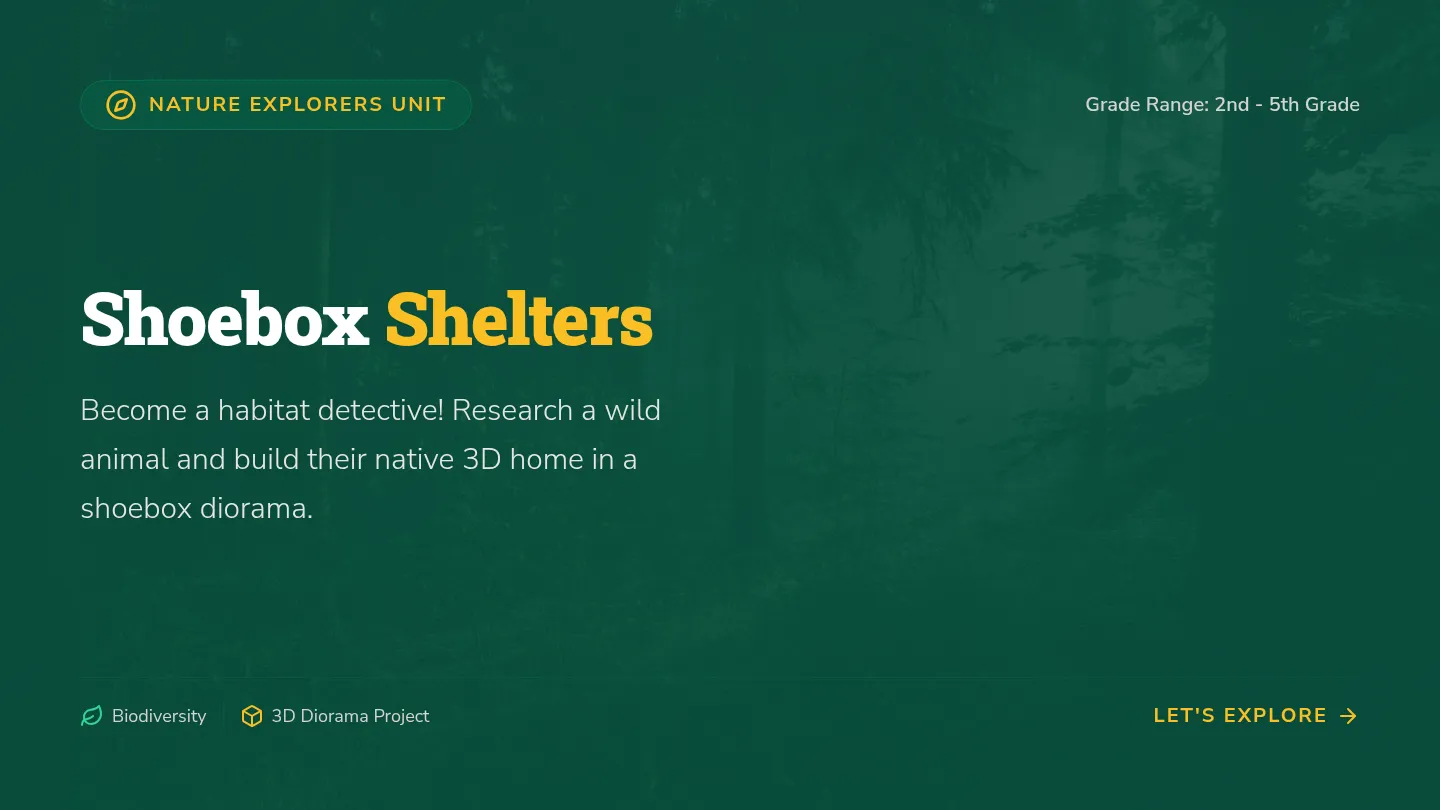
A complete project bundle where students research an animal's habitat and design a detailed shoebox diorama. This lesson includes interactive presentation slides, scaffolded research sheets with visual choice boards, a blueprint planner, and a comprehensive teacher guide with a rubric.
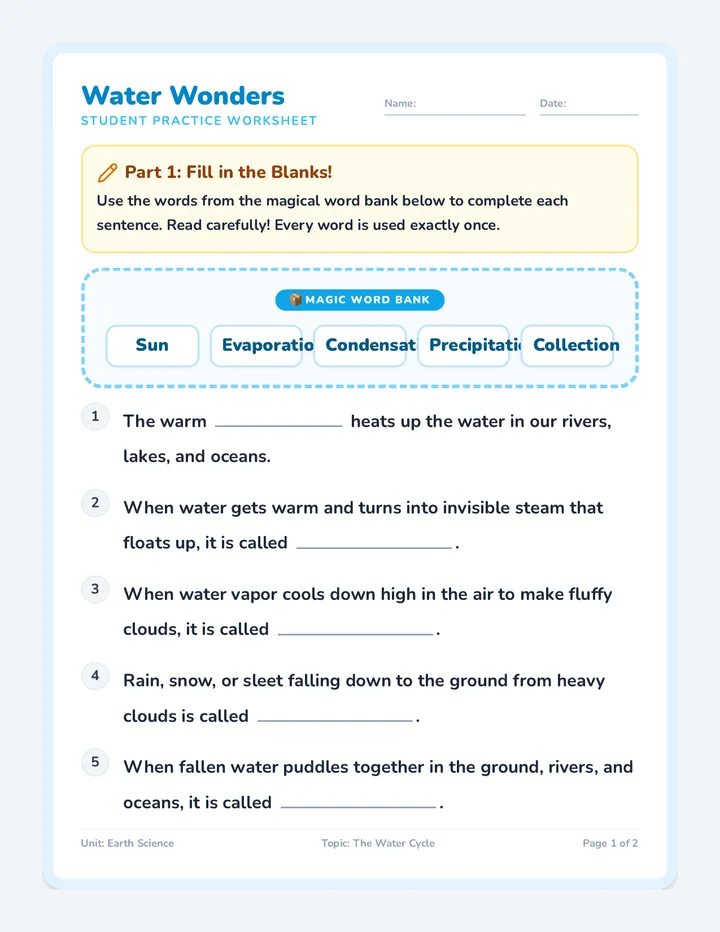
A student-facing 2-page practice worksheet. Page 1 features a clear word bank at the top followed by five easy-to-read fill-in-the-blank questions. Page 2 provides icon-driven picture clues where students identify and describe each of the four main stages of the water cycle in their own words.
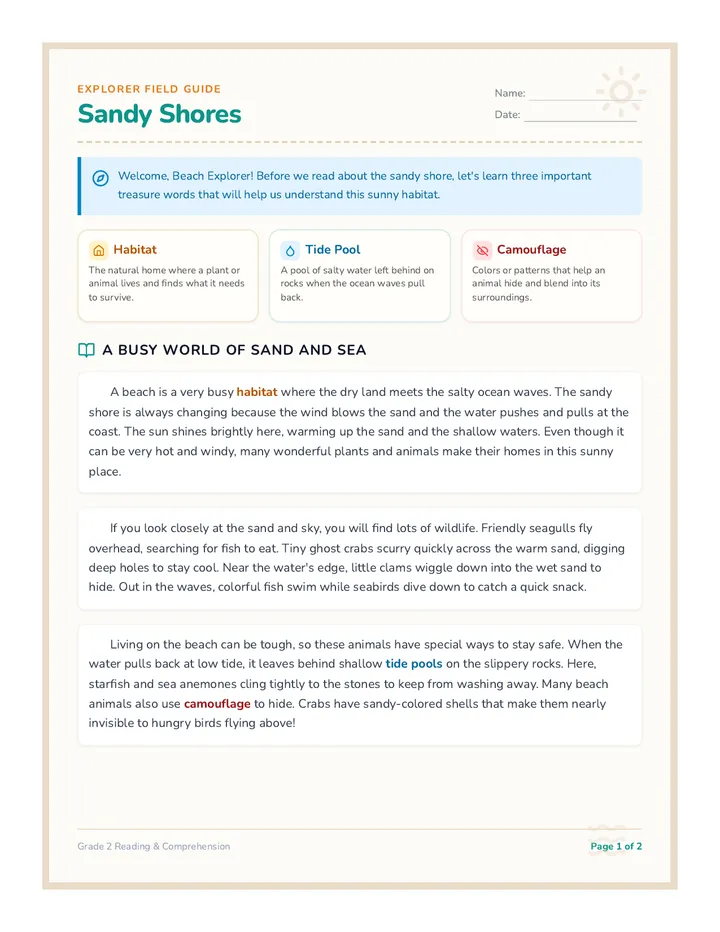
An engaging, beach-themed lesson for 2nd graders to explore the sandy shore habitat through vocabulary review, a reading comprehension passage, and a timed fluency reading tracker.
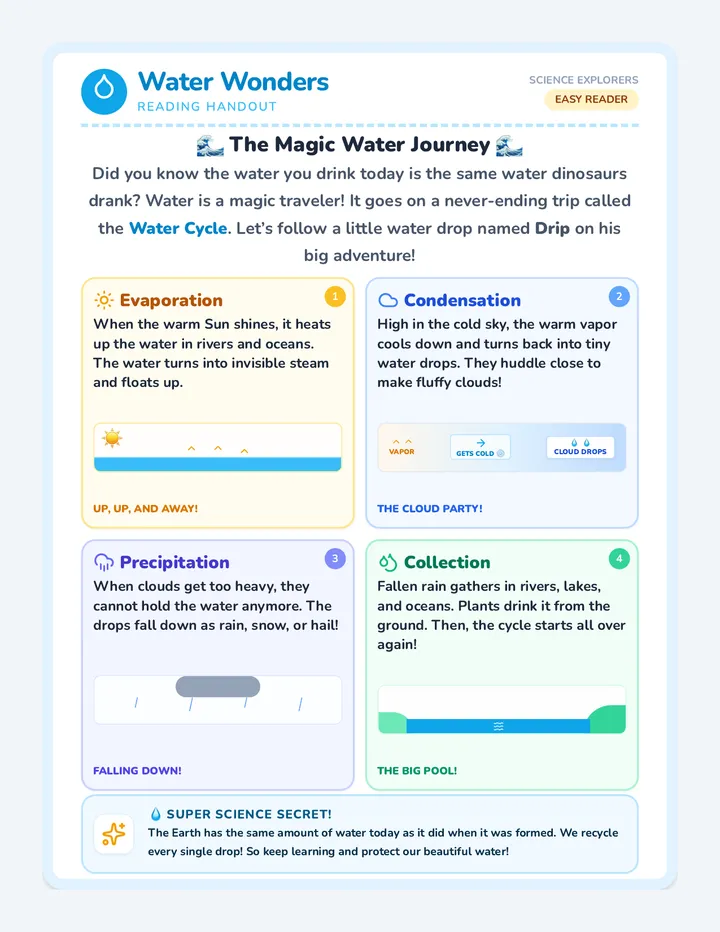
A highly legible, beautifully designed reading handout for early elementary students. It tells the story of the water cycle through a friendly character named 'Drip', using large font size, simple vocabulary, and clear visual sections for each step of the cycle.