A comprehensive introduction to how telescopes work, their history, and the famous ones that help us see deep into space. Students will explore different types of telescopes through a massive research quest.
A 4-hour independent learning sequence where students investigate fossil formation, environmental changes over time, and the secrets of the fossil record.
Synthesizing knowledge to analyze a fossil "dig site" and completing a final assessment.
Exploring the differences between body fossils (bones, teeth) and trace fossils (footprints, burrows).
Using fossil evidence to determine whether an area was once a marine, desert, or forest environment.
Introduction to how fossils form through the process of sedimentary rock layering and preservation.
A biology and health lesson focused on bone growth, mineral density, and the lifelong habits required to build a strong skeletal foundation through nutrition and exercise.
An introductory lesson on renewable and non-renewable energy resources, focusing on the science behind solar, wind, and hydroelectric power. Students will explore how these energy sources work and their impact on the environment.
A whole-group lesson where students identify cause and effect relationships by analyzing how animal adaptations help fairy tale creatures survive their stories.
A comprehensive review of Earth's atmospheric layers, the crucial role of the ozone layer, and the chemical impact of CFCs on our planetary shield.
A comprehensive year-end science review for 5th grade designed as a high-energy Jeopardy-style game. This lesson covers matter, Earth systems, space, ecosystems, and scientific inquiry to prepare students for end-of-year assessments.
This four-day lesson guides students through the physics of sound, focusing on pitch and wavelength. It features a teacher-led demonstration of vibrating strings/rulers and a high-interest scientific journal article designed for Lexile 600-800 readers.
A simplified, symbol-supported lesson on surface water movement, covering watersheds, stream systems, and flood safety, themed around the world of Equestria.
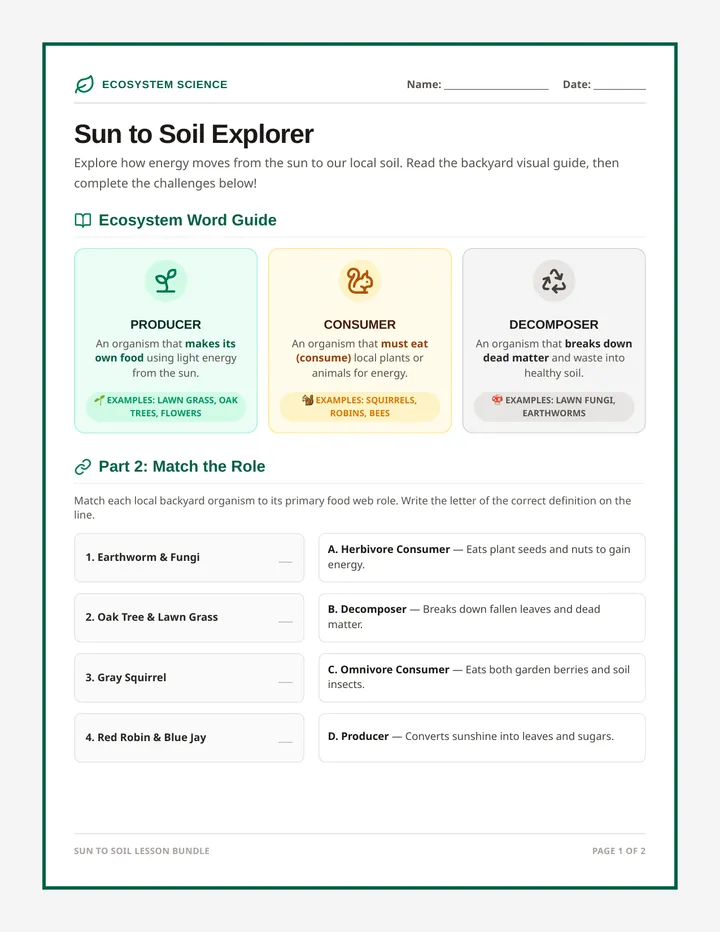
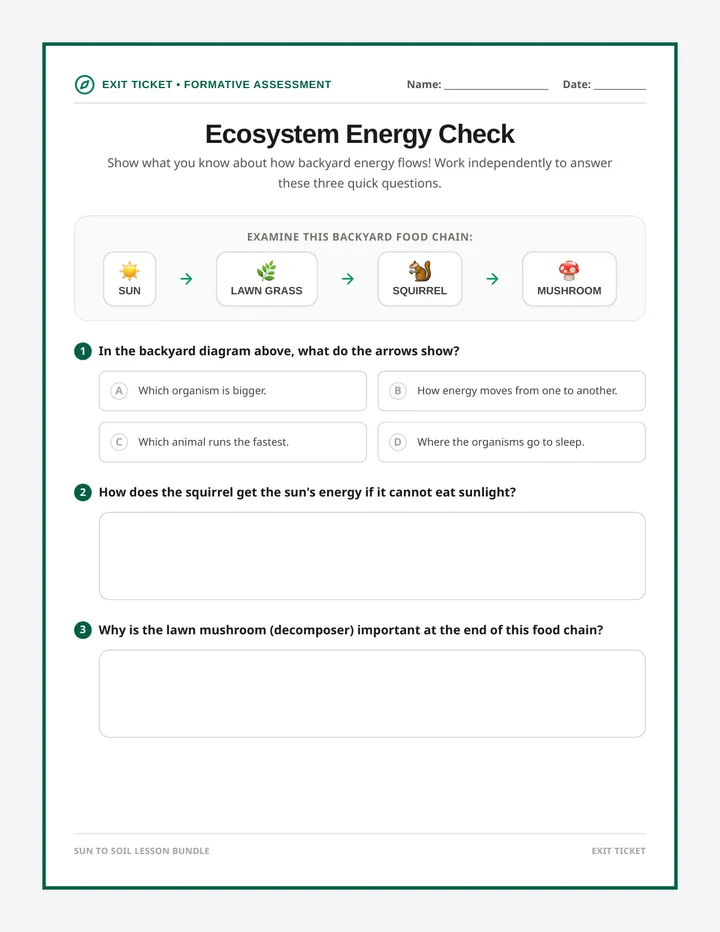
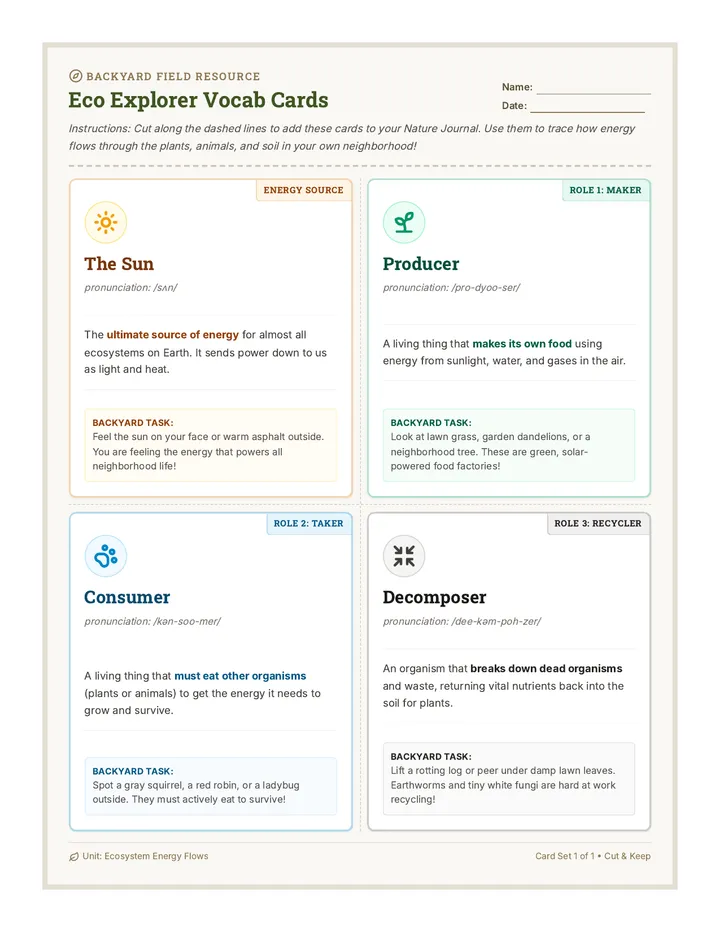
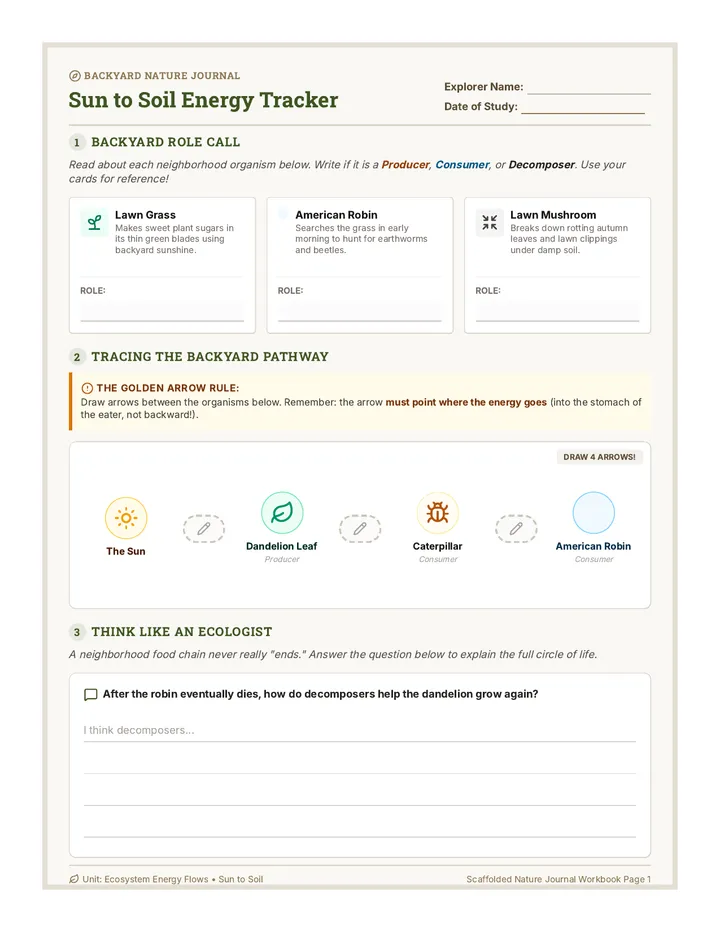
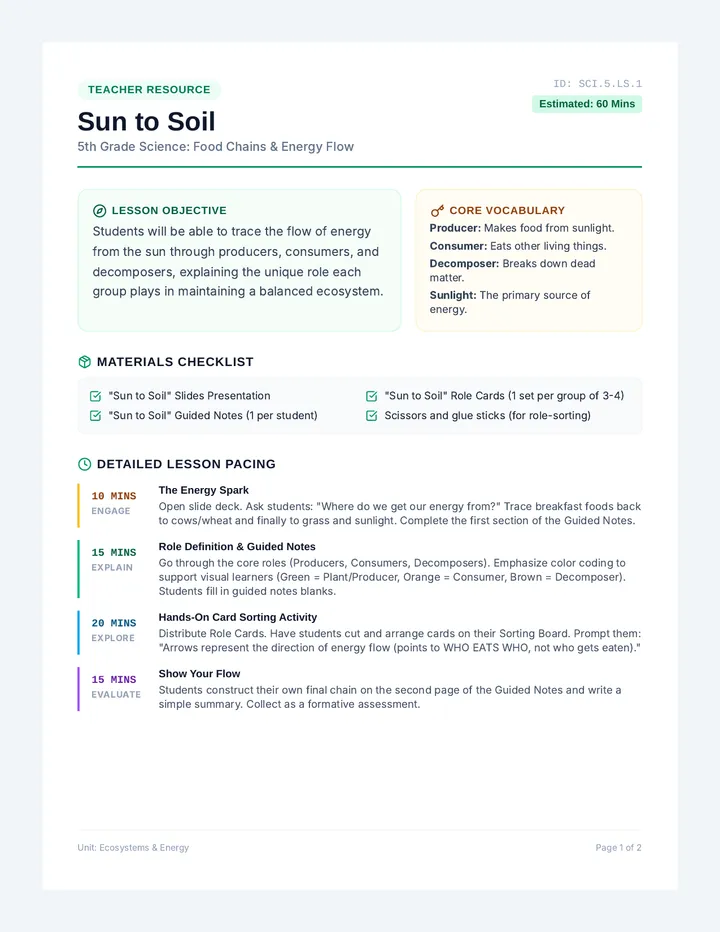
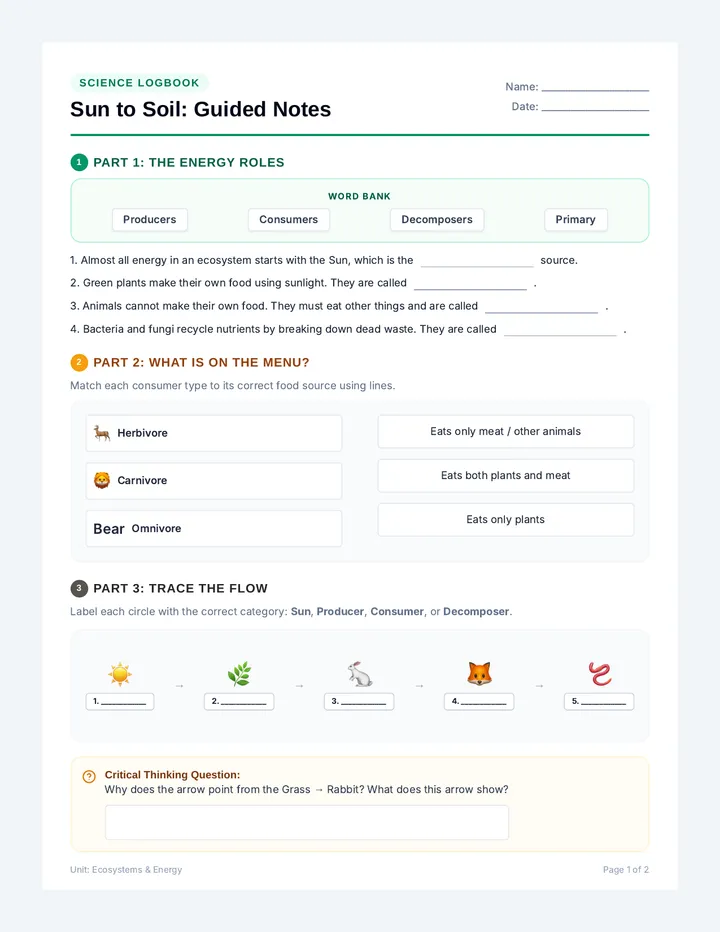
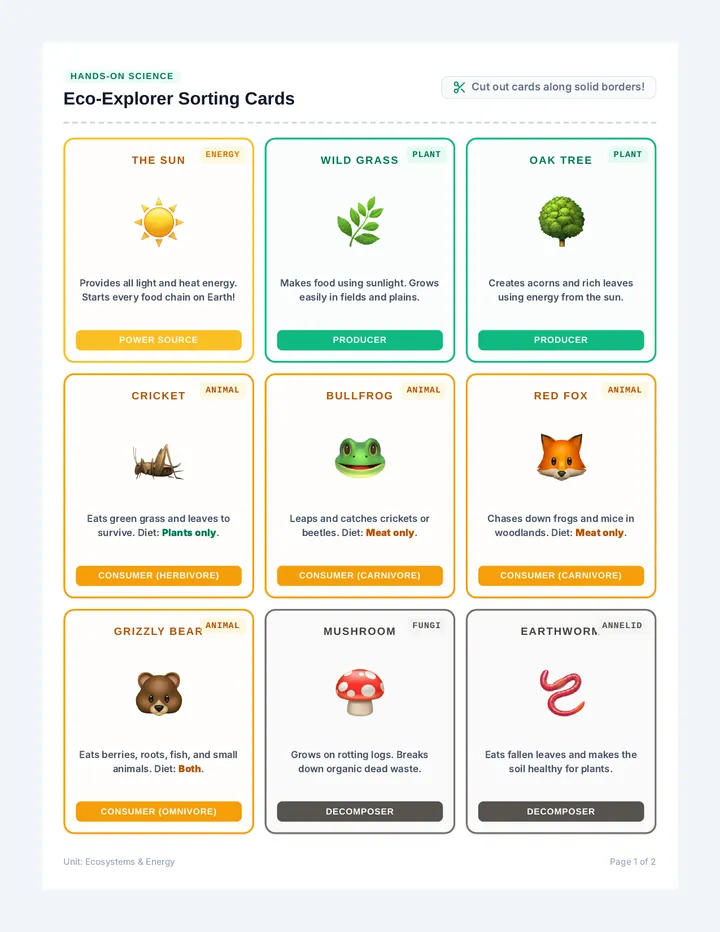
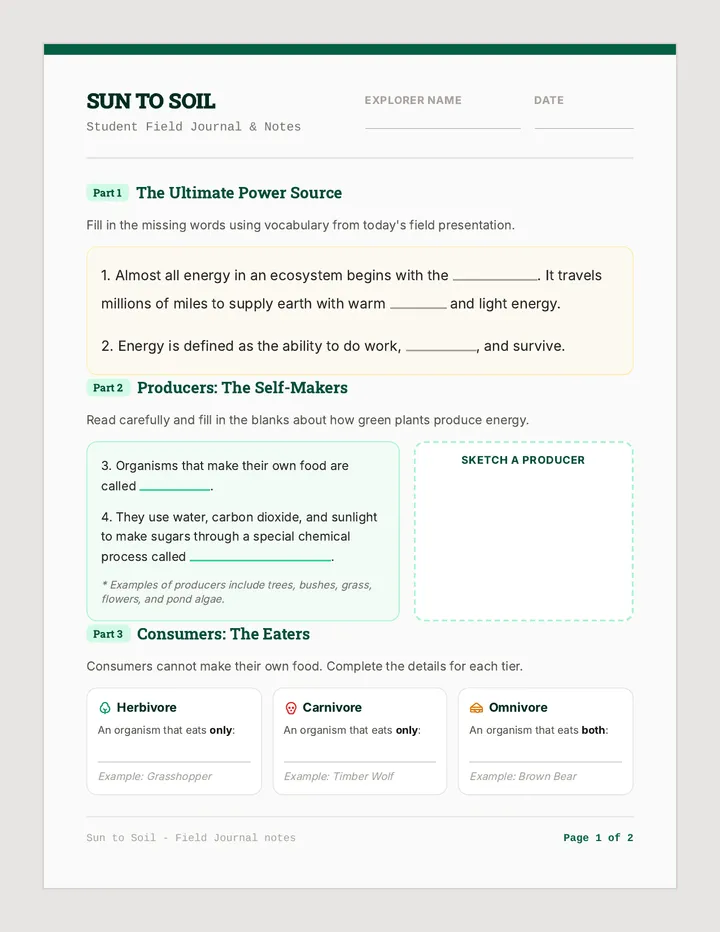
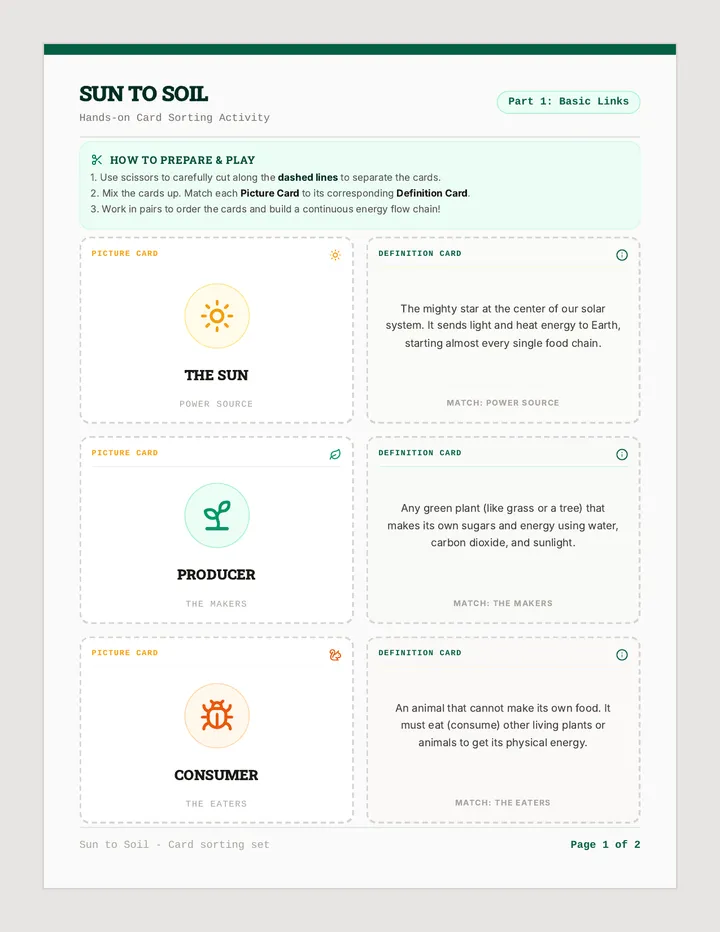
A comprehensive science lesson exploring the complex interactions within ecosystems and the flow of energy through food webs. Includes instruction, reading comprehension, and assessment materials.
An introductory lesson on the hydrosphere and water systems featuring My Little Pony characters to explain complex concepts like groundwater, watersheds, and conservation through symbol-supported text.
A comprehensive collection of 10 differentiated reading passages focused on animal adaptations and ecosystems, specifically designed to help students practice reading cursive while reinforcing key science concepts.
A hands-on, asynchronous observation lesson where students track the movement and size of shadows over the course of a single day to understand Earth's rotation and data collection.
An introductory science lesson on surface tension where students conduct a hands-on experiment at home using coins, water, and soap to observe how molecules stick together.
A visual exploration of how ecosystems recover and develop over time, comparing the long-term process of primary succession with the faster recovery of secondary succession. Students will analyze timeframes, pioneer species, and climax communities.
This lesson explores the impact of invasive species on global biodiversity through hands-on simulation and detailed case studies. Students will identify key characteristics of successful invaders and analyze the ecological and economic consequences of their introduction.
A cross-curricular lesson integrating North Carolina's gold rush history with physical properties of matter, landform changes, and ecosystem impacts. Students will explore the chronology of the 1799 discovery while analyzing the science behind the 'Golden State's' first boom.
A foundational lesson on the scientific method and hypothesis formation, using real-world biological examples to practice variable identification and structured prediction.
A focused lesson on crafting and refining scientific hypotheses using the If/Then format and distinguishing between testable and non-testable questions.
An introductory exploration into how telescopes work, the history of their invention by Galileo and Newton, and the practical steps for observing the night sky.