Lenny.com
Explore
Create
ActivitiesNewMathEnglish Language ArtsScience & EngineeringSocial StudiesGlobal LanguagesHealth & Physical EducationSpecial EducationCounseling & Life SkillsArts & CreativityESL
Lenny.com
Lenny.com
Explore
Create
ActivitiesNewMathEnglish Language ArtsScience & EngineeringSocial StudiesGlobal LanguagesHealth & Physical EducationSpecial EducationCounseling & Life SkillsArts & CreativityESL
Lenny.com
Lenny.com

Solutions

Lenny for EducatorsLenny for SchoolsLenny for Districts

Product

ExploreSign inCreateSupportAbout

Resources

Getting startedMTSS Acceleration Program

© 2026 Lenny Learning Inc.

TermsPrivacyAccessibility
LinkedInInstagramX
Lenny
Science & EngineeringLife ScienceLiving ThingsAnimalsPlantsBody SystemsTraitsAdaptationsCellsEcosystemsHeredityGenes to TraitsCell DivisionPhysicsComparing MaterialsShapes and PropertiesMagnetsMagnetismLightSoundLight and SoundMatterStates of MatterChanges of StateMixturesPhysical and Chemical ChangeHeating and CoolingHeat and Thermal EnergyEnergyForce and MotionElectrical CircuitsAtoms and MoleculesPeriodic TableMotion in One DimensionMotion in Two DimensionsScalars and VectorsForces and Laws of MotionCircular Motion and GravityMomentum and ImpulseWork, Energy, and PowerWavesElectromagnetic WavesGeometric OpticsElectricity and MagnetismSimple Harmonic MotionThermodynamicsNuclear PhysicsEarth Science & AstronomyWeatherWater CycleRocks and MineralsFossilsEarth's FeaturesEarth's ResourcesEarth's StructureWeather and ClimateEarth EventsFossils and Geologic TimePlate TectonicsHuman ImpactsAstronomyChemistryUnits and MeasurementAtomic StructurePeriodic TrendsChemical BondingNomenclatureMolecular StructureIntermolecular ForcesThe MoleStoichiometryProperties of GasesSolutionsChemical ReactionsBalancing EquationsEnergy ChangesRates of ReactionsEquilibriumAcids and BasesQuantum ModelBiologyClassificationCell StructureThe Chemistry of LifeBiomoleculesCellular TransportCell EnergyCell Growth and DivisionDNAProtein SynthesisMeiosis and Sexual ReproductionPatterns of InheritanceMulticellular OrganismsEvolutionEcologyBiodiversityComputer ScienceAlgorithms and Computational ThinkingProgramming LanguagesComputing SystemsNetworks and InternetData AnalysisCybersecurityAI and Machine LearningSoftware Design and DevelopmentBlockchainEngineering & AIDesigning ExperimentsEngineering PracticesDesign ThinkingEngineering Design ProcessMechanical EngineeringElectrical EngineeringMaterials and StructuresCAD and 3D DesignRoboticsArtificial Intelligence BasicsVibe CodingMachine LearningAI Ethics and SocietySystems ThinkingEntrepreneurship & InnovationEntrepreneurial MindsetBusiness Idea DevelopmentBusiness Plan BasicsMarketing & Customer DiscoveryFinancial Management for Startups

Sprout to Harvest

A third-grade botanical investigation tracing the complete life cycle of a pumpkin from seed germination to harvest and decomposition. Students explore plant development stages, flower pollination, and seasonal timelines through interactive slides, hands-on diagramming, and explanatory analysis.

JSJami Sharp

D Because people bake sweet pies with its flesh

2. What causes the pumpkin to turn from green to orange in October?

A Green chlorophyll breaks down and orange pigments show

B Cold frost paints the rind orange overnight

C Roots stop drinking water from the ground

D Bees return to deposit orange nectar on the skin

5

Botanical Field Sketch

Choose one stage of the pumpkin life cycle. Draw and label it clearly in the white box below.

Stage Drawn:

Key Observation:

Sprout to Harvest • Page 2 of 2 Completed Botanical Field Worksheet

Exemplar Grade 3 Response:

"The soft pumpkin flesh breaks down and nourishes the soil, but the seeds survive the winter underground. When warm spring rain arrives, the seeds sprout and start the life cycle all over again!"

Criteria: Full credit (2 pts) if student recognizes seeds remain protected and restart the cycle next spring.

4

Part 4: Botanical Fact Check (2 Points)

1 pt each

Question 1: Fruit Classification

Correct: Option B

"Because it develops from a flower and holds seeds inside." Scientifically, any seed-bearing structure developed from ovary tissue is a fruit.

Question 2: Color Change Reason

Correct: Option A

"Green chlorophyll breaks down and orange pigments show." As days shorten, chlorophyll degrades, unmasking carotenoid orange pigments.

5

Part 5: Field Sketch Scoring Rubric (4 Points)

Total Possible: 20 Points

Stage Accuracy (2 pts)

Drawing clearly represents one defined stage (e.g., cotyledon leaves, sprawling vine with tendrils, flower with bee, green or ribbed orange pumpkin).

Label & Identification (1 pt)

Correct stage name is filled in accurately on the "Stage Drawn" blank line.

Scientific Observation (1 pt)

Written observation includes specific botanical detail (e.g., "Tendrils curling around stick," "Flower has mini-pumpkin under it").

Sprout to Harvest Teacher Answer Key • Page 2 of 2 Assessment Total: 20 Points • Meets NGSS 3-LS1-1

Density Water Tub:

Place water tubs on low plastic trays. Students predict then drop whole pumpkin in. It floats because the hollow interior acts as an air chamber!

Adult Cut Only:

Adult pre-cuts lids at a 45-degree inward angle so tops don't fall in. Students scoop pulp and seeds using plastic spoons and hands.

Embryo Soak Prep:

Pre-soak a cup of pumpkin seeds in warm water overnight so 3rd graders can easily slip off the white coat and view the green embryo.

Common Grade 3 Misconceptions & Scientific Reality

❌ Misconception 1:

"Heavy objects always sink in water, so a 10-pound pumpkin will sink to the bottom."

✓ Scientific Fact:

Pumpkins have a hollow, air-filled internal cavity, giving them an overall density less than water!

❌ Misconception 2:

"The stringy guts are just waste inside the pumpkin that serves no purpose."

✓ Scientific Fact:

Fibrous strands are vascular tissue delivering water and nutrients directly to each developing seed.

Differentiation & Multi-Tiered Support

Support / ELL:

Provide visual role cards (Specimen Measurer, Seed Counter, Scribe). Pre-open soaked seeds to reveal embryo.

On-Level:

Complete lab sheet independently with team. Calculate multiplication seed estimate and label 3 seed parts in sketch.

Extension / Math:

Calculate class total: Sum each team's pumpkin seed estimate to find the grand total seeds produced across all classroom pumpkins.

Sprout to Harvest Teacher Guide • Page 2 of 2 Classroom Ready • Designed for Grade 3 Botanical Investigation

Step C: Multiplication

Multiply Step A × Step B:

Our Lab Team's Total Pumpkin Seed Estimate: seeds inside our pumpkin!

5

Seed Dissection: Finding the Baby Embryo

Soak one large seed, gently peel away the outer white seed coat, and split the two halves open.

Lab Sketch: Inside the Split Seed

Draw: 1. Seed Coat • 2. Food Leaf • 3. Tiny Embryo

Botanical Reflection:

Why did the mother pumpkin plant spend the entire summer building this giant orange fruit just to protect these seeds?

Pumpkin Dissection Lab • Page 2 of 2 Completed Hands-On Science Investigation

You might also like

Helix Studio Slides

Candy Code Sequence

A multi-day competency-based biology sequence exploring DNA architecture, complementary base pairing, and semi-conservative replication through tactile candy modeling and evidence-based assessment.

TM

Teri Minami

6
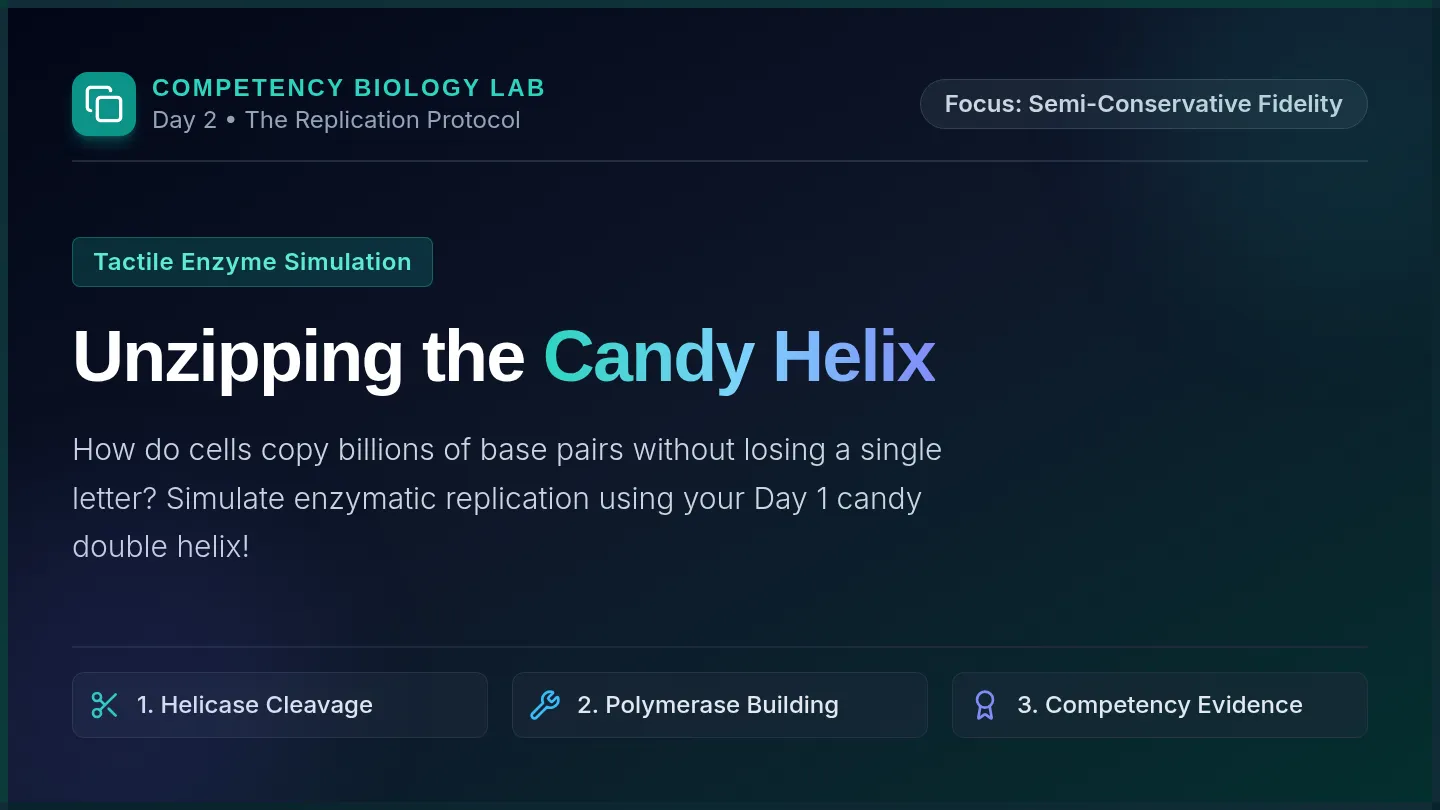
Replication Protocol Slides

Replication Protocol

Students simulate semi-conservative DNA replication by enzymatically unzipping candy strands and building complementary daughter helices, demonstrating competency through lab evidence and knowledge checks.

TM

Teri Minami

3
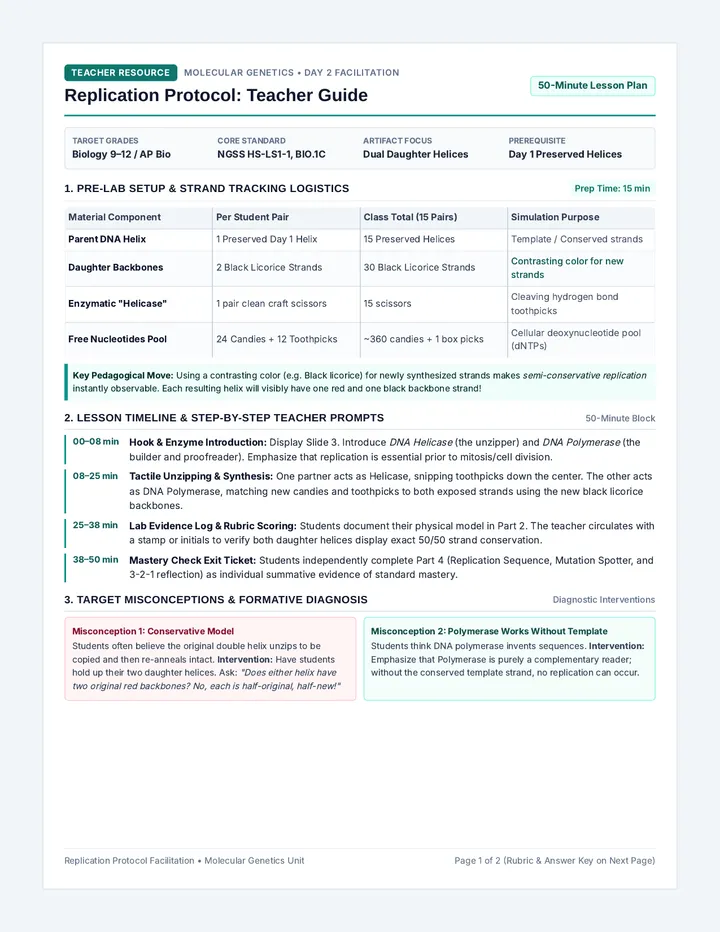
Replication Protocol Teacher Guide

Replication Protocol Teacher Guide

A complete 2-page teacher facilitation guide and rubric calibration key for Lesson 2 (Replication Protocol), detailing enzymatic unzipping logistics, strand tracking procedures, misconception remediation, and full answers for the competency assessment and exit ticket.

TM

Teri Minami

Pesky Biters Slides

Bug Busters

A two-part fifth-grade science sequence investigating how insects can be annoying nuisances, bite and sting, and damage crops and homes. Specially scaffolded with high-visual supports, decodable text chunks, and guided practice for lower-literacy learners.

Lenny Avatar
Lenny
11
Helix Studio Slides

Helix Studio

Students dissect nucleotide anatomy and discover base pairing rules by engineering an accurate candy double helix model with complementary nitrogenous bases and sugar-phosphate backbones.

TM

Teri Minami

3
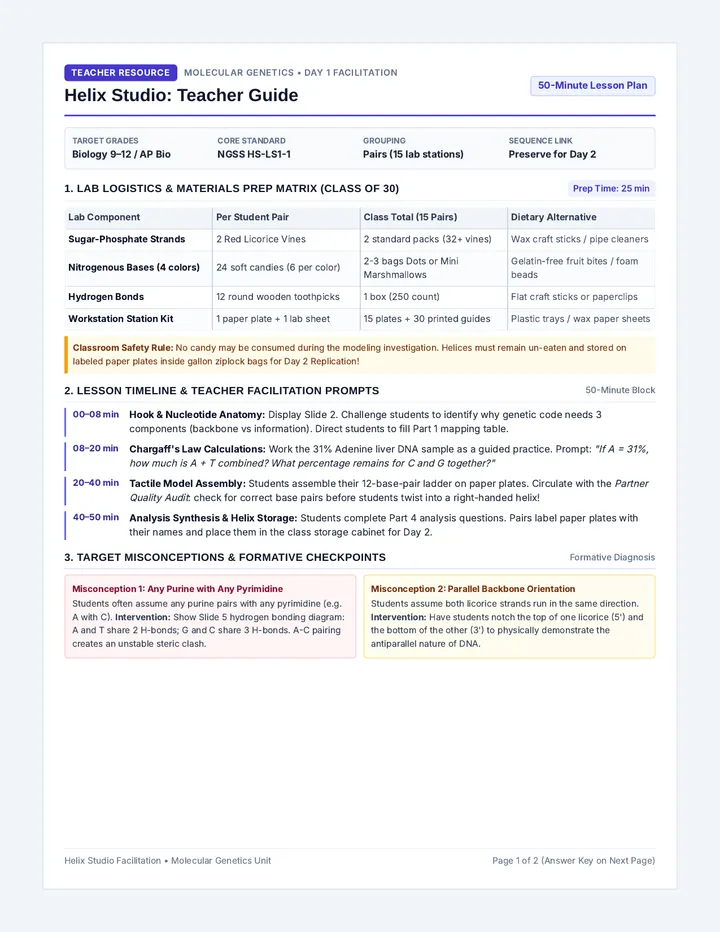
Helix Studio Teacher Guide

Helix Studio Teacher Guide

A comprehensive 2-page teacher facilitation guide and answer key for Lesson 1 (Helix Studio), featuring candy prep logistics, a 50-minute pacing timeline, misconception interventions, and complete mathematical and structural solutions for the student lab guide.

TM

Teri Minami

Habitability Blueprint Slides

Life Beyond Limits

A one-week interdisciplinary astrobiology sequence investigating Earth's habitability, extreme biological adaptations across eleven Earth species, and the plausibility of life on other celestial bodies.

M

Megan.Tanner

7
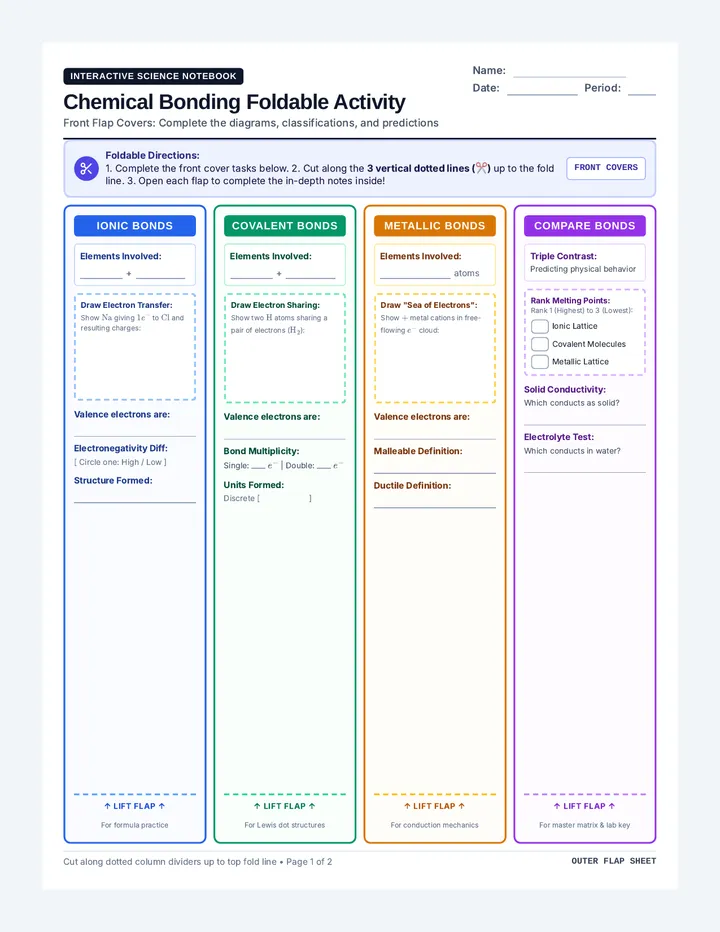
Chemical Bonding Foldable Activity

Chemical Bonding

A foundational chemistry lesson exploring ionic, covalent, and metallic bonding through interactive modeling, detailed reference notes, and comparative property analysis.

OM

Olutoyin Makinde

3
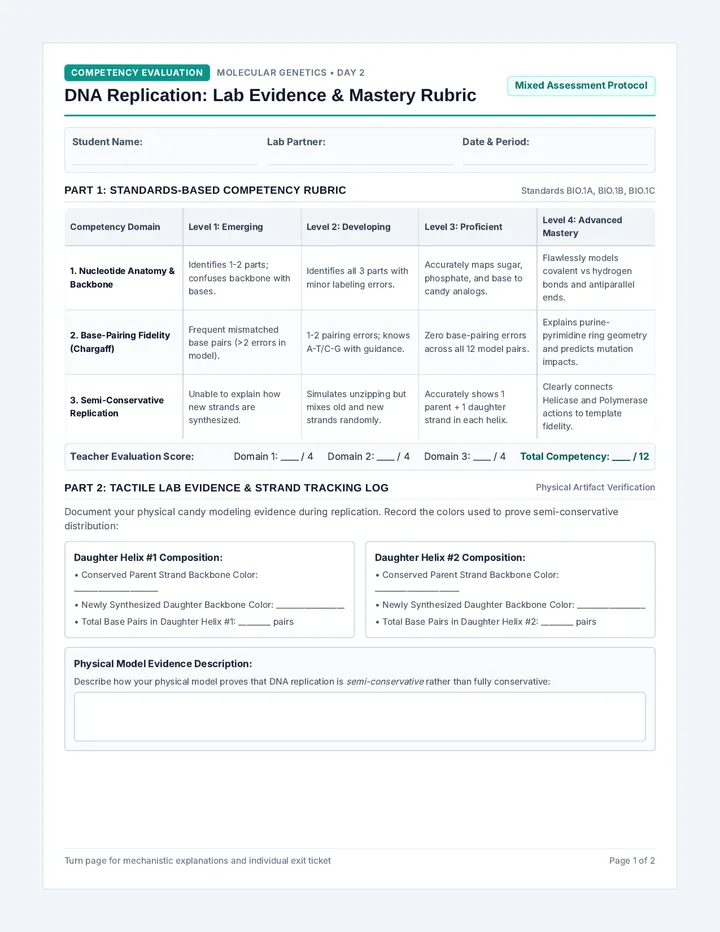
Replication Evidence Assessment

Replication Evidence Assessment

A multi-part competency assessment combining a 4-level standards rubric, tactile lab evidence documentation, mechanistic written explanations, and an individual exit ticket.

TM

Teri Minami

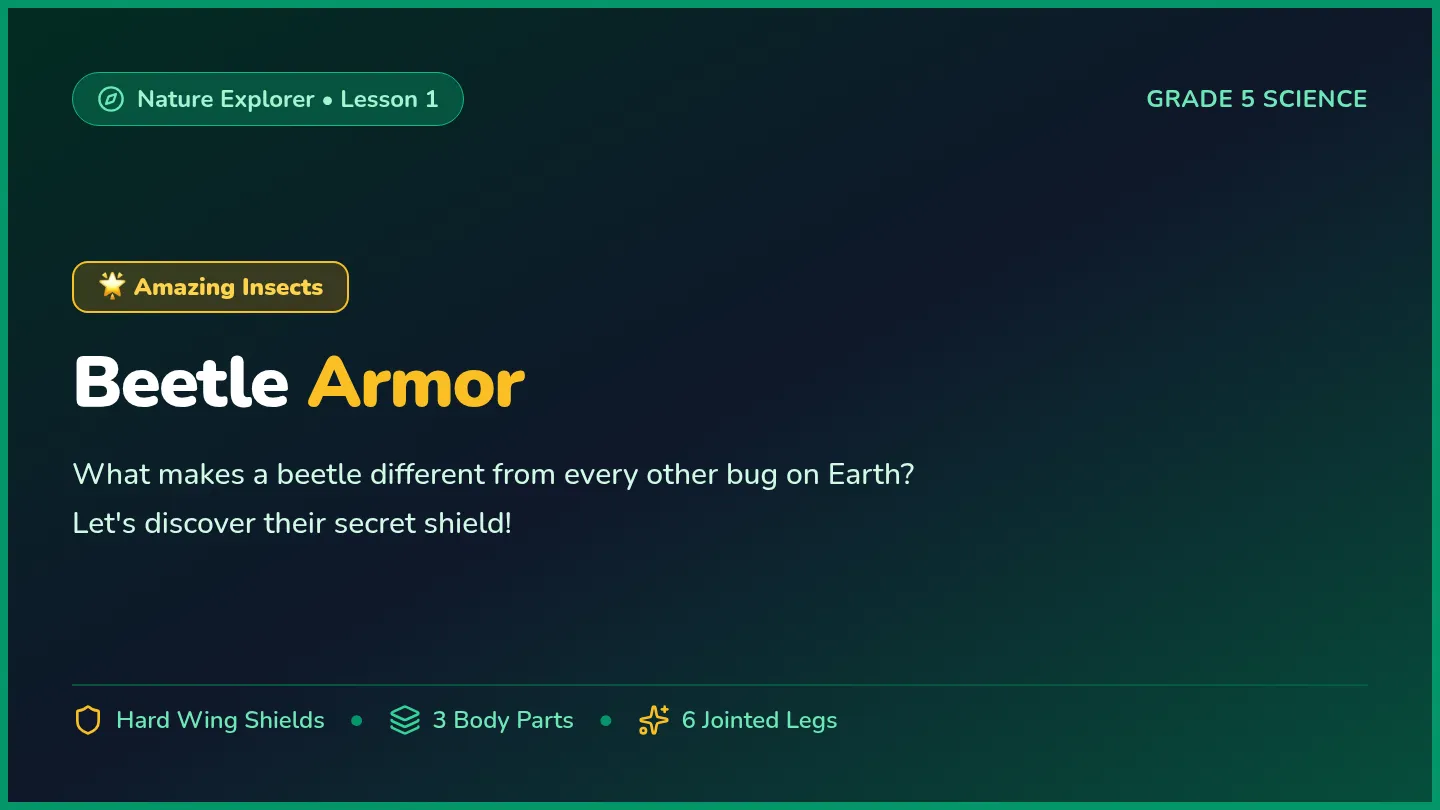
Beetle Armor Slides

Beetle Power

A high-interest, accessible science unit for fifth-grade developing readers exploring beetle anatomy, unique adaptations, and diverse beetle species. Incorporates visual vocabulary, supportive sentence frames, and clear graphic organizers.

A

amy_oshea

9
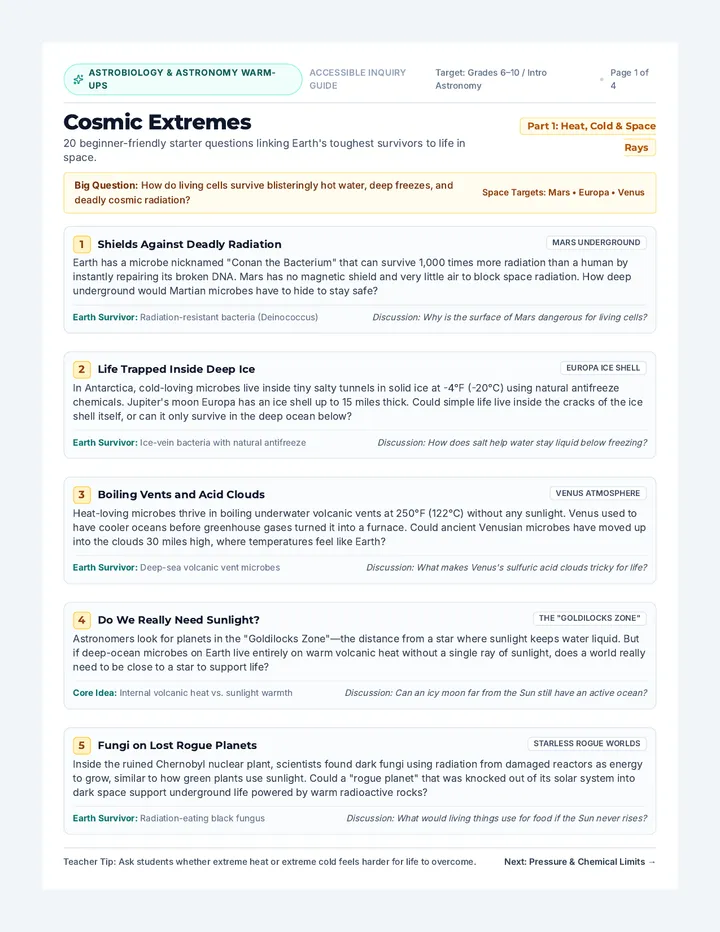
Cosmic Extremes Question Bank

Cosmic Extremes

An astrobiology exploration unit connecting Earth's most resilient extremophiles to planetary exploration across the solar system, habitable zones, and the search for alien life.

M

Megan.Tanner

3
Replication Protocol Slides

Replication Protocol Slides

Classroom presentation slides walking students through enzymatic unzipping, semi-conservative replication modeling with candy strands, proofreading fidelity, and lab evidence collection.

TM

Teri Minami