Lenny.com
Explore
Create
ActivitiesNewMathEnglish Language ArtsScience & EngineeringSocial StudiesGlobal LanguagesHealth & Physical EducationSpecial EducationCounseling & Life SkillsArts & CreativityESL
Lenny.com
Lenny.com
Explore
Create
ActivitiesNewMathEnglish Language ArtsScience & EngineeringSocial StudiesGlobal LanguagesHealth & Physical EducationSpecial EducationCounseling & Life SkillsArts & CreativityESL
Lenny.com
Lenny.com

Solutions

Lenny for EducatorsLenny for SchoolsLenny for Districts

Product

ExploreSign inCreateSupportAbout

Resources

Getting startedMTSS Acceleration Program

Newsletters

School Funding Newsletter

© 2026 Lenny Learning Inc.

TermsPrivacyAccessibility
LinkedInInstagramX
Lenny
Science & EngineeringLife ScienceLiving ThingsAnimalsPlantsBody SystemsTraitsAdaptationsCellsEcosystemsHeredityGenes to TraitsCell DivisionPhysicsComparing MaterialsShapes and PropertiesMagnetsMagnetismLightSoundLight and SoundMatterStates of MatterChanges of StateMixturesPhysical and Chemical ChangeHeating and CoolingHeat and Thermal EnergyEnergyForce and MotionElectrical CircuitsAtoms and MoleculesPeriodic TableMotion in One DimensionMotion in Two DimensionsScalars and VectorsForces and Laws of MotionCircular Motion and GravityMomentum and ImpulseWork, Energy, and PowerWavesElectromagnetic WavesGeometric OpticsElectricity and MagnetismSimple Harmonic MotionThermodynamicsNuclear PhysicsEarth Science & AstronomyWeatherWater CycleRocks and MineralsFossilsEarth's FeaturesEarth's ResourcesEarth's StructureWeather and ClimateEarth EventsFossils and Geologic TimePlate TectonicsHuman ImpactsAstronomyChemistryUnits and MeasurementAtomic StructurePeriodic TrendsChemical BondingNomenclatureMolecular StructureIntermolecular ForcesThe MoleStoichiometryProperties of GasesSolutionsChemical ReactionsBalancing EquationsEnergy ChangesRates of ReactionsEquilibriumAcids and BasesQuantum ModelBiologyClassificationCell StructureThe Chemistry of LifeBiomoleculesCellular TransportCell EnergyCell Growth and DivisionDNAProtein SynthesisMeiosis and Sexual ReproductionPatterns of InheritanceMulticellular OrganismsEvolutionEcologyBiodiversityComputer ScienceAlgorithms and Computational ThinkingProgramming LanguagesComputing SystemsNetworks and InternetData AnalysisCybersecurityAI and Machine LearningSoftware Design and DevelopmentBlockchainEngineering & AIDesigning ExperimentsEngineering PracticesDesign ThinkingEngineering Design ProcessMechanical EngineeringElectrical EngineeringMaterials and StructuresCAD and 3D DesignRoboticsArtificial Intelligence BasicsVibe CodingMachine LearningAI Ethics and SocietySystems ThinkingEntrepreneurship & InnovationEntrepreneurial MindsetBusiness Idea DevelopmentBusiness Plan BasicsMarketing & Customer DiscoveryFinancial Management for Startups

Midnight Zone

An investigative middle school science lesson exploring how sunlight, hydrostatic pressure, and temperature stratify ocean zones and drive extreme biological adaptations. Students analyze oceanographic data gradients, examine abyssal creature case studies, and evaluate hydrothermal vent chemosynthetic ecosystems.

UUnknown

Key Trait: High TMAO concentrations; gelatinous scaleless body; flexible cartilage skull.

Adaptation Type:

Survival Value in Midnight Zone:

Page 1 of 2 • Continue to Page 2 for Energy Systems & CER Synthesis

Part II: Trophic Pathways & Synthesis

Energy Flow & Evidence-Based Synthesis

Ocean Ecology Core

3

Comparing Deep-Sea Energy Transfer Models

Without solar illumination, deep benthic ecosystems rely on two radically distinct energetic inputs. Analyze the comparative models below:

Model A: Marine Snow & Detrital Falls

Phytoplankton and organic debris sink from the epipelagic zone. Only 1% to 3% of surface photosynthetic energy reaches depths below 1,000 meters.

Solar Energy ➔ Phytoplankton ➔ Marine Snow ➔ Deep Scavengers

Model B: Hydrothermal Vent Chemosynthesis

Geothermal vents discharge hydrogen sulfide (H₂S). Specialized chemoautotrophs synthesize glucose without any solar input, supporting dense biomass.

Geothermal H₂S ➔ Sulfur Bacteria ➔ Tube Worms ➔ Vent Crabs

1. Energy Limitation Analysis: Why does the 97–99% loss of surface organic energy explain why predators in the midnight zone are typically small, slow-moving, or solitary?

2. Chemosynthetic Independence: If a volcanic eruption or sediment slump completely blocked sunlight across Earth for 5 years, predict the impact on Model A vs Model B ecosystems. Justify your prediction:

4

Claim-Evidence-Reasoning (CER) Synthesis

Investigation Prompt: "How do biological adaptations allow organisms in the Hadal trenches (below 6,000 m) to survive extreme hydrostatic pressure and total darkness that would destroy surface marine life?"

1. Scientific Claim (Direct, testable answer): 1 complete sentence

2. Empirical Evidence (Data points & cellular structures): Cite at least two specific adaptations

3. Scientific Reasoning (Connecting mechanisms to survival principles): Explain why the biology resists physical collapse

Page 2 of 2 • Deep Sea Ecology Unit Assessment Handout

Hadal SnailfishPhysiological & Structural: Elevated cellular TMAO osmolyte; non-ossified cartilaginous skeleton.TMAO prevents water molecules from distorting cellular proteins under 800+ atm; absence of rigid bone prevents high-pressure stress fractures.

Page 1 of 2 • Teacher Facilitation Guide & Keys
Part II Assessment Rubric & Extension Protocols

Assessment & Differentiation Guide

Evaluation Support

Worksheet Part 3: Trophic Energy Analysis Solutions

1. Energy Limitation Rationale:

Because 97–99% of solar photosynthetic energy is consumed or decomposed in upper layers, the Midnight Zone has very low carrying capacity. High-speed pursuit swimming consumes excessive ATP; sit-and-wait predation and small bodies conserve scarce calories.

2. Sunless Catastrophe Prediction:

Model A: Collapses entirely within months as phytoplankton die and marine snow ceases.
Model B: Remains completely unaffected; hydrothermal vents depend on geothermal heat and chemical reduction from Earth's mantle, not solar radiation.

Part 4: CER Model Response & Scoring Rubric

Exemplar Student Response (Score: 4/4):

Claim: Organisms in Hadal trenches survive extreme pressure and darkness through cellular chemical stabilizers, non-rigid fluid anatomy, and non-visual feeding adaptations.

Evidence: Hadal snailfish produce high levels of TMAO in their cells, lack gas-filled swim bladders, possess flexible cartilage instead of dense bones, and rely on non-solar organic falls and lateral line vibration sensors.

Reasoning: Hydrostatic pressure only compresses air spaces; by replacing air cavities with water-filled tissues, internal and external forces equalize. Additionally, TMAO prevents high pressure from distorting protein tertiary structures, maintaining metabolic function where surface organisms would suffer molecular collapse.

ComponentProficient (3–4 pts)Developing (1–2 pts)
ClaimDirectly answers the prompt with a testable, clear scientific assertion.Vague ("they adapt to live deep") or repeats the prompt without a mechanism.
EvidenceCites at least two specific data points or biochemical/structural features.Cites general ideas ("they are strong") without specific biological evidence.
ReasoningApplies pressure physics and cellular biology to explain why traits enable survival.Simply restates evidence without connecting to physical pressure principles.

Universal Support & ELL Scaffolds

  • • Provide a Word Bank: Hydrostatic pressure, TMAO, Photophore, Chemosynthesis, Bioluminescence.
  • • Use sentence starter for CER: "Hadal organisms survive intense pressure because their bodies rely on..."
  • • Pair with visual diagram showing equalized pressure arrows pushing equally inside/outside cell.

Astrobiology & Advanced Extensions

  • • Europa Analogy: Research Jupiter's moon Europa, which harbors a subsurface liquid ocean under 20 km of ice.
  • • Prompt: Evaluate whether hydrothermal chemosynthesis could sustain extraterrestrial life in total solar absence.
  • • Investigate piezophiles: bacteria whose enzymes literally require 500+ atm to fold properly.

Page 2 of 2 • Teacher Facilitation Guide & Keys
You might also like

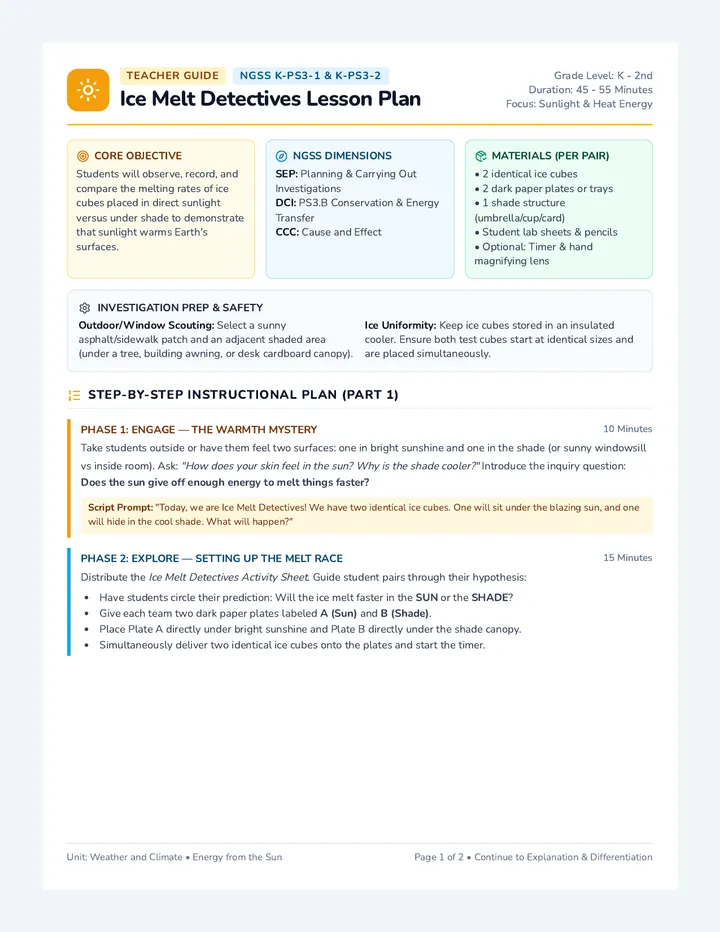
Ice Melt Detectives Lesson Plan

Science Inquiry Series

A multi-grade hands-on science sequence emphasizing experiential investigations, energy concepts, clear classroom procedures, proactive behavior management, and deep cognitive engagement.

R

rcarlson

6
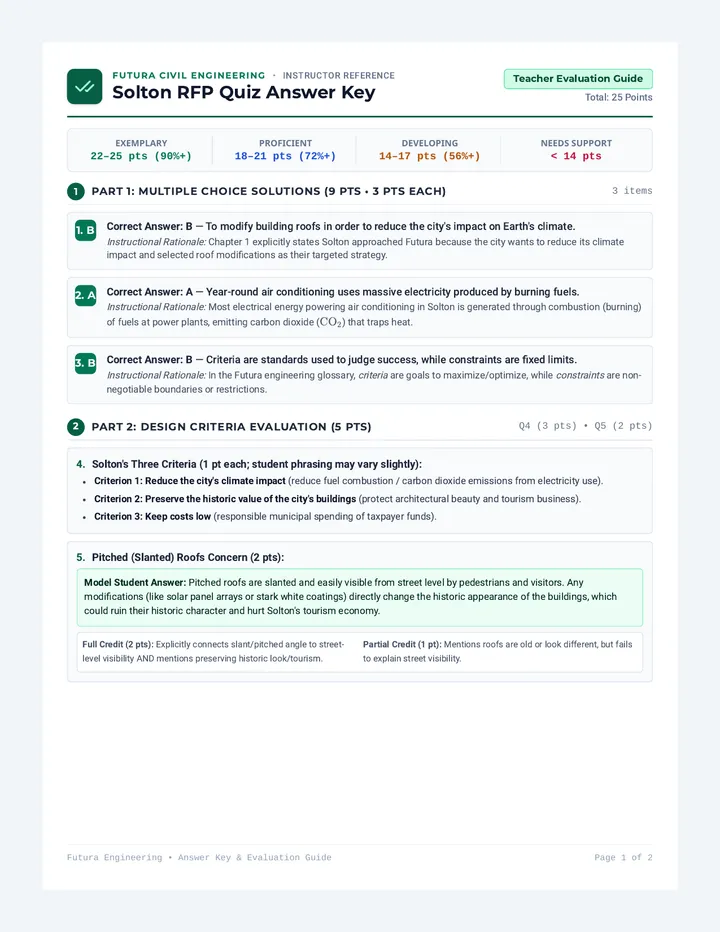
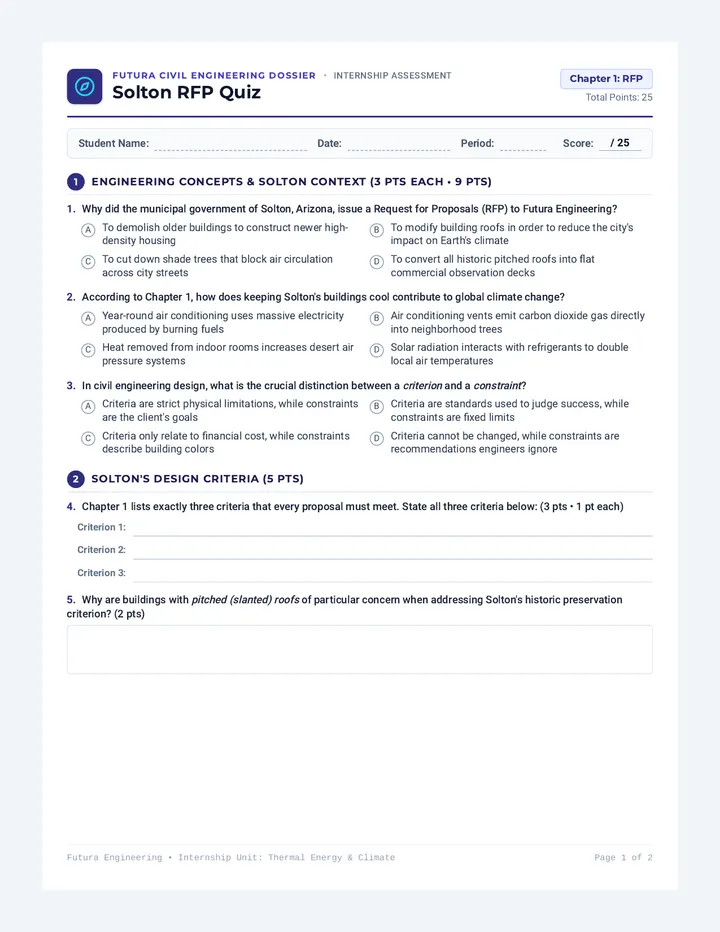
Solton RFP Quiz

Solton Roof Challenge

A civil engineering unit focusing on Chapter 1 of the Futura Dossier, where students analyze municipal requests for proposals, distinguish criteria from constraints, and evaluate urban climate solutions for Solton, Arizona.

A

Andrea.Golden

2
Solton RFP Answer Key

Solton RFP Answer Key

A comprehensive two-page teacher answer key and grading guide for the Solton RFP Quiz, providing correct answers, point allocations, scoring rubrics, and common student misconceptions.

A

Andrea.Golden

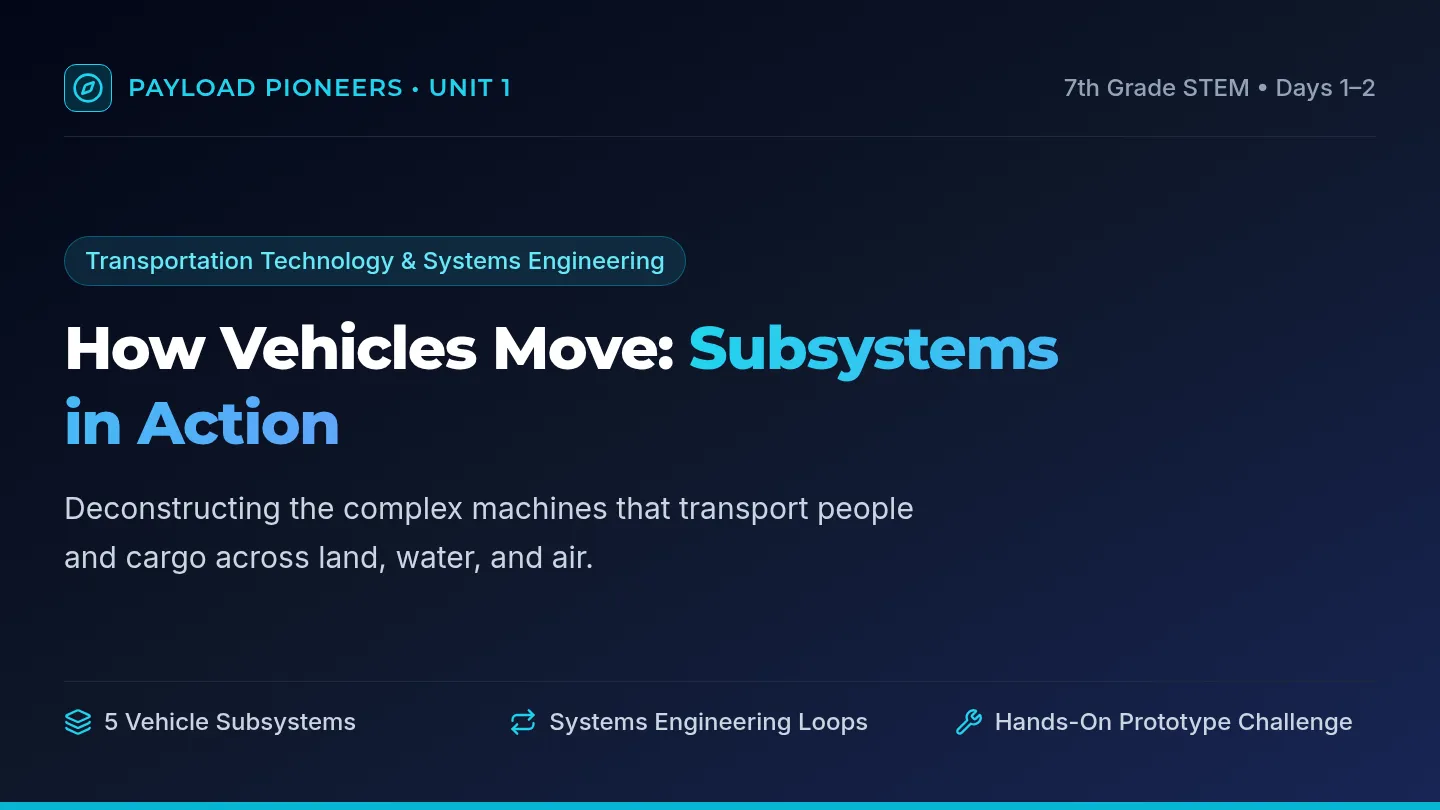
Subsystem Blueprint Slides

Payload Pioneers

A 6-period middle school engineering unit exploring transportation networks, vehicle subsystems, and systems engineering modeling. Students investigate real-world transit technologies and apply the engineering design process to build, test, and optimize a cargo transport vehicle.

TC

Theresa Crafts

6
Energy Talk Lab Lesson Plan

Energy Talk Lab

A 4th-grade physical science inquiry lesson on energy transfer and forms of energy powered by student-led sticky note discussions, silent affinity mapping, and structured peer discourse. Built directly to exemplify Danielson Rubric standards for managing classroom procedures (2c), managing student behavior during peer talk (2d), and engaging students in high-level intellectual discussions (3c).

R

rcarlson

3
Solton RFP Quiz

Solton RFP Quiz

A comprehensive two-page engineering quiz assessing student mastery of Chapter 1 (Request for Proposals) from the Futura Civil Engineer's Dossier, covering Solton's climate, design criteria, constraints, and scenario trade-off analysis.

A

Andrea.Golden

Understanding Loops Slides

Repetition and Logic

A multi-day Python computing sequence preparing students to upgrade Rock-Paper-Scissors into a five-round match using loops and variable counters.

BF

Brandi Flanigan

3
Ice Melt Detectives Lesson Plan

Ice Melt Detectives

An early elementary science lesson where young scientists investigate how sunlight warms surfaces by observing and comparing ice cubes melting in direct sunlight versus under shade structures. Students make predictions, record before-and-after observations with drawings, and discover the cooling power of shade.

R

rcarlson

3
Energy Talk Lab Exit Ticket

Energy Talk Lab Exit Ticket

A single-page formative exit ticket and Danielson observation assessment for the Energy Talk Lab. Features conceptual energy transfer questions (3c), sticky-note evidence evaluation (3c), student discussion role and conduct reflection (2c/2d), and an administrator/teacher Danielson observation scoring guide.

R

rcarlson

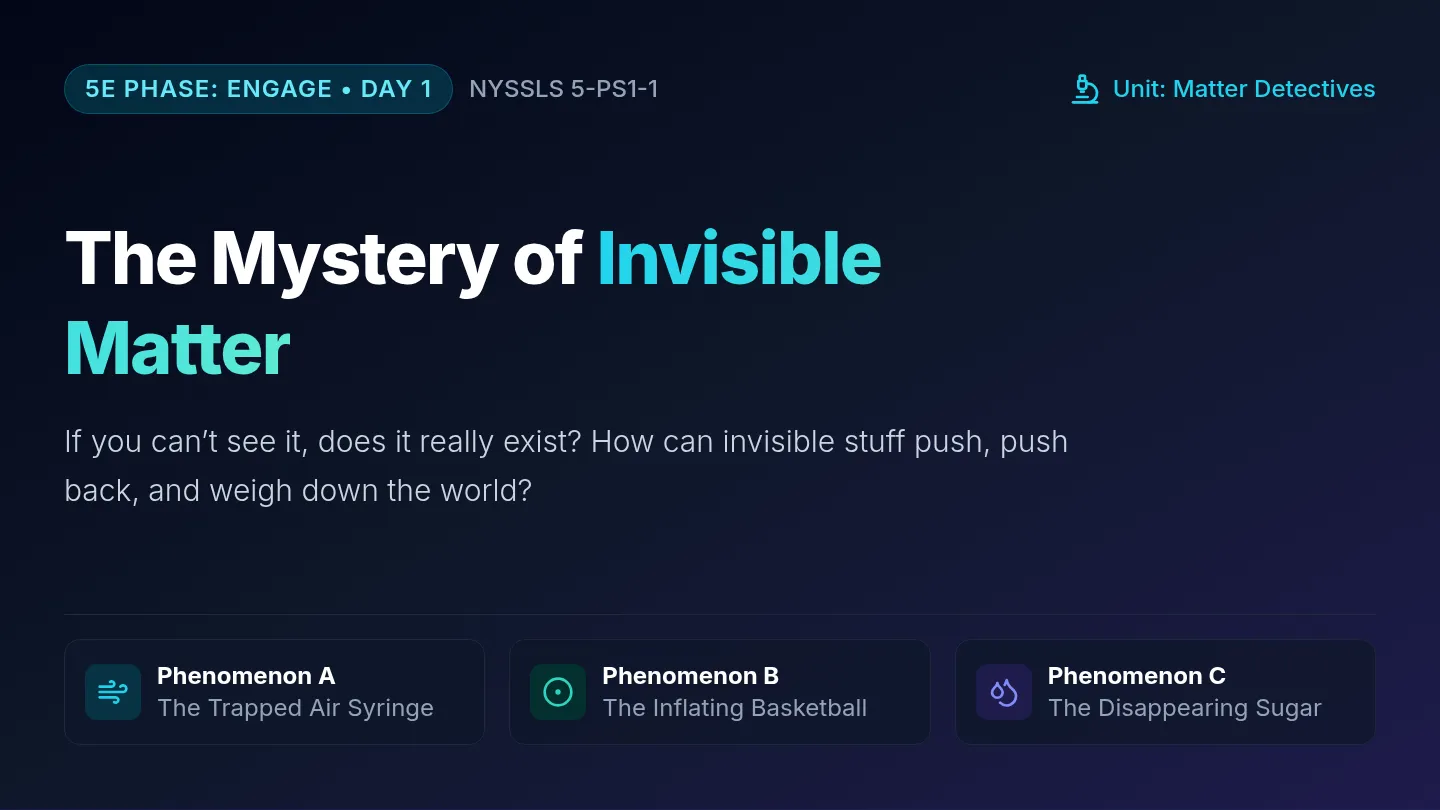
Invisible Matter Slides

Matter Detectives

A comprehensive 5-day 5E science sequence for 5th grade exploring the particle nature of matter, properties of substances, conservation of mass, and chemical reactions through hands-on investigations.

CC

Caitlin Corr Reilly

10
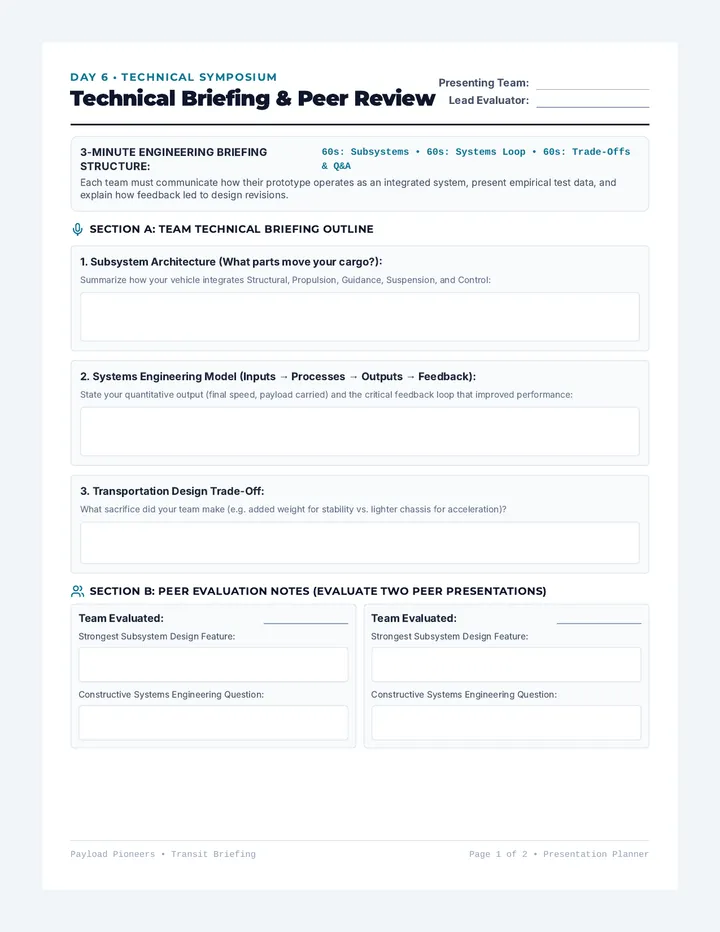
Transit Briefing Rubric

Systems Briefing

Student engineering teams analyze quantitative test data, map feedback loops, and present a technical briefing communicating their vehicle design and subsystems. A unit debrief evaluates transportation design trade-offs.

TC

Theresa Crafts

1
Energy Talk Lab Activity Sheet

Energy Talk Lab Activity Sheet

A two-page student-led discussion packet and sticky note thinking mat for 4th-grade energy investigations. Features cooperative discussion roles, accountable talk sentence stems, a four-quadrant energy affinity mat, energy transfer scenario analysis, and peer critique reflection.

R

rcarlson