Three Sisters Posters Agriculture Poster 1 of 3 • The Big Idea
The Three Sisters
Companion Planting Innovation
🌽
Corn
🫘
Beans
🎃
Squash
Three Crops • One Shared Mound
Indigenous farmers in North America created a smart way to grow corn, beans, and squash together in one garden mound. They called these three plants the Three Sisters because they help each other grow strong, just like a family. Planting them side by side produces more healthy food than growing each crop all alone.
Agriculture Poster 2 of 3 • How It Works
Teamwork in the Soil
The Three Sisters System
🌽
Tall Corn
Natural Climbing Pole
🫘
Busy Beans
Soil Nutrient Helper
🎃
Broad Squash
Living Ground Shield
Tall corn stalks act like sturdy ladders so the climbing bean vines can reach the sunlight. The beans add special nutrients to the soil that feed the corn and squash roots. Big, prickly squash leaves spread across the ground to block weeds and keep the soil cool and wet.
Agriculture Poster 3 of 3 • Why It Matters
A Lasting Harvest
The Three Sisters Legacy
Healthy Soil
Balanced Food
Future Farming
This clever farming system protects the soil naturally without needing any harmful chemicals. Together, corn, beans, and squash give people a balanced meal full of energy and protein. Today, gardeners and scientists still study the Three Sisters to learn how to farm in a sustainable way.
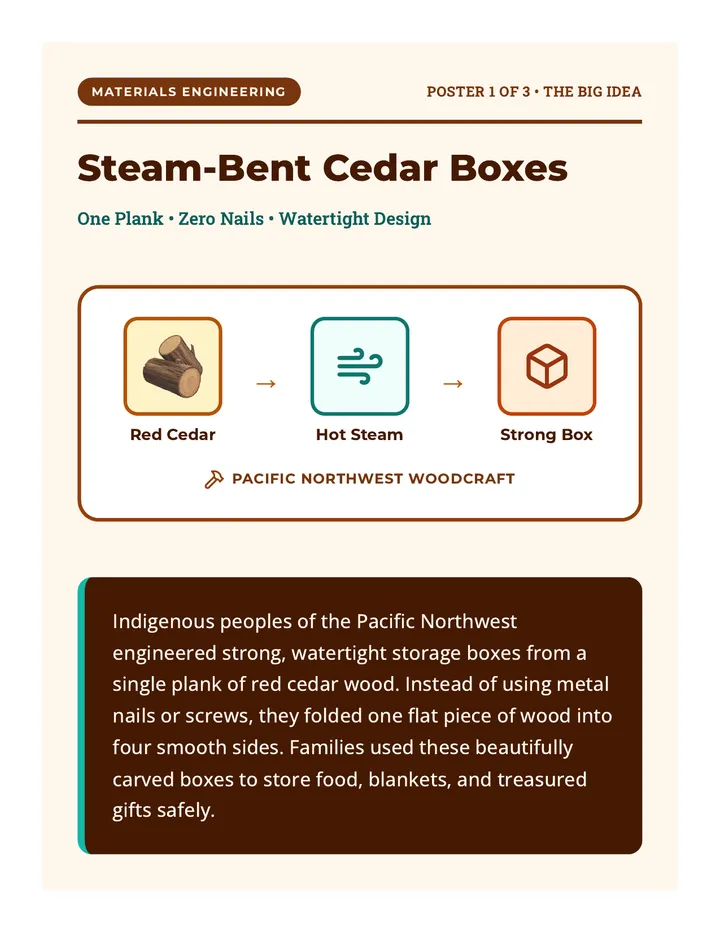
Cedar Boxes Posters Materials Engineering Poster 1 of 3 • The Big Idea
Steam-Bent Cedar Boxes
One Plank • Zero Nails • Watertight Design
🪵
Red Cedar
→
Hot Steam
→
Strong Box
Pacific Northwest Woodcraft
Indigenous peoples of the Pacific Northwest engineered strong, watertight storage boxes from a single plank of red cedar wood. Instead of using metal nails or screws, they folded one flat piece of wood into four smooth sides. Families used these beautifully carved boxes to store food, blankets, and treasured gifts safely.
Materials Engineering Poster 2 of 3 • How It Works
Bending Solid Wood
The Science of Steam and Kerfs
1. Carve
Three Corner Grooves
2. Steam
Soften Wood Fibers
3. Fold & Peg
Tight Wooden Lock
Craftspeople carved three deep grooves, called kerfs, into a cedar plank where the corners would bend. They held the wood over hot steam until the fibers became soft and flexible enough to fold without snapping. Once cooled into a box shape, the corners were locked tight with wooden pegs and a fitted lid.
Materials Engineering Poster 3 of 3 • Why It Matters
Built to Last
Smart Material Design
Rot Resistant
Watertight
Zero Metal Waste
Cedar wood naturally resists rot and insects, keeping dried food fresh for months at a time. Because the box is made from one continuous plank, it is strong enough to hold boiling water for cooking. Modern engineers still admire steam-bending as an eco-friendly way to shape wood with zero metal waste.
Iggaak Goggles Posters Optics & Design Poster 1 of 3 • The Big Idea
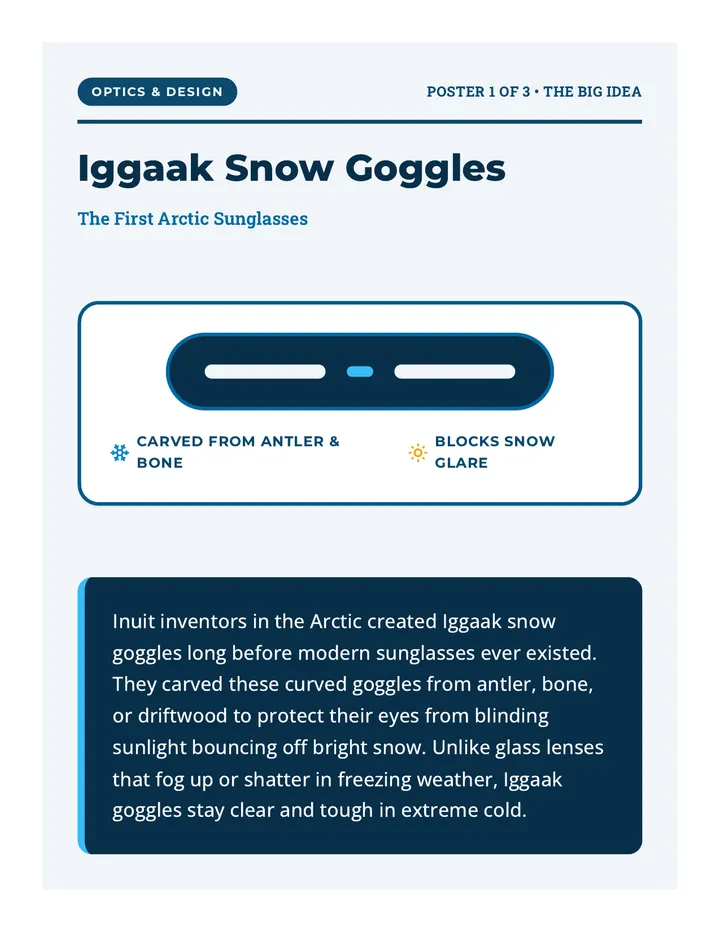
Iggaak Snow Goggles
The First Arctic Sunglasses
Carved from Antler & Bone Blocks Snow Glare
Inuit inventors in the Arctic created Iggaak snow goggles long before modern sunglasses ever existed. They carved these curved goggles from antler, bone, or driftwood to protect their eyes from blinding sunlight bouncing off bright snow. Unlike glass lenses that fog up or shatter in freezing weather, Iggaak goggles stay clear and tough in extreme cold.
Optics & Design Poster 2 of 3 • How It Works
Smart Slit Optics
Controlling Light Without Glass
Narrow Slits
Small Light Opening
Glare Shield
Blocks Harsh Rays
Sharp Focus
Clear Distant Sight
Each pair of goggles has two narrow horizontal slits instead of wide open lenses. Those tiny slits block harmful glare from above and below while still letting the wearer see straight ahead. Narrowing the light path also sharpens focus, helping hunters and travelers spot distant landmarks across the ice.
Optics & Design Poster 3 of 3 • Why It Matters
Vision in the Cold
Inspiring Modern Eyewear
Safe Travel
Modern Gear
Optics Genius
By preventing painful snow blindness, Iggaak goggles helped Arctic communities travel and hunt safely all winter long. The smart slit design also inspired modern pinhole glasses and high-altitude sports eyewear. Today, Iggaak goggles remain a brilliant example of using optics and simple materials to solve a tough problem.
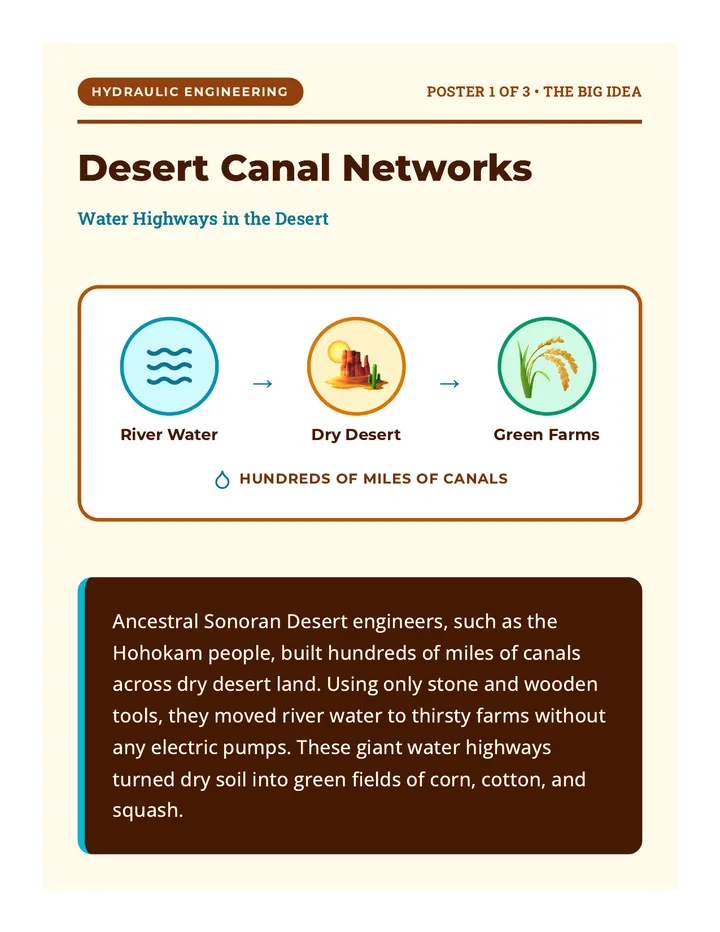
Desert Canals Posters Hydraulic Engineering Poster 1 of 3 • The Big Idea
Desert Canal Networks
Water Highways in the Desert
River Water
→
🏜️
Dry Desert
→
🌾
Green Farms
Hundreds of Miles of Canals
Ancestral Sonoran Desert engineers, such as the Hohokam people, built hundreds of miles of canals across dry desert land. Using only stone and wooden tools, they moved river water to thirsty farms without any electric pumps. These giant water highways turned dry soil into green fields of corn, cotton, and squash.
Hydraulic Engineering Poster 2 of 3 • How It Works
Guided by Gravity
Smart Slopes and Channels
Gentle Slope
Gravity Moves Water
Side Channels
Branching Farm Paths
Clay Linings
Keeps Water Inside
Builders dug wide main canals that gently sloped downhill so gravity would carry river water for miles. Smaller side channels branched off like tree limbs to deliver just the right amount of water to each field. Smooth clay linings and simple gates helped stop water from soaking into the sand or overflowing.
Hydraulic Engineering Poster 3 of 3 • Why It Matters
Flowing Through Time
Canals That Still Inspire
1,000+ Years
Modern Paths
Smart Water Use
This amazing hydraulic system supported thriving desert cities for more than a thousand years. Modern Arizona cities still follow the exact paths of many ancient canals to bring water to people today. Desert canal networks prove that careful planning with gravity and nature can solve even the hardest water challenges.