Sphere Explorers Slides Earth Sphere Explorers
Decoding the Four Systems of Our Home Planet
One Planet, Four Systems
What is a System?
A collection of parts that work together to perform a function. Earth is one giant system made of four smaller parts.
Interconnectedness
Nothing happens in isolation. A change in one sphere affects all the others. We call this a "system interaction."
The Geosphere
Includes all the rocks, minerals, and landforms on Earth's surface and interior.
From the highest mountain peak to the molten iron core deep below.
Provides the physical foundation for all life.
Foundation of the Planet
The Hydrosphere
Contains all the water on Earth in every form:
Liquid (Oceans, Rivers)
Solid (Glaciers, Ice)
Gas (Water Vapor)
"Water is the driving force of all nature."
— Leonardo da Vinci
The Atmosphere
A Protective Blanket
The thin layer of gases surrounding Earth. It protects us from radiation and regulates our temperature.
78%
Nitrogen
21%
Oxygen
1%
Other Gases
The Biosphere
The biosphere is the sum of all living things on Earth.
Plants
Animals
Insects
Bacteria
Life is everywhere
Can You Spot the Interaction?
Rain falling on a mountain side...
Hydro Geo
Wind spreading seeds across a field...
Atmo Bio
Fish breathing oxygen in the ocean...
Hydro Bio
Geosphere Journey Passage Geosphere Journey
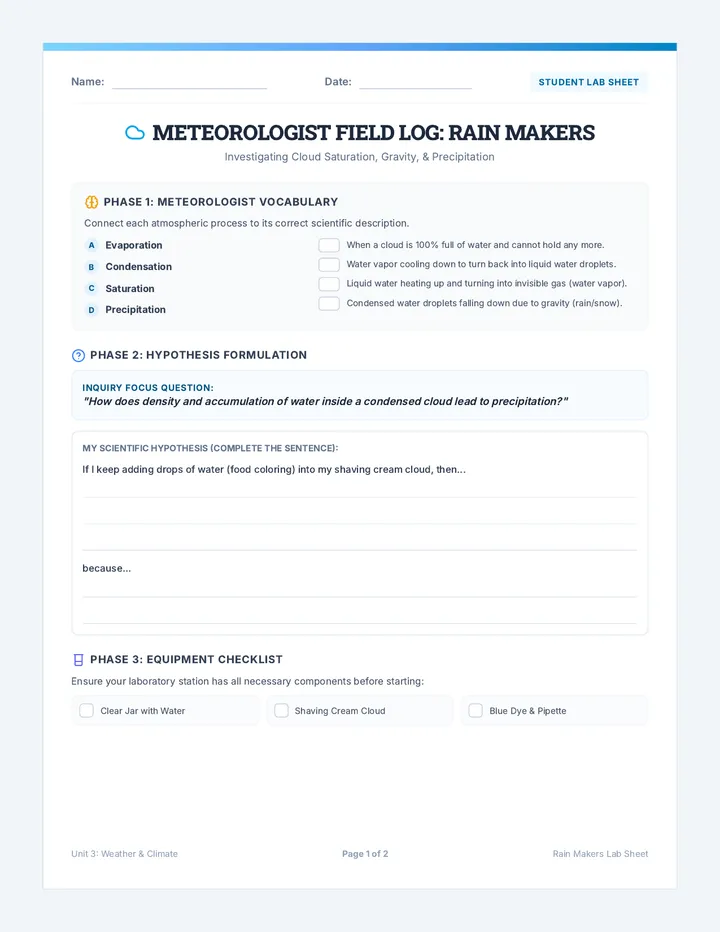
Name: __________________________ Date: _______________
The Solid Foundation
Beneath your feet lies the geosphere , the massive system that includes all the rocks, minerals, and landforms on Earth. From the highest volcanic peaks of the Andes to the deep floor of the Sahara Desert, the geosphere is the physical skeleton of our planet. It isn't just the surface, however; it extends thousands of miles deep to the center of the Earth.
Scientists divide the geosphere into three main layers: the crust , the mantle , and the core . The crust is the thin, outer shell where we live. Below it is the mantle, a thick layer of hot, semi-solid rock. At the center is the core, made of iron and nickel, as hot as the surface of the sun.
The geosphere is constantly changing. Forces like plate tectonics push up mountains and trigger earthquakes. Processes like weathering and erosion, caused by wind and water, slowly wear down rocks into soil. This soil then becomes a vital resource for life, providing nutrients for plants and a home for billions of tiny organisms.
"The geosphere provides the stage upon which the drama of life unfolds, offering the raw materials and the physical space for every other system to exist."
Key Vocabulary
Mineral: A naturally occurring solid substance with a specific structure.
Landform: A natural feature of Earth's surface, such as a mountain or valley.
Plate Tectonics: The theory that Earth's outer shell is divided into plates.
Focus Questions
1. List the three main layers of the geosphere:
2. What are two forces that change the geosphere?
3. Why is the geosphere called the "physical skeleton"?
Explorer Challenge
Sketch and label Earth's layers (crust, mantle, core).
Hydrosphere Flow Passage Hydrosphere Flow
Name: __________________________ Date: _______________
The Blue Planet's Lifeblood
From space, Earth looks like a "blue marble" because about 71% of its surface is covered by water. This massive collection of water—found in oceans, rivers, lakes, and even frozen in glaciers—makes up the hydrosphere . Without the hydrosphere, life as we know it would be impossible.
The hydrosphere is unique because water exists in three states: solid (ice), liquid (water), and gas (water vapor). Most of Earth's water (about 97%) is salt water found in the oceans. Only a tiny fraction is fresh water, and much of that is trapped in huge ice sheets and glaciers.
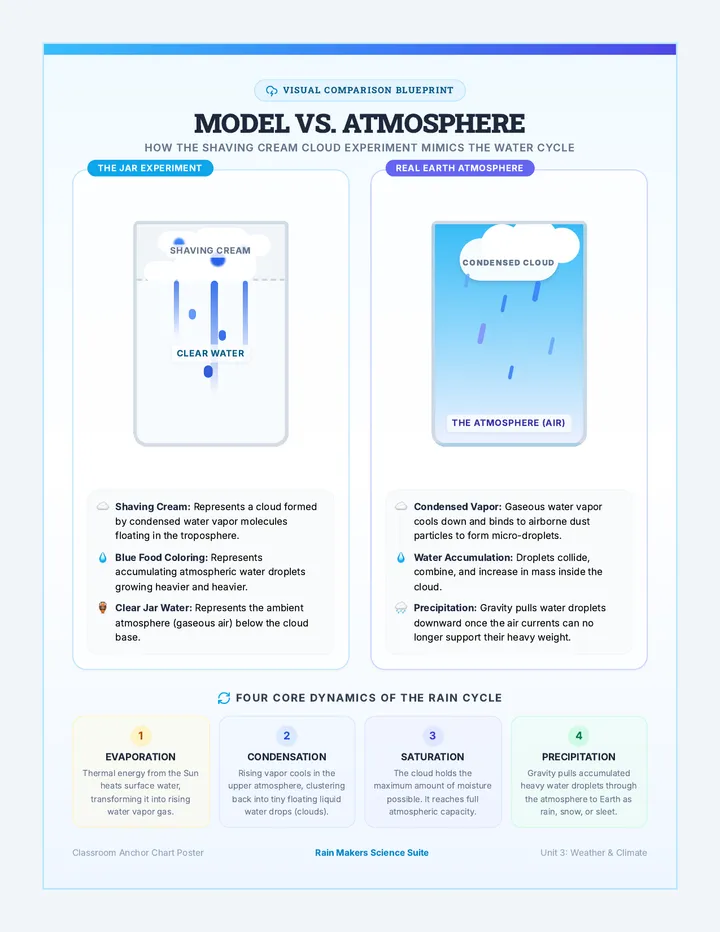
Water is constantly moving through the water cycle . Heat from the sun causes water to evaporate. It cools down to form clouds and falls back to Earth as precipitation (rain or snow). As water flows over land, it interacts with the geosphere by carving canyons and carrying minerals to the sea.
"Water is the only substance on Earth that naturally exists in three states. It connects every corner of the globe through its tireless movement."
Key Vocabulary
Evaporation: Liquid water turning into gas (water vapor).
Precipitation: Water falling from the sky (rain, snow, etc.).
Glacier: A slowly moving mass or river of ice.
Focus Questions
1. What % of Earth is covered by water?
2. Name the three states of water:
3. How does water interact with the geosphere?
Water Detective
Where is most fresh water stored? Underline it in the text.
Check: Did you find "glaciers"?
Atmosphere Breath Passage Atmosphere Breath
Name: __________________________ Date: _______________
Our Protective Blanket
Take a deep breath. You are interacting with the atmosphere ! The atmosphere is the thin layer of gases that surrounds our planet. Though it seems like empty space, it is a complex system that keeps Earth habitable.
The atmosphere is made mostly of nitrogen (78%) and oxygen (21%). The remaining 1% includes argon, carbon dioxide, and water vapor. This mix of gases acts like a shield, protecting us from the sun's UV radiation and burning up most meteors before they hit the ground.
This system also regulates Earth's temperature. Greenhouse gases trap heat from the sun, keeping the planet warm enough for liquid water. The atmosphere is divided into several layers, including the troposphere (where weather happens) and the stratosphere (home of the ozone layer).
"Without our atmosphere, Earth would be a lifeless rock, freezing at night and scorching during the day."
Key Vocabulary
Troposphere: The lowest layer where weather occurs.
Ozone Layer: Region that absorbs UV radiation.
Altitude: Height relative to sea level.
Focus Questions
1. Two most abundant gases:
2. Where does weather occur?
3. Two ways it protects Earth:
Quick Check
Why is the atmosphere like a "blanket"?
Biosphere Web Passage Biosphere Web
Name: __________________________ Date: _______________
The Zone of Life
The biosphere is the most vibrant of all Earth's systems. It includes every living thing—from tiny bacteria in the soil to massive blue whales in the ocean. The biosphere exists wherever life is found, from the sea depths to the high altitudes where birds fly.
Living things are divided into groups, like plants, animals, fungi, and microbes. All these organisms depend on one another. Plants use sunlight and CO2 to make food, while animals eat those plants to get energy. This network is called a food web.
The biosphere relies on the other spheres to survive. It needs the geosphere for space/nutrients, the hydrosphere for water, and the atmosphere for gases. In return, life changes the other systems, such as when trees release oxygen or roots break down rocks.
"The biosphere is like a giant puzzle where every living thing is a piece. If one piece is removed, the whole picture changes."
Key Vocabulary
Organism: An individual living thing.
Habitat: The natural home of an organism.
Photosynthesis: Plants making food from sunlight.
Focus Questions
1. Define the biosphere:
2. Two examples of organisms:
3. How does life need the hydrosphere?
Ecosystem Sketch
Draw one plant and one animal from your local biosphere.
System Synergy Organizer System Synergy
Mapping the Interconnections of our Home Planet
Name: __________________________ Date: ___________________________
Part 1: The Four Spheres
Geosphere
Key Components:
Importance:
Hydrosphere
Key Components:
Importance:
Atmosphere
Key Components:
Importance:
Biosphere
Key Components:
Importance:
Part 2: Interaction Scenarios
Identify the two spheres involved and explain how they interact.
A rainstorm causes a mudslide down a mountain.
Spheres Involved:
Explain the Connection:
Plants take in carbon dioxide to grow.
Spheres Involved:
Explain the Connection:
A volcano erupts ash into the sky.
Spheres Involved:
Explain the Connection:
Sphere Master Teacher Guide Sphere Master Teacher Guide
Lesson Support & Answer Keys
Lesson Overview
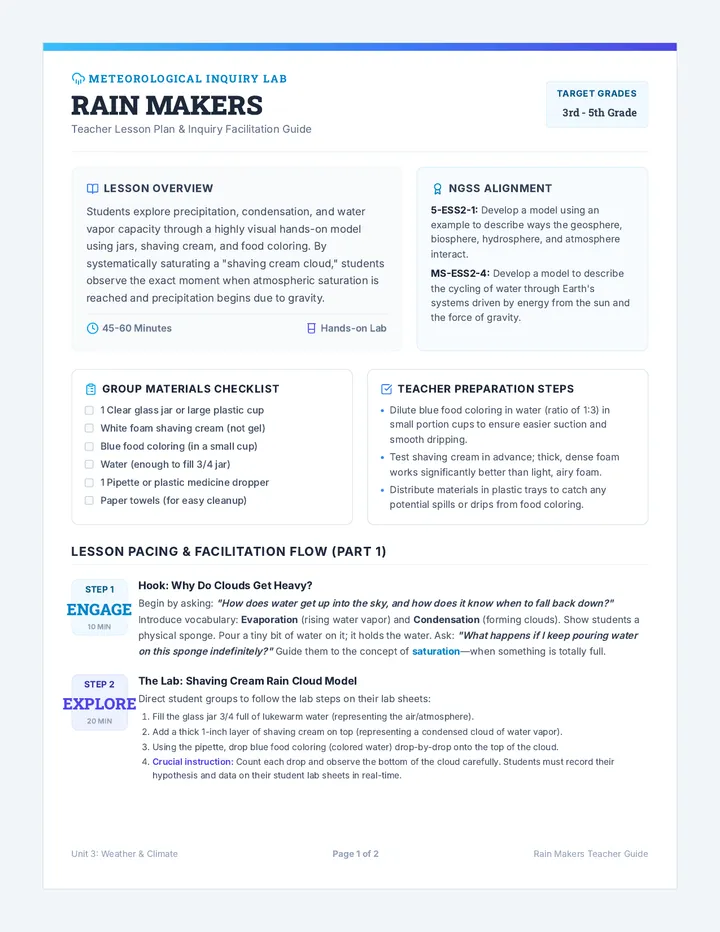
This lesson explores Earth as a system of systems. Students move through four reading passages (Geosphere, Hydrosphere, Atmosphere, and Biosphere) to build foundational knowledge. The lesson culminates in the System Synergy Organizer , requiring synthesis and identification of sphere interactions.
Suggested Pacing
Day 1: Intro via "Sphere Explorers Slides." Focus on "system" definition.
Day 2: Geosphere and Hydrosphere passages.
Day 3: Atmosphere and Biosphere passages.
Day 4: System Synergy Organizer & class debrief.
Answer Keys: Reading Passages
Geosphere Journey
Layers: Crust, Mantle, Core.
Forces: Plate tectonics, weathering, erosion.
Skeleton: Provides physical structure and minerals.
Hydrosphere Flow
% Water: Approx. 71%.
States: Solid, liquid, gas.
Interactions: Carving land (canyons), hydration.
Atmosphere Breath
Gases: Nitrogen (78%), Oxygen (21%).
Weather: Troposphere.
Protection: Shields UV, meteors; traps heat.
Biosphere Web
Definition: Total collection of living things.
Types: Plants, animals, bacteria, fungi.
Interactions: Photosynthesis, habitat use.
Synergy Organizer Key (Part 2)
Rainstorm Mudslide: Hydrosphere + Geosphere. Water saturates soil/rock and moves it downhill via gravity and erosion.
Plants/CO2: Biosphere + Atmosphere. Living things swap gases with the air for photosynthesis and respiration.
Volcano/Ash: Geosphere + Atmosphere. Earth's interior releases particulate matter and gases into the gaseous envelope.