Lenny.com
Explore
Create
ActivitiesNewMathEnglish Language ArtsScience & EngineeringSocial StudiesGlobal LanguagesHealth & Physical EducationSpecial EducationCounseling & Life SkillsArts & CreativityESL
Lenny.com
Lenny.com
Explore
Create
ActivitiesNewMathEnglish Language ArtsScience & EngineeringSocial StudiesGlobal LanguagesHealth & Physical EducationSpecial EducationCounseling & Life SkillsArts & CreativityESL
Lenny.com
Lenny.com

Solutions

Lenny for EducatorsLenny for SchoolsLenny for Districts

Product

ExploreSign inCreateSupportAbout

Resources

Getting startedMTSS Acceleration Program

Newsletters

School Funding Newsletter

© 2026 Lenny Learning Inc.

TermsPrivacyAccessibility
LinkedInInstagramX
Lenny

Energy

Kinetic and potential energy transformations, thermodynamics, and the principle of conservation. Analyzes various power sources including solar, wind, and fossil fuels alongside mechanical and chemical systems.

Science & EngineeringLife ScienceLiving ThingsAnimalsPlantsBody SystemsTraitsAdaptationsCellsEcosystemsHeredityGenes to TraitsCell DivisionPhysicsComparing MaterialsShapes and PropertiesMagnetsMagnetismLightSoundLight and SoundMatterStates of MatterChanges of StateMixturesPhysical and Chemical ChangeHeating and CoolingHeat and Thermal EnergyEnergyForce and MotionElectrical CircuitsAtoms and MoleculesPeriodic TableMotion in One DimensionMotion in Two DimensionsScalars and VectorsForces and Laws of MotionCircular Motion and GravityMomentum and ImpulseWork, Energy, and PowerWavesElectromagnetic WavesGeometric OpticsElectricity and MagnetismSimple Harmonic MotionThermodynamicsNuclear PhysicsEarth Science & AstronomyWeatherWater CycleRocks and MineralsFossilsEarth's FeaturesEarth's ResourcesEarth's StructureWeather and ClimateEarth EventsFossils and Geologic TimePlate TectonicsHuman ImpactsAstronomyChemistryUnits and MeasurementAtomic StructurePeriodic TrendsChemical BondingNomenclatureMolecular StructureIntermolecular ForcesThe MoleStoichiometryProperties of GasesSolutionsChemical ReactionsBalancing EquationsEnergy ChangesRates of ReactionsEquilibriumAcids and BasesQuantum ModelBiologyClassificationCell StructureThe Chemistry of LifeBiomoleculesCellular TransportCell EnergyCell Growth and DivisionDNAProtein SynthesisMeiosis and Sexual ReproductionPatterns of InheritanceMulticellular OrganismsEvolutionEcologyBiodiversityComputer ScienceAlgorithms and Computational ThinkingProgramming LanguagesComputing SystemsNetworks and InternetData AnalysisCybersecurityAI and Machine LearningSoftware Design and DevelopmentBlockchainEngineering & AIDesigning ExperimentsEngineering PracticesDesign ThinkingEngineering Design ProcessMechanical EngineeringElectrical EngineeringMaterials and StructuresCAD and 3D DesignRoboticsArtificial Intelligence BasicsVibe CodingMachine LearningAI Ethics and SocietySystems ThinkingEntrepreneurship & InnovationEntrepreneurial MindsetBusiness Idea DevelopmentBusiness Plan BasicsMarketing & Customer DiscoveryFinancial Management for Startups

Videos

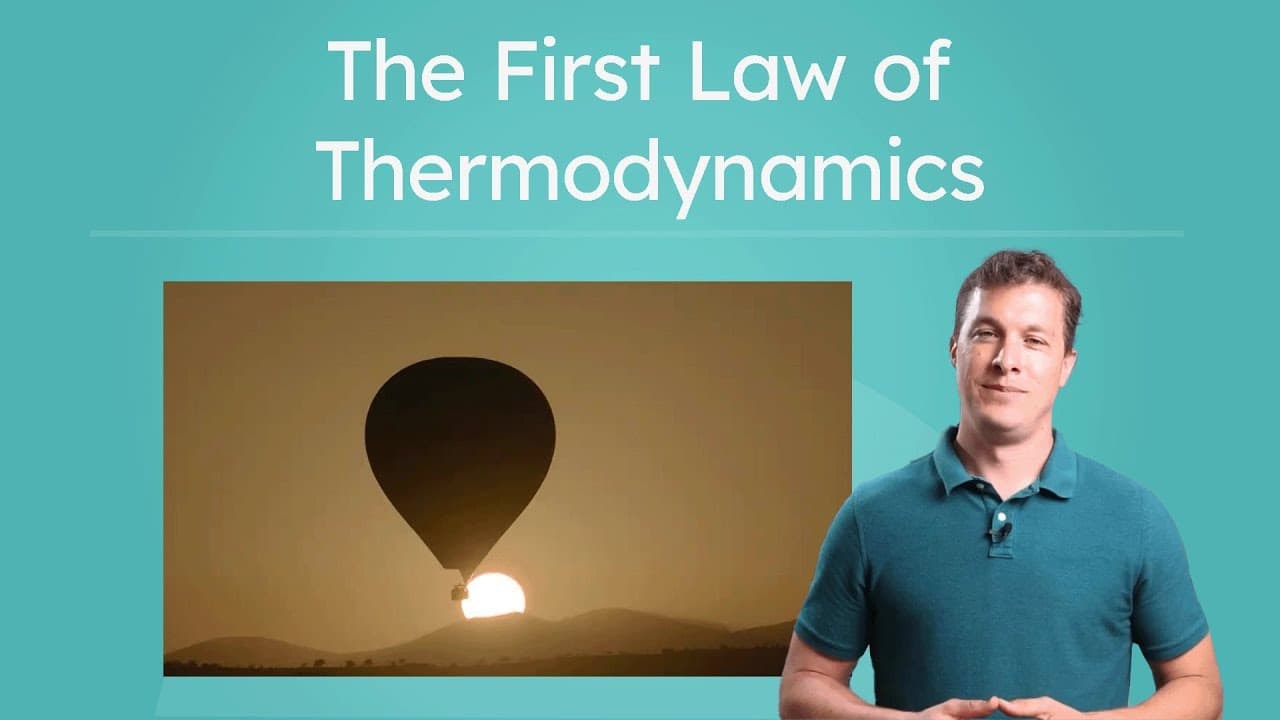
How Heat and Work Change Energy

How Heat and Work Change Energy

This engaging video lesson provides a clear and practical introduction to the First Law of Thermodynamics, using real-world examples like the SR-71 Blackbird spy plane and hot air balloons to ground abstract physics concepts. The narrator explains the fundamental relationship between heat ($q$), work ($w$), and the change in internal energy ($ΔE$), demonstrating that energy is conserved and can only be transferred, not created or destroyed. The video breaks down the mathematical formula $ΔE = q + w$ and provides specific rules for determining positive and negative signs based on whether a system gains or loses energy. Key themes explored include the definitions of thermodynamic systems and surroundings, the conversion of heat into mechanical work, and the principle of conservation of energy. The video specifically focuses on the crucial skill of identifying sign conventions—understanding when heat and work values should be positive or negative in calculations. It walks students through multiple practice problems, moving from conceptual identification to calculating energy changes in kilojoules. For educators, this video is an excellent resource for high school chemistry or physics units on thermodynamics. It bridges the gap between conceptual understanding and mathematical application. The step-by-step problem-solving sections allow for natural pause points where students can attempt calculations before seeing the solution, making it ideal for direct instruction or flipped classroom models. The use of the SR-71 Blackbird as a hook effectively demonstrates how thermodynamic principles solve real engineering problems.

Miacademy & MiaPrep Learning ChannelMiacademy & MiaPrep Learning Channel

12mins 34s

How Land and Water Absorb the Sun's Heat

How Land and Water Absorb the Sun's Heat

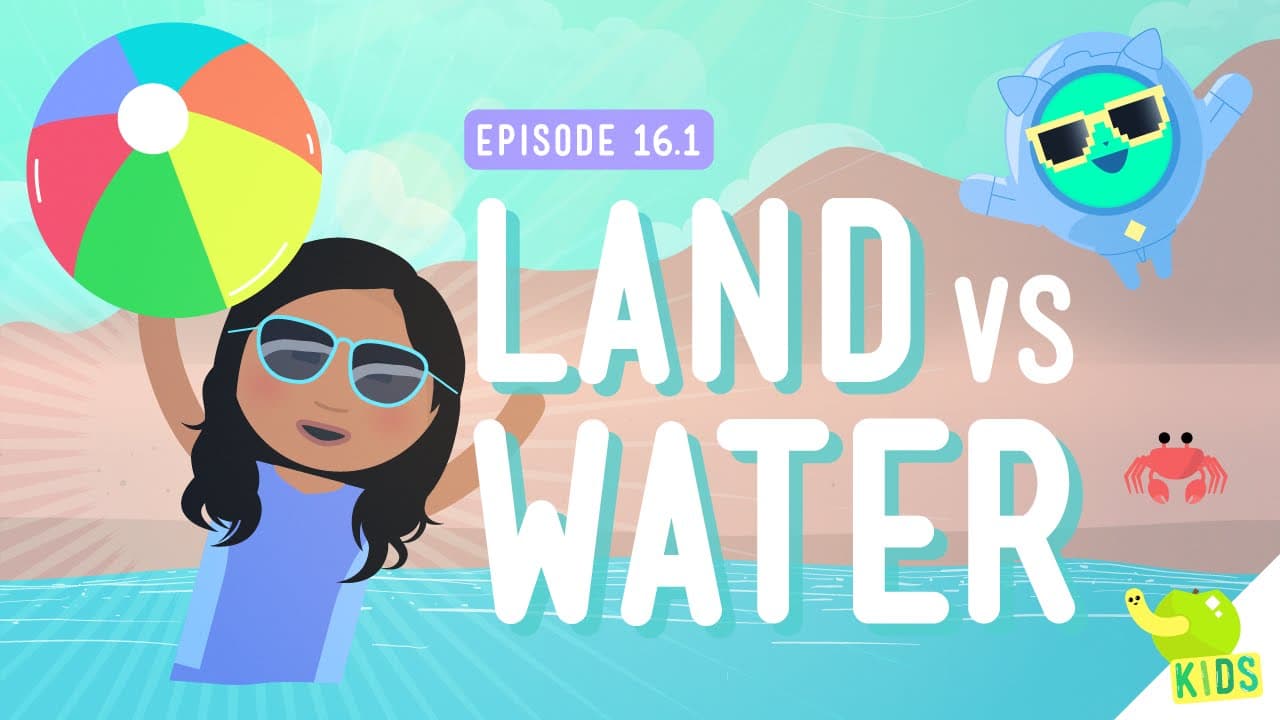
This educational video from Crash Course Kids investigates the relationship between the sun's energy and the Earth's surface, specifically comparing how land and water absorb heat differently. Through the relatable example of a day at the beach, the host explains complex physical concepts like absorption and reflection in an accessible way. The video breaks down the path of solar energy from the sun's core to Earth, using clear visual aids like pie charts to show exactly how much energy reaches the surface versus what gets blocked or reflected by the atmosphere. The core scientific themes explored include heat energy transfer, the properties of matter (specifically color) in relation to light absorption, and the interaction between solar radiation and different terrestrial surfaces. A key focus is the concept that darker objects (like land/sand) absorb more heat than lighter objects (like water), which reflect more energy. This explains why sand feels hotter than the ocean on a sunny day despite receiving the same amount of sunlight. For educators, this video serves as an excellent anchor for units on Earth Science, weather patterns, or physical science regarding heat and light. It provides a visual and practical demonstration of differential heating, a foundational concept for understanding global weather systems, climate, and the water cycle. The use of clear definitions for terms like 'absorb' and 'reflect' makes it particularly useful for building scientific vocabulary in upper elementary grades.

Crash Course KidsCrash Course Kids

3mins 33s

How to Build a Rube Goldberg Machine

How to Build a Rube Goldberg Machine

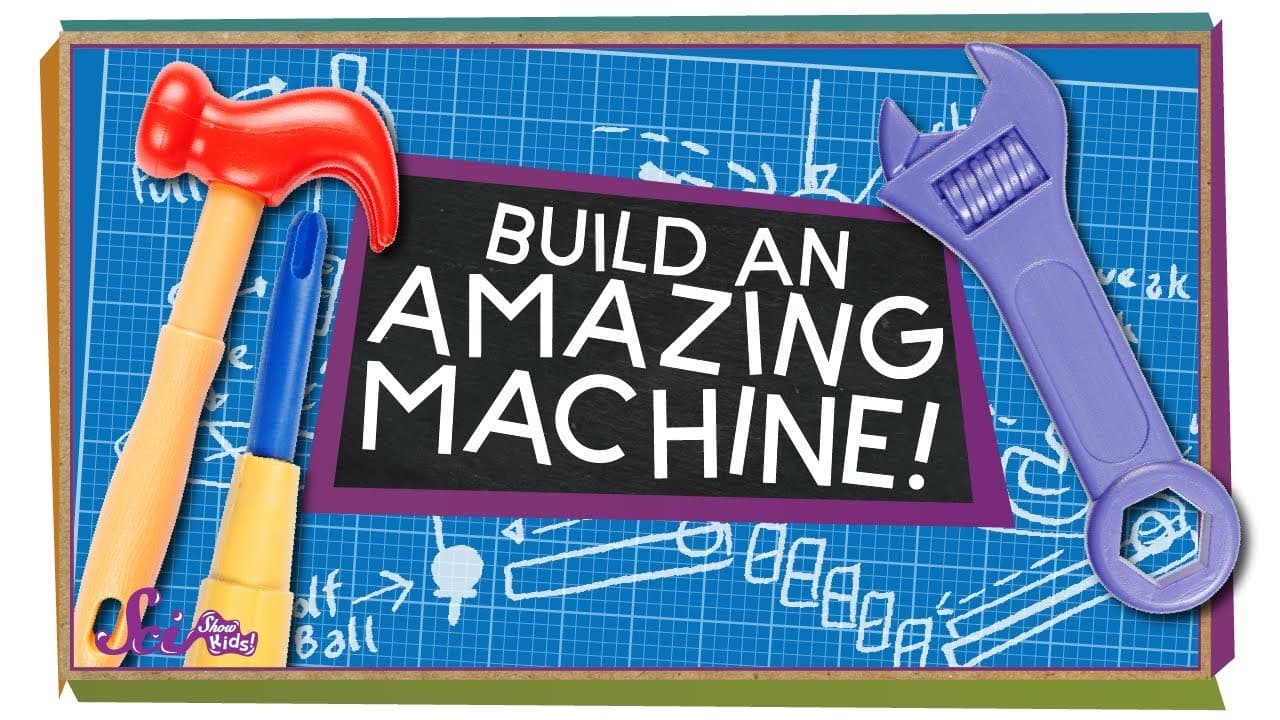
In this engaging episode of SciShow Kids, host Jessi and her robot rat friend Squeaks introduce young learners to the whimsical world of Rube Goldberg machines. The video begins with a practical demonstration of a "cheese serving machine" that the duo has invented, which utilizes a complex chain reaction to perform the simple task of putting cheese on a table. Through this fun example, the video breaks down the mechanics behind the machine, specifically highlighting simple machines like levers and pulleys, and explains how energy is transferred from one object to another in a chain reaction. The video seamlessly transitions from physical science to engineering history by introducing Rube Goldberg, the real-life cartoonist and engineer famous for drawing overly complicated machines for simple tasks. Key themes explored include the physics of simple machines (levers, fulcrums, pulleys), the concept of a chain reaction, and the Engineering Design Process (Idea, Design, Gather, Build). It also touches on an important Social-Emotional Learning (SEL) concept for young engineers: persistence, emphasizing that inventions often require multiple attempts before they work correctly. For educators, this video serves as an excellent launchpad for STEM units on motion, force, and engineering design. It demystifies technical concepts by showing them in action and provides a clear, four-step framework for students to create their own inventions. The content encourages creativity and critical thinking, challenging students to look at everyday objects as potential components of a larger machine. It is particularly useful for introducing the "Design" phase of engineering, showing actual blueprints and planning before building.
SciShow KidsSciShow Kids

5mins 56s

Exploring Sound Energy and How It Travels

Exploring Sound Energy and How It Travels

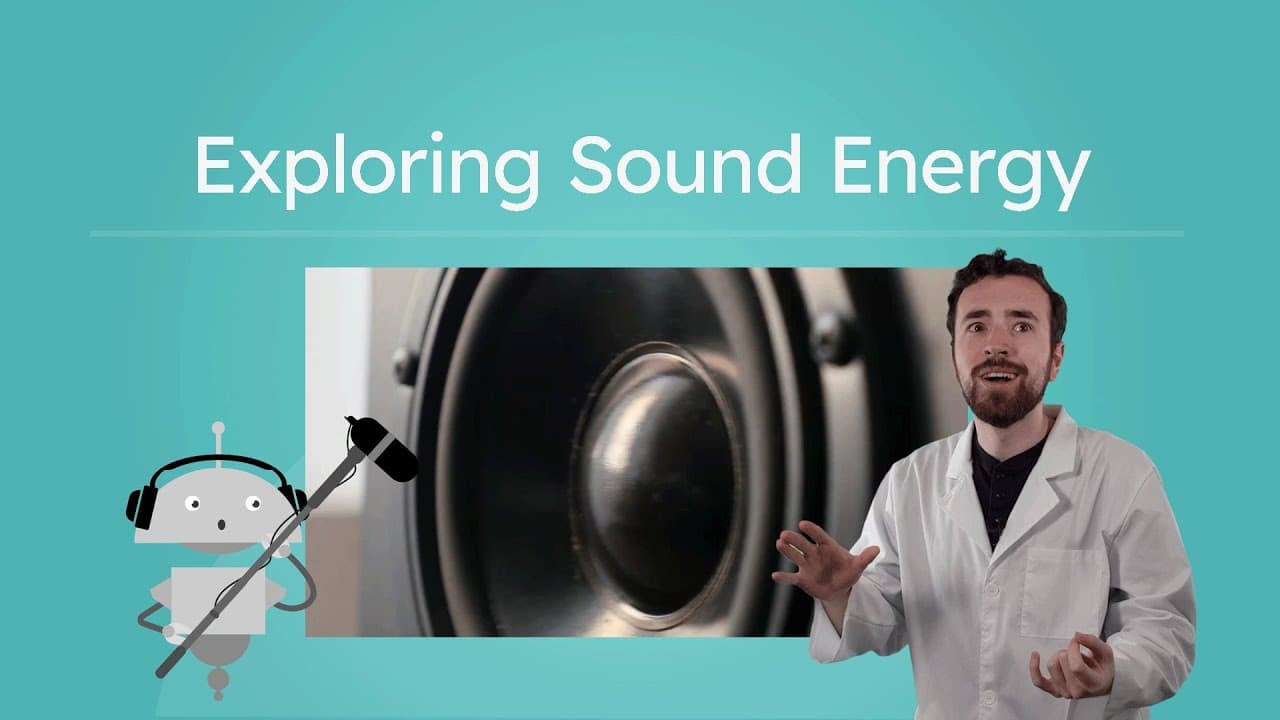
This engaging science video explores the fundamental concepts of sound energy, defining it as mechanical energy created by vibrations. Hosted by a presenter who uses humor and clear demonstrations, the lesson breaks down complex physics concepts into accessible segments. It covers the creation of sound through vibration, the anatomy of the ear including the role of the eardrum, and how the brain interprets these signals as distinct noises.

Miacademy & MiaPrep Learning ChannelMiacademy & MiaPrep Learning Channel

8mins 58s

Comparing Heat Conductivity: Metal vs. Glass Experiment

Comparing Heat Conductivity: Metal vs. Glass Experiment

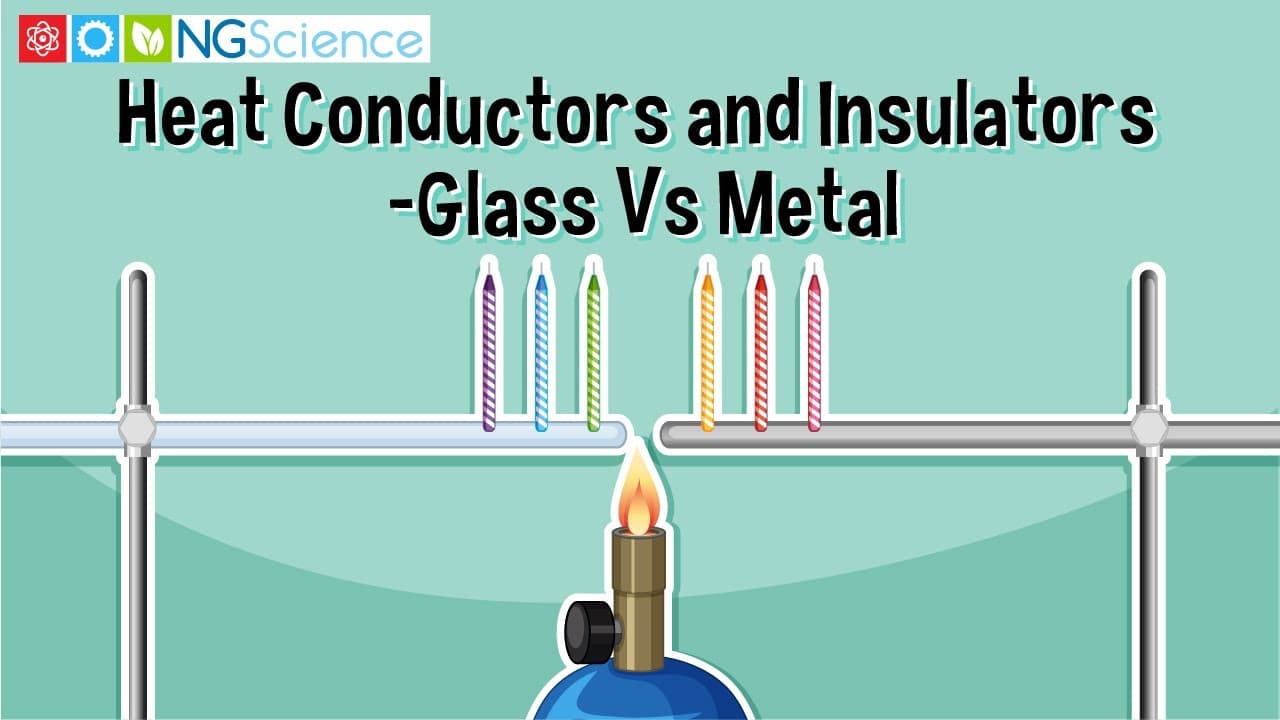
This concise science demonstration visualizes the concept of thermal conductivity by comparing how heat travels through metal versus glass. Set against a high-contrast background, the video features a clear experiment where candles are attached to metal and glass rods using wax. As a central heat source is applied, viewers can observe the progressive melting of the wax on the metal rod, demonstrating how heat energy transfers through conductive materials over time. The video introduces key physics vocabulary including thermal energy, conductors, insulators, and heat transfer. It explicitly addresses the direction of heat flow (from hot to cold) and provides a side-by-side comparison that makes the abstract concept of material properties concrete for young learners. The distinct visual result—candles falling off the metal rod while staying put on the glass rod—serves as immediate, observable evidence. Teachers can use this video to anchor lessons on energy transfer, material science, or the scientific method. It provides an excellent phenomenon for students to observe, predict, and explain. The clear setup allows for easy replication in a lab setting, or serves as a safe virtual alternative for classrooms without access to Bunsen burners. It naturally leads into discussions about why we use specific materials for cooking pans versus handles, or building insulation.

Next Generation ScienceNext Generation Science

2mins 15s

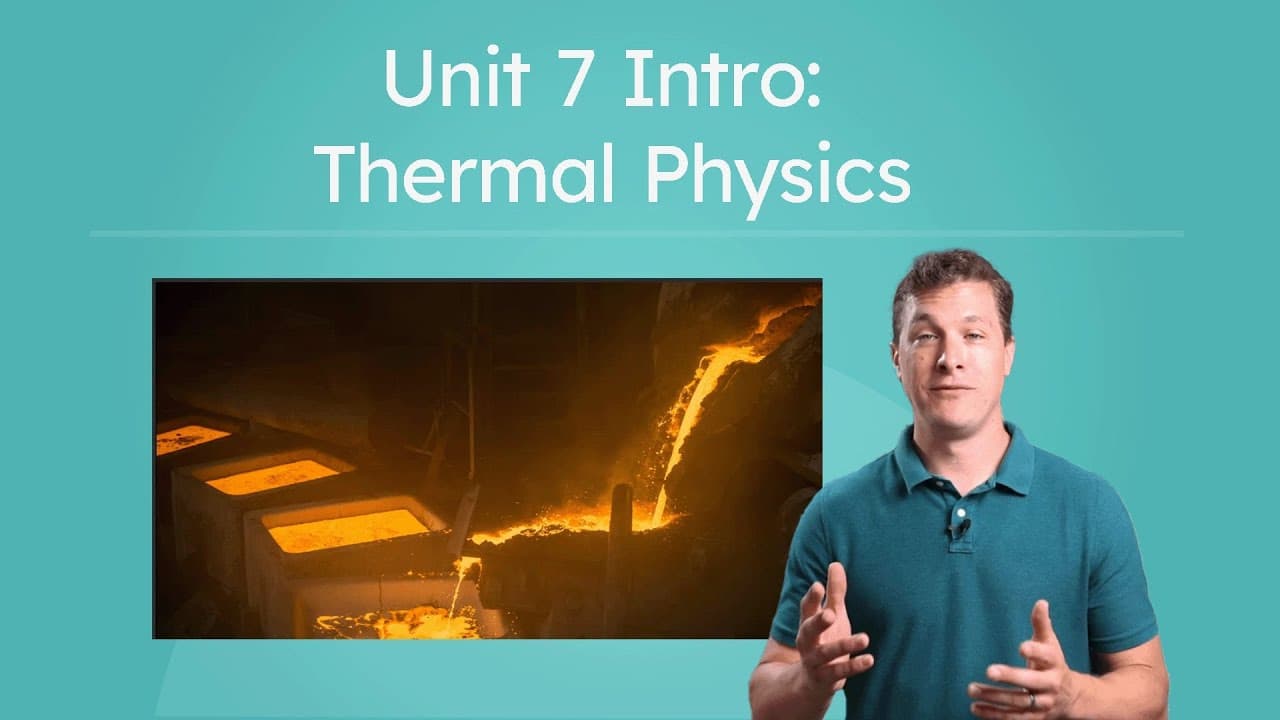
Thermal Physics: Kinetic Energy, Heat Transfer, and Thermodynamics

Thermal Physics: Kinetic Energy, Heat Transfer, and Thermodynamics

This educational video provides a comprehensive introduction to thermal physics, bridging the gap between macroscopic observations and microscopic atomic behavior. It begins by defining thermal energy as a form of kinetic energy, using clear animations to show how particle motion increases with temperature. The lesson progresses through practical concepts including temperature scales, thermal equilibrium, and the three primary methods of heat transfer: conduction, convection, and radiation. The video also explores the states of matter, introducing plasma and explaining how phase changes occur as energy is added. A significant portion of the video is dedicated to explaining the three Laws of Thermodynamics in accessible terms, using real-world analogies like the decaying Colosseum to explain entropy. The content connects abstract physics concepts to tangible examples like molten iron, boiling water, and pottery kilns. This resource is highly valuable for middle and high school science classrooms as it visually demonstrates concepts that are often difficult for students to conceptualize, such as atomic vibration and entropy. Teachers can use this video to introduce a unit on thermodynamics, reinforce vocabulary around heat transfer, or visually demonstrate the relationship between kinetic energy and temperature.

Miacademy & MiaPrep Learning ChannelMiacademy & MiaPrep Learning Channel

10mins 56s

Materials

Wind Chasers Worksheet

Wind Chasers Worksheet

An accessible, single-page science worksheet for 3rd graders focused on how wind moves, defining wind as moving air, showing warm and cool air movement without pressure jargon, and featuring gentle comprehension questions.

EG

Emily Gianni

Roof Modification Challenge Slides

Roof Modification Challenge Slides

A 31-slide interactive presentation featuring 15 multiple-choice questions covering pages 60-63 of the Futura Engineering Dossier (White Roofs and Solar Roofs). Each question slide is followed immediately by an answer and explanation slide, fully adhering to font size guidelines and answer length constraints.

K

KATIE.CADLE

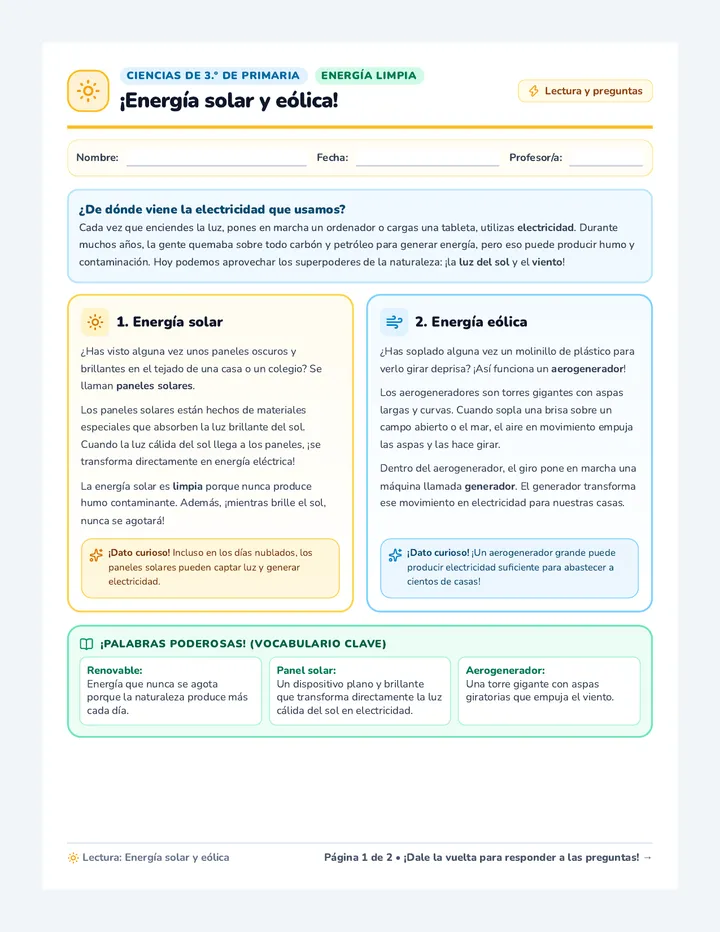
Clean Currents Reading Worksheet

Clean Currents Reading Worksheet

A two-page 3rd-grade reading comprehension worksheet on solar and wind energy. Features age-appropriate informational passages, friendly vocabulary callouts, multiple-choice questions, true/false checks, spacious writing lines, and a drawing prompt.

EG

Emily Gianni

Water Cycle Flashcards

Water Cycle Flashcards

A 24-card conceptual double-sided flashcard set engineered for long-edge duplex printing. Focuses on foundational Earth science concepts, atmospheric thermodynamics, energy transfer mechanisms, and hydrological processes without duplicating specific test questions.

A

Andrea.Golden

Thermal Power Vocabulary Slides

Thermal Power Vocabulary Slides

A dynamic, classroom-ready 16-slide presentation for practicing and mastering 11 foundational thermal energy and scientific investigation vocabulary words. Each slide features clear scientific definitions, real-world examples, memory hooks, and interactive classroom check questions with bold visual layouts.

MT

Micha Taylor

Energy Detectives Worksheet

Energy Detectives Worksheet

A two-page printable science practice worksheet exploring how energy is detected through observable evidence like light, sound, heat, and motion. Students analyze everyday scenarios to identify evidence clues and explain how invisible energy reveals its presence.

KB

Kelsey Barofski

Sequences

Vowel Valley Fluency Packet Mastered

Phonics Fluency Fun

A series of phonics lessons focusing on vowel teams, digraphs, and other phonetic patterns through narrative passages and fluency drills.

N

npowers

28
Naval Architect Challenge Answer Key

Fluid Dynamics

A series of lessons exploring the physics of fluids, including buoyancy, pressure, and fluid flow.

CM

Chuguna Murugesan

28
Wave Racer CER Bellringer

Wave Runners Sequence

A comprehensive physics unit covering the behavior of mechanical and electromagnetic waves. Students transition from hands-on slinky exploration to advanced optical modeling and mathematical derivations.

OM

Olutoyin Makinde

65
Induction Insight Map Handout

Magnetic Forces Investigation

A 5-day intensive exploration of magnetic forces and fields, focusing on atomic-level causes, field interactions, and mathematical modeling of forces on charged particles. Students progress from anchoring phenomena to complex mathematical applications and a comprehensive unit review.

OM

Olutoyin Makinde

68
Mission Scoring Rubric

Physics Frontiers Research Project

A partner-based research project for 9th-grade conceptual physics students focusing on diverse topics from celestial mechanics to the physics of dance. Students move through a structured research process with mandatory teacher checkpoints for source reliability.

C

ckroeker

13
Climate Crisis Slides

Science Essentials Vault

A comprehensive collection of core science units covering Environmental Science, Biology, and Physical Science. This sequence provides high-impact instructional slides, hands-on lab experiences, guided notes, and differentiated assessments for five major scientific domains.

CB

Chloe Brown

25