Lenny.com
Explore
Create
ActivitiesNewMathEnglish Language ArtsScience & EngineeringSocial StudiesGlobal LanguagesHealth & Physical EducationSpecial EducationCounseling & Life SkillsArts & CreativityESL
Lenny.com
Lenny.com
Explore
Create
ActivitiesNewMathEnglish Language ArtsScience & EngineeringSocial StudiesGlobal LanguagesHealth & Physical EducationSpecial EducationCounseling & Life SkillsArts & CreativityESL
Lenny.com
Lenny.com

Solutions

Lenny for EducatorsLenny for SchoolsLenny for Districts

Product

ExploreSign inCreateSupportAbout

Resources

Getting startedMTSS Acceleration Program

Newsletters

School Funding Newsletter

© 2026 Lenny Learning Inc.

TermsPrivacyAccessibility
LinkedInInstagramX
Lenny

Electromagnetic Waves

Properties of the electromagnetic spectrum including frequency, wavelength, and photon energy. Connects Maxwell's equations to the behavior of light, radio waves, and ionizing radiation.

Science & EngineeringLife ScienceLiving ThingsAnimalsPlantsBody SystemsTraitsAdaptationsCellsEcosystemsHeredityGenes to TraitsCell DivisionPhysicsComparing MaterialsShapes and PropertiesMagnetsMagnetismLightSoundLight and SoundMatterStates of MatterChanges of StateMixturesPhysical and Chemical ChangeHeating and CoolingHeat and Thermal EnergyEnergyForce and MotionElectrical CircuitsAtoms and MoleculesPeriodic TableMotion in One DimensionMotion in Two DimensionsScalars and VectorsForces and Laws of MotionCircular Motion and GravityMomentum and ImpulseWork, Energy, and PowerWavesElectromagnetic WavesGeometric OpticsElectricity and MagnetismSimple Harmonic MotionThermodynamicsNuclear PhysicsEarth Science & AstronomyWeatherWater CycleRocks and MineralsFossilsEarth's FeaturesEarth's ResourcesEarth's StructureWeather and ClimateEarth EventsFossils and Geologic TimePlate TectonicsHuman ImpactsAstronomyChemistryUnits and MeasurementAtomic StructurePeriodic TrendsChemical BondingNomenclatureMolecular StructureIntermolecular ForcesThe MoleStoichiometryProperties of GasesSolutionsChemical ReactionsBalancing EquationsEnergy ChangesRates of ReactionsEquilibriumAcids and BasesQuantum ModelBiologyClassificationCell StructureThe Chemistry of LifeBiomoleculesCellular TransportCell EnergyCell Growth and DivisionDNAProtein SynthesisMeiosis and Sexual ReproductionPatterns of InheritanceMulticellular OrganismsEvolutionEcologyBiodiversityComputer ScienceAlgorithms and Computational ThinkingProgramming LanguagesComputing SystemsNetworks and InternetData AnalysisCybersecurityAI and Machine LearningSoftware Design and DevelopmentBlockchainEngineering & AIDesigning ExperimentsEngineering PracticesDesign ThinkingEngineering Design ProcessMechanical EngineeringElectrical EngineeringMaterials and StructuresCAD and 3D DesignRoboticsArtificial Intelligence BasicsVibe CodingMachine LearningAI Ethics and SocietySystems ThinkingEntrepreneurship & InnovationEntrepreneurial MindsetBusiness Idea DevelopmentBusiness Plan BasicsMarketing & Customer DiscoveryFinancial Management for Startups

Videos

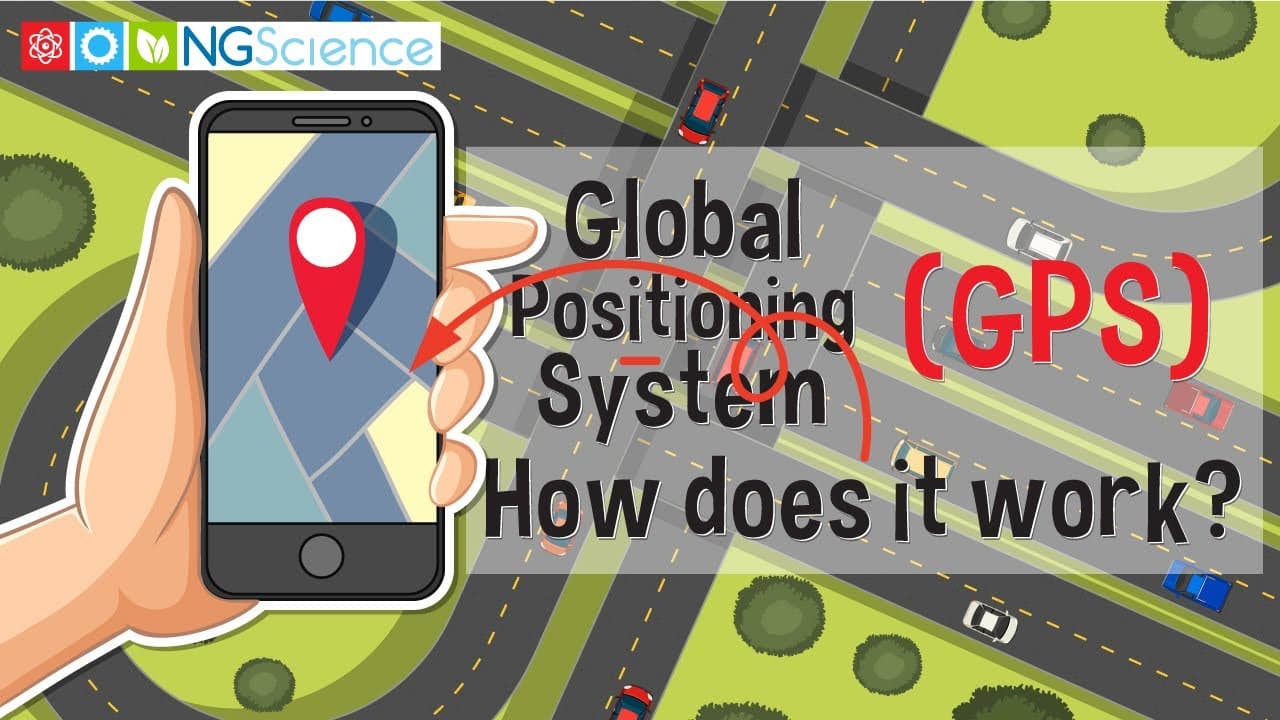
How GPS Works and Why We Need It

How GPS Works and Why We Need It

This educational video provides a clear and engaging explanation of the Global Positioning System (GPS), tracing its evolution from a military tool to an essential part of daily civilian life. The video begins by contrasting modern digital navigation with the traditional use of paper maps, highlighting the convenience technology has brought to travel. It then dives into the technical mechanics of GPS, explaining how a network of satellites orbiting Earth communicates with receivers in devices like smartphones to determine precise locations through signal timing.

Next Generation ScienceNext Generation Science

7mins 7s

Exploring the Nature of Light and Electromagnetic Waves

Exploring the Nature of Light and Electromagnetic Waves

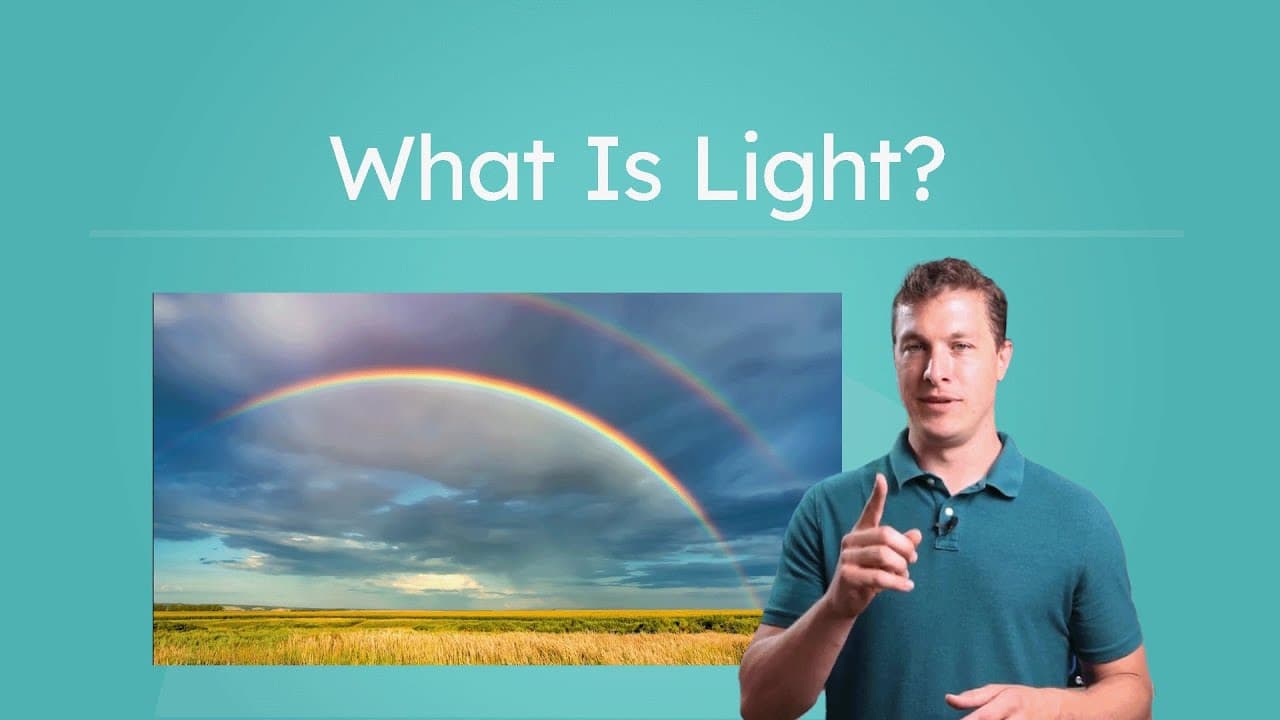
This educational video provides a comprehensive introduction to the physics of light, defining it as an oscillating electromagnetic wave. The instructor breaks down complex abstract concepts by first explaining electric and magnetic fields separately, using clear diagrams and real-world analogies like magnets and iron filings. The video then combines these concepts to visualize light as two perpendicular fields—electric and magnetic—oscillating together as they travel through space. The lesson delves into the specific wave properties of light, including wavelength, frequency, and amplitude. It effectively connects these mathematical and physical properties to human perception, explaining how wavelength and frequency determine the color we see, while amplitude determines the brightness. The video uses helpful animations, such as 3D graphs and water wave comparisons, to make these invisible phenomena easier to visualize. This resource is highly valuable for physical science and physics classrooms as it bridges the gap between static electricity/magnetism and wave theory. It is ideal for introducing the electromagnetic spectrum, teaching wave properties, or explaining the fundamental nature of light. The video includes a built-in review quiz and summary, making it a ready-to-use lesson component for checking student understanding of key physics vocabulary.

Miacademy & MiaPrep Learning ChannelMiacademy & MiaPrep Learning Channel

10mins

Understanding Time Dilation and Relativity

Understanding Time Dilation and Relativity

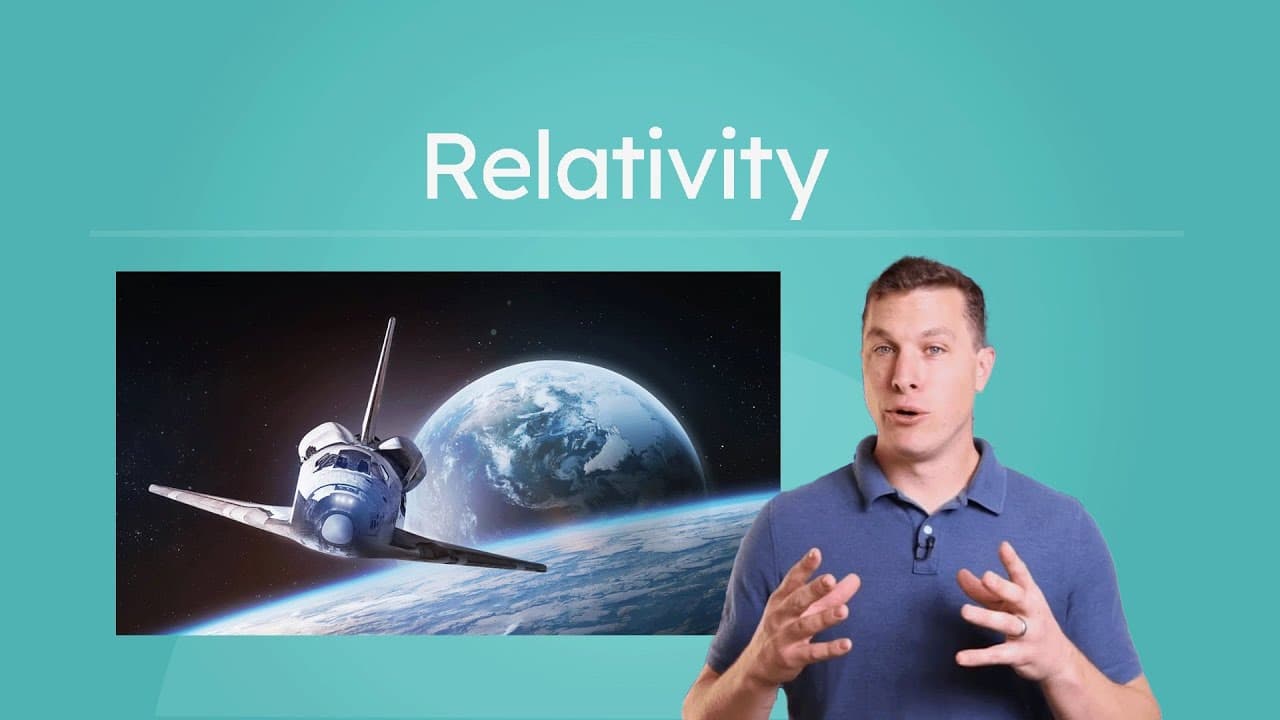
This educational video provides an engaging introduction to the complex physics concepts of time dilation and relativity. Using the popular film Interstellar as a hook, the narrator explains how time is not a fixed constant but changes based on velocity and gravity. The video breaks down Albert Einstein's theories into two main sections: Special Relativity, which deals with speed and the constant nature of light, and General Relativity, which connects acceleration and gravity to the warping of time.

Miacademy & MiaPrep Learning ChannelMiacademy & MiaPrep Learning Channel

10mins 54s

Introduction to Modern Physics: Quantum Mechanics and Relativity

Introduction to Modern Physics: Quantum Mechanics and Relativity

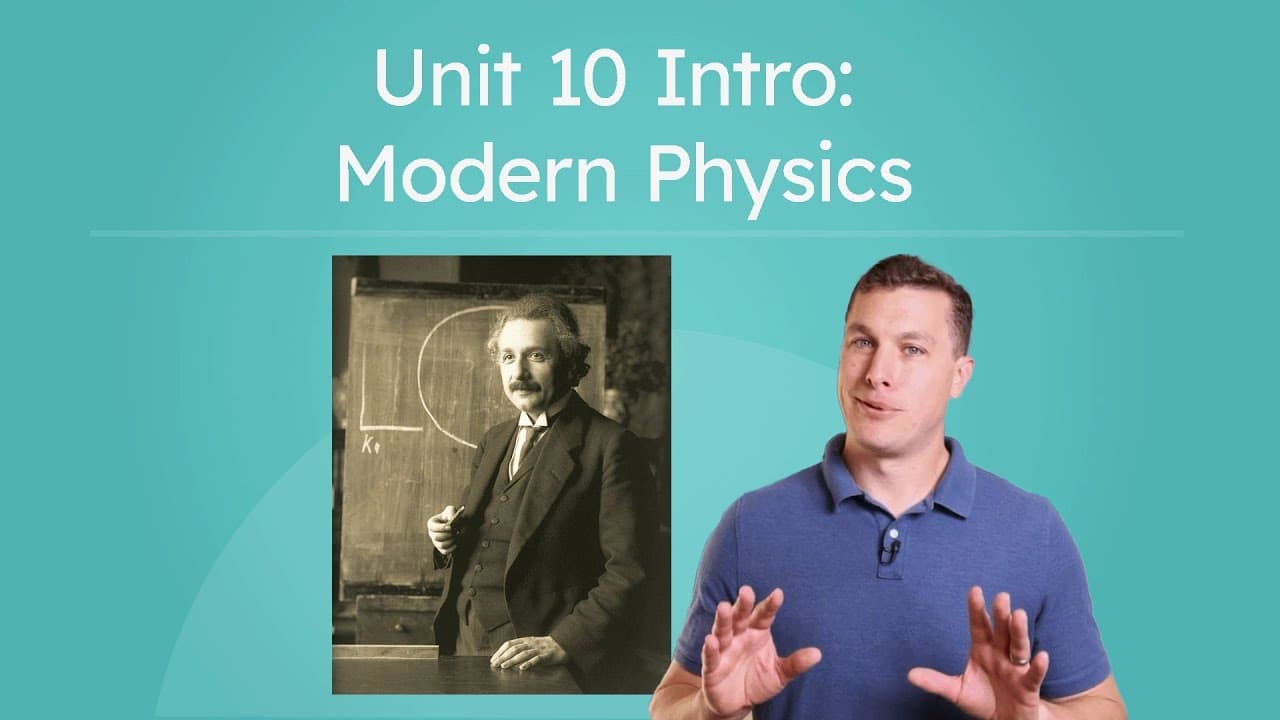
This video serves as an engaging introduction to the transition from Classical Physics to Modern Physics, covering the major scientific shifts that occurred in the early 20th century. It begins by contrasting pre-1900s physics (electricity and magnetism) with the revolutionary discoveries that followed, specifically addressing the limitations of classical theories in explaining phenomena like the nature of light. The instructor uses historical anecdotes, such as Max Planck's advisor advising him against studying physics, to highlight how drastically the scientific landscape changed. The content explores three pillars of Modern Physics: Quantum Mechanics, Special Relativity, and General Relativity. It breaks down complex concepts using accessible animations and analogies, explaining the Photoelectric Effect (wave-particle duality), the Michelson-Morley experiment (disproving the luminiferous aether), and the counter-intuitive nature of time dilation. The video also touches upon the Big Bang theory as an application of General Relativity to cosmology. For educators, this video is an excellent conceptual overview that bridges the gap between standard mechanics and advanced theoretical physics. It provides a narrative structure to physics history, making it ideal for introducing a unit on modern physics or light. The included true/false assessment at the end offers immediate checking for understanding, while the clear visualizations of electromagnetic waves and the twin paradox help demystify abstract ideas for high school students.
Miacademy & MiaPrep Learning ChannelMiacademy & MiaPrep Learning Channel

9mins 17s

The Science of Electromagnetic Waves and Radiation

The Science of Electromagnetic Waves and Radiation

This engaging educational video provides a comprehensive introduction to electromagnetic waves, breaking down complex physics concepts into accessible segments using humor and relatable analogies. The lesson begins by demystifying how microwave ovens work, using this common appliance as a springboard to explain the fundamental nature of electromagnetic radiation. It details how vibrating electric and magnetic fields regenerate each other to allow energy to travel through a vacuum, distinguishing these waves from mechanical waves like sound.

Miacademy & MiaPrep Learning ChannelMiacademy & MiaPrep Learning Channel

8mins 34s

How We Explore Space: Telescopes, Satellites, and Rovers

How We Explore Space: Telescopes, Satellites, and Rovers

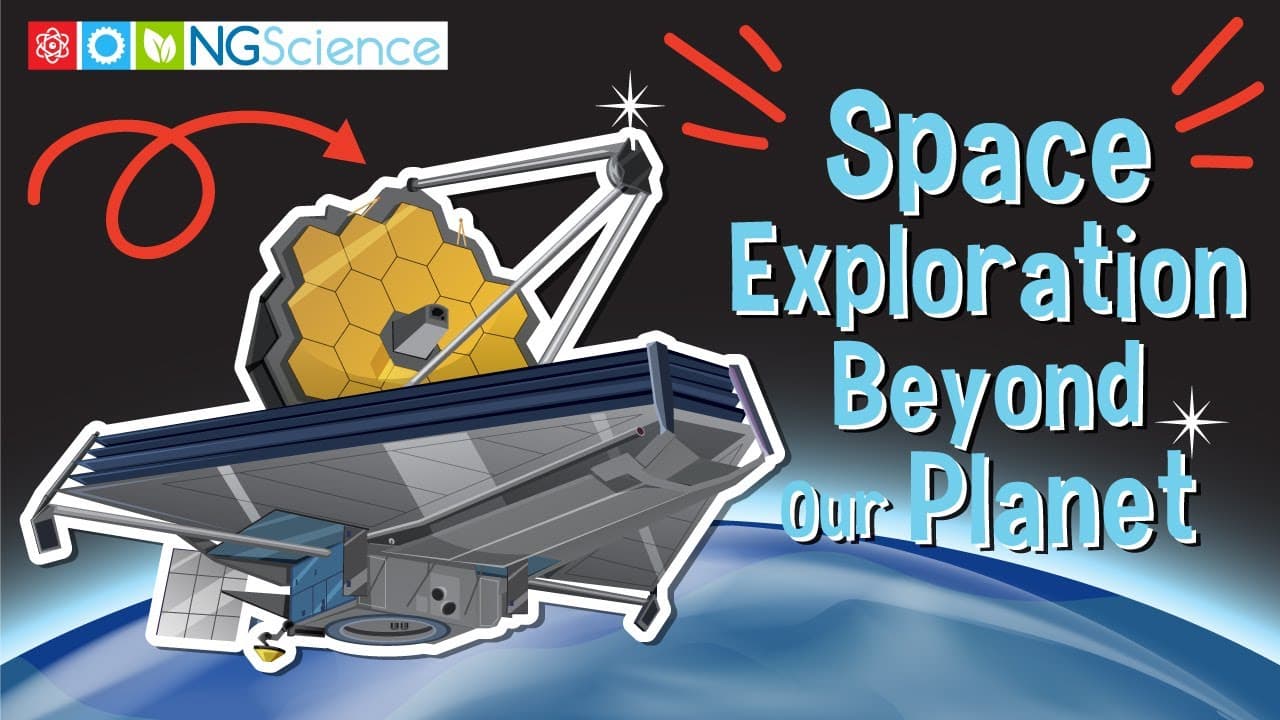
This educational video provides a comprehensive overview of the history, methods, and technologies humanity has developed to explore the cosmos. Starting with our innate curiosity about the stars, the narration guides viewers through the evolution of space exploration tools, from early optical telescopes to the advanced James Webb Space Telescope. It categorizes exploration into distinct methods: ground-based telescopes, orbiting satellites, deep-space probes, planetary rovers, and human space missions.

Next Generation ScienceNext Generation Science

12mins 4s

Materials

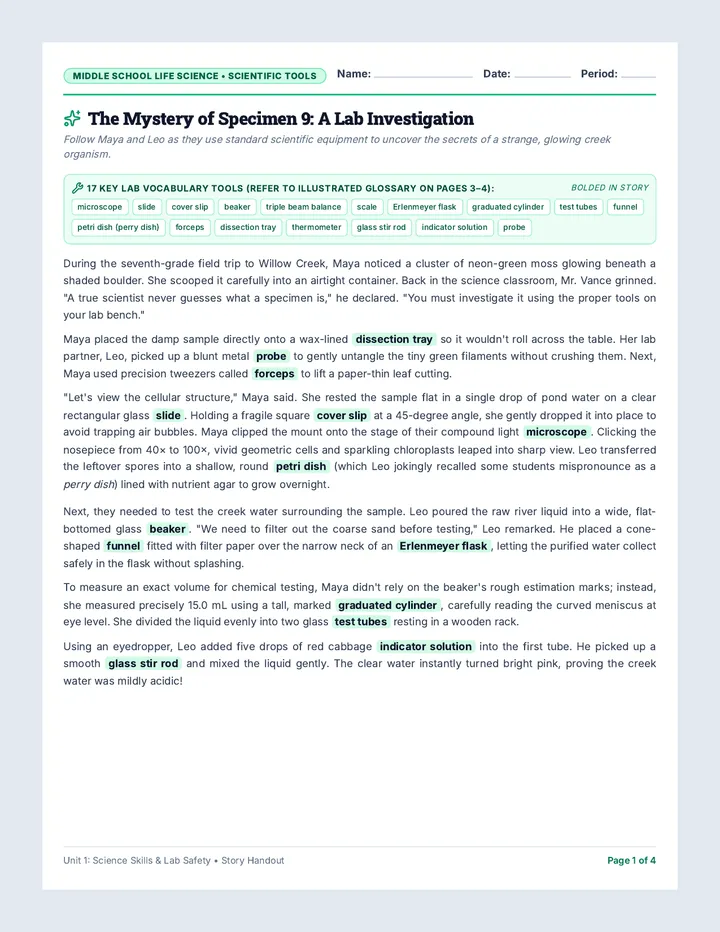
Mystery Specimen Story Handout

Mystery Specimen Story Handout

A comprehensive four-page middle school science packet containing the 'Mystery of Specimen 9' reading story, comprehension questions, and a complete two-page illustrated visual glossary featuring diagrams and definitions for all 17 laboratory tools.

S

stewart

ACT Science Problem Cards

ACT Science Problem Cards

Complete 40-question ACT Science problem card deck formatted as 10 printable pages with 4 self-contained task cards per page. Each card includes the specific passage stimulus, table or graph data, question stem, answer choices, and a student recording area.

AI

Allison Ingraham

درع الشمس عرض شرائح

درع الشمس عرض شرائح

عرض شرائح تفصيلي وبصري من 10 شرائح للمرحلة الثانوية يستعرض كيمياء واقيات الشمس، يشمل طاقة الفوتونات، ونظرية فجوة النطاق، والأنظمة المترافقة، والاستقرار الضوئي، وحساب SPF، والكيمياء الخضراء.

ا

الجوهره

ACT Science Problem Cards

ACT Science Problem Cards

Complete 40-question ACT Science problem card deck formatted as 10 printable pages with 4 self-contained task cards per page. Each card includes the specific passage stimulus, table or graph data, question stem, answer choices, and a student recording area.

AI

Allison Ingraham

كيمياء واقي الشمس شرائح عرض

كيمياء واقي الشمس شرائح عرض

عرض تقديمي تفاعلي وتفصيلي لمادة الكيمياء للمرحلة الثانوية يستعرض كيمياء واقيات الشمس، وطيف الأشعة فوق البنفسجية، والآليات الجزيئية لامتصاص وتشتيت الإشعاع، بالإضافة إلى فيزياء فجوة النطاق وحسابات عامل الحماية SPF.

Solar Shield Slides

Solar Shield Slides

عرض تقديمي متقدم لطلاب المرحلة الثانوية يتناول الكيمياء الحيوية والفيزيائية لواقيات الشمس، يشمل تحليل الطيف الكهرومغناطيسي، وميكانيكية عمل المركبات غير العضوية والعضوية، وحسابات عامل الحماية SPF والاستقرار الضوئي.

Sequences

Wave Racer CER Bellringer

Wave Runners Sequence

A comprehensive physics unit covering the behavior of mechanical and electromagnetic waves. Students transition from hands-on slinky exploration to advanced optical modeling and mathematical derivations.

OM

Olutoyin Makinde

65
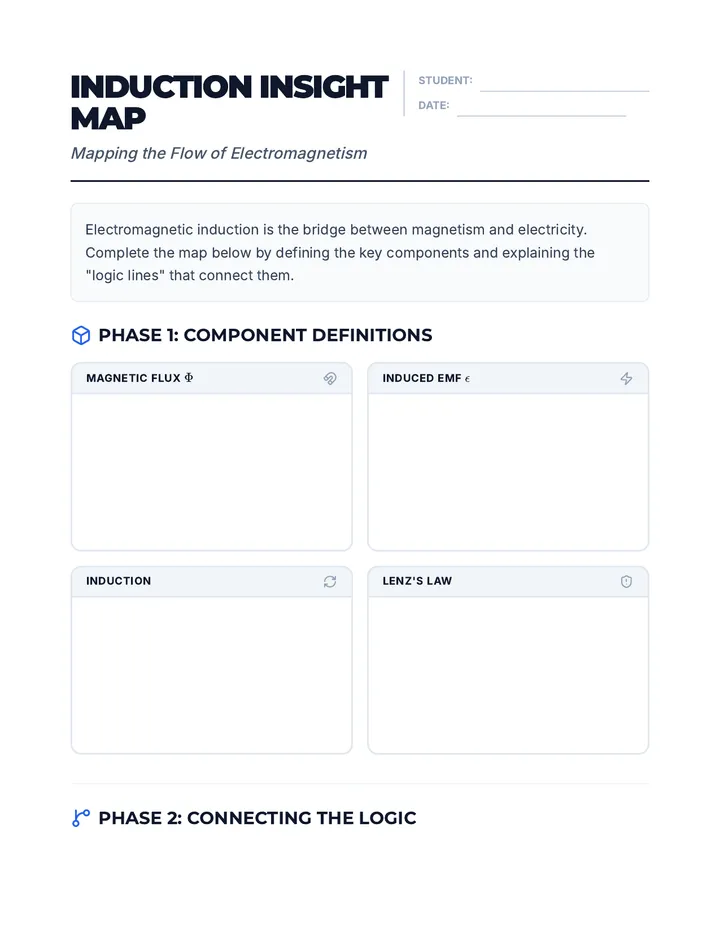
Induction Insight Map Handout

Magnetic Forces Investigation

A 5-day intensive exploration of magnetic forces and fields, focusing on atomic-level causes, field interactions, and mathematical modeling of forces on charged particles. Students progress from anchoring phenomena to complex mathematical applications and a comprehensive unit review.

OM

Olutoyin Makinde

68
Mission Scoring Rubric

Physics Frontiers Research Project

A partner-based research project for 9th-grade conceptual physics students focusing on diverse topics from celestial mechanics to the physics of dance. Students move through a structured research process with mandatory teacher checkpoints for source reliability.

C

ckroeker

13
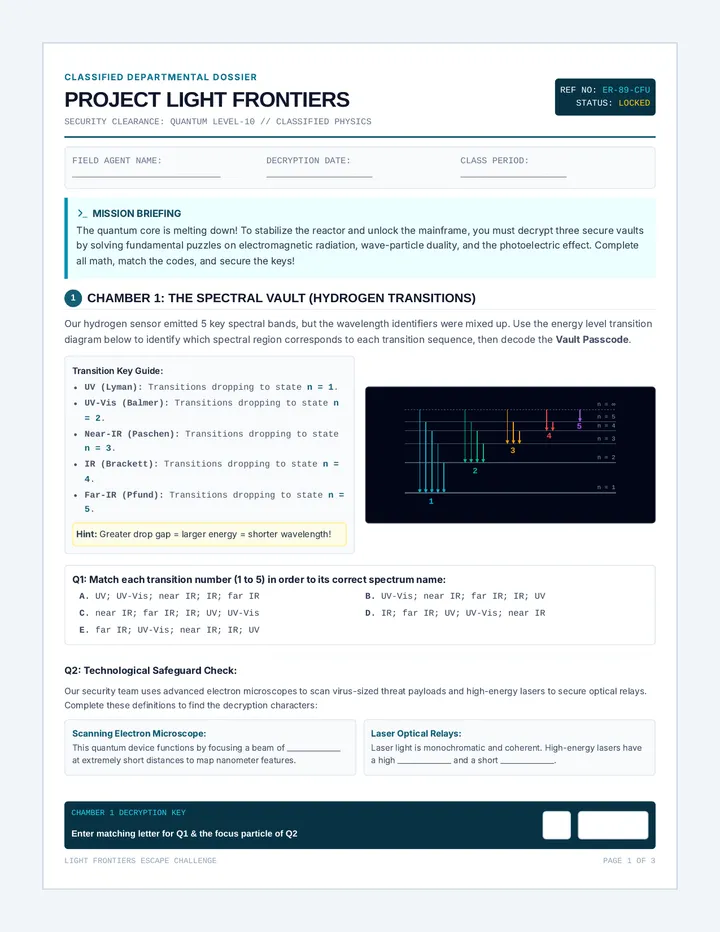
Quantum Escape Room Worksheet

Light Frontiers

A comprehensive physics sequence exploring the dual nature of light, the electromagnetic spectrum, and the interactions of radiation with matter, including the photoelectric effect and polarization.

OM

Olutoyin Makinde

18
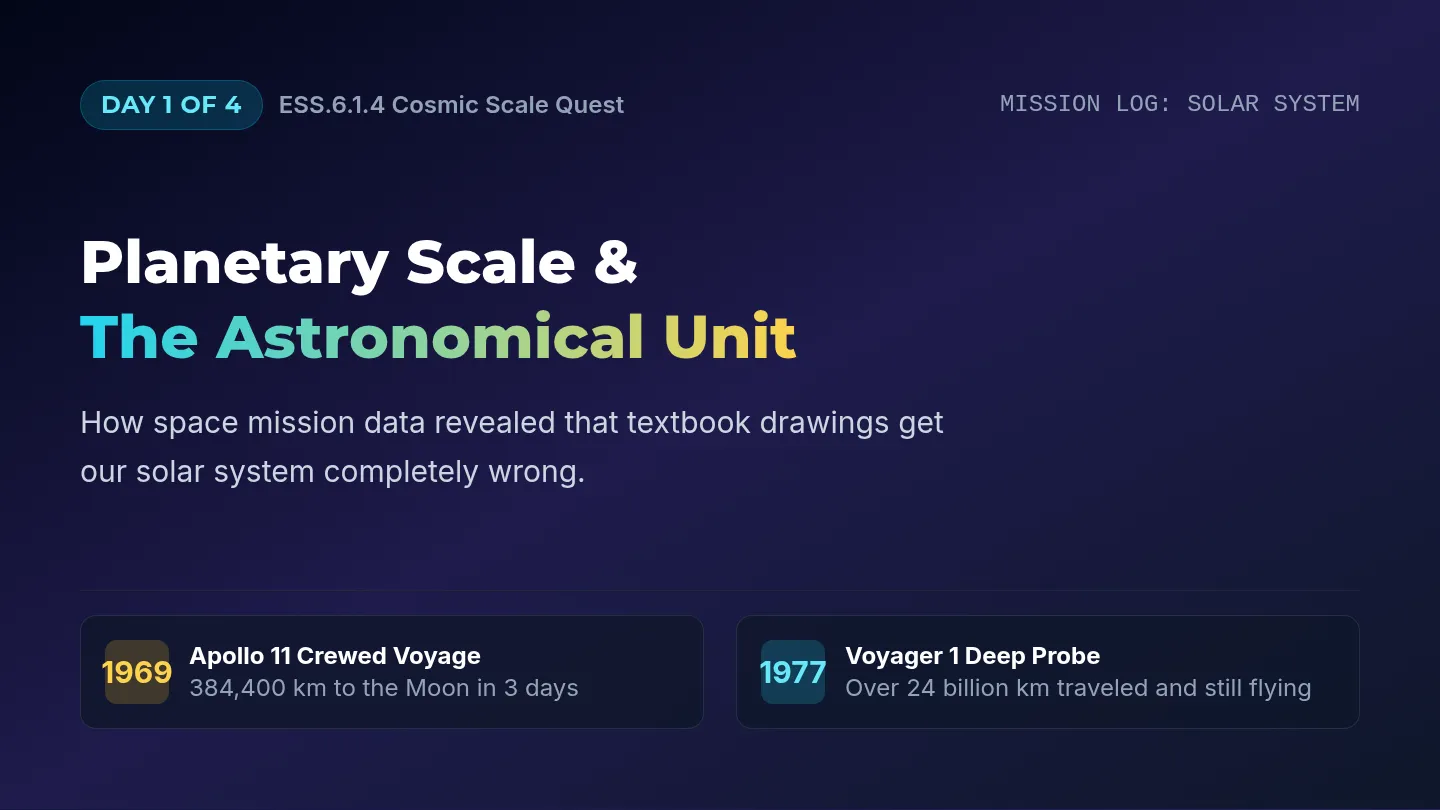
Solar Scale Slides

Cosmic Scale Quest

A 4-day 6th-grade science unit investigating the immense size and scale of the solar system, Milky Way galaxy, and observable universe using historical and ongoing space mission data. Students progress from Astronomical Units to light-years and cosmic deep fields through collaborative investigations and evidence-based modeling.

KM

Katlyn Makatura

11
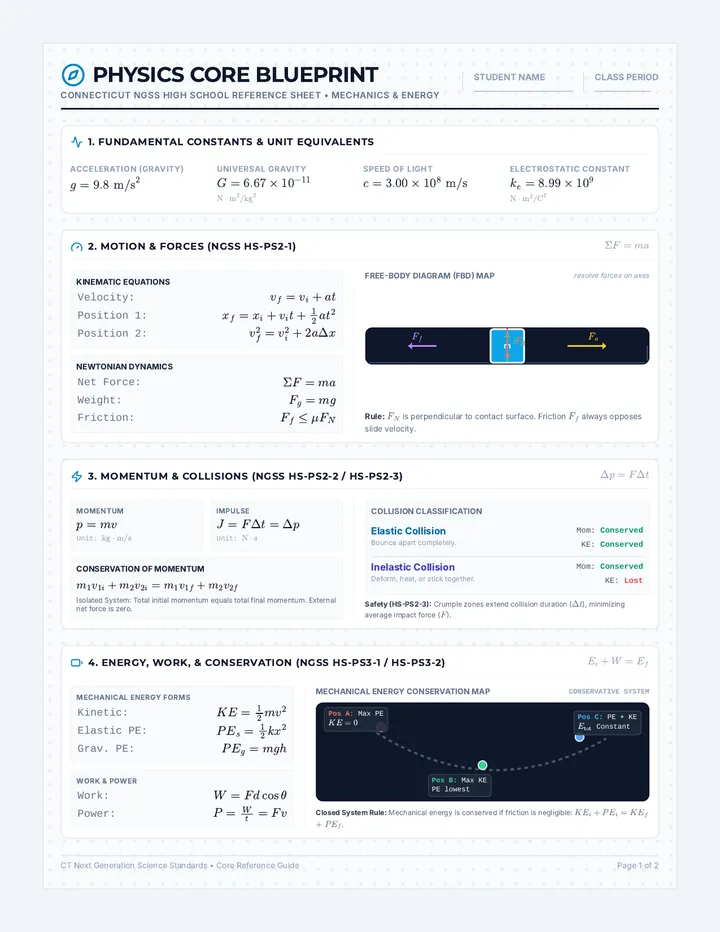
Physics Blueprint Reference Sheet

CT Physics Essentials

A comprehensive high school physics curriculum sequence aligned with the Connecticut Next Generation Science Standards (CT-NGSS), focusing on core concepts, quantitative problem-solving, and visual models.

T

tafranklin

1

Lessons

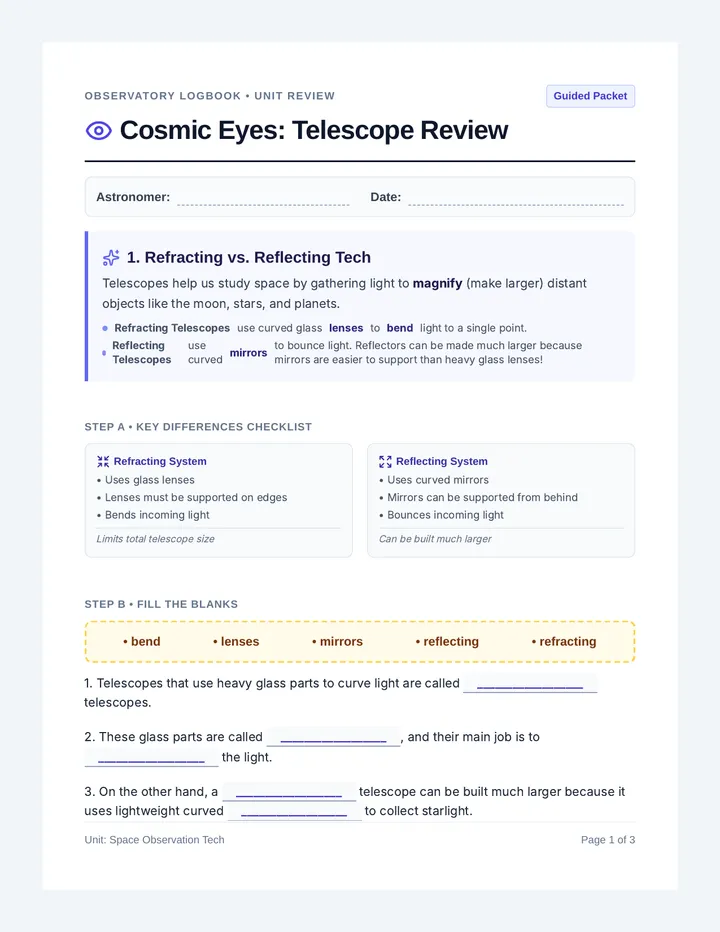
Cosmic Eyes Review Packet

Cosmic Eyes

An accommodated science lesson covering telescope technology, optical vs. radio systems, reflecting vs. refracting designs, and the history of space observation (including Hubble and Galileo). Features high-scaffolding review materials and a fresh, aligned assessment.

S

Shelby.Toll

7
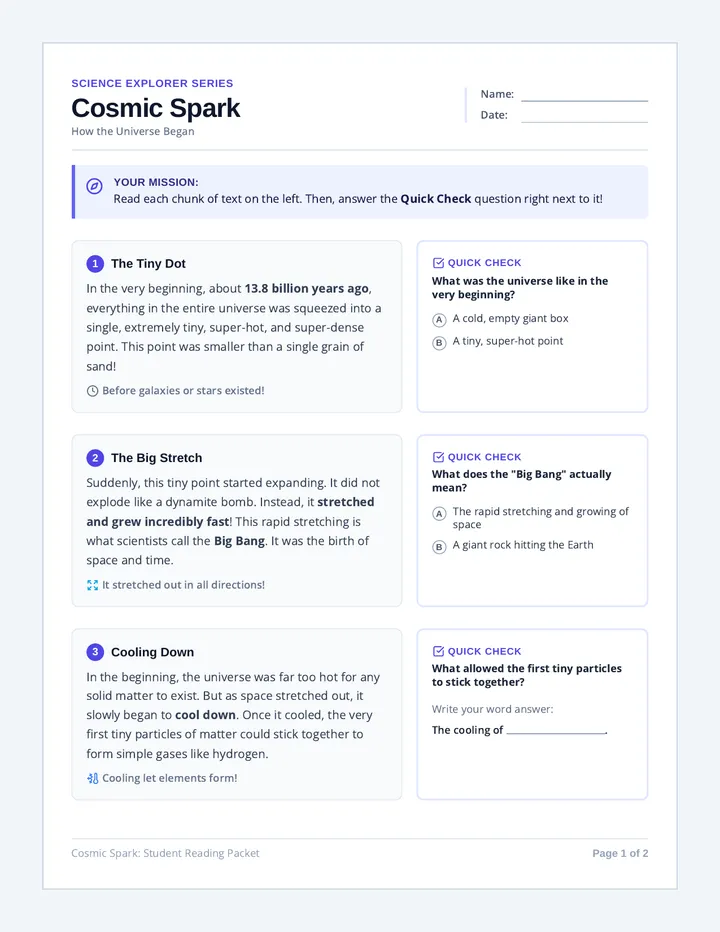
Cosmic Spark Reading

Cosmic Spark

A scaffolded science lesson introducing the Big Bang Theory. Designed with chunked text, visual cues, and immediate comprehension checks to support special education students in understanding the origin and expansion of our universe.

S

Shelby.Toll

5
Physics Final Study Guide Packet

Conceptual Physics Final Prep

A comprehensive 3-page study guide covering Radioactive Decay, Geophysics, Waves, and Momentum for a 9th grade Conceptual Physics final exam.

C

ckroeker

3
Galaxy Hunters Worksheet

Cosmic Islands

An astronomy lesson exploring the shapes, compositions, and lifecycles of galaxies. Students classify galactic morphologies using the Hubble system, analyze the architectural structure of the Milky Way, and investigate our Local Group neighborhood.

S

Shelby.Toll

4
Wave Match Cards

Frequency Vibes

A set of hands-on materials for mastering the essential vocabulary of wave physics, including matching cards and a recording sheet.

TL

Tricia Lucie

3
Crimson Shadows Teacher Guide

Crimson Shadows

A complete, high-quality lesson focused on the mechanics of lunar eclipses, exploring why the Moon turns red during a total eclipse (Rayleigh scattering) and contrasting solar vs. lunar eclipses. Includes interactive modeling, formative assessment, exit tickets, slides, and a teacher guide.

M

Megan.Tanner

5