Lenny.com
Explore
Create
ActivitiesNewMathEnglish Language ArtsScience & EngineeringSocial StudiesGlobal LanguagesHealth & Physical EducationSpecial EducationCounseling & Life SkillsArts & CreativityESL
Lenny.com
Lenny.com
Explore
Create
ActivitiesNewMathEnglish Language ArtsScience & EngineeringSocial StudiesGlobal LanguagesHealth & Physical EducationSpecial EducationCounseling & Life SkillsArts & CreativityESL
Lenny.com
Lenny.com

Solutions

Lenny for EducatorsLenny for SchoolsLenny for Districts

Product

ExploreSign inCreateSupportAbout

Resources

Getting startedMTSS Acceleration Program

Newsletters

School Funding Newsletter

© 2026 Lenny Learning Inc.

TermsPrivacyAccessibility
LinkedInInstagramX
Lenny

Earth's Features

Identification of landforms, soil compositions, and the processes of weathering and erosion. Connects plate tectonics to the formation of mountains, volcanoes, and oceanic trenches.

Science & EngineeringLife ScienceLiving ThingsAnimalsPlantsBody SystemsTraitsAdaptationsCellsEcosystemsHeredityGenes to TraitsCell DivisionPhysicsComparing MaterialsShapes and PropertiesMagnetsMagnetismLightSoundLight and SoundMatterStates of MatterChanges of StateMixturesPhysical and Chemical ChangeHeating and CoolingHeat and Thermal EnergyEnergyForce and MotionElectrical CircuitsAtoms and MoleculesPeriodic TableMotion in One DimensionMotion in Two DimensionsScalars and VectorsForces and Laws of MotionCircular Motion and GravityMomentum and ImpulseWork, Energy, and PowerWavesElectromagnetic WavesGeometric OpticsElectricity and MagnetismSimple Harmonic MotionThermodynamicsNuclear PhysicsEarth Science & AstronomyWeatherWater CycleRocks and MineralsFossilsEarth's FeaturesEarth's ResourcesEarth's StructureWeather and ClimateEarth EventsFossils and Geologic TimePlate TectonicsHuman ImpactsAstronomyChemistryUnits and MeasurementAtomic StructurePeriodic TrendsChemical BondingNomenclatureMolecular StructureIntermolecular ForcesThe MoleStoichiometryProperties of GasesSolutionsChemical ReactionsBalancing EquationsEnergy ChangesRates of ReactionsEquilibriumAcids and BasesQuantum ModelBiologyClassificationCell StructureThe Chemistry of LifeBiomoleculesCellular TransportCell EnergyCell Growth and DivisionDNAProtein SynthesisMeiosis and Sexual ReproductionPatterns of InheritanceMulticellular OrganismsEvolutionEcologyBiodiversityComputer ScienceAlgorithms and Computational ThinkingProgramming LanguagesComputing SystemsNetworks and InternetData AnalysisCybersecurityAI and Machine LearningSoftware Design and DevelopmentBlockchainEngineering & AIDesigning ExperimentsEngineering PracticesDesign ThinkingEngineering Design ProcessMechanical EngineeringElectrical EngineeringMaterials and StructuresCAD and 3D DesignRoboticsArtificial Intelligence BasicsVibe CodingMachine LearningAI Ethics and SocietySystems ThinkingEntrepreneurship & InnovationEntrepreneurial MindsetBusiness Idea DevelopmentBusiness Plan BasicsMarketing & Customer DiscoveryFinancial Management for Startups

Videos

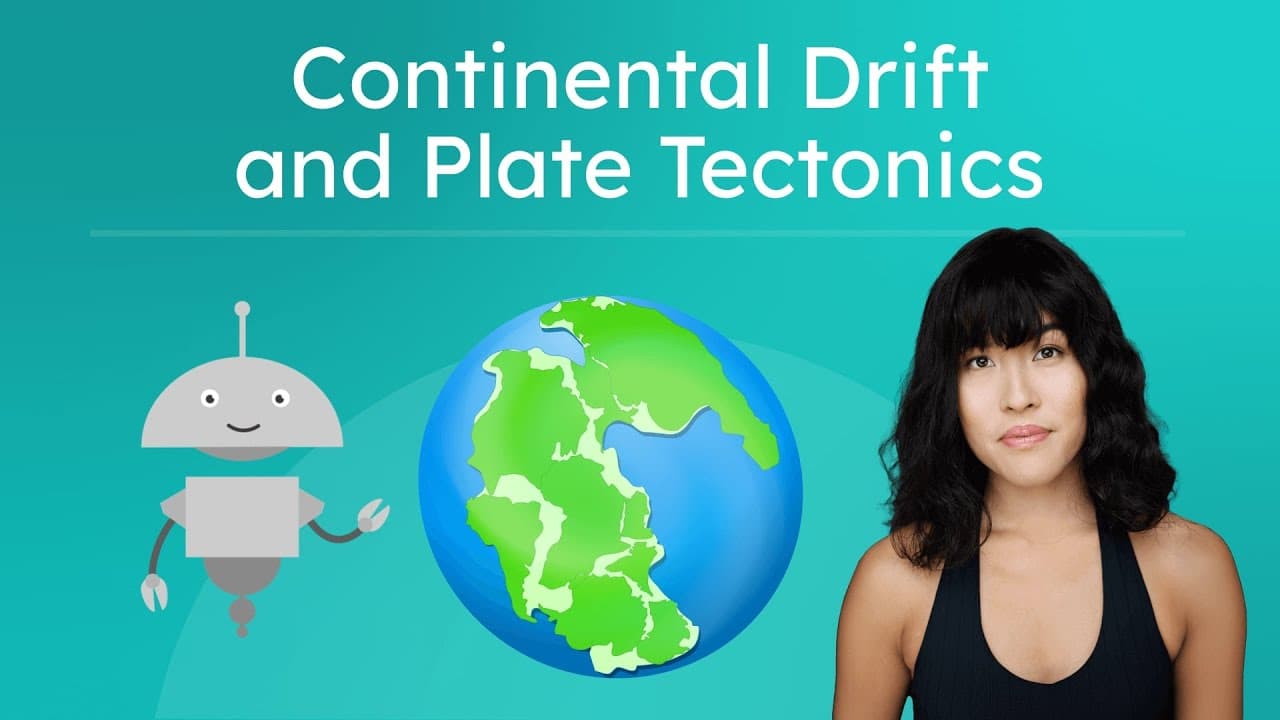
How Plate Tectonics Shape Our Planet

How Plate Tectonics Shape Our Planet

This engaging earth science video explores the fascinating geological history of our planet, specifically focusing on how the Earth's surface has changed over millions of years. It introduces students to the concept of the Earth as a giant puzzle, explaining the connection between the historical theory of Continental Drift and the modern theory of Plate Tectonics. The narrator guides viewers through the scientific journey of Alfred Wegener, whose initial hypothesis about a supercontinent called Pangaea was rejected until fossil and rock evidence later confirmed that continents do indeed move.

Miacademy & MiaPrep Learning ChannelMiacademy & MiaPrep Learning Channel

9mins 36s

Exploring the Earth's Oceans and Marine Life

Exploring the Earth's Oceans and Marine Life

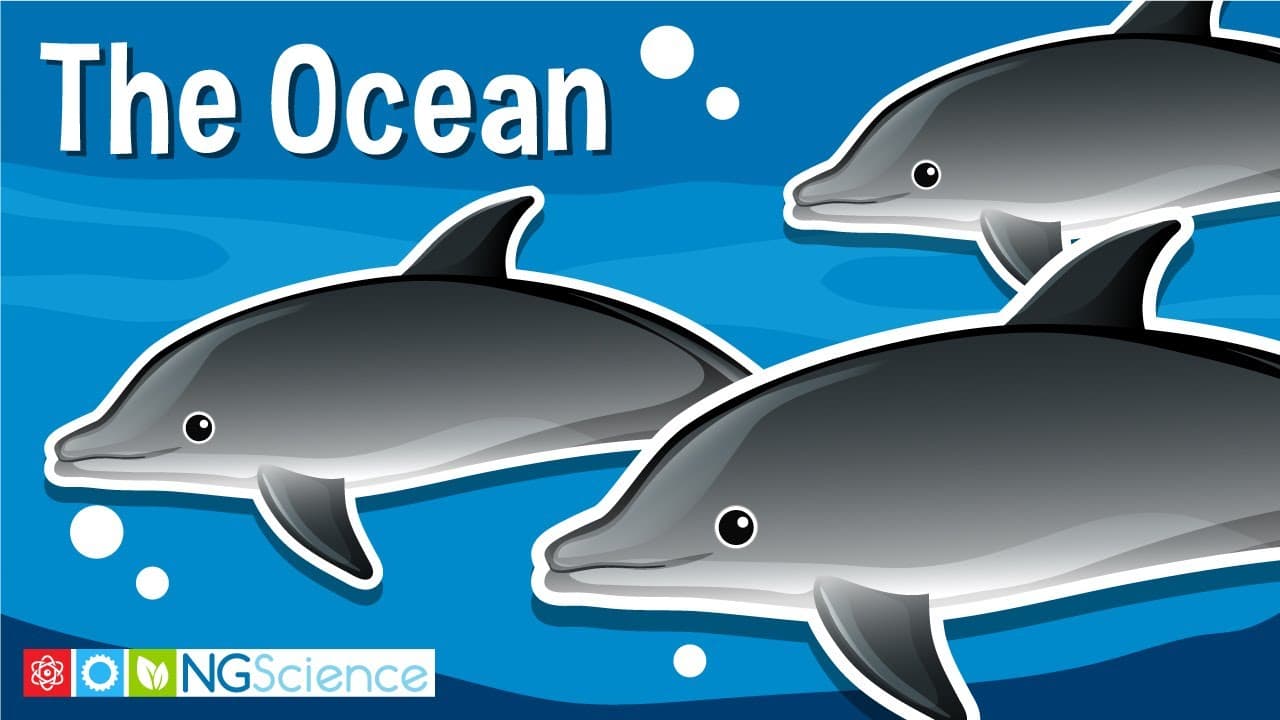
This educational video provides a comprehensive introduction to the Earth's oceans, explaining why our planet looks like a "giant blue ball" from space. It breaks down the global ocean into its five major named regions—Southern, Indian, Pacific, Atlantic, and Arctic—while emphasizing that they are all part of one continuous body of salt water. The narrative transitions from geography to marine biology, exploring the diverse habitats found within the ocean, from icy arctic waters to warm tropical coral reefs. The video dives into the biological diversity of marine life, starting with often-overlooked ocean plants. It highlights the critical role of microscopic phytoplankton, alongside visible flora like seagrass and seaweed. The tour of marine life continues up the food chain, showcasing animals ranging from tiny krill to massive whales, and detailing the bustling ecosystem of coral reefs, described as "underwater jungles." It also notes the connection between the ocean and land-based animals, specifically seabirds that rely on the ocean for food. For educators, this resource serves as an excellent primer for units on Earth science, habitats, or biodiversity. It visually demonstrates complex concepts like the microscopic scale of plankton and the vastness of global geography in an accessible way. The clear narration and distinct categorization of plants, animals, and habitats make it a versatile tool for vocabulary building and initiating discussions about ocean conservation and interconnected ecosystems.

Next Generation ScienceNext Generation Science

2mins 31s

Exploring the Four Types of Soil

Exploring the Four Types of Soil

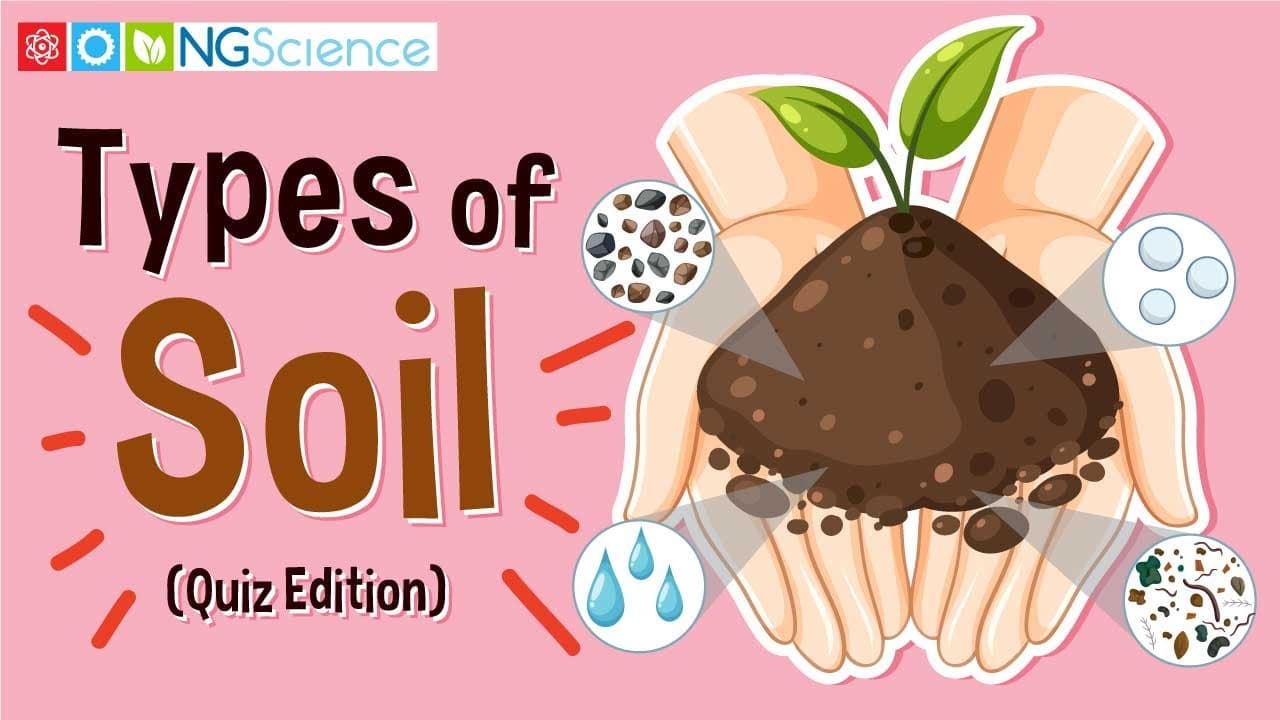
This educational video provides a clear and comprehensive introduction to soil science, specifically designed for elementary students. It begins by defining soil as a mixture of rock particles, water, air, and humus, explaining how these components interact to support life on Earth. The narration highlights the vital role soil plays in providing nutrients for plants and habitats for various organisms, from earthworms to microscopic fungi.

Next Generation ScienceNext Generation Science

7mins 25s

The Wonders of Water: Rivers, Erosion, and the Water Cycle

The Wonders of Water: Rivers, Erosion, and the Water Cycle

In this comprehensive compilation from SciShow Kids, Jessi and her robot rat friend Squeaks take students on a journey to explore everything about Earth's water. The video is divided into three distinct segments: first, investigating where the water in our faucets comes from by exploring groundwater, rivers, oceans, and glaciers; second, a debate between puppet characters Bill and Webb about whether wind or water is a stronger force of nature, leading to a lesson on erosion and landforms; and third, a theatrical performance that dramatizes the stages of the water cycle. Key themes include the geography of water (rivers, lakes, oceans), the states of matter (liquid water, solid ice, water vapor), and the geological forces of erosion and weathering. The video covers specific landforms like the Grand Canyon, sand dunes, and stone arches, explaining how they were formed over millions of years. It also breaks down the water cycle into its four main components: evaporation, condensation, precipitation, and collection, using a play-within-a-video format to model these abstract concepts. This video is highly valuable for elementary science classrooms as it connects everyday experiences (turning on a tap, seeing rain) to global systems. It models scientific inquiry through Squeaks' hypothesis testing and uses engaging visual aids—including maps, real-world footage, and puppetry—to make complex topics like geological time and phase changes accessible. The variety of segments allows teachers to use the video as a whole or break it down to teach specific units on hydrology, geology, or weather.
SciShow KidsSciShow Kids

16mins 44s

Where Does Water Come From? Exploring Rivers, Oceans, and Ice

Where Does Water Come From? Exploring Rivers, Oceans, and Ice

This engaging episode of SciShow Kids explores the origins of tap water and takes young viewers on a global journey to discover Earth's various water sources. Hosted by Jessi and her robot mouse friend Squeaks, the video begins with a simple question about how a kitchen faucet works and expands into a geography and earth science lesson. It effectively breaks down the complex journey of water from natural sources to our homes using animation, maps, and real-world footage.

SciShow KidsSciShow Kids

5mins 28s

Exploring the World's Rainiest Places and Measuring Rainfall

Exploring the World's Rainiest Places and Measuring Rainfall

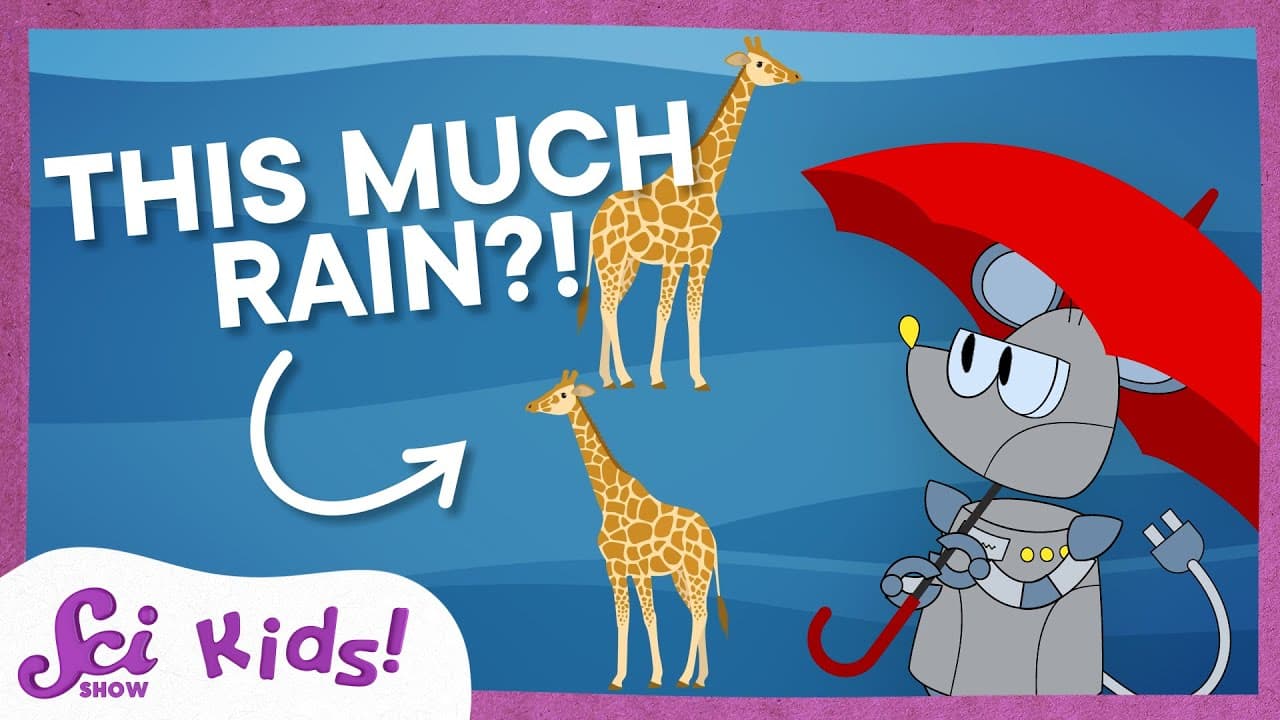
In this engaging episode of SciShow Kids, host Jessi and her robot friend Squeaks explore the science behind rainfall and discover why weather patterns vary so drastically across the globe. After Squeaks gets rained out of his kite-flying plans, the duo investigates why some locations on Earth are much wetter than others. The video introduces young viewers to the concept of global weather variance, explaining how geography—specifically mountains, valleys, and proximity to oceans—creates unique climates. It takes students on a virtual field trip to record-breaking locations like Mount Waiʻaleʻale in Hawaii and the villages of Cherrapunji and Mawsynram in India, using fun comparisons like giraffes and buildings to visualize rainfall amounts. The video covers key earth science themes including the water cycle, the influence of topography on weather (orographic lift simplified), and the seasonal impact of monsoons. It also integrates mathematics and measurement by introducing rain gauges and the metric unit of millimeters. The narrative explains complex concepts through accessible analogies, such as comparing wind moving through valleys to gravy flowing through a mashed potato channel, helping students understand how landscapes direct storm clouds. For educators, this video is an excellent dual-purpose resource that combines Earth Science with practical measurement skills. It seamlessly transitions from theoretical learning about global climates to a hands-on engineering activity where students learn to build their own rain gauge using simple household items. This allows teachers to bridge the gap between learning about weather and actually observing and recording data, making it a perfect launchpad for a weather observation unit or a lesson on climate geography.

SciShow KidsSciShow Kids

7mins 7s

Materials

Rock Record IEP Assessment

Rock Record IEP Assessment

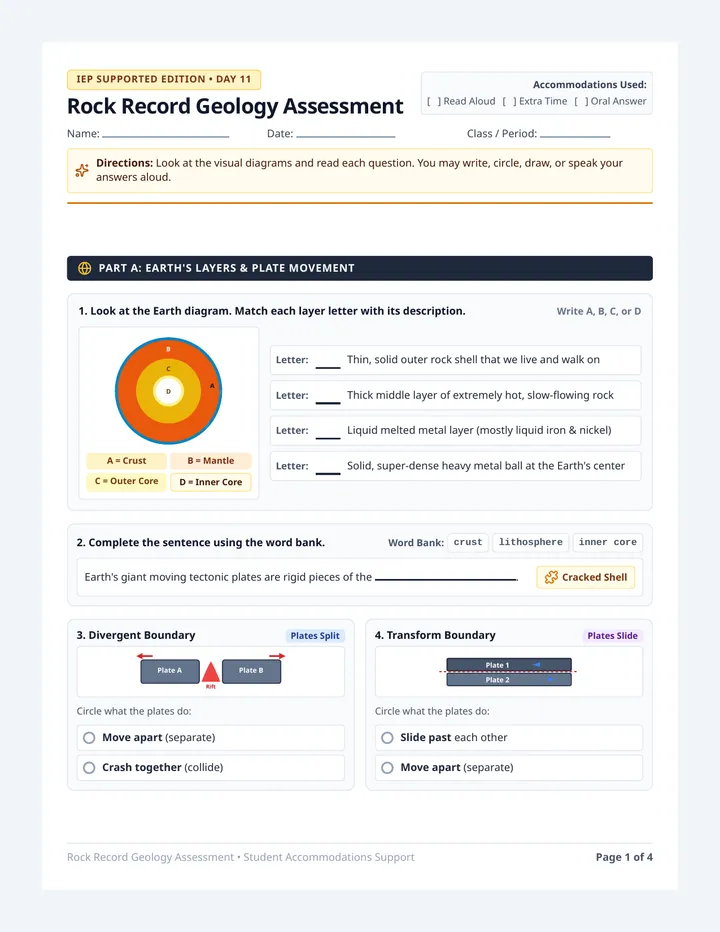
Enhanced 4-page IEP-adapted geology assessment featuring rich visual diagrams: Earth layer cross-sections, tectonic plate boundary arrows, subduction trench illustrations, 3-rock-type formation graphics, rock cycle flow paths, textured strata cross-sections, and earthquake safety icons.

CS

Courtney Scherer

Break Move Drop Worksheet

Break Move Drop Worksheet

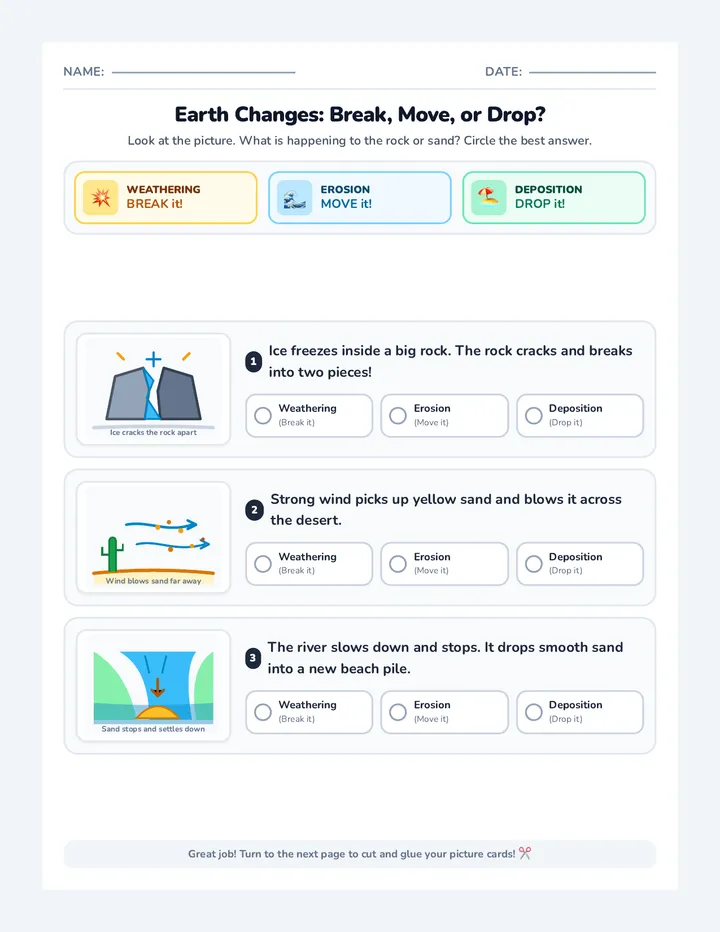
A simplified, highly visual science worksheet designed for early elementary students with intensive special needs. Features clear visual anchor cues, large pictorial examples, and a hands-on cut-and-paste sorting activity to differentiate between weathering, erosion, and deposition.

CT

Christina Tosches

Water Cycle Flashcards

Water Cycle Flashcards

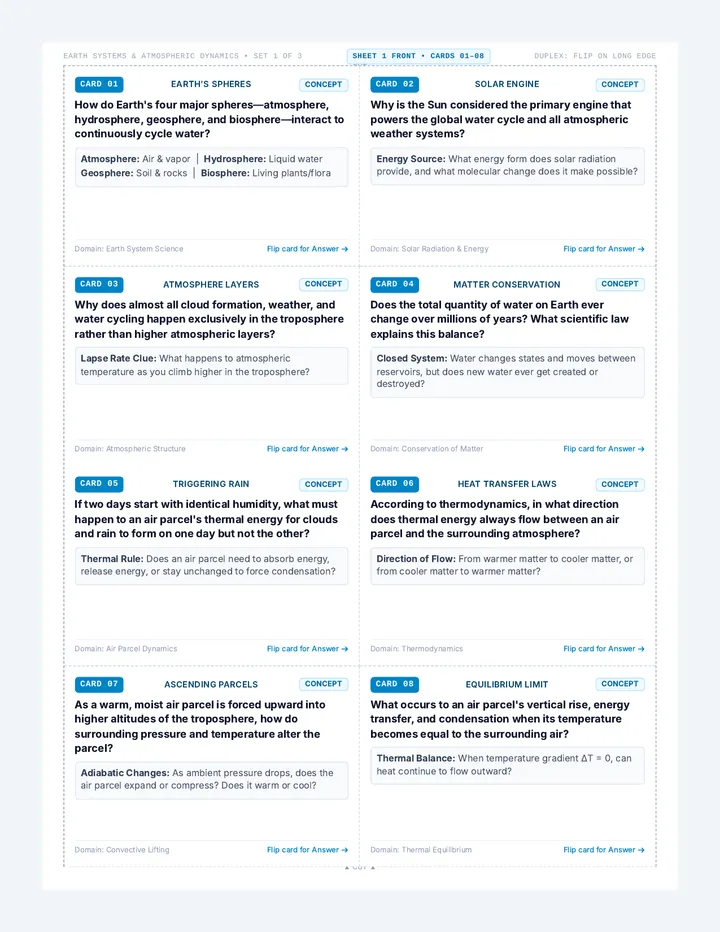
A 24-card conceptual double-sided flashcard set engineered for long-edge duplex printing. Focuses on foundational Earth science concepts, atmospheric thermodynamics, energy transfer mechanisms, and hydrological processes without duplicating specific test questions.

A

Andrea.Golden

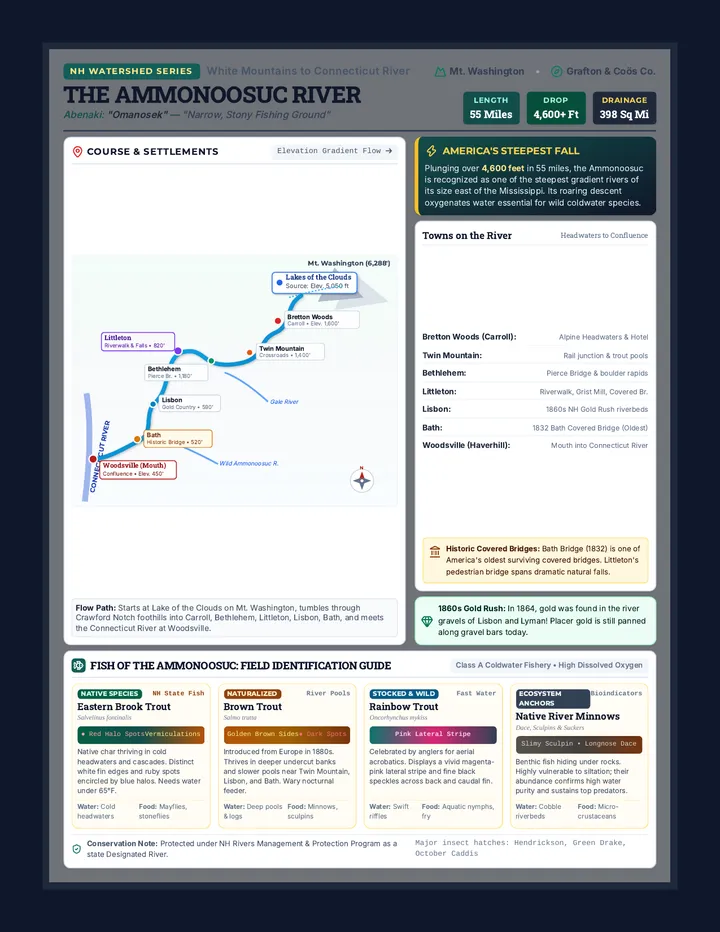
Ammonoosuc River Field Poster

Ammonoosuc River Field Poster

An educational poster illustrating New Hampshire's Ammonoosuc River from its headwaters at Mount Washington to its mouth at the Connecticut River. It features a detailed cartographic course showing key towns and landmarks, coldwater fish profiles, and watershed facts.

SF

Steven Flint

Phonics Tales Reading Passages

Phonics Tales Reading Passages

A 3-page printable phonics reading passage worksheet for 1st graders targeting CVC short vowels, Bossy E long vowels, and common vowel teams with decodable stories, fluency tracking stars, phonics word hunts, and spacious handwriting lines.

M

MARIBETH.GOSSARD

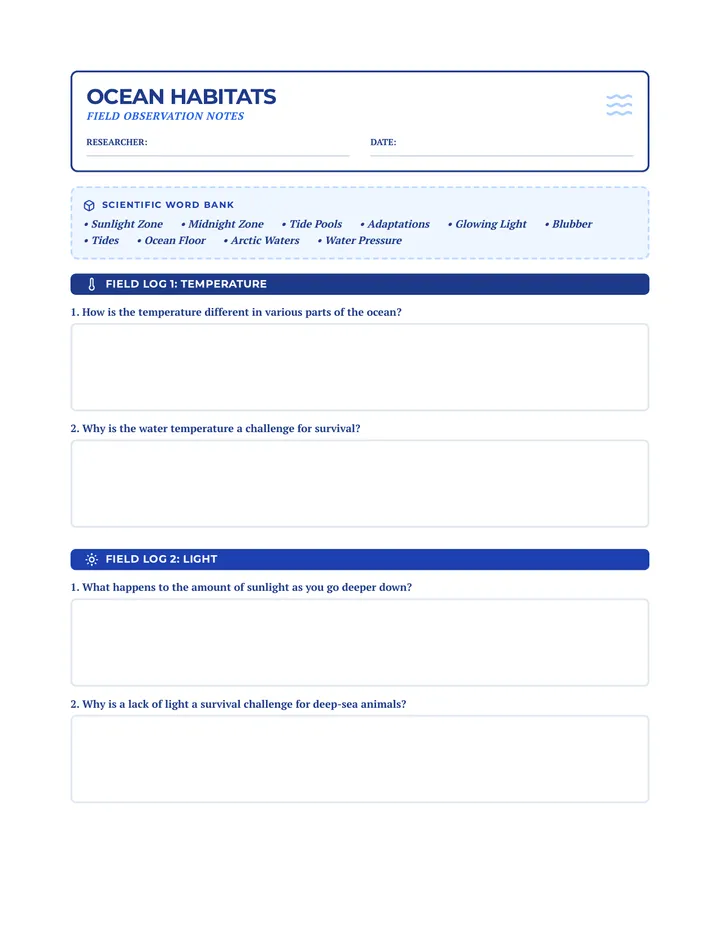
Ocean Habitats Notes Document Slice

Ocean Habitats Notes Document Slice

A 2-page age-appropriate guided note-taking document for studying ocean habitats. Features simplified vocabulary (Sunlight Zone, Tide Pools, etc.) and structured writing spaces for Temperature, Light, and Tides. Optimized to fit strictly on two pages.

ET

Emily Tuccio

Sequences

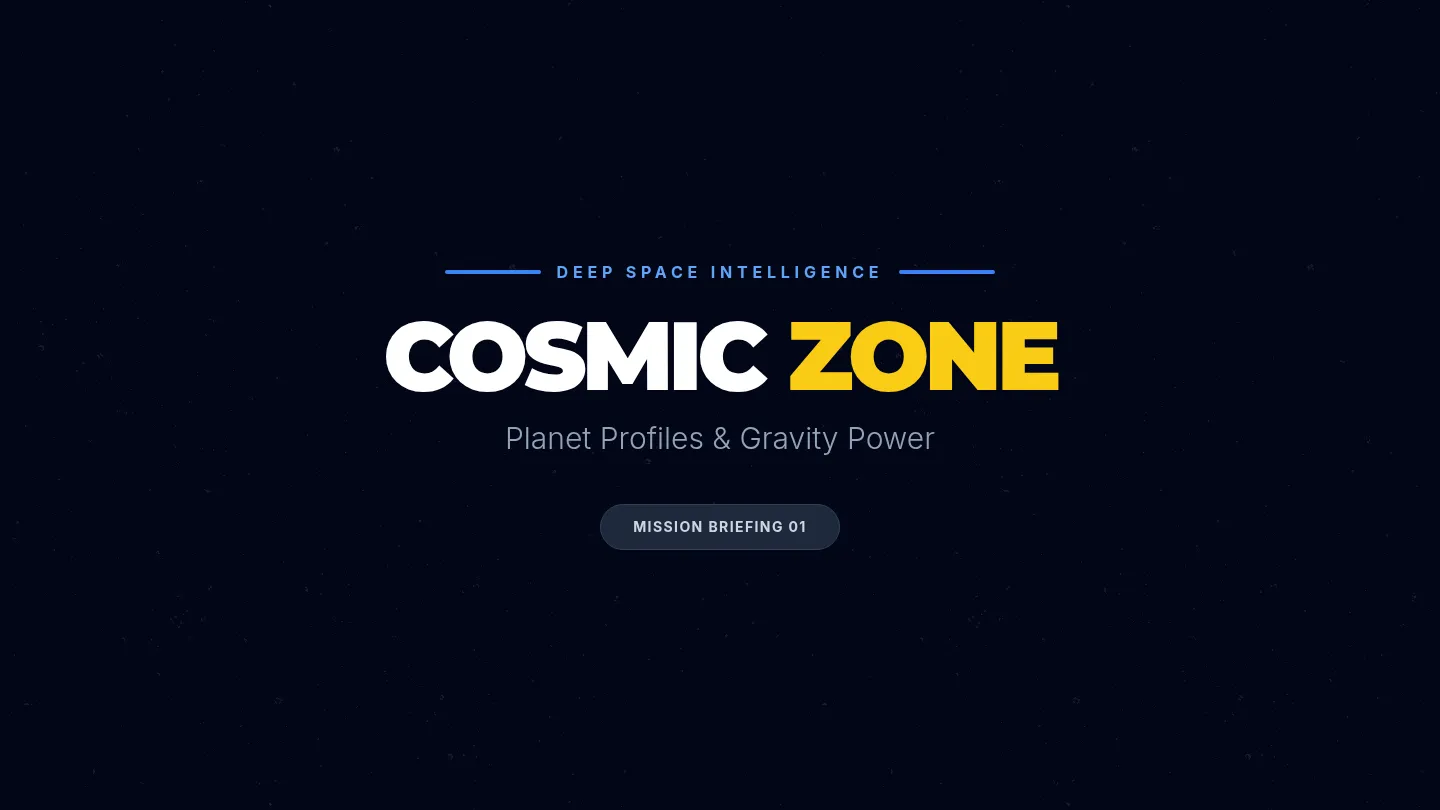
Planet Profile Slides

Infinite Frontier

A comprehensive Hi-Lo unit for 6th graders exploring the scale of the universe, our place in the Milky Way, the technology used to explore space, and the history of human spaceflight.

JS

Janette Sullivan

54
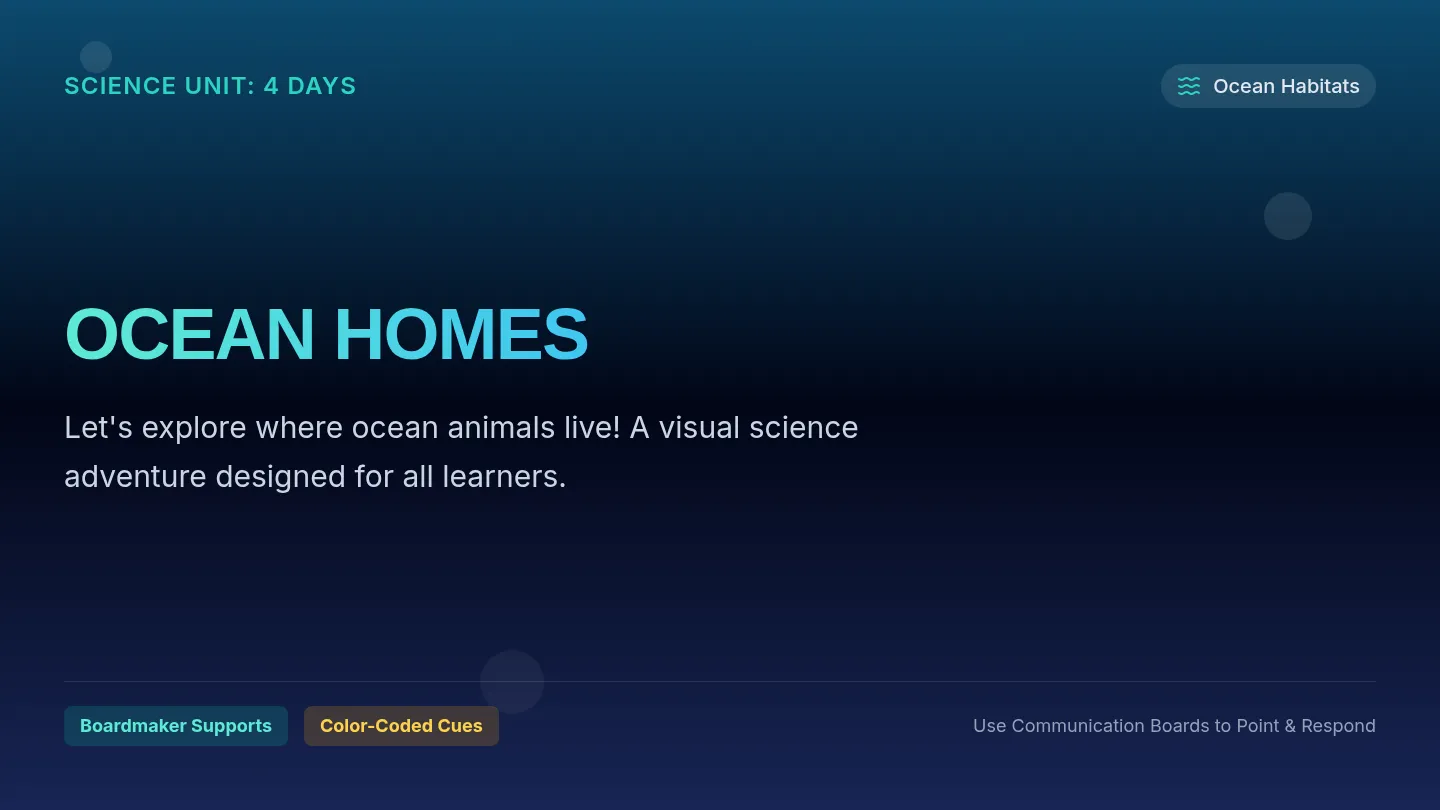
Ocean Homes Slides

Ocean Homes

A highly visual 4-day science unit exploring ocean habitats and depth zones. Tailored for differentiated instruction for 3rd grade and nonverbal 7th grade students using Boardmaker-style symbols, color-coded matching, and visual check comprehension.

D

dbowers

17
Water World Slides

Earths Dynamic Systems

A series of lessons exploring Earth's major systems, starting with the hydrosphere and its impact on the planet's processes.

JS

Janette Sullivan

36
Science Squad Student Booklet

Science Literacy Journals

A multi-grade collection of scientific reading comprehension and response booklets designed to build disciplinary literacy in Earth, Life, and Physical sciences across elementary and middle school levels.

N

nmack

4
Earthquake Anchor Chart

Disaster Detectives

A series of lessons focused on understanding different natural disasters, their causes, impacts, and safety protocols through structured writing and investigation.

CO

Catherine Onessimo

18
Volcano Quest Slides

Ring of Fire Detectives

A comprehensive 5E science sequence where students investigate global volcano patterns to discover the 'Ring of Fire' and evaluate the likelihood of volcanic activity in their own region. Students use data mapping, research, and CER (Claim, Evidence, Reasoning) to build their scientific arguments.

AN

Alexis Nelson

6