Lenny.com
Explore
Create
ActivitiesNewMathEnglish Language ArtsScience & EngineeringSocial StudiesGlobal LanguagesHealth & Physical EducationSpecial EducationCounseling & Life SkillsArts & CreativityESL
Lenny.com
Lenny.com
Explore
Create
ActivitiesNewMathEnglish Language ArtsScience & EngineeringSocial StudiesGlobal LanguagesHealth & Physical EducationSpecial EducationCounseling & Life SkillsArts & CreativityESL
Lenny.com

Blends, Digraphs, and Trigraphs

Identification and pronunciation of consonant blends, digraphs, and three-letter trigraphs. Develops phonemic awareness and decoding skills essential for early reading fluency.

Lenny.com

Solutions

Lenny for EducatorsLenny for SchoolsLenny for Districts

Product

ExploreSign inCreateSupportAbout

Resources

Getting startedMTSS Acceleration Program

© 2026 Lenny Learning Inc.

TermsPrivacyAccessibility
LinkedInInstagramX
Lenny

Videos

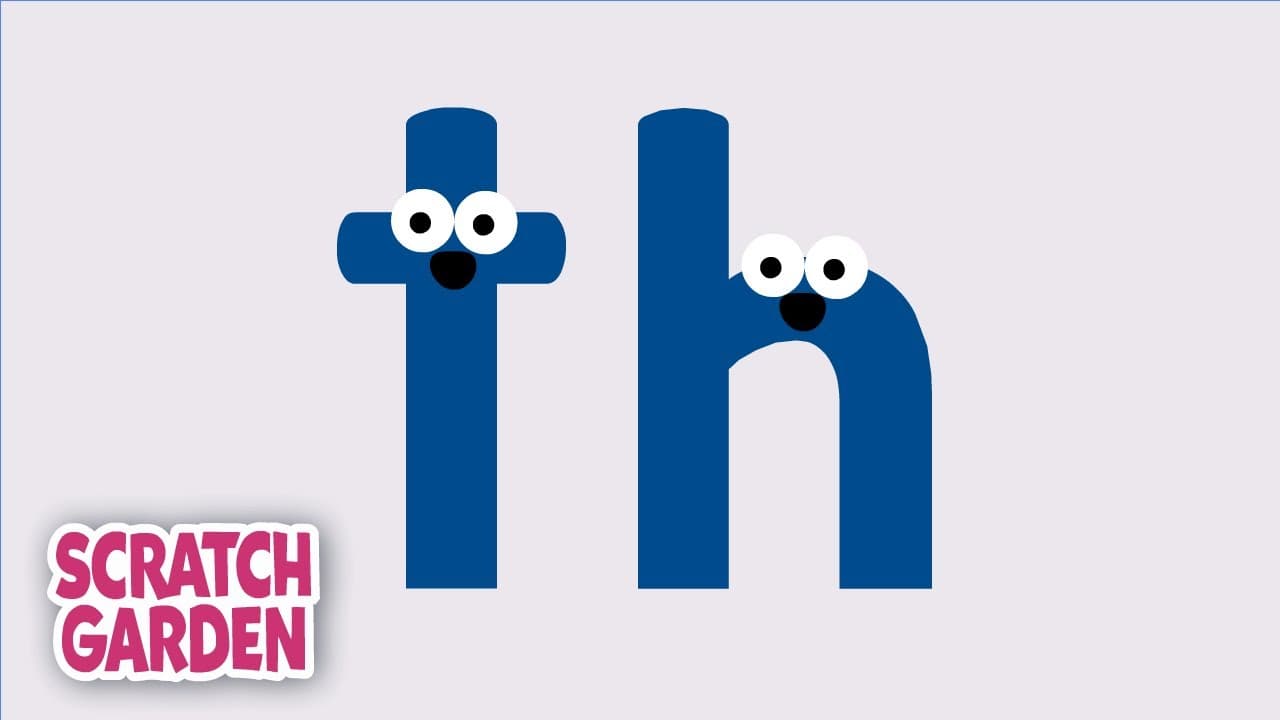
Learning the Two Sounds of the TH Digraph

Learning the Two Sounds of the TH Digraph

This engaging animated video introduces early readers to the digraph "TH" and its two distinct pronunciations in the English language: the unvoiced sound (as in "think") and the voiced sound (as in "this"). Hosted by a character named Happy Cheese, the lesson breaks down complex phonics rules into simple, humorous segments using clear visual aids and examples. The video explores the concept that when the letters T and H are combined, they create a new sound rather than keeping their individual sounds. It specifically highlights the difference between the "soft" unvoiced sound and the "buzzy" voiced sound. To help students distinguish between the two, the video uses a clever visual cue: the letters representing the voiced sound wear mustaches, helping learners associate the visual difference with the auditory difference. Ideally suited for early elementary literacy blocks or English Language Learners, this resource provides excellent classroom utility. It includes built-in pause points with a countdown timer, encouraging active participation where students are asked to brainstorm their own words. Teachers can use this video to introduce the TH digraph, review pronunciation, or as a hook for a word sorting activity focusing on voiced versus unvoiced consonants.

Scratch GardenScratch Garden

4mins 1s

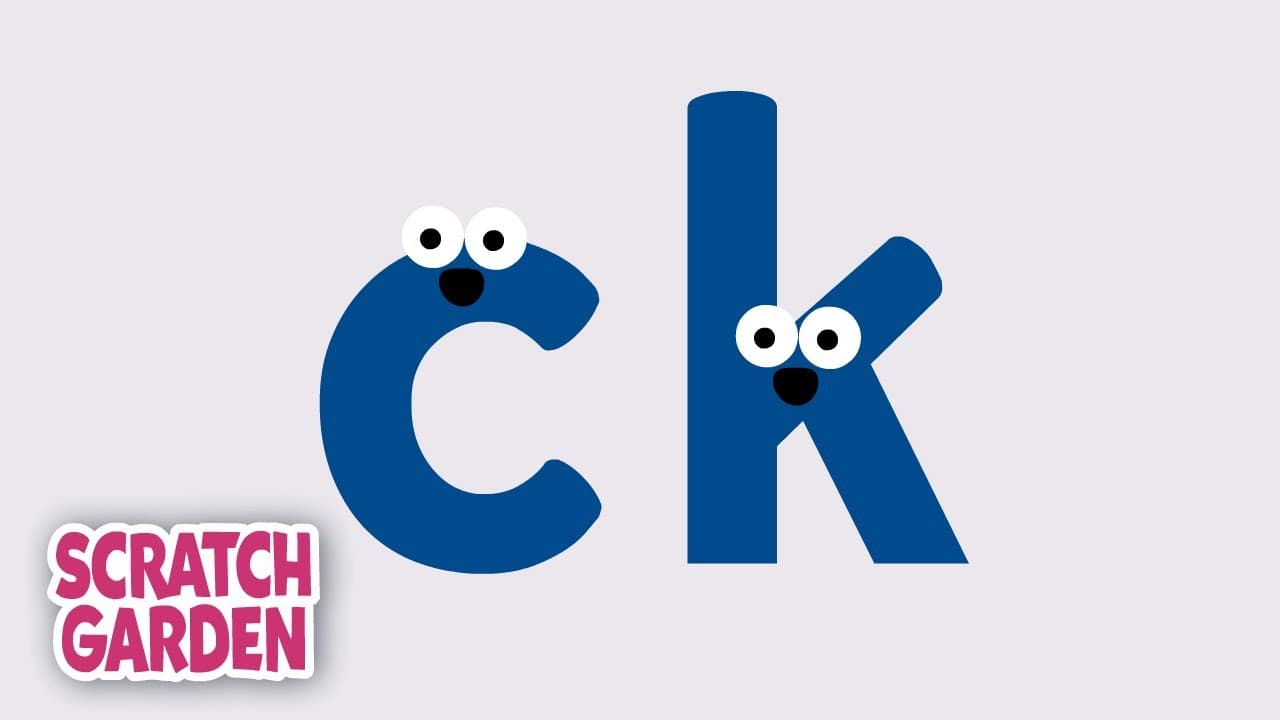
Learning the CK Digraph Sound

Learning the CK Digraph Sound

This engaging animated phonics video features a character named Happy Cheese who teaches young viewers about the "ck" digraph sound. Through humor and clear visual examples, the video breaks down how the letters 'c' and 'k' combine to make a single /k/ sound. It specifically addresses the phonics rule regarding where this letter combination appears in words, differentiating it from initial sounds. The video focuses on key literacy concepts including letter identification, sound blending, and spelling patterns. It provides concrete examples of common words containing the digraph, such as "brick," "pickle," and "backpack," visualizing the spelling to reinforce retention. A built-in interactive segment challenges students to recall or generate their own words before a timer runs out. For educators, this resource is an excellent tool for introducing or reviewing digraphs in early elementary classrooms. The clear audio and distinct visual text make it accessible for beginning readers. It can be used to launch a spelling unit, support struggling readers with specific phonics rules, or serve as a fun review activity during literacy centers. The inclusion of a specific rule—that 'ck' never starts a word—helps clarify a common confusion for young spellers.

Scratch GardenScratch Garden

2mins 31s

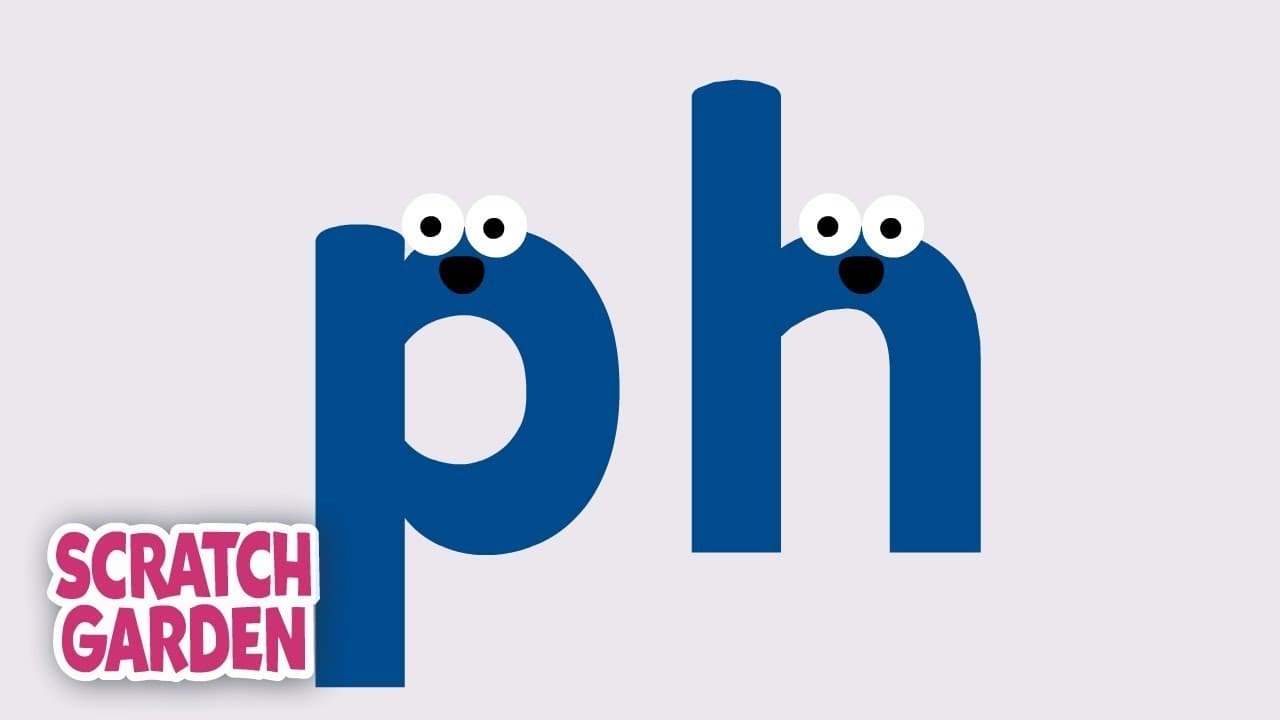
How the Letters P and H Make the F Sound

How the Letters P and H Make the F Sound

This entertaining animated video introduces young learners to the "ph" digraph, explaining how the letters P and H combine to create the /f/ sound. Hosted by a quirky character named Happy Cheese, the video uses humor and clear visual aids to demonstrate phonics concepts that are often tricky for beginning readers. The energetic pacing and memorable character help solidify the connection between the visual letter pair and its corresponding sound. Key themes include letter recognition, phonemic awareness, and the specific mechanics of digraphs in English spelling. The video specifically contrasts the individual sounds of P and H (as in "pot" and "hot") with their combined sound, providing a clear and memorable rule for students to follow. It provides numerous vocabulary examples ranging from common words like "phone" to more complex terms like "philosophers" and "arachnophobia." Ideally suited for early elementary literacy lessons, this video serves as an engaging hook or review for phonics units. Teachers can use the built-in pause points and interactive guessing game to check for understanding and encourage active participation. The humorous ending, which highlights the confusion between "ph" and "f" spellings, offers a perfect transition into a lesson on spelling rules and exceptions.

Scratch GardenScratch Garden

2mins 51s

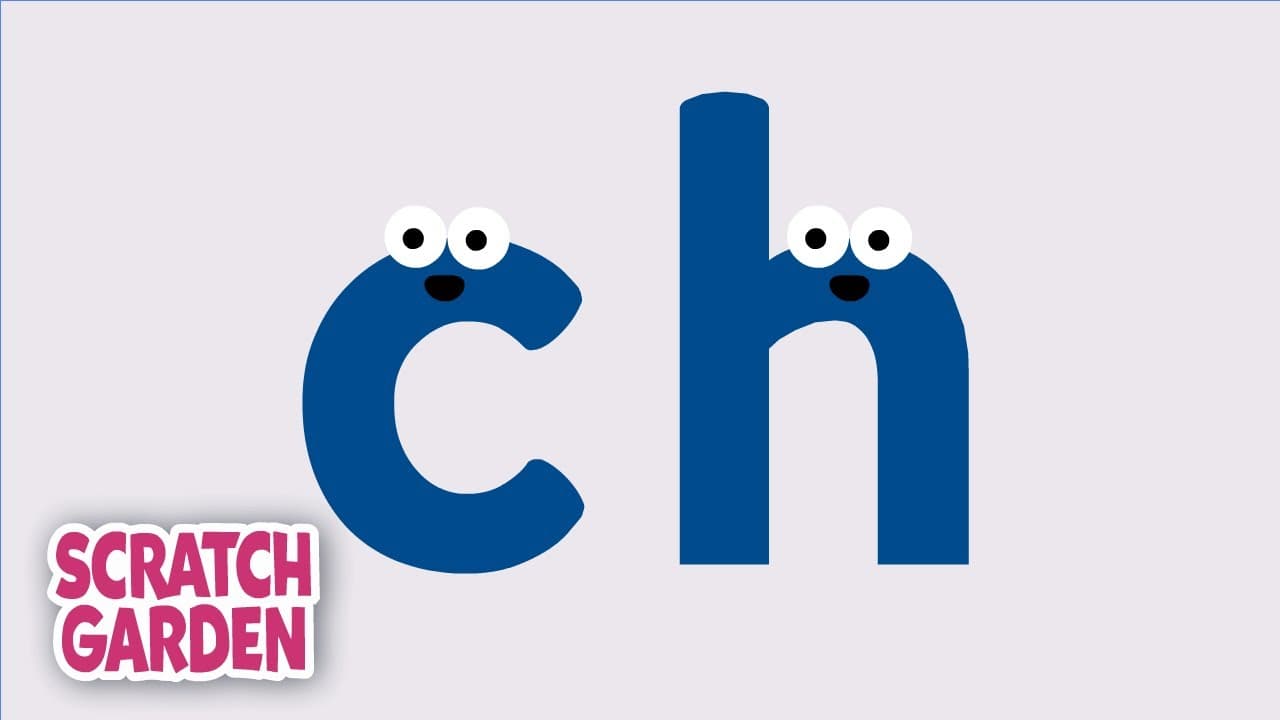
Learning the CH Sound with Happy Cheese

Learning the CH Sound with Happy Cheese

This engaging animated video introduces early learners to the "ch" digraph through the character of Happy Cheese. Using humor and clear visual cues, the video breaks down how the letters C and H, which normally make separate sounds, combine to create a new, distinct sound. The character demonstrates the pronunciation using a memorable train analogy ("ch-ch-ch") that helps students physically produce the sound correctly. The content is structured to scaffold learning by first introducing the sound itself, then presenting words that begin with "ch" (chair, chicken, cheese), followed by words that end with "ch" (ouch, wrench, sandwich). The video includes built-in interactive segments with a countdown timer, encouraging students to actively participate by generating their own vocabulary words during the lesson. Teachers can use this video as a core component of a phonics lesson introducing digraphs. Its pacing allows for natural pauses where educators can check for understanding. The distinct separation of beginning and ending sounds makes it an excellent tool for phonemic awareness practice, specifically for identifying sound positioning within words. The humorous ending with falling cherries reinforces the sound in a memorable way.

Scratch GardenScratch Garden

2mins 46s

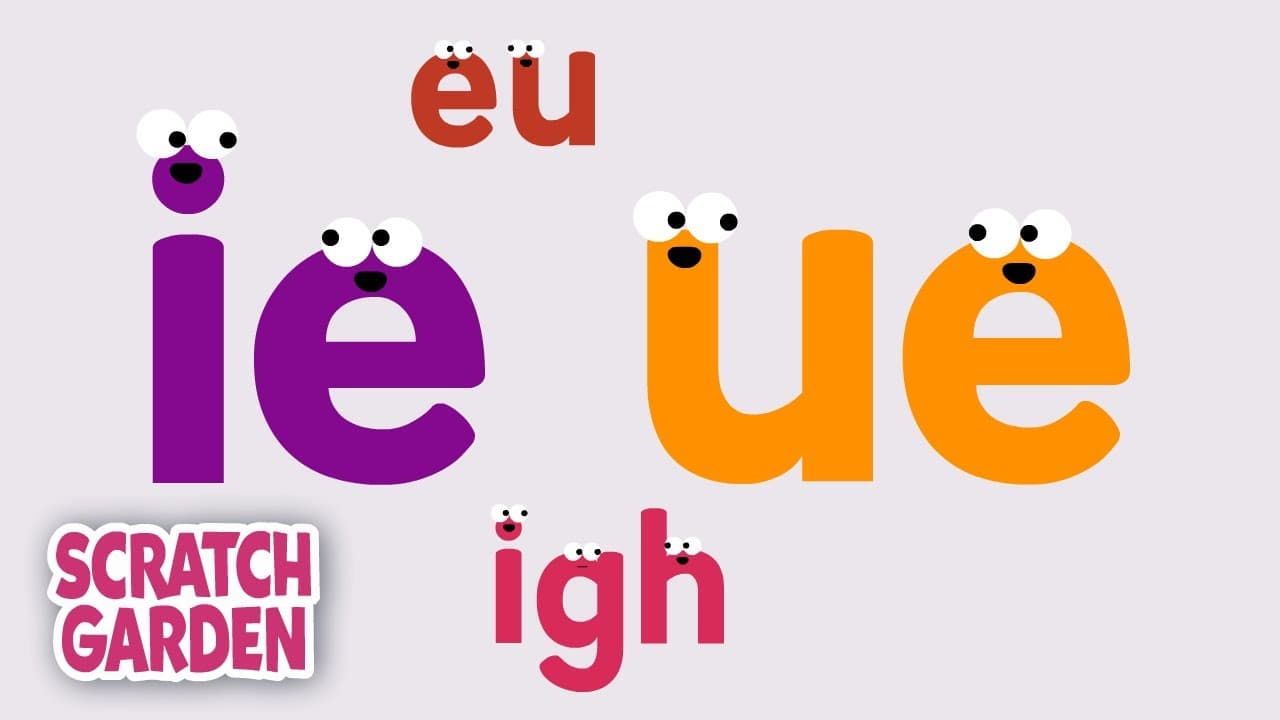
Mastering Vowel Teams: ie, igh, ue, and eu

Mastering Vowel Teams: ie, igh, ue, and eu

This engaging animated music video introduces students to advanced vowel teams, specifically focusing on 'ie', 'igh', 'ue', and 'eu'. Set against a catchy folk-rock tune, animated letters ride a train through a colorful landscape, demonstrating how vowels (and sometimes consonants) work together to create specific sounds. The video explicitly moves beyond simple vowel pairs to explore complex graphemes, including trigraphs like 'igh', helping students visualize the spelling patterns associated with long vowel sounds. Key themes include phonemic awareness, spelling patterns, and the concept that letters can team up to make new sounds or support a vowel sound. The video breaks down four specific teams: 'ie' and 'igh' (both making the long 'i' sound), and 'ue' and 'eu' (making the long 'u' or 'yoo' sound). Each segment provides clear visual examples of words containing these patterns, reinforcing the connection between the letter combination and its pronunciation. For educators, this video is an excellent tool for introducing or reviewing complex phonics rules that often trip up early readers. The catchy melody aids in memorization, while the 'train' visual provides a concrete metaphor for letter grouping. It is particularly useful for differentiating between alternative spellings for the same sound (e.g., why we use 'igh' in 'night' but 'ie' in 'tie'), supporting spelling accuracy and reading fluency in elementary classrooms.
Scratch GardenScratch Garden

3mins 20s

Mastering the WH Digraph Sound

Mastering the WH Digraph Sound

This engaging animated video introduces early learners to the "wh" digraph through humor and clear visual examples. Hosted by a character named "Happy Cheese," the lesson breaks down how the letters W and H function individually versus how they sound when combined. The video explicitly teaches the concept of silent letters, demonstrating that in the "wh" digraph, the H is silent, resulting in the /w/ sound.

Scratch GardenScratch Garden

2mins 37s

Materials

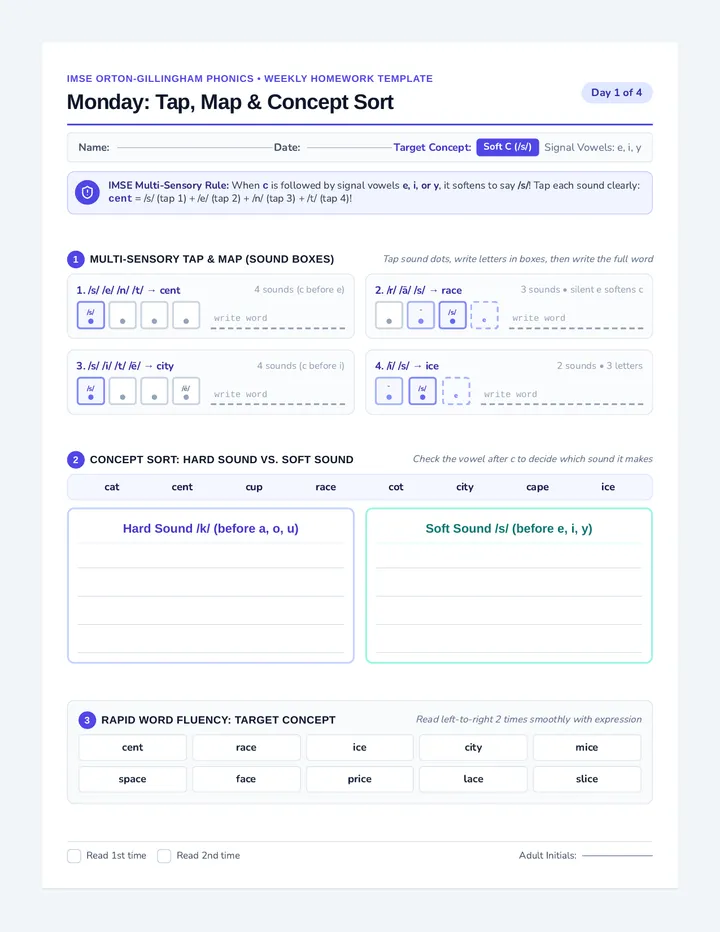
Phonics Homework Packet Template

Phonics Homework Packet Template

A standardized four-day weekly homework packet template aligned with the IMSE Orton-Gillingham scope and sequence. Features daily multi-sensory sound tapping, sound boxes, concept sorts, sound change ladders, decodable cloze sentences, fluency matrices, and home dictation with C.O.P.S. self-monitoring.

K

katie_conklin

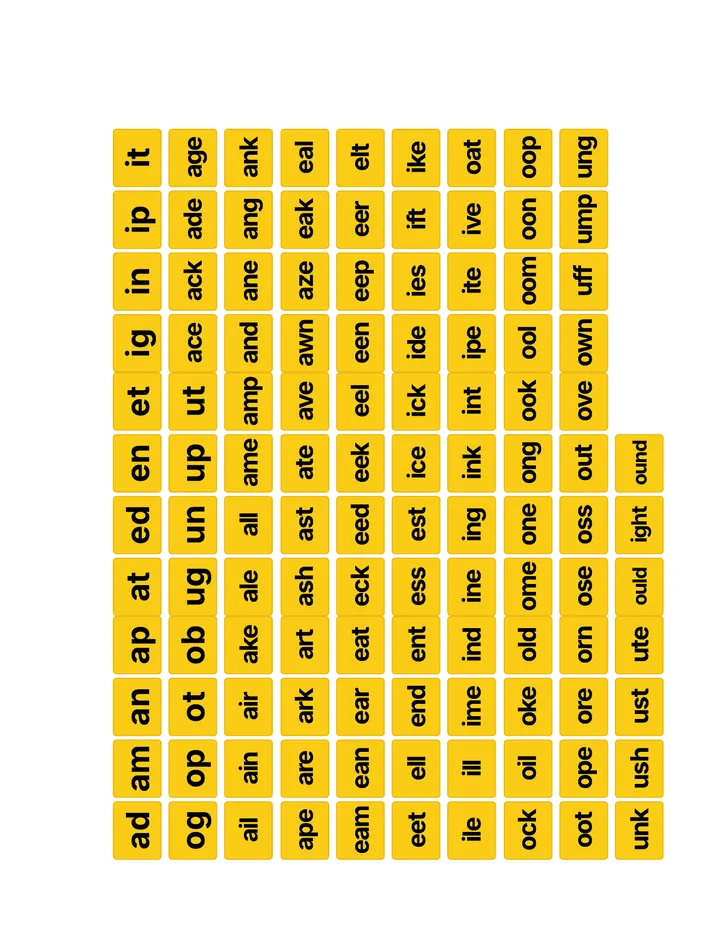
Yellow Word Family Strips Landscape Final

Yellow Word Family Strips Landscape Final

A single-page, landscape printable containing 116 yellow word family tiles organized in rows of 12 with groupings of 4 for easy identification. This version utilizes the entire page area with exactly twice the vertical spacing between rows relative to the space between tiles. The font size is maximized for visibility.

R

RENEE.ALGER

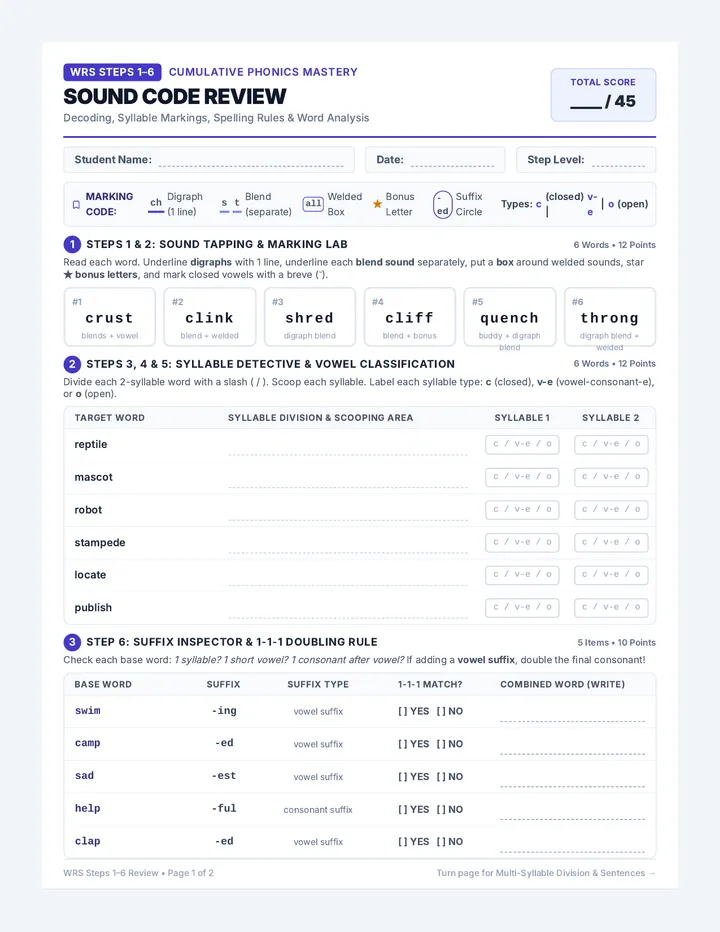
Sound Code Review Worksheet

Sound Code Review Worksheet

A comprehensive two-page cumulative review worksheet covering Wilson Reading System Steps 1 through 6. Features systematic practice with sound markings, syllable division, open and closed syllables, 1-1-1 suffix doubling rules, the three sounds of -ed, and sentence fluency proofreading.

C

christopher_lourens

Grade 1 ELA Assessment Packet

Grade 1 ELA Assessment Packet

An End-of-Grade-1 ELA Benchmark Assessment Packet featuring late-first-grade sight words, complex initial and final consonant blends, a rich 105-word spring decodable reading passage with open constructed-response comprehension questions, an accommodated visual version, and a teacher running record and scoring rubric aligned to Spring Grade 1 benchmarks.

A

awarner1

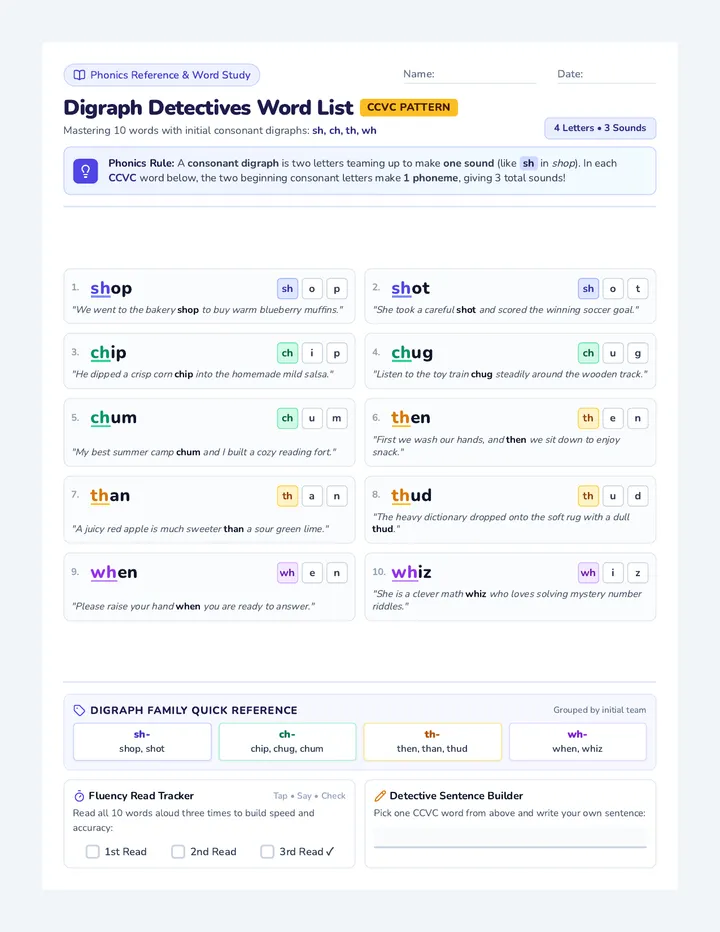
Digraph Detectives Word List

Digraph Detectives Word List

A comprehensive phonics reference and practice sheet featuring a fresh set of 10 CCVC words with consonant digraphs (sh, ch, th, wh). Includes orthographic sound mapping boxes, decodable context sentences, a digraph family sorting strip, and a fluency tracking activity.

AW

Arielle West

Tuesday Minimal Pairs Worksheet

Tuesday Minimal Pairs Worksheet

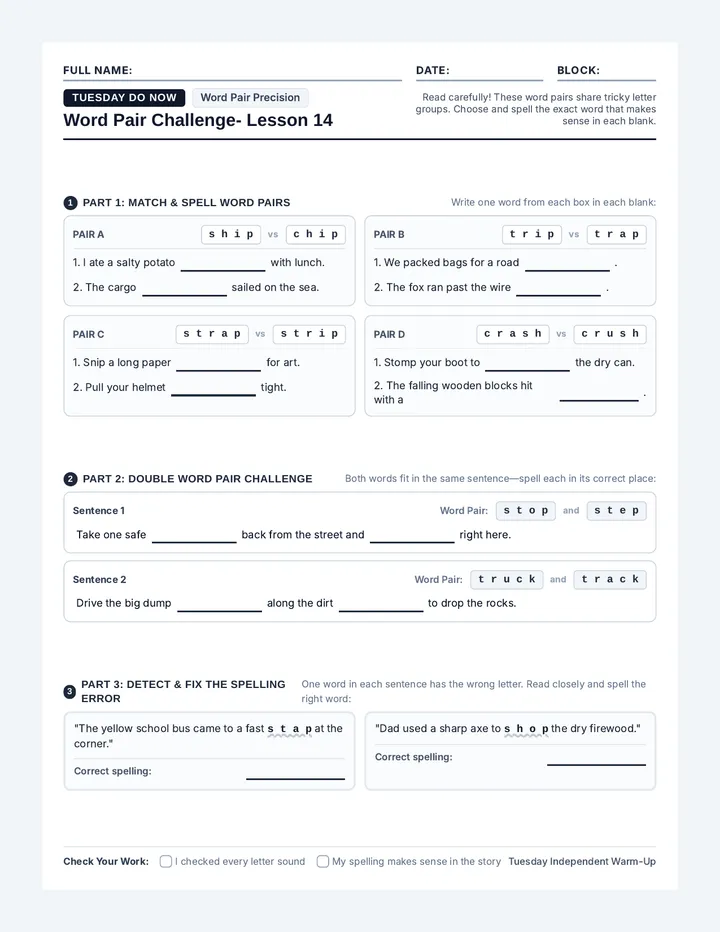
A Tuesday Do Now worksheet featuring minimal pairs with digraphs and blends, alternated answer positions, and a Part 4 challenge to create an original minimal pair by swapping only the vowel, with no phonics or grade labels.

SC

Sarah Clark

Lessons

Sound Scout Reading List

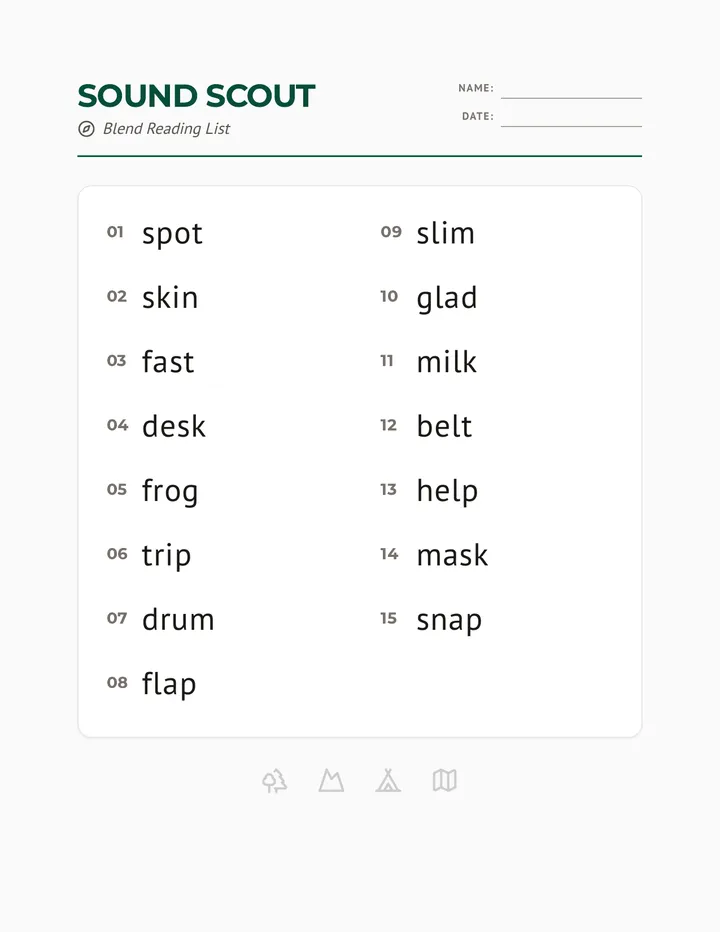
Sound Scout Blends

A progress monitoring tool designed to assess a student's ability to decode words with initial and final s-blends, r-blends, and l-blends. This lesson includes a student reading list and a teacher scoring checklist.

ML

Michelle Low

6
Spelling Secrets Folder Sheet

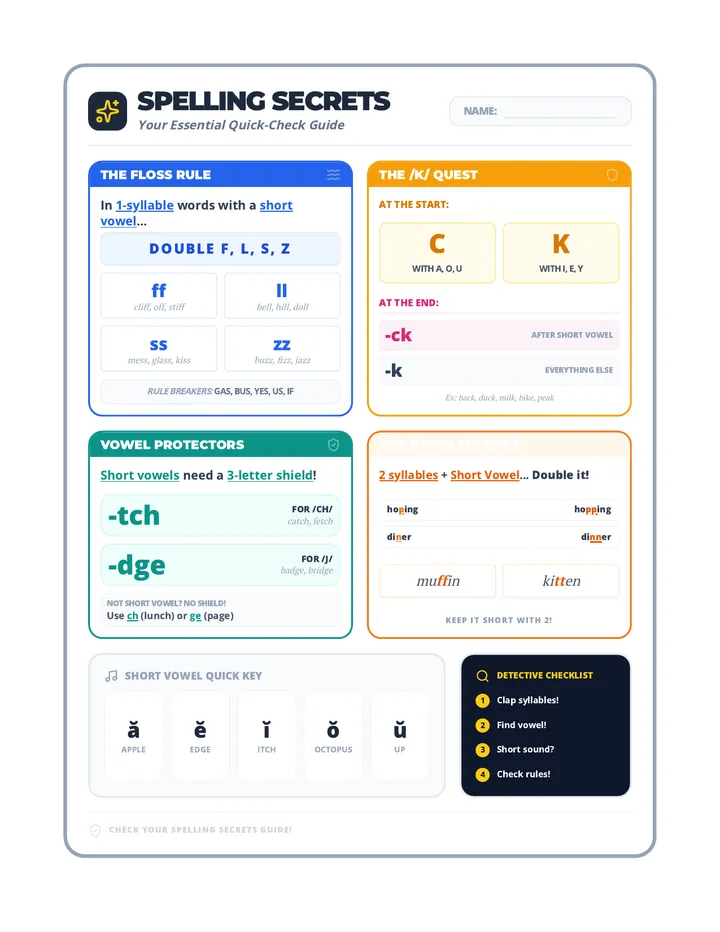
Spelling Secrets

A collection of visual anchor charts and notebook inserts to help students master common spelling rules including the FLOSS rule and the C/K/CK spelling choice.

E

ecreamer

11
Suffix Spark Slides

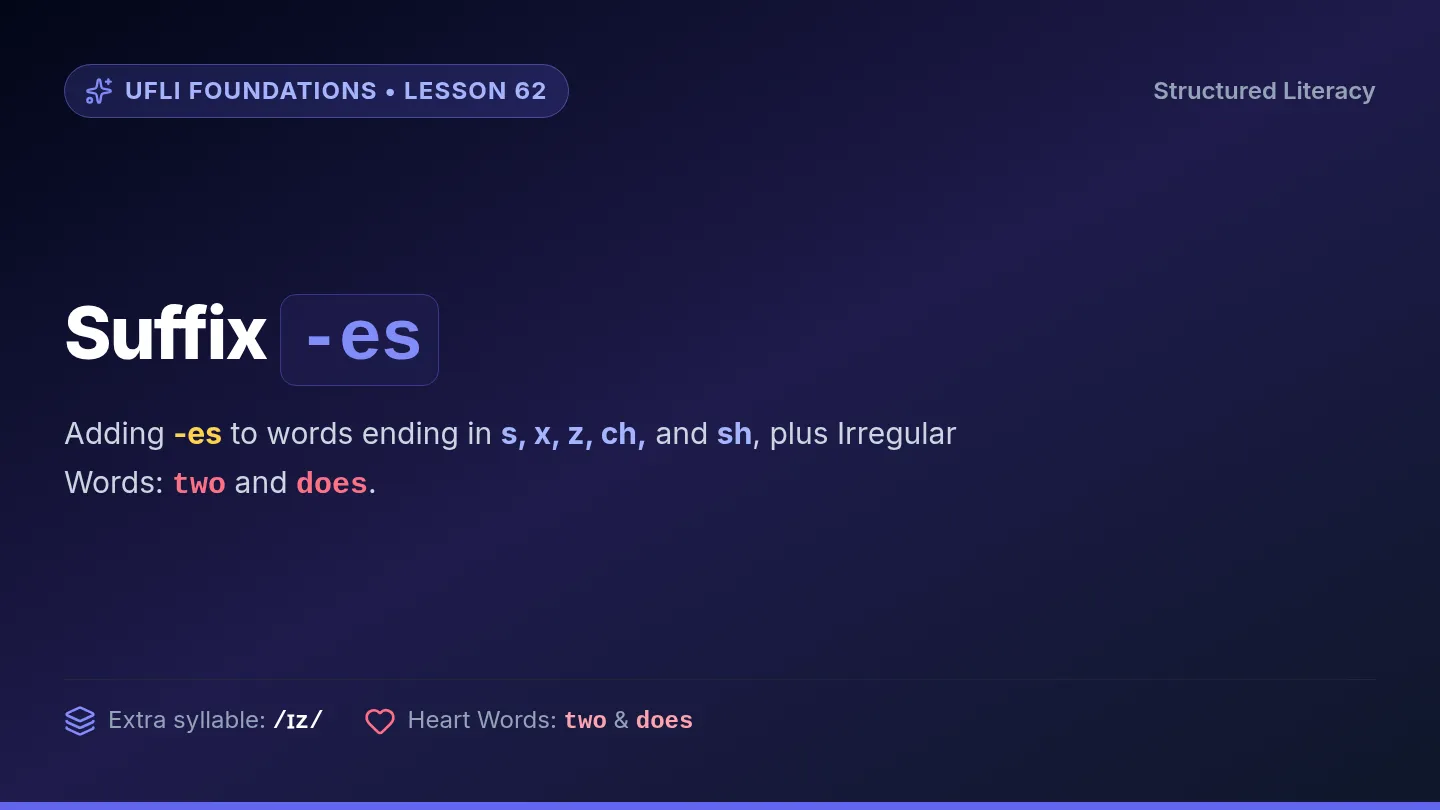
Suffix Power

A comprehensive UFLI Lesson 63 unit covering suffix -es added to base words ending in s, x, z, ch, and sh. Includes explicit phonics instruction, three decodable readers, an oral check exit ticket, and a long fluency passage with comprehension questions.

ML

Marti Lushin

7
Alphabet Strike Final Handout

Letter Logic Rods

A focused activity on identifying and distinguishing between vowels and consonants using the visual style of plastic reading rods.

R

RENEE.ALGER

15
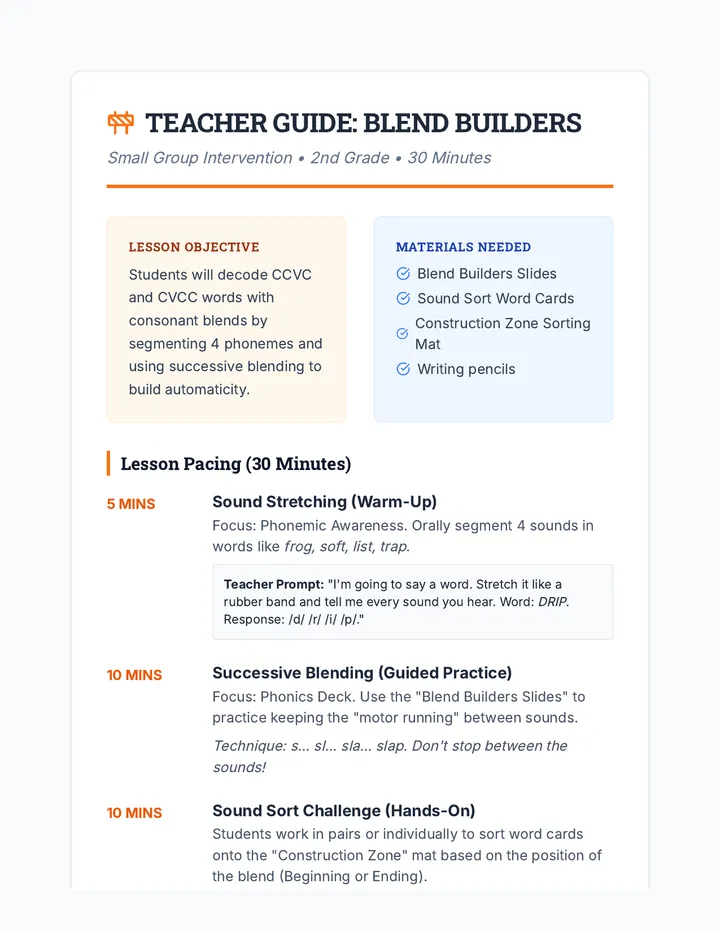
Blend Builders Teacher Guide

Blend Builders

A focused 30-minute small group lesson for 2nd graders to master decoding CCVC and CVCC words with consonant blends through successive blending and hands-on sorting.

K

knnatale

5
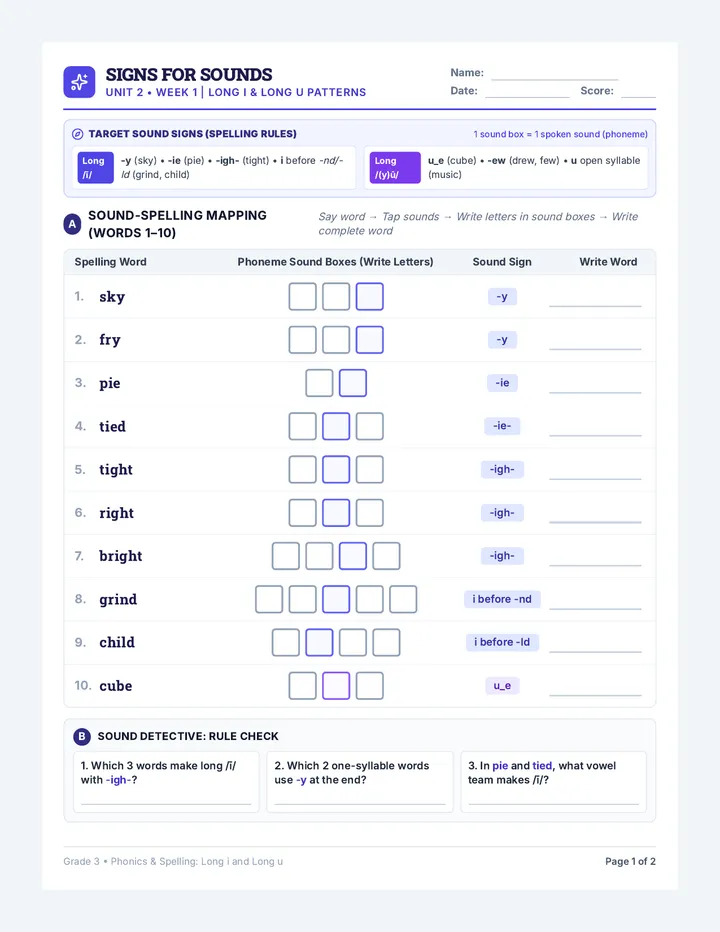
Sky High Sounds Worksheet

Sound Signs Phonics

A ten-part phonics and spelling series based on Grade 3 sound patterns. Features five orthographic mapping worksheets and five companion Sound Builder spelling practice worksheets covering long vowels, silent letters, triple blends, and digraphs.

LG

Leslie Gerken

10

Sequences

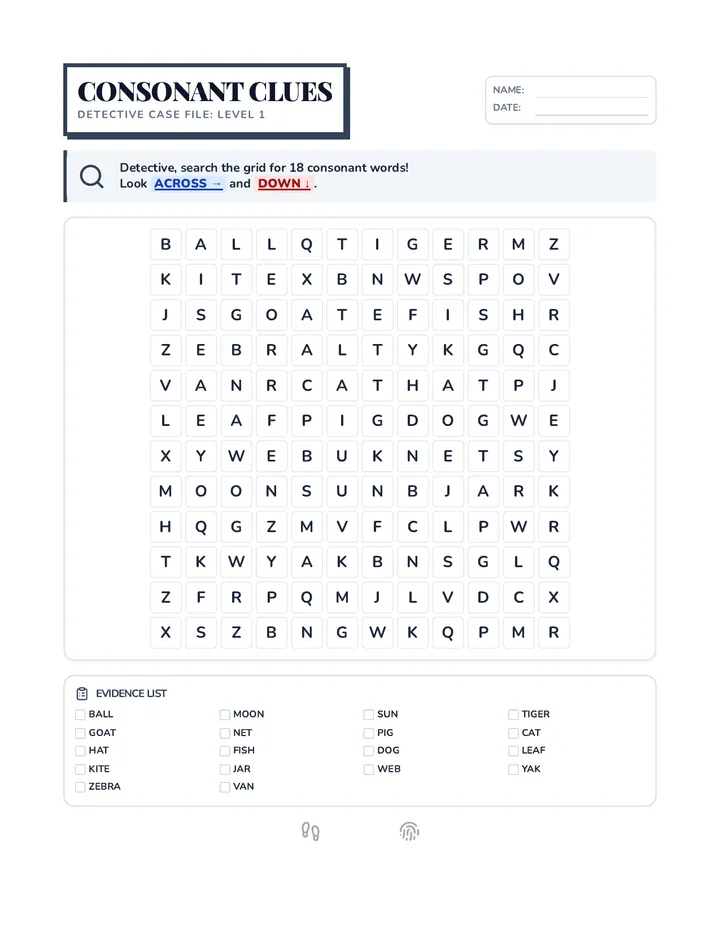
Consonant Clues Word Search

Sound Detective Workbook

A complete phonics journey covering letter-name alphabetic spelling stages, featuring randomized word sort practice through interactive sentence completion.

N

nmack

57
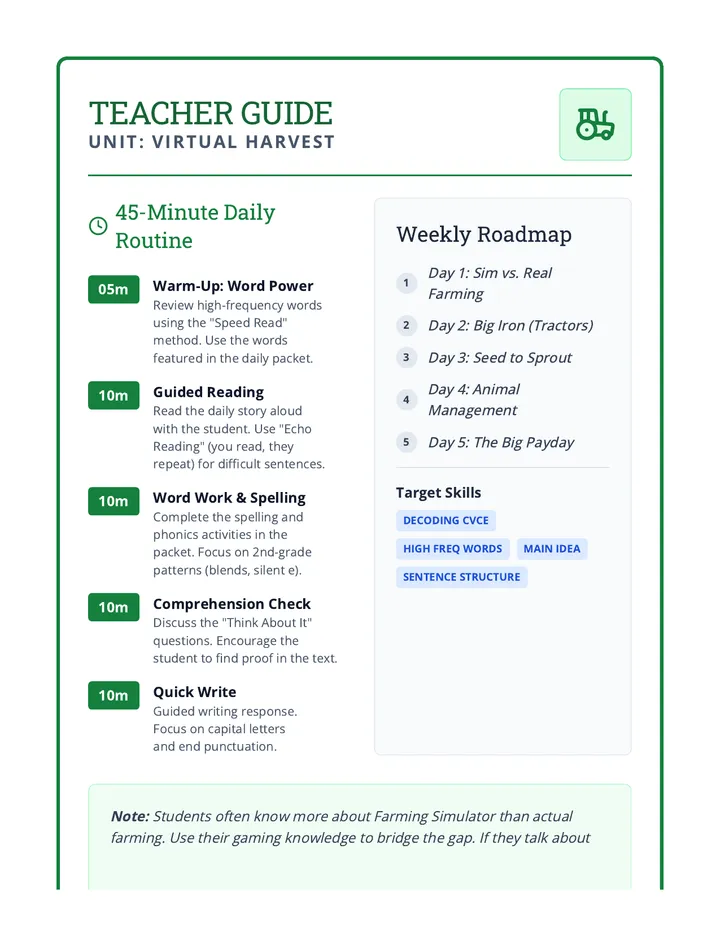
Virtual Harvest Teacher Guide

Digital Dirt

A 5-day reading comprehension and writing unit for struggling readers, blending the world of Farming Simulator with real-world agriculture. Focuses on 2nd-grade level literacy skills within a high-interest 5th-grade context.

CM

carley Martin

30
Vowel Valley Fluency Packet Mastered

Phonics Fluency Fun

A series of phonics lessons focusing on vowel teams, digraphs, and other phonetic patterns through narrative passages and fluency drills.

N

npowers

28
I Sit I Tap Slides

Reading Foundations

A collection of decodable passages and activities aligned with UFLI Foundations, focusing on systematic phonics and heart word acquisition. Each lesson centers on a specific phonics skill and accompanying "heart words" to build reading fluency.

N

npowers

54
Will Wins Chapter Book

Sound Stars Phonics

A multi-lesson phonics intervention sequence using sports-themed early reader books to target specific phonemes. Each lesson includes a student chapter book with phonetic margin cues and a corresponding teacher data collection guide.

J

james.shaw

21
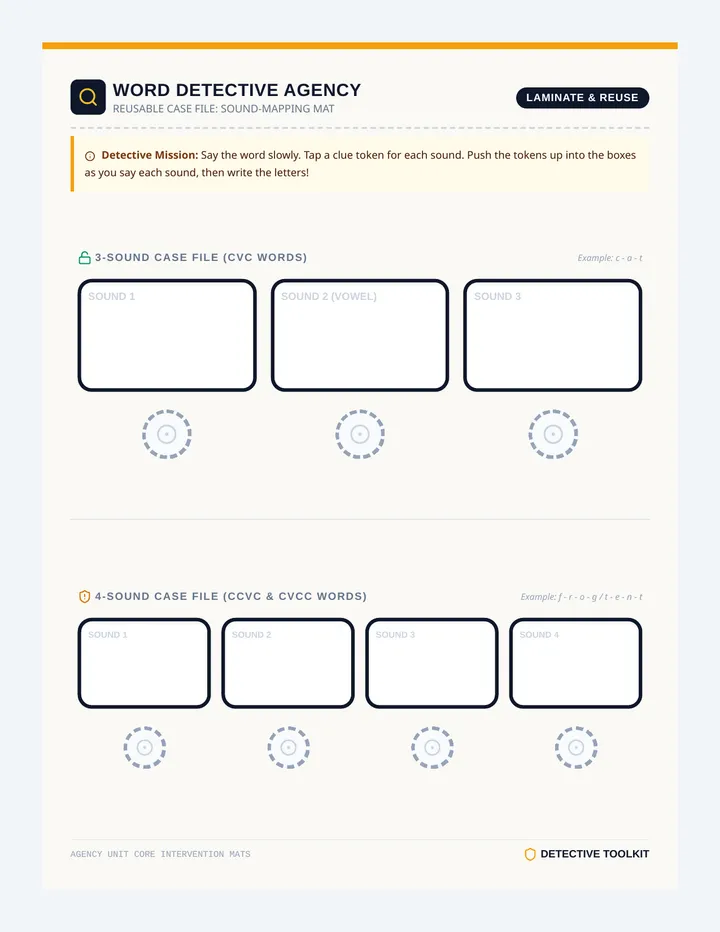
Phonics Detective Activity Mats

Word Detectives Phonics Unit

A four-session reading intervention sequence for 1st-grade students focused on decoding CVC, CCVC, CVCC words, and mastering core sight words (about, after, again, always) using structured, multi-sensory strategies.

K

kurtzm

44
English Language ArtsPhonics & Reading FoundationsLetter IdentificationLearn Letters A-ZLowercase and Uppercase LettersConsonants and VowelsLetter-Sound AssociationsLetter-Sound Associations: LowercaseLetter-Sound Associations: UppercaseBeginning and Ending SoundsRhymingBlending And SegmentingShort VowelsShort Vowel SoundsConsonant BlendsConsonant DigraphsBlends, Digraphs, and TrigraphsDigraphs, Blends, and Silent LettersLong Vowel SoundsLong Vowel PatternsShort and Long VowelsShort and Long Vowel PatternsSilent EVowel SoundsVowel TeamsR-Controlled VowelsDiphthongs: Oi, Oy, Ou, OwVariant VowelsVariant, Diphthong, And R Vowel PatternsSoft G And CSight WordsIrregular WordsWord RecognitionSyllablesSyllable TypesTwo-Syllable WordsMultisyllabic WordsPhoneme ManipulationDecodable TextsVocabularyAction WordsQuestion WordsNouns and AdjectivesClassify WordsCompound WordsSynonyms and AntonymsHomophonesHomophones and HomonymsShades of MeaningContext CluesPrefixes and SuffixesGreek and Latin RootsAnalogiesIdioms and AdagesForeign Words and ExpressionsWord Choice and UsageReference SkillsReading ComprehensionRead-Along Literary TextsRead-Along Informational TextsReality vs. FictionStory ElementsCharacterSequenceMain IdeaCause And EffectCompare And ContrastReading StrategiesText StructureAuthor's PurposeAuthor's Purpose And ToneAuthor's PerspectivePoint Of ViewThemeInference And ThemeInference And AnalysisPoetry ElementsLiterary DevicesAnalyzing LiteratureAnalyzing Informational TextsComparing TextsAudience, Purpose, And ToneBusiness DocumentsNovel StudyNonfiction Book StudyGrammar & MechanicsSentencesNounsVerbsAdjectivesPronounsCapitalizationPunctuationContractionsConjunctionsPrepositionsArticlesAdjectives And AdverbsVerb TypesVerb TensePronouns And AntecedentsPronoun TypesSubject-Verb AgreementDirect And Indirect ObjectsSentences, Fragments, And Run-OnsPhrases And ClausesCommasSemicolons, Colons, And CommasDashes, Hyphens, And EllipsesSpellingAbbreviationsFormattingVerb Tense And MoodMisplaced ModifiersWritingDescriptive DetailsCreative WritingOpinion WritingTopic SentencesOrganizing WritingLinking WordsSentence VarietyIntroductions And ConclusionsPersuasive And Opinion WritingExpository WritingPersuasive StrategiesDeveloping And Supporting ArgumentsTopic Sentences And Thesis StatementsSummarizingResearch SkillsEditing And RevisingActive And Passive Voice=Writing Clearly And ConciselyDebate & Public SpeakingPublic Speaking BasicsPersuasive TechniquesClaims and EvidenceTypes of ArgumentsReasoning TypesLogical FallaciesTopic ResearchOrganizing EvidenceDebate Speech OrganizationAttacking and Defending ArgumentsClash and EngagementImpact CalculusQuestioning and Cross-ExaminationCritical ThinkingInformal LogicFormal LogicInductive Reasoning