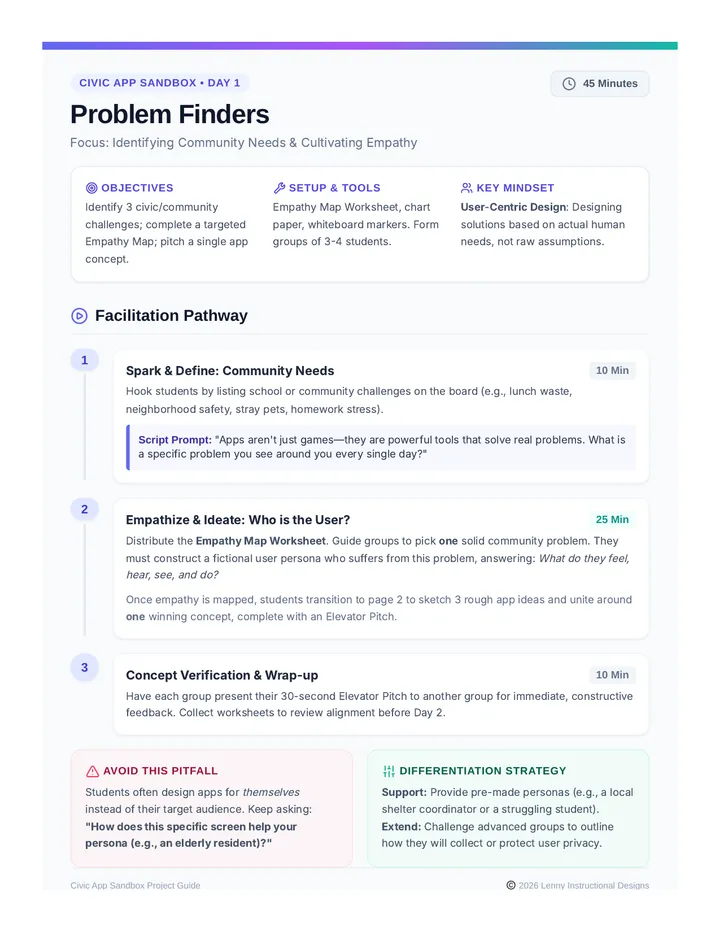
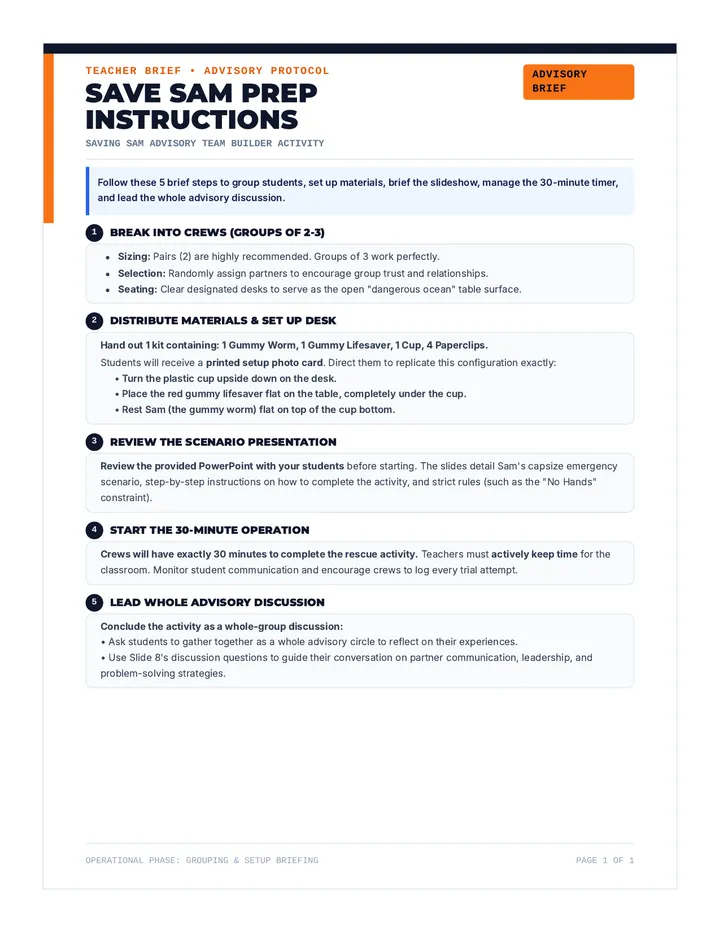
A collection of project-based STEM and social studies lessons designed to engage 3rd and 6th grade students in creative exploration and technical skill-building.
A comprehensive 3-lesson unit exploring the science, chemistry, and purpose of bioluminescence in nature. Students dive into the deep sea, experiment with chemical reactions, and analyze how light is used for survival.
A three-day exploration of the interconnected roles of chloroplasts and mitochondria in cycling matter through ecosystems. Students use a lunar colony hypothetical lab to apply the scientific method to real-world gas exchange scenarios.
An introductory sequence for 3rd graders exploring how energy flows through food chains, starting with sun-powered producers and moving through various levels of consumers.
A two-day unit exploring the carbon cycle's movement through diverse ecosystems, focusing on how carbon storage and release impact global stability. Students examine oceans, rainforests, tundra, and local environments to understand ecological balance.
A two-part interdisciplinary unit for middle school students exploring the science and art of the Three Rs: Reduce, Reuse, and Recycle. Students analyze the environmental impact of waste through scientific data and then apply creative design thinking to upcycle materials into functional art.
A comprehensive technology applications sequence covering Internet Safety & Ethics, Computer Hardware, and Spreadsheet Data Management. Designed for middle or high school students to build foundational digital literacy and technical skills.
A comprehensive unit exploring the science of hearing, the technology used to assist hearing loss, and the personal impact of being D/deaf or hard of hearing. Students will build a 3D ear model, learn to read audiograms, and understand the difference between hearing aids and cochlear implants.
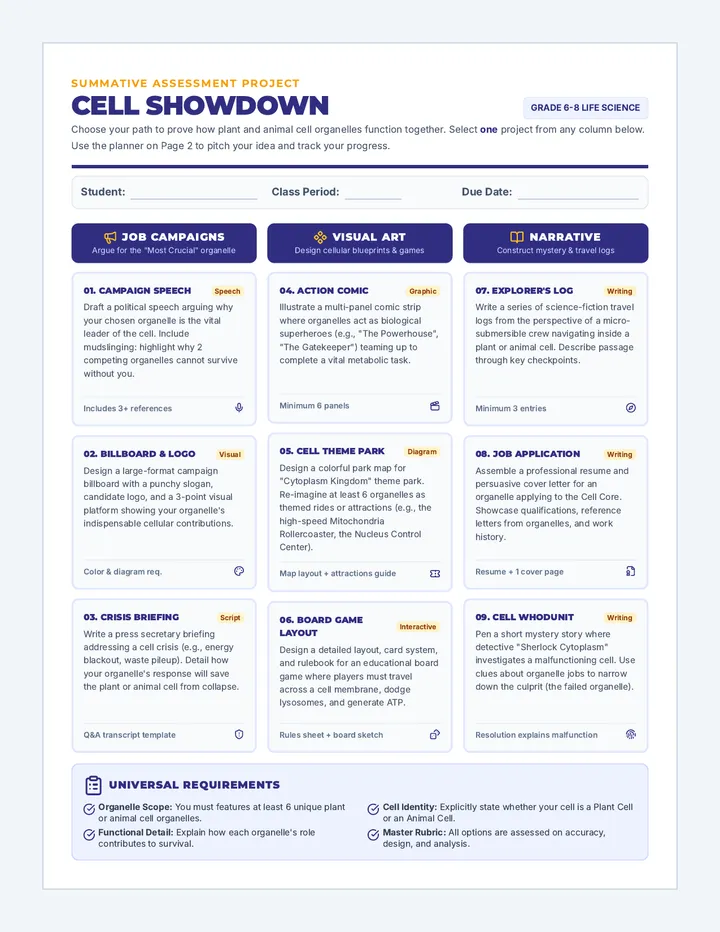
A 2-3 day project-based learning sequence where students explore the relationship between photosynthesis and cellular respiration, culminating in a creative project where they explain the cycling of matter and flow of energy in ecosystems.
A comprehensive unit on meteorology focusing on air mass interactions, pressure systems, and frontal boundaries. Students learn to interpret data to predict local weather events like thunderstorms and clear sky periods.
An inquiry-based science and literacy curriculum for grades 1-3 that combines foundational scientific concepts with high-frequency sight word mastery and precision handwriting practice.
A comprehensive K-12 AI literacy sequence covering the fundamentals of how AI works, machine learning, ethics, social impact, and creative application through age-appropriate lessons.
A comprehensive 4-day sequence focusing on the application of thermal energy concepts, including conduction, convection, radiation, and insulation through hands-on labs and real-world analysis.
A full-day 3rd-grade beach-themed room transformation covering math word problems, reading comprehension, creative writing, and a sink-or-float science experiment. Students engage in 'Island Adventure' tasks to earn their way back to shore.
A cross-curricular unit blending astronomy and Greek mythology, exploring how ancient cultures interpreted the night sky and the scientific reality of stars.
A collection of lessons focused on nature and science, designed with differentiated reading materials for diverse learners including early readers and special education students.
A high-energy introduction to coding concepts using the vibrant world of dance games to teach algorithms, sequencing, variables, and loops.
A beginner-friendly introduction to coding concepts using the excitement of basketball tournaments to teach algorithms, sequencing, and selection.
A three-day sub plan sequence for middle school students exploring wind and solar energy. Students learn about energy transformations, advantages and disadvantages, and analyze energy output data to prepare for upcoming engineering design challenges.
A comprehensive 2-day unit on heat transfer (conduction, convection, and radiation) featuring teacher-led demonstrations, visual slides, doodle notes, and exit tickets. Students explore how thermal energy moves through different states of matter and vacuum.
A comprehensive unit on thermal energy transfer where students use models and hands-on experiments to compare conduction, convection, and radiation. The sequence covers theoretical understanding and practical observation of how heat moves through matter.
A comprehensive exploration of how scientists organize the diversity of life on Earth, from the broadest domains to individual species.
An investigative sequence diving into the mechanics of our solar system, focusing on planetary properties and the dynamic relationships within the Earth-Moon-Sun system.
A comprehensive unit exploring the human cardiovascular system, starting with the intricate anatomy of the heart and extending to blood vessels and circulation loops.
A four-day introductory science sequence for grades K-3 exploring the properties of light, illumination, and shadows through hands-on play with glowsticks and flashlights. Students will transition from understanding light sources to creating complex shadow narratives and participating in light-based games.
A series of phonics lessons focusing on vowel teams, digraphs, and other phonetic patterns through narrative passages and fluency drills.
A comprehensive marine biology curriculum exploring the structural and functional design of ocean life, from microscopic plankton to massive cetaceans. Students act as 'Ocean Architects' to understand how environmental pressures shape biological forms.
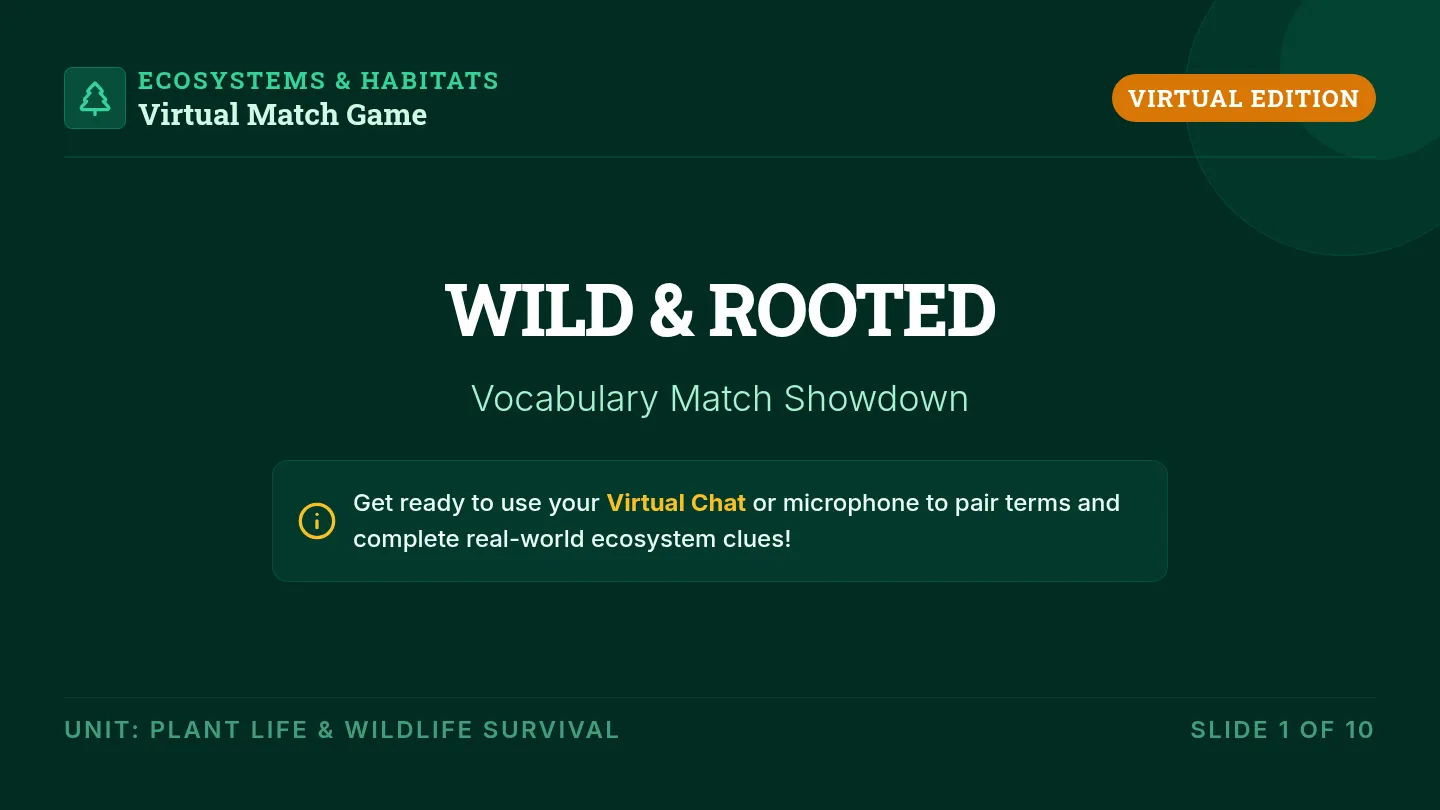
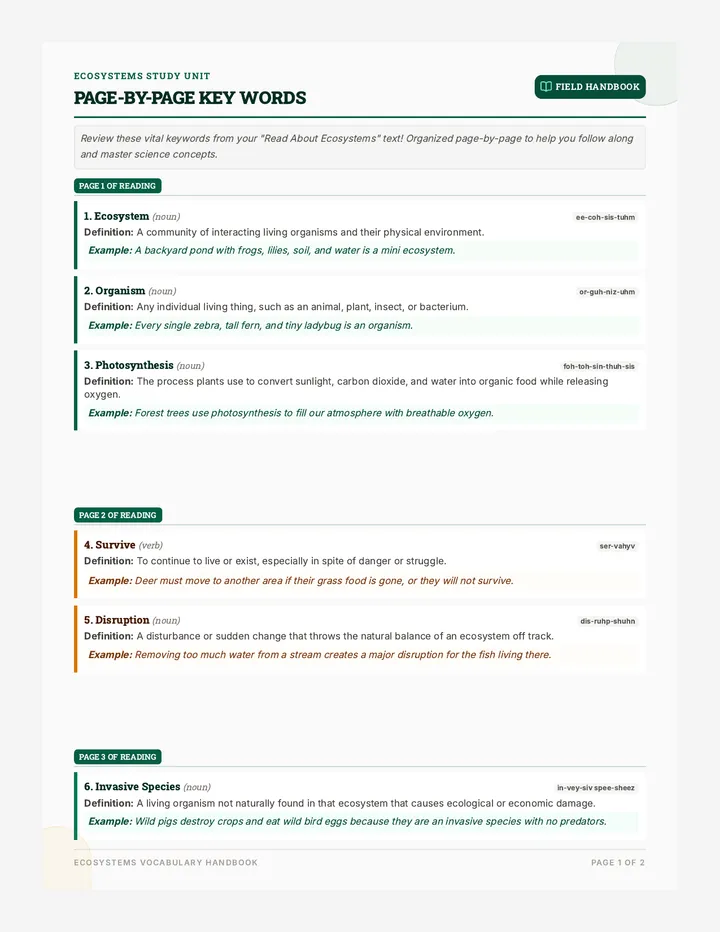
A comprehensive sequence covering introductory 6th-grade life science topics, from ecosystem dynamics to inheritance and evolutionary changes.
A scaffolded middle school unit exploring competition, energy flow, and ecosystem stability. Each lesson is tailored to specific NGSS performance expectations for grades 6, 7, and 8, building from individual organism growth to complex system dynamics.