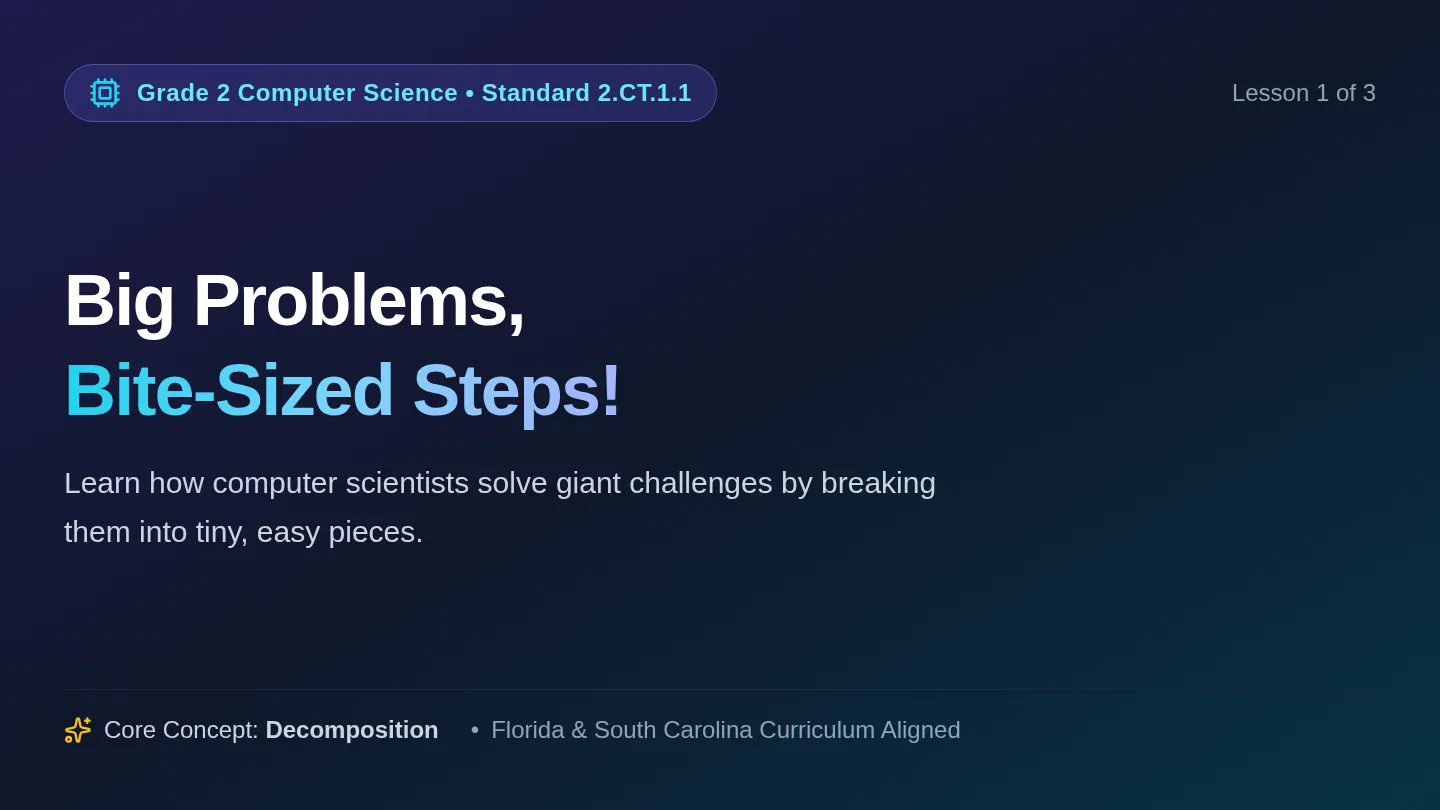
Star Detectives SlidesGrade 2 Reading & Science Constellation Explorers Ancient Sky Watchers How Ancient People, Farmers, and Ptolemy Used the Night Sky Adapted from Where Are the Constellations? (Pages 16–22) Read, analyze, and discover! Grade 2 Lesson Slides Opening Mystery: The Dark Sky Imagine living in the ancient world! Hook No Electric Lights! Imagine a world without streetlights, televisions, or phone screens. When the sun went down, the sky was filled with thousands of glowing stars! Partner Discussion Share your thoughts using this sentence starter: “If the sky were completely pitch-black, I think the stars would look...” Today we will discover how ancient observers used star patterns as calendars and maps! Read Together: 2nd Grade Text Adapted from Pages 16–17 Read Patterns in the Starlight Long ago, people watched the night sky and noticed that groups of stars formed patterns, like giant connect-the-dots puzzles. We call these star pictures constellations. Constellations were not just fun to look at—they were essential survival tools for everyday life! Vocabulary: A constellation is an officially recognized pattern of stars in the night sky. Follow along on Page 1 of your packet! Why were star patterns important? Wh- Question Detectives The 5 Big Questions to Ask After Reading (Page 2) 5 Wh- Words WHO Who was Ptolemy? An ancient star scientist in Egypt. WHAT What is a constellation? A group of stars making a picture. WHERE Where did he live? In the city of Alexandria, Egypt. WHEN When did farmers plant? In spring when special stars rose. WHY Why tell star stories? To remember patterns and teach lessons. Use details from the text to answer each Wh- question on Page 2! When & Who: Essential Helpers How ancient people relied on the stars (pp. 16–17) Details 1. The Farmer’s Calendar Early farmers watched the seasons change by watching the constellations: Spring stars signaled planting season Autumn stars warned to harvest before frost 2. The Sailor’s Compass Navigators had no GPS or satellite technology on the open ocean: The North Star (Polaris) always pointed north Stars guided vessels safely to port Comprehension Check: How would life change for an ancient farmer without star patterns? Who Was Ptolemy? The Astronomer of Alexandria (pp. 18–20) Astronomer Claudius Ptolemy (c. 100–170 CE) Where He Lived In Alexandria, Egypt, nearly 1,900 years ago. The Almagest His landmark book recording stars, mathematics, and planets. 48 Constellations He cataloged 48 star pictures still recognized today! Ptolemy combined mathematics with stargazing. His records were so accurate that people studied his work for more than a thousand years! Pronunciation Guide: TAH-luh-mee (Remember, the “P” is silent!) What: Creatures & Legends in the Sky What shapes did Ptolemy name? (pp. 20–22) Myths Leo the Lion A proud cosmic beast whose brightest star sits at the lion’s heart. Hercules A legendary Greek warrior known for superhuman strength and courage. Pegasus A magnificent winged horse soaring across autumn and winter skies. Astronomical Legacy: Today there are 88 official constellations, and all 48 of Ptolemy’s star groups remain! Why: Inferential Thinking Use text evidence and your own reasoning Why? The Big “WHY” Question: Why did ancient cultures create stories and myths around star patterns rather than just numbering them? Reasoning Hint: How do exciting stories help people remember important information without books or internet? Inference Question 2: Why was it so much easier for Ptolemy to observe the constellations than for someone living in a bustling city today? Sentence Frame: “Ancient people could see more stars because...” Turn and discuss with your learning partner! Support your idea with clues! Exit Ticket Walkthrough Demonstrate your star detective mastery (Page 3) Exit Ticket 1 Key Fact Check Recall how sailors navigated by Polaris and how many patterns Ptolemy recorded. Multiple choice questions 2 Ancient vs. Modern Explain why city lights make it harder to see constellations today. Written explanation 3 Constellation Creator Connect the stars to invent a constellation and write its origin story! Draw & create Ready to complete your Star Detectives Reading Packet! You are a Sky Expert! ⭐
Star Detectives Reading PacketAncient Sky Watchers Large Print Grade 2 Reading • Adapted from Where Are the Constellations? (pp. 16–22) Name: Date: The Story in the Stars Read Aloud or With a Partner Long ago, there were no electric street lamps, alarm clocks, or glowing phones. When the sun went down, the world turned completely dark. The night was lit only by campfires and thousands of brilliant stars. Ancient people watched the night sky and noticed that groups of stars stayed together like giant connect-the-dots pictures. We call these star pictures constellations. Constellations were important helpers! Early farmers had no paper calendars. When special star patterns rose in the spring, farmers knew it was time to plant seeds. When different stars appeared in the chilly fall, it was time to harvest crops. On the open sea, sailors had no GPS maps. They used the bright North Star to steer their ships safely across dark waters without getting lost. Around 1,900 years ago, a star scientist named Ptolemy lived in Alexandria, Egypt. Ptolemy wrote an important book called the Almagest. In his book, Ptolemy mapped 48 constellations. He named them after ancient myths, brave heroes like Hercules, and mighty animals like Leo the Lion. Today, all 48 of Ptolemy’s star groups are still part of the 88 constellations we recognize today! Constellation: A star picture Astronomer: A star scientist Navigate: To steer or find the way Turn the page for the 5 Wh- Questions → Page 1 of 3 Wh- Question Detectives Answer each Wh- question using details from the text on Page 1. 5 Wh- Questions WHO Who was Ptolemy, and what was his job? Frame: “Ptolemy was...” WHAT What is a constellation, and what was Ptolemy’s book called? Frame: “A constellation is...” WHERE Where did Ptolemy live when he studied the stars? Frame: “He lived in...” WHEN When did ancient farmers look at constellations to plant or harvest? Frame: “They planted in...” WHY Why did ancient people create stories about heroes in the stars? Frame: “Stories helped because...” Turn the page for the Exit Ticket → Page 2 of 3 Star Detective Exit Ticket Grade 2 Exit Slip • Show What You Mastered! Final Check 1 Key Facts Check A. Why did sailors at sea look for the North Star? To find direction and navigate safely.
Sky Myths Reading PacketSky Myths and Star Bears Large Print Grade 2 Reading • Adapted from Where Are the Constellations? (pp. 22–29) Name: Date: Bears, Hunters, and Secret Maps 2nd Grade Text One of the most famous shapes in the night sky is the Big Dipper. It looks like a giant soup ladle with a long handle. But the Big Dipper is actually part of a much larger constellation called Ursa Major, which means the “Great Bear.” Next to it sits Ursa Minor, the “Little Bear.” Ancient Greek myths say a king tossed the bears into the heavens by their tails, stretching their tails out long! The two bright stars at the outer edge of the Big Dipper cup are called Pointer Stars. If you draw an imaginary line through them straight across the sky, they point directly to Polaris, the North Star, sitting at the tip of the Little Bear’s tail. For centuries, lost travelers in the dark followed these pointer stars to find north. Different people looked at the very same stars and told different stories. Native American storytellers saw the stars of Ursa Major not as one bear, but as a giant bear being chased by three hungry hunters. Later, during the Middle Ages, brilliant Arabic astronomers studied the stars and gave many bright stars Arabic names we still speak today, like Betelgeuse and Rigel! Ursa Major: The Great Bear Pointer Stars: Stars pointing to Polaris Myth: A traditional story explaining nature Turn the page for the 5 Wh- Questions → Page 1 of 3 Wh- Question Detectives Answer each Wh- question using evidence from the text on Page 1. 5 Wh- Questions WHO Who studied the stars in the Middle Ages and gave them Arabic names? Frame: “Arabic astronomers gave...” WHAT What do the two Pointer Stars at the edge of the Big Dipper point to? Frame: “The pointer stars point to...” WHERE Where in the Little Bear constellation is Polaris (the North Star) located? Frame: “Polaris sits at the tip of...” WHEN When did ancient travelers look for the North Star, and why? Frame: “Travelers looked at night when...” WHY Why did Greek myths say the two sky bears have long, stretched tails? Frame: “Their tails stretched because...” Turn the page for the Exit Ticket → Page 2 of 3 Star Navigator Exit Ticket Grade 2 Exit Slip • Constellations and Myths (pp. 22–29) Lesson 2 Check 1 Key Facts: Finding the North Star
Sky Myths SlidesGrade 2 Reading & Science • Lesson 2 Constellation Explorers Sky Myths & Star Bears The Big Dipper, Pointer Stars, and Stories Across the World Adapted from Where Are the Constellations? (Pages 22–29) Follow the stars to the Great Bear! Grade 2 Lesson 2 Slides Opening Mystery: The Giant Soup Ladle Have you ever seen the Big Dipper? Hook A Shape Inside a Bear! Seven bright stars look like a giant pot or ladle scooping through the sky. Did you know the Big Dipper is part of a giant constellation named Ursa Major (The Great Bear)? Partner Discussion Turn to your partner and share: “If you looked at a group of stars, would you imagine a ladle, an animal, or something else?” Today we will explore the star bears, pointer stars, and ancient legends! Read Together: Star Bears Adapted from Pages 22–25 Read Ursa Major & The Pointer Stars The Big Dipper is part of a giant constellation called Ursa Major (The Great Bear). Greek myth says a king swung the bears into the heavens by their tails, stretching them long! The two stars at the end of the cup are the Pointer Stars. They point straight toward Polaris, the North Star. Key Fact: The North Star (Polaris) sits at the tip of the Little Bear’s tail (Ursa Minor)! Follow along on Page 1 of your packet! How do pointer stars guide us? Wh- Question Detectives The 5 Big Questions for Lesson 2 (Page 2) 5 Wh- Words WHO Who named bright stars? Arabic astronomers in the Middle Ages. WHAT What do pointers do? They point directly to Polaris (North Star). WHERE Where is Polaris? At the tip of Ursa Minor’s tail. WHEN When follow stars? At night when traveling in darkness. WHY Why long bear tails? Greek myth says they stretched when swung! Use text evidence from Page 1 to write your answers on Page 2! The Night Sky Secret: Pointer Stars How to find true North using your eyes (pp. 24–25) Navigation Follow the Arrow! Look at the outer two stars of the Big Dipper cup: 1. Find the Big Dipper bowl 2. Trace a straight line through the two edge stars
Sky Myths Exit TicketSky Myths Exit Ticket Large Print Grade 2 Astronomy • Where Are the Constellations? (pp. 22–29) Name: Date: 1. WHO Who studied the stars during the Middle Ages and gave them Arabic names? Arabic astronomers and scholars. Ship captains looking for treasure. 2. WHAT The Big Dipper soup ladle shape is actually part of which constellation? Ursa Major (Great Bear) Leo the Lion Pegasus the Winged Horse 3. WHERE Trace the path: How do the Pointer Stars help find the North Star (Polaris)? ← Draw arrow to POLARIS Big Dipper Pointer Stars • Draw line to Polaris Why was finding Polaris important for travelers at night? 4. WHY [Inferential Question] Why did Greek and Native American storytellers see different pictures in the exact same stars? Star Navigator Check: How confident are you with constellations? ⭐ Learning ⭐⭐ Got It! ⭐⭐⭐ Star Navigator