A differentiated science unit exploring the life cycles, parts, and processes of plants for Kindergarten, 2nd, and 4th grade students.
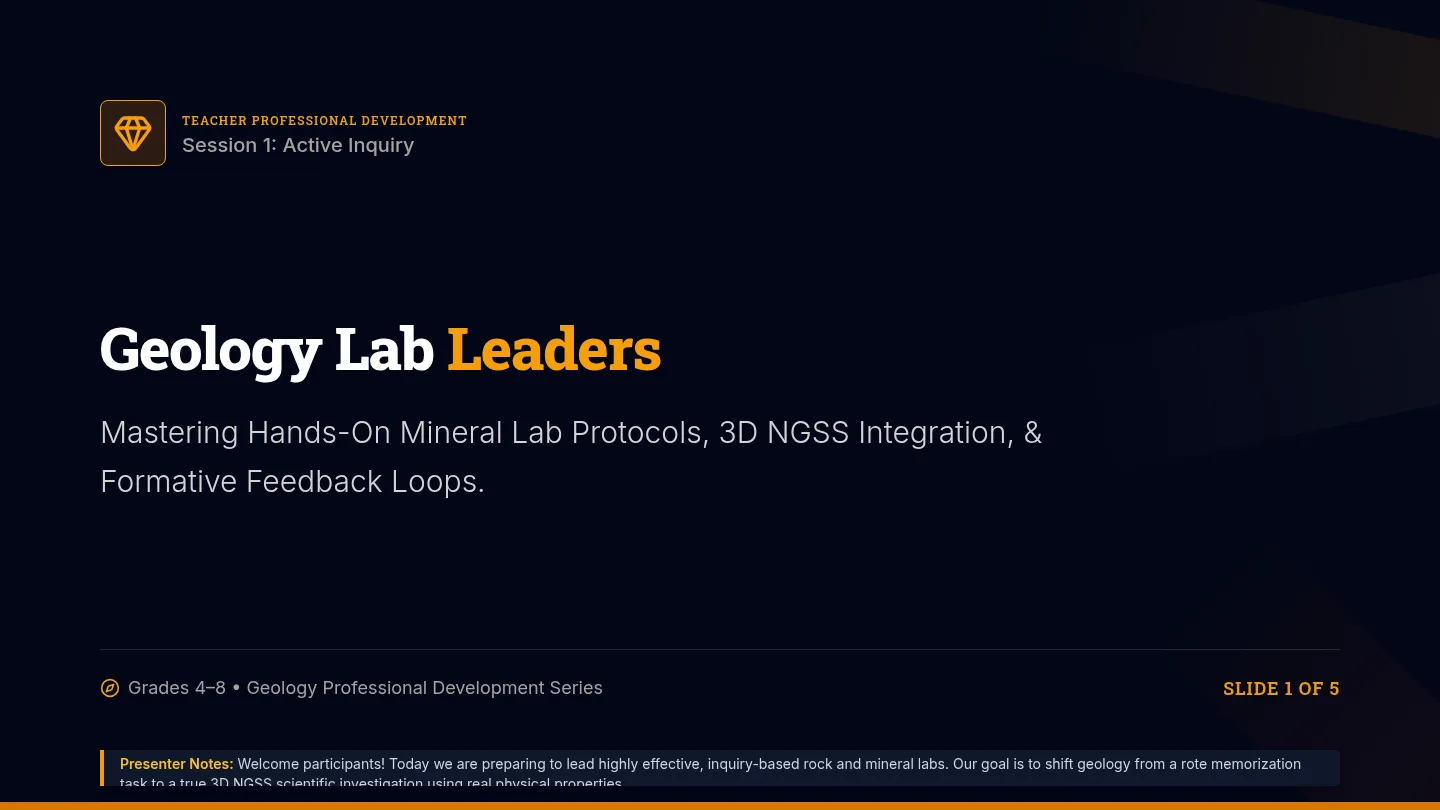
A comprehensive teacher professional development and model lesson plan sequence. It equips educators with hands-on mineral testing protocols, inquiry-based (3D) NGSS teaching strategies, geological vocabulary support, and formative assessment tools for grades 4-8.
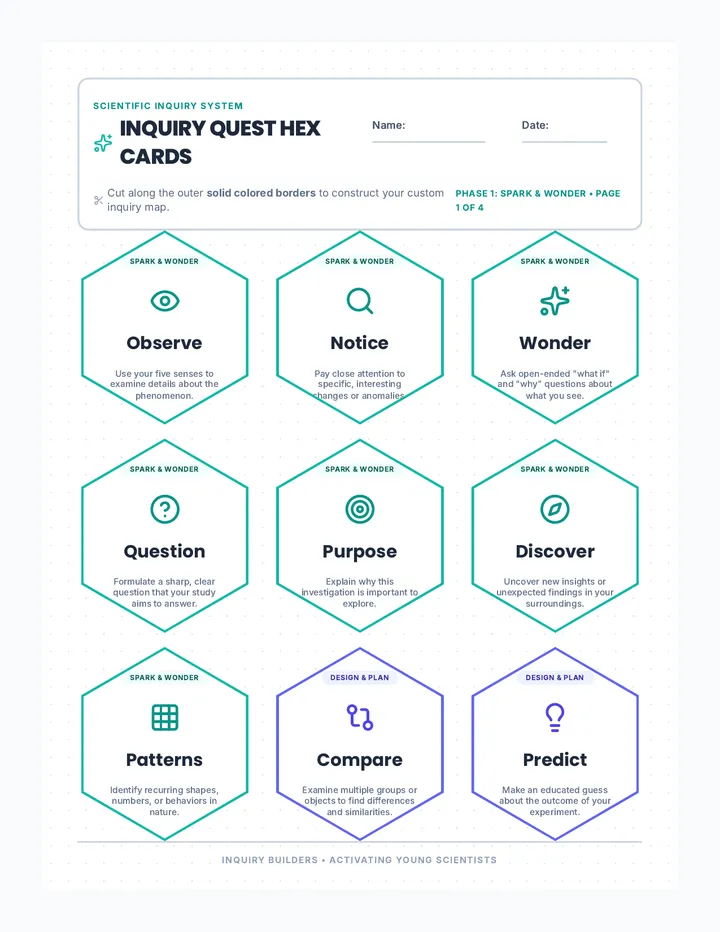
A lesson designed to guide students through the fundamental stages of scientific inquiry using tactile, color-coded hex cards to map, sort, and collaborate on scientific investigations.
A high-quality, printable set of 35 color-coded scientific inquiry hex cards (plus 1 customizable card) divided into 5 clear scientific phases. Students cut out these hexagons to map, sequence, sort, and collaborate on real scientific investigations.
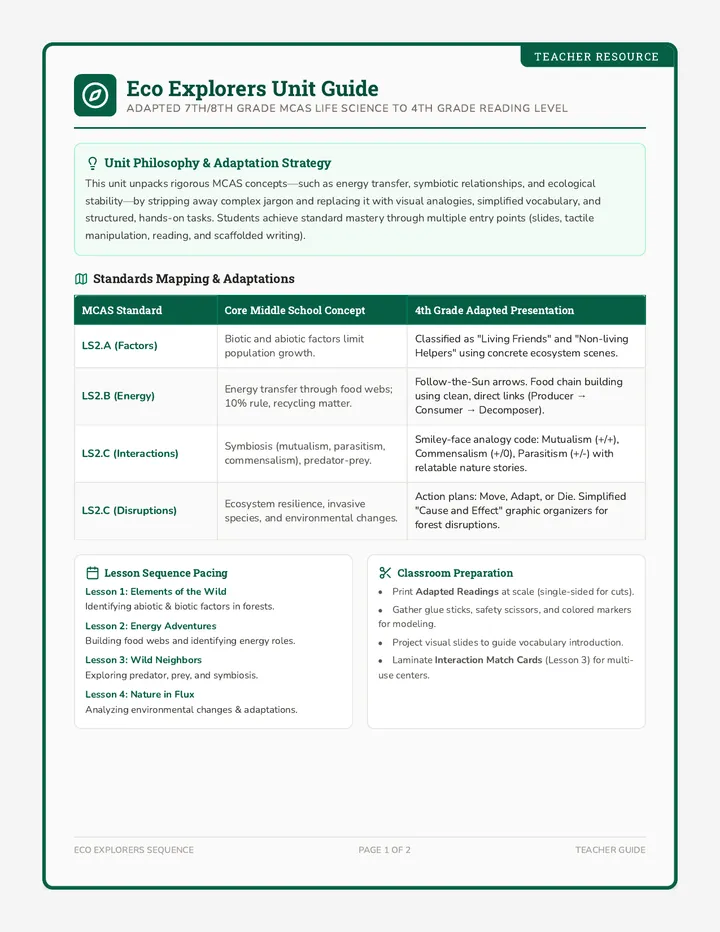
An interactive, highly visual ecosystem unit designed for 7th/8th grade MCAS standards but adapted to a 4th-grade reading and comprehension level. The unit explores abiotic/biotic factors, energy flow, interactions, and disruptions through hands-on activities, adapted readings, visual slides, and scaffolded assessments.
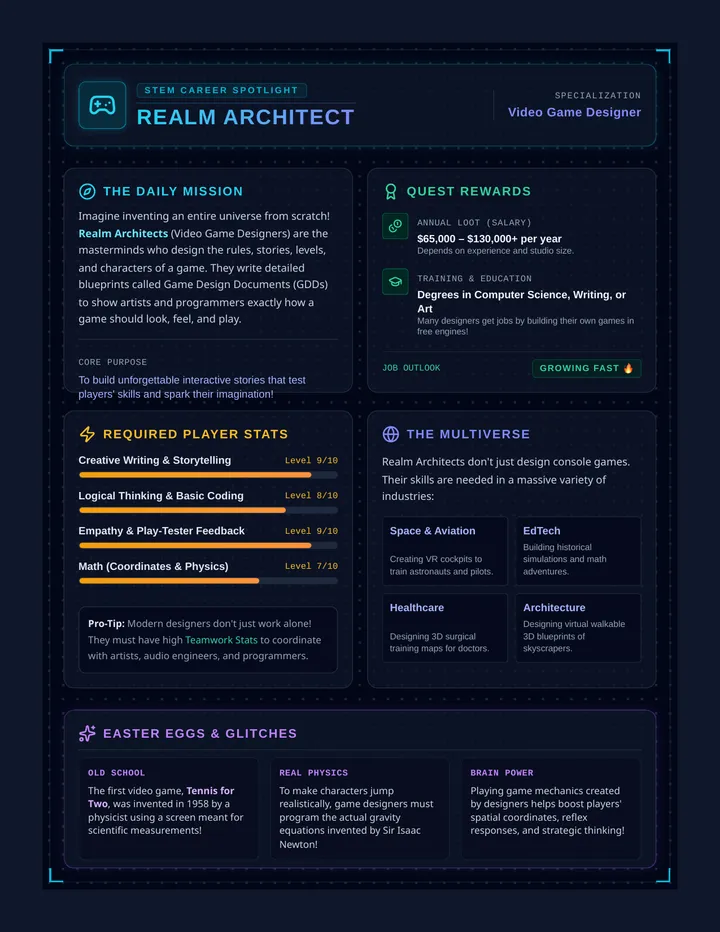
A collection of visually engaging and highly structured career posters highlighting high-interest STEM occupations for upper elementary students. Each spotlight details key skills, education, salary stats, and real-world industries.
A visually stunning, high-interest STEM career poster showcasing the role of a Video Game Designer (Realm Architect). Styled like a digital gaming interface, it details the daily mission, required player stats (skills), quest rewards (salary & education), diverse industries, and exciting easter eggs (fun facts) for upper elementary students.
A comprehensive elementary/middle school astronomy unit exploring the predictable patterns of Earth and sky. Students investigate why constellations change seasonally and decode the predictable cycle of lunar phases through hands-on models, observations, and guided inquiry.
An exemplar 3D science lesson exploring physical properties, mineral testing, and rock classification. It integrates hands-on inquiry with structured vocabulary acquisition and formative checks.
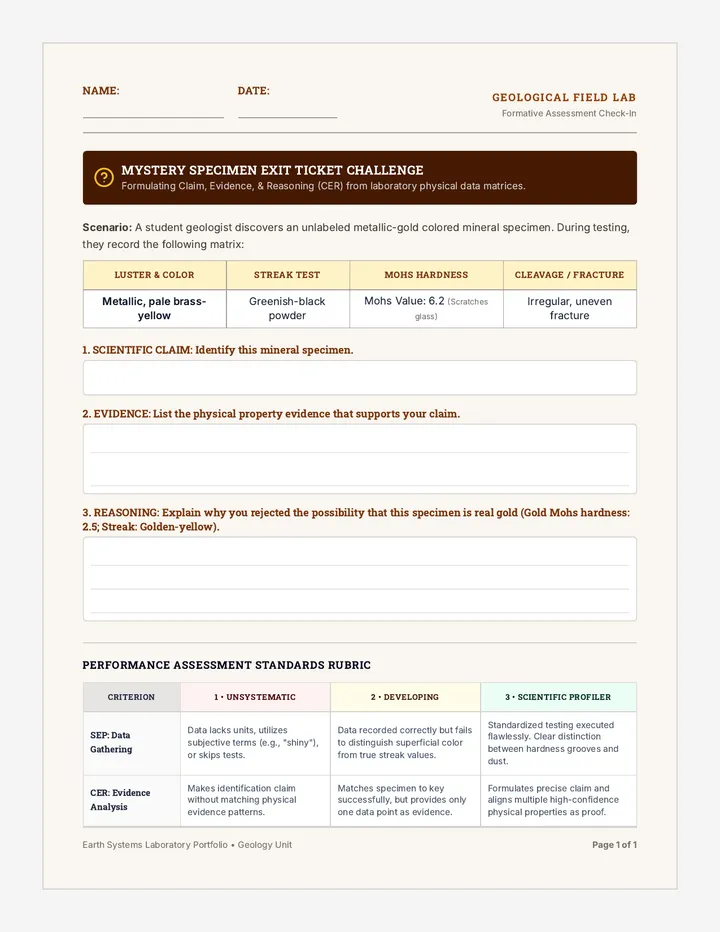
A formative assessment exit ticket with a performance-based criteria rubric to assess student competency in physical mineral testing, evidence-backed claims, and geological patterns.
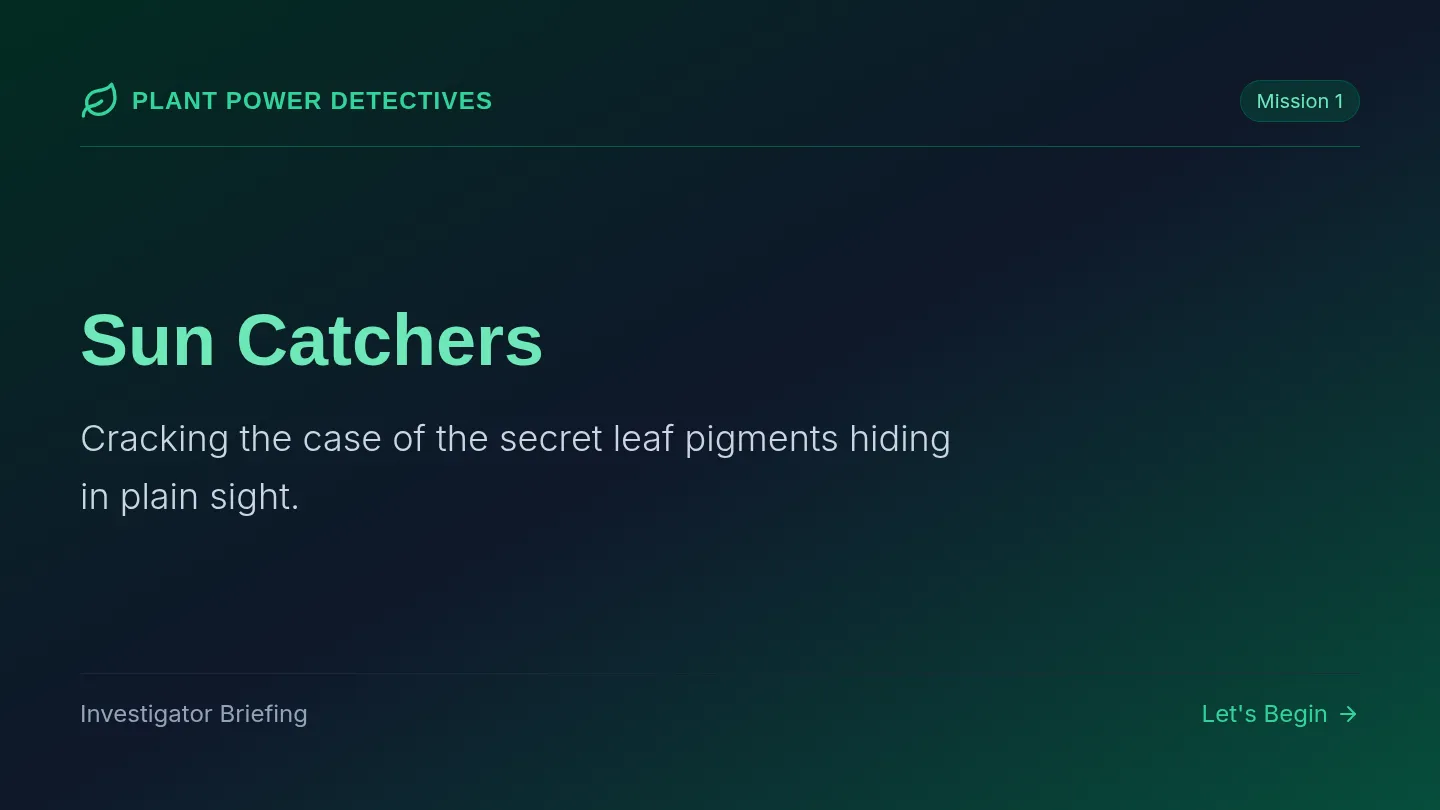
A hands-on, inquiry-based elementary science unit investigating the secrets of photosynthesis. Students act as 'Plant Power Detectives' conducting wet labs, including leaf chromatography and Elodea oxygen bubble experiments, to discover how plants capture light, make food, and produce oxygen.
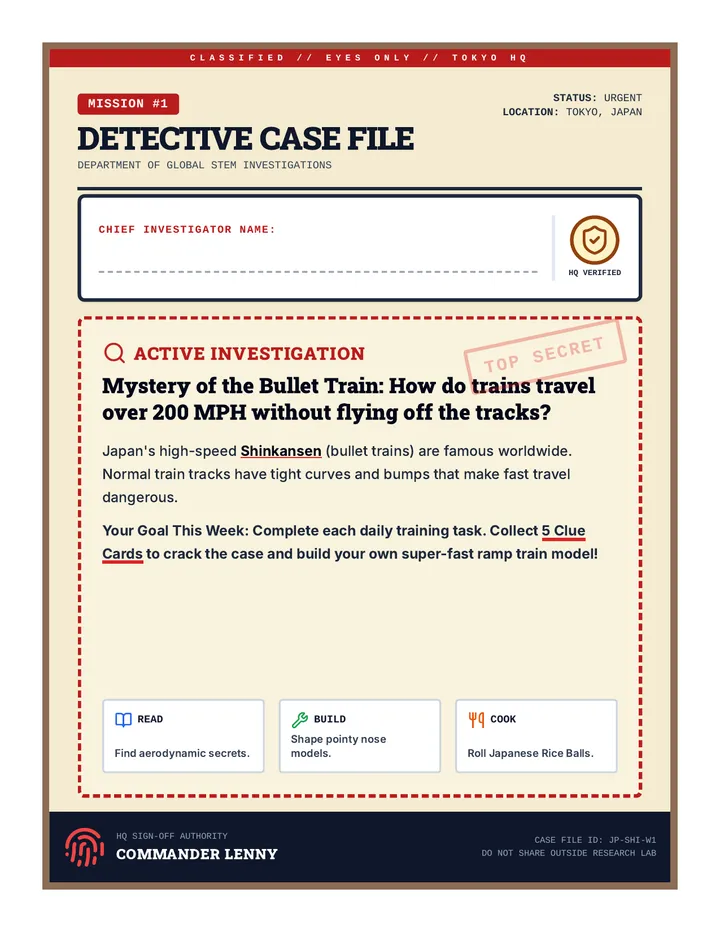
A themed, detective-style STEM unit on Japan's bullet trains (Shinkansen). Students act as Chief Investigators to solve the mystery of how bullet trains travel over 200 mph without flying off the tracks, combining science, reading, math, cooking, and writing.
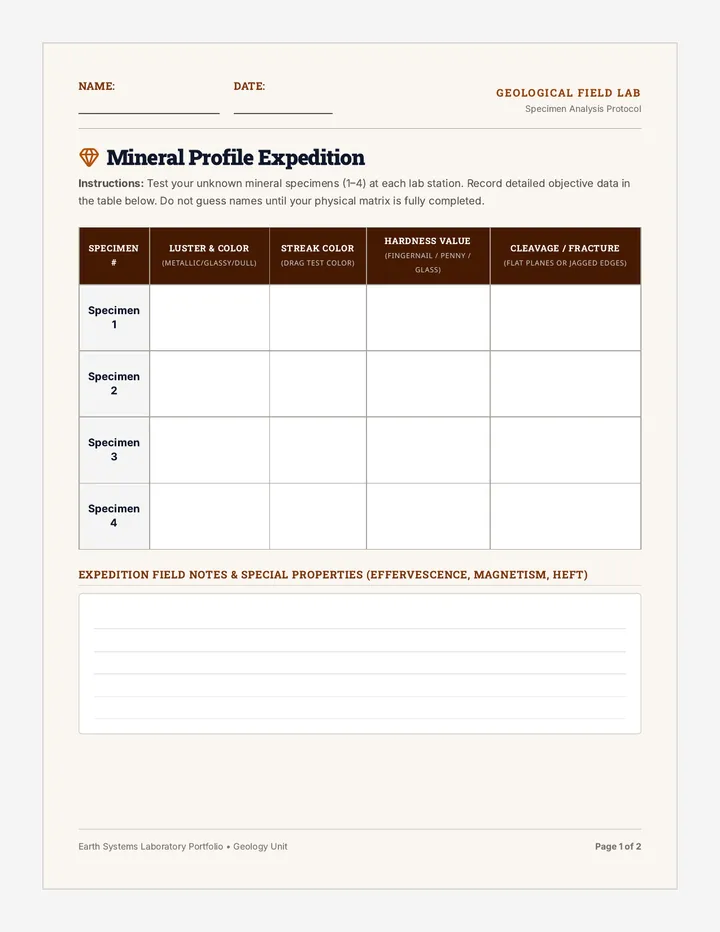
A printable two-page student lab packet containing structured data recording tables for mineral testing, a dichotomous rock classification key, and analytical reflection prompts.