A two-day science unit for 6th graders exploring the relationship between thermal energy, particle motion, and phase changes through visual notes and kinesthetic modeling.
A comprehensive unit exploring the intricate webs of life, focusing on the relationships and environmental factors that shape ecosystems.
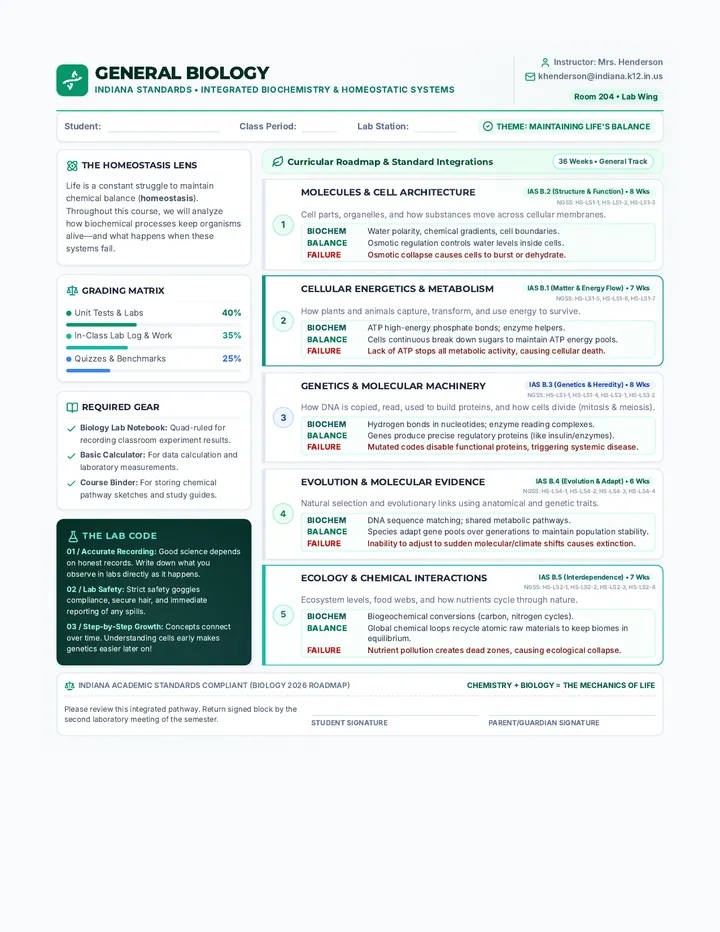
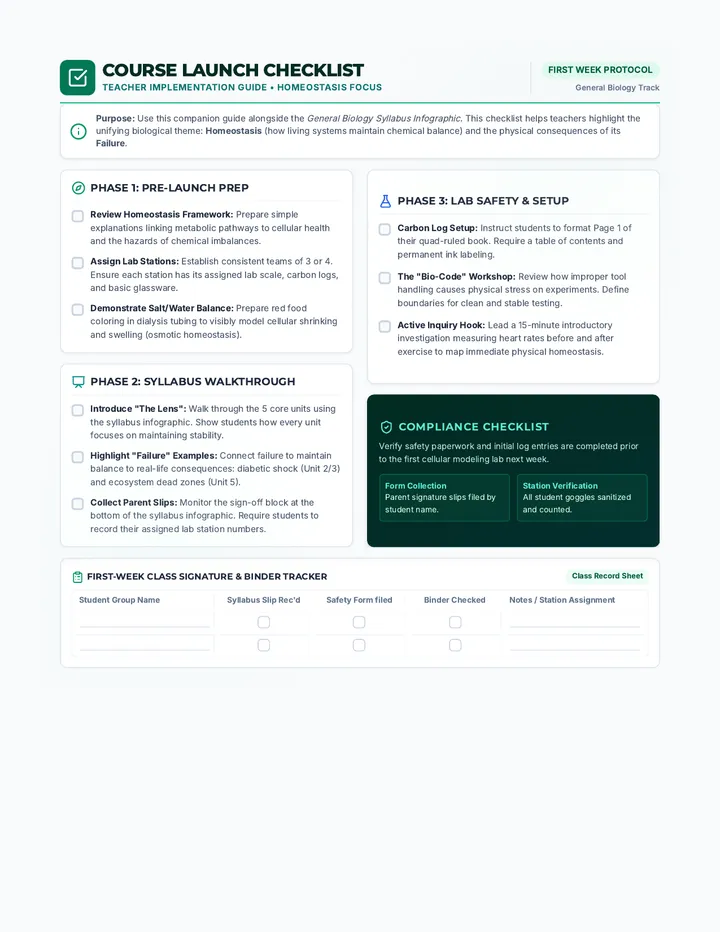
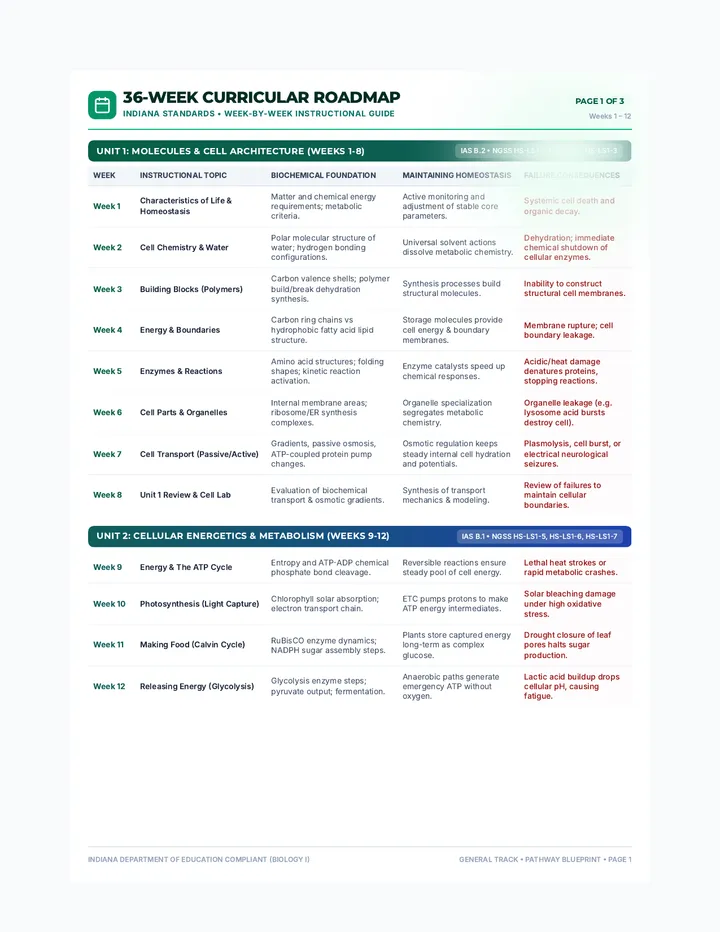
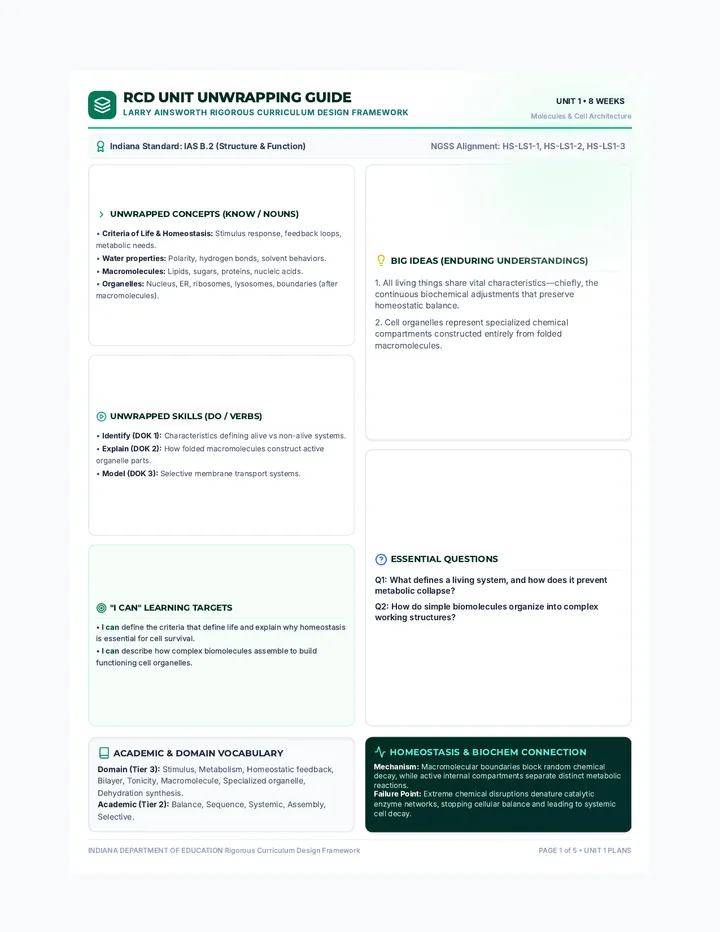
A comprehensive full-year planning framework for high school Life Science: Biology, including pacing, unit objectives, lab requirements, and assessment strategies.
A comprehensive review of the 3rd-5th grade Massachusetts Science and Technology/Engineering (STE) standards to prepare students for the 5th grade MCAS. Includes a detailed study guide, instructional slides, and teacher support materials.
A comprehensive review of organic chemistry and biochemistry topics including carbohydrates, carboxylic acids, esters, amines, amides, and proteins. This sequence prepares students for a final assessment through structured notes, visual organizers, and a full-length mock exam.
A series of materials focused on building and programming assistive technology interfaces, specifically switch-based controls for accessibility.
A bilingual (English/Spanish) unit exploring the structure and organization of the periodic table, focusing on atomic properties and element classification.
A series of quick, engaging bell-ringer activities focused on building technical vocabulary and understanding computer-related terminology through matching exercises.
A 5-6 week capstone project framework for Grade 10 Exploring Technology, focusing on a Minimum Viable Product (MVP) approach and weekly engineering milestones.
Un parcours complet pour transformer un débutant en analyste de données SQL, couvrant des bases fondamentales aux requêtes complexes pour le Big Data.
A professional development series for PreK-12 educators that reframes Computer Science as a "Superpower" through Computational Thinking. Teachers explore how CS concepts like decomposition, abstraction, and automation are already present in their daily instructional practices and Iowa Core content.
A unit focused on the visual principles of brand identity, moving from theory (color, type) to creation using vector-based tools like Google Drawing.
A series of lessons exploring how Earth's chemical and physical systems support life, focusing on nutrient cycling and the biosphere's delicate balance.
A comprehensive identity design unit where students explore the psychological and visual elements of branding, including color theory, typography, and logo composition.
A comprehensive unit focused on environmental stewardship, exploring waste management, conservation, and sustainable living through hands-on activities.
A 3-lesson unit on the water cycle, weather patterns, and global circulation designed for 7th-grade SPED students. This sequence covers the energy drivers of water movement, the interaction of air masses, and the patterns of oceanic and atmospheric circulation with heavy scaffolding and visual supports.
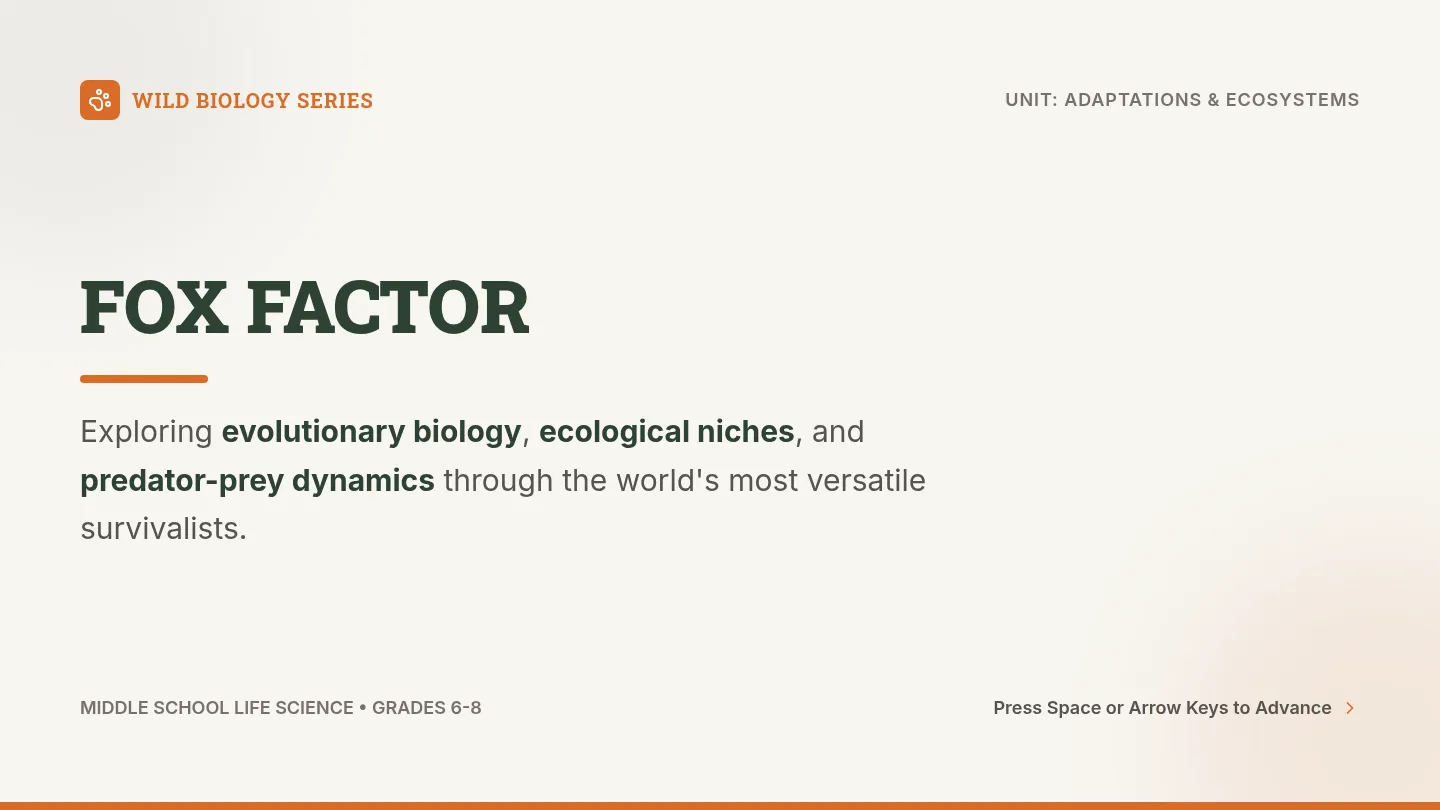
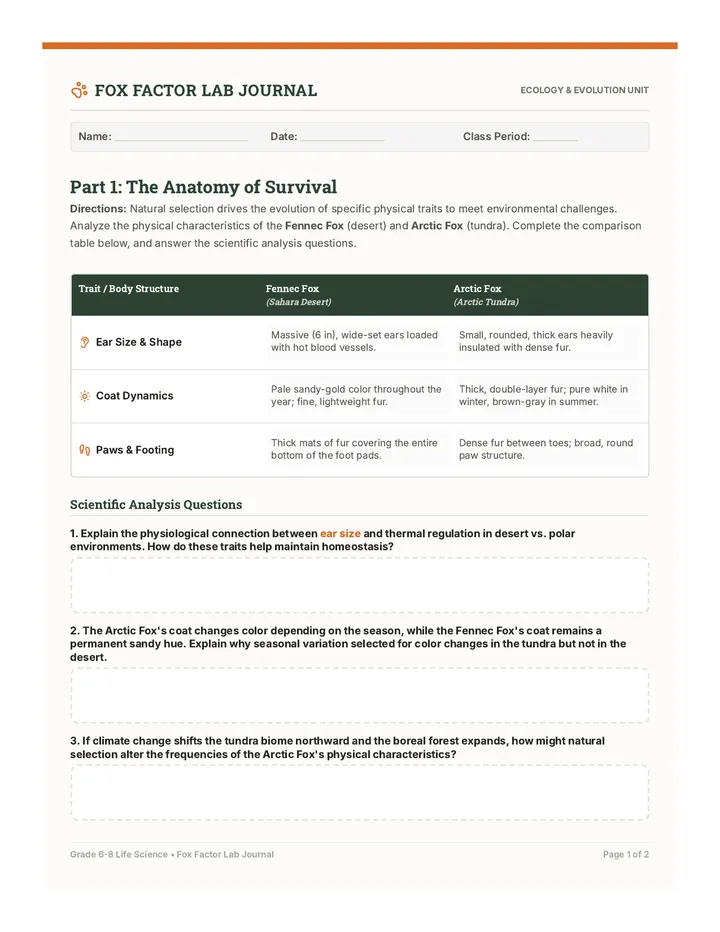
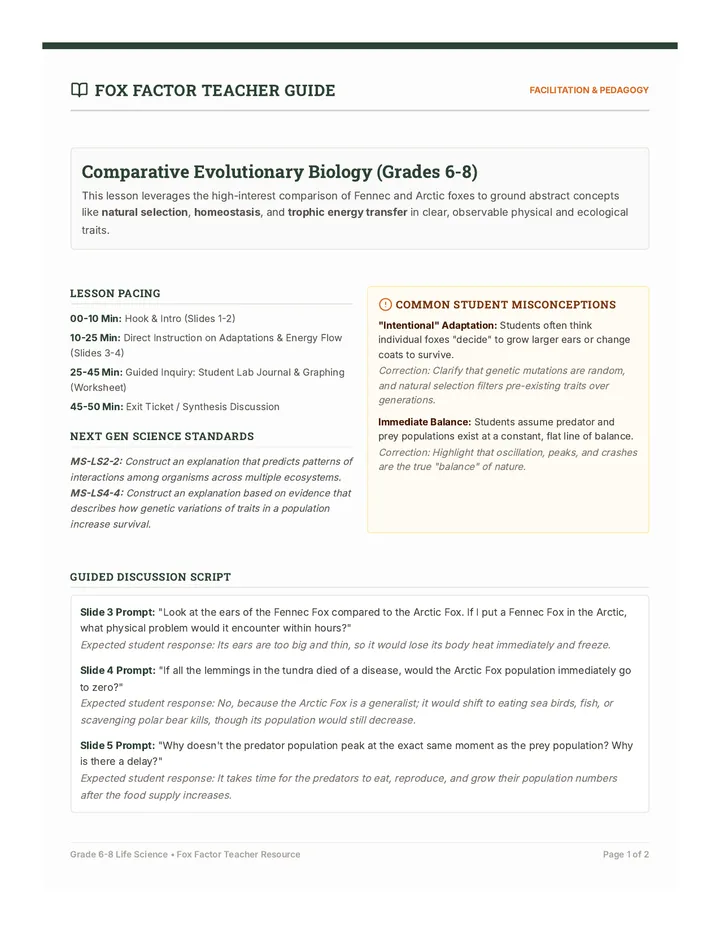
A study of the iconic predator-prey relationship between wolves and moose on Isle Royale, exploring population dynamics, carrying capacity, and limiting factors.
A sports-science unit exploring the chemistry of performance and the architecture of the human body. Students investigate energy changes in reactions through the lens of metabolism and injury recovery, and discover how the skeletal system provides the structural foundation for athletic movement.
An ecology-focused sequence exploring population dynamics, ecosystem stability, and the intricate dance between predators and their prey through the famous Isle Royale case study.
A comprehensive science unit focused on global biomes, adaptations, and ecological relationships, culminating in a creative travel brochure project.
A comprehensive exploration of Earth's diverse biomes, covering climates, geography, and complex biological adaptations. Each lesson focuses on a different environment, starting with the arid world of deserts.
A 3-day introductory unit for Digital Design students, focusing on Project-Based Learning, collaborative teamwork, and the very first steps into Adobe Photoshop. Students will connect classroom learning to workforce readiness through a giant collaborative mural and guided discovery of design tools.
A hands-on forensic science sequence focusing on the collection and analysis of trace evidence, specifically soil and glass fragments, through an outdoor scavenger hunt.
A sequence exploring the mechanics of ocean currents and their role in regulating global climate, based on the SciShow documentary.
A literary science unit exploring tectonic plates and earthquake mechanics through narrative storytelling and character-driven prose.
A comprehensive Earth Day unit focused on climate change and personal impact, specifically designed for high school students with foundational literacy needs. The sequence integrates the four language domains—reading, writing, listening, and speaking—through accessible text and scaffolded activities.
A week-long exploration of ecological tolerance, focusing on how plants and animals survive within specific environmental ranges. Students identify key factors, analyze tolerance curves, and apply concepts to real-world environmental shifts.