Lenny.com
Explore
Create
ActivitiesNewMathEnglish Language ArtsScience & EngineeringSocial StudiesGlobal LanguagesHealth & Physical EducationSpecial EducationCounseling & Life SkillsArts & CreativityESL
Lenny.com
Lenny.com
Explore
Create
ActivitiesNewMathEnglish Language ArtsScience & EngineeringSocial StudiesGlobal LanguagesHealth & Physical EducationSpecial EducationCounseling & Life SkillsArts & CreativityESL
Lenny.com
Lenny.com

Solutions

Lenny for EducatorsLenny for SchoolsLenny for Districts

Product

ExploreSign inCreateSupportAbout

Resources

Getting startedMTSS Acceleration Program

Newsletters

School Funding Newsletter

© 2026 Lenny Learning Inc.

TermsPrivacyAccessibility
LinkedInInstagramX
Lenny
English Language ArtsPhonics & Reading FoundationsLetter IdentificationLearn Letters A-ZLowercase and Uppercase LettersConsonants and VowelsLetter-Sound AssociationsLetter-Sound Associations: LowercaseLetter-Sound Associations: UppercaseBeginning and Ending SoundsRhymingBlending And SegmentingShort VowelsShort Vowel SoundsConsonant BlendsConsonant DigraphsBlends, Digraphs, and TrigraphsDigraphs, Blends, and Silent LettersLong Vowel SoundsLong Vowel PatternsShort and Long VowelsShort and Long Vowel PatternsSilent EVowel SoundsVowel TeamsR-Controlled VowelsDiphthongs: Oi, Oy, Ou, OwVariant VowelsVariant, Diphthong, And R Vowel PatternsSoft G And CSight WordsIrregular WordsWord RecognitionSyllablesSyllable TypesTwo-Syllable WordsMultisyllabic WordsPhoneme ManipulationDecodable TextsVocabularyAction WordsQuestion WordsNouns and AdjectivesClassify WordsCompound WordsSynonyms and AntonymsHomophonesHomophones and HomonymsShades of MeaningContext CluesPrefixes and SuffixesGreek and Latin RootsAnalogiesIdioms and AdagesForeign Words and ExpressionsWord Choice and UsageReference SkillsReading ComprehensionRead-Along Literary TextsRead-Along Informational TextsReality vs. FictionStory ElementsCharacterSequenceMain IdeaCause And EffectCompare And ContrastReading StrategiesText StructureAuthor's PurposeAuthor's Purpose And ToneAuthor's PerspectivePoint Of ViewThemeInference And ThemeInference And AnalysisPoetry ElementsLiterary DevicesAnalyzing LiteratureAnalyzing Informational TextsComparing TextsAudience, Purpose, And ToneBusiness DocumentsNovel StudyNonfiction Book StudyGrammar & MechanicsSentencesNounsVerbsAdjectivesPronounsCapitalizationPunctuationContractionsConjunctionsPrepositionsArticlesAdjectives And AdverbsVerb TypesVerb TensePronouns And AntecedentsPronoun TypesSubject-Verb AgreementDirect And Indirect ObjectsSentences, Fragments, And Run-OnsPhrases And ClausesCommasSemicolons, Colons, And CommasDashes, Hyphens, And EllipsesSpellingAbbreviationsFormattingVerb Tense And MoodMisplaced ModifiersWritingDescriptive DetailsCreative WritingOpinion WritingTopic SentencesOrganizing WritingLinking WordsSentence VarietyIntroductions And ConclusionsPersuasive And Opinion WritingExpository WritingPersuasive StrategiesDeveloping And Supporting ArgumentsTopic Sentences And Thesis StatementsSummarizingResearch SkillsEditing And RevisingActive And Passive Voice=Writing Clearly And ConciselyDebate & Public SpeakingPublic Speaking BasicsPersuasive TechniquesClaims and EvidenceTypes of ArgumentsReasoning TypesLogical FallaciesTopic ResearchOrganizing EvidenceDebate Speech OrganizationAttacking and Defending ArgumentsClash and EngagementImpact CalculusQuestioning and Cross-ExaminationCritical ThinkingInformal LogicFormal LogicInductive Reasoning

Fable Writers

A two-part foundational early first-grade CKLA narrative writing sequence. Week 1 introduces shared and interactive fable retelling with King Log and King Crane and tiered readiness groups. Week 2 progresses to student-led retelling and opinion book reports with Mr. Mowse.

KKatherine.Land
King Log and Crane

A 4-day shared and interactive narrative writing lesson set based on the CKLA Skills 3 fable King Log and King Crane. Emphasizes heavy teacher demonstration, co-constructed writing, and three tiered readiness groups.

Story Makers

A foundational first-grade CKLA writing unit focused on narrative retelling and opinion book reports. Features explicit step-by-step modeling, independent student writing, and daily mystery notes from Mr. Mowse.

Fable Writers

A two-part foundational early first-grade CKLA narrative writing sequence. Week 1 introduces shared and interactive fable retelling with King Log and King Crane and tiered readiness groups. Week 2 progresses to student-led retelling and opinion book reports with Mr. Mowse.

KKatherine.Land

Our Shared Ending Sentence: Write what King Crane did

✔ Shared Retell Complete • Ready for Week 2 Story Makers! Days 3–4 • Resolution & Moral

Objective: Name who is in the story and where it takes place

Mr. Mowse's Overnight Note (3 Min Warm-up):

"i see a big lion in the woods"

Students spot 2 fixes: Capitalize starting 'I' and add a period. Rehearse: "Sentences start tall and stop with a dot!"

I Do • Explicit Modeling (6 Min):

  • Display 2-box planning chart: Characters & Setting.
  • Teacher sketches Lion & Mouse. Labels: lion, mous.
  • Say: "Watch me write my character sentence on the primary lines. I start with a capital: The lion is big."

We Do • Oral Rehearsal (4 Min):

  • Turn & Talk: "Who is your character? Where are they?"
  • Partner A speaks, Partner B counts words on fingers.
  • Choral chant: "Say the word, tap the sounds, write the letters!"

You Do • Independent Writing (24 Min) Students write in their personal Story Journals

Task: Students draw characters and setting in the top box, then write at least 2 complete sentences on guidelines: "The ____ is ____. It is in the ____."

Conferring Prompt: "Read your sentence with your finger. What sound do you hear at the start? Did you leave a finger space?"

DAY 2

Plot Power: Beginning & Middle Action

Objective: Sequence first two story events with transition words

Mr. Mowse's Overnight Note (3 Min Warm-up):

"firstthe lion let the mouse go"

Students spot squished words. Introduce the Two-Finger Space Tool (popsicle stick or spacing spaceman).

I Do • Explicit Modeling (6 Min):

  • Introduce transition anchor: First and Next.
  • Model saying event before writing: "First, the mouse woke the lion."
  • Demonstrate sound-spelling w-o-k without worrying about silent 'e'. Praise effort!

We Do • Guided Sentence Building (4 Min):

  • Class practices transition word signals: hold up 1 finger for First, 2 for Next.
  • Rehearse Middle problem: "Next, hunters caught the lion."

You Do • Independent Writing (24 Min) Students write Day 2 plot page

Task: Students draw the problem/action, then write their 2 sequential sentences using word bank starters: First, ... and Next, ...

Differentiation: Provide pre-printed sentence frame for emerging writers; challenge advanced writers to use an emotion word (mad, sad).

CKLA Early Grade 1 Narrative Writing Unit Page 2 of 4 • Days 1 & 2 Detailed Plans

3-4

Days 3 & 4 • Ending Plot & Detective Editing

Completing the Retell & Scaffolding Revision

DAY 3

Climax & Ending: Solving the Problem

Objective: Draft the ending sentence using "Last..." to finish sequence

Mr. Mowse's Overnight Note (3 Min Warm-up):

"last the mouse chewed the rop"

Students add the missing period at the end and stretch sound r-o-p. Notice how the ending solves the lion's trap.

I Do • Explicit Modeling (6 Min):

  • Introduce transition word: Last, ... or At the end, ...
  • Show how the ending connects back to the beginning: "The mouse helped the lion just like he promised!"
  • Model writing: "Last, the mouse bit the rope. The lion was free."

We Do • Full Sequence Review (4 Min):

  • Whole-class hand motion retelling: Hands open (First), hands rolling (Next), hands clapping (Last).
  • Partners whisper their ending sentence to each other twice.

You Do • Independent Writing (24 Min) Students complete Page 3 of their retell

Task: Students illustrate the solution and write their ending sentence. Early finishers review all 3 pages (Day 1, 2, and 3) in sequence.

Conferring Focus: Check that students have 3 distinct parts: Beginning, Middle, and Ending.

DAY 4

Mr. Mowse's Big Polish: Editing Detective

Objective: Apply child-friendly CUPS editing checklist to self-edit

Mr. Mowse's Full Draft Mystery (5 Min):

"the lion was in a net. the mouse bit it the lion ran"

Students use green crayons to ring missing capitals and red crayons to add missing stop-dots (periods).

C • Capitals Did every sentence start tall?

U • Understand Does it make sense when read aloud?

P • Punctuation Is there a stop-dot at the end?

S • Spaces Can a finger fit between words?

You Do • Self-Editing & Polish (24 Min) Students act as "Editor Mice" with colored crayons

Task: Students touch every word in their 3-day retell. They use a special Green Crayon to trace start capitals and a Red Crayon for end periods. Then rewrite 1 favorite page extra neatly.

Conferring Focus: Celebrate self-corrections! Say: "Look how you caught that period yourself just like Mr. Mowse!"

CKLA Early Grade 1 Narrative Writing Unit Page 3 of 4 • Days 3 & 4 Detailed Plans

5

Day 5 • Opinion Book Report & Author's Chair

Culminating Presentation & Assessment

DAY 5

My Story Verdict: Adding Book Opinion

Objective: State an opinion with reason using "because"

Mr. Mowse's Graduation Note:

"i loved this story because the little mouse was brave!"

Highlight the magical word because—it tells the reader WHY you feel that way.

I Do & We Do (7 Min):

Teacher models rating the story (1 to 3 stars) and writing: "I like this book because the mouse was fast." Students practice stating their opinion to a partner using the sentence stem.

You Do • Book Report Page (20 Min):

Students color 1, 2, or 3 stars, draw their favorite scene, and write their opinion sentence: "I like this book because ____." Assemble into a completed 4-page booklet.

Author's Chair Celebration (10 Min): Students wear "Author Badges" and read their retell & opinion to a peer. Peers give 1 compliment.

Beginning 1st Grade CKLA Narrative Rubric (4-Point Scale)

Skill Domain 3 • Meeting Standard 2 • Approaching 1 • Emerging

Story Retell Elements Names characters, setting, and 3 sequential events Includes 2 events or misses setting Only drawing or 1 isolated word

Opinion with Reason States opinion and uses "because" with story detail States like/dislike without clear reason Only circled stars; no sentence

Capitals & Periods Starts with capital; ends with period on most sentences Inconsistent capitals or missing end dots Random capitals or no punctuation

Phonics & Spacing Clear finger spaces; plausible sound-spelling Some crowded words; initial/final sounds represented Strings of letters without spacing

Teacher Conferring Cheat Sheet (1-Minute Conferences during You Do):

If student is stuck:

"Tell me what happened first in your picture. Now say that sentence out loud!"

If words are crammed:

"Put your pointer finger down right after that word before you write the next one."

If finished early:

"Add one color word or feeling word to your sentence to make it even juicier!"

CKLA Early Grade 1 Narrative Writing Unit Page 4 of 4 • Day 5 & Assessment Rubric

P • Punctuation Find the missing end stop-dot Hint: sentence 2

S • Spaces Find the 2 squished words Hint: huntersput

Day 5

Graduation Note & Printable Detective Badges

Cut badges for Author's Chair celebration

🧀

Mr. Mowse's Final Note: "Dear Authors, you taught me how to retell a story with a beginning, middle, and end! Today I shared my opinion: I love our book because the little mouse never gave up! Now you are official Story Detectives!"

Official CKLA

Story Detective

Master of Capitals & Dots

Name: ___________

Official CKLA

Story Detective

Master of Capitals & Dots

Name: ___________

Official CKLA

Story Detective

Master of Capitals & Dots

Name: ___________

Official CKLA

Story Detective

Master of Capitals & Dots

Name: ___________

CKLA Early Grade 1 • Mr. Mowse Detective Routine Page 2 of 2 • Mystery Letter & Badges

My Neat Retell: Rewrite your best sentences with capitals and stop-dots

🔍 Detective Polish Complete! Ready for Book Report!

Page 4 • Detective Edit & Rewrite

DAY 5

My Book Report & Story Opinion

Name: Date:

⭐

My Story Rating How many stars do you give this book? Color them in!

★ ★ ★

My Favorite Part: Draw the best scene in the book Draw why you loved it

Write your opinion using the magic word because:

🎉 Master Author Certificate Complete! Ready for Author's Chair!

Page 5 • Book Report & Opinion


DAY 5

My Story Verdict

Opinion Book Report

Rate the Story!

Color 1, 2, or 3 stars in your journal

★ ★ ★

The Magic Opinion Word

"I like this book because..."

Example: "I like this book because the mouse never gave up!"

Tell your reader the REASON why you felt that way!

📢 Every author has an opinion, and every opinion has a reason! State Your Verdict


CELEBRATE

Author's Chair

Share Your Story

The Author

When you are reading

  • • Hold your journal proud and tall
  • • Use a clear speaking voice
  • • Show your favorite illustration

Wear your Story Detective Badge!

The Audience

When you are listening

  • • Keep eyes on the speaker
  • • Listen for Beginning, Middle, End
  • • Give 1 specific compliment!

Say: "I liked the part where..."

🐾 Mr. Mowse: "Hip, hip, hooray! You are all official First Grade Authors!" 🧀 Certified Detectives
You might also like

Prompt Decoder Slides

Argument Architecture

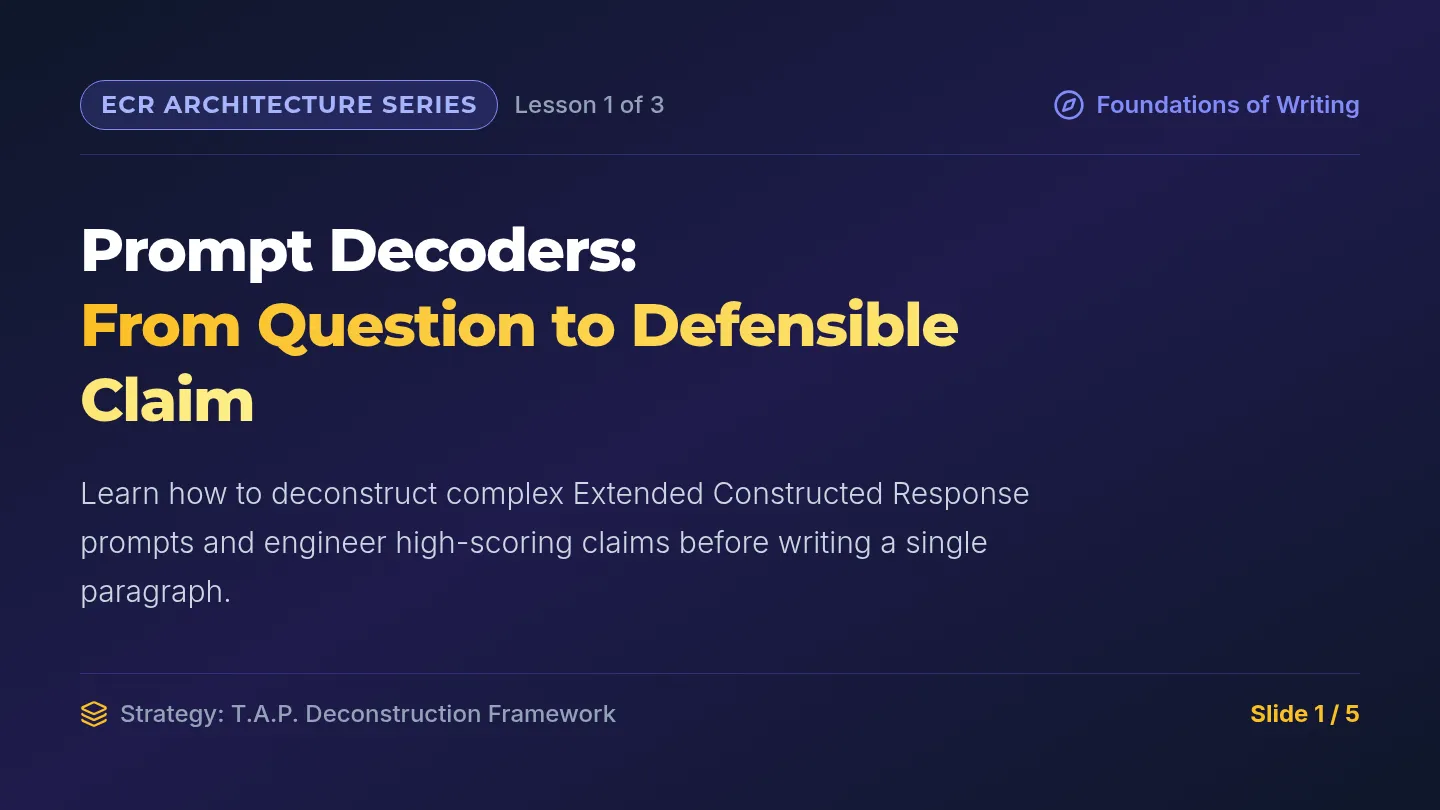
A comprehensive middle school writing sequence guiding students through the Extended Constructed Response process, from prompt deconstruction and claim generation to evidence integration and multi-paragraph synthesis.

Lenny Avatar
Lenny
6
Vowel Team Showdown Slides

Vowel Team Showdown

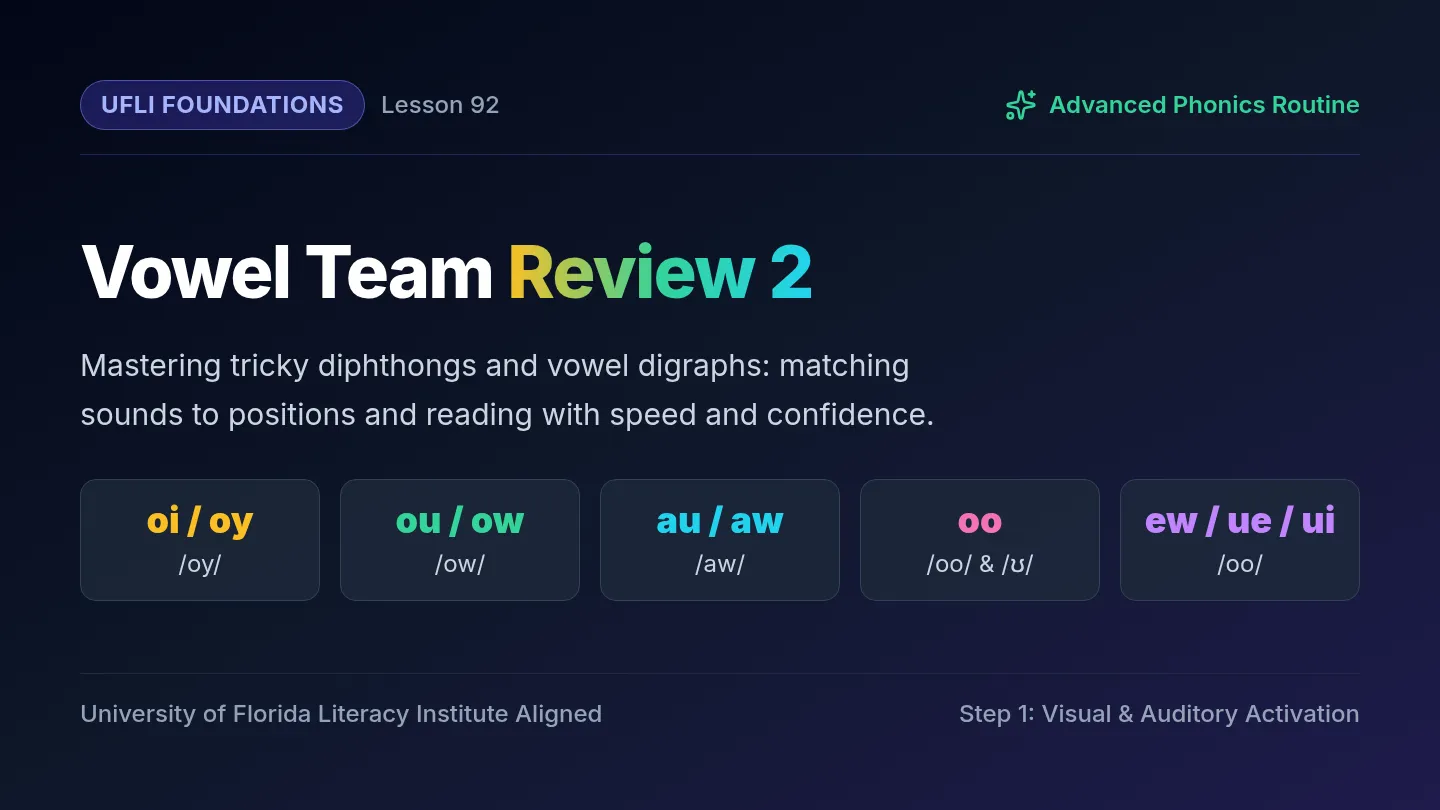
A complete UFLI Lesson 92 instructional unit reviewing complex vowel teams and diphthongs (oi, oy, ou, ow, au, aw, oo, ew, ue, ui). Includes direct instruction slides, three extended decodable stories, a fluency passage with comprehension questions, an oral reading exit ticket with nonsense words, and an instructional teacher guide.

ML

Marti Lushin

5
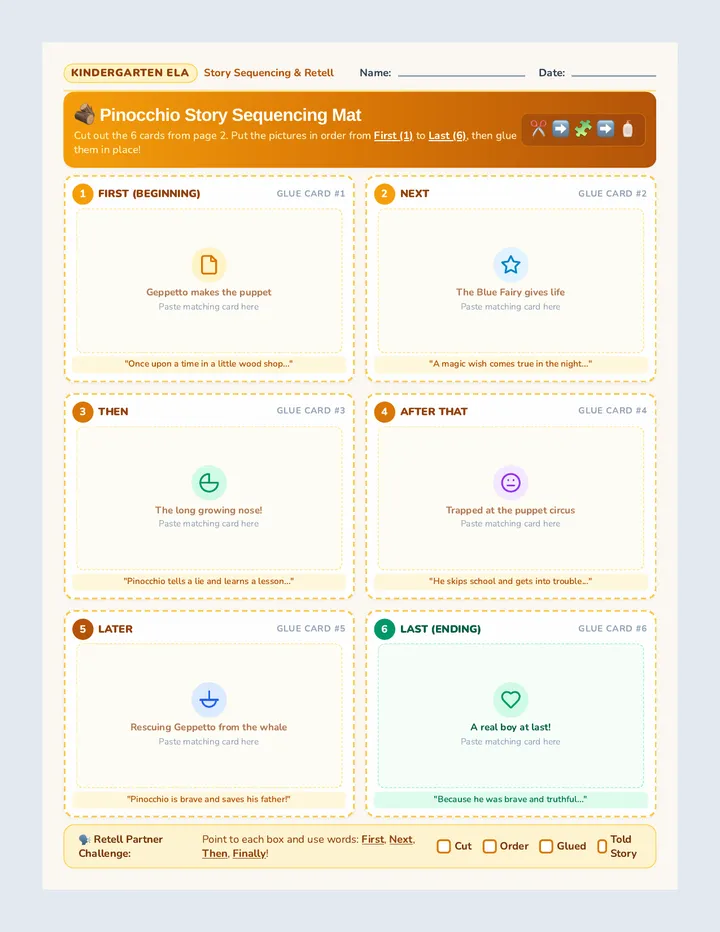
Pinocchio Tales Sequencing Activity

Pinocchio Tales Sequencing Activity

A 3-page kindergarten story sequencing packet featuring a 6-step cut-and-paste story mat, scrambled picture cards with custom storybook illustrations, and a teacher answer key with retelling discussion prompts.

MC

Milena Criniti

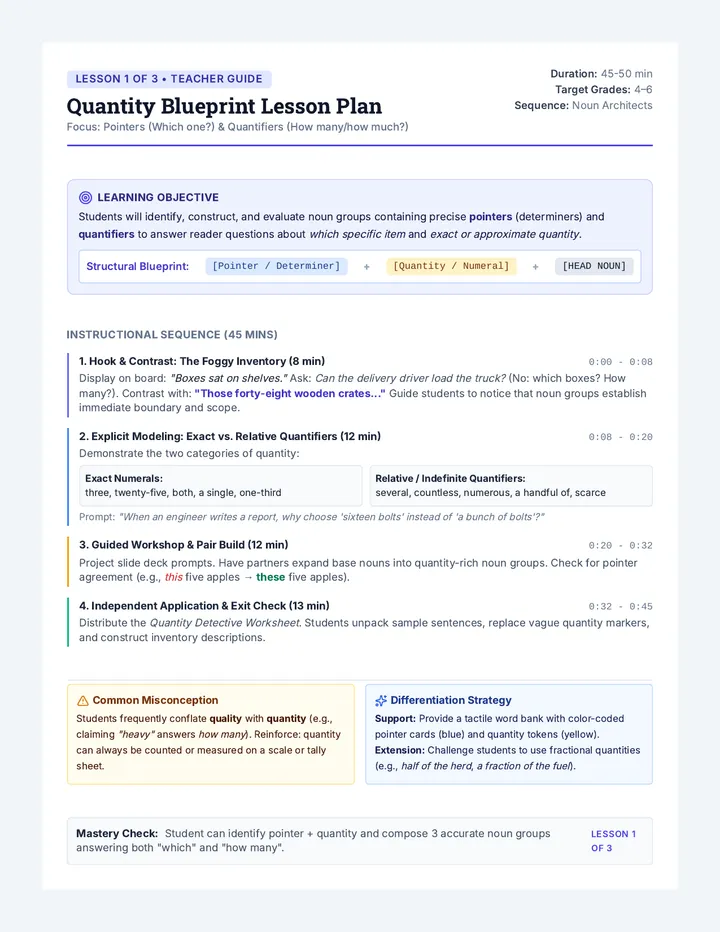
Quantity Blueprint Lesson Plan

Noun Group Architects

A three-part grammar and writing unit where students investigate, assemble, and refine precise noun groups. Learners progress from tracking quantity and pointer determiners to layering vivid qualities and specific classifiers for rich descriptive writing.

A

arlavoie-ridings

9
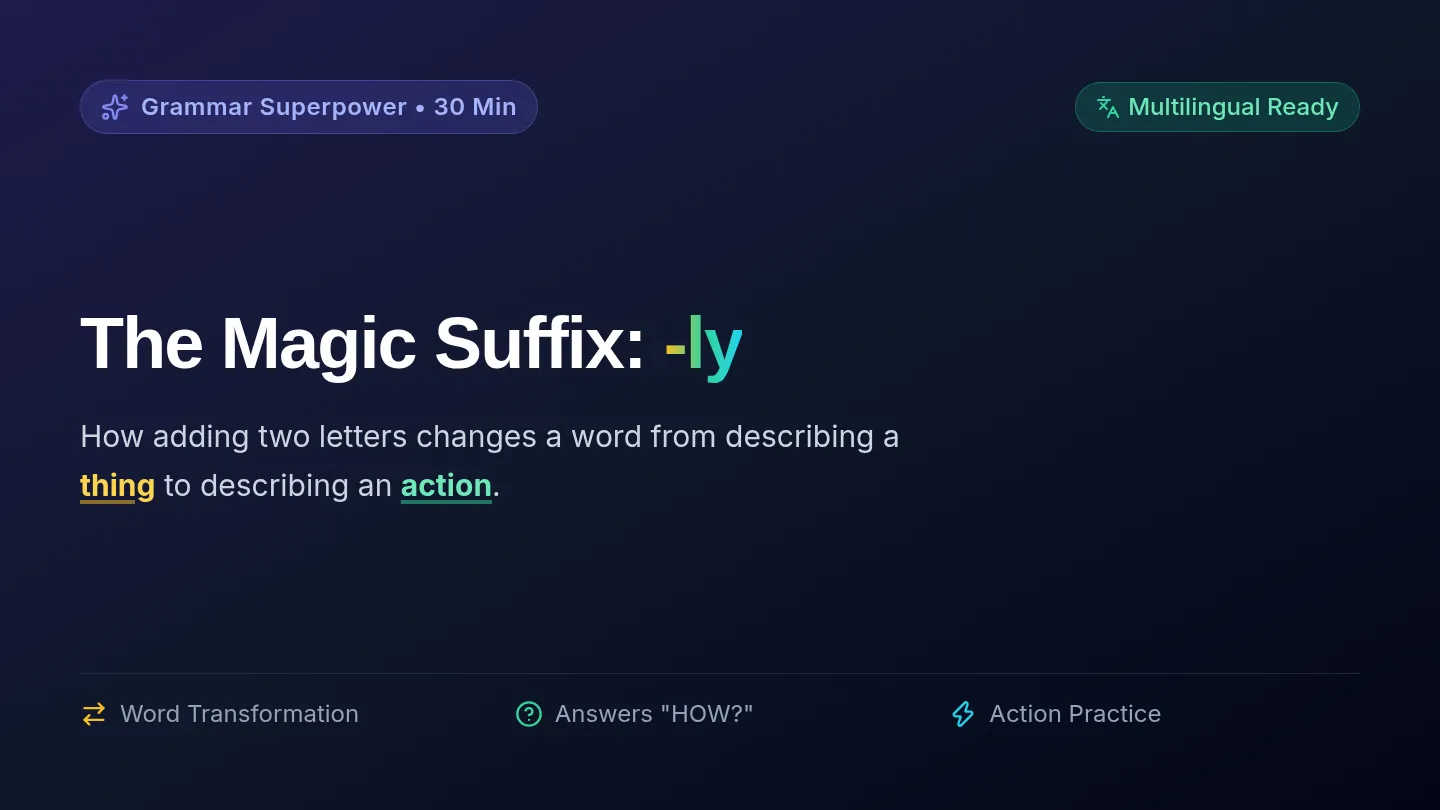
Adverb Action Slides

Adverb Action

A high-impact 30-minute lesson introducing how the -ly suffix transforms adjectives into adverbs describing action. Designed with visual supports, cognate connections, and structured sentence frames for multilingual learners.

HA

HAYDEE AYALA-GONZALEZ

3
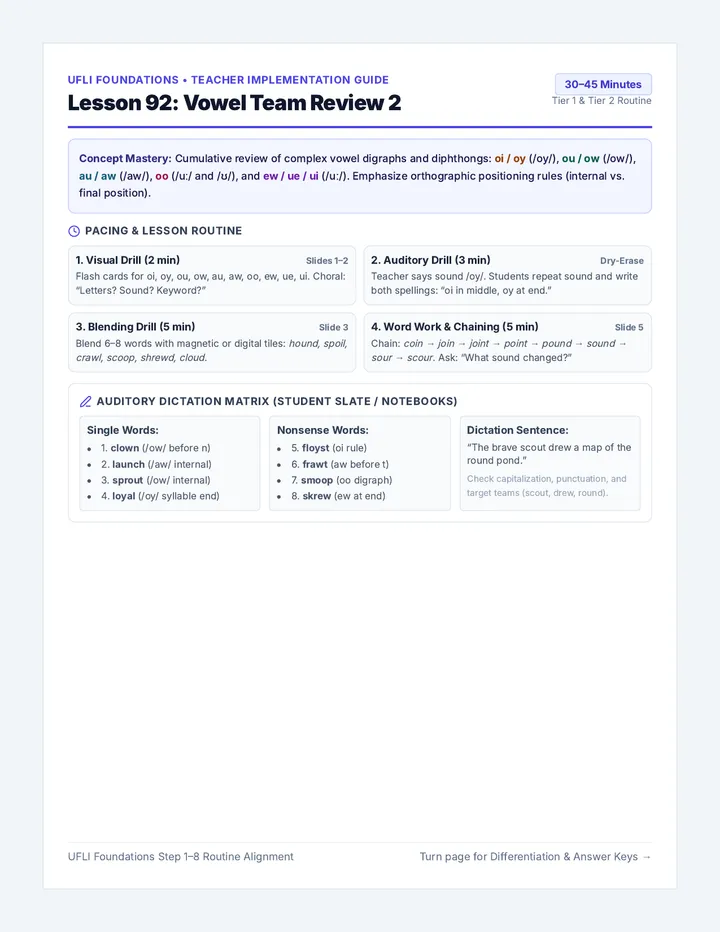
Vowel Team Review Teacher Guide

Vowel Team Review Teacher Guide

A comprehensive two-page teacher implementation guide for UFLI Lesson 92 featuring the step-by-step instructional script, auditory dictation lists, word chaining sequences, differentiation supports, and full answer keys for all student materials.

ML

Marti Lushin

Latin Roots Slide Deck

Rooted Words Curriculum

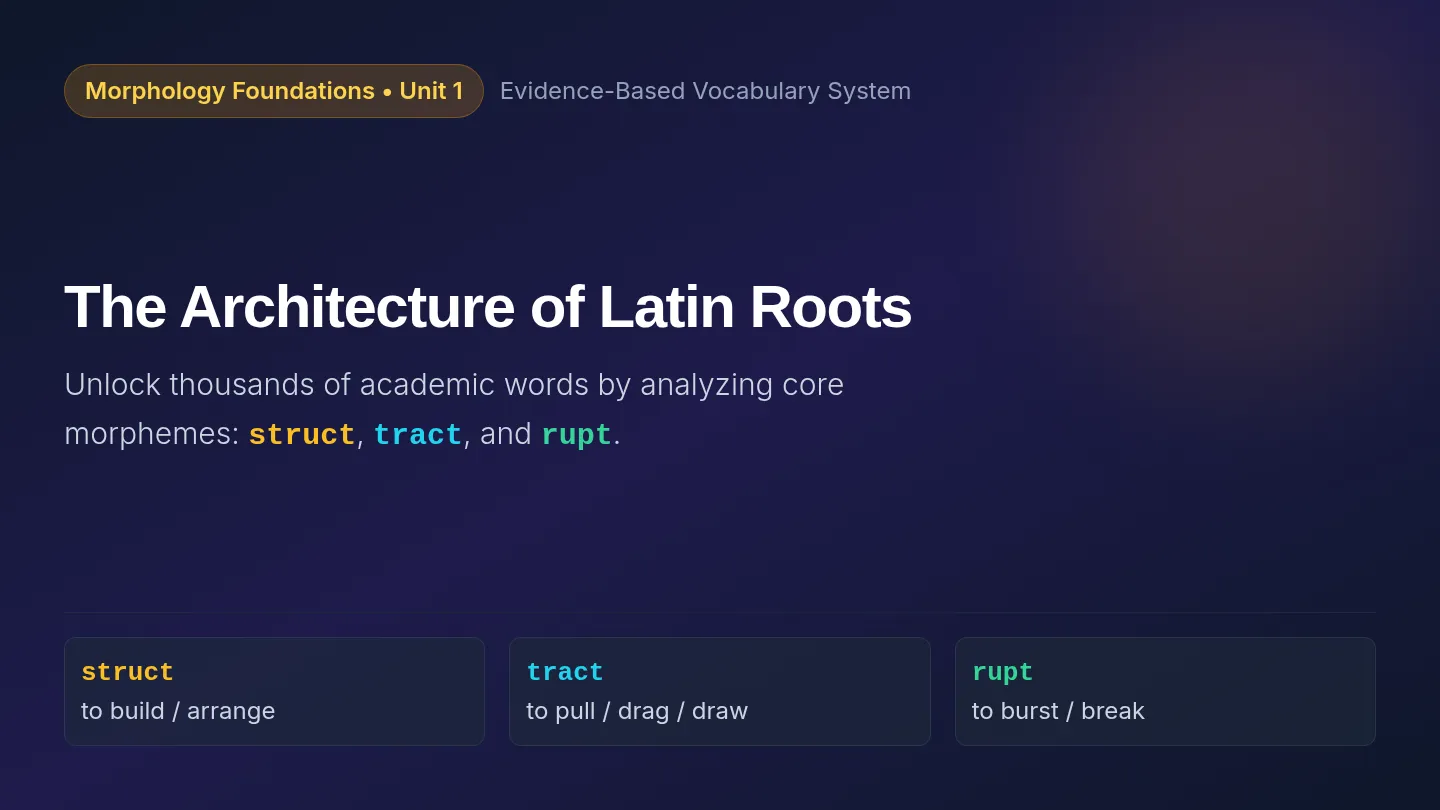
A comprehensive, evidence-based morphology curriculum systematically teaching Latin roots, Greek combining forms, and prefix assimilation through word matrices, morpheme sums, and contextual decoding.

M

melissa.white

6
Glue Clue Slides

Glue Clue Crew

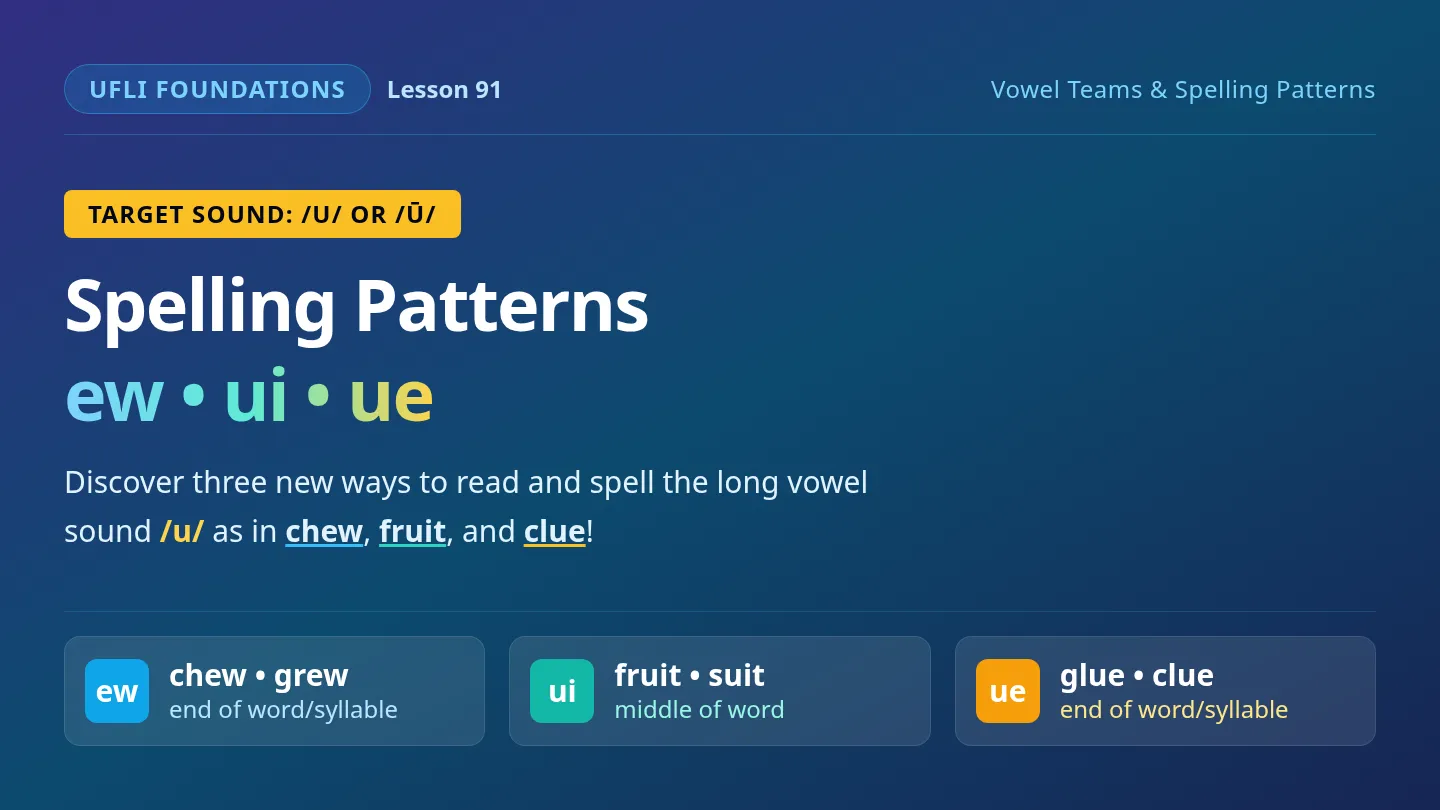
A complete UFLI Lesson 91 foundational phonics unit targeting the vowel patterns ew, ui, and ue representing the /u/ sound. Includes interactive teaching slides, three extended decodable stories, a fluency reading passage with text-dependent comprehension questions, and an individual verbal exit assessment with real and nonsense words.

ML

Marti Lushin

4
Vowel Team Check Exit Ticket

Vowel Team Check Exit Ticket

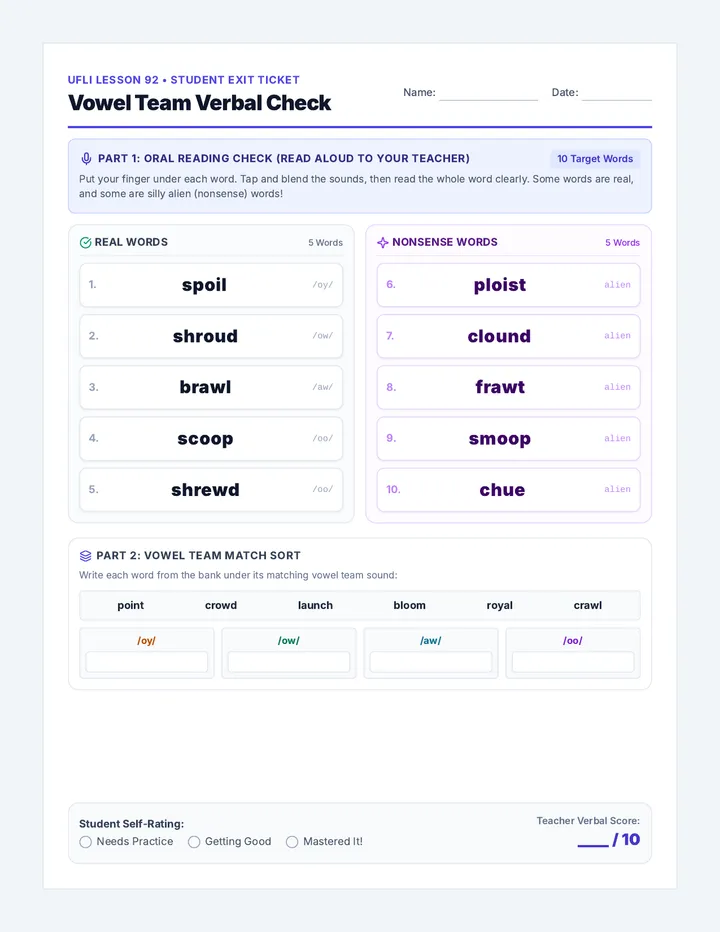
A two-page exit ticket and teacher oral diagnostic protocol for UFLI Lesson 92. Features a 10-word verbal reading check with five real and five nonsense decodable words, student phonics sort, and a teacher error-analysis scoring grid.

ML

Marti Lushin

Unit Architecture Overview Guide

Story Elements Detectives

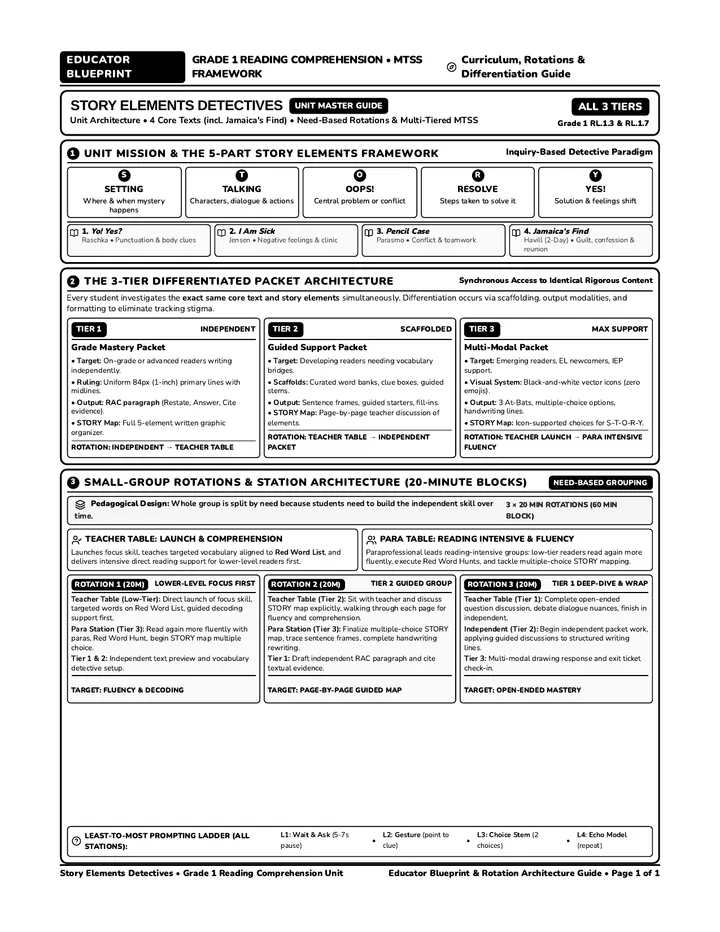
A Grade 1 reading comprehension unit teaching students how to identify character feelings, actions, dialogue, and problems using the STORY elements framework with multi-tiered differentiated packets and paraprofessional guides.

JE

jenn edwards

86
Book and Brook Slides

Book and Brook Phonics

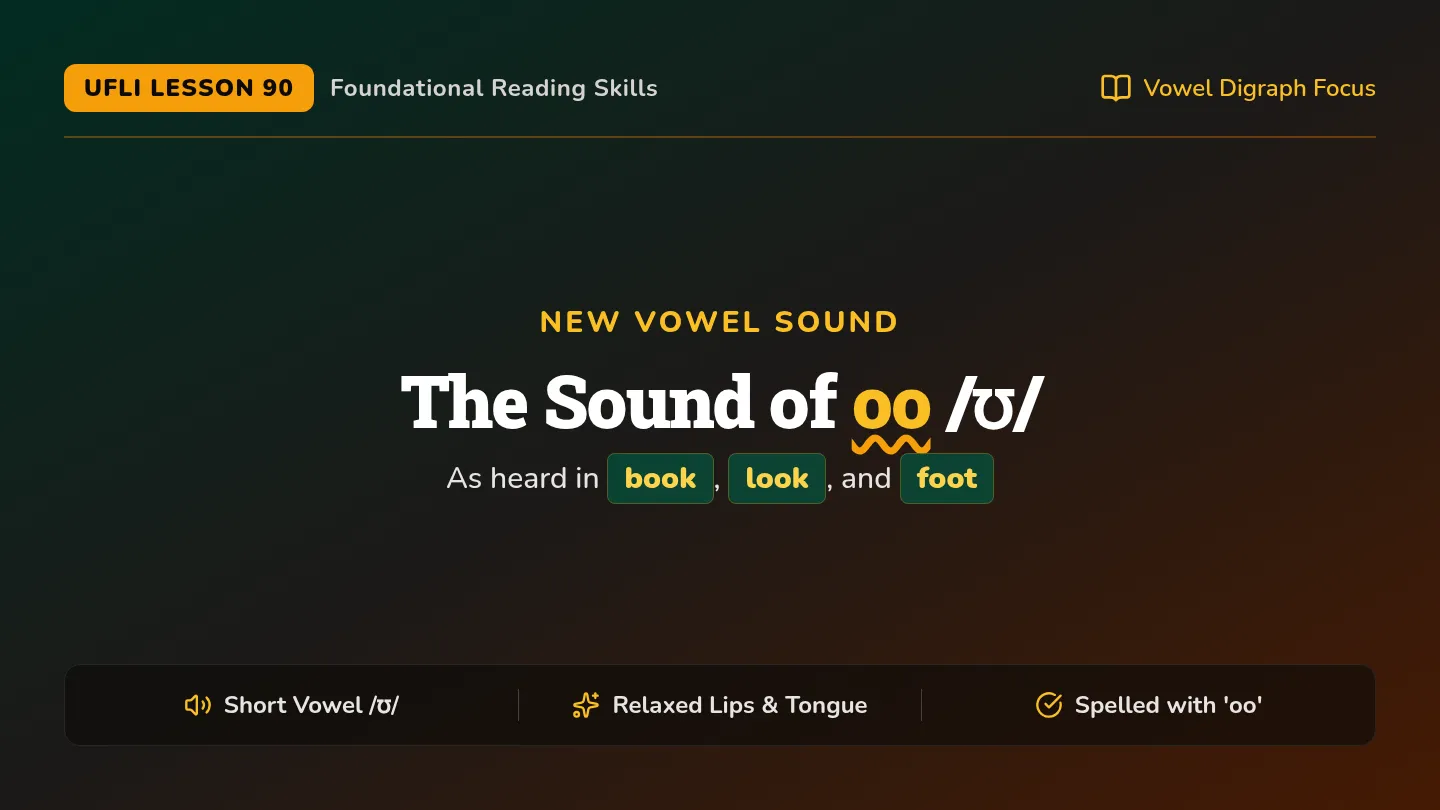
A comprehensive UFLI Lesson 90 phonics unit introducing the short vowel sound /ʊ/ spelled 'oo' through systematic phonemic awareness, decodable texts, fluency practice, and diagnostic verbal assessments.

ML

Marti Lushin

5
Voyage Hound Fluency Reader

Voyage Hound Fluency Reader

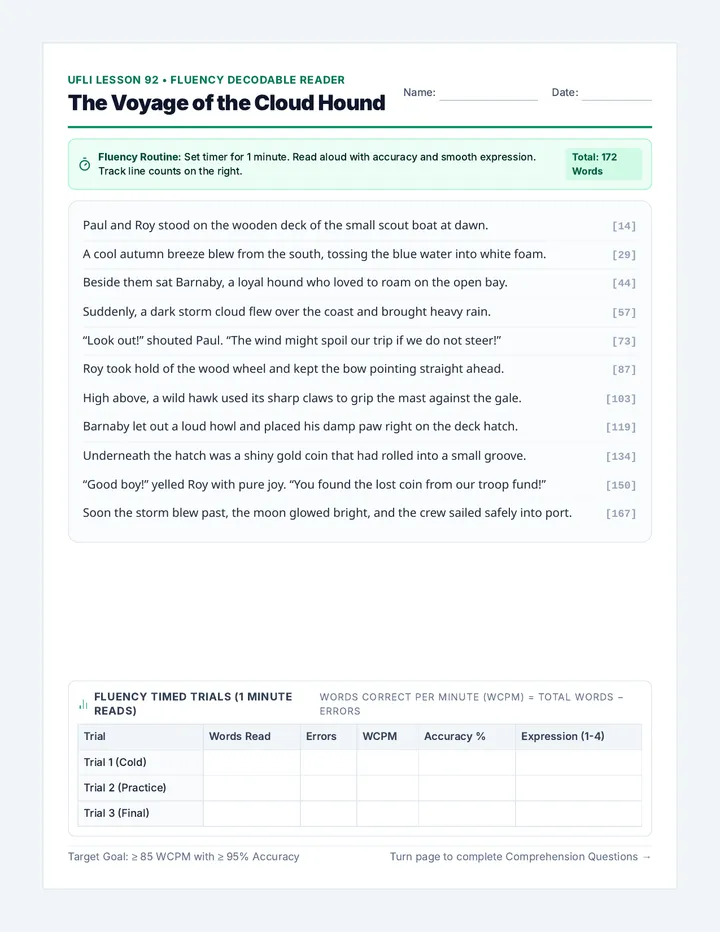
A two-page fluency assessment featuring a timed decodable reading passage with running word counts and scoring metrics on page one, followed by five text-dependent multiple-choice comprehension questions with uniform styling on page two.

ML

Marti Lushin