Lenny.com
Explore
Create
ActivitiesNewMathEnglish Language ArtsScience & EngineeringSocial StudiesGlobal LanguagesHealth & Physical EducationSpecial EducationCounseling & Life SkillsArts & CreativityESL
Lenny.com
Lenny.com
Explore
Create
ActivitiesNewMathEnglish Language ArtsScience & EngineeringSocial StudiesGlobal LanguagesHealth & Physical EducationSpecial EducationCounseling & Life SkillsArts & CreativityESL
Lenny.com
Lenny.com

Solutions

Lenny for EducatorsLenny for SchoolsLenny for Districts

Product

ExploreSign inCreateSupportAbout

Resources

Getting startedMTSS Acceleration Program

Newsletters

School Funding Newsletter

© 2026 Lenny Learning Inc.

TermsPrivacyAccessibility
LinkedInInstagramX
Lenny
English Language ArtsPhonics & Reading FoundationsLetter IdentificationLearn Letters A-ZLowercase and Uppercase LettersConsonants and VowelsLetter-Sound AssociationsLetter-Sound Associations: LowercaseLetter-Sound Associations: UppercaseBeginning and Ending SoundsRhymingBlending And SegmentingShort VowelsShort Vowel SoundsConsonant BlendsConsonant DigraphsBlends, Digraphs, and TrigraphsDigraphs, Blends, and Silent LettersLong Vowel SoundsLong Vowel PatternsShort and Long VowelsShort and Long Vowel PatternsSilent EVowel SoundsVowel TeamsR-Controlled VowelsDiphthongs: Oi, Oy, Ou, OwVariant VowelsVariant, Diphthong, And R Vowel PatternsSoft G And CSight WordsIrregular WordsWord RecognitionSyllablesSyllable TypesTwo-Syllable WordsMultisyllabic WordsPhoneme ManipulationDecodable TextsVocabularyAction WordsQuestion WordsNouns and AdjectivesClassify WordsCompound WordsSynonyms and AntonymsHomophonesHomophones and HomonymsShades of MeaningContext CluesPrefixes and SuffixesGreek and Latin RootsAnalogiesIdioms and AdagesForeign Words and ExpressionsWord Choice and UsageReference SkillsReading ComprehensionRead-Along Literary TextsRead-Along Informational TextsReality vs. FictionStory ElementsCharacterSequenceMain IdeaCause And EffectCompare And ContrastReading StrategiesText StructureAuthor's PurposeAuthor's Purpose And ToneAuthor's PerspectivePoint Of ViewThemeInference And ThemeInference And AnalysisPoetry ElementsLiterary DevicesAnalyzing LiteratureAnalyzing Informational TextsComparing TextsAudience, Purpose, And ToneBusiness DocumentsNovel StudyNonfiction Book StudyGrammar & MechanicsSentencesNounsVerbsAdjectivesPronounsCapitalizationPunctuationContractionsConjunctionsPrepositionsArticlesAdjectives And AdverbsVerb TypesVerb TensePronouns And AntecedentsPronoun TypesSubject-Verb AgreementDirect And Indirect ObjectsSentences, Fragments, And Run-OnsPhrases And ClausesCommasSemicolons, Colons, And CommasDashes, Hyphens, And EllipsesSpellingAbbreviationsFormattingVerb Tense And MoodMisplaced ModifiersWritingDescriptive DetailsCreative WritingOpinion WritingTopic SentencesOrganizing WritingLinking WordsSentence VarietyIntroductions And ConclusionsPersuasive And Opinion WritingExpository WritingPersuasive StrategiesDeveloping And Supporting ArgumentsTopic Sentences And Thesis StatementsSummarizingResearch SkillsEditing And RevisingActive And Passive Voice=Writing Clearly And ConciselyDebate & Public SpeakingPublic Speaking BasicsPersuasive TechniquesClaims and EvidenceTypes of ArgumentsReasoning TypesLogical FallaciesTopic ResearchOrganizing EvidenceDebate Speech OrganizationAttacking and Defending ArgumentsClash and EngagementImpact CalculusQuestioning and Cross-ExaminationCritical ThinkingInformal LogicFormal LogicInductive Reasoning

Book and Brook Phonics

A comprehensive UFLI Lesson 90 phonics unit introducing the short vowel sound /ʊ/ spelled 'oo' through systematic phonemic awareness, decodable texts, fluency practice, and diagnostic verbal assessments.

MLMarti Lushin

Book and Brook Phonics

A comprehensive UFLI Lesson 90 phonics unit introducing the short vowel sound /ʊ/ spelled 'oo' through systematic phonemic awareness, decodable texts, fluency practice, and diagnostic verbal assessments.

MLMarti Lushin

4

"You are the finest cook in all these woods!" they cheered. Brooks nodded and smiled. He fully understood that good food warms the heart on a cold day.

Decodable Text Evidence

Story Sequence Check

1. What two things did Chef Brooks need before he could make the stew?

2. Find compound words with oo in the story (Hint: words made of two smaller words):

1. cook + _____

2. fire + _____

UFLI Lesson 90 Decodable • Story 3

The Lost Wool Hood

Name:  

Date:  

Pre-Reading Warm-Up: Target Vowel oo /ʊ/

wool hood crook looking footprint shook

1

Brooke loved her red wool hood. Her grandmother had crafted it from sheep’s wool on a handmade wooden loom. On an icy morning, Brooke went walking in the woods with her dog, Woody.

2

Brooke stood beside the frozen brook. All at once, a sudden gust of wind shook the branches overhead. The gust took her wool hood right off her braids and tossed it high into the air!

3

The red hood landed right in the crook of an oak branch, far out of reach. Brooke shook her head sadly. But clever Woody ran up and tapped Brooke’s foot with his nose. He sniffed at a fallen wooden branch on the path.

4

Brooke understood Woody's hint! She took the long stick and reached up into the crook of the tree. With one gentle tap, the hood tumbled down. "You are such a good dog!" Brooke said as she tied it snug.

Decodable Text Evidence

Vocabulary & Phonics

1. In this story, what does the word crook mean?

2. How did Woody help Brooke get her wool hood back?

Hot Read (3)


① ② ③ ④

UFLI Lesson 90 • Comprehension Check

Reader Comprehension Questions

5 Text-Dependent Questions

Directions: Read each question carefully. Fill in the bubble next to the best answer based on "A Cookout by the Wooden Brook."

1. What warm clothing did Camp Cook Cooper pull on before heading outside?

A) A heavy wool coat and a warm hood

B) A dark green raincoat and rubber boots

C) A thick winter scarf and woolen mittens

D) A light fleece vest and a hiking cap

2. Why did Cooper chop dry pine logs with his axe?

A) To carve new wooden spoons for the campers

B) To get firewood to cook breakfast over the flames

C) To construct a sturdy foot bridge over the brook

D) To build a shelter for the playful camp squirrel

3. What startled Cooper by shaking pinecones right down to his foot?

A) A sudden, cold gust of forest wind

B) A frisky squirrel sitting on a branch above

C) A group of campers running toward the cabin

D) A heavy falling branch snapped by the axe

4. What meal did Cooper prepare using his favorite cookbook?

A) Fresh brook trout fried in a skillet

B) Thick beef stew simmered with carrots

C) Bubbling warm oats and milk

D) Toasted campfire bread with berry jam

5. In the story, what does the word brook mean?

A) A small, rushing natural stream of water

B) A wooden bench used for eating meals

C) An iron pot used for cooking over flames

D) A thick book filled with camping recipes

Written Evidence Check

Write one sentence from the passage that shows the campers enjoyed Cooper's cooking:

Instructional Action:

Student Self-Check: How easy was it to read the short "oo" /ʊ/ sound today?

😄 Super Easy 🙂 Just Right 🤔 Still Tricky

UFLI Lesson 90 Guide • Page 1 of 2 University of Florida Literacy Institute Aligned

UFLI Lesson 90 • Routines & Assessments

Word Work & Dictation Script

Lesson Pacing: Steps 4–8

Step 4 Sound Chaining / Word Work Ladder (7 mins)

Manipulating Phonemes

Use magnetic letters or sound tiles. Direct students: "Build the word. Listen for the sound that changes. Swap only that tile."

Chain 1: look → took → cook → hook → hood → good → wood

Chain 2: brook → crook → shook → shoot* → soot → foot

*Attention check: Ask students which sound changed when going from shook (/ʊ/) to shoot (/uː/)!

Step 5 Structured Dictation Routine (8 mins)

Slates / Whiteboards

1. Phonemes (Say sound, students repeat and write grapheme):

/ʊ/ ("oo"), /sh/ ("sh"), /k/ ("k" after vowel), /d/ ("d")

2. Words (Finger tap sounds before writing):

1. book 2. stood 3. brook 4. wooden

3. Sentences (Pound syllables, count words, check COPS):

Sentence 1: "The cook stood by the cold brook." (7 words)

Sentence 2: "She took a good look at the dry firewood." (9 words)

Support Tier 2 Intervention & ELL Accommodations

Spanish / Portuguese ELLs:

Spanish and Portuguese lack the /ʊ/ phoneme; speakers typically substitute /uː/. Emphasize the relaxed jaw drop and tactile throat feel. Pair visual lip mirrors during small group warm-up.

Dyslexic / Struggling Readers:

Color-code the 'oo' vowel team in amber or green before reading passages. Use continuous blending (sing the sounds together without stopping between phonemes: /llll/ - /ʊʊʊ/ - /k/).

Unit Materials Included in Workspace:

● Lesson Slides ● Trio Decodable Booklet ● Fluency Reader (with 5 MCQs) ● 10-Word Verbal Exit Ticket
You might also like

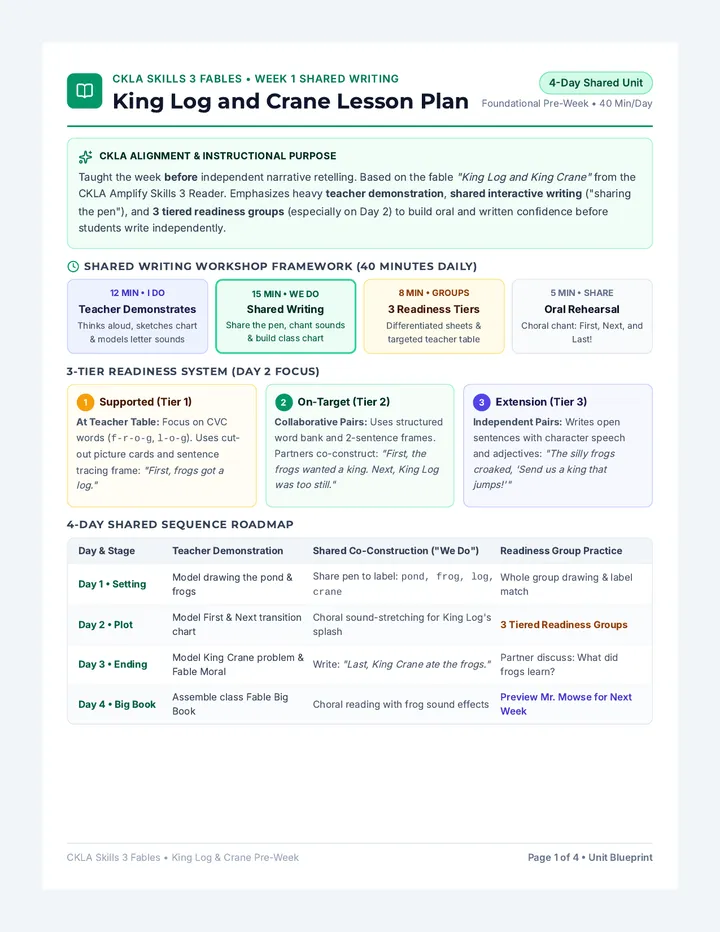
King Log Lesson Plan

Fable Writers

A two-part foundational early first-grade CKLA narrative writing sequence. Week 1 introduces shared and interactive fable retelling with King Log and King Crane and tiered readiness groups. Week 2 progresses to student-led retelling and opinion book reports with Mr. Mowse.

K

Katherine.Land

6
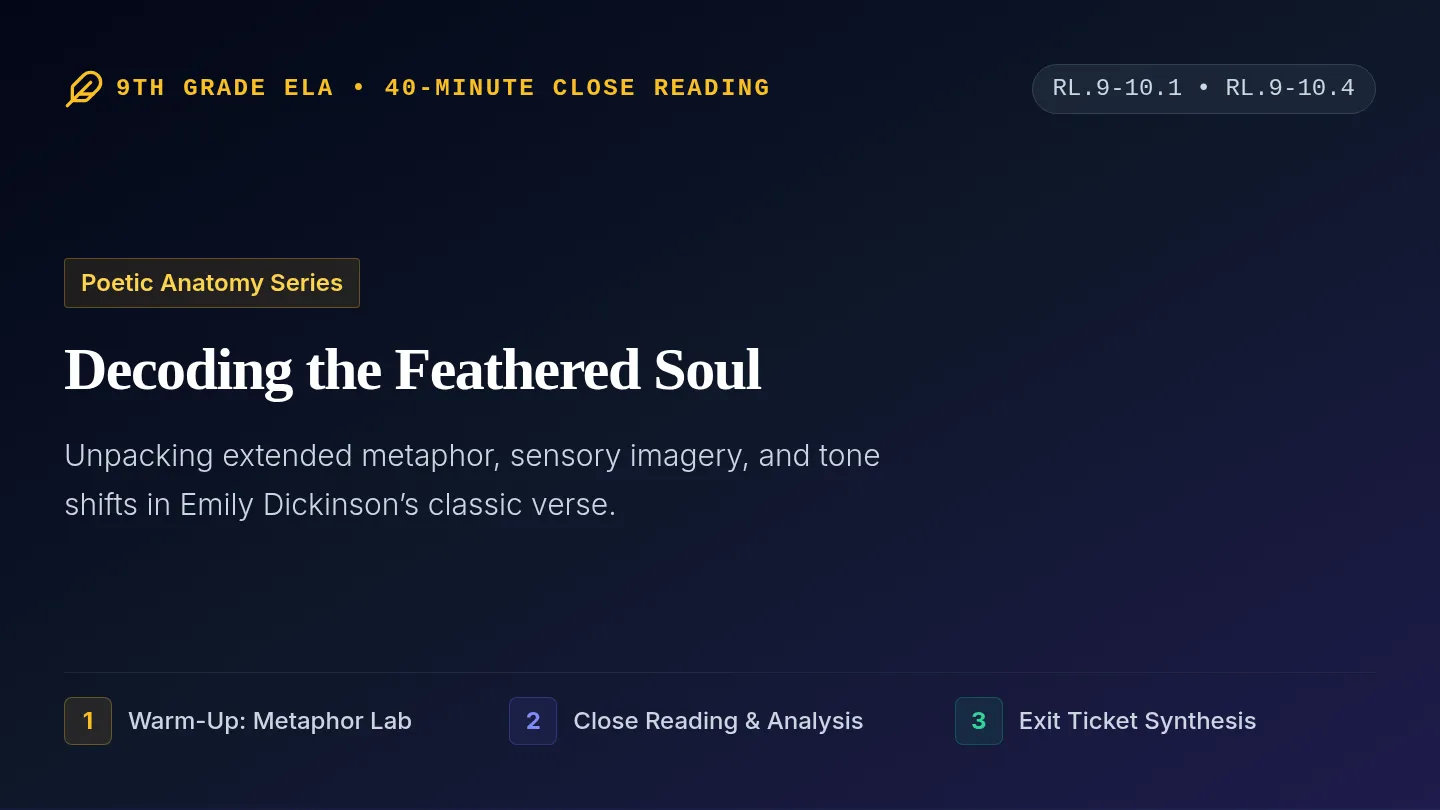
Metaphor Mastery Slides

Poetic Lens

A targeted 40-minute 9th-grade ELA lesson dissecting extended metaphor, diction, and imagery in Emily Dickinson's classic poem Hope is the thing with feathers. Students annotate poetic devices, engage in collaborative analysis, and synthesize thematic meaning on an exit ticket.

MJ

Mr. J. Pfluke

4
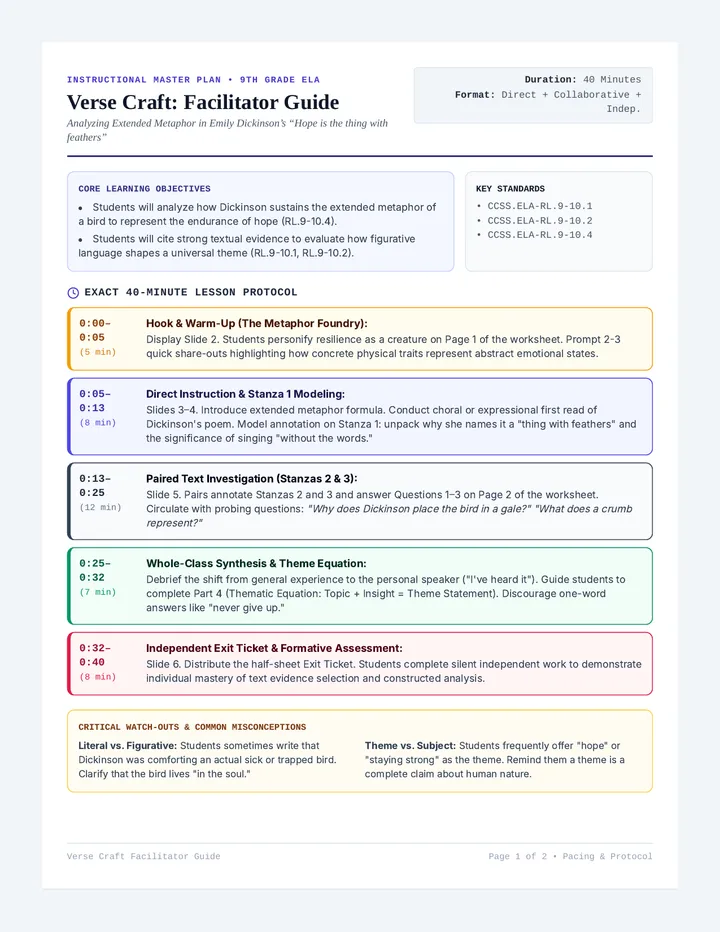
Verse Craft Teacher Guide

Verse Craft Teacher Guide

A 2-page instructional guide for teachers delivering the 40-minute poetry analysis lesson. Features an exact minute-by-minute pacing protocol, complete text-dependent question answer keys, exemplar student responses, and differentiation strategies.

MJ

Mr. J. Pfluke

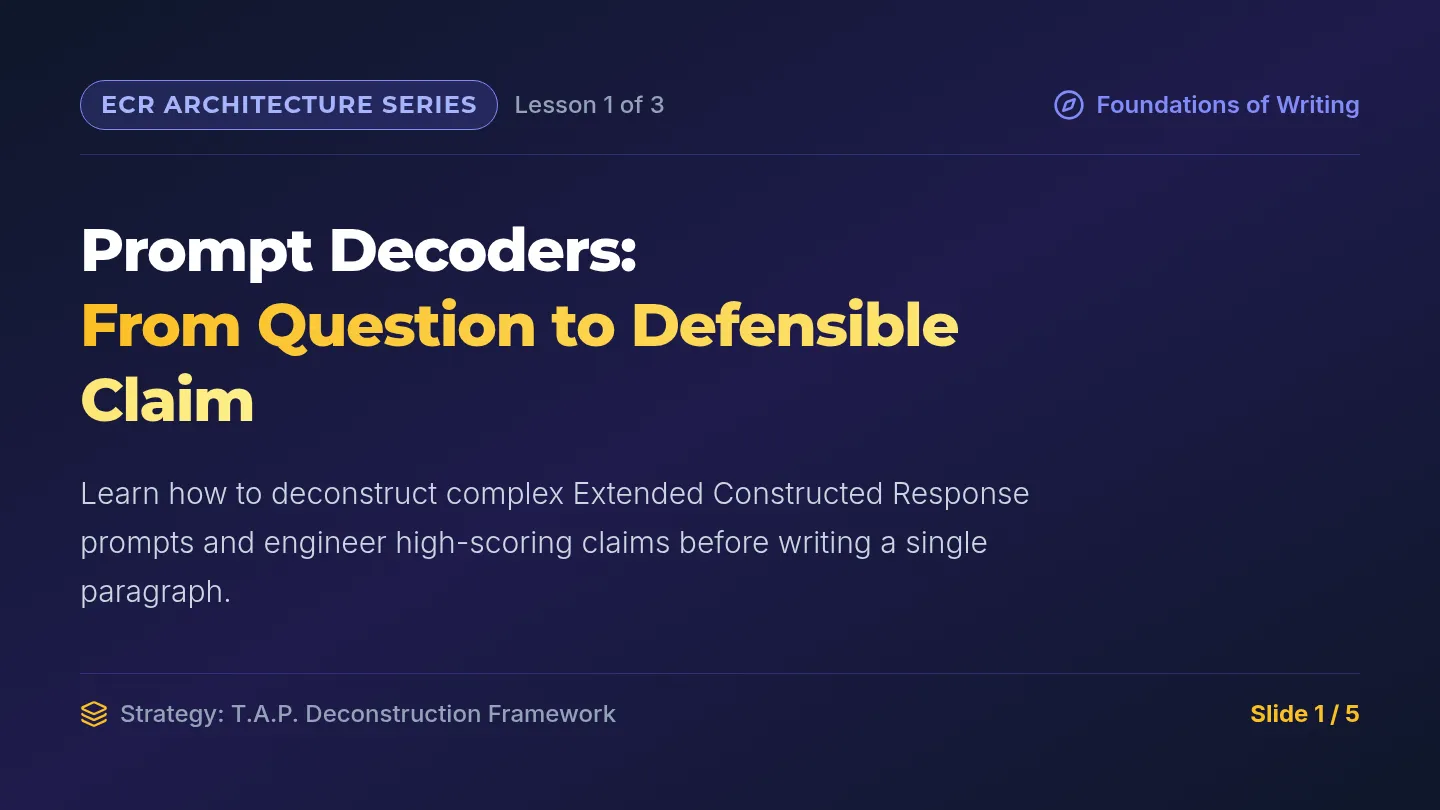
Prompt Decoder Slides

Argument Architecture

A comprehensive middle school writing sequence guiding students through the Extended Constructed Response process, from prompt deconstruction and claim generation to evidence integration and multi-paragraph synthesis.

Lenny Avatar
Lenny
6
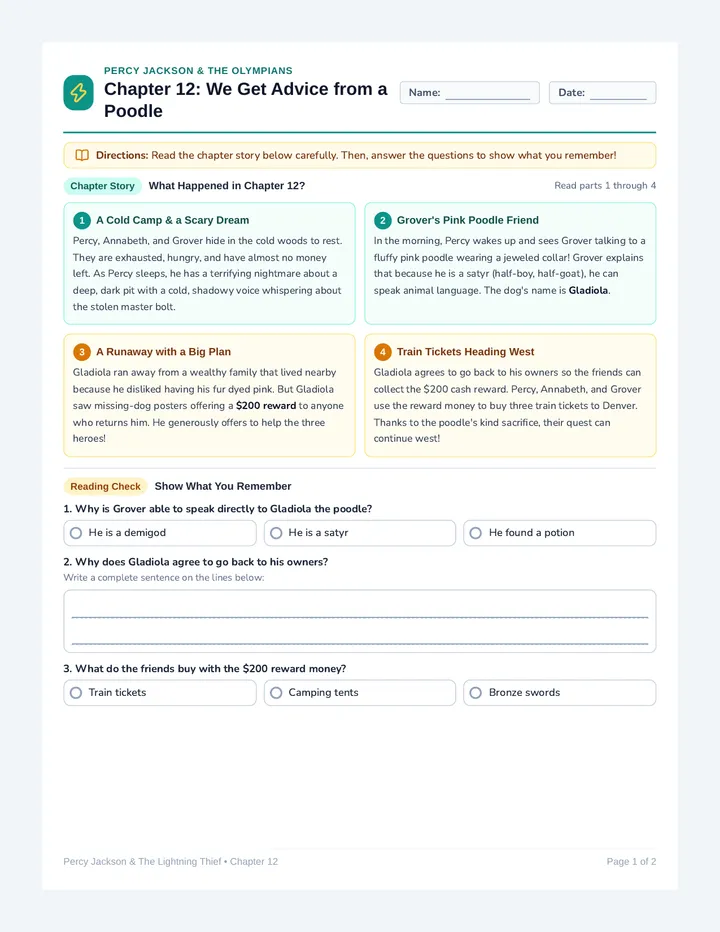
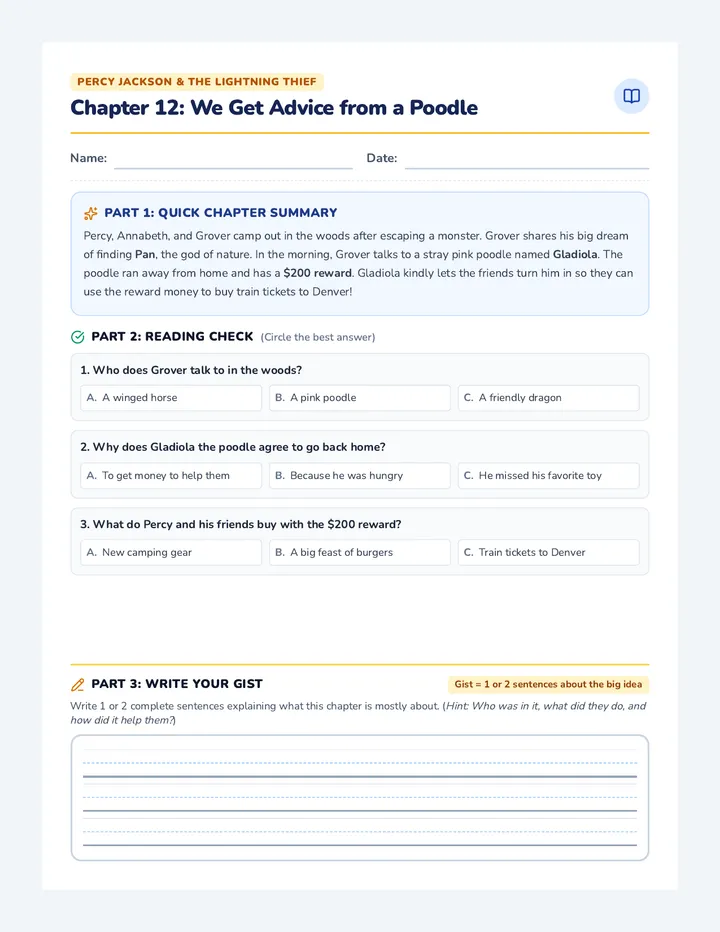
Poodle Advice Gist Worksheet

Poodle Advice Quest

A grade 2 lesson focused on Chapter 12 of Percy Jackson & The Olympians: The Lightning Thief, featuring an accessible chapter summary, comprehension quick-check, guided gist-writing scaffold, and a comprehensive teacher guide with modeling scripts.

C

cedaniels

2
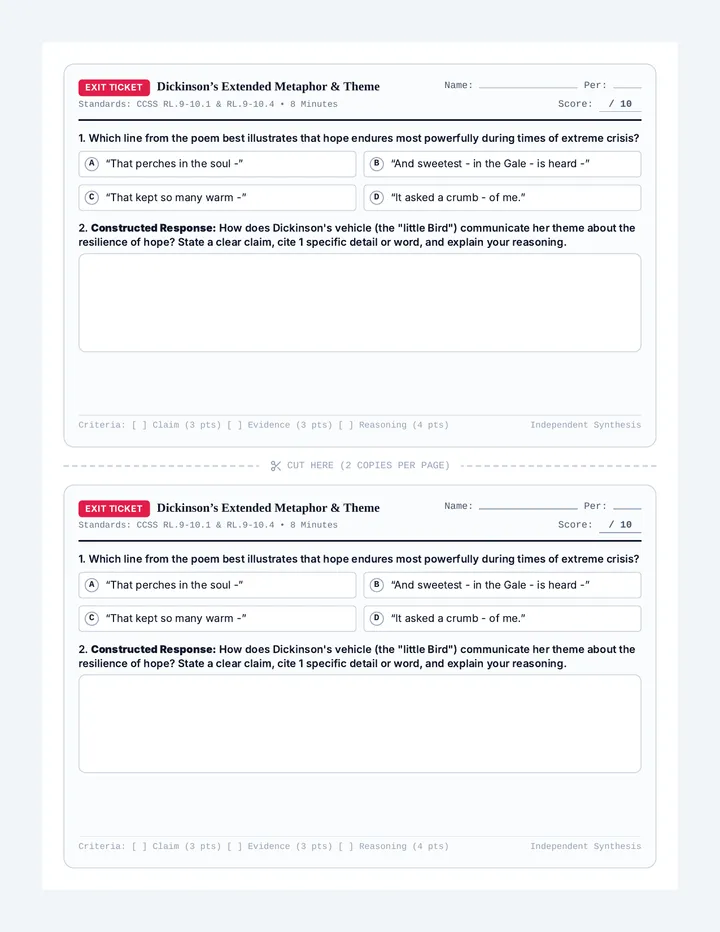
Poetic Evidence Exit Ticket

Poetic Evidence Exit Ticket

A print-ready 2-up half-sheet exit ticket for Emily Dickinson's Hope is the thing with feathers. Assesses standard RL.9-10.1 and RL.9-10.4 through text-evidence selection and a constructed response on extended metaphor.

MJ

Mr. J. Pfluke

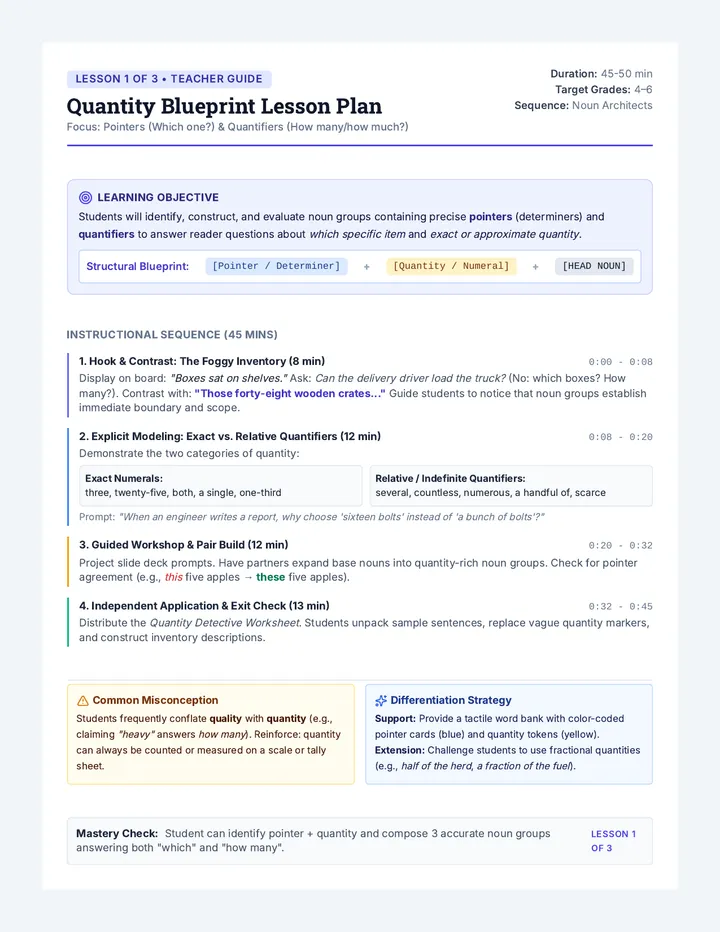
Quantity Blueprint Lesson Plan

Noun Group Architects

A three-part grammar and writing unit where students investigate, assemble, and refine precise noun groups. Learners progress from tracking quantity and pointer determiners to layering vivid qualities and specific classifiers for rich descriptive writing.

A

arlavoie-ridings

9
Poodle Advice Reading Worksheet

Poodle Advice Gist

A Grade 2 reading comprehension and writing lesson on Chapter 12 of The Lightning Thief, featuring an accessible story summary, reading check questions, dedicated gist writing spaces, and a comprehensive teacher guide with model responses.

Lenny Avatar
Lenny
3
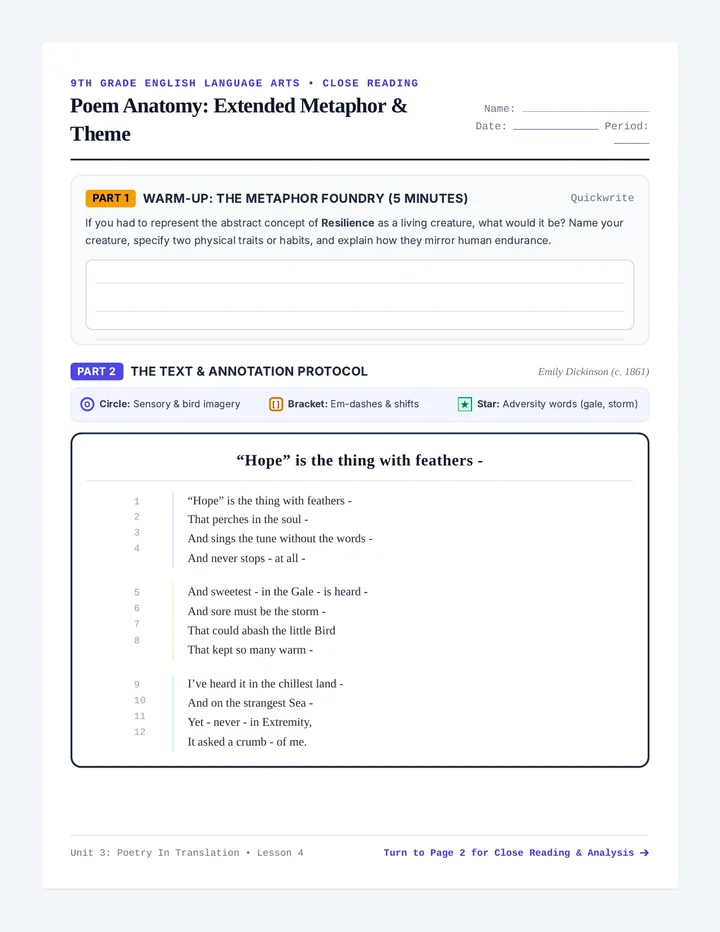
Poem Anatomy Worksheet

Poem Anatomy Worksheet

A 2-page student close-reading worksheet for analyzing Emily Dickinson's Hope is the thing with feathers. Includes a quickwrite warm-up, annotated full poem text, three text-dependent analysis questions, and a theme synthesis equation.

MJ

Mr. J. Pfluke

Latin Roots Slide Deck

Rooted Words Curriculum

A comprehensive, evidence-based morphology curriculum systematically teaching Latin roots, Greek combining forms, and prefix assimilation through word matrices, morpheme sums, and contextual decoding.

M

melissa.white

6
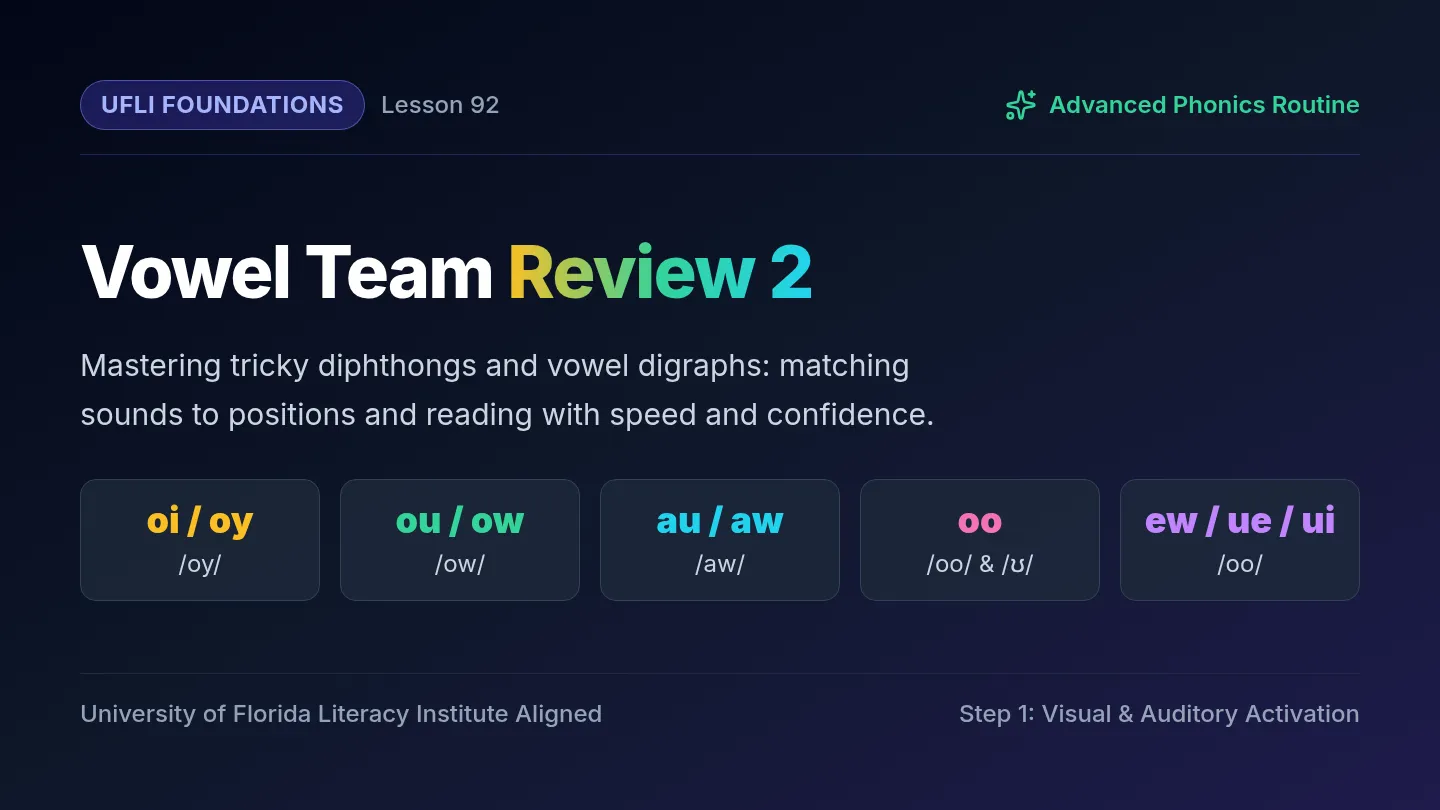
Vowel Team Showdown Slides

Vowel Team Showdown

A complete UFLI Lesson 92 instructional unit reviewing complex vowel teams and diphthongs (oi, oy, ou, ow, au, aw, oo, ew, ue, ui). Includes direct instruction slides, three extended decodable stories, a fluency passage with comprehension questions, an oral reading exit ticket with nonsense words, and an instructional teacher guide.

ML

Marti Lushin

5
Metaphor Mastery Slides

Metaphor Mastery Slides

A structured 6-slide visual presentation for a 40-minute 9th-grade poetry analysis lesson. Features a quickwrite warm-up prompt, extended metaphor modeling, stanza-by-stanza text breakdowns, and exit ticket guidelines.

MJ

Mr. J. Pfluke