Lenny.com
Explore
Create
ActivitiesNewMathEnglish Language ArtsScience & EngineeringSocial StudiesGlobal LanguagesHealth & Physical EducationSpecial EducationCounseling & Life SkillsArts & CreativityESL
Lenny.com
Lenny.com
Explore
Create
ActivitiesNewMathEnglish Language ArtsScience & EngineeringSocial StudiesGlobal LanguagesHealth & Physical EducationSpecial EducationCounseling & Life SkillsArts & CreativityESL
Lenny.com
Lenny.com

Solutions

Lenny for EducatorsLenny for SchoolsLenny for Districts

Product

ExploreSign inCreateSupportAbout

Resources

Getting startedMTSS Acceleration Program

Newsletters

School Funding Newsletter

© 2026 Lenny Learning Inc.

TermsPrivacyAccessibility
LinkedInInstagramX
Lenny
English Language ArtsPhonics & Reading FoundationsLetter IdentificationLearn Letters A-ZLowercase and Uppercase LettersConsonants and VowelsLetter-Sound AssociationsLetter-Sound Associations: LowercaseLetter-Sound Associations: UppercaseBeginning and Ending SoundsRhymingBlending And SegmentingShort VowelsShort Vowel SoundsConsonant BlendsConsonant DigraphsBlends, Digraphs, and TrigraphsDigraphs, Blends, and Silent LettersLong Vowel SoundsLong Vowel PatternsShort and Long VowelsShort and Long Vowel PatternsSilent EVowel SoundsVowel TeamsR-Controlled VowelsDiphthongs: Oi, Oy, Ou, OwVariant VowelsVariant, Diphthong, And R Vowel PatternsSoft G And CSight WordsIrregular WordsWord RecognitionSyllablesSyllable TypesTwo-Syllable WordsMultisyllabic WordsPhoneme ManipulationDecodable TextsVocabularyAction WordsQuestion WordsNouns and AdjectivesClassify WordsCompound WordsSynonyms and AntonymsHomophonesHomophones and HomonymsShades of MeaningContext CluesPrefixes and SuffixesGreek and Latin RootsAnalogiesIdioms and AdagesForeign Words and ExpressionsWord Choice and UsageReference SkillsReading ComprehensionRead-Along Literary TextsRead-Along Informational TextsReality vs. FictionStory ElementsCharacterSequenceMain IdeaCause And EffectCompare And ContrastReading StrategiesText StructureAuthor's PurposeAuthor's Purpose And ToneAuthor's PerspectivePoint Of ViewThemeInference And ThemeInference And AnalysisPoetry ElementsLiterary DevicesAnalyzing LiteratureAnalyzing Informational TextsComparing TextsAudience, Purpose, And ToneBusiness DocumentsNovel StudyNonfiction Book StudyGrammar & MechanicsSentencesNounsVerbsAdjectivesPronounsCapitalizationPunctuationContractionsConjunctionsPrepositionsArticlesAdjectives And AdverbsVerb TypesVerb TensePronouns And AntecedentsPronoun TypesSubject-Verb AgreementDirect And Indirect ObjectsSentences, Fragments, And Run-OnsPhrases And ClausesCommasSemicolons, Colons, And CommasDashes, Hyphens, And EllipsesSpellingAbbreviationsFormattingVerb Tense And MoodMisplaced ModifiersWritingDescriptive DetailsCreative WritingOpinion WritingTopic SentencesOrganizing WritingLinking WordsSentence VarietyIntroductions And ConclusionsPersuasive And Opinion WritingExpository WritingPersuasive StrategiesDeveloping And Supporting ArgumentsTopic Sentences And Thesis StatementsSummarizingResearch SkillsEditing And RevisingActive And Passive Voice=Writing Clearly And ConciselyDebate & Public SpeakingPublic Speaking BasicsPersuasive TechniquesClaims and EvidenceTypes of ArgumentsReasoning TypesLogical FallaciesTopic ResearchOrganizing EvidenceDebate Speech OrganizationAttacking and Defending ArgumentsClash and EngagementImpact CalculusQuestioning and Cross-ExaminationCritical ThinkingInformal LogicFormal LogicInductive Reasoning

Poodle Advice Quest

A grade 2 lesson focused on Chapter 12 of Percy Jackson & The Olympians: The Lightning Thief, featuring an accessible chapter summary, comprehension quick-check, guided gist-writing scaffold, and a comprehensive teacher guide with modeling scripts.

Ccedaniels

Poodle Advice Quest

A grade 2 lesson focused on Chapter 12 of Percy Jackson & The Olympians: The Lightning Thief, featuring an accessible chapter summary, comprehension quick-check, guided gist-writing scaffold, and a comprehensive teacher guide with modeling scripts.

Ccedaniels

Guiding Prompts During Work Time

Before Writing

  • “Tell me in your own words: What surprise friend appeared in the woods?”
  • “Why couldn't the kids just keep walking to California?”
  • “Say your gist aloud to your partner before writing it down.”

During Writing (Conferring)

  • “Check your sentence: Did you tell why Gladiola went home?”
  • “If your sentence feels too long, can you join your ideas with ‘so that’ or ‘to’?”
  • “Where does your first sentence end? Place your finger on the period.”

After Writing (Debrief)

  • “Let's read two student gists: How do both tell the big idea in different words?”
  • “How does Gladiola the poodle help Percy become a better hero?”
  • “Rate your gist using our 3 checklist stars!”

Troubleshooting

Common Misconceptions & Quick Fixes

⚠️ Misconception: Retelling Every Single Detail

Student says: “Percy slept in the woods and had a nightmare about a pit, then woke up cold, then Grover saw a pink poodle with a ribbon...”

💡 Coaching Fix: “A gist is like taking a snapshot with a camera, not a whole movie. What is the one thing that helps them continue their journey? Focus on that!”

⚠️ Misconception: Missing the ‘Why’ (The Quest Purpose)

Student writes: “Grover talked to a pink dog.”

💡 Coaching Fix: “You told me Who and What! Now add the magic word: so that. Why did talking to the poodle help them?”

Worksheet Page 1 Answer Key

1. Who can talk to Gladiola?

→ Grover (satyr ability)

2. Why does Gladiola agree to return?

→ Accept: “To get the $200 reward money” or “To help Percy buy train tickets.”

3. What do the friends buy with the reward?

→ Train tickets

Grade 2 Gist Scoring Rubric

⭐⭐⭐ (3): Names key characters, states main action, and includes purpose (train tickets) in 1–2 complete sentences.

⭐⭐ (2): Identifies characters and dog, but misses the reason (reward/tickets) or includes too many minor details.

⭐ (1): Incomplete sentence or off-topic detail (e.g., only mentions the nightmare). Needs teacher conference.

Percy Jackson & The Lightning Thief • Chapter 12 Teacher Resource Page 2 of 2

You might also like

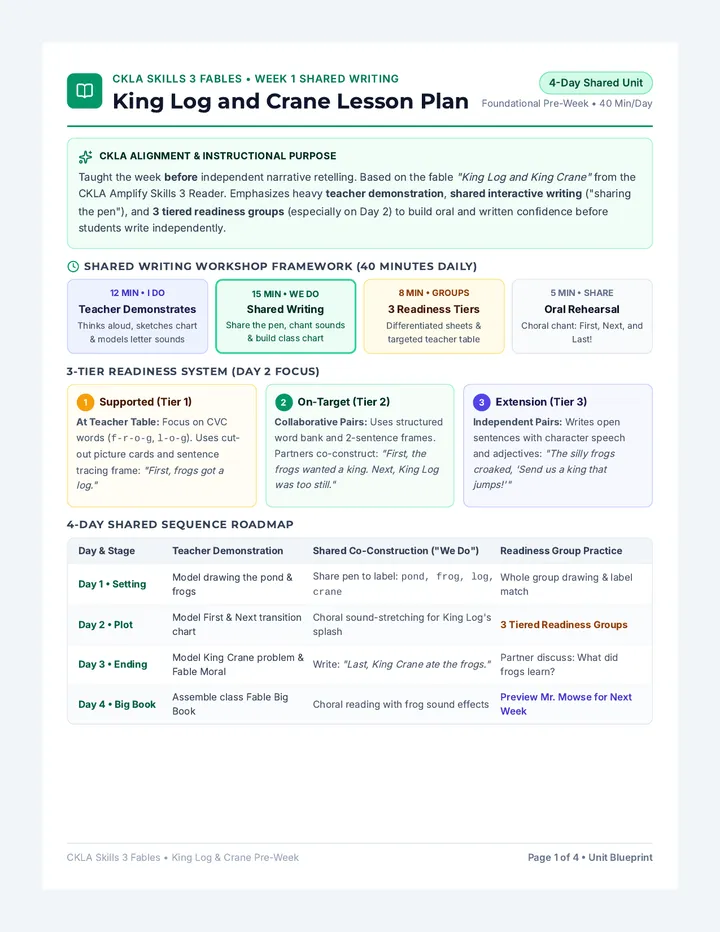
King Log Lesson Plan

Fable Writers

A two-part foundational early first-grade CKLA narrative writing sequence. Week 1 introduces shared and interactive fable retelling with King Log and King Crane and tiered readiness groups. Week 2 progresses to student-led retelling and opinion book reports with Mr. Mowse.

K

Katherine.Land

6
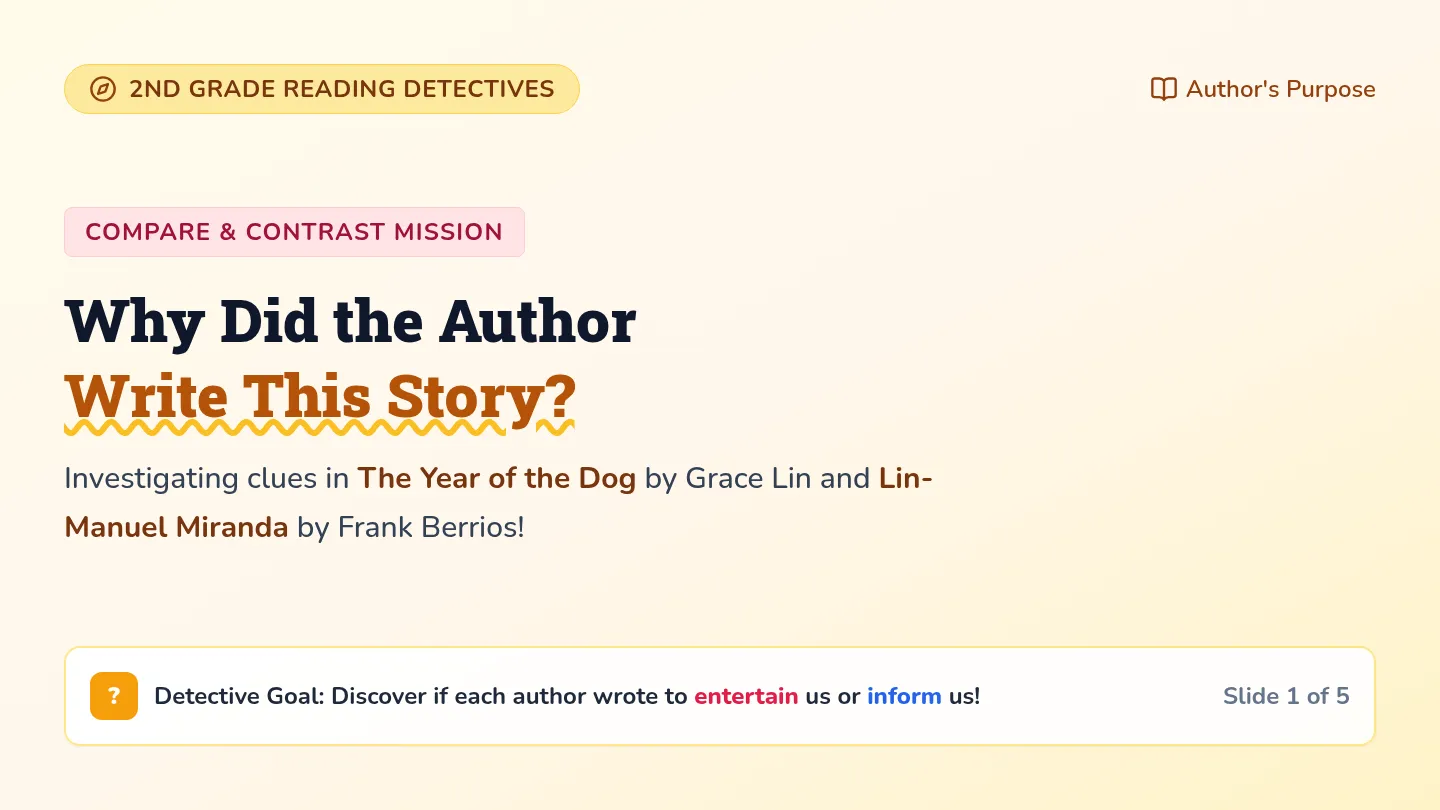
Story Purpose Slides

Story Purpose Detectives

A 2nd-grade comparative reading lesson exploring author's purpose through excerpts from Grace Lin's The Year of the Dog and Frank Berrios's Lin-Manuel Miranda. Students analyze why authors write to entertain or inform, make text-based inferences, and compare fictionalized memoir with biographical nonfiction.

A

awarner1

4
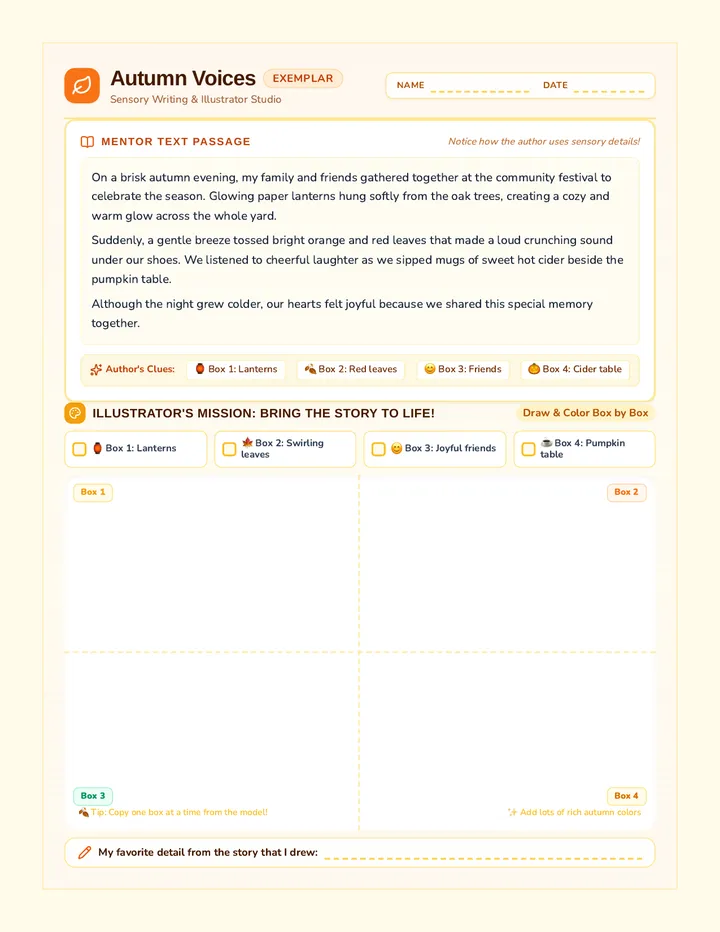
Autumn Voices Exemplar Worksheet

Autumn Voices Exemplar Worksheet

An engaging, child-friendly elementary worksheet featuring the Autumn Voices descriptive exemplar passage alongside an illustrated artist challenge, sensory detail checklist, and expansive drawing canvas.

SM

Shalini Mitchell

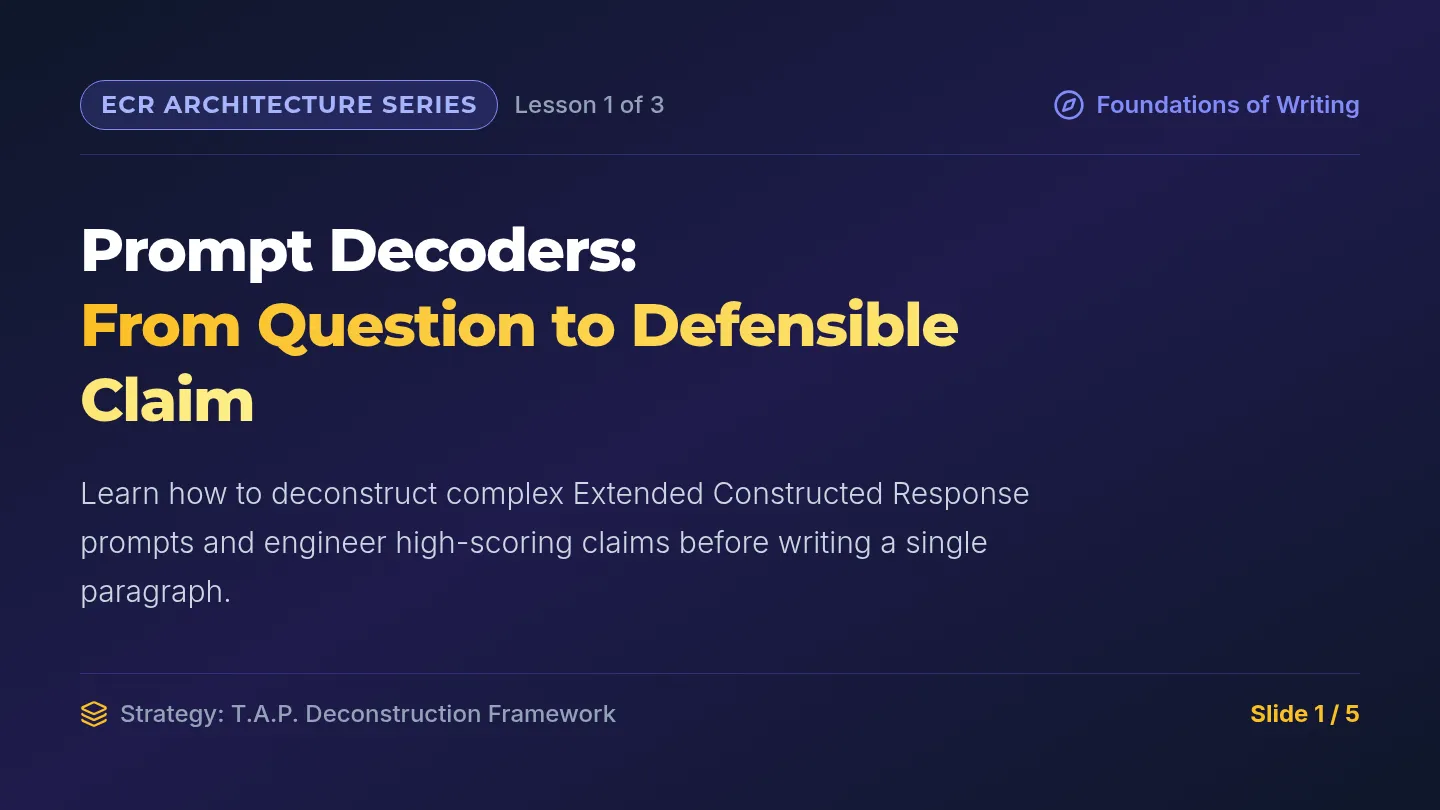
Prompt Decoder Slides

Argument Architecture

A comprehensive middle school writing sequence guiding students through the Extended Constructed Response process, from prompt deconstruction and claim generation to evidence integration and multi-paragraph synthesis.

Lenny Avatar
Lenny
6
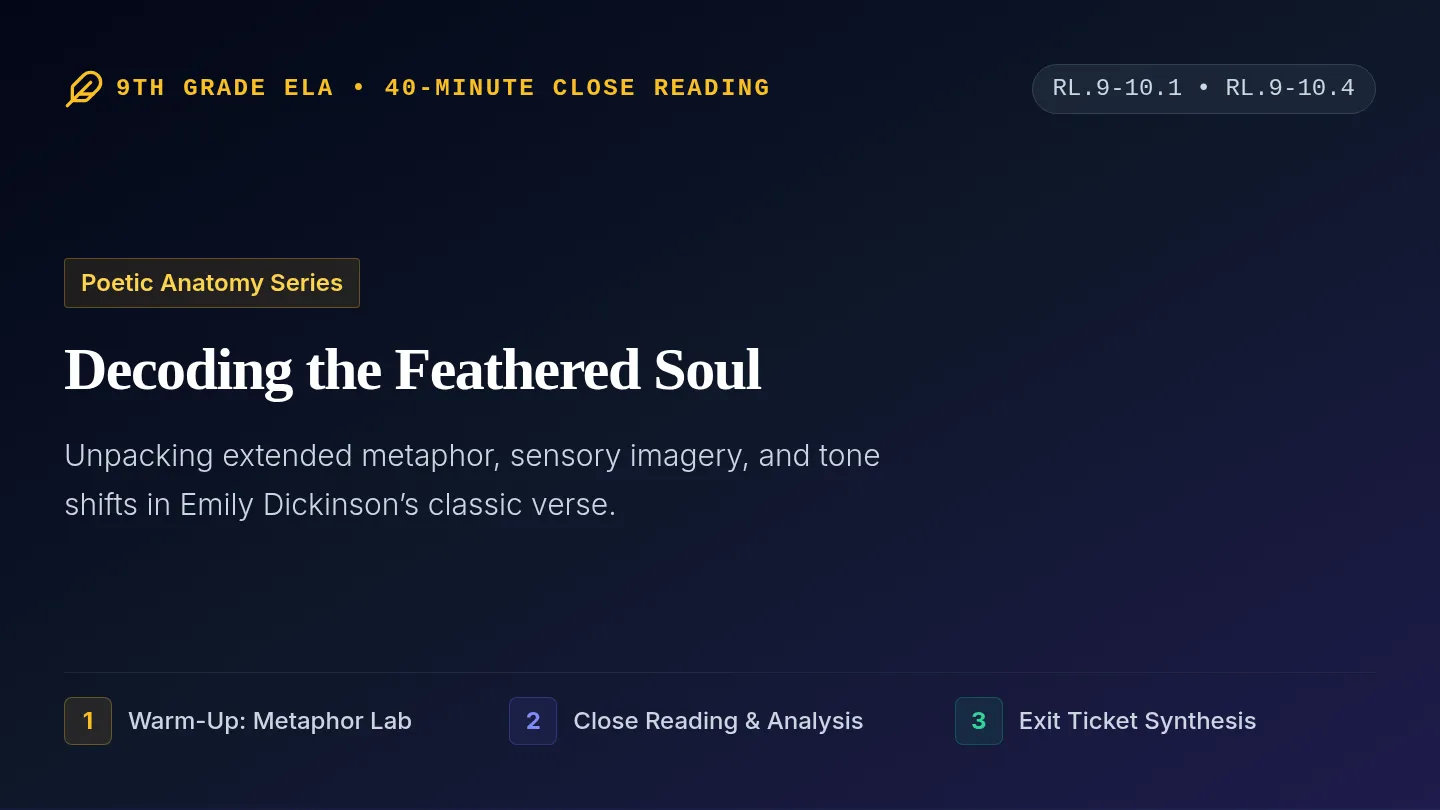
Metaphor Mastery Slides

Poetic Lens

A targeted 40-minute 9th-grade ELA lesson dissecting extended metaphor, diction, and imagery in Emily Dickinson's classic poem Hope is the thing with feathers. Students annotate poetic devices, engage in collaborative analysis, and synthesize thematic meaning on an exit ticket.

MJ

Mr. J. Pfluke

4
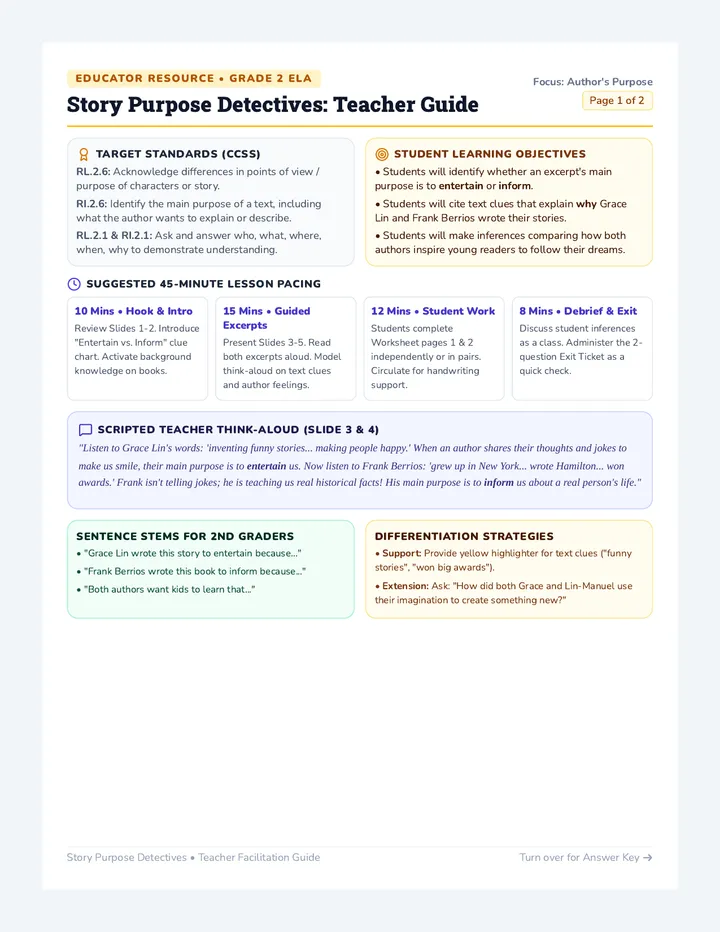
Story Purpose Teacher Guide

Story Purpose Teacher Guide

A 2-page comprehensive teacher guide and answer key for the 2nd-grade author's purpose lesson, including CCSS standards, pacing, scripted modeling, sentence stems, and exemplar responses.

A

awarner1

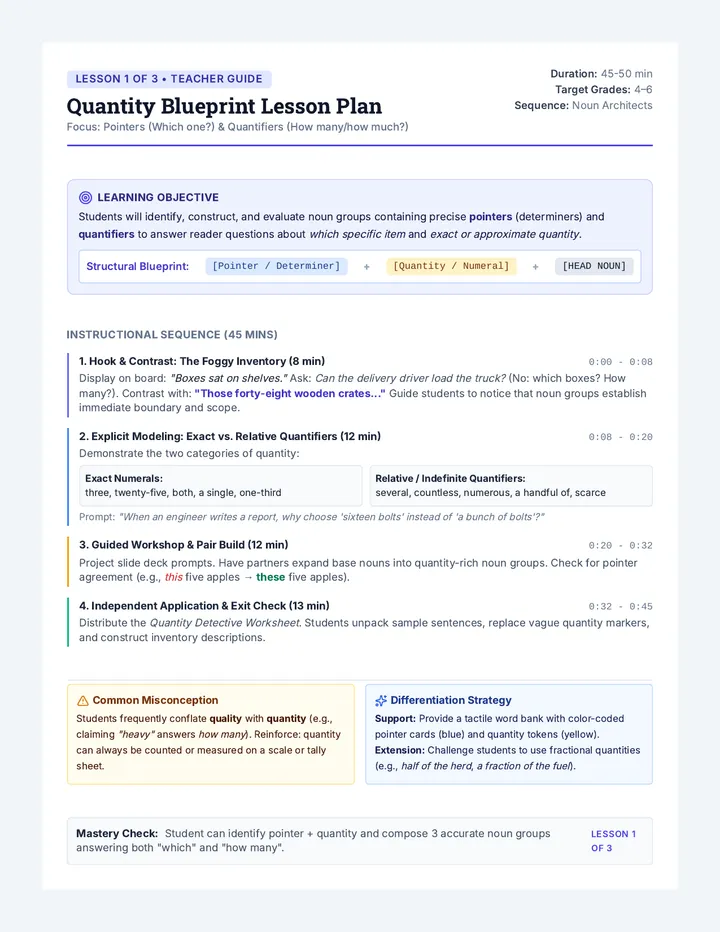
Quantity Blueprint Lesson Plan

Noun Group Architects

A three-part grammar and writing unit where students investigate, assemble, and refine precise noun groups. Learners progress from tracking quantity and pointer determiners to layering vivid qualities and specific classifiers for rich descriptive writing.

A

arlavoie-ridings

9
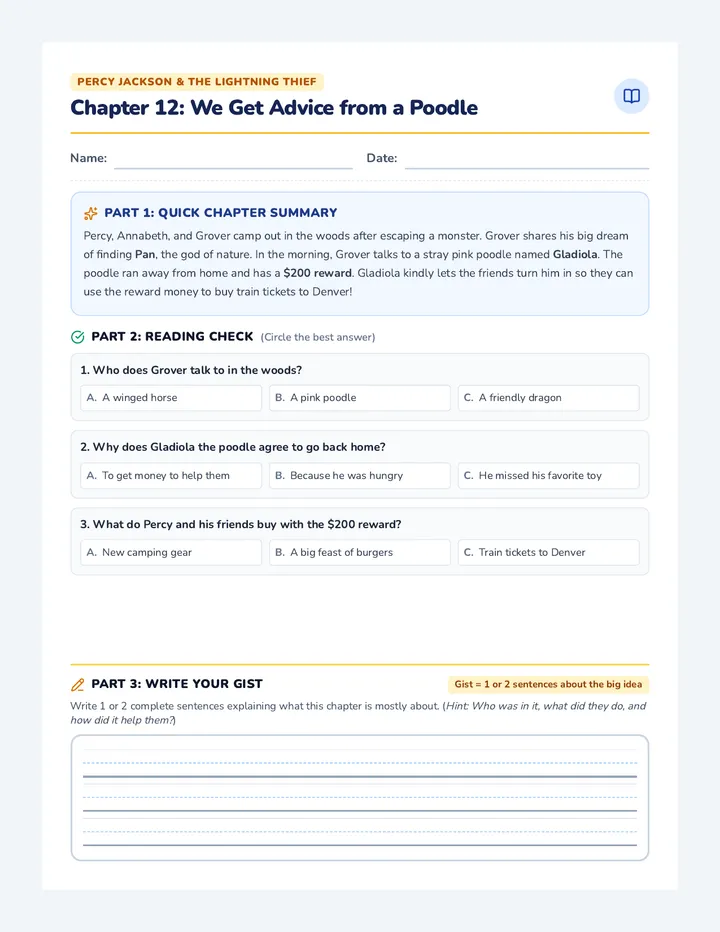
Poodle Advice Reading Worksheet

Poodle Advice Gist

A Grade 2 reading comprehension and writing lesson on Chapter 12 of The Lightning Thief, featuring an accessible story summary, reading check questions, dedicated gist writing spaces, and a comprehensive teacher guide with model responses.

Lenny Avatar
Lenny
3
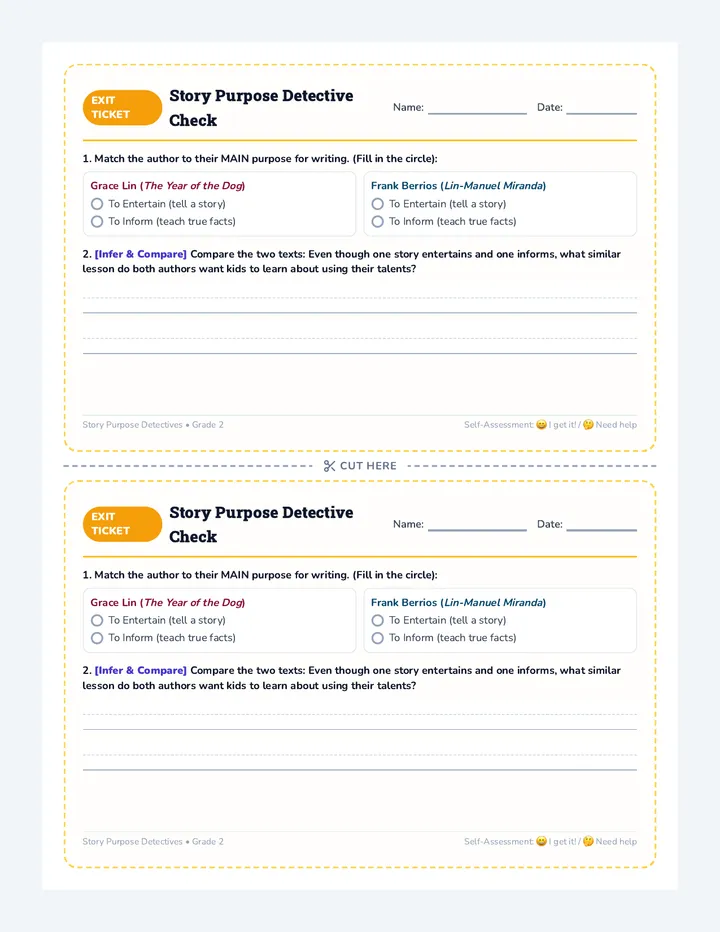
Purpose Detective Exit Ticket

Purpose Detective Exit Ticket

A print-ready 2nd grade exit ticket featuring a quick check on author's purpose, paired text comparison, and an inferential written response with primary handwriting lines.

A

awarner1

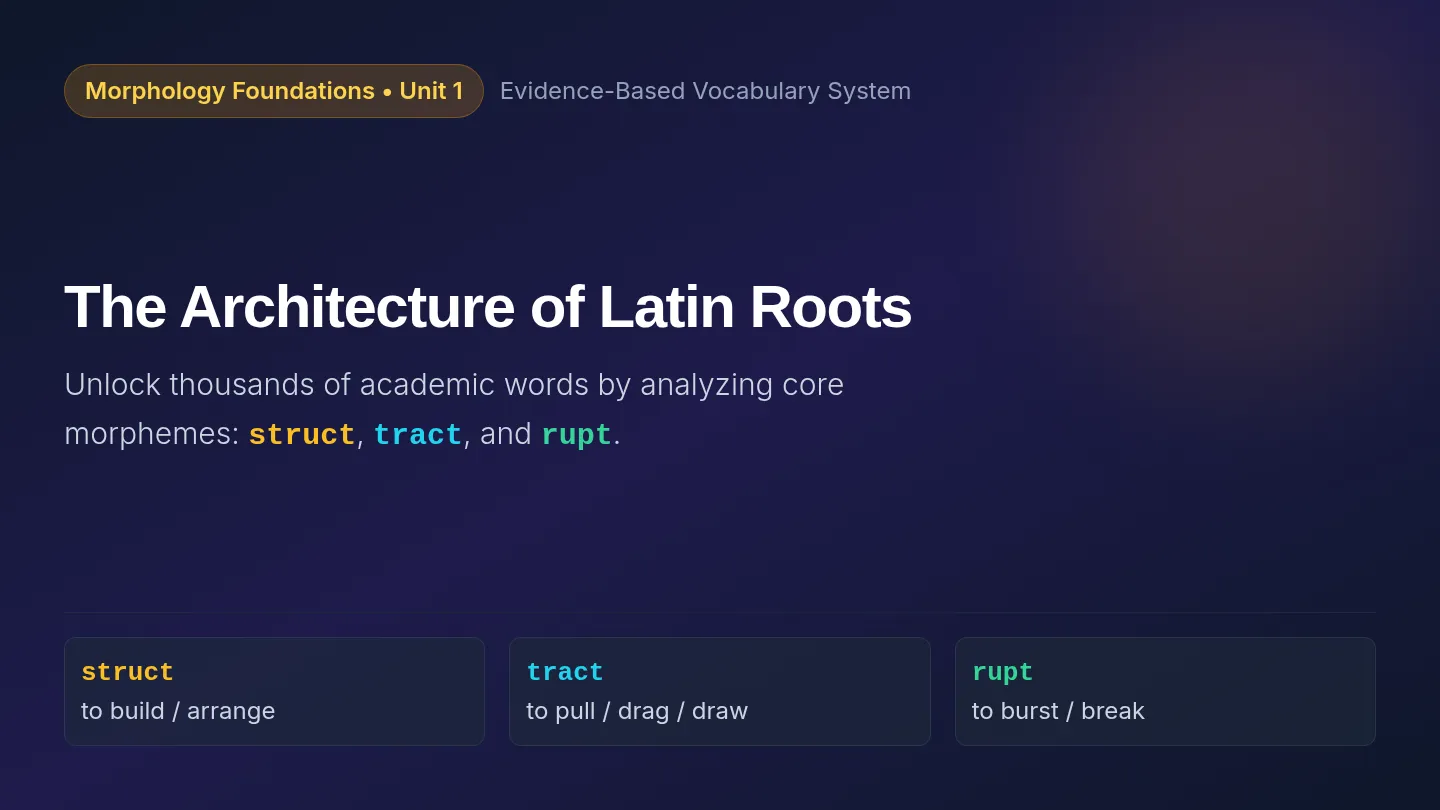
Latin Roots Slide Deck

Rooted Words Curriculum

A comprehensive, evidence-based morphology curriculum systematically teaching Latin roots, Greek combining forms, and prefix assimilation through word matrices, morpheme sums, and contextual decoding.

M

melissa.white

6
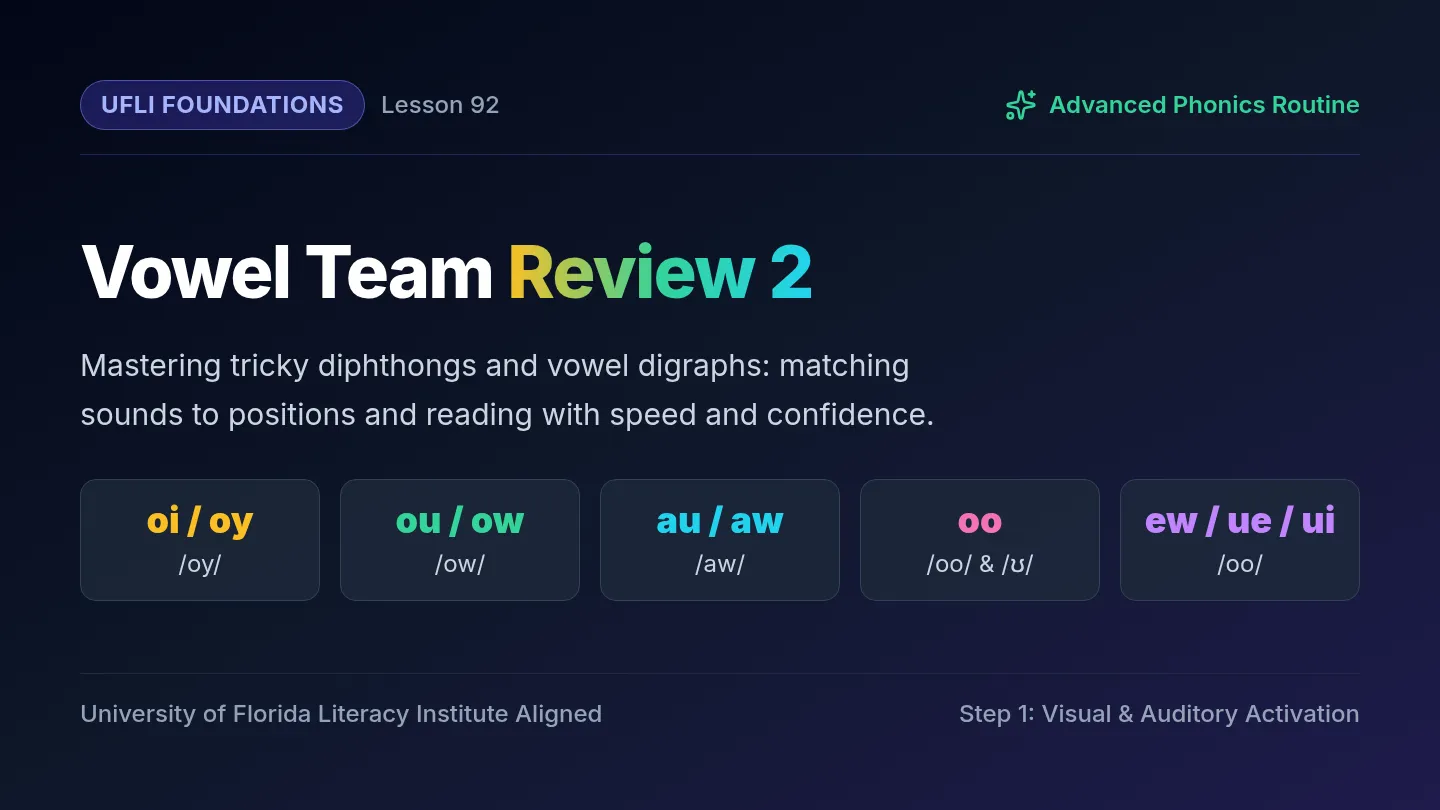
Vowel Team Showdown Slides

Vowel Team Showdown

A complete UFLI Lesson 92 instructional unit reviewing complex vowel teams and diphthongs (oi, oy, ou, ow, au, aw, oo, ew, ue, ui). Includes direct instruction slides, three extended decodable stories, a fluency passage with comprehension questions, an oral reading exit ticket with nonsense words, and an instructional teacher guide.

ML

Marti Lushin

5
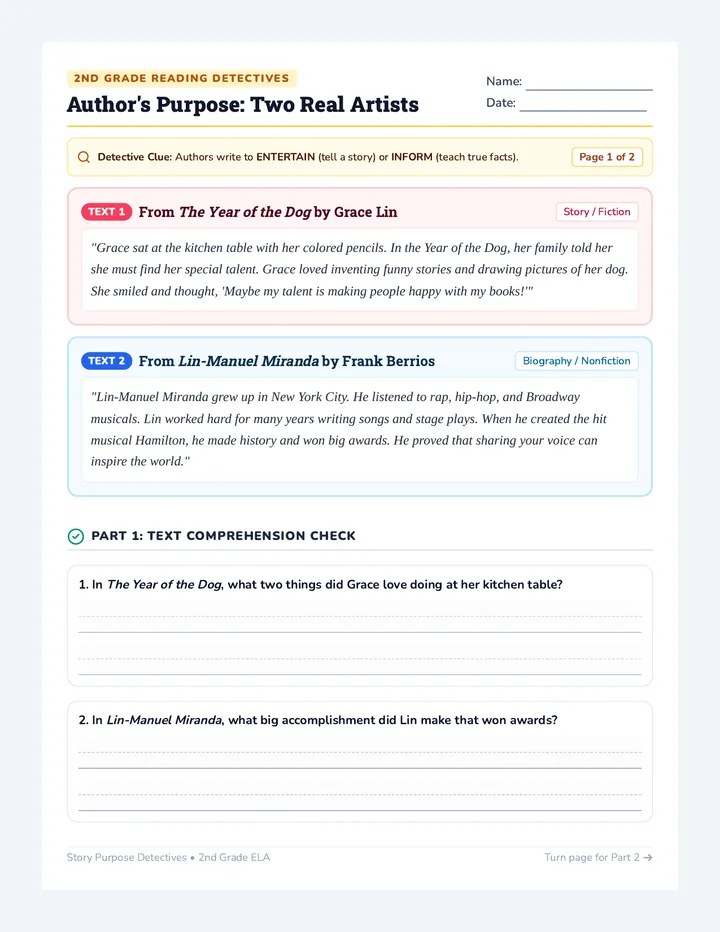
Author Purpose Comparison Worksheet

Author Purpose Comparison Worksheet

A 2-page print-ready student worksheet for 2nd graders featuring adapted excerpts from The Year of the Dog and Lin-Manuel Miranda, paired comprehension questions, a comparative purpose organizer, and inferential writing prompts with large handwriting lines.

A

awarner1